By: [VERIFY: add the real author name and relevant automotive repair credentials] · Last updated: July 31, 2026
How this guide was checked: The diagnosis, installation cautions, recall details, and cost context were reviewed against Timken wheel-hub guidance, SKF hub-installation guidance, Toyota Technical Information System resources, Toyota’s VIN recall lookup, the NHTSA notice for Recall 24V-911, and current RepairPal RAV4 estimates. This is a source-based diagnostic guide; it does not claim that a specific RAV4 was inspected or road-tested for this article. It does not replace repair information for your exact RAV4.
Toyota RAV4 wheel bearing noise usually sounds like a steady hum, rumble, growl, roar, or grind that rises with vehicle speed and often remains while you coast. It may become louder during a gentle turn, but that road-test pattern cannot confirm the failed side by itself. Cupped tires, brakes, CV joints, loose wheel hardware, driveline parts, and worn suspension components can create similar sounds, so confirm the source before replacing a hub or bearing.
Quick Answer
A bad RAV4 wheel bearing usually follows wheel speed rather than engine RPM. The sound may remain while you coast and may change when steering load shifts from one side to the other. A lack of obvious wheel play does not prove that the bearing is healthy; rotation noise, roughness, road-test behavior, brake condition, tire wear, and related parts still need to be checked. Stop normal driving and arrange prompt inspection if you hear grinding or notice wheel play, heavy vibration, abnormal braking or steering, severe wheel-end heat, or warning lights.
Key Takeaways
- A bad RAV4 wheel bearing usually follows wheel speed, not engine RPM, so the sound often stays present while coasting.
- If the noise gets louder during a gentle turn, the bearing on the more heavily loaded side is often the suspect, but tires, brakes, and suspension parts can mislead this test.
- No detectable wheel play does not clear the bearing. Continue with rotation, roughness, noise, tire, brake, and related-part checks.
- Stop unnecessary driving and arrange prompt inspection if you hear grinding or notice wheel play, heavy vibration, abnormal braking or steering, severe wheel-end heat, or warning lights.
- Do not guess axle nut, hub bolt, brake bracket, or lug nut torque. Use Toyota service information for your exact year, drivetrain, and wheel position.
At a Glance
| Time Required | Varies by model year, wheel position, drivetrain, corrosion, tools, and whether the RAV4 uses a bolt-on hub or a press-in bearing. |
| Difficulty | Moderate to advanced DIY. Brake, axle, ABS, and wheel-end work is safety-critical. |
| Tools Needed | Jack, jack stands, wheel chocks, torque wrench, sockets, breaker bar, mechanic’s stethoscope or chassis ear, dial indicator if measuring movement or runout, and Toyota service information. |
| U.S. Cost Benchmark | RepairPal’s July 25, 2026 estimate is $318–$572 for RAV4 wheel-bearing replacement. Its separate hub-assembly estimate is $476–$785. Taxes, location adjustments, and related repairs are excluded. |
| Repair Decision | Confirm the failed corner, check for related brake or suspension damage, check the VIN for open campaigns, and get a VIN-specific parts and labor quote before authorizing repair. |
Warning: Never work under a vehicle supported only by a jack. Before lifting, place the transmission in Park, apply the parking brake, chock the wheels remaining on the ground, and use the correct Toyota jack points. Support the RAV4 on rated jack stands before touching the wheel, brakes, axle nut, or hub. If a rear wheel must rotate during inspection, follow Toyota’s procedure for releasing the parking brake only after the vehicle is fully supported and securely chocked.
What Does Toyota RAV4 Wheel Bearing Noise Sound Like?
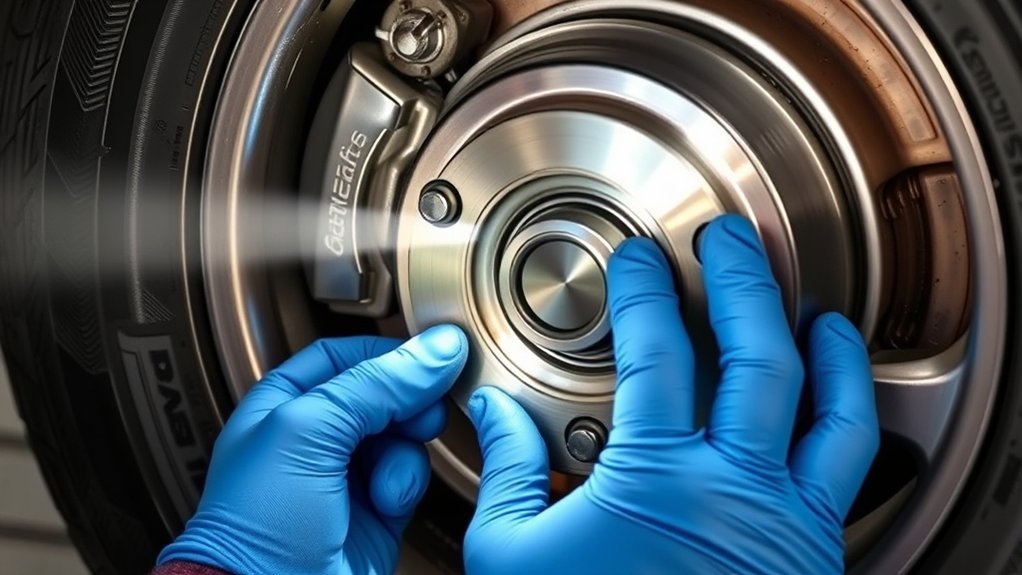
Listen for a low humming, rumbling, growling, roaring, or grinding sound that becomes more noticeable as vehicle speed increases. Timken lists these sounds, wheel vibration or wobble, and some ABS-related faults among common wheel-hub bearing clues. Timken also notes that constant-speed vibration commonly comes from tires, wheels, suspension parts, or alignment rather than the bearing alone.
A bearing-related noise is usually tied to wheel rotation. That means it often changes with road speed, even if you lift off the throttle and coast. If the noise rises and falls with engine RPM while vehicle speed stays the same, investigate engine, belt, exhaust, transaxle, or drivetrain causes instead.
| Noise or Symptom Pattern | What It May Mean | What to Check Next |
|---|---|---|
| Humming, rumbling, or roaring that increases with road speed | Possible worn wheel bearing, tire tread noise, or driveline noise | Coast at the same road speed, compare different pavement, inspect tires, then isolate the hub |
| Noise gets louder during a gentle left or right turn | Often points to a bearing on the more heavily loaded side | Treat the turn result as a clue, then confirm with wheel-end inspection and a stethoscope or chassis ear |
| Noise changes sharply on different pavement or moves after tire rotation | Cupped, feathered, scalloped, or aggressive tire tread is more likely | Inspect tread by sight and touch, verify pressure, and compare the noise after rotation |
| Grinding while driving | Advanced wheel-end damage, brake contact, backing-plate contact, or hub trouble | Stop unnecessary driving and inspect the brakes, rotor, backing plate, axle, and hub |
| Repeating click or pop during a tight turn under light power | Outer CV joint is more likely than a wheel bearing | Inspect the CV boots, grease leakage, joint play, and axle condition |
| Scrape or grind that changes when the brake pedal is applied | Brake pad, rotor, caliper, debris, or backing-plate problem | Inspect pad thickness, caliper movement, rotor condition, and backing-plate clearance |
| No wheel play, but a persistent speed-related hum remains | The bearing is not cleared; early or noise-only damage is still possible | Check rotation roughness and noise, compare corners, inspect tires and brakes, and use professional listening equipment if needed |
| Wheel vibration, wobble, or looseness | Possible severe bearing wear, loose lug nuts, tire or wheel damage, or suspension wear | Check wheel play, lug torque, tire condition, ball joints, tie rods, struts, and control arms |
| ABS or traction-control warning with hub noise | Possible wheel-speed sensor, magnetic encoder, wiring, or hub/bearing issue | Scan the ABS system and inspect the indicated wheel circuit before replacing parts |
To narrow the source, test drive the RAV4 only on a safe, dry, low-traffic road. Turn off the radio, reduce the HVAC fan, note the speed where the sound begins, and make only small steering inputs while staying within your lane. A sound that changes as weight shifts can help identify a suspect side, but tires, brakes, and suspension wear can mislead this test.
Note: A left turn usually increases load on the right-side wheel bearings, while a right turn usually increases load on the left-side bearings. Treat this only as a clue. Sound can travel through the body and make the wrong corner seem louder.
What Else Can Sound Like a Bad RAV4 Wheel Bearing?
Many parts can mimic a bad RAV4 wheel bearing. Before ordering a hub or bearing assembly, inspect the simple items that commonly create the same humming, growling, grinding, or vibration.
- Tires: Cupped, feathered, uneven, or aggressive tires can roar like a bearing. If the sound changes dramatically on different pavement or moves after a tire rotation, suspect tire noise. Use the separate RAV4 steering-wheel vibration guide for tire, wheel, balance, and alignment checks.
- Brake parts: A bent dust shield, worn brake pad, stuck caliper, rotor contact, or loose brake hardware can create grinding or scraping. Follow the RAV4 brake-pedal pulsation guide when the vibration appears mainly during braking.
- Brake drag: A sticking caliper can cause heat, odor, pulling, uneven pad wear, and wheel-end noise. See the RAV4 sticking-caliper diagnostic guide if one corner is much hotter than the others.
- CV joints and axles: Clicking or popping during sharp powered turns often points to an outer CV joint rather than a wheel bearing. The RAV4 CV-axle clicking guide explains the turn-test and boot inspection.
- Lug nuts and wheel hardware: Loose, damaged, cross-threaded, or improperly torqued lug nuts can cause vibration and unsafe wheel movement.
- Suspension and steering: Worn ball joints, tie rods, struts, control arm bushings, or alignment problems can cause vibration, looseness, and uneven tire wear.
- ABS wiring: A damaged wheel-speed sensor, encoder, connector, or wiring harness can trigger warnings that may be mistaken for a hub failure.
The best diagnosis is not “replace the loudest-sounding corner.” Confirm the pattern on the road, rule out tires and brakes, and then verify the wheel-end condition with the vehicle safely supported.
When Should You Replace a RAV4 Wheel Bearing?
Arrange prompt inspection or replace the confirmed bearing or hub assembly when you find one or more of these signs:
- Speed-related noise: A roaring, humming, or grinding noise gets louder with vehicle speed and does not disappear when you coast.
- Turning-load change: The noise changes during a gentle left or right turn, especially when one side of the vehicle is more heavily loaded.
- Rough rotation: With the RAV4 safely supported, the wheel or hub feels rough, notchy, or noisy when rotated by hand.
- Wheel play: The wheel rocks excessively when checked at the 12-and-6 or 3-and-9 positions, after ball joint, tie rod, and suspension movement is ruled out.
- Vibration or wobble: The steering wheel, floor, or body vibrates in a way that follows vehicle speed.
- ABS or traction-control warning: The warning appears with wheel-end noise or hub play, especially if scan data points to one wheel-speed sensor circuit.
- Heat or odor: One wheel-end area is noticeably hotter than the others after normal driving, with no clear brake-drag explanation. Do not touch a hot hub or brake assembly.
A lack of obvious wheel play does not prove that the bearing is healthy. Timken’s hub-checking process also evaluates hand-rotation roughness, bearing noise, looseness, and measured internal clearance. Continue the diagnosis when the road-speed pattern remains convincing but the shake test feels solid.
Warning: Do not keep driving normally if the noise has become grinding, the wheel has visible play, the vehicle vibrates heavily, braking or steering feels abnormal, a wheel becomes severely hot, or a brake, ABS, or traction warning stays on. Arrange inspection or towing before the wheel-end damage gets worse.
[Products Worth Considering]

This bearing press kit makes it easy to install bearing races and seals quickly without damaging the axle housing. It includes nine dual-sided adapters to fit a wide range of standard races and seals, plus a knurled handle for controlled, slip-resistant use. Built from durable aluminum alloy and stored in a compact case, it is a practical solution for automotive bearing installation jobs.

This 2-piece suspension tool set combines a compact strut spreader with a high-leverage lower control arm prying tool to help speed up safe suspension service. Designed for many FWD, import, and domestic vehicles, it supports strut, hub, ball joint, and control arm work while helping reduce the risk of damage to surrounding components. Heavy-duty steel construction makes it a dependable choice for mechanics and serious DIY suspension repair.
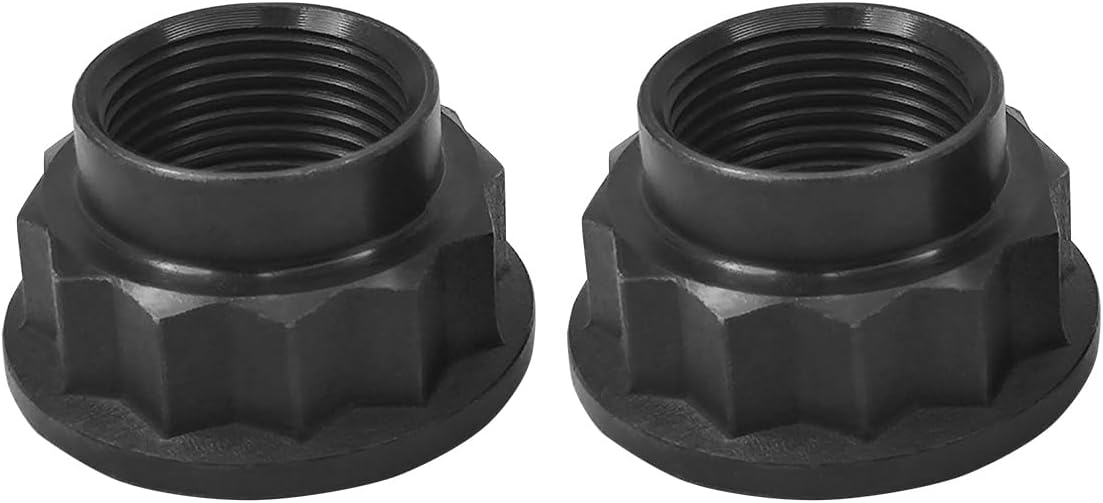
This pair of front axle shaft nuts is designed to secure CV joints and wheel bearings on compatible Toyota and Lexus front drive axles. Built from heat-treated carbon steel for durability and corrosion resistance, it helps maintain proper torque and reliable power transfer. It is a direct replacement for several factory part numbers and is recommended for paired replacement.
How Do You Diagnose RAV4 Wheel Bearing Noise Safely?
Use this process to narrow the noisy corner before replacing a part:
- Start with tire pressure and tire wear. Check all four tires for cupping, scalloping, feathering, exposed cords, uneven tread, incorrect pressure, or mismatched tires.
- Road-test at a steady speed. Drive only where the sound can be checked safely. A bearing hum usually follows vehicle speed rather than engine RPM.
- Lift off the throttle safely. If the sound remains while road speed changes, the source is more likely related to the wheel, tire, brake, hub, axle, or driveline than to engine RPM alone.
- Load the left and right sides gently. Make small, smooth steering inputs while staying within your lane. Do not swerve. Note whether the noise grows louder during a gentle left or right curve.
- Lift the suspect wheel or axle according to Toyota instructions. Work on a level, hard surface and support the RAV4 at the specified points. If a rear wheel must rotate, release the parking brake only after the vehicle is fully supported and the remaining wheels are securely chocked.
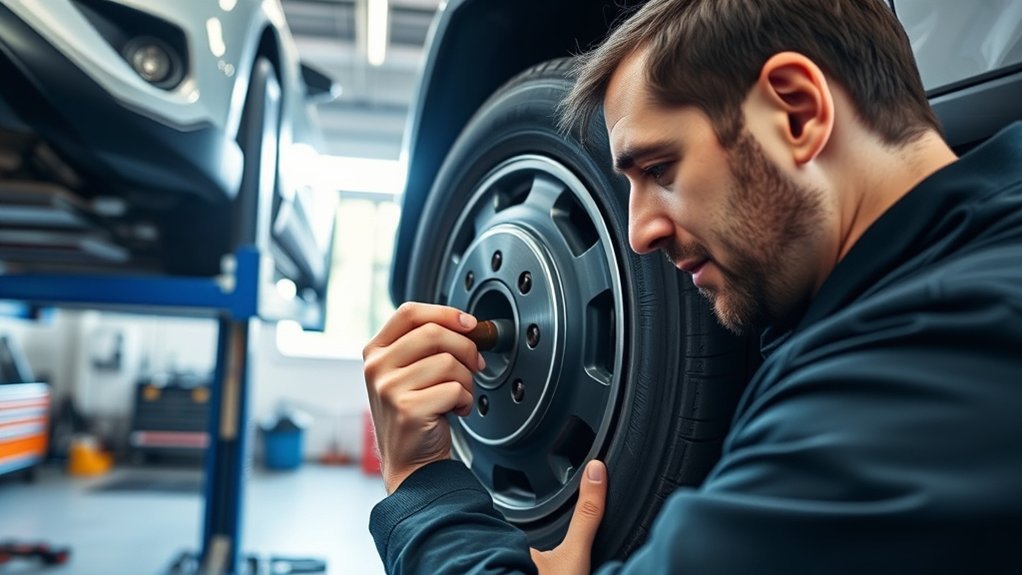
- Spin and listen by hand. Rotate the wheel or exposed hub as the Toyota procedure permits. Listen and feel for roughness, scraping, or a dry growl. A mechanic’s stethoscope or chassis ear can help isolate the hub. Do not run the drivetrain with the vehicle supported on stands unless Toyota’s exact procedure and professional equipment specifically call for it.
- Check for play. Rock the tire at 12-and-6 and 3-and-9. If there is movement, determine whether it comes from the hub, ball joint, tie rod, or suspension before condemning the bearing. If there is no movement, do not end the diagnosis when the road-speed noise, hand-rotation roughness, or listening test still points to that corner.
- Inspect the brakes and backing plate. A bent backing plate touching the rotor, stuck caliper, worn pad, or trapped debris can sound like a bad bearing.
- Scan warning lights before clearing codes. Record ABS, traction-control, and wheel-speed sensor codes and live data before replacing the hub or sensor.
Pro Tip: If the noise moves or changes substantially after rotating tires front-to-rear, tire wear becomes more likely. If it stays associated with the same vehicle corner, the hub or bearing becomes a stronger suspect.
Could a Recall Cause Front-Axle Noise on a 2024 RAV4?
Before replacing a wheel bearing, check your VIN through the Toyota Safety Recall and Service Campaign lookup. Toyota’s lookup accepts a 17-digit VIN or a U.S. license plate and shows open recalls and service campaigns for the specific vehicle.
This check is especially important for certain 2024 model-year RAV4 vehicles covered by NHTSA Recall 24V-911, also identified by Toyota as Recall 24TA14. Toyota’s notice says some front brake caliper mounting bracket bolts or front hub bearing bolts may not have been tightened correctly during manufacturing and can loosen. A loose bolt may cause abnormal rattling or vibration from the front axle area. The condition can also increase the risk of brake-hose damage, reduced braking performance, or wheel separation.
This is a limited manufacturing bolt-tightening recall, not a recall for ordinary wheel-bearing wear on every 2024 RAV4. Toyota says dealers will inspect and tighten the affected bolts and replace damaged wheel-area components free of charge. The owner notice says the remedy normally takes approximately one hour, although dealer scheduling may require the vehicle to remain longer.
For repair steps and torque specifications, use Toyota Technical Information System (TIS) or a Toyota dealer or qualified technician. RAV4 wheel-bearing and hub procedures vary by model year, drivetrain, and whether you are working on the front or rear.
How Is a RAV4 Wheel Bearing or Hub Removed?
The exact removal procedure depends on the RAV4’s model year, drivetrain, wheel position, and hub design. Treat the steps below as a planning overview, not as a substitute for Toyota repair information for the VIN.
- Confirm the part and position. Verify front or rear, left or right, ABS or encoder style, drivetrain, and whether the replacement is a complete hub assembly or a press-in bearing design.
- Prepare the vehicle safely. Park on a level surface, place the transmission in Park, apply the parking brake, chock the wheels, loosen the lug nuts before lifting, raise the RAV4 at the correct jack point, and support it on rated jack stands.
- Remove the wheel and inspect. Check tire wear, rotor condition, backing-plate clearance, brake-hose routing, lug studs, and ABS wiring before taking parts apart.
- Remove brake components carefully. Remove the brake caliper and bracket as required. Hang the caliper with a hook or wire; never let it dangle by the brake hose.
- Remove the rotor. If the rotor is stuck, use the service-manual method instead of hammering aggressively near the hub, wheel studs, or ABS components.
- Handle the axle nut correctly if equipped. If the hub uses a staked or one-time-use axle nut, unstake it according to Toyota service information and replace it when specified. Avoid cutting near axle threads, the hub, brake hose, or ABS wiring.
- Disconnect or protect ABS wiring. Keep the wheel-speed sensor, connector, magnetic encoder, and harness out of the work area. Do not pull on the harness.
- Remove hub mounting bolts or press components as designed. Some assemblies bolt to the knuckle, while other bearing designs require a press and application-specific adapters. Confirm the design before applying force.
- Clean and inspect the mounting surface. Remove rust and debris from the knuckle and backing-plate contact area using a method allowed by Toyota service information. Do not gouge, round, or unevenly remove material from the mounting face.
Note: If the bearing is pressed into the knuckle, force must be applied through the correct race with the specified adapters. Incorrect press support can damage the new bearing before the RAV4 leaves the garage. Have a qualified shop press it when the correct equipment is unavailable.
[Products Worth Considering]

This master ball joint removal kit gives you the tools needed to remove and install ball joints, tie rod ends, Pitman arms, and other front-end components. It is designed for broad compatibility with many GM, Chevrolet, Ford, and Dodge vehicles, including a range of light trucks, vans, and SUVs. Built from forged steel and stored in a molded ABS case, it offers durable performance and organized portability for garage or shop use.

This all-in-one front end service kit is designed to help remove stubborn ball joints, tie rod ends, and pitman arms on a wide range of vehicles. Built from hardened alloy and organized in a portable ABS case, it offers reliable performance for both professional mechanics and DIY repairs.

This heavy-duty ball joint press kit makes it easier to remove and install press-fit components like ball joints, U-joints, and brake anchor pins on many 2WD and 4WD vehicles without removing the control arm. Built from forged steel with corrosion-resistant black oxide adapters, it is designed for reliable performance and long service life. The included 4WD adapter and organized carrying case make it a practical choice for automotive suspension and steering repairs.
How Do You Install a New RAV4 Wheel Bearing Correctly?
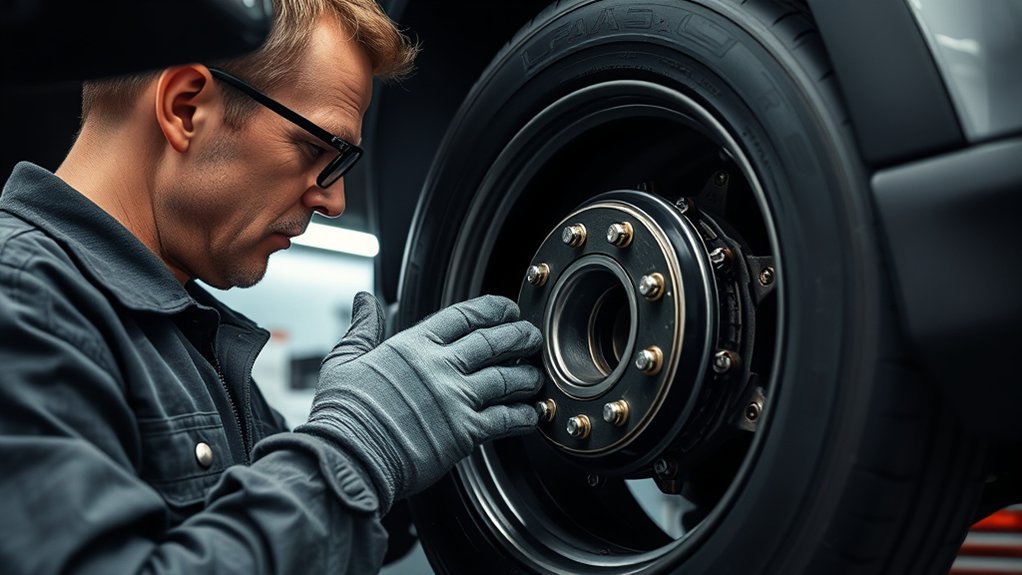
After removing the old wheel bearing or hub assembly, compare the new part with the old one before installation. Check the bolt pattern, ABS encoder side, sensor provision, flange offset, connector style, included hardware, and part number.
- Clean the backing plate and knuckle. The mounting face must be clean, undamaged, and flat so the new bearing or hub seats squarely.
- Protect the encoder side. If the bearing or hub has a magnetic encoder for ABS, keep it clean and away from metal filings, impacts, and contaminated tools.
- Start bolts by hand. Start all hub, caliper-bracket, and related fasteners by hand before tightening. This reduces cross-threading and helps parts seat correctly.
- Tighten evenly and apply final torque correctly. Follow Toyota’s specified sequence and use a calibrated torque wrench for the exact RAV4 application. Do not use an impact wrench as the final torque method.
- Use a new axle nut when specified. Some self-staking axle nuts are one-time-use. If the new hub includes a nut or Toyota specifies replacement, do not reuse the old one.
- Stake or lock the axle nut correctly. If the design uses a staked nut, apply final torque first and then stake it at the location and depth specified by Toyota.
- Check rotor and backing-plate clearance. Spin the rotor by hand and make sure no shield, sensor, hose, wire, or brake component rubs before reinstalling the wheel.
- Torque the lug nuts correctly. Tighten them in the sequence and to the specification listed for the exact model year and wheel type. Apply final torque with the vehicle positioned as Toyota directs.
SKF’s hub-installation guidance states that axle-nut, hub-bolt, and lug-nut torque affects bearing preload, hub seating, rotor condition, wheel studs, and wheel retention. SKF also warns that rust or debris behind the hub can prevent correct seating and that a supplied one-time-use self-staking axle nut must not be replaced with the old nut.
[Products Worth Considering]

This brake caliper hanger set helps hold calipers securely during brake pad changes and other suspension or axle work, making brake service safer and more convenient. Built from durable steel with rust-resistant coating, it features rubber tips to help prevent scratches and protect brake hoses and surrounding components. Brightly colored and easy to spot, it is a practical mechanic tool for keeping calipers supported while you work.

This click torque wrench delivers accurate, repeatable tightening for automotive and home repair tasks, helping prevent over-tightening and fastener damage. Its dual-range scale, knurled non-slip grip, and durable ratchet head make it easy to use, while the included extension bar and storage case add extra convenience.
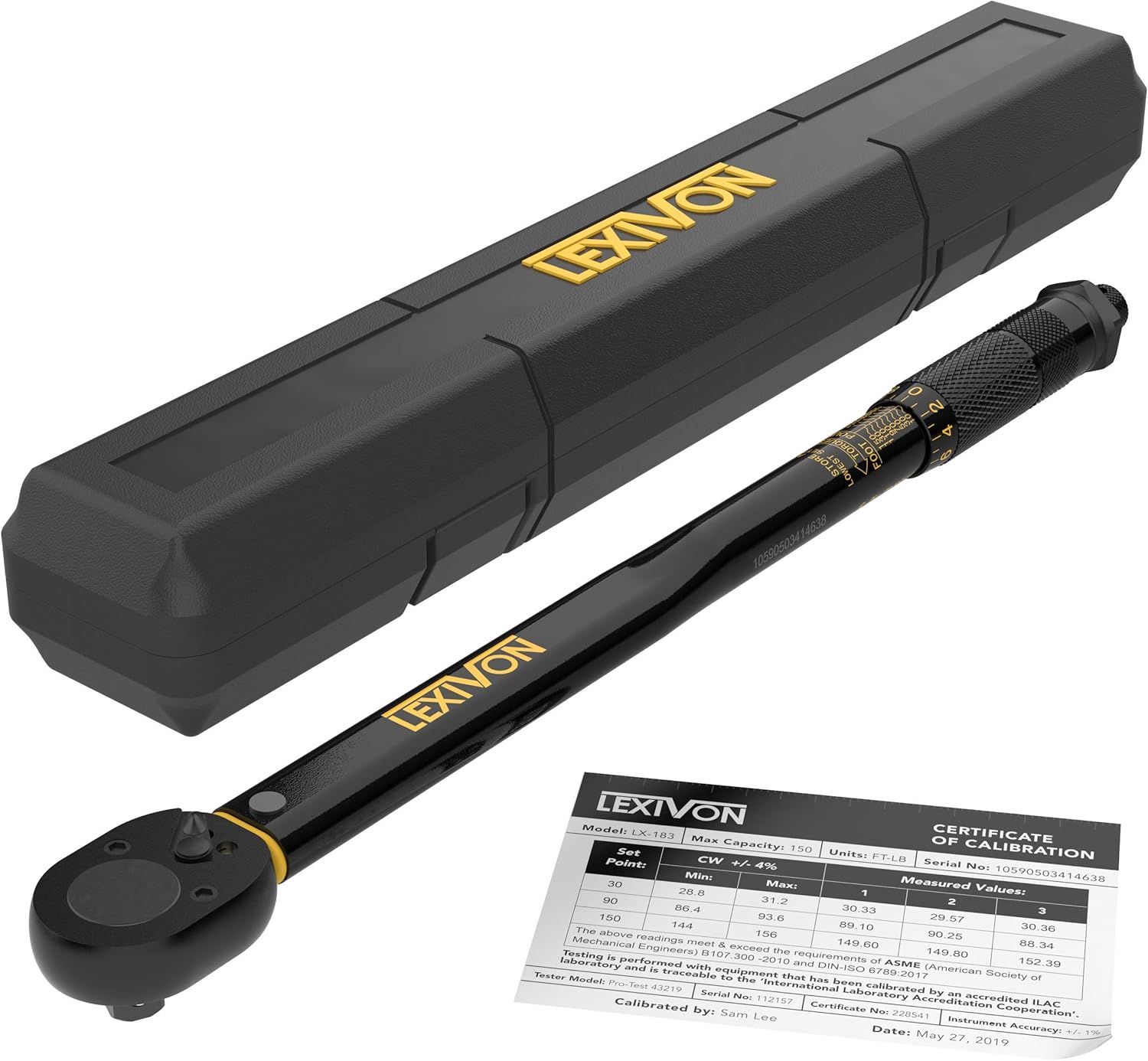
The LEXIVON 1/2-inch drive click torque wrench delivers accurate, dependable tightening for automotive and mechanical jobs with pre-calibrated precision. Its dual-range scale, reversible ratchet head, and ergonomic knurled handle make it easy to set, read, and use comfortably in a variety of applications. Built with hardened chrome vanadium steel and a corrosion-resistant finish, it is designed for lasting performance and reliability.
What Mistakes Can Cause a New Wheel Bearing to Fail?
When replacing a RAV4 wheel bearing or hub assembly, avoid these mistakes that can cause returning noise, ABS faults, brake pulsation, premature failure, or unsafe wheel movement:
- Replacing the wrong side: Confirm the corner with several checks instead of relying only on where the sound seems loudest inside the cabin.
- Treating no wheel play as proof the bearing is good: A solid shake test does not override persistent rotation noise, roughness, or a repeatable road-speed pattern.
- Ignoring tire noise: Cupped or uneven tires can mimic a bad bearing and remain noisy after a new hub is installed.
- Forgetting the ABS sensor or encoder: Damaged wiring, a dirty encoder, magnetic debris, or wrong-side installation can trigger ABS and traction-control warnings.
- Reusing a one-time-use axle nut: If Toyota or the hub manufacturer specifies replacement, install a new nut.
- Using an impact wrench for final torque: Use it for removal only when appropriate. Apply final axle-nut, hub-bolt, brake-bracket, and lug-nut torque with a calibrated torque wrench.
- Skipping mounting-surface cleaning: Rust or debris behind the hub can cause incorrect seating, runout, brake pulsation, or misalignment.
- Letting the brake caliper hang by the hose: This can damage the hose and create a braking hazard.
- Pressing through the wrong bearing race: Incorrect support can transfer damaging force through the rolling elements and ruin a new press-in bearing.
- Skipping the post-repair test drive: Verify that the original noise is gone, warning lights stay off, and steering and braking remain normal.
What Should You Check After the Repair?
After the RAV4 is fully reassembled, use this checklist before calling the job finished:
- Confirm the brake pedal feels firm before moving the vehicle.
- Check that the ABS, brake, and traction-control lights complete their normal self-check and turn off.
- Drive slowly first and listen for scraping, rubbing, clicking, grinding, or a repeating wheel-speed noise.
- Make a gentle stop and confirm that braking feels normal and the vehicle does not pull abnormally.
- Repeat the original speed range where the bearing noise was heard, using a safe road.
- After the test drive, check for abnormal heat, leaks, loose hardware, warning lights, or unusual smells near the repaired corner.
- Recheck lug-nut torque after the wheel has been removed and reinstalled, following Toyota guidance for the exact model and wheel.
Frequently Asked Questions
What does a bad wheel bearing sound like on a Toyota RAV4?
It commonly sounds like a steady hum, rumble, growl, roar, or grind that rises with road speed and often remains while coasting. The noise may change during a gentle turn. Tire wear, brake contact, and driveline problems can sound similar, so confirm the wheel-end source before replacing a part.
Can I drive my RAV4 with wheel bearing noise?
Avoid normal or extended driving until the noise is diagnosed. A faint hum with completely normal steering, braking, temperature, and warning lights may allow a short direct trip to a repair shop if a qualified technician advises it. Grinding, wheel play, heavy vibration, severe heat, pulling, brake changes, or warning lights mean you should stop unnecessary driving and arrange towing or immediate inspection.
How do I tell which RAV4 wheel bearing is bad?
Use the road-test noise pattern as a clue, then confirm with the vehicle safely supported. A noise that becomes louder during a left turn often points to a right-side bearing, while a noise that becomes louder during a right turn often points to a left-side bearing. Sound can travel through the body, so verify the corner with tire checks, hand rotation, roughness checks, brake inspection, and listening equipment when needed.
Can a RAV4 wheel bearing be bad without wheel play?
Yes. A lack of obvious movement during the 12-and-6 or 3-and-9 shake test does not prove the bearing is healthy. Continue checking for speed-related noise, rough or noisy rotation, turning-load changes, tire wear, brake contact, and ABS faults. A chassis ear, stethoscope, or measured internal-clearance test may be needed to isolate the corner.
Can a bad wheel bearing turn on the ABS light?
Yes. Excessive bearing movement, hub damage, magnetic-encoder damage, sensor contamination, or wiring problems can affect wheel-speed readings and trigger ABS or traction-control warnings. Scan the ABS system before replacing parts so you know which corner or circuit is reporting the fault.
Should I replace both wheel bearings on the same axle?
Not automatically. Replace the confirmed failed bearing or hub assembly unless inspection shows the opposite side is also noisy, loose, rough, overheated, or damaged. Replacing both sides may make sense on a high-mileage vehicle when the second side shows deterioration or when corrosion and overlapping labor justify preventive replacement.
How much does Toyota RAV4 wheel bearing replacement cost?
RepairPal’s estimate updated July 25, 2026 places Toyota RAV4 wheel-bearing replacement at $318–$572. Its separate RAV4 hub-assembly estimate is $476–$785. These U.S. ranges exclude taxes, local price differences, and related repairs. Your total depends on model year, front or rear position, drivetrain, hub design, parts choice, corrosion, one-time-use hardware, sensor or brake damage, and labor rates.
How long do Toyota RAV4 wheel bearings last?
There is no universal replacement mileage for every RAV4 wheel bearing. Sealed bearings are normally replaced when diagnosis confirms noise, roughness, looseness, heat, sensor faults, or physical damage. Pothole or curb impacts, water intrusion, corrosion, incorrect torque, poor installation, damaged tires, and worn surrounding components can shorten service life.
Do I need an alignment after replacing a RAV4 wheel bearing?
A simple bolt-on hub replacement may not require an alignment if no alignment-related parts were moved. Get an alignment if the knuckle, strut, tie rod, control arm, or other geometry-setting parts were loosened, or if the RAV4 already had pulling, an off-center steering wheel, or uneven tire wear.
Conclusion
Do not replace a RAV4 wheel bearing from sound or wheel play alone. First separate wheel-speed noise from engine-speed noise, compare the sound on different pavement, rule out tires and brakes, check for rough rotation or looseness, and scan ABS faults when present. A solid shake test does not clear a bearing when the remaining evidence still points to that corner.
If the bearing or hub is confirmed faulty, use the correct VIN-specific part, protect the ABS components, clean the mounting surface, replace one-time-use hardware when required, and torque every fastener according to Toyota service information. Check the VIN for Recall 24TA14 when applicable. Stop driving and arrange inspection or towing if you have grinding, visible wheel play, heavy vibration, abnormal braking or steering, warning lights, or severe wheel-end heat.
Sources
- Timken TechTips: Symptoms of a Worn Wheel Hub Bearing — supports humming, rumbling, growling, grinding, turning-load clues, vibration, tire-wear cautions, and ABS-related symptoms.
- Timken TechTips: Checking a Hub Bearing Assembly — supports checking road and tire causes, hand-rotation roughness, noise, looseness, caliper support, and measured internal clearance.
- SKF Tech Tip TT 08-018: Hub Installation and Torquing — supports axle-nut, hub mounting bolt, lug-nut torque, clean knuckle surfaces, wheel-end related-part checks, and one-time-use self-staking axle-nut cautions.
- Toyota Technical Information System (TIS) — official Toyota repair information source for model-year-specific procedures, torque specifications, wiring diagrams, and service publications.
- Toyota Safety Recall and Service Campaign Lookup — supports VIN-specific recall and campaign checks before repair.
- NHTSA/Toyota Recall 24V-911 / Toyota 24TA14 Notice — supports the limited 2024 RAV4 front brake-caliper mounting bracket and hub-bearing bolt recall, possible rattling or vibration, free remedy, and approximate remedy time.
- RepairPal: Toyota RAV4 Wheel Bearing Replacement Cost — supports the July 25, 2026 bearing-replacement estimate and exclusions.
- RepairPal: Toyota RAV4 Wheel Hub Assembly Replacement Cost — supports the separate complete hub-assembly estimate and cost variables.