Affiliate disclosure: AutoReviewNest may earn a commission from qualifying purchases made through product links placed on this page. Editorial conclusions and vehicle specifications are based on the cited sources.
The 2026 Toyota RAV4 interior seats five and gives standard hybrid models 41.0 inches of front legroom, 37.8 inches of rear legroom, and up to 37.8 cubic feet of cargo space behind the second row. Fold the rear seats and capacity rises to 70.4 cubic feet. Plug-in hybrid models keep the same listed legroom but provide less cargo volume. This guide explains the measurements, trim features, child-seat fit, and rival-SUV differences that matter before a test drive.
Quick Answer
For the standard 2026 RAV4 Hybrid, Toyota lists 41.0 inches of front legroom, 37.8 inches of rear legroom, 37.9/39.5 inches of front/rear headroom with a moonroof, and 37.8 cubic feet of cargo space behind the second row. Maximum cargo volume is 70.4 cubic feet. The 2026 RAV4 Plug-in Hybrid drops to about 33.5 cubic feet behind the second row and 63.5 cubic feet maximum, so do not apply the standard-hybrid cargo figures to every powertrain.
Key Takeaways
- Front-seat space is strong at 41.0 inches of legroom; the rear seat’s 37.8 inches works better for two adults than three on longer trips.
- Standard hybrid cargo space is 37.8 cubic feet behind the second row and 70.4 cubic feet maximum; plug-in hybrid capacity is lower at about 33.5 and 63.5 cubic feet.
- Comfort equipment builds by trim: heated front seats start at SE, SofTex seating starts at XLE Premium, ventilated front seats arrive at XSE, and heated rear outboard seats are Limited-only.
- Independent Cars.com testing found room for two child seats but not three across; thin, hook-style LATCH connectors were also harder to attach than rigid connectors.
- Against the Honda CR-V Hybrid, Mazda CX-5, and Nissan Rogue, the RAV4 gives strong cargo space but does not lead every interior measurement.
Measurement note: Toyota redesigned the RAV4 for 2026 and sells it in standard hybrid and plug-in hybrid forms. The headroom figures below are Toyota’s published measurements with a moonroof. Cargo capacity, passenger volume, and some comfort features vary by powertrain, trim, drivetrain, and roof equipment.
RAV4 Interior Quick Specs (Headroom, Legroom, Cargo)
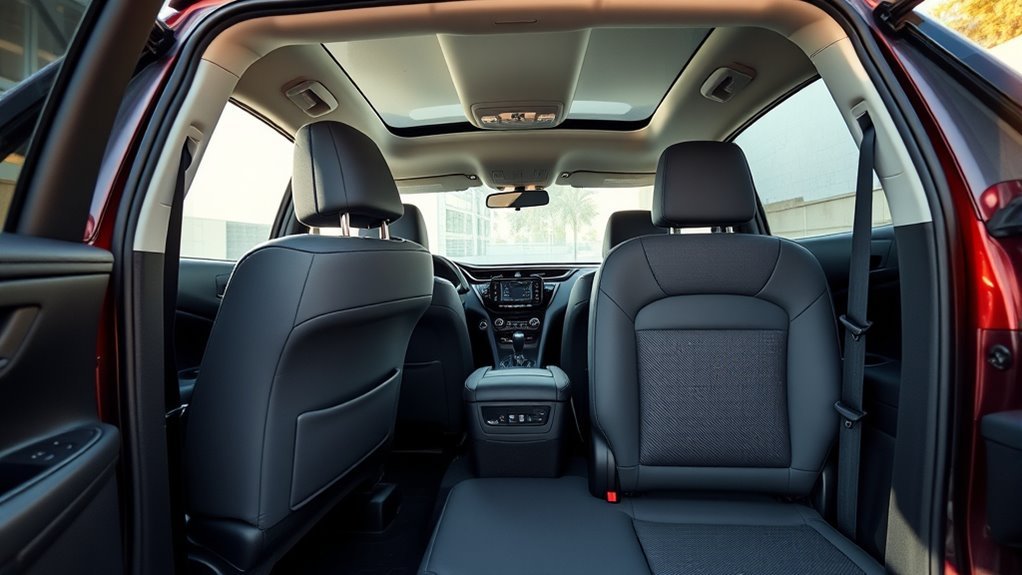
For a compact SUV, the RAV4 gives you a useful mix of passenger room and cargo space. Toyota’s 2026 RAV4 Sales Consultant Guide lists 41.0 inches of front legroom, 37.8 inches of rear legroom, and 70.4 cubic feet of maximum cargo space for the standard hybrid. Toyota’s official RAV4 page lists up to 37.8 cubic feet behind the second row. The front row gives useful stretch space, while the rear row is more comfortable for two adults than three on a long trip.
Powertrain choice changes cargo capacity more than seating dimensions. Standard hybrid models provide 37.8 cubic feet behind the second row and 70.4 cubic feet with the rear seats folded. Edmunds’ 2026 RAV4 Plug-in Hybrid specifications list 33.5 cubic feet behind the second row and 63.5 cubic feet maximum.
| 2026 RAV4 Powertrain | Cargo Behind Second Row | Maximum Cargo |
|---|---|---|
| Standard Hybrid | 37.8 cu ft | 70.4 cu ft |
| Plug-in Hybrid | 33.5 cu ft | 63.5 cu ft |
The cabin also gives you door bins, center-console storage, a 60/40 split rear seat, and a flexible cargo floor. These features matter because total cubic feet do not show how easily small items, long loads, or mixed passenger-and-cargo trips fit.
Front & Rear Dimensions: Headroom, Legroom, Shoulder, Hip
Toyota’s 2026 U.S. sales guide lists 37.9 inches of front headroom and 39.5 inches of rear headroom with a moonroof. Front legroom is 41.0 inches, with 57.0 inches of shoulder room and 55.3 inches of hip room.
Rear legroom is 37.8 inches, rear shoulder room is 56.4 inches, and rear hip room is 49.6 inches. Those figures make the RAV4 practical for four adults, but the 49.6-inch rear hip measurement explains why three adults feel tighter across the bench. Tall shoppers should also check right-knee clearance beside the center console because published legroom measures fore-and-aft space, not lateral clearance.
| Row | Headroom With Moonroof (in) | Legroom (in) | Shoulder Room (in) | Hip Room (in) |
|---|---|---|---|---|
| Front | 37.9 | 41.0 | 57.0 | 55.3 |
| Rear | 39.5 | 37.8 | 56.4 | 49.6 |
Passenger Volume & Seating: Comfort and Cargo Tradeoffs
The RAV4 seats five, but its most comfortable arrangement is four adults. Car and Driver currently lists 98.9 cubic feet of passenger volume for its selected 2026 RAV4 specification. Toyota’s U.S. sales guide does not provide one universal passenger-volume figure, so compare the same trim, roof, and powertrain when another source shows a different total.
| Area | Key Number | What It Means for You |
|---|---|---|
| Front legroom | 41.0 in | Good stretch space for the driver and front passenger |
| Rear legroom | 37.8 in | Useful for adults, better for two than three |
| Passenger volume | 98.9 cu ft* | A selected published configuration, not a universal figure for every trim |
*Passenger-volume figures can vary by source configuration. Legroom, headroom, shoulder room, and hip room are better for direct fit comparisons.
Think about seating and cargo together. Keep both rear seatbacks upright when you carry four or five people, then use soft bags or small bins in the cargo area. Fold the narrower side of the 60/40 rear seat when you need space for one long item while preserving a rear passenger position.
Comfort Features by Trim: LE Through Limited
The dimensions above stay close across the standard 2026 RAV4 hybrid lineup, but trim level changes seat material, heating, ventilation, charging, liftgate features, and how the cabin feels day to day. Toyota’s 2026 lineup includes standard hybrid models and separate plug-in hybrid models, so the table below focuses on the standard hybrid trims most shoppers compare first.
| Trim | Base MSRP* | Comfort & Convenience Highlights |
|---|---|---|
| LE | $31,900 | Fabric-trimmed seats with an 8-way manual driver’s seat with lumbar support and a 6-way manual front passenger seat, three USB-C ports, 12.3-in. digital gauge cluster, 10.5-in. Toyota Audio Multimedia, push-button start, and cargo-area tonneau cover |
| SE | $34,700 | Fabric sport seats, power 8-way driver’s seat, heated front seats, blue interior stitching, leather-wrapped steering wheel, and five USB-C ports |
| XLE Premium | $36,100 | SofTex-trimmed seats, power 8-way driver’s seat, heated front seats, power liftgate, leather-wrapped steering wheel, and one Qi-compatible wireless phone charger |
| Woodland | $39,900 | SofTex-trimmed seats, power 8-way driver’s seat, manual 6-way front passenger seat, heated front seats and steering wheel, all-weather floor and cargo mats, rear cargo 120V/1500W outlet, standard AWD, and all-terrain tires |
| XSE | $41,300 | Ultrasuede and SofTex sport-trimmed seats, heated and ventilated front seats, power front passenger seat, 12.9-in. touchscreen, hands-free power liftgate, and power tilt/slide moonroof |
| Limited | $43,300 | Panoramic glass roof, 9-speaker JBL Premium Audio, heated and ventilated front seats, heated rear outboard seats, heated steering wheel, digital rearview mirror, and two Qi-compatible wireless phone chargers |
*Base MSRP figures shown exclude dealer processing, handling, destination, taxes, title, license, and region-specific fees. Check the window sticker for the exact vehicle you are comparing.
Heated front seats first show up on SE, while SofTex seating starts at XLE Premium in the core lineup and is also standard on Woodland. Ventilated front seats wait until XSE, and heated rear outboard seats are Limited-only. Choose SE when seat heat is the main requirement. Choose XLE Premium for SofTex and a power liftgate, Woodland for rugged equipment plus a cargo-area power outlet, XSE for ventilation, and Limited for rear-seat heat.
Shopping tip: Sit in the exact trim you plan to buy, especially if it has a moonroof or panoramic glass roof. Published headroom figures are helpful, but seat height, roof hardware, and your driving posture can change how much space you feel.
[Products Worth Considering]

This custom-fit center console organizer tray adds practical storage to the Toyota RAV4 2026, helping keep small essentials neatly separated and easy to reach. Designed with precise 3D scanning for a snug fit, it creates extra usable space in the armrest area while reducing clutter and rattling. The durable insert installs easily without tools and includes a non-slip mat to help keep items in place.

This custom-fit center console armrest cover is designed to refresh and protect the lid on compatible Toyota RAV4 models and trims. Made to follow the console curvature for a smooth, wrinkle-free look, it helps guard against scratches, spills, dirt, and everyday wear while improving the appearance of an aging armrest. Installation is simple and the cover is tailored for a snug, secure fit across supported RAV4, RAV4 Hybrid, and RAV4 Prime vehicles.

These custom-fit seat covers are tailored for Toyota RAV4 gasoline models from 2019 through 2025, giving your SUV a refined interior upgrade with a precise OEM-inspired look. The spill-resistant faux leather surface helps protect against daily messes, scuffs, and pet wear while staying easy to clean, and the reinforced airbag-compatible stitching supports safety without sacrificing style. A secure strap, zipper, and Velcro installation system helps keep the covers in place for a stable, comfortable fit in all seasons.
Child Seat Fit and LATCH Access
Child seat anchors and rear door child safety locks are standard across the 2026 RAV4 lineup. Cars.com’s April 2026 hands-on car-seat check found two sets of lower LATCH anchors in the outboard rear positions. The anchors sit snug against the cushions, so thin, hook-style connectors were harder to attach than rigid connectors. Three top-tether anchors are marked but recessed in the seatback upholstery.
Cars.com found ample room for two child seats, but its three-across test did not fit. The infant and rear-facing convertible seats installed successfully, although the 5-foot-8-inch front passenger wanted more legroom. The booster also fit after the head restraint was removed, but its short buckle stalks may be difficult for a child to reach independently. Test your exact rear-facing seat behind the front passenger before buying.
Lower LATCH anchors also have weight limits. NHTSA says to follow the car-seat label and both manuals. If a seat has no lower-anchor limit label, calculate the maximum child weight by subtracting the car seat’s weight from 65 pounds. Once the limit is reached, install the seat with the vehicle belt and continue using the top tether for a forward-facing seat when both manufacturers allow it.
RAV4 Cargo Measurements: Seats Up vs. Folded
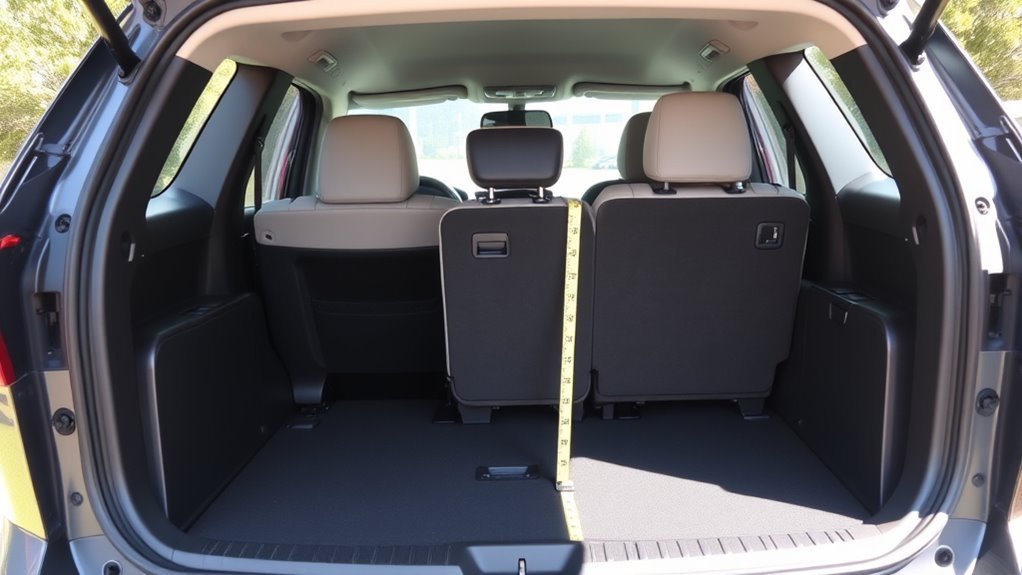
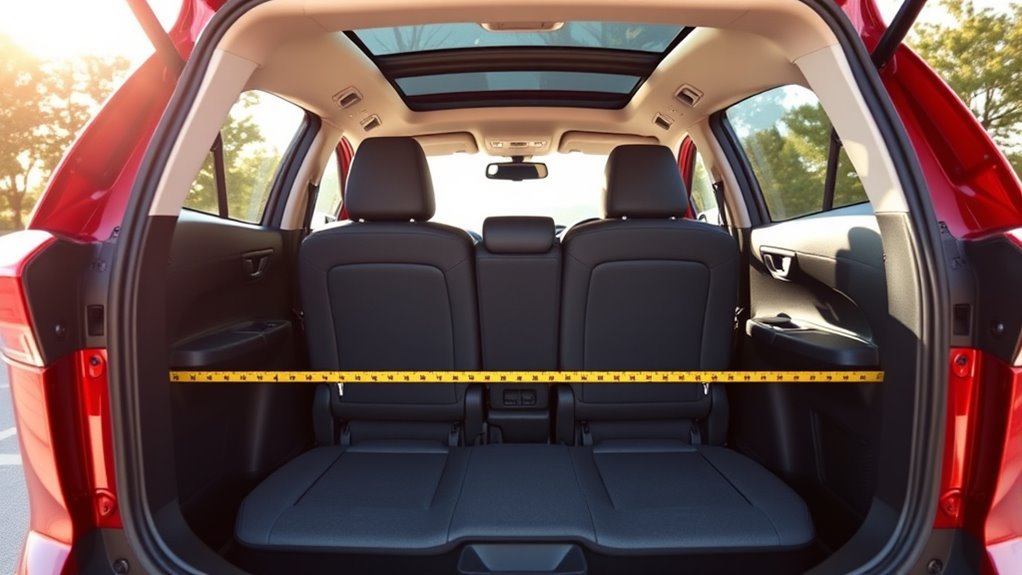
A standard 2026 RAV4 Hybrid provides 37.8 cubic feet behind the second row and 70.4 cubic feet behind the first row with the rear seats folded. The 2026 RAV4 Plug-in Hybrid provides less room at about 33.5 and 63.5 cubic feet. The outgoing 2025 RAV4 was commonly listed at 37.5 to 37.6 cubic feet behind the rear seats and 69.8 cubic feet maximum.
All versions use a 60/40 split-folding rear seat, so you can carry one long item while retaining one rear passenger position. Before buying for a stroller, wheelchair, dog crate, bicycle, or flat-pack furniture, measure the item’s height and width as well as its length. Cubic-foot volume does not reveal the hatch-opening shape or wheel-well clearance.
Seats Up Cargo Volume
With the rear seats up, the RAV4 gives you enough cargo room for groceries, backpacks, sports gear, luggage, and small storage bins. The low cargo floor helps you lift heavier items with less strain. Soft bags work better than hard bins when you need to fill odd corners near the wheel wells.
Place heavier items near the rear seatbacks. This helps keep weight forward and reduces load movement. Use tie-down points when you carry loose or heavy items.
Folded Seat Capacity
When you fold the RAV4’s 60/40 rear seats, you get a longer and flatter cargo area. Edmunds and Car and Driver list about 70.4 cubic feet behind the first row. This space works well for bulky boxes, camping gear, small furniture, or larger tools.
Fold only one seatback when you need both cargo length and a rear passenger spot. Fold both sides when load length matters more than passenger space. Measure tall or wide items before loading because the cargo opening can matter as much as total volume.
| Configuration | Standard Hybrid / Plug-in Hybrid | Best Use |
|---|---|---|
| Rear seats up | 37.8 / 33.5 cu ft | Daily cargo, groceries, luggage, small gear |
| Rear seats folded | 70.4 / 63.5 cu ft | Long items, bulky boxes, travel gear |
Loading Dimensions & Tips
Good loading habits help you use the RAV4 cargo area more safely. Put heavy items low and close to the seatbacks. Keep loose items restrained so they don’t slide during braking or turning.
Use small bins, cargo blocks, straps, or soft organizers to divide the load area. Fold the 40 percent seatback for narrow long items, and fold the 60 percent side when you need more width. Keep your rearview line clear when you stack cargo high. For physical opening and gear-fit details, see the site’s RAV4 cargo-area measurement guide and RAV4 cargo-opening dimensions guide.
Warning: Cubic-foot figures describe volume, not weight capacity. Every RAV4 has its own maximum payload rating, which includes all passengers and everything you load. That rating is printed on the sticker inside the driver’s door jamb. Dense cargo like tools, water, or building materials can hit that weight limit long before the space runs out, and doing so affects braking distance and handling. Check the door-jamb rating before loading heavy cargo, especially with a full load of passengers.
How the RAV4 Compares to Rival Compact SUVs
Numbers in isolation are hard to judge, so here’s how the 2026 RAV4 stacks up against three close compact SUV rivals on the measurements that matter most for passengers and cargo. Because the 2026 RAV4 standard model is hybrid-only, the CR-V row below uses CR-V Hybrid cargo figures. Gas CR-V trims offer more cargo space, at 39.3 cubic feet behind the second row and 76.5 cubic feet maximum.
| Model | Front Legroom | Rear Legroom | Cargo (Seats Up) | Max Cargo (Seats Folded) |
|---|---|---|---|---|
| Toyota RAV4 (2026 Hybrid) | 41.0 in | 37.8 in | 37.8 cu ft | 70.4 cu ft |
| Honda CR-V (2026 Hybrid) | 41.3 in | 41.0 in | 36.3 cu ft | 71.8 cu ft |
| Mazda CX-5 (2026) | 41.7 in | 39.9 in | 33.7 cu ft | 66.5 cu ft |
| Nissan Rogue (2026.5) | 43.3 in | 38.5 in | 36.3 cu ft | 74.1 cu ft |
The Honda CR-V Hybrid leads the RAV4 on rear legroom and maximum cargo space, though the RAV4 offers slightly more seats-up cargo space than the CR-V Hybrid. The redesigned Mazda CX-5 edges ahead on legroom in both rows, but the RAV4 gives you more cargo space behind the second row and with the seats folded. The Nissan Rogue has the strongest listed front legroom here and the most maximum cargo space, while the RAV4 remains competitive for everyday cargo with the rear seats up.
Manufacturer cargo figures and physical test measurements use different methods. Cars.com measured a 2026 RAV4 Limited at 19.4 cubic feet when counting only to the top of the rear seatback. That result does not contradict Toyota’s 37.8-cubic-foot rating because the measurement boundaries differ. Use manufacturer figures for same-standard comparisons, then inspect the cargo opening, floor height, and wheel-well shape for your actual gear.
[Products Worth Considering]
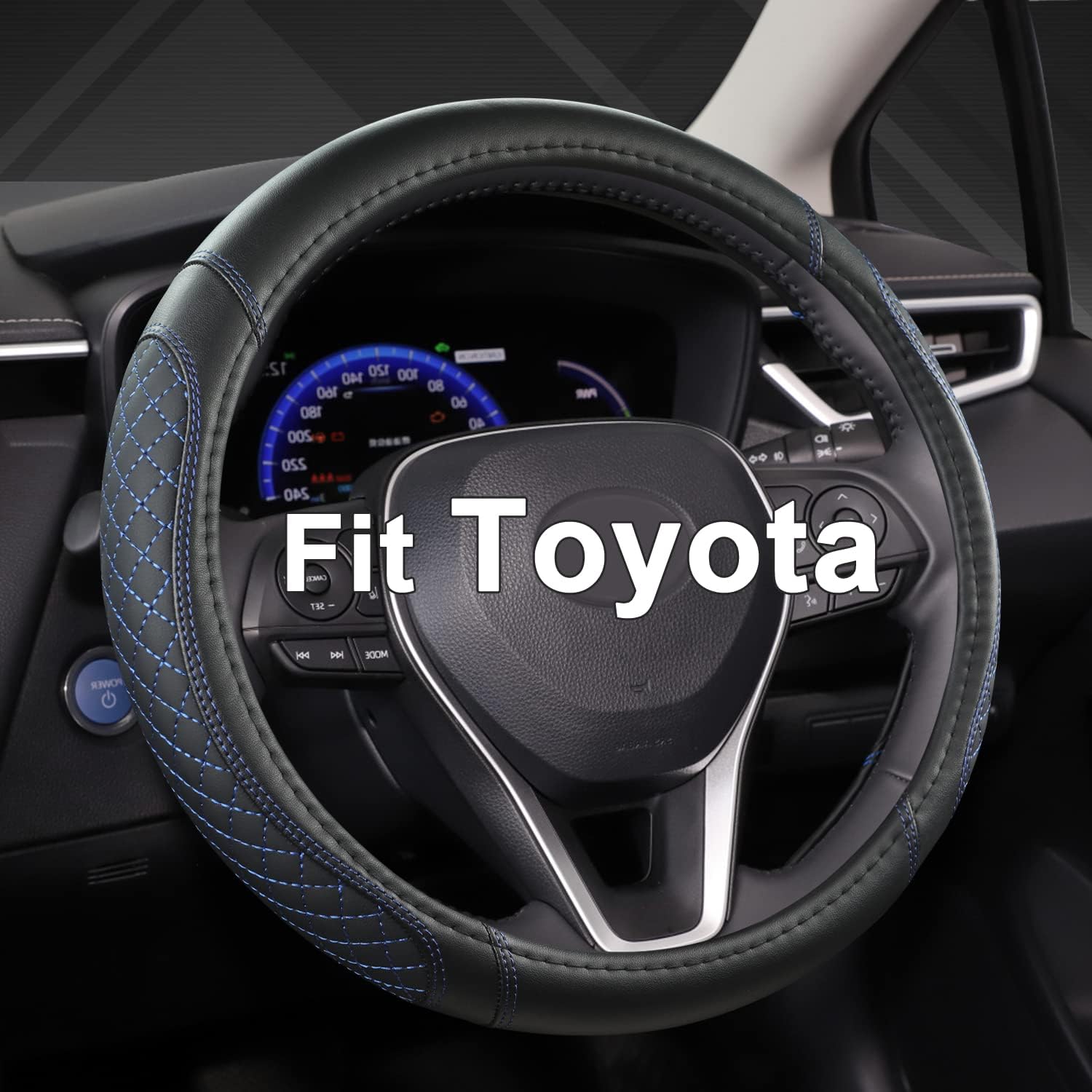
This custom-fit steering wheel cover is designed for select Toyota models and sized for standard steering wheels to help improve grip and comfort while driving. Made with soft microfiber leather and a non-slip rubber inner ring, it adds control, protects your wheel, and brings a stylish diamond-quilted look to your car interior. Installation is simple and tool-free, making it an easy upgrade for everyday driving.

This windshield sun shade is designed to fit Toyota RAV4 models from 2013 to 2018 and help keep the cabin cooler after long hours in the sun. Its triple-laminate construction and silver surface block most UV rays to help protect the dashboard, seats, and steering wheel from sun damage. The accordion-folding design makes it easy to set up, store, and carry with the included bag.

PREMIUM CAR TRUNK ORGANIZER: The Knodel Trunk Organizer is best for all kinds of vehicles. Due to its large storage capacity, it keeps everything organized while giving you a clean and tidy car. It can also be an ideal storage basket for household usage. Its reinforced handles make it more secure when you are carrying.
Bottom Line: Which RAV4 Interior Best Fits You?
The 2026 Toyota RAV4 interior is a strong fit for shoppers who want useful front-seat space, flexible standard-hybrid cargo capacity, and a five-seat cabin. Choose SE for heated front seats, XLE Premium for SofTex and a power liftgate, Woodland for rugged equipment and a cargo-area outlet, XSE for ventilated front seats, or Limited for heated rear outboard seats.
Choose the standard hybrid when maximum cargo room matters; the plug-in hybrid gives up about 4.3 cubic feet behind the second row and 6.9 cubic feet with the seats folded. Before buying, check your right-knee clearance, your tallest rear passenger’s legroom, and your exact child-seat or cargo setup. Cars.com’s tests found space for two child seats, not three across.
[Products Worth Considering]

【Accessories for RAV4】The CARTIST trunk mat designed for Toyota RAV4 2019 2020 2021 2022 2023 2024 2025, Hybrid and Non-Hybrid all models. If your vehicle has a JBL speaker in the rear cargo area, please tuck it under the speaker panel.

Large Size & Universal Fit: Featuring expansive 53" x 79" dimensions, this foldable pet cargo cover is designed for a custom fit in full-size SUVs, mid-size SUVs, compact crossovers, minivans, and sedans. Ensure your pet has ample room to sit or lie down comfortably. Please measure your vehicle's cargo area before ordering.
RAV4 Interior FAQ
Is the 2026 Toyota RAV4 roomy inside?
Yes. The 2026 RAV4 has 41.0 inches of front legroom and 37.8 inches of rear legroom. Toyota lists 37.9 inches of front headroom and 39.5 inches of rear headroom with a moonroof. Four adults fit more comfortably than five because rear hip room is 49.6 inches.
How much cargo space does the 2026 RAV4 have?
The standard 2026 RAV4 Hybrid offers 37.8 cubic feet behind the second row and 70.4 cubic feet with the rear seats folded. The RAV4 Plug-in Hybrid offers less space at about 33.5 and 63.5 cubic feet. Real-world usable space depends on the cargo opening, wheel wells, and measurement method.
Does the 2026 RAV4 have heated rear seats?
Yes, but only on the Limited trim in the standard hybrid lineup. Toyota lists heated rear outboard seats as part of the Limited interior equipment.
Can the 2026 RAV4 fit three car seats?
Cars.com’s 2026 RAV4 tests found room for two child seats but not three across. The rear bench has two sets of lower LATCH anchors and three top-tether anchors. Connector style also matters because thin hook-style connectors were harder to attach than rigid connectors.
Which 2026 RAV4 trim has ventilated seats?
Ventilated front seats start at XSE and continue on Limited. Heated front seats start lower in the lineup, at SE.
Is the Honda CR-V roomier than the RAV4?
The CR-V Hybrid gives you more rear legroom and slightly more maximum cargo volume than the RAV4 Hybrid, but the RAV4 has a small edge in seats-up cargo volume against the CR-V Hybrid. Gas CR-V trims offer more cargo space than the hybrid version, so compare the exact powertrain you plan to buy.
Sources
Sources last checked: July 31, 2026.
- Toyota — 2026 RAV4 — official trim lineup, cargo capacity, standard/available features, and electrified lineup details
- Toyota — 2026 RAV4 Sales Consultant Guide — official U.S. interior dimensions and trim equipment
- Toyota Newsroom — 2026 RAV4 Arrives This Winter — official lineup, powertrain, and feature details
- Edmunds — 2026 Toyota RAV4 Specs & Features — standard-hybrid interior dimensions and cargo volume
- Edmunds — 2026 Toyota RAV4 Plug-in Hybrid Specs & Features — plug-in hybrid cargo-volume figures
- Car and Driver — 2026 Toyota RAV4 Specs — passenger volume, legroom, and cargo figures
- Cars.com — Car Seat Check: 2026 Toyota RAV4 — LATCH and child-seat installation findings
- NHTSA — Car Seats and Booster Seats — lower-anchor weight-limit guidance
- Cars.com — How Much Cargo Space Does the 2026 Toyota RAV4 Have? — real-world cargo measurement methodology
- Honda — 2026 CR-V Specifications and Features — CR-V legroom and cargo figures
- Edmunds — 2026 Mazda CX-5 Specs & Features — CX-5 legroom and cargo figures
- Nissan USA — 2026.5 Rogue Features — Rogue legroom and cargo figures