Your Toyota RAV4 tire sidewall is more than a string of random letters and numbers. It tells you the tire size, construction, load capacity, speed category, DOT Tire Identification Number, winter markings, and quality grades. Reading those markings helps you buy the right replacement tires, avoid unsafe mismatches, and understand what your tires are built to handle.
Quick Answer
To read RAV4 tire markings, start with the size code, such as 225/65R17 102H. The numbers show width, sidewall height, wheel diameter, load index, and speed rating. Then check the DOT code for tire age, UTQG ratings for treadwear and traction, and winter symbols for snow suitability.
Key Takeaways
- Use the driver-side door-jamb tire placard and your Toyota owner’s manual as the final authority for your RAV4’s correct tire size and cold tire pressure.
- A code such as 225/65R17 102H tells you the tire width, aspect ratio, radial construction, wheel diameter, load index, and speed rating.
- The DOT Tire Identification Number helps identify the tire and includes the manufacturing week and year in the final four digits.
- UTQG treadwear, traction, and temperature grades are useful comparison tools, but they do not replace matching the correct size, load rating, and speed rating.
- For winter driving, a Three-Peak Mountain Snowflake symbol is a stronger snow-traction indicator than M+S alone.
At a Glance
| Time Required | 5–10 minutes |
| Difficulty | Easy |
| Tools Needed | Flashlight, tire pressure gauge, and your RAV4 tire placard or owner’s manual |
| Cost | Free, unless inspection shows you need replacement tires |
How to Read Tire Markings on Your RAV4 for Better Safety
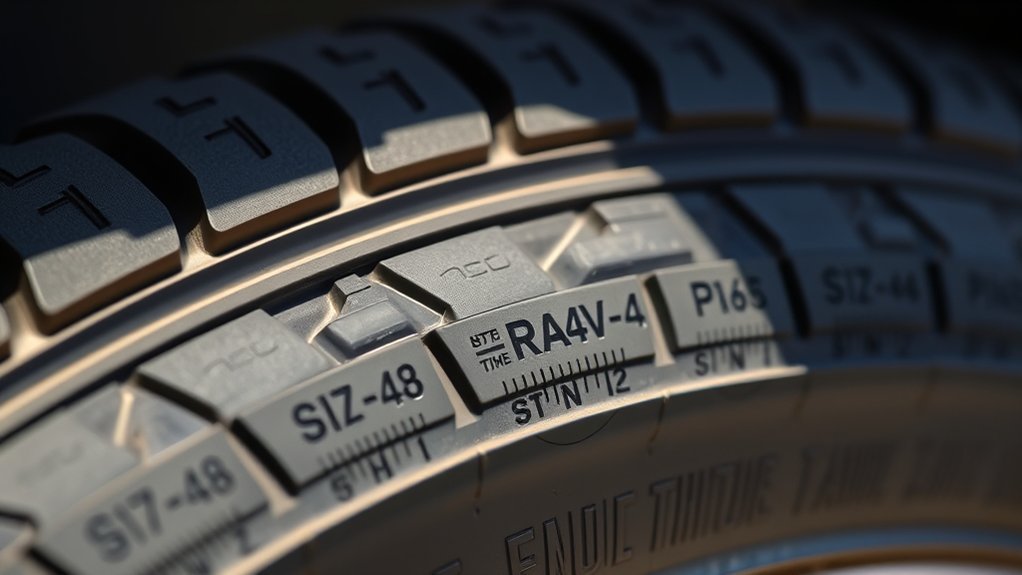
The safest way to decode your RAV4’s tires is to compare three places: the tire sidewall, the tire information placard on the driver-side door jamb, and the correct Toyota owner’s manual for your model year. Toyota’s owner information identifies the sidewall areas for tire size, DOT/Tire Identification Number, treadwear indicators, and tire construction details, while the placard tells you the tire size and cold inflation pressure Toyota specified for your exact vehicle configuration.
A common RAV4 sidewall format may look like 225/65R17 102H. Some tires may include a letter before the size, such as P for passenger-car type. The numbers and letters are not decoration; they affect fitment, ride, braking, load capacity, and replacement-tire safety.
Warning: Do not use the maximum PSI printed on the tire sidewall as your everyday inflation pressure. Use the cold tire pressure listed on your RAV4’s door-jamb placard unless Toyota or a qualified tire professional gives a specific approved adjustment.
Step 1: Find the Full Tire Code
Look on the outer sidewall for the largest size marking. It is usually molded into the rubber and may read something like 225/65R17 102H. If the outside sidewall does not show the full DOT code, check the inner sidewall as well; some full Tire Identification Numbers appear on only one side of the tire.
Step 2: Compare It With the RAV4 Placard
Open the driver’s door and read the tire and loading information placard. This label is the fastest way to confirm the original tire size, load information, and recommended cold PSI for your RAV4. If your current tire does not match the placard, confirm with your owner’s manual or a Toyota dealer before buying replacements.
Step 3: Read Beyond the Size
After the size code, continue reading the sidewall for the load index, speed rating, DOT code, UTQG ratings, maximum load, maximum pressure, winter symbols, and directional or outside/inside mounting instructions. These markings help you avoid mistakes such as buying the right rim size but the wrong load rating.
Key Tire Size Information: Width, Aspect Ratio, and Diameter
The tire size code explains how the tire fits the wheel and how much sidewall it has. RAV4 sizes vary by model year, trim, market, and wheel package, so treat the example below as a decoding guide rather than a universal fitment recommendation.
| Example Marking | What It Means | Why It Matters |
|---|---|---|
| P if present | Passenger-car type tire | Many RAV4 tires are passenger-type tires, but some sidewalls omit the prefix. |
| 225 | Section width in millimeters | Affects clearance, steering feel, traction, and rolling resistance. |
| 65 | Aspect ratio; sidewall height is 65% of the tire width | A lower number usually means a shorter sidewall and firmer ride. |
| R | Radial construction | Modern RAV4 tires are radial; match the construction type when replacing tires. |
| 17 | Wheel diameter in inches | Must match the wheel diameter exactly. |
| 102H | Load index and speed rating | Must meet or exceed the rating Toyota specified for your vehicle. |
For fitment, the wheel diameter is non-negotiable. A 17-inch tire belongs on a 17-inch wheel, not an 18-inch or 19-inch wheel. Width and aspect ratio also matter because changing them changes overall tire diameter, speedometer accuracy, clearance, and all-wheel-drive behavior.
Pro Tip: If you bought your RAV4 used, do not assume the tires currently installed are the factory-correct size. Always verify against the door-jamb placard and owner’s manual before replacing them.
Decoding the DOT Code for Tire Safety Compliance
The DOT marking shows that the tire was made to comply with U.S. Department of Transportation requirements. The full Tire Identification Number, often called the DOT code, is used for traceability, recalls, and tire registration. Federal tire identification rules are listed in 49 CFR § 574.5.
How to Read the Date Code
For tires made in 2000 or later, the last four digits of the DOT code show the week and year of manufacture. For example, a code ending in 1524 means the tire was made in the 15th week of 2024. This date is useful when checking older tires, spare tires, and “new” tires that may have sat in storage.
Why the DOT Code Matters
The DOT code helps you identify whether a tire is affected by a recall and when it was produced. Age alone is not the only replacement factor, but older tires deserve closer inspection for cracking, hardening, bulges, puncture repairs, uneven wear, or vibration. The National Highway Traffic Safety Administration tire safety page also recommends checking tires regularly for proper inflation, tread depth, damage, and aging concerns.
Note: A recent DOT date does not prove a tire is the right tire for your RAV4. You still need the correct size, load index, speed rating, construction, and condition.
Why Treadwear and Traction Ratings Matter
Many passenger tires sold in the United States include Uniform Tire Quality Grading, usually shown as Treadwear, Traction, and Temperature. NHTSA explains that the Uniform Tire Quality Grading System helps consumers compare treadwear, traction performance, and temperature resistance. The federal UTQG rules are also published in 49 CFR § 575.104.
Treadwear Rating Explained
The treadwear grade is a relative comparison, not a mileage promise. A tire with a higher treadwear number generally indicates longer wear in standardized testing than one with a lower number from the same broad category. Real-world life still depends on alignment, inflation pressure, road surface, rotation habits, driving style, climate, and tire design.
Importance of Traction Rating
The traction grade compares a tire’s straight-line wet traction performance under controlled test conditions. Grades include AA, A, B, and C, with AA being the highest. This does not measure every real-world factor, such as cornering, hydroplaning resistance, snow traction, or ice braking, but it is still useful when comparing tires.
Temperature Rating Explained
The temperature grade shows how well a tire resists heat buildup under test conditions. Grades include A, B, and C. Heat resistance matters because excessive heat can shorten tire life or contribute to failure, especially when tires are overloaded, underinflated, or driven at sustained high speeds.
UTQG ratings are helpful for comparison, but the correct RAV4 tire starts with Toyota’s specified size, load index, speed rating, and cold inflation pressure.
Understanding Load Index and Speed Ratings for Your Tires
The load index and speed rating usually appear immediately after the tire size. In 225/65R17 102H, the 102 is the load index and the H is the speed rating. Together, they are often called the service description.
| Rating Type | What It Means | RAV4 Replacement Rule |
|---|---|---|
| Load Index | A numeric code for the maximum load one tire can carry when properly inflated. For example, 95 corresponds to 1,521 lb, while 102 corresponds to 1,874 lb. | Match or exceed the load index Toyota specifies for your RAV4. |
| Speed Rating | A letter code for the tire’s tested speed category. Common examples include T, H, and V. | Match or exceed the original rating unless Toyota or a tire professional approves a specific winter-tire exception. |
Speed ratings are not permission to exceed posted speed limits. They indicate tire capability under controlled conditions when the tire is properly inflated, loaded, and in good condition. A lower-than-specified speed rating can change handling and heat resistance, even if you never drive near the rating’s maximum speed.
Warning: Never replace RAV4 tires with a lower load index than the vehicle requires. An under-rated tire can run hotter, wear faster, and fail under load.
[Products Worth Considering]

The JACO ElitePro Digital Tire Pressure Gauge delivers shop-grade accuracy with a clear digital readout, making it easy to maintain proper tire pressure for safer driving and better performance. Built with rugged brass and steel components, a protective guard, and a flexible air hose, it is designed for reliable use across cars, trucks, motorcycles, bikes, RVs, and trailers. The lock-on display, built-in bleeder valve, and bright backlit screen add convenience in any lighting condition.
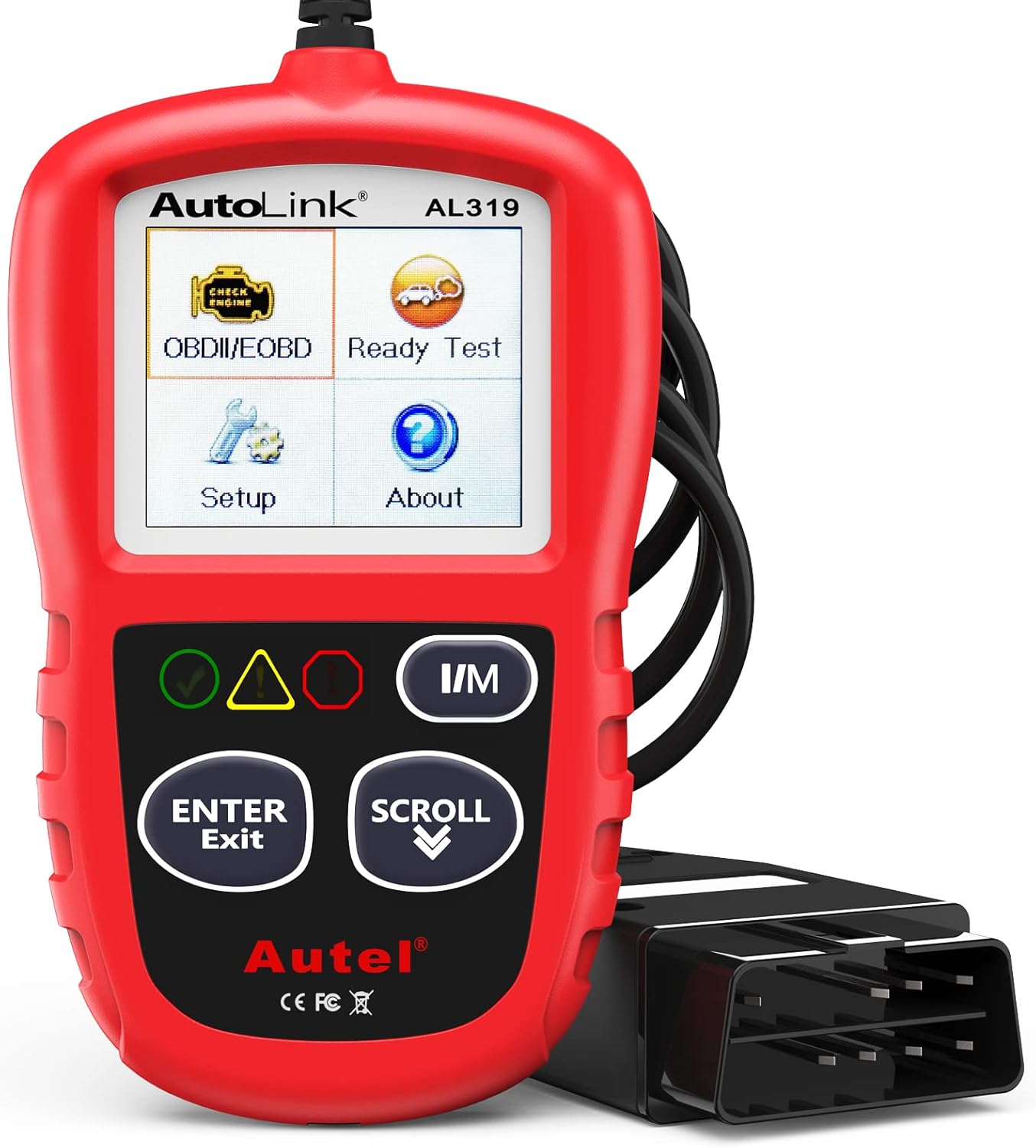
The Autel AL319 is a user-friendly OBD2 scan tool designed to help drivers quickly diagnose check engine light issues and understand vehicle fault codes. It supports reading and clearing DTCs, live data, freeze frame, I/M readiness, and vehicle information, making it a practical choice for DIYers and everyday car owners. With plug-and-play operation, a color display, built-in speaker, and broad vehicle compatibility, it delivers fast, reliable diagnostics without complicated setup.

Turn your iPhone, Android device, or Windows PC into a professional-grade diagnostic scan tool with this Bluetooth OBD2 adapter. It is designed for broad vehicle compatibility and supports popular apps for deeper diagnostics, live data, and code clearing. Built-in protections and firmware updates help keep your vehicle and scanner safe while delivering reliable performance.
Choosing Tires for Your RAV4: Passenger vs. Light Truck
Most Toyota RAV4 models are designed for passenger-type tires, not heavy light-truck tires. Passenger tires are usually better matched to the RAV4’s ride comfort, steering response, fuel economy, braking, and everyday road manners.
Light truck tires, marked with LT, are built for heavier-duty use. They can be useful on vehicles that require them, but they are not automatically better for a RAV4. LT tires may be heavier, ride firmer, affect fuel economy, require different inflation considerations, and change handling. Only use an LT tire if the size, load rating, wheel fitment, and inflation requirements are confirmed for your exact RAV4 setup.
[Products Worth Considering]

The AstroAI Portable Tire Inflator delivers fast, reliable inflation with an upgraded TrueGauge display for accurate pressure readings. Its durable metal construction, compact size, and versatile compatibility make it a practical tool for cars, bikes, motorcycles, sports balls, and inflatables. Designed for convenient storage and quick roadside use, it helps keep tires properly inflated for safer driving.

This portable tire inflator delivers fast, reliable inflation with a high-pressure pump, digital pressure gauge, and automatic shut-off for safer use. Dual power support lets you run it from the built-in battery or a 12V car outlet, while the LED light and USB output make it a practical emergency tool for roadside and outdoor situations.

What About All-Terrain Tires?
All-terrain tires can make sense for gravel roads, mild trails, camping routes, and rough jobsite access. The tradeoff is that some all-terrain tires add road noise, weight, rolling resistance, and longer wet-road stopping distances compared with touring all-season tires. For most daily-driven RAV4s, the best tire is the one that matches your actual driving conditions rather than the most aggressive-looking tread.
Winter Symbols: M+S and Three-Peak Mountain Snowflake
The M+S marking stands for mud and snow, but it is not the same as a dedicated severe-snow rating. The Three-Peak Mountain Snowflake symbol indicates the tire meets a defined snow-traction performance standard. If you regularly drive on snow-covered or icy roads, choose winter tires or all-weather tires with the Three-Peak Mountain Snowflake symbol and install them as a matching set.
Toyota’s RAV4 tire guidance also notes that when snow tires are used, they should be the same size, construction, and load capacity as the originally installed tires, and snow tires should be installed on all wheels. Always check local rules before using studded tires or chains.
Tips for Selecting the Right Replacement Tires for Your RAV4
When it is time to replace your RAV4 tires, do not shop by tire size alone. Use this checklist before ordering or approving installation.
[Products Worth Considering]

HIGH QUALITY: Marsflex tire pressure sensors include a CR2450 battery and a cutting-edge technology chip. The upgraded battery improves the operating temperature range to -40℃~+125℃, and has 5-8 years lifespan. The chip provides best signal strength, real-time reading the condition of your tire

Vehicle Specific
Replacement Tire Checklist
- Check the door-jamb placard first. Confirm the original size and cold tire pressure for your vehicle.
- Check the owner’s manual. Use the correct Toyota manual for your model year, trim, and market.
- Match the wheel diameter exactly. A 17-inch tire must go on a 17-inch wheel.
- Match or exceed the load index. Do not choose a tire with a lower load rating than specified.
- Match or exceed the speed rating. Keep the original performance category unless a qualified professional approves a suitable alternative.
- Choose the right season category. Touring all-season tires work for many drivers; winter or severe-snow-rated all-weather tires are better for regular snow and ice.
- Check the DOT date. Avoid paying new-tire prices for old stock unless you understand the age and condition.
- Replace in matching sets when possible. This is especially important for all-wheel-drive RAV4 models, where large tread-depth differences can affect driveline behavior.
- Inspect valve stems and TPMS service parts. When tires are replaced, ask the installer to inspect or service tire-pressure monitoring components as needed.
- Recheck pressure after installation. Set cold PSI to the placard value and recheck after the tires have cooled.
Pro Tip: If you are comparing two similar tires, choose the one that best fits your daily driving: quiet touring comfort, wet braking, long tread life, winter grip, light trail use, or fuel efficiency. The “best” RAV4 tire is not the same for every driver.
Common Mistakes to Avoid
| Mistake | Why It Is a Problem | Better Choice |
|---|---|---|
| Using sidewall max PSI for daily driving | It may overinflate the tire for the vehicle’s intended ride and handling. | Use the cold PSI on the RAV4 placard. |
| Buying the same size but lower load index | The tire may not be rated for the vehicle’s load needs. | Match or exceed the required load index. |
| Ignoring the DOT date | Old tires can age even if tread depth looks acceptable. | Check the final four DOT digits before buying. |
| Mixing tire types on AWD models | Different diameters or tread depths can affect driveline behavior. | Use a matching set or ask a tire professional about acceptable tread-depth limits. |
Frequently Asked Questions
What do the letters on my tire sidewall mean?
The letters identify tire type, construction, speed category, winter capability, or special features. For example, P means passenger type when present, R means radial construction, H or V can identify the speed rating, M+S means mud and snow, and DOT introduces the Tire Identification Number.
What are the different types of tire sidewalls?
Sidewalls can vary by tire category and construction. Touring tires often have flexible sidewalls for comfort, performance tires may have stiffer sidewalls for sharper handling, all-terrain tires may have reinforced or more protective sidewall designs, and some tires are marked XL or Extra Load for higher load capacity.
How can I tell if a tire is LT or P?
Look at the beginning of the size code. A tire marked P is a passenger-type tire, while a tire marked LT is a light-truck tire. Many RAV4 tires use passenger-type sizing and may not show a P prefix. Do not switch to LT tires unless the fitment and inflation requirements are confirmed for your specific RAV4.
Where is the correct tire size for my Toyota RAV4?
The best starting point is the tire and loading information placard on the driver-side door jamb. You can also confirm the tire information in the Toyota owner’s manual for your model year. The sidewall shows what is currently installed, but the placard shows what Toyota specified.
How do I read the tire date code?
Find the DOT Tire Identification Number and read the last four digits. The first two digits are the manufacturing week, and the last two digits are the manufacturing year. For example, 1524 means the tire was made during the 15th week of 2024.
Does the tire sidewall show the pressure I should use?
The sidewall usually shows maximum pressure, not the recommended everyday pressure for your RAV4. For normal driving, use the cold tire pressure on the driver-side door-jamb placard unless Toyota or a qualified tire professional gives a specific approved adjustment.
Conclusion
Reading RAV4 tire markings is one of the easiest ways to make safer tire decisions. Start with the tire size, then confirm the load index, speed rating, DOT date code, UTQG grades, and winter symbols. Most importantly, compare everything with your Toyota door-jamb placard and owner’s manual before buying replacements. When the markings match the vehicle’s requirements and the tires are properly inflated, your RAV4 can steer, brake, ride, and wear its tires the way Toyota intended.
Sources
- NHTSA Tire Safety Ratings and Awareness — supports tire safety checks, UTQG overview, treadwear, traction, and temperature rating context.
- 49 CFR § 574.5 Tire Identification Requirements — supports DOT Tire Identification Number requirements.
- 49 CFR § 575.104 Uniform Tire Quality Grading Standards — supports treadwear, traction, and temperature grading explanation.
- Toyota RAV4 Owner’s Manual: Tire Information — supports Toyota’s description of tire size, DOT/TIN, treadwear indicators, and tire construction markings.
- Toyota RAV4 Owner’s Manual: Tire Information — confirms Toyota’s RAV4 tire-marking guidance across owner manual information.