Last updated: July 31, 2026
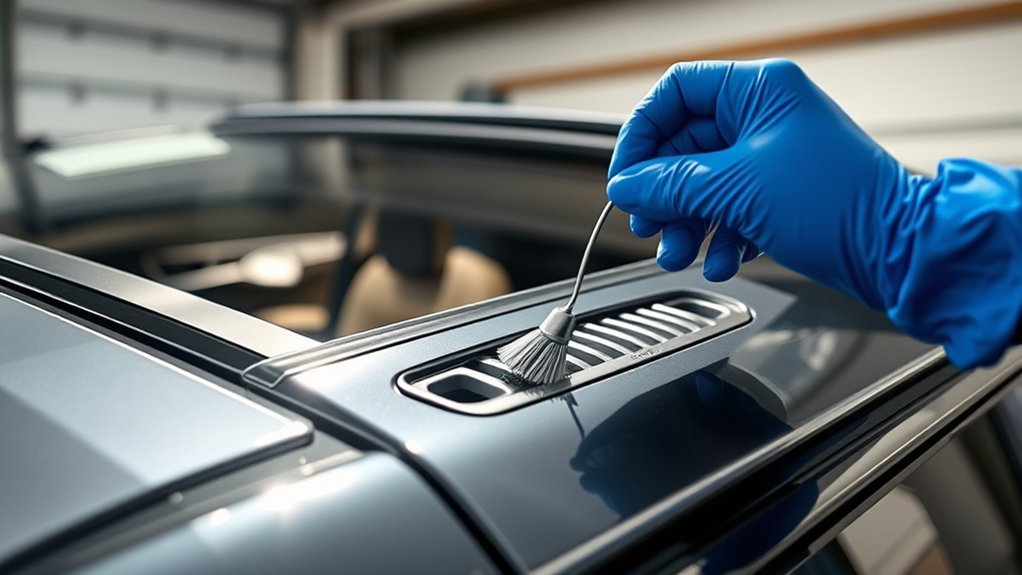
To clean Toyota RAV4 sunroof drains, open the roof, remove loose debris from the tray, test one drain at a time with a small controlled pour, and gently feed flexible nylon trimmer line into a slow drain. Stop if the line meets hard resistance or water enters the headliner, pillar trim, or carpet. A drain that still will not flow may be kinked, disconnected, or blocked deeper inside the body.
This guide covers routine drain inspection and light cleaning. For a leak that continues after the drains flow freely, see the RAV4 sunroof leak diagnosis guide to check roof rails, glass alignment, seals, the windshield area, and other water-entry points.
Quick Answer
Clean the sunroof tray first, then pour a small amount of clean water into one drain channel at a time. Normal flow should leave the tray without pooling and exit outside the vehicle. For a light restriction, use only a soft brush or flexible nylon line. Do not force sharp wire or blast high-pressure air into the tube.
What’s in This Article
- Before You Begin: Tools, Time, and Safety
- Why RAV4 Sunroof Drains Need Regular Cleaning
- Signs Your RAV4 Sunroof Drains May Be Clogged
- Where to Find RAV4 Sunroof Drain Openings
- Step-by-Step Cleaning Process for Sunroof Drains
- Common Debris That Blocks Sunroof Drains
- How Often to Maintain RAV4 Sunroof Drains
- How to Dry the Interior After a Sunroof Leak
- When to Get Professional Help
- Frequently Asked Questions
Key Takeaways
- Clean the tray before debris can wash into a drain opening.
- Test one drain at a time so you can identify the slow side.
- Use flexible nylon line instead of sharp wire or forceful air.
- Do not assume every roof leak is a clogged sunroof drain.
- Stop DIY testing if water reaches trim, airbags, wiring, or carpet padding.
Before You Begin: Tools, Time, and Safety
Estimated time: About 20 to 30 minutes for inspection and light cleaning of accessible drains. A deep blockage can take longer because a technician may need to remove trim and trace the hose.
You will need a small squeeze bottle or cup of clean water, a soft detailing brush, microfiber towels, a flashlight, and flexible nylon trimmer line with a smooth, blunt end. A narrow vacuum nozzle can help remove loose debris from the tray before you add water.
Open the roof only far enough to reach the tray. Then switch the ignition off, keep the key away from children, and keep hands, clothing, and tools clear of the moving glass and sunshade. Toyota’s RAV4 owner guidance warns about pinch injuries and advises removing foreign objects from around the roof opening.
Warning: Do not use a coat hanger, screwdriver, stiff metal wire, or a drill-powered cleaning line. Do not seal an air nozzle against the drain and apply high pressure. These methods can puncture a tube, push debris deeper, or separate a hose behind the trim.
[Products Worth Considering]

This flexible magnetic grabber tool helps retrieve lost or stuck items from narrow, hard-to-reach spaces with a 4-claw gripper and bendable cable. It is ideal for automotive repairs, drain cleaning, bathroom and kitchen use, and other small-space recovery tasks. The spring-loaded handle offers simple one-handed operation for efficient pickup without disassembly.

This three-piece windshield wiper set is designed for compatible Toyota RAV4 and Highlander models to help deliver clear visibility in everyday driving. The natural rubber blades feature a graphite-treated surface for quiet, smooth wiping performance and reliable weather resistance. Installation is quick and tool-free, making it easy to replace worn blades on the front and rear of your vehicle.

This car interior detailing brush is designed to gently remove dust from vents, dashboards, consoles, and other hard-to-reach areas without scratching surfaces. Its soft bristles and comfortable grip make routine interior cleaning easier, while the compact size allows convenient storage in your glove box. It also works well for household cleaning tasks like keyboards, fans, and window tracks.
Why RAV4 Sunroof Drains Need Regular Cleaning
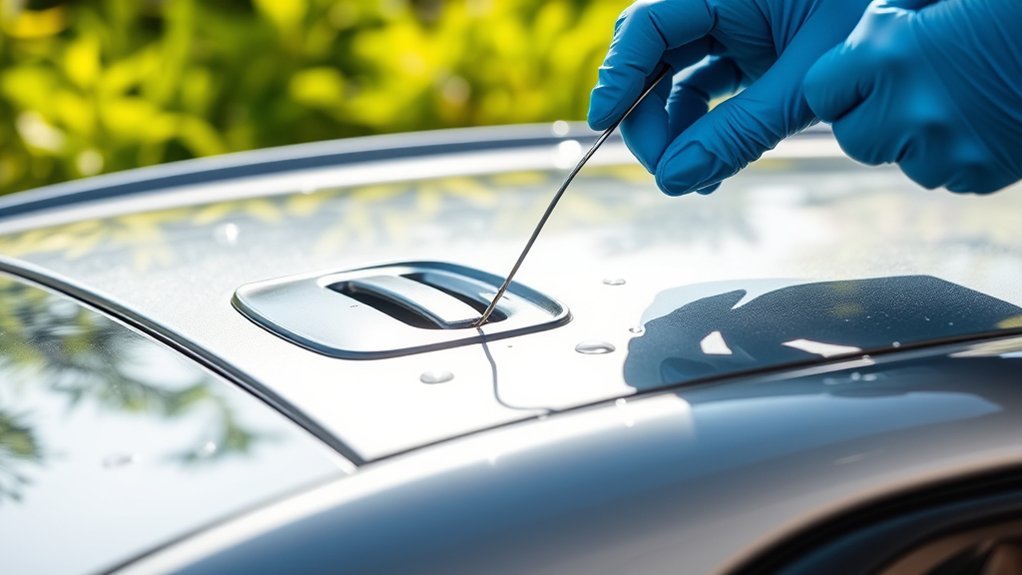
The outer sunroof or moon-roof seal sheds most water, but the tray and drain tubes manage water that reaches the channel around the glass. When leaves, pollen, grit, or mud restrict a drain, the tray can fill faster than the tube can empty.
Overflow may wet the headliner, run down a pillar, soak the carpet padding, or create a musty smell. A disconnected or kinked tube can cause similar symptoms even when the opening looks clean.
Check the tray more often if the RAV4 is parked under trees, driven on dusty roads, or exposed to heavy pollen. Removing debris from the tray is safer and easier than clearing material after it has entered a tube.
Signs Your RAV4 Sunroof Drains May Be Clogged
A clogged drain usually shows a repeatable pattern: water pools in one corner of the tray, that side drains slower than the other, or fresh moisture appears near the matching pillar or footwell during a controlled test.
Foggy interior glass, a damp smell, water stains, wet carpet edges, or moisture near the overhead console can confirm that water is trapped inside. These signs do not prove that the sunroof drain is the source, so compare the symptoms before taking anything apart.
Does Water Pool in the Sunroof Tray?
Check each accessible corner for standing water, packed debris, or a drain opening hidden by mud. If one side remains wet while the other empties, focus on the slow side.
If water appears in the headliner or pillar as soon as you pour it into the tray, stop. An immediate cabin leak can point to a loose or disconnected hose rather than a simple opening-level clog.
Do Foggy Windows or Wet Carpet Point to a Drain Clog?
Foggy windows after rain can indicate trapped cabin moisture. Wet floor mats, damp carpet padding, a musty odor, or stained headliner fabric may come from a roof leak, but the source can also be the roof rails, windshield, door seals, cowl area, air-conditioning drain, or a body seam.
| What You Observe | Most Likely Next Check | DIY or Professional? |
|---|---|---|
| Debris covering a tray corner | Brush and vacuum the tray, then retest | DIY |
| One side pools while the other drains | Gently clear the slow drain with nylon line | DIY if no cabin water appears |
| Water enters a pillar or headliner immediately | Disconnected, kinked, or damaged drain hose | Professional inspection |
| All drains flow but the cabin still gets wet | Roof rail, glass fit, seal, windshield, or body leak | Leak diagnosis |
Where to Find RAV4 Sunroof Drain Openings
RAV4 roof designs vary by model year, trim, and whether the vehicle has a standard moon roof or panoramic moon roof. Drain openings are generally located in the tray near the corners, but not every opening is equally visible or reachable from above.
Open the sunroof and use a flashlight to inspect the front corners first. Move loose debris away from the opening before testing. Do not pry seals, remove the glass, or pull pillar trim to search for a hose.
[Products Worth Considering]

This ANRDDO wiper blade set is designed as a direct replacement for compatible Toyota RAV4 and Mazda 5 models, delivering reliable front and rear windshield coverage. The precision-tensioned springs and asymmetrical spoiler help maintain even pressure for a cleaner wipe, while the rubber compound is engineered for smooth, quiet performance in all seasons. It installs easily with U/J hook arms for a convenient fit and dependable visibility.

This wheel alignment tool makes it easy to check and adjust toe-in and toe-out at home for better handling, stability, and more even tire wear. Designed for one-person use, it includes tape-measure slots for simple setup and accurate measurements without extra help. Its stainless steel construction and broad vehicle compatibility make it a practical addition to any DIY garage.

This AUTOBOO windshield wiper blade set is designed to fit Toyota RAV4 models from 2013 to 2018 with an OE-style replacement fit. It includes front and rear blades for clear visibility, quiet operation, and dependable all-weather performance, while the easy J/H arm installation helps make replacement quick and simple.
Where Do the Front and Rear Drain Tubes Run?
Front drain tubes generally route down the windshield-pillar area toward the lower body. Rear tubes route toward the rear pillars or body outlets. The exact exit location can vary, so watch the lower body and underbody on the same side rather than expecting one universal drip point.
Do not remove pillar trim unless you are trained to work around clips, wiring, and curtain airbags. A technician can trace the tube, confirm its connection, and inspect hidden moisture without damaging safety components.
How Can You Test a RAV4 Sunroof Drain?
Use these checks before deeper cleaning:
| Inspection Method | What You May See | What to Do Next |
|---|---|---|
| Visual Inspection | Leaves, grit, or mud around a drain | Remove loose debris before adding water |
| Controlled Water Test | Water pools or drains slower on one side | Clear only the slow side, then retest |
| Cabin Check | Fresh moisture at the headliner, pillar, or carpet | Stop the test and arrange leak diagnosis |
Step-by-Step Cleaning Process for Sunroof Drains
Work slowly and test one drain at a time. Small water amounts help identify the weak side without flooding the tray.
- Park and prepare. Park the RAV4 on level ground where you can see water beneath the vehicle. Open the roof, switch the ignition off, and place towels near the headliner and carpet.
- Clean the tray. Brush or vacuum leaves, pine needles, pollen, grit, and mud from the channel. Do not wash loose debris into the holes.
- Locate one drain. Use a flashlight to identify an accessible corner opening. Do not pry plastic trim or rubber seals.
- Test with water. Use a squeeze bottle to add a small, controlled stream to that corner. Pause and watch the tray, cabin, lower body, and underbody.
- Clear a light restriction. Feed flexible nylon trimmer line into the opening by hand. Turn it gently as it follows the tube. Stop if it catches, kinks, or meets hard resistance.
- Retest the same drain. Add another small amount of water. The tray should empty without pooling, and no fresh moisture should appear inside.
- Repeat on the other accessible drains. Test each side separately so you know which drain produced each result.
- Verify the repair. Dry the tray, close the roof, and check the headliner, pillars, carpet edges, and floor mats after the next rain or car wash.
If water backs up or enters the cabin, stop adding water. More testing can increase damage when a hose is kinked, disconnected, or blocked beyond the reach of a safe hand tool.
[Products Worth Considering]

The OEMTOOLS coolant vacuum refill kit helps quickly refill a vehicle’s cooling system while removing trapped air that can lead to overheating and engine damage. It also performs vacuum leak tests to help confirm system integrity and reduce the chance of repeat repairs. With multiple bushings, adapters, and a tapered cone seal, it is designed for flexible use on many radiator and coolant bottle necks.
This replacement windshield wiper blade set is designed for Toyota RAV4 models from 2006 to 2012, offering a complete front and rear fit for dependable all-weather visibility. The premium rubber blades help deliver streak-free, quiet wiping while the aerodynamic design reduces wind lift and noise for smoother performance. Built for easy installation and long service life, it is a convenient upgrade for restoring clear driving vision.

Designed for Toyota RAV4 models from 2013 through 2018, this three-piece windshield wiper set delivers clear, quiet performance for dependable visibility in changing weather. The precision-fit blades provide streak-free wiping, simple installation, and durable all-season use with reduced wind noise and consistent pressure across the windshield.
Common Debris That Blocks Sunroof Drains
Leaves, pine needles, seed pods, pollen clumps, dust, grit, and mud are common sunroof-drain obstructions. Fine organic material can mix with water and form a paste that hides the opening or settles at a bend in the tube.
Clean the tray during regular washes, especially after parking under trees or after a dusty trip. Use a brush or vacuum first. Spraying the tray before removing loose material can push a preventable clog into the drain.
How Often to Maintain RAV4 Sunroof Drains
 maintenance tips” height=”100%” />
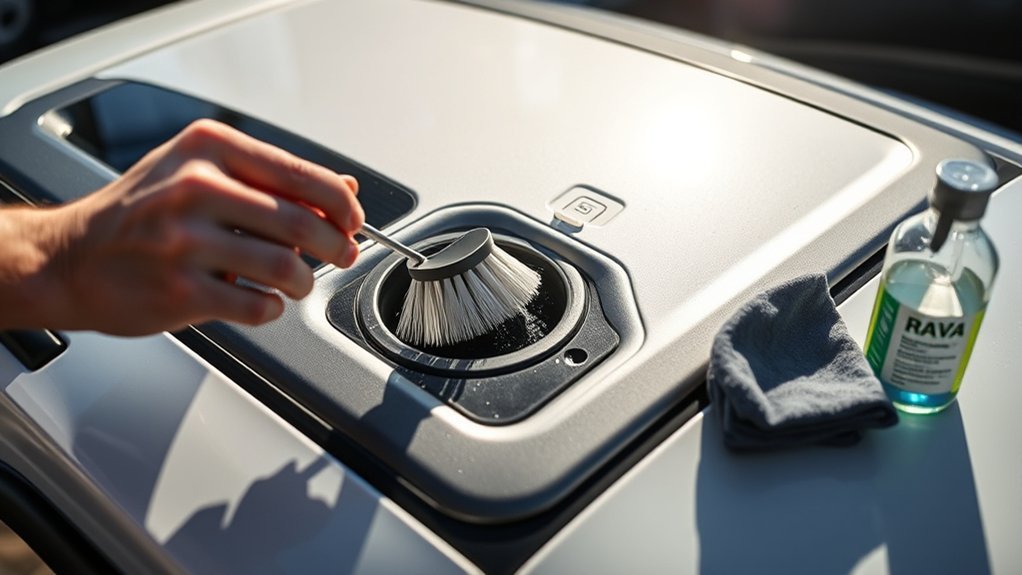
Inspect the tray at least twice a year as a practical preventive routine, and check it sooner after heavy pollen, storms, autumn leaf fall, or long periods under trees. This is a preventive recommendation, not a universal Toyota factory service interval.
A quick inspection does not always require flushing. Remove visible debris first. Use a controlled water test when drainage seems slow, after cleaning a packed tray, or before a rainy season.
Keep the glass edges, seals, and tracks clean at the same time. Toyota advises removing foreign objects around the moon-roof opening and avoiding hard objects that can damage the roof.
How to Dry the Interior After a Sunroof Leak
Fixing the drain does not remove water already trapped under carpet or behind trim. Blot standing water, remove and dry the floor mats, and use a wet/dry vacuum if the carpet surface is soaked. Ventilate the cabin in a safe, dry place and use fans or a dehumidifier when practical.
The U.S. Environmental Protection Agency advises drying wet materials within 24 to 48 hours to reduce the chance of mold growth. Vehicle carpet padding can remain wet after the surface feels dry, so get professional drying help if the padding is spongy, the odor persists, or water reached wiring and connectors.
When to Get Professional Help
Get professional help if water reaches the headliner, overhead console, dashboard area, pillar trim, seat-belt area, curtain-airbag area, wiring, or carpet padding. You should also stop DIY cleaning if a drain will not flow after gentle tray cleaning and a hand-fed nylon line.
A technician can check for a disconnected hose, kinked drain line, damaged tube, worn seal, misaligned glass, roof-rail leak, windshield leak, or another body opening. For a broader troubleshooting sequence, use the RAV4 sunroof leak diagnosis guide.
Roof-rail program: Toyota Customer Support Program 22TE05 covers verified roof-rail water leaks on certain 2019 to 2021 RAV4 and RAV4 Hybrid vehicles and certain 2021 RAV4 Prime vehicles. The program provides coverage for 10 years from the vehicle’s Date of First Use, regardless of mileage, when eligibility and the covered condition are verified by an authorized Toyota dealer. See the official Toyota program document hosted by NHTSA.
Frequently Asked Questions
How do you clean a clogged RAV4 sunroof drain?
Remove loose debris from the tray, test one drain with a small amount of water, and gently feed flexible nylon trimmer line into a slow opening. Stop if the line meets hard resistance or water appears inside the cabin.
Where are RAV4 sunroof drains located?
The openings are generally near the corners of the sunroof or moon-roof tray. Front tubes usually route down the windshield-pillar area, while rear routing and exit points vary by model year and roof type.
How can you prevent RAV4 sunroof drains from clogging?
Brush or vacuum leaves, pine needles, pollen, and dirt from the tray before they reach the drain holes. Inspect the tray after heavy debris buildup and test water flow only when needed.
How often should you check RAV4 sunroof drains?
Check the tray about twice a year as a practical routine and more often if you park under trees, drive on dusty roads, or see heavy pollen and leaf buildup. This is preventive guidance rather than a universal Toyota service interval.
Can you use compressed air on RAV4 sunroof drains?
Compressed air can be used in some professional procedures, but force and tube design matter. For DIY cleaning, start with a brush, controlled water test, and flexible nylon line. Do not seal a nozzle against the opening or use high pressure.
Why does a RAV4 leak when the sunroof is closed?
The tray and drain tubes still manage water that reaches the channel around the closed glass. A clog, disconnected tube, roof-rail leak, damaged seal, windshield leak, or body leak can let that water enter the cabin.
What if water still leaks after cleaning the drains?
Stop adding water and dry the interior. If the drains flow freely but the leak continues, inspect the glass fit, seals, roof rails, windshield area, and drain-hose connections. A shop may need to perform a controlled leak test.
Conclusion
Start RAV4 sunroof-drain maintenance with the least aggressive method: clean the tray, test one corner at a time, and use flexible nylon line only for a light restriction. Confirm that the tray empties and no fresh water appears inside.
Stop the test when water reaches the cabin or a blockage resists gentle cleaning. Dry wet materials promptly and arrange a proper diagnosis for a disconnected tube, roof-rail leak, seal problem, or another hidden water path.
References
- 2024 RAV4 Panoramic Moon Roof Owner Guidance – Toyota
- Tips for Maintaining Your Car’s Sunroof – Diehl Toyota of Butler, 2023
- Fixing Toyota Sunroof Leak Issues – Millennium Toyota, 2026
- Customer Support Program 22TE05: Coverage for Roof Rail Water Leak – Toyota Motor Sales, USA via NHTSA, 2023
- A Brief Guide to Mold, Moisture and Your Home – U.S. Environmental Protection Agency