

Last updated: August 31, 2026 — rotation interval, service-lift setup, TPMS guidance, and 2026-generation notes rechecked.
For a Toyota RAV4 tire rotation, use the pattern shown in the owner’s manual for your exact model year and tire setup. Recent U.S. RAV4 maintenance charts use a 5,000-mile service rhythm for tire rotation, while directional tires normally move front-to-back on the same side and staggered front/rear sizes cannot be swapped between axles. Before lifting the vehicle, confirm tire size, tread direction, spare type, wheel-nut torque, TPMS procedure, and the correct service-lift instructions for your year. Toyota fully redesigned the RAV4 for 2026, so do not carry 2019–2025 lifting, pressure, or TPMS procedures forward without checking the 2026 manual.
Quick Answer
For most late-model U.S.-market RAV4 maintenance schedules, plan on a tire rotation every 5,000 miles or 6 months, whichever comes first, then confirm your exact guide. For the pattern, follow Toyota’s model-year diagram: directional tires stay on the same side, staggered sizes do not move between axles, and same-size non-directional tires use the pattern Toyota specifies for that vehicle. NHTSA’s broader 5,000–8,000-mile range is general tire guidance, not a replacement for Toyota’s schedule.
Key Takeaways
- Use the tire rotation diagram in your exact RAV4 owner’s manual before choosing a front-to-back, cross, or five-tire pattern.
- Recent U.S. RAV4 maintenance charts call for tire rotation every 5,000 miles; Toyota also uses a 6-month scheduled-maintenance rhythm. Your exact model-year guide controls.
- Set cold tire pressure from the driver’s door placard, not the maximum pressure molded on the tire sidewall.
- Toyota’s 2021 RAV4 specifications list 76 ft-lbf (103 N·m) for factory wheel nuts; verify the value for your exact model year and wheel hardware before tightening.
- After rotation, check tread depth, valve stems, brake pad condition, wheel seating, and the tire pressure warning system if equipped.
At a Glance
| Time Required | About 30–60 minutes for an experienced DIYer with safe lifting equipment |
| Rotation Interval | Every 5,000 miles on recent U.S. RAV4 maintenance charts; also follow the time interval in your exact guide |
| Difficulty | Moderate; safe lifting and correct torque matter |
| Tools Needed | Owner’s manual, wheel chocks, floor jack, jack stands, lug wrench or breaker bar, torque wrench, tire-pressure gauge, tread-depth gauge |
| Cost | Varies by your tools, wheel type, and local shop rates |
What Is the Toyota RAV4 Tire Rotation Pattern?

The correct Toyota RAV4 tire rotation pattern is the one shown in your exact model-year owner’s manual. Toyota’s official Manuals and Warranties page lets you select the year and model before opening the instructions. Toyota’s tire guidance tells owners to rotate in the order shown in the manual, while tire-industry patterns vary by drivetrain and tire design. The manual therefore wins if a generic FWD or AWD diagram conflicts with your RAV4 instructions.
Use this five-check sequence before choosing a pattern: confirm the model year, compare all four tire sizes, look for a directional arrow, identify the spare type, and read the Toyota diagram. If the manual shows a straight front-to-rear movement, keep each tire on the same side. If it shows a cross pattern, follow that diagram only when the tires are non-directional and the sizes match.
Note: Do not assume every RAV4 uses the same pattern. AWD models, full-size spare setups, directional tires, and staggered tire sizes can change the rotation pattern. Your owner’s manual and tire sidewall markings come first.
| Tire Setup | Recommended Pattern | What to Check |
|---|---|---|
| Same-size, non-directional tires | Follow the exact Toyota model-year diagram; it may be straight or crossed | Confirm all four tires are the same size and not directional |
| Directional tires | Front-to-back on the same side only | Look for a rotation arrow on the sidewall |
| AWD with same-size, non-directional tires | Use the Toyota manual first; general industry guidance may use a cross or double-X pattern | Compare tread depth and tire size; investigate any meaningful mismatch before rotating |
| Staggered tire sizes | Do not move front tires to the rear if the sizes differ | Rotate side-to-side only if tires are non-directional and the manual allows it |
| Temporary spare tire | Do not include it in regular rotation | Temporary spares are for short-term emergency use only |
30-Second Pattern Check
- Read all four tire size markings. If front and rear sizes differ, do not swap axles.
- Look for a directional arrow. If present, keep that tire on the same side unless it is professionally dismounted and remounted.
- Identify the spare. Do not put a compact temporary spare into the rotation.
- Open the exact RAV4 manual and match your setup to Toyota’s diagram before moving a wheel.
The Tire Industry Association says front-wheel-drive vehicles generally cross the free-rolling rear axle, while AWD/4WD vehicles commonly use a double-X pattern. Directional tires stay front-to-rear on the same side. Use those patterns as general context only; Toyota’s vehicle-specific diagram decides the final RAV4 pattern.
[Products Worth Considering]

This wheel lock key set is designed to help remove and replace compatible Toyota and Lexus wheel locks with confidence. It includes four wheel lock nuts and one key, offering a practical replacement solution for many popular models while supporting secure wheel protection and reliable fitment. Built for durability and corrosion resistance, it is a useful choice when matching OE reference numbers and vehicle compatibility is important.

This wheel lock lug nut set adds an extra layer of theft protection for compatible Toyota and Lexus vehicles by securing wheels with a unique key pattern that resists common removal tools. Built to OEM-standard fitment with corrosion-resistant, triple-chrome finished construction, it is designed for direct replacement and long-lasting performance. The set includes locking nuts and a matching key for easy installation on compatible vehicles with the correct thread and cone seat specifications.
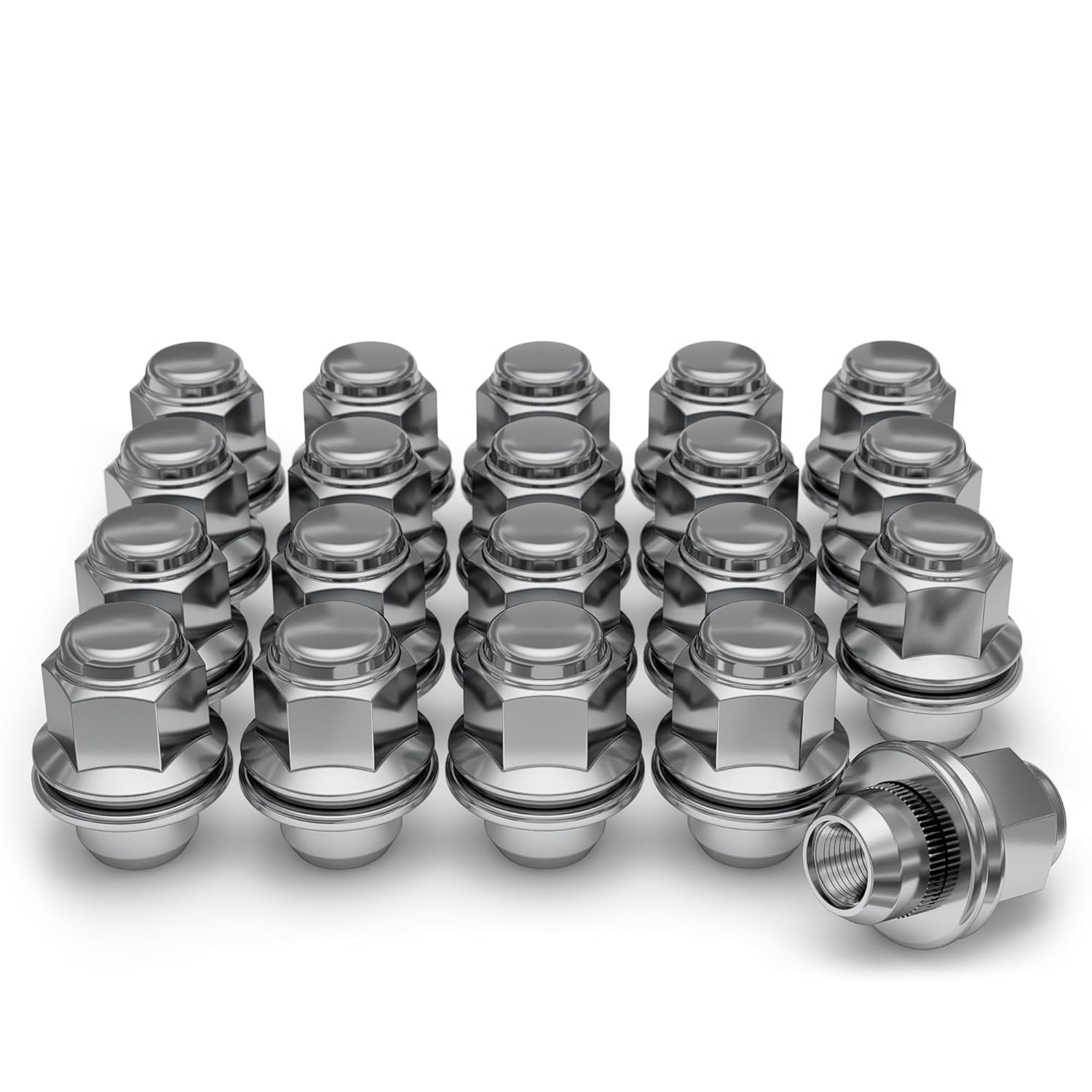
These White Knight mag-style lug nuts are designed for select Toyota, Lexus, Kia, and Genesis vehicles, delivering a secure fit and a clean factory-inspired look. Made from heat-treated cold forged carbon steel with a chrome finish, they offer durable strength, reliable corrosion resistance, and easy installation with a traditional hex-body, flat-seat design. Use them to replace worn or damaged lug nuts while maintaining proper wheel fitment and dependable performance.
How Often Should You Rotate Toyota RAV4 Tires?
For recent U.S.-market RAV4 schedules, rotate the tires every 5,000 miles; Toyota’s scheduled-maintenance guidance also uses a six-month service rhythm. The official 2025 RAV4 Hybrid maintenance chart marks “Rotate Tires” at 5,000, 10,000, 15,000 miles and every 5,000-mile interval after that. Check your exact model-year guide because Toyota can revise schedules. NHTSA’s 5,000–8,000-mile range is useful only as general guidance when a manufacturer-specific interval is not available.
Do not wait for a 10,000-mile oil change to rotate the tires if your RAV4 maintenance guide calls for rotation at 5,000 miles. Inspect sooner if you see uneven wear, vibration, repeated pressure loss, feathering, cupping, or a handling change. Keep the mileage and date of each rotation in your maintenance record so you can compare wear at the next 5,000-mile service.
| Trigger | Action | Why It Matters |
|---|---|---|
| Scheduled maintenance | For recent U.S. RAV4 schedules, rotate every 5,000 miles; use the exact year guide for the time interval | Keeps front and rear wear more even |
| Cupping or scalloped tread | Rotate and inspect suspension, balance, and alignment | May signal worn suspension parts or imbalance |
| Feathering or one-shoulder wear | Rotate only after checking alignment | Rotation alone will not fix alignment wear |
| Noticeable tread-depth mismatch | Measure all four tires and check Toyota and tire-maker limits before rotating | A generic 2/32-inch rule is a replacement threshold, not a universal AWD mismatch limit |
| New vibration after rotation | Stop and recheck torque, seating, pressure, and balance | A vibration can point to loose hardware, debris on the hub, or a tire/wheel issue |
Use a tread-depth gauge, not just a visual check. The National Highway Traffic Safety Administration recommends checking tire pressure and tire condition regularly, and tire tread wear indicators help show when a tire has reached its wear limit.
What Tools and Safety Steps Do You Need?
Before you remove any wheel, use a solid, level surface and follow the vehicle-setup steps for the exact lifting method—not one universal Park/parking-brake rule. Toyota service information for 2019–2025 RAV4/RAV4 Hybrid jack-and-stand lifting directs the operator to release the parking brake, select Neutral, and use wheel chocks, while roadside tire-change instructions can use a different setup. Read the exact lift-and-support procedure for your model year before raising the vehicle. Treat the emergency scissor jack as roadside equipment, not as the sole support for a four-wheel rotation.
[Products Worth Considering]
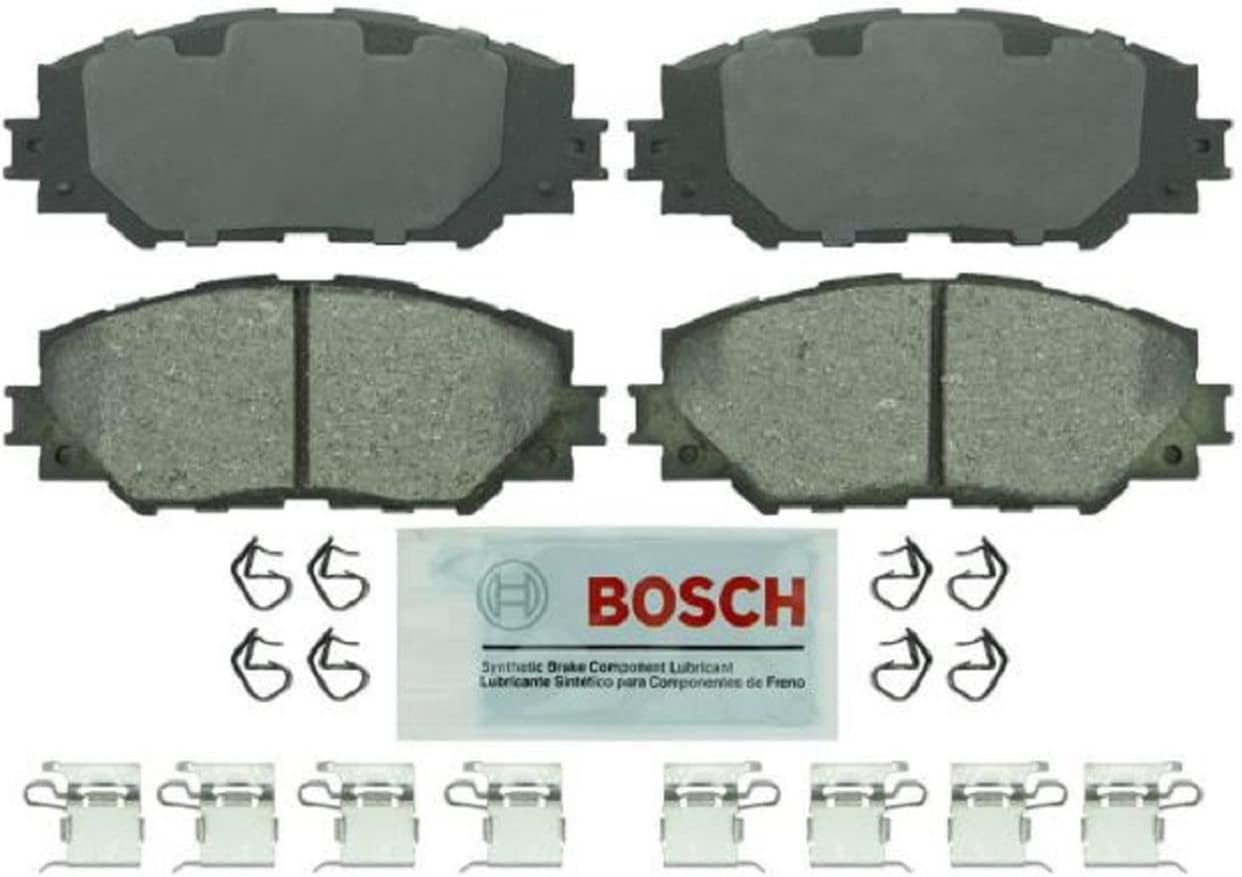
Bosch Blue ceramic front brake pads deliver dependable stopping power with platform-specific friction material designed for select Lexus, Pontiac, Scion, and Toyota vehicles. OE-style shims, slots, and chamfers help promote quiet braking, while the rust-inhibitive coating supports long-lasting performance and cleaner operation. The set includes hardware and synthetic lubricant for easier installation on one axle.

Lightweight jack stands are used to support your vehicle after lifting with a jack; Wide pyramid foot base provides added strength and stable support

Handle A Big Load: Are you dealing with tough lifting jobs? VEVOR's jack stands have a 6 ton/13000 lbs loading capacity and can raise SUVs, pickups, cars, UTVs, and ATVs. They conform to CE standards, ensuring your safety during use. Feel confident during vehicle repairs!
Tools Needed
- Owner’s manual plus the Toyota service lift/support procedure for your exact RAV4 year and lifting method
- Wheel chocks
- Floor jack rated for the vehicle
- Jack stands rated for the vehicle
- Lug wrench, breaker bar, or correct-size socket
- Calibrated torque wrench
- Tire-pressure gauge
- Tread-depth gauge
- Gloves, eye protection, and a notebook or phone to log tread readings
Warning: Never work under a RAV4 supported only by a jack. Use jack stands on approved support points. If you are unsure where to lift or support the vehicle, have the rotation done by a qualified technician.
Jack Points Location
Use only the lift and support points shown in Toyota information for your exact model year and procedure. Do not assume the roadside tire-jack point, a center floor-jack point, and a safety-stand point are interchangeable. Toyota service information for 2019–2025 RAV4 models separates the jack position from the safety-stand locations and specifies wheel chocks and rubber stand attachments. For the detailed diagrams and setup differences, see the RAV4 jack-points guide.
- Front wheel area: Use the manufacturer-designated front-side lift point or front support point shown in the manual.
- Rear wheel area: Use the manufacturer-designated rear-side lift point or rear support point shown in the manual.
- Support points: Place jack stands only where the manual allows, and make sure the saddle is seated before removing a wheel.
Torque Specification
Toyota’s official 2021 RAV4 specifications list wheel-nut torque at 76 ft-lbf (103 N·m) across the factory wheel sizes shown for that model year. Use that as a verified reference, not permission to assume every RAV4 or aftermarket wheel uses the same value. Check your exact manual and wheel hardware before tightening. For more detail, see RAV4 lug-nut torque guidance.
Hand-thread every lug nut first so you do not cross-thread the stud. Snug the nuts in a star pattern, lower the vehicle until the tire just contacts the ground, then torque in the same star pattern. Do not lubricate wheel studs or lug nuts unless Toyota specifically instructs it, because lubrication can change the real clamping force at a given torque reading.
Tire Pressure and TPMS Prep
Set pressure when the tires are cold, using the Tire and Loading Information label on the driver’s door edge or door jamb. Do not use the maximum PSI molded on the tire sidewall as your normal target. The placard reflects the vehicle’s approved tire size and load requirements. If you need the measurement steps, see how to check RAV4 tire pressure.
After setting all four cold pressures, follow the TPMS instructions in your exact model-year manual. Toyota RAV4 manuals for several late-model variants specifically require tire-pressure-warning-system initialization after tire rotation; the menu path and drive cycle can vary by year and display. Do not initialize the system until the tires match the door placard, and do not use a reset to hide a leak. For year-specific steps, see the RAV4 TPMS pressure-setting guide.
How Do You Rotate Toyota RAV4 Tires?
- Confirm the pattern. Check your owner’s manual, tire sidewall arrows, tire sizes, and whether you have a temporary or full-size spare.
- Set up for the lifting method. Use a flat, solid surface and follow Toyota’s exact transmission, parking-brake, and wheel-chock instructions for your year and whether you are using a roadside jack or a floor jack with stands.
- Break the lug nuts loose. With the tires still on the ground, loosen each lug nut about a quarter turn. Do not remove them yet.
- Lift and support the RAV4. Jack only at approved lift points and place jack stands at approved support points.
- Remove the wheels. Keep lug nuts organized and avoid dropping them in dirt or gravel.
- Inspect before swapping. Check tread depth, uneven wear, embedded nails, sidewall damage, valve stems, brake pads, and rotor condition.
- Move the tires to the correct positions. Follow the Toyota manual diagram or the tire-type-specific pattern you confirmed earlier.
- Clean the hub face if needed. Remove loose corrosion or debris that could stop the wheel from seating flat.
- Reinstall by hand. Start every lug nut by hand before using tools. If a nut does not spin on smoothly, stop and inspect the threads.
- Snug in a star pattern. Bring the wheel evenly against the hub without fully torquing while the vehicle is still high on stands.
- Lower and torque. Lower the vehicle until the tire touches the ground enough to stop spinning, then torque each lug nut to the manual specification in a star pattern.
- Set pressure and complete the TPMS procedure. Adjust cold tire pressure to the door placard, then initialize or relearn the tire-pressure-warning system exactly as your model-year manual specifies.
- Test drive carefully. Drive slowly at first, listen for noise, and stop immediately if you feel vibration or wobble.
- Follow any retorque instruction. Use the interval specified by Toyota, the wheel manufacturer, or the service provider. Do not assume one retorque distance applies to every factory and aftermarket wheel.
[Products Worth Considering]

【Car Jack Capacity】Maximum lifting weight 2 Ton (4409 lbs),This Jack for Car Lifting Range from 4.33" (11cm) to 15.75"(40cm). The scissor lift jack provides a wider range to reach under low chassis sedans or elevate high-body SUVs effortlessly.

Pair of 3 Ton (2.7 metric Ton) jack stands with 6,000-pound capacity
Record Before-and-After Tire Readings
Before moving the wheels, record tread depth at the inside, center, and outside of each tire plus cold pressure. This creates a simple wear map you can compare at the next rotation. A repeated one-shoulder pattern points toward alignment; cupping can point toward balance or suspension problems; a single tire that keeps losing pressure needs a leak inspection rather than another reset.
| Starting Position | Inside Tread | Center Tread | Outside Tread | Cold PSI |
|---|---|---|---|---|
| Left front (LF) | Record | Record | Record | Record |
| Right front (RF) | Record | Record | Record | Record |
| Left rear (LR) | Record | Record | Record | Record |
| Right rear (RR) | Record | Record | Record | Record |
Pro Tip: Mark each tire’s starting position with chalk or masking tape before removal: LF, RF, LR, and RR. It prevents confusion once all four wheels are off the vehicle.
What Should You Inspect During a Tire Rotation?

A tire rotation is the perfect time to inspect parts that are normally hidden. Spend a few extra minutes checking tread depth, tire pressure, brake condition, valve stems, and wheel damage before everything goes back on.
Tread Depth Checks
Measure tread depth in at least three spots across each tire: inside shoulder, center, and outside shoulder. NHTSA says tires are unsafe and should be replaced when tread reaches 2/32 inch. Bridgestone’s replacement guidance uses the same minimum and also advises checking for sidewall damage and irregular wear. Replace a damaged tire even if its tread is still above the minimum.
| Wear Pattern | Likely Cause | What to Do |
|---|---|---|
| Center wear | Overinflation or load mismatch | Set cold pressure to the door placard |
| Both shoulders worn | Underinflation or hard cornering | Check pressure and inspect for leaks |
| One shoulder worn | Alignment issue | Schedule an alignment check |
| Cupping or scalloping | Worn shocks/struts, imbalance, or suspension wear | Inspect suspension and balance |
| Feathered tread blocks | Toe alignment problem | Get alignment diagnosed before tire damage worsens |
Brake and Wheel Checks
With the wheel removed, look through the caliper opening and check brake pad thickness. If the pad material is near the wear indicator, uneven from side to side, contaminated, cracked, or close to the backing plate, have the brakes inspected before driving long distances. Also check rotors for deep grooves, heavy rust scaling, or blue heat spots.
Inspect the wheel too. A bent rim, missing wheel weight, damaged bead area, cracked valve stem, or corroded mounting surface can cause leaks or vibration after rotation. Fix those issues before blaming the rotation pattern.
What If Your RAV4 Has Directional or Staggered Tires?
Directional Tires
Directional tires have an arrow or rotation marking on the sidewall. They are designed to roll one way, so they should move front-to-back on the same side unless the tire is dismounted and remounted correctly. Bridgestone’s tire rotation guidance also notes that directional tires are rotated front to rear only.
Staggered Setups
A staggered setup uses different front and rear tire sizes or wheel offsets. Do not move tires between axles if the sizes differ. If the tires are non-directional and the same size side-to-side, a side-to-side rotation may be possible, but only if the owner’s manual and tire manufacturer allow it.
Full-Size Spare Tire
Only include a spare tire in rotation if it is a full-size matching tire and wheel, the tread depth is compatible with the other tires, and your manual shows a five-tire pattern. Do not include a compact temporary spare in a normal tire rotation.
Post-Rotation Noise or Vibration
If you hear a new noise or feel vibration after rotating the tires, stop and inspect the work. Check wheel seating, lug nut torque, tire pressure, direction arrows, and whether any wheel weight fell off. If the vibration starts at a specific speed, wheel balance may be the issue. If the vehicle pulls, the problem may be alignment, tire conicity, or uneven tire wear that became more noticeable after moving tire positions.
Warning: Do not continue driving if the RAV4 wobbles, clunks, or feels unstable after a rotation. Pull over safely and recheck the wheel installation before driving again.
TPMS Light After Rotation
If the tire pressure warning light appears after rotation, check all four tires with an accurate gauge before resetting anything. Correct the pressures to the door placard, inspect for a puncture or damaged valve stem, and then follow the model-year TPMS procedure. A light that flashes before staying on can indicate a system malfunction rather than simple underinflation. If the pressure is correct but the light remains, use the RAV4 tire-pressure-light troubleshooting guide rather than repeatedly initializing the system.
Frequently Asked Questions
What does Toyota recommend for RAV4 tire rotation?
Use the rotation order shown in the owner’s manual for your exact RAV4 model year. Confirm tire size, directional markings, and spare type before applying the diagram. Recent U.S. RAV4 maintenance charts use a 5,000-mile rotation interval.
How often should I rotate tires on a Toyota RAV4?
For recent U.S.-market RAV4 schedules, use every 5,000 miles and follow the time interval in your exact Warranty & Maintenance Guide. Rotate sooner if you see uneven wear, vibration, feathering, cupping, or repeated pressure loss.
What is the tire rotation pattern for an AWD Toyota RAV4?
Use Toyota’s model-year diagram first. The Tire Industry Association lists a double-X pattern as general AWD/4WD guidance, but that generic rule does not override the RAV4 manual. Directional tires stay on the same side, and different front/rear sizes cannot be swapped between axles.
Can directional RAV4 tires be crossed during rotation?
Not while they remain mounted in the same direction. Directional tires normally move front-to-back on the same side so the sidewall rotation arrow still points the correct way. Crossing them requires correct dismounting and remounting by a tire professional.
What torque should I use for RAV4 lug nuts?
Toyota’s official 2021 RAV4 specifications list 76 ft-lbf, or 103 N·m, for the factory wheel setups shown for that year. Verify your exact model-year manual and any aftermarket wheel instructions before tightening, then use a calibrated torque wrench in a star pattern.
Should I reset or initialize TPMS after rotating RAV4 tires?
Follow the exact model-year procedure. Several late-model RAV4 manuals require TPMS initialization after rotation. Set every tire to the door-placard cold pressure first, then perform the initialization or relearn steps specified for your display and model year.
Do I need an alignment every time I rotate RAV4 tires?
No. Rotation and alignment are different services. Have alignment checked when you see one-shoulder wear, feathering, steering pull, an off-center steering wheel, or other alignment symptoms. Rotating tires will not correct an alignment problem.
Can I rotate RAV4 tires if tread depth is very different?
Measure all four tires before rotating. A large mismatch can point to skipped rotations, alignment, pressure, suspension, or tire problems. Do not use the 2/32-inch legal wear threshold as a universal AWD mismatch limit; check Toyota and the tire manufacturer for the acceptable setup before continuing.
Conclusion
For a safe Toyota RAV4 tire rotation, start with four checks: the model-year rotation diagram, the 5,000-mile maintenance schedule for your exact guide, the correct service-lift procedure, and the verified wheel-nut torque. Record tread depth and cold pressure before moving the wheels, then complete the model-year TPMS procedure after the tires are set to the door placard. Stop driving and recheck the installation if the RAV4 wobbles, clunks, pulls sharply, or develops a flashing TPMS warning after the rotation.
Sources
- Toyota: 2025 RAV4 Hybrid Warranty & Maintenance Guide — official U.S. maintenance chart showing tire rotation at every 5,000-mile interval.
- Toyota Manuals and Warranties — official source for the owner’s manual and maintenance guide for a specific RAV4 model year.
- Toyota Owners: 2021 RAV4 Maintenance Data — official 76 ft-lbf / 103 N·m wheel-nut torque reference for the factory wheel setups listed for that year.
- NHTSA TireWise Tire Safety — general 5,000–8,000-mile rotation guidance when recommended by the vehicle manufacturer, plus tire-pressure and tread-safety checks.
- Tire Industry Association: Tire Rotation — general FWD, RWD, AWD/4WD, and directional-tire rotation patterns.
- Bridgestone: Tire Rotation 101 — directional tire and general rotation-pattern guidance.
- Toyota service information reproduced by Mitchell: 2019–2025 RAV4 Vehicle Lift and Support Locations — procedure-specific jack-and-stand setup, wheel chocks, Neutral, parking-brake release, and safety-stand guidance.
- Toyota USA Newsroom: All-New 2026 RAV4 — confirms the full sixth-generation redesign for 2026.

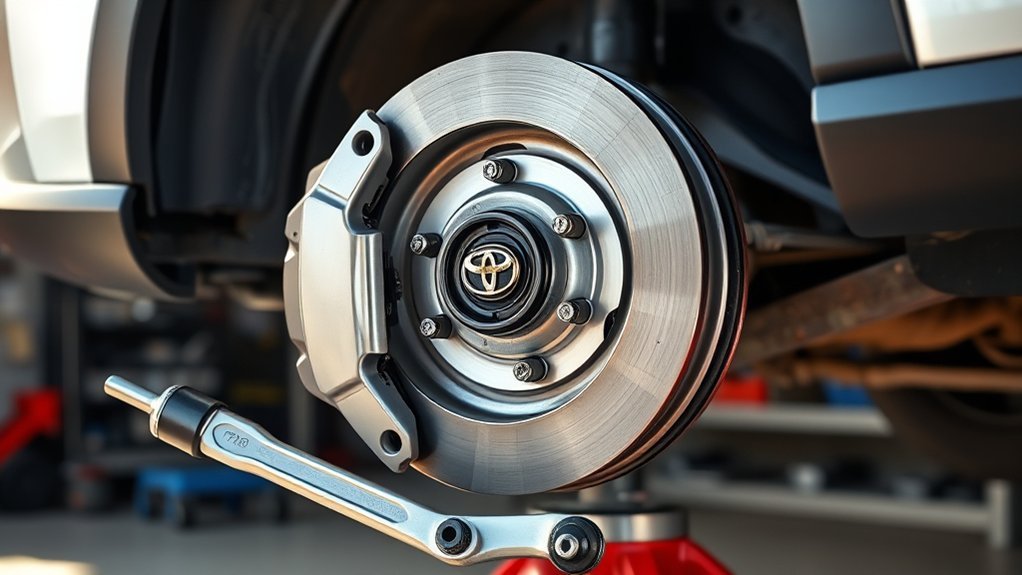


[…] wheel-nut torque, tire-pressure specification, and TPMS/TPWS procedure for your exact RAV4. The RAV4 tire rotation pattern guide covers those model-specific checks in more […]