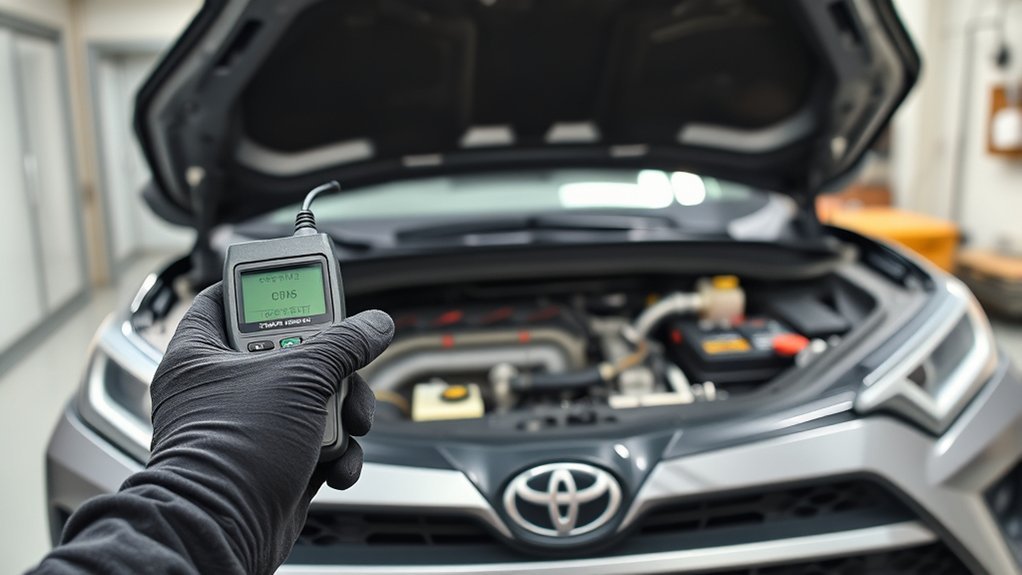
When your Toyota RAV4 stores a P0171 code, the engine computer is correcting for a lean air-fuel condition on Bank 1. In plain terms, the engine is seeing more air than expected, not enough fuel, or sensor data that makes it look that way. The fix is not to guess at oxygen sensors first. Start with the common causes: intake leaks, cracked hoses, a dirty or inaccurate MAF sensor, low fuel delivery, exhaust leaks before the air-fuel sensor, or a stuck-open purge valve.
Quick Answer
A RAV4 P0171 code means System Too Lean, Bank 1. The most likely fixes are repairing an intake or vacuum leak, cleaning or replacing the MAF sensor, correcting low fuel pressure, fixing an exhaust leak near the upstream sensor, or replacing a faulty air-fuel/O2 sensor only after testing proves it is bad.
Key Takeaways
- P0171 is a lean-condition code, not an automatic oxygen-sensor replacement code.
- Check for unmetered air first: cracked intake boots, loose clamps, PCV hoses, vacuum hoses, intake gaskets, and purge valve leaks.
- Use scan-tool fuel trims to decide where to test next: high trims at idle often point to a leak; high trims under load can point to fuel delivery or MAF issues.
- Fuel pressure specs vary by model year and engine, so compare your gauge reading to Toyota service data for your exact RAV4.
- After repairs, clear codes only when the fault is fixed, then complete a drive cycle and confirm readiness before an emissions test.
At a Glance
| Time Required | 30 minutes to 3 hours for basic diagnosis; longer if fuel-pressure or smoke testing is needed |
| Difficulty | Beginner to intermediate |
| Tools Needed | OBD2 scanner with live data, flashlight, MAF cleaner, basic hand tools, smoke tester or vacuum gauge, fuel-pressure gauge if applicable |
| Typical Cost | About $10–$80 for simple DIY cleaning or hose repairs; $100–$600+ at a shop depending on the failed part and diagnostic time |
What P0171 Means for Your RAV4
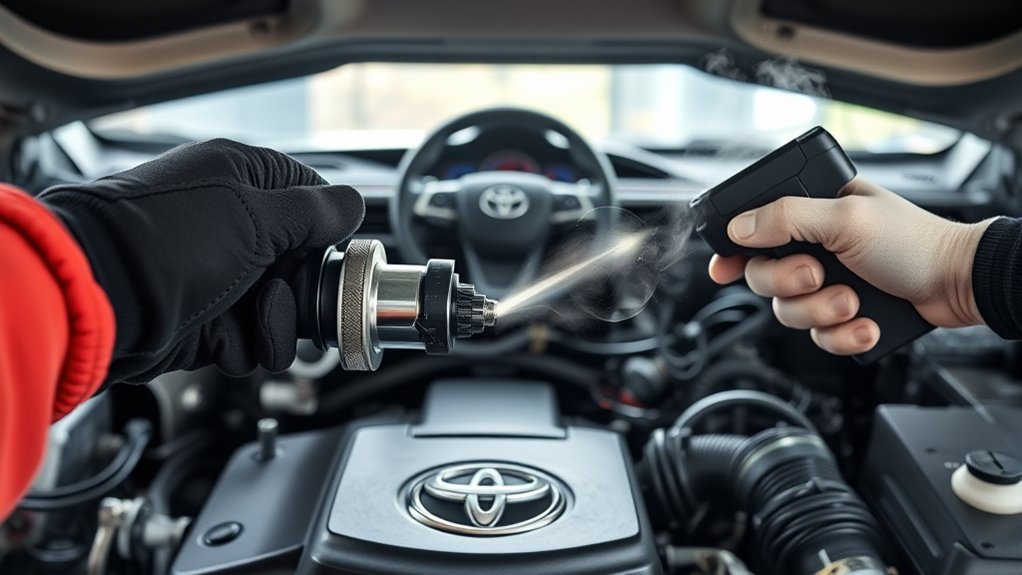
P0171 means the powertrain control module has reached a limit while adding fuel to correct a lean mixture on Bank 1. On a 4-cylinder RAV4, Bank 1 is the only bank. On V6 models, Bank 1 is the side with cylinder No. 1; a matching P0174 would mean the other bank is also lean.
A lean condition can be caused by too much unmetered air, too little fuel, or incorrect sensor data. That is why the best repair order is testing, not parts-swapping. Inspect the intake system first, review scan-tool data, then test the fuel system and sensors only when the data points that way.
For emissions context, Toyota explains in the RAV4 owner’s manual that the OBD system monitors the emission-control system and that a malfunction indicator lamp can prevent the vehicle from passing an inspection and maintenance test. You can review Toyota’s official owner information here: Toyota RAV4 emission inspection and maintenance information.
P0171 Symptoms on a RAV4: What to Watch
A RAV4 with P0171 may still drive, but symptoms often get worse as the lean condition grows. Watch for:
- Check engine light or stored pending P0171 code
- Rough idle, especially when warm or stopped in gear
- Hesitation or weak throttle response
- Surging at light throttle
- Hard starting or extended cranking
- Reduced fuel economy because the computer keeps adding fuel to compensate
- Misfire codes such as P0300, P0301, P0302, P0303, or P0304 if the lean condition is severe
Warning: Do not ignore P0171 if the check engine light flashes, the engine misfires, or the vehicle feels unsafe. A flashing light usually means active misfire, which can overheat and damage the catalytic converter.
Tools and Prep Before You Start Diagnosing
Before you open the hood, scan the vehicle and save the data. Clearing the code too early erases freeze-frame information that can show engine load, coolant temperature, RPM, speed, and fuel trims when the fault occurred.
- OBD2 scanner with live data: Use it to read codes, freeze frame, short-term fuel trim, long-term fuel trim, MAF data, oxygen or air-fuel sensor data, and readiness status.
- Inspection tools: Use a flashlight, mirror, basic sockets, pliers, and replacement clamps for loose intake or vacuum connections.
- Testing tools: A smoke machine is the cleanest way to find intake leaks. A fuel-pressure gauge is useful only if your RAV4 has a safe service point or the proper adapter.
- Cleaning supplies: Use only dedicated MAF sensor cleaner. Do not use brake cleaner, carb cleaner, or a rag on the sensing elements.
- Safety gear: Wear gloves and eye protection, work on a cool engine when possible, and avoid spraying flammable cleaner near hot exhaust parts.
Note: Hybrid and Prime RAV4 models have high-voltage systems. The P0171 checks in this guide focus on the intake, fuel, and emissions systems, but do not probe orange high-voltage wiring or components.
[Products Worth Considering]

This genuine Toyota vent valve is designed as a vehicle-specific replacement part to support proper engine ventilation and reliable PCV system performance. It helps maintain correct airflow and crankcase function, making it a dependable choice for restoring original operation. Built to Toyota specifications, it offers a direct-fit solution for compatible vehicles.

This oxygen O2 sensor set is designed for select Toyota Camry and RAV4 models with 2.4L engines, providing upstream and downstream replacement coverage in one package. Built to OEM specifications for plug-and-play installation, it helps improve fuel efficiency, support accurate air-fuel monitoring, and restore reliable engine performance. The stainless steel and heat-resistant construction is made for long-lasting durability and stable operation.

This coolant electric water pump is designed as a replacement for select Toyota vehicles, helping maintain proper engine cooling performance and reliable temperature control. Built to OE specifications, it offers fitment support for compatible Avalon, Camry, and RAV4 models with 2.5L L4 engines. It also includes cross-reference part numbers for easier matching and comes with after-sales support for covered defects.
Find Intake and Vacuum Leaks Step by Step
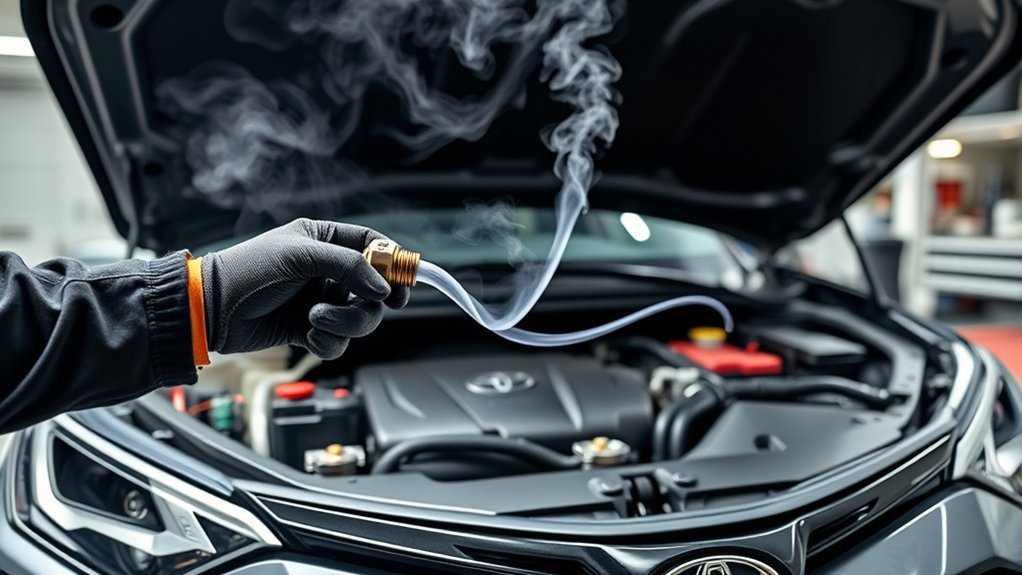
Unmetered air is one of the most common reasons a RAV4 sets P0171. “Unmetered” means air enters the engine after the MAF sensor, so the computer does not know it is there. Start with these checks:
- Inspect the air intake duct: Look for cracks between the air filter box, MAF housing, throttle body, and intake manifold. Flex the rubber duct by hand because splits often hide in the folds.
- Check clamps and fittings: Make sure the airbox is sealed, the MAF is fully seated, and all clamps after the MAF sensor are tight.
- Inspect vacuum hoses: Check brake booster hoses, PCV hoses, EVAP purge hoses, and small vacuum lines for cracks, hardening, oil swelling, or loose ends.
- Check the PCV system: A cracked PCV hose or stuck PCV valve can act like a vacuum leak.
- Smoke-test the intake: Feed low-pressure smoke into the intake tract and look for smoke at hose joints, intake gasket areas, throttle body seals, and vacuum ports.
- Check the purge valve: A purge valve stuck open can feed extra vapor or air into the intake at idle and mimic a vacuum leak.
| Fuel Trim Clue | Likely Direction |
|---|---|
| High positive trims mostly at idle | Vacuum leak, PCV leak, purge leak, intake gasket |
| High positive trims under load | Low fuel delivery, restricted injectors, MAF under-reporting |
| Both banks lean on V6 | Shared intake leak, MAF issue, fuel delivery issue |
Pro Tip: If fuel trims improve when you raise the engine speed from idle to about 2,500 RPM, suspect a vacuum leak. If trims stay high or get worse under load, look harder at the MAF reading and fuel delivery.
[Products Worth Considering]

This coolant bypass valve is a direct replacement for select Toyota models, helping regulate coolant flow for stable engine temperature and dependable performance. Built from high-temperature, corrosion-resistant materials, it is designed to handle demanding driving conditions while supporting long-term durability. Its straightforward design also makes installation quick and hassle-free.

This 3-piece intake manifold gasket set is designed to help restore a tight, reliable seal between the intake manifold and cylinder head. It is compatible with a range of Lexus and Toyota vehicles and is made from durable silicone for dependable performance under demanding engine conditions. The set is sized to match original specifications for a proper fit and is intended as a practical replacement for worn or damaged intake gaskets.

HyperSmoke Technology – Creates Thick Visible Smoke for Easy Leak Testing. Adjustable Pressure. Infinite Smoke. Instant Warmup. Built-In Air Compressor Motor. OEM Approved Smoke Fluid. Designed and Engineered by AutoLine Pro USA, an American Team of Individuals bringing the latest innovation to you.
Clean and Test the MAF Sensor
The mass air flow sensor tells the engine computer how much air is entering the engine. If it is dirty, contaminated by an oiled air filter, installed incorrectly, or electrically failing, it can under-report airflow and cause P0171.
Locate and Remove the Sensor
The MAF sensor is usually mounted in the intake tube near the air filter box. With the ignition off, unplug the electrical connector, remove the retaining screws, and lift the sensor straight out. Do not touch the sensing wires or film.
- Check the air filter for dirt, poor fitment, or an aftermarket oiled filter that may contaminate the MAF.
- Inspect the MAF connector for corrosion, bent pins, loose terminals, or damaged wiring.
- Confirm the sensor and intake tube are installed in the correct direction and fully sealed.
Clean, Dry, and Reinstall
Spray the sensing elements with dedicated MAF cleaner, then let the sensor air-dry completely before reinstalling it. Never wipe the sensor, blow it with high-pressure air, or reinstall it wet.
| Step | Action | Do Not |
|---|---|---|
| 1 | Spray MAF cleaner on the sensing area | Use brake cleaner or carb cleaner |
| 2 | Let it air-dry fully | Wipe or touch the element |
| 3 | Reinstall and check live data | Assume cleaning fixed it without verifying trims |
After cleaning, start the engine and watch fuel trims. If trims move closer to zero and the idle improves, the MAF was likely part of the problem. If the readings stay abnormal, continue testing before replacing it.
Test Fuel Pressure the Right Way
Low fuel delivery can cause a real lean condition. The cause may be a weak fuel pump, restricted pickup, clogged filter or strainer, voltage supply issue, pressure regulator problem, or restricted injectors. A Toyota fuel-pump technical bulletin filed with NHTSA notes that loss of fuel pressure on some Toyota vehicles can be associated with hard starting, MIL illumination, and lean codes such as P0171 and P0174: Toyota fuel pump loss-of-pressure bulletin.
Do not rely on a universal “30–40 psi” number for every RAV4. Toyota fuel-pressure specifications vary by engine, model year, and fuel-system design. Some systems do not have a simple rail service port, and newer direct-injection systems require scan-tool data and proper high-pressure procedures.
- Check service information first: Look up the correct pressure spec and connection method for your exact year, engine, and market.
- Verify pump command and voltage: A good pump can test poorly if the relay, wiring, ground, or control circuit is weak.
- Measure safely: Relieve fuel pressure as specified, use the correct adapter, keep ignition sources away, and check for leaks before starting.
- Compare pressure under load: A pump may look acceptable at idle but fall short during acceleration.
- Check injector balance if needed: One restricted injector can make a single bank or cylinder run lean.
Warning: Fuel is flammable and under pressure. If you do not have the correct gauge, adapter, and procedure, let a qualified shop perform the fuel-pressure test.
Air-Fuel Sensor, O2 Sensor, or Fuel Problem?
A common mistake is replacing the oxygen sensor just because a lean code mentions fuel mixture. On many Toyota engines, the upstream sensor is an air-fuel ratio sensor, not a simple narrowband oxygen sensor. Its scan-tool readings and behavior are different from the older 0.1–0.9 volt oxygen-sensor pattern.
Compare Fuel Delivery and Sensor Behavior
Use data to decide where to go next:
- If fuel pressure or volume is low: Focus on the pump, strainer, filter, regulator, injectors, and electrical supply.
- If pressure is correct but trims are high: Recheck intake leaks, exhaust leaks before the upstream sensor, MAF readings, purge valve operation, and injector balance.
- If sensor data is stuck, slow, or illogical: Test the air-fuel or oxygen sensor circuit before replacing the sensor.
Live Data Diagnosis
Start with short-term fuel trim and long-term fuel trim. Positive trims mean the computer is adding fuel. A small amount of trim is normal, but double-digit positive trims—especially when both short-term and long-term trims are elevated—show the computer is working hard to correct a lean reading.
Then review MAF data, engine load, coolant temperature, upstream air-fuel sensor data, downstream oxygen sensor data, and freeze-frame conditions. If the code set during idle, prioritize leak checks. If it set during acceleration or highway load, prioritize fuel delivery and MAF accuracy.
P0171 diagnosis is a fuel-trim investigation: find out whether the computer is correcting for extra air, low fuel, or bad sensor information before buying parts.
Repair Costs: Parts, Labor, DIY vs Pro
P0171 repair cost depends on the failed part and how much testing is needed. The cheapest fix may be a loose clamp or cracked hose. The expensive fix may be a fuel pump, injector service, intake gasket, or sensor replacement after proper diagnosis.
- DIY low-cost fixes: MAF cleaning, hose inspection, loose clamp repair, and air-filter housing reseating often cost less than a basic diagnostic fee.
- Independent shop diagnosis: Expect to pay for scan-tool testing, smoke testing, and fuel-pressure checks. Paying for diagnosis can be cheaper than replacing good parts.
- Dealer or specialist repair: Best when the issue involves Toyota-specific service data, hybrid systems, fuel-system access, warranty concerns, or technical service bulletins.
| Possible Fix | DIY Difficulty | Typical Notes |
|---|---|---|
| Tighten loose intake clamp | Easy | Verify no cracks in the duct |
| Replace cracked vacuum or PCV hose | Easy to moderate | Use heat- and fuel-vapor-rated hose where required |
| Clean MAF sensor | Easy | Use only MAF cleaner |
| Replace MAF or air-fuel sensor | Moderate | Test first; use quality parts |
| Fuel pump or injector repair | Advanced | Often best left to a shop |
[Products Worth Considering]

Genuine Toyota 90999-92002 Vacuum Hose

Compatible With: This pcv valve hose is compatible with for toyota camry rav4 highlander sienna venza scion tc 2.5l 2.7l 1arfe 2arfe engine crankcase ventilation system
Fast Prioritized Checklist to Fix P0171
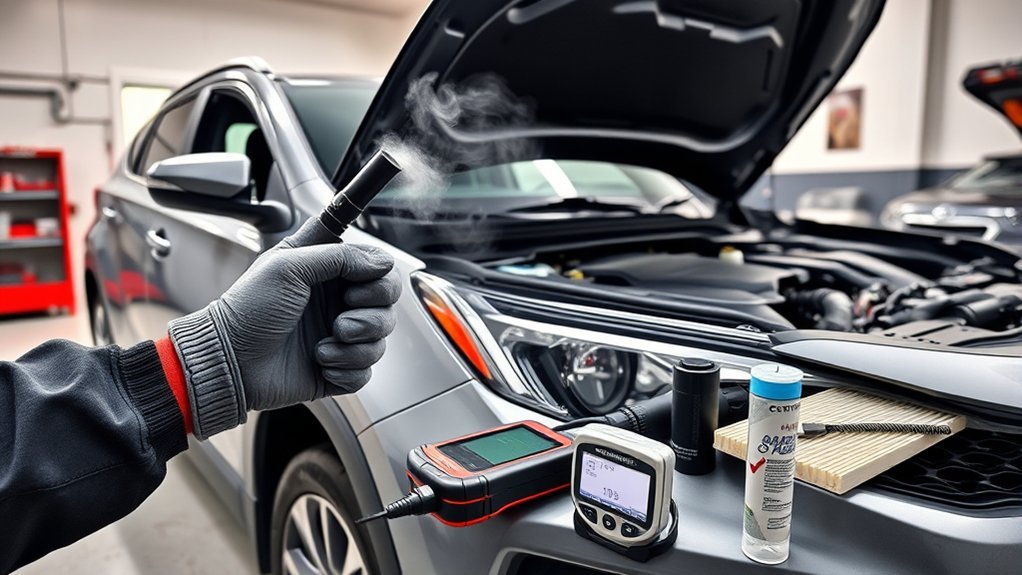
Use this order to avoid wasting money:
1. Check for Intake and Vacuum Leaks
Inspect the intake boot, airbox, MAF housing, throttle body connection, PCV hoses, vacuum lines, brake booster hose, intake manifold gasket area, and EVAP purge hoses. Smoke-test if the visual inspection does not reveal the leak.
2. Clean or Test the MAF
Clean the MAF sensor with proper cleaner and verify live data afterward. Replace it only if readings remain incorrect, the sensor is damaged, or circuit testing proves it has failed.
3. Check the Purge Valve and PCV System
A purge valve stuck open can add uncommanded airflow or vapor at idle. A cracked PCV hose or stuck PCV valve can do the same. Pinch or command-test the purge system only using safe procedures and scan-tool support when available.
4. Inspect for Exhaust Leaks Before the Upstream Sensor
A leak ahead of the upstream air-fuel sensor can draw in oxygen and trick the computer into adding fuel. Listen for ticking near the manifold, check gaskets and flex sections, and inspect for soot marks.
5. Verify Fuel Delivery
If the trims are worse under load, check fuel pressure, fuel volume, pump control, and injector performance against Toyota service data.
6. Test Sensors Last
Replace the upstream air-fuel sensor, downstream oxygen sensor, coolant temperature sensor, or MAF sensor only after the data and circuit tests point to that part.
Prevent P0171: Maintenance Tips for RAV4
Preventing P0171 is mostly about keeping the intake and fuel systems sealed, clean, and maintained. Toyota’s maintenance guide includes repeated inspections of fuel lines and connections, fuel tank vapor vent system hoses, fuel tank cap gasket, and exhaust components at scheduled intervals: Toyota RAV4 Warranty & Maintenance Guide.
- Replace the engine air filter on schedule: Make sure it seals correctly in the airbox.
- Inspect intake ducts during oil changes: Look for cracks, loose clamps, and disconnected hoses.
- Avoid over-oiled reusable filters: Oil contamination can foul the MAF sensor.
- Fix small exhaust leaks early: Leaks near upstream sensors can affect mixture feedback.
- Use good fuel and keep records: Contaminated fuel can cause drivability issues and injector deposits.
- Do not clear codes before emissions testing: Clearing codes resets readiness monitors, and the vehicle may need normal driving before it is ready to test again. EPA inspection and maintenance information is available here: EPA vehicle emissions inspection and maintenance information.
Frequently Asked Questions
Can P0171 cause long-term engine damage if ignored?
Yes. A mild lean condition may only cause poor drivability at first, but a severe or ignored lean condition can lead to misfires, higher combustion temperatures, catalytic converter damage, and engine wear. Diagnose it promptly, especially if the vehicle misfires or the check engine light flashes.
Will an ECU reflash fix P0171?
Rarely. A calibration update or technical service bulletin can matter on some vehicles, but most RAV4 P0171 repairs involve an air leak, MAF issue, fuel-delivery problem, exhaust leak, purge valve issue, or sensor fault. Check for applicable Toyota service bulletins, but do not use a reflash as a substitute for diagnosis.
Can cheap fuel or ethanol blends trigger P0171?
Normal pump fuel that meets the vehicle’s requirements should not set P0171 by itself. However, contaminated fuel, incorrect fuel, excessive ethanol content for a non-flex-fuel vehicle, or injector deposits can contribute to lean running or drivability problems.
Does P0171 affect emissions test results?
Yes. If the malfunction indicator lamp is on for an emissions-related code, the vehicle may fail an OBD-based inspection. Clearing the code immediately before the test is not a real fix because readiness monitors may be incomplete until the vehicle completes the required self-checks.
Can a clogged catalytic converter mimic P0171 symptoms?
A restricted catalytic converter can cause hesitation, poor acceleration, and high backpressure, so it can feel similar to a lean-condition problem. It is not one of the first things to replace for P0171. Test backpressure, fuel trims, and sensor behavior before blaming the converter.
Can I drive my RAV4 with a P0171 code?
You may be able to drive a short distance if the vehicle runs smoothly and the check engine light is steady. Avoid long trips, towing, hard acceleration, and high-speed driving until it is diagnosed. Stop driving if the light flashes, the engine misfires, or power drops suddenly.
Conclusion
Fixing P0171 on a Toyota RAV4 is a step-by-step process. Start with the easy and common checks: intake boots, vacuum hoses, PCV hoses, loose clamps, MAF contamination, purge valve leaks, and exhaust leaks near the upstream sensor. Then use live fuel-trim data to decide whether to test fuel delivery, injectors, or sensors. Once the repair is complete, clear the code, drive the vehicle, and confirm fuel trims and readiness monitors before calling the job done.
Sources
- Toyota RAV4 Owner’s Manual: Emission inspection and maintenance — backs OBD/MIL and inspection-readiness guidance.
- Toyota RAV4 Warranty & Maintenance Guide — backs scheduled inspection of fuel lines, vapor vent hoses, cap gasket, and exhaust components.
- NHTSA-hosted Toyota Technical Service Bulletin T-SB-0009-23 — backs the connection between Toyota fuel-pressure loss symptoms and lean codes on affected Toyota vehicles.
- U.S. EPA Vehicle Emissions Inspection and Maintenance Information — backs emissions inspection and OBD program context.