To maintain your Toyota RAV4’s engine health, change the coolant every 10 years or 120,000 miles initially, then every 50,000 miles or 5 years after that. Under severe conditions, more frequent changes are necessary. Look for signs like discolored coolant, engine overheating, or leaks. Regular checks can prevent major repairs. Knowing how to properly change and dispose of old coolant is essential. There’s more to explore about protecting your RAV4’s cooling system effectively.
Recommended Coolant Change Interval for Your RAV4
When it comes to maintaining your Toyota RAV4, understanding the recommended coolant change interval is vital for maximum performance. Toyota advises the first coolant change at 10 years or 120,000 miles, with subsequent changes every 50,000 miles or 5 years thereafter. If you often drive under severe conditions—like towing or in dusty environments—you may need to change your coolant more frequently. It’s important to perform a complete coolant replacement rather than a partial drain; this guarantees that old coolant is fully removed, safeguarding your engine’s health. Regularly monitor coolant quality through pH testing and visual inspections to catch any issues early. By following these maintenance tips and adhering to the manufacturer’s guidelines, you not only protect your engine but also maintain your vehicle’s warranty, preventing overheating or potential damage. Choose the right coolant types to match your RAV4’s specifications for best results.
Why Early Coolant Replacement Can Be Beneficial
Early coolant replacement offers significant benefits that enhance your RAV4’s engine longevity and performance. By changing the coolant every 50,000 miles or 5 years, you help prevent coolant degradation and guarantee that it retains its protective properties. Over time, coolant can become acidic and corrosive, which increases the risk of damage to critical engine components. Regular replacement mitigates this risk, safeguarding against costly repairs like head gasket failures.
Monitoring coolant pH and total dissolved solids (TDS) with test strips can also guide timely replacements, allowing for proactive maintenance. This approach aligns with best practices recommended by manufacturers and experienced users, ultimately assuring reliable vehicle performance. By prioritizing early coolant changes, you’re investing in engine protection and enhancing your RAV4’s overall reliability.
Signs Your RAV4 Needs a Coolant Change
Recognizing the signs that your RAV4 needs a coolant change is essential for maintaining peak engine health. Ignoring these indicators can lead to costly repairs down the line. Here are some key signs to watch for:
- Coolant discoloration: If the coolant appears rusty or murky, it’s time for a change to prevent engine corrosion.
- Engine overheating: Fluctuations in engine temperature can signal coolant issues, necessitating immediate attention.
- Leaks: Regularly inspect for coolant leaks; any loss indicates that a change may be necessary to maintain system function.
- High acidity levels: Use test strips to measure coolant acidity. If they show high levels, it’s time to replace the coolant.
Being proactive about these signs not only protects your engine but also enhances your driving experience. Don’t wait for a breakdown; stay ahead of potential issues!
How to Change Your RAV4’s Coolant
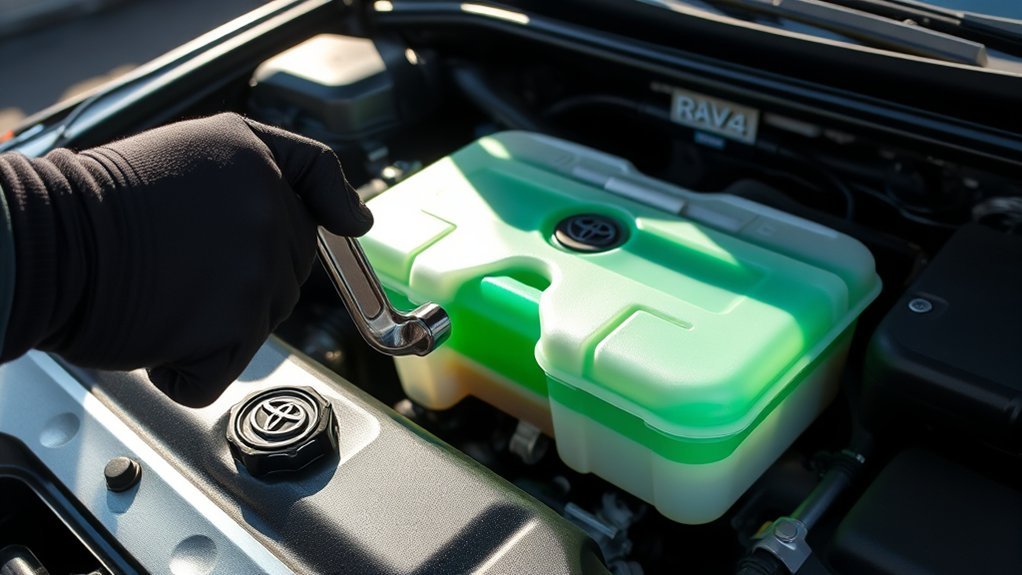
Changing your RAV4’s coolant requires specific tools and a clear step-by-step process to guarantee accuracy. You’ll need to gather the right equipment, including a drain pan and coolant mixture, before you start. Don’t forget to take into account proper disposal methods for the old coolant to protect the environment.
Tools Required For Change
To successfully change your RAV4’s coolant, you’ll need a few essential tools. Gathering these items beforehand guarantees a smooth process, allowing you to liberate your vehicle’s cooling system.
- Socket set: For removing components effectively.
- Drain pan: To catch the old coolant during flushing.
- Funnel: For precise pouring of the new coolant mixture.
- Coolant tester: To assess coolant types and determine if a change is necessary.
Don’t forget to wear gloves and safety goggles to protect yourself from the old coolant’s harmful properties. Remember, using a 50:50 mixture of OEM-approved coolant and distilled water enhances performance. Finally, always dispose of the old coolant at a designated recycling location to minimize environmental impact.
Step-By-Step Process
Start by ensuring your RAV4 is parked on a level surface with the engine cool. Remove the coolant reservoir cap to avoid pressure buildup. Locate the radiator drain plug at the bottom of the radiator and drain the old coolant into a suitable container. After draining, flush the system with clean water or a 50:50 coolant mixture to eliminate any residual contaminants, then drain again. Refill the system with new Toyota Super Long-Life coolant, mixing according to the manufacturer’s guidelines, typically a 50:50 ratio with distilled water. Finally, run the engine with the heater on, allowing the new coolant to circulate. Check for leaks and top off the reservoir as needed, ensuring effective radiator maintenance.
Disposal Considerations
After completing the coolant change for your RAV4, proper disposal of the used coolant must be a priority. Since coolant is classified as hazardous waste, it’s crucial to follow local regulations for safe disposal. Consider these essential steps:
- Use a designated container to catch old coolant and prevent spills.
- Check with local auto parts stores or service centers for coolant recycling programs.
- Avoid mixing different types of coolant; this complicates disposal and recycling.
- Always wear protective gear, like gloves and goggles, to safeguard against irritation.
Disposing of Old Coolant Safely
When you’re ready to dispose of old coolant, it’s essential to follow local disposal regulations to avoid fines and environmental harm. Many auto parts stores and service centers provide eco-friendly disposal options that guarantee safe recycling. Always store used coolant in a sealed, labeled container before taking it to a designated disposal facility.
Local Disposal Regulations
Properly disposing of old coolant is essential, as it’s classified as hazardous waste due to its toxic components. To protect the environment and comply with local regulations, follow these guidelines for safe disposal:
- Check for designated drop-off sites in your area.
- Utilize local recycling programs specifically for automotive fluids.
- Avoid pouring coolant down drains or on the ground—it’s illegal and harmful.
- Visit auto parts stores or repair shops that offer recycling services for convenience.
Always verify local regulations, as they can vary greatly. Taking these steps not only keeps your community safe but also empowers you to be a responsible car owner. By disposing of old coolant properly, you contribute to a healthier environment for everyone.
Eco-Friendly Disposal Methods
Disposing of old coolant safely is essential not just for compliance with regulations, but also for protecting the environment. You should never pour coolant down drains or toss it in the trash due to its toxic properties. Instead, take it to a designated hazardous waste facility or a recycling center. Many auto parts stores and service centers offer free recycling programs, promoting eco-friendly practices.
Here’s a quick reference table to guide you:
| Action | Importance |
|---|---|
| Use sealed containers | Prevents leaks and spills |
| Label containers clearly | Avoids accidental ingestion |
| Check local regulations | Guarantees legal compliance |
| Utilize recycling programs | Supports environmental health |
Always prioritize safety and sustainability in your coolant disposal efforts.
Top Mistakes to Avoid During Your Coolant Change
While changing your coolant may seem straightforward, several critical mistakes can undermine the effectiveness of the process. To guarantee your engine runs smoothly, avoid these common pitfalls:
- Neglecting Complete Replacement: Always perform a full coolant replacement to prevent coolant contamination.
- Using Incorrect Water for Flushing: Stick to filtered or distilled water for flushing techniques; plain water can introduce harmful contaminants.
- Ignoring Coolant Testing: Regularly check pH and Total Dissolved Solids (TDS) levels every 5,000 to 10,000 miles—this helps you catch degradation early.
- Mixing Different Coolant Types: Avoid mixing coolants; it can trigger chemical reactions that damage your engine.
Testing Your Coolant Quality: What to Look For
To guarantee your vehicle operates efficiently, regularly testing your coolant quality is essential. Aim to perform coolant testing every 5,000 to 10,000 miles. This involves checking pH levels and total dissolved solids (TDS) to safeguard against corrosion. Use test strips to quickly assess the glycol percentage and acidity levels. If you notice a rusty appearance or cloudiness in your coolant, it’s a clear sign you need to drain and replace it immediately to avoid engine damage.
Visual inspections are helpful, but they should be complemented by testing to accurately gauge acidity levels. Old coolant can become acidic, leading to deterioration of engine components over time. By maintaining proper coolant quality, you not only extend the life of your vehicle’s cooling system but also prevent costly repairs. Regular checks guarantee adequate rust inhibitors and lubricating properties are present, keeping your RAV4 performing at its best.
Maintaining Your RAV4’s Cooling System for Longevity
Maintaining your RAV4’s cooling system is vital for guaranteeing its longevity and best performance. To keep your engine running smoothly and prevent overheating, follow these key practices:
- Change coolant every 100,000 miles or 10 years, then every 50,000 miles or 5 years.
- Test coolant quality for pH and Total Dissolved Solids (TDS) every 5,000 to 10,000 miles.
- Use OEM-approved coolant to ensure compatibility and prevent corrosion.
- Opt for complete coolant replacement instead of partial drains.
Incorporating coolant additives can further enhance protection against corrosion and extend your system’s lifespan. Proactive maintenance, like regular inspections for leaks, is essential. These steps not only shield your engine from overheating but also liberate you from costly repairs down the road. By prioritizing your RAV4’s cooling system, you’re investing in its performance and longevity.
What to Do After Testing Coolant Quality?
After testing coolant quality, it’s vital to act promptly based on the results. If you find a low pH or high Total Dissolved Solids (TDS), drain and replace the coolant to protect your engine. Visual inspections can reveal if the coolant is dirty or rusty, signaling the need for immediate replacement.
Regular coolant testing with strips helps monitor glycol percentage and acidity levels. If significant degradation is detected, schedule a coolant change.
If contaminants are present, flush the system thoroughly before refilling with fresh coolant.
Keep a record of your coolant tests and changes; this is important for tracking your cooling system’s health.
| Condition | Action Needed | Emotional Impact |
|---|---|---|
| Low pH or high TDS | Drain and replace coolant | Relief from worry |
| Dirty or rusty coolant | Immediate replacement | Confidence restored |
| Contaminants detected | Thorough flushing required | Peace of mind achieved |
Implement these maintenance tips to guarantee your RAV4 runs smoothly.
Frequently Asked Questions
Is Toyota Coolant Lifetime?
Toyota coolant can last up to 10 years or 100,000 miles, but for ideal engine health, regular coolant maintenance is essential. Monitor coolant types for acidity and contamination to prevent performance issues or overheating.
Conclusion
In conclusion, regularly changing your RAV4’s coolant is essential for engine health. For instance, a RAV4 owner noticed overheating issues after skipping coolant changes, leading to costly repairs. By adhering to the recommended intervals and testing coolant quality, you can avoid such problems. Always pay attention to signs that indicate a coolant change is needed, and remember that proper disposal and maintenance practices will keep your cooling system running smoothly for years to come.