Your Toyota RAV4’s catalytic converter is one of the most important parts of its emissions system. It uses precious-metal catalysts to help convert harmful exhaust pollutants, including carbon monoxide, unburned hydrocarbons, and nitrogen oxides, into less harmful gases before they leave the tailpipe. When it works properly, your RAV4 runs cleaner, passes emissions tests more easily, and avoids many drivability problems linked to restricted exhaust flow.
Quick Answer
A Toyota RAV4 catalytic converter reduces harmful exhaust emissions by using platinum, palladium, and rhodium to trigger chemical reactions. It helps change carbon monoxide, hydrocarbons, and nitrogen oxides into carbon dioxide, water vapor, nitrogen, and oxygen. If it clogs or fails, you may notice poor acceleration, sulfur odors, rattling, or a check engine light.
Key Takeaways
- The catalytic converter helps your RAV4 meet emissions standards by reducing toxic exhaust pollutants.
- Common warning signs include sluggish acceleration, rotten-egg exhaust odor, rattling noises, failed emissions tests, and diagnostic trouble codes such as P0420 or P0430.
- Misfires, oil burning, coolant leaks, and poor fuel control can overheat or contaminate the converter.
- Do not replace the converter until the root cause is diagnosed, because oxygen sensor, fuel trim, or engine misfire problems can mimic catalytic converter failure.
- Federal emissions warranty coverage may apply to catalytic converters for up to 8 years or 80,000 miles, so check your Toyota warranty booklet before paying out of pocket.
What Is a Catalytic Converter and How Does It Work?
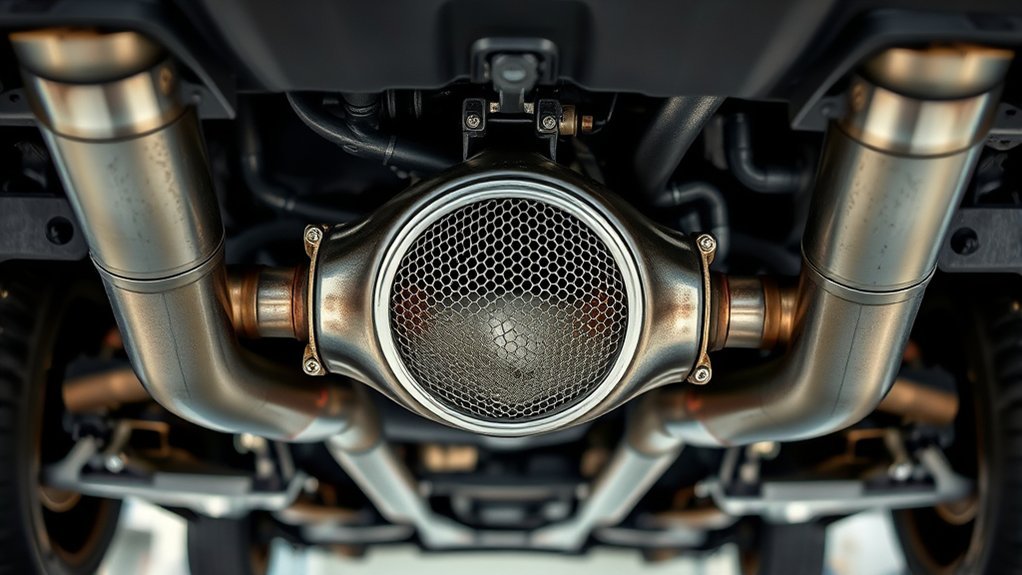
A catalytic converter is an emissions-control device mounted in the exhaust system. Inside the converter is a ceramic or metallic honeycomb coated with precious metals, usually platinum, palladium, and rhodium. These metals do not get used up quickly during normal operation; instead, they act as catalysts that speed up chemical reactions in hot exhaust gases.
In a gasoline Toyota RAV4, the converter helps reduce three major exhaust pollutants:
- Carbon monoxide (CO): a poisonous gas formed by incomplete combustion.
- Hydrocarbons (HC): unburned fuel vapors that contribute to smog.
- Nitrogen oxides (NOx): gases formed under high combustion temperatures that contribute to smog and respiratory irritation.
The converter uses both oxidation and reduction reactions. Carbon monoxide and hydrocarbons are oxidized into carbon dioxide and water vapor, while nitrogen oxides are reduced into nitrogen and oxygen. The converter works best when the engine is fully warmed up and the air-fuel mixture is controlled correctly by the engine computer and oxygen sensors.
Note: A catalytic converter does not make exhaust harmless. It reduces several toxic pollutants, but carbon dioxide still exits the tailpipe. Its main job is clean-air pollution control, not eliminating all greenhouse gas emissions.
The Importance of Catalytic Converters in Emission Control
Catalytic converters became common on U.S. gasoline vehicles in the mid-1970s as emissions standards became stricter. For your RAV4, the converter is essential for meeting federal and, where applicable, California emissions requirements. It also helps the onboard diagnostic system monitor whether the exhaust system is cleaning pollutants effectively.
Here is a clearer look at what the catalytic converter helps change:
| Pollutant | Converted Mainly To | Why It Matters |
|---|---|---|
| Carbon Monoxide | Carbon Dioxide | Reduces a poisonous exhaust gas |
| Nitrogen Oxides | Nitrogen and Oxygen | Helps reduce smog-forming pollution |
| Unburned Hydrocarbons | Carbon Dioxide and Water Vapor | Helps reduce fuel-vapor pollution and smog |
Because the converter is part of the emissions system, failure can cause more than a drivability complaint. It can trigger the check engine light, cause an emissions test failure, and in severe cases restrict exhaust flow enough to reduce power.
How Many Catalytic Converters Does a Toyota RAV4 Have?
The number and layout of catalytic converters on a Toyota RAV4 depends on the model year, engine, drivetrain, emissions certification, and whether it is gasoline, hybrid, or plug-in hybrid. Some RAV4 models use a converter integrated with the exhaust manifold, some use an underfloor converter assembly, and some exhaust layouts include more than one catalyst element.
The most reliable ways to confirm your exact setup are to:
- Check the emissions label under the hood.
- Use your VIN in Toyota’s official parts catalog or with a Toyota dealer parts department.
- Review the factory repair information for your exact model year and engine.
- Ask a qualified technician to inspect the exhaust layout before ordering parts.
This matters because ordering the wrong converter can cause fitment issues, sensor problems, emissions-test failure, or a rejected repair in states with stricter replacement rules.
Common Signs of Catalytic Converter Issues in Your Toyota RAV4
Catalytic converter problems often show up as a mix of warning lights, exhaust smells, and performance changes. The signs below do not prove the converter is bad by themselves, but they do mean the system needs diagnosis.
Check Engine Light and Emissions Codes
A failing or inefficient converter may trigger the check engine light. Common catalytic-converter-related codes include P0420 and, on vehicles with two monitored catalyst banks, P0430. These codes usually mean the engine computer sees low catalyst efficiency based on oxygen sensor readings.
However, these codes can also be influenced by exhaust leaks, aging oxygen sensors, fuel control problems, software issues, or engine misfires. That is why replacing the converter without testing can waste money.
Reduced Engine Performance
If your RAV4 feels slow, struggles to accelerate, or loses power at higher speeds, a clogged catalytic converter may be restricting exhaust flow. When exhaust cannot leave the engine efficiently, the engine has to work harder and may feel choked or unresponsive.
Engine misfires can also create this problem. A misfire sends unburned fuel into the exhaust, where it can overheat and damage the catalyst. If the root cause is not fixed, a new converter can fail again.
Unpleasant Exhaust Odors
A sulfur-like or rotten-egg smell from the exhaust can point to improper combustion, fuel mixture problems, overheating, or catalyst trouble. The odor alone does not confirm converter failure, but it is a warning sign that the exhaust system and engine management system should be checked.
Rattling Noises From Under the Vehicle
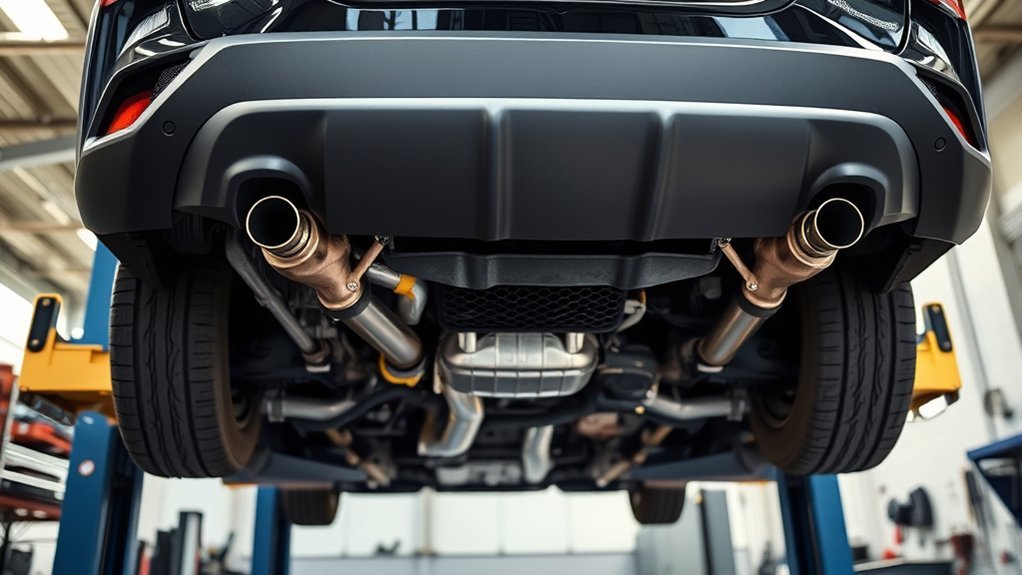
A rattling sound during startup, idle, or acceleration may mean the internal honeycomb substrate has cracked or broken apart. This can happen after impact damage, overheating, or age-related deterioration. A broken substrate can also shift and partially block exhaust flow.
Increased Emissions Levels
A weak or damaged catalytic converter may allow higher levels of pollutants to exit the tailpipe. You may discover this during an emissions inspection, after a check engine light scan, or when a technician performs exhaust-gas testing. Thick black smoke is usually more related to rich running, oil burning, or engine faults, but those faults can also damage the converter if ignored.
Warning: Do not keep driving for long with an active misfire, flashing check engine light, or strong overheating smell. Unburned fuel can overheat the catalytic converter and may create a fire risk or cause expensive catalyst damage.
How to Diagnose Catalytic Converter Issues in Your RAV4
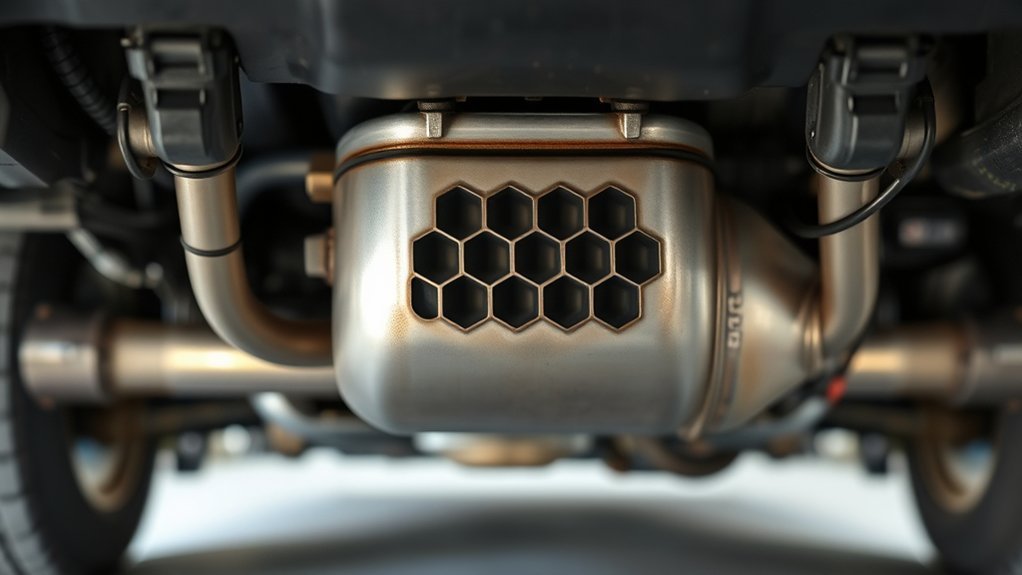
Good diagnosis starts with confirming whether the converter is actually the problem or whether another issue is making it look bad. A catalytic converter is usually expensive, so testing matters.
At a Glance
| Time Required | 30 minutes to 2 hours for basic diagnosis |
| Difficulty | Moderate for DIY checks; advanced for backpressure and fuel-trim diagnosis |
| Tools Needed | OBD-II scanner, flashlight, infrared thermometer, basic hand tools; professional shops may use a scan tool, smoke machine, pressure gauge, or exhaust analyzer |
| Cost | Often free to $150+ for basic code reading; professional diagnostics vary by shop and region |
[Products Worth Considering]

Meguiar's PlastX Clear Plastic Cleaner & Polish restores clarity to uncoated plastic surfaces by reducing light scratches, haze, yellowing, and oxidation. Its versatile formula works on headlights, taillights, plexiglass, and other clear plastics while leaving a protective water-resistant finish for improved visibility and safer nighttime driving.

EPAuto CP134 is a premium cabin air filter designed to help keep the air inside your vehicle cleaner and fresher. It includes activated carbon to help reduce odors and support a more comfortable ride for drivers and passengers. Built as a replacement option for many Honda and Acura models, it offers broad compatibility and dependable cabin air filtration.

Bosch 6029C HEPA cabin air filter is designed to help keep your vehicle’s passenger compartment filled with clean, fresh, odor-free air. Its dense HEPA media and electrostatic layer are engineered to capture fine particles while the added cotton layer supports higher filtration capacity. Built with structural ribs for stability, it helps maintain filter shape and airflow performance over time.
Step 1: Scan for Codes
Use an OBD-II scanner to read stored and pending trouble codes. Write down all codes before clearing anything. Catalyst-efficiency codes are important, but misfire codes, fuel-trim codes, oxygen sensor codes, coolant temperature codes, and air-fuel ratio sensor codes may reveal the real cause.
Step 2: Check for Engine Problems First
Before condemning the converter, check for engine issues that can damage it:
- Misfires from worn spark plugs, ignition coils, or fuel problems.
- Oil consumption that can coat the catalyst with ash deposits.
- Coolant leaks from internal engine problems.
- Rich fuel mixture from sensor, injector, or fuel-pressure faults.
- Exhaust leaks near the oxygen sensors.
Step 3: Inspect the Exhaust System
Look for dents, impact damage, loose heat shields, missing hardware, cracked welds, or signs of theft attempts. A loose heat shield can sound like a bad converter, while an exhaust leak can confuse oxygen sensor readings.
Step 4: Compare Temperature or Test Backpressure
A technician may compare inlet and outlet temperatures with an infrared thermometer or test exhaust backpressure with a pressure gauge. A restricted converter often causes abnormal backpressure. Temperature testing alone is not perfect, so it should be considered alongside scan data and engine condition.
Step 5: Confirm Before Replacing
Replace the catalytic converter only after confirming the catalyst is inefficient, melted, broken, contaminated, stolen, or physically damaged. If the root cause remains, the replacement converter can fail again quickly.
Pro Tip: If your RAV4 has a P0420 code but drives normally, ask the shop to check oxygen sensor activity, fuel trims, exhaust leaks, and misfire history before replacing the converter.
How Your Engine Performance Affects Your Catalytic Converter
Your catalytic converter depends on a healthy engine. When the engine runs correctly, the exhaust mixture stays within a range the converter can handle. When the engine runs too rich, misfires, burns oil, or leaks coolant into the combustion chamber, the converter can overheat or become contaminated.
Three engine conditions are especially hard on a converter:
- Engine misfires: Unburned fuel enters the exhaust and can burn inside the converter, raising temperatures beyond safe limits.
- Oil or coolant contamination: Burning oil or coolant can coat the catalyst and reduce its ability to clean exhaust gases.
- Incorrect air-fuel mixture: A rich or lean mixture can reduce catalyst efficiency and trigger emissions codes.
Routine maintenance protects the converter. Use the correct spark plugs, fix warning lights promptly, follow Toyota’s maintenance schedule, and use the fuel grade recommended for your specific RAV4. Do not use premium fuel as a “fix” unless your owner’s manual specifically calls for it.
Recognizing Clogging and Overheating Problems
A catalytic converter can fail chemically, physically, or by restriction. Chemical failure means the catalyst no longer cleans exhaust effectively. Physical failure means the internal structure is cracked or melted. Restriction means exhaust flow is blocked.
Common Clogging Causes
Clogging or restriction usually develops after another problem damages the converter. Common causes include:
- Untreated misfires: Unburned fuel overheats the catalyst and can melt the honeycomb.
- Oil burning: Oil ash can coat the catalyst surface and reduce flow.
- Coolant contamination: Internal coolant leaks can leave deposits that poison the catalyst.
- Impact damage: Road debris or bottoming out can crush the converter or break the substrate.
- Long-term rich running: Excess fuel can overheat and overload the converter.
Overheating Symptoms
Converter overheating may show up as excessive heat under the vehicle, a burning smell, power loss, or a flashing check engine light if misfires are active. In severe cases, the converter can glow red-hot. That situation requires immediate attention and the vehicle should not be driven until inspected.
Prevention Tips
To reduce the chance of catalytic converter damage:
- Fix misfires quickly: A flashing check engine light is urgent.
- Repair oil and coolant leaks: Contamination shortens catalyst life.
- Use the correct fuel: Follow the octane and fuel recommendations in your Toyota owner’s manual.
- Do not ignore oxygen sensor or fuel-trim codes: They can point to conditions that hurt the converter.
- Inspect after impacts: If the underside hits debris or a curb, check the exhaust system.
What Causes Catalytic Converter Contamination?
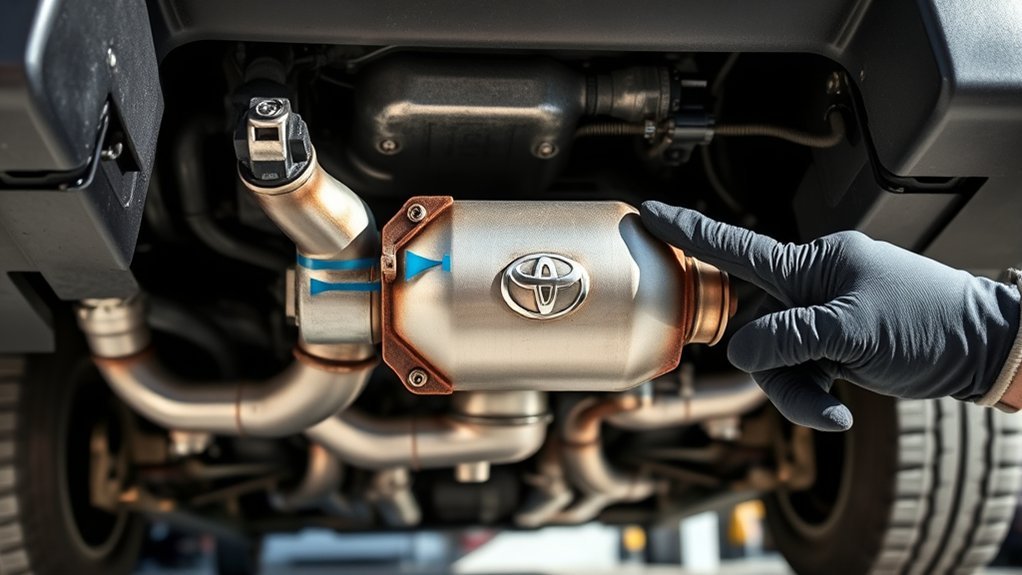
Catalytic converter contamination happens when substances enter the exhaust that the catalyst is not designed to process. The most common contaminants are oil ash, coolant residue, fuel additives used incorrectly, and excess unburned fuel from misfires or rich running.
Oil contamination can come from worn piston rings, valve stem seals, or PCV system problems. Coolant contamination may point to a serious internal engine issue. Excess fuel can come from a misfire, leaking injector, faulty sensor, or fuel-control problem. Once the catalyst is coated, melted, or broken, chemical “cleaners” rarely restore it to like-new condition.
If contamination is found, the cause must be repaired before installing a new catalytic converter. Otherwise, the replacement part may fail and the warranty may be denied.
Essential Maintenance Practices for Your RAV4’s Catalytic Converter
Most catalytic converter maintenance is actually engine maintenance. The converter is not a normal tune-up item, but it depends on the systems around it.
- Follow Toyota’s maintenance schedule: Replace spark plugs, filters, fluids, and other service items at the proper intervals for your model year.
- Fix warning lights early: Small ignition, sensor, or fuel problems can become converter problems.
- Inspect the exhaust system: Look for leaks, loose shields, impact damage, or missing hardware.
- Use correct engine oil: The wrong oil or excessive oil consumption can increase deposits.
- Avoid repeated short-trip abuse when possible: The converter needs heat to work efficiently, and constant short trips can increase moisture and deposits in the exhaust system.
A catalytic converter often fails because another system failed first. Diagnose the engine, fuel system, ignition system, sensors, and exhaust leaks before replacing the converter.
Catalytic Converter Theft Protection for a Toyota RAV4
RAV4 catalytic converters can be targets for theft because they contain valuable metals. Hybrid vehicles may be especially attractive in some markets because their converters can experience less wear from engine operation, depending on usage.
A catalytic converter shield can help deter theft, but it is not theft-proof. Thieves with enough time and cutting tools may still get through a shield. The goal is to make your vehicle harder and slower to target than nearby vehicles.
Ways to reduce risk include:
- Installing a quality catalytic converter shield or cage.
- Parking in well-lit areas or inside a garage when possible.
- Etching the VIN or a traceable ID onto the converter where local programs support it.
- Using motion lighting or cameras at home.
- Checking whether your insurance policy includes comprehensive coverage for theft.
[Products Worth Considering]

The ANCEL AD410 helps drivers quickly read and clear engine-related fault codes, view live data, and understand why the check engine light is on before heading to a repair shop. With built-in code definitions, readiness checks, and support for common OBD2 functions, it makes basic diagnostics straightforward for beginners and DIY users. Powered directly from the vehicle and easy to use with no app required, it offers practical value for everyday vehicle troubleshooting.

Turn your iPhone, Android device, or Windows PC into a professional-grade diagnostic scan tool with this Bluetooth OBD2 adapter. It is designed for broad vehicle compatibility and supports popular apps for deeper diagnostics, live data, and code clearing. Built-in protections and firmware updates help keep your vehicle and scanner safe while delivering reliable performance.

Designed and manufactured in the USA, made completely from 304 stainless steel and uses stainless steel tamper-proof screws.
When to Seek Professional Help for Your Catalytic Converter?
You should seek professional help if your RAV4 has a persistent check engine light, failed emissions test, strong sulfur odor, rattling converter noise, major power loss, or signs of overheating. A shop can test the full system instead of guessing.
| Symptom | Possible Issue | Best Next Step |
|---|---|---|
| Reduced engine performance | Restricted exhaust, misfire, fuel issue, or converter damage | Professional diagnosis |
| Sulfur-like odor | Fuel mixture problem, overheating, or catalyst issue | Inspect engine and exhaust system |
| Check engine light with P0420/P0430 | Low catalyst efficiency or related sensor/exhaust issue | Scan data and leak testing |
| Rattling under vehicle | Loose heat shield or broken catalyst substrate | Physical inspection |
| Flashing check engine light | Active misfire that can damage the converter | Stop driving and repair promptly |
Cost of Catalytic Converter Repair and Replacement
Catalytic converter repair costs vary widely because the price depends on your RAV4’s model year, engine, emissions certification, labor rate, and whether the part is OEM, aftermarket, or CARB-compliant. In many cases, an OEM converter assembly can cost hundreds to well over $1,000 before labor, and total replacement can reach $1,000 to $3,000 or more in some situations.
Before approving replacement, check these items:
- Warranty coverage: Federal emissions rules provide longer coverage for specified major emissions components, including catalytic converters, up to 8 years or 80,000 miles in many cases.
- California or CARB-state rules: If your vehicle is registered in California or another state that follows CARB rules, the replacement converter must be approved for your exact vehicle application.
- Root-cause diagnosis: Replacing the converter without fixing misfires, oil burning, coolant leaks, or fuel-control problems can ruin the new part.
- Insurance coverage: If the converter was stolen, comprehensive coverage may help pay for the repair, depending on your policy and deductible.
Repair is sometimes possible when the issue is a loose heat shield, exhaust leak, sensor problem, or stolen-converter damage to nearby pipes. But a melted, contaminated, cracked, or chemically failed catalyst usually requires replacement.
[Products Worth Considering]

【Vehicle Compatibility】Specifically engineered for Toyota RAV4 2001-2003 L4 2.0L, Reference Number: 674-593, 674593, 16385, 642277, 2505128080, 2505128260

【Vehicle Fitment】Catalytic Convertor Compatible with 2006-2008 Toyota Rav4 2.4L L4, 2008-2015 Scion xB 2.4L L4. Make sure to research the part's fit for your vehicle before purchasing. Enter your vehicle's information (year, make, model, engine, and trim) to verify compatibility and review the qualifier notes.
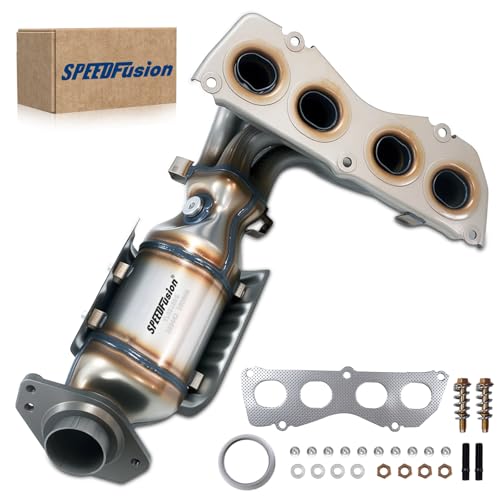
【Vehicle Fitment】Catalytic Convertor Compatible with Toyota RAV4 2009-2018 L4 2.5L, RAV4 2016-2018 L4 2.5L (Gas), Scion tC 2011-2016 L4 2.5L. Make sure to research the part's fit for your vehicle before purchasing. Enter your vehicle's information (year, make, model, engine, and trim) to verify compatibility and review the qualifier notes.
Frequently Asked Questions
What are the three main functions of a catalytic converter?
The three main functions are reducing nitrogen oxides, oxidizing carbon monoxide, and oxidizing unburned hydrocarbons. In simple terms, it helps turn several harmful exhaust pollutants into less harmful gases before they leave the tailpipe.
How many catalytic converters does a Toyota RAV4 have?
It depends on the model year, engine, drivetrain, and emissions package. Some RAV4 models have a converter integrated into the exhaust manifold, some have an underfloor converter assembly, and some layouts include more than one catalyst element. Use your VIN, emissions label, or Toyota parts information to confirm your exact setup.
Can thieves cut through a catalytic converter shield?
Yes. A catalytic converter shield can reduce theft risk by adding time, noise, and difficulty, but it is not completely theft-proof. For better protection, combine a shield with smart parking, lighting, cameras, VIN etching, and comprehensive insurance coverage.
Can I drive my RAV4 with a bad catalytic converter?
It depends on the failure. If the converter is only below efficiency, the vehicle may still drive, but it may fail emissions testing. If the check engine light is flashing, the vehicle lacks power, or the converter is overheating, stop driving and have it inspected because severe damage or fire risk is possible.
Will catalytic converter cleaner fix a P0420 code?
Usually not if the converter is melted, cracked, contaminated, or worn out. A cleaner may temporarily affect minor deposits, but it will not repair a damaged catalyst. Diagnose oxygen sensors, exhaust leaks, misfires, and fuel trims before replacing parts.
Is a Toyota RAV4 catalytic converter covered under warranty?
It may be, depending on the vehicle age, mileage, failure type, and emissions warranty terms. Federal emissions warranty rules provide longer coverage for specified major emissions components, including catalytic converters, up to 8 years or 80,000 miles in many cases. Always check your Toyota warranty booklet or ask a Toyota dealer before paying for replacement.
Conclusion
Your Toyota RAV4’s catalytic converter works like a chemical cleanup station in the exhaust system. It helps reduce harmful pollutants, supports emissions compliance, and protects air quality. When it fails, the symptoms can include poor acceleration, warning lights, exhaust odors, rattles, and failed emissions tests.
The smartest approach is to diagnose the whole system before replacing the converter. Fix misfires, oil burning, coolant leaks, exhaust leaks, and sensor problems first. With proper maintenance and prompt repairs, your RAV4’s catalytic converter can last longer and keep the vehicle running cleaner and more efficiently.
Sources
- U.S. Environmental Protection Agency: Emission Standards Reference Guide — supports the discussion of regulated vehicle pollutants and emissions standards.
- U.S. EPA: Transportation, Air Pollution, and Climate Change FAQs — supports the emissions warranty discussion and owner guidance.
- 40 CFR § 85.2103: Emission Warranty — supports the federal emissions warranty period information.
- California Air Resources Board: Aftermarket Catalytic Converters — supports CARB-compliant replacement converter guidance.
- Toyota Owners: Manuals and Warranties — supports checking model-specific Toyota warranty and maintenance information.
- Chemistry LibreTexts: Catalytic Converters — supports the explanation of oxidation and reduction reactions inside catalytic converters.