Last updated: August 21, 2026
Toyota Camry heated seat not working? Start with symptoms before buying parts. A switch light only proves the control side may be waking up; it does not prove the seat heater pad is actually getting power, has a good ground, or still has continuity. Use the checks below to narrow the fault safely.
Quick Answer
A Camry heated seat that lights up but stays cold usually has a blown seat-heater fuse, bad relay or switch output, loose connector, failed heater element, faulty temperature sensor, or damaged wiring under the seat. If you smell burning, see smoke, or feel one spot getting too hot, stop using the heater immediately.
Key Takeaways
- Do not trust the switch light by itself. Confirm power, ground, and heater-pad continuity before replacing parts.
- Exact fuse names, fuse ratings, relay locations, and connector pins vary by Camry year and trim, so use the owner’s manual or repair manual for your VIN.
- Cold spots usually point to a damaged heater pad; no heat from one seat often points to that seat’s fuse, connector, switch output, wiring, or element.
- Seat work can involve side airbags and seat-belt pretensioner wiring. Do not probe yellow SRS connectors, and disconnect the 12-volt battery before seat removal.
- A burning smell, smoke, scorched upholstery, or runaway heat is a stop-use safety issue, not just a comfort problem.
At a Glance
| Time Required | 15–30 minutes for basic fuse/switch checks; 1–3 hours for connector and element testing |
| Difficulty | Beginner for fuse checks; intermediate for multimeter testing; professional recommended for seat removal or SRS-adjacent work |
| Tools Needed | Owner’s manual, repair manual or wiring diagram, flashlight, trim-safe access tools, digital multimeter, correct replacement fuse, and basic hand tools |
| Cost | A fuse or connector repair may be low cost; full seat-heater replacement can exceed $1,000 depending on year, labor, parts, taxes, and location |
Quick Diagnostic Checklist: Camry Heated Seats Start Here
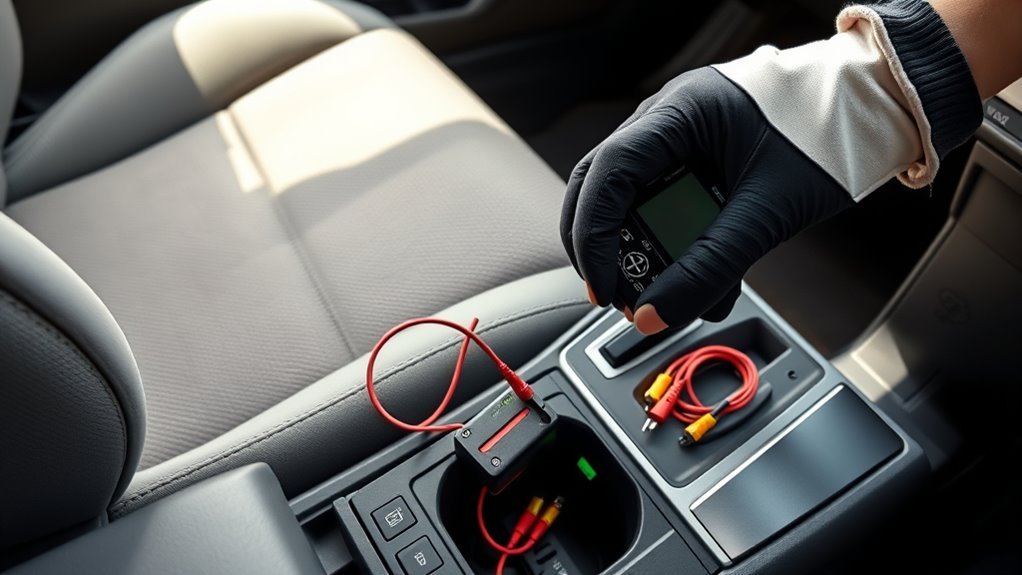
Use this checklist before removing a seat or ordering a heater pad. It separates simple power faults from pad, wiring, and control faults.
- Confirm the symptom. Note whether one seat fails, both seats fail, the switch light comes on, the seat warms unevenly, or the heat shuts off after a few seconds.
- Check the correct fuse. Look up the seat-heater fuse for your Camry year and trim in the owner’s manual or repair manual. Do not rely on a universal fuse number from another model year.
- Listen for relay or module response if your model uses one. A click can help, but it does not prove the relay contacts are passing current.
- Inspect under-seat connectors. Slide the seat back and forward, look for loose plugs, corrosion, water intrusion, bent pins, pinched harnesses, or objects caught under the seat track.
- Test switch output and seat power. With the correct wiring diagram, verify that voltage reaches the seat-heater circuit when the switch is on.
- Test the heater element only with the circuit isolated. Unplug the heater circuit and check resistance or continuity according to the service information for your model.
Warning: Many Camry front seats have side airbags, occupancy sensors, and seat-belt pretensioner wiring. Do not probe yellow SRS connectors. Before removing a seat or unplugging SRS-related connectors, disconnect the 12-volt battery and follow the wait time in the factory repair manual. If you are not comfortable with SRS precautions, have a qualified technician do the work.
How Do Camry Heated Seats Work?
A heated seat is a simple idea, but the circuit can vary by model year. Most systems use a switch or climate-control command, a fuse, wiring, one or more heater pads in the cushion and backrest, and a temperature sensor or control logic to keep the seat from overheating. Some Camry trims may also use a relay, seat-heater ECU, A/C amplifier, or body-control logic.
When the switch indicator lights, it usually means the command side of the circuit has power. It does not prove that the heating element has continuity or that current is flowing through the pad. That is why a seat can show an illuminated button and still stay cold.
Control Switch Operation
The heated-seat switch tells the system which heat level you want. Depending on the year and trim, that command may pass through a simple switch circuit, a relay, or a module. If the button lights but the seat stays cold, test the switch input and output with the correct wiring diagram instead of replacing the switch on guesswork.
Common switch-side signs include a dead indicator lamp, no voltage leaving the switch when activated, heat that works only on one setting, or intermittent operation when the switch is moved. If the passenger seat works normally and the driver’s seat does not, compare the two sides to isolate the fault faster.
Where Is the Camry Heated-Seat Fuse and Relay?
Camry fuse locations and labels are not the same across every generation. Some diagrams may use labels such as seat heater, S/HTR, HTR, or a trim-specific abbreviation, while others route the circuit through a module. Use your owner’s manual, the fuse-box cover, or Toyota repair information for the exact label, amperage, and location.
If a fuse is blown, replace it only with the same amperage. If it blows again, stop replacing fuses and diagnose the short or overloaded circuit. Repeated fuse failure can indicate damaged wiring, a shorted heater pad, a pinched under-seat harness, or water/corrosion in a connector.
Note: Swapping relays is only useful when the relay type, pin layout, and rating match exactly. Never swap a relay blindly just because it fits the socket.
Seat Heating Element Design
The heater pad contains thin resistive wiring or a heating mat bonded under the seat upholstery. Current flowing through the element creates heat, while a sensor or control circuit helps regulate temperature. A break in the element can create an open circuit and no heat. A damaged section can also create one hot area, one cold area, or intermittent warmth when the cushion flexes.
Because the pad is inside the cushion or backrest, replacement often requires upholstery work and sometimes seat removal. That is why it is worth confirming power, ground, connectors, and switch output before condemning the element.
Example: On some Camry generations, owners have traced the driver’s-side seat-heater feed to a blue wire (hot) with a white/black ground wire, with the passenger side using a pink hot wire, on a circuit fed by a 10–20A fuse. Exact wire colors and fuse amperage vary by generation and trim.
Top Signs a Camry Heated Seat Is Failing
The most useful diagnostic clue is the exact behavior. “No heat” can mean several different faults. “One cold spot” points somewhere else. “Too hot” or “burning smell” is a safety issue.
| Symptom | Most Likely Areas to Check | First Action |
|---|---|---|
| Switch light on, no heat | Element, connector, relay/contact side, switch output, ground | Check voltage at the seat-heater circuit and continuity of the pad |
| No switch light | Fuse, switch power feed, module power, wiring | Check the correct fuse and switch power feed |
| Uneven heat or cold patch | Broken heater pad, damaged cushion element, poor connector contact | Inspect and resistance-test the pad circuit |
| Both front seats do not heat | Shared fuse, shared power feed, module, climate-control command | Look for a shared power or control fault |
| Burning smell, smoke, or one spot too hot | Overheating pad, short, damaged insulation, control fault | Turn the heater off and stop using it until inspected |
No Heat From Switches
If the heated-seat switch lights up but the seat stays cold, the control command may be working while the power side or element side has failed. Start with the seat-heater fuse, then test whether the switch or module sends power toward the seat. Next, inspect the under-seat connector and test the heater pad according to the wiring diagram.
Do not assume the switch is bad just because the seat is cold. A failed heater element, loose connector, corroded terminal, bad ground, or open circuit can create the same symptom.
Uneven or Cold Spots
A heated seat that warms in one area but stays cold in another often has a damaged heating pad. The element wires flex every time someone sits down, shifts weight, or kneels on the cushion. Over time, that flexing can break a conductor or damage the bond between the pad and the upholstery.
Cold spots are different from a whole-seat power failure. If one small area stays cold or one small area gets unusually hot, stop guessing at fuses and focus on pad condition, connector contact, and temperature sensing.
Burning Smell or Smoke
A burning smell, visible smoke, scorched seat material, or a hot spot that feels unsafe means the heater may be overheating. Turn the seat heater off immediately. If the odor continues, park safely, shut the vehicle off, and have the circuit inspected before using the heater again.
Heated-seat pad failures can create hot spots and, in severe cases, damage upholstery or raise fire risk. Treat this as a safety problem, especially for children, older adults, people with reduced skin sensitivity, or anyone who may not quickly feel excessive heat.
If the seat smells burnt, smokes, or gets hot in one small area, stop using the heater. A comfort feature is never worth the risk of a shorted pad, damaged wiring, or overheated upholstery.
Quick Checks to Try First
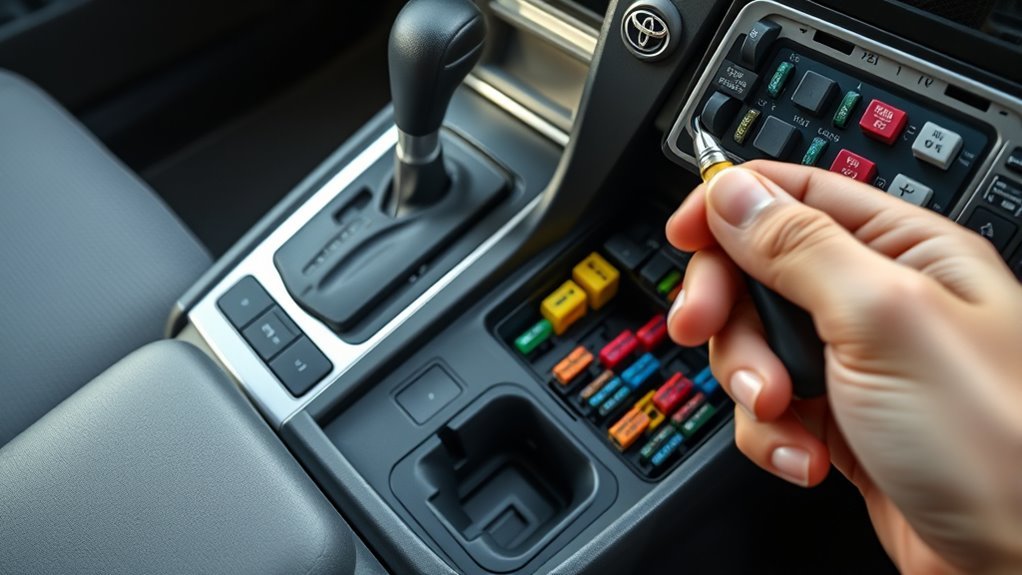
These quick checks help you decide whether the problem is simple or needs deeper testing.
- Try the other heated seat. If the passenger side works but the driver side does not, the problem is probably local to the failed seat.
- Check the heater setting. Make sure the vehicle is in the correct power mode and the seat-heater switch is actually set to heat, not ventilation on equipped models.
- Inspect the seat track area. Coins, bottles, cargo, or floor mats can tug or pinch under-seat wiring.
- Check the fuse listed for your model. Use the fuse puller and a multimeter if possible. A fuse can look good and still test poorly.
- Watch the switch indicator. No light suggests a switch, power feed, fuse, or module issue. A light with no heat points farther downstream.
- Look for water or corrosion. Spilled drinks, wet carpet, or water intrusion under the seat can create high resistance or intermittent faults.
Pro Tip: If only one seat fails, compare the working side with the failed side. Similar connector locations, switch behavior, and resistance readings can help you spot the abnormal circuit without guessing.
Test the Seat-Heater Circuit: Power, Ground, and Continuity
Use a digital multimeter and the correct wiring diagram for your Camry. The goal is to find where the circuit stops: power supply, switch or module output, connector, ground, or heater element.
[Products Worth Considering]

This automotive circuit tester checks low-voltage DC systems from 3-65V, making it useful for diagnosing headlights, taillights, fuses, sockets, and other vehicle wiring issues. The digital backlit display provides clear voltage readings with fine accuracy, while the bidirectional polarity indicator helps you test from either ground or positive. Built with a durable probe, insulated tip, and extra-long spring wire, it is designed for dependable everyday use in automotive and household electrical work.

The KONNWEI KW208 is a versatile 12V battery tester designed to quickly analyze battery health, cranking performance, and charging system status for cars, trucks, boats, motorcycles, and more. It supports multiple battery types and provides clear guidance on whether a battery should be recharged or replaced, helping you diagnose issues before they become failures. With plug-and-play use, high accuracy, and multilingual support, it offers a convenient way to test batteries in-vehicle or out-of-vehicle.
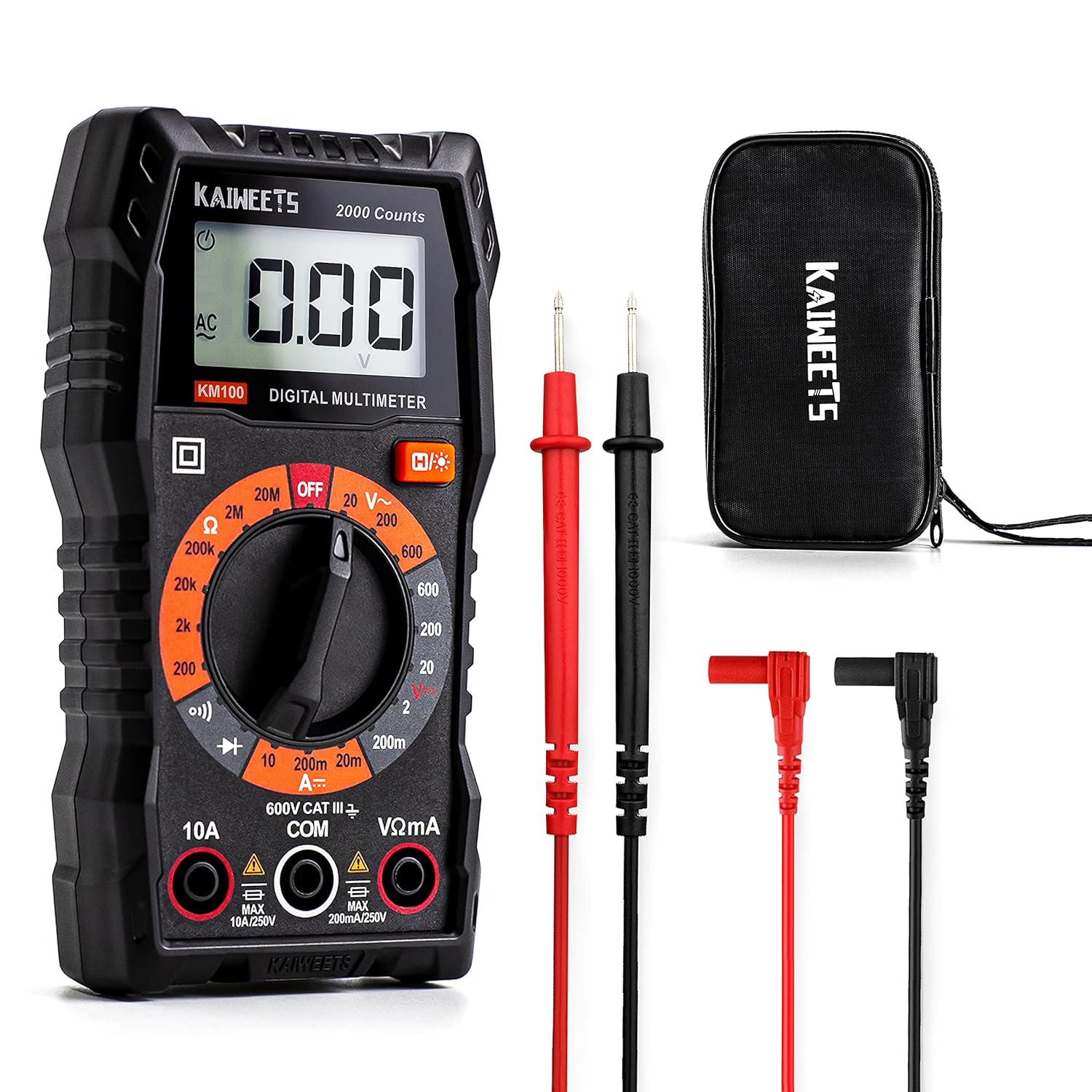
This KAIWEETS digital multimeter is a versatile tool for measuring AC/DC voltage, DC current, resistance, continuity, and diodes in home, automotive, and electrical applications. It includes pre-installed batteries, a carrying case, test leads, data hold, backlight, and overload protection for easier and safer everyday testing. Built with double fuses and rated for broad household and light professional use, it helps users diagnose electrical issues with confidence.
Step 1: Check for Power at the Seat-Heater Feed
With the heater commanded on and the connector identified from the wiring diagram, check whether voltage reaches the heater circuit. If there is no voltage, move upstream toward the fuse, relay, switch, or control module. If voltage is present but there is no heat, move downstream to ground and element checks.
Step 2: Check Ground Integrity
A poor ground can make the seat weak, intermittent, or completely dead. Test the ground path according to the wiring diagram. Do not assume every black wire is ground, and do not pierce insulation unless the repair manual allows that method.
Step 3: Check Heater-Pad Resistance
Turn the system off, isolate the heater pad connector, and measure resistance across the heater element leads specified in the manual. An open circuit usually means a broken element. A reading far outside the service-manual range can point to a damaged pad, shorted section, or wrong test point.
Step 4: Wiggle-Test the Harness
If the seat heats intermittently, gently move the under-seat harness while watching the meter reading. A reading that jumps or cuts out can indicate a broken wire near the seat track, a loose terminal, or corrosion inside a connector.
Common Failures: Switch, Heater Element, Sensor, Wiring, or Module
Once you know where the circuit stops, the likely repair becomes much clearer.
- Blown fuse: Often simple if it happened once, but repeated fuse failure means the circuit needs diagnosis.
- Loose or corroded connector: Common under seats because the harness moves and the area collects moisture, dust, and debris.
- Failed heater element: A frequent cause when the switch works but the seat does not warm.
- Faulty temperature sensor or thermistor: Can cause the heater to shut off too soon, cycle strangely, or fail to regulate heat.
- Switch or relay fault: Possible when the command does not reach the seat or the relay contacts fail under load.
- Control module issue: Less common, but possible if power, ground, switch input, and pad condition all test correctly.
[Products Worth Considering]
These custom-fit floor mats are designed for Toyota 4Runner models from 2003 to 2009, offering edge-to-edge coverage for a factory-like fit without trimming. Built for all-weather protection, they help shield your interior from mud, snow, sand, rainwater, and daily debris while staying securely in place. The durable TPE construction is flexible, easy to clean, and made to handle regular use with minimal maintenance.

The CRAFTSMAN CMXCESM258 is a versatile 4-in-1 battery charger and maintainer designed to charge, maintain, test, and restore a wide range of vehicle batteries. Its microprocessor-controlled operation, auto voltage detection, reverse hook-up protection, and multi-stage charging help support reliable starts and extend battery life for cars, motorcycles, ATVs, trucks, SUVs, and boats.

[Part Number] 3U2Z-14S411-ZMB WPT928 WPT-928
Wiring, Connectors, and Control Modules: When to Suspect Electronics
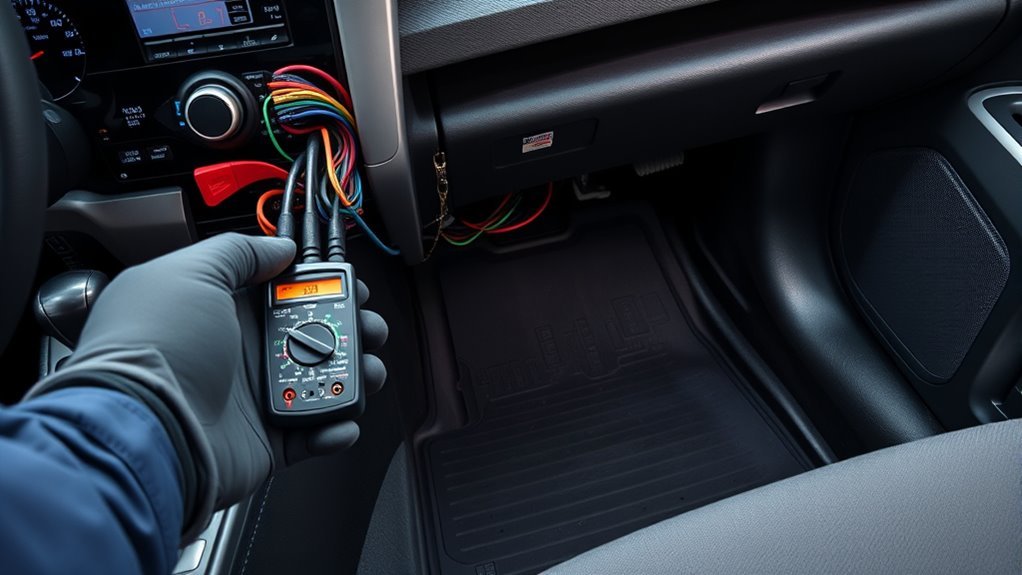
Suspect wiring or electronics when the problem changes as the seat moves, appears after interior water exposure, affects both seats, or returns after a fuse is replaced. Under-seat harnesses live in a harsh spot: they move with the seat, sit near shoes and floor mats, and can be hit by stored items.
Look for rubbed insulation, crushed wires, loose locking tabs, green corrosion on terminals, and connectors that are not fully seated. If the circuit runs through a seat-heater ECU, A/C amplifier, body ECU, or climate-control module, use scan-tool data and factory diagnostic steps rather than replacing modules by trial and error. On models where the seat-heater command routes through the A/C amplifier (climate-control ECU), a single fault in that shared module — not the fuse — can take out both seats’ heat at once even when every fuse tests good. That’s worth ruling out before assuming both heater pads failed simultaneously, which is statistically less likely than one shared control fault.
| Finding | What It Suggests | Best Next Step |
|---|---|---|
| Fuse blows again | Shorted pad or wiring | Stop replacing fuses and isolate the circuit |
| Heat cuts out when seat moves | Broken or stretched under-seat harness | Wiggle-test wiring and inspect seat-track area |
| Pad has open circuit | Failed heater element | Replace the correct cushion or backrest heater pad |
| Both seats fail together | Shared power, control module, or climate-control command issue | Check shared fuses, power feeds, module inputs, and scan data |
Repair Options and Camry Cost Estimates
Repair cost depends on what actually failed. A fuse, connector cleaning, or minor wiring repair is very different from replacing a heater pad inside the seat. Full Toyota Camry seat-heater replacement can be a higher-cost job because the seat may need to come out and the upholstery may need to be disassembled.
As a public benchmark, RepairPal’s Toyota Camry seat-heater replacement estimate lists an average range of about $1,055–$1,128, excluding taxes, fees, and location factors. A shop quote may be lower or higher depending on model year, leather or cloth upholstery, parts availability, diagnostic time, and whether related SRS or occupancy-sensor work is needed.
| Repair Type | DIY-Friendly? | Notes |
|---|---|---|
| Replace correct blown fuse once | Yes | Use the same amperage; diagnose if it blows again |
| Clean or reseat non-SRS connector | Sometimes | Battery-off precautions are wise near seat wiring |
| Switch or relay replacement | Sometimes | Confirm failed output before buying parts |
| Heater pad replacement | Usually pro-level | Often requires seat removal and upholstery disassembly |
| Module or advanced wiring diagnosis | Professional recommended | Requires wiring diagrams, scan data, and SRS-safe procedures |
[Products Worth Considering]

Cool and Breathable: This TPR cold gel has the property of greatly reducing the heat conduction and so on. It is not affected by the high temperature of the environment in the hot summer. It quickly conducts body heat away. With the breathable fabric and honeycomb ventilation structure, air can circulate freely inside the cushion, taking away heat and keeping it cool. You can say goodbye to the hot seat and enjoy a cool and cozy driving time in the hot summer.

Cool and Breathable: This TPR cold gel has the property of greatly reducing the heat conduction and so on. It is not affected by the high temperature of the environment in the hot summer. It quickly conducts body heat away. With the breathable fabric and honeycomb ventilation structure, air can circulate freely inside the cushion, taking away heat and keeping it cool. You can say goodbye to the hot seat and enjoy a cool and cozy driving time in the hot summer.

More Breathable: Crafted from mesh fabric, our car seat cushion boosts air circulation to reduce sweat buildup in daily indoor or normal temperature environments (20-28℃). Ideal for summer, it minimizes heat and moisture even during long drives, preventing the burning feel on leather seats in midday heat. Note: Breathability is affected by scenarios—for high temperatures (above 30℃) or high humidity (e.g., outdoor exposure, strenuous exercise), loose clothing is recommended for better experience
Check for Recalls Before Paying for Repair
Before paying for a heated-seat repair, check whether your specific Camry has an open safety recall or service campaign. Use Toyota’s owner resources and the official NHTSA recall lookup with your 17-character VIN.
Even if a recall is not related to your Camry, heated-seat overheating has been serious enough in the broader auto industry to trigger safety recalls. For example, an NHTSA recall document for a Chrysler Dodge Dakota (unrelated to Toyota) described heated-seat pad fatigue that could create hot spots, burn holes, open flames, and injury or fire risk. That is why smoke, burning odor, or excessive heat should be treated seriously.
What to Tell Your Mechanic and Common DIY Mistakes
A clear symptom report can save diagnostic time. Tell the technician:
- Which seat fails: driver, passenger, or both.
- Whether the switch light turns on.
- Whether the seat is fully cold, uneven, intermittent, too hot, or smells burnt.
- Whether the problem changes when the seat moves.
- Whether any fuse was replaced and whether it blew again.
- Whether water, spills, interior cleaning, or seat removal happened recently.
Avoid the most common DIY mistakes: replacing the switch without testing the heater pad, replacing fuses repeatedly, probing SRS connectors, using another Camry year’s fuse diagram, or removing the seat without battery and airbag precautions.
Frequently Asked Questions
How do you diagnose a Toyota Camry heated seat that is not working?
Start with the symptom, then check the correct seat-heater fuse for your model year, inspect under-seat connectors, verify switch or module output, confirm power and ground at the heater circuit, and test heater-pad resistance with the circuit isolated. Use a wiring diagram because connector pins and fuse labels vary by year.
Why does my Camry heated-seat switch light up but the seat stays cold?
The light usually means the command side is active, but it does not prove the heater pad is receiving current. The fault may be a failed heater element, bad relay contact, loose connector, poor ground, wiring break, or control-module issue.
What is the most common heated-seat problem?
For a seat that commands on but does not warm, a failed heater element is a common cause. However, a blown fuse, bad switch output, corroded connector, broken under-seat wire, temperature sensor fault, or control issue can create the same complaint, so testing matters.
Can I drive with a bad heated seat?
If the heater simply does not work, the car is usually driveable. Do not use the seat heater if it smells burnt, smokes, gets too hot, creates a hot spot, or repeatedly blows a fuse. Those symptoms can point to an electrical or overheating risk that should be repaired promptly.
How much does it cost to replace a Camry heated-seat element?
Cost depends on the year, trim, seat material, labor rate, and whether the cushion, backrest, wiring, or module is involved. A simple fuse or connector fix may be inexpensive, while public estimates for full Toyota Camry seat-heater replacement can be around $1,050–$1,130 or more before taxes and local fees.
Can I replace a Camry heated-seat element myself?
It’s possible but usually pro-level work: the heater pad is bonded inside the seat cushion or backrest upholstery, so replacement typically means removing the seat, disconnecting the 12-volt battery first, disassembling the upholstery, and being careful around any SRS side-airbag wiring. Confirm the fault is actually the element (not a fuse, connector, or switch) before starting, since those simpler fixes don’t require opening the seat at all.
Conclusion
A cold Camry heated seat is easiest to fix when you diagnose it in order: confirm the symptom, check the correct fuse for your model year, inspect under-seat wiring, verify power and ground, and test the heater pad before replacing parts. If the seat has cold spots, the pad may be damaged. If it smells burnt, smokes, or gets too hot, stop using it and have the circuit inspected. When seat removal, upholstery work, airbags, or control modules are involved, a professional diagnosis is usually the safer and cheaper path.
Sources
- Toyota 2025 Camry Hybrid Owner’s Manual: Seat heaters and seat ventilators — Toyota seat-heater use, burn cautions, and seat-heater damage prevention guidance.
- Toyota Manuals and Warranties — official Toyota owner-manual and vehicle-specific information portal.
- NHTSA Recall Lookup — official VIN recall search for safety recalls.
- NHTSA Safety Recall 17V-820 (Chrysler/Dodge Dakota) — Heated Seats — example of heated-seat pad overheating, hot spots, burn holes, and fire-risk language; not a Toyota recall.
- RepairPal Toyota Camry Seat Heater Replacement Cost Estimate — public repair-cost benchmark and overview of diagnosis, symptoms, and SRS-related repair cautions.