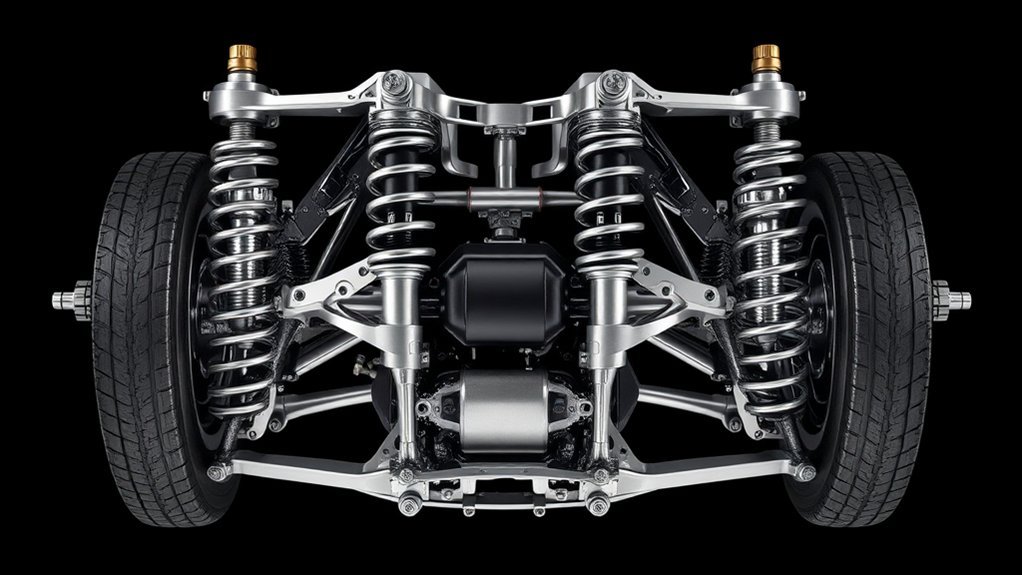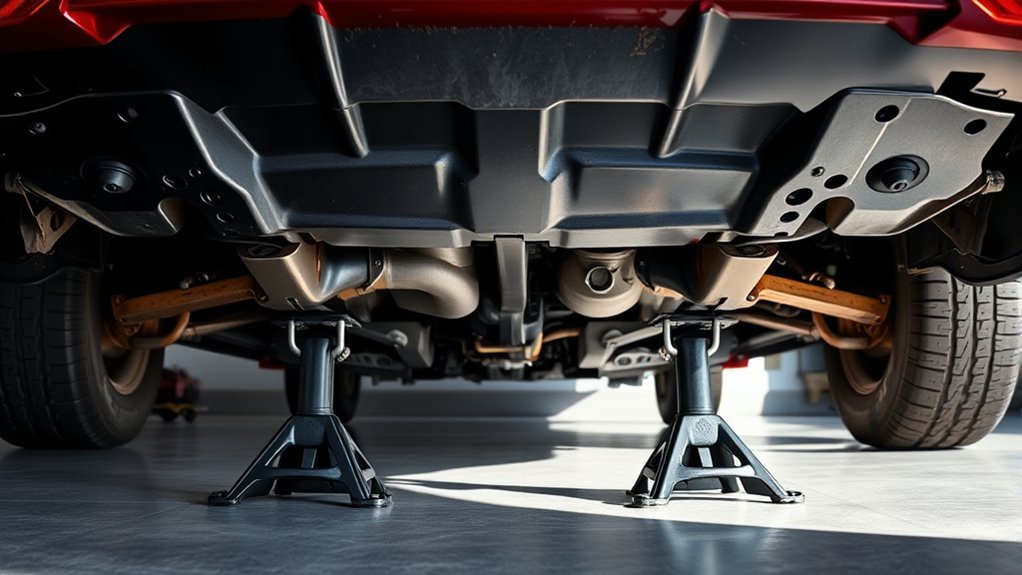
Toyota Camry Jacking Points: Safe Lift and Jack Stand Guide
Toyota Camry jacking points are the reinforced locations identified in the owner’s manual or year-specific repair information. For a roadside wheel change, use the marked side pinch-weld point near that wheel. For garage work, use only the confirmed front or rear floor-jack point, then lower the vehicle onto approved jack-stand support points. The lifting point and the stand point are not automatically the same. Never work under a Camry held only by a jack.
Quick Answer
Match the lift method to the job. For a flat tire, use the factory tire jack only at the marked side point shown for that wheel. For maintenance, use a rated floor jack at the exact front or rear point shown for your Camry, then support the vehicle on rated stands at approved support points. Check drivetrain-specific diagrams: Toyota’s 2025 Camry manual, for example, shows different rear floor-jack locations for 2WD and AWD models.
Key Takeaways
- Confirm the exact model year, drivetrain, lift point, and stand point before raising the Camry.
- Do not assume the tire-jack point, floor-jack point, and jack-stand support point are interchangeable.
- Use wheel chocks, a flat solid surface, and equipment with readable capacity labels.
- Support the Camry with rated jack stands before working near or under it.
- Avoid control arms, plastic panels, the exhaust, fuel-system parts, and hybrid high-voltage covers or cables.
[Products Worth Considering]

This low profile hydraulic floor jack is designed for cars, coupes, hatchbacks, and sedans with limited ground clearance, making it a practical choice for garages and home maintenance. It lifts smoothly up to a useful height range with a single piston quick-lift pump, while the steel construction, rotating saddle, and overload protection help improve stability and safety during use.
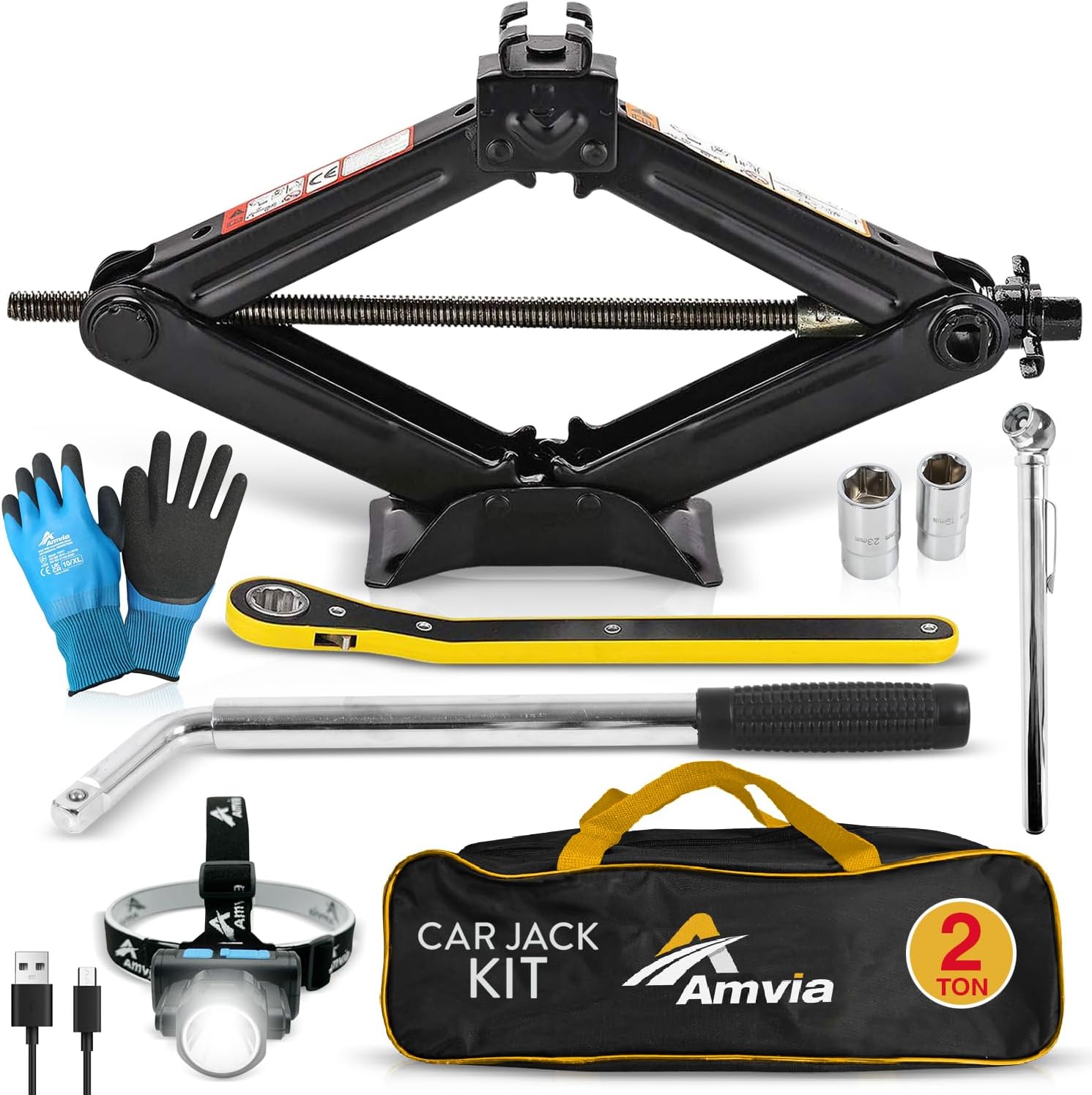
This all-in-one car jack kit is built to help drivers handle flat tire emergencies quickly and safely. It includes a 2 ton scissor jack, telescopic lug wrench, USB rechargeable LED headlamp, tire pressure gauge, gloves, and a storage bag for organized trunk storage. Designed for a wide range of vehicles, it offers a compact, portable solution for roadside tire changes day or night.
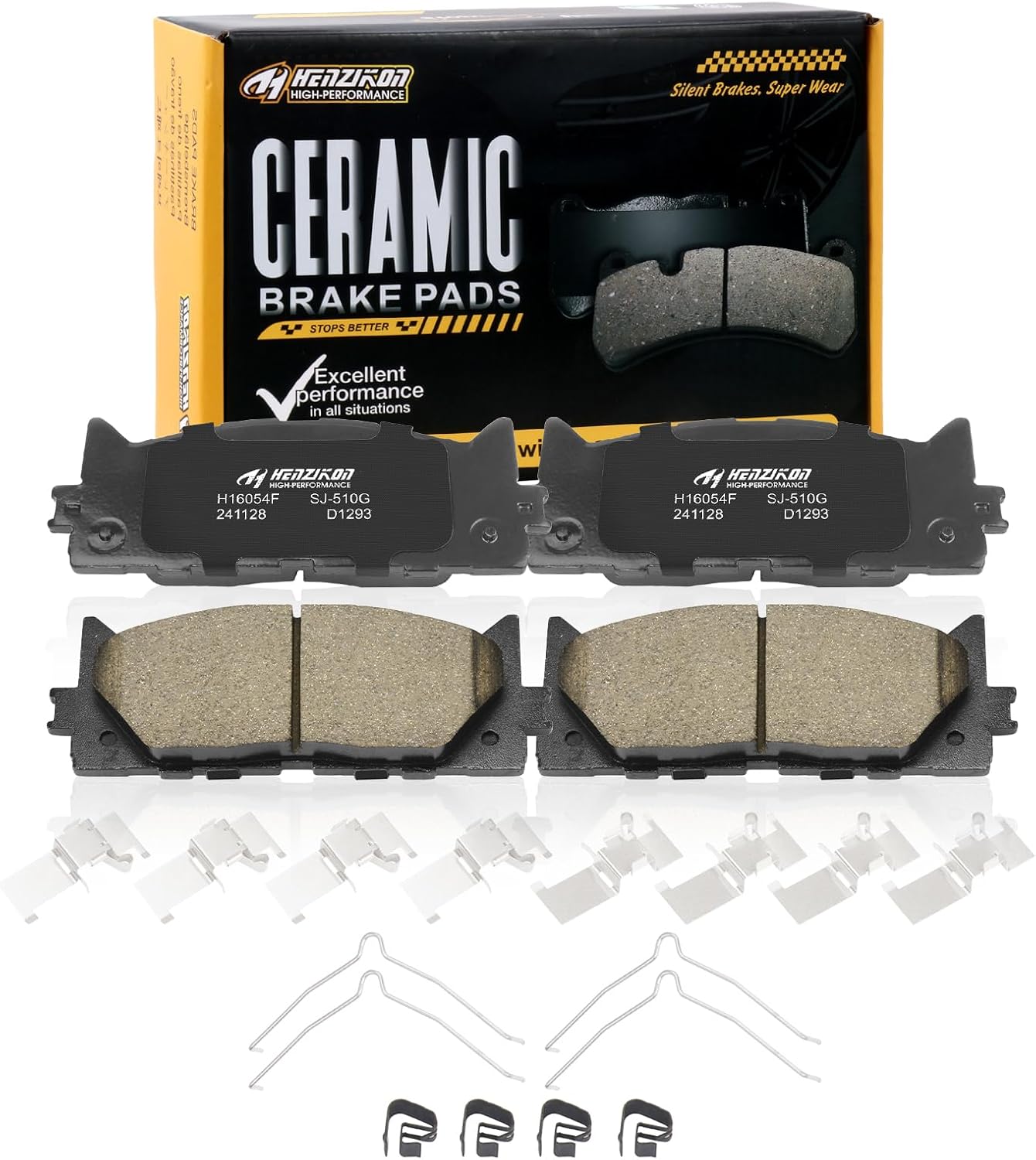
These ceramic front brake pads are designed for compatible Toyota Avalon, Camry, and Lexus ES-series vehicles, offering dependable stopping power and smooth, consistent braking performance. Built with included hardware for easier installation, they help reduce squealing and brake dust while supporting long-term durability for everyday driving.
Quick Jack Point Map for a Toyota Camry
This map separates lifting from supporting. It does not replace the factory diagram, because Toyota changes floor-jack and support locations across generations and drivetrains.
|
Job |
Point to confirm |
Critical limit |
|---|---|---|
|
Roadside wheel change |
Marked side pinch-weld point for that wheel |
Use the factory tire jack only for the manual-listed roadside task |
|
Lift the whole front |
Front floor-jack point shown for your exact Camry |
Do not substitute the oil pan, radiator support, or a convenient suspension part |
|
Lift the whole rear |
Rear floor-jack point for the exact year and drivetrain |
Do not assume the 2WD and AWD diagrams match |
|
Support the raised car |
Approved jack-stand or safety-stand locations in repair information |
A floor-jack point is not automatically a stand point |
Parking-brake warning: Do not use one setup for every lift. Toyota’s roadside tire-change procedure uses Park and the parking brake. Some full-vehicle service procedures call for Neutral and the parking brake released, with the wheels securely chocked. Follow the exact procedure for your model and lift type.
Are Camry Jacking Points and Jack-Stand Points the Same?
Not always. A jacking point is designed to accept force while the vehicle is being raised. A support point is designed to hold the vehicle after it is lifted. The side pinch-weld area may serve both roles on some Camry procedures when the correct saddle or adapter is used, but you should not assume that every floor-jack point is also an approved stand location.
This distinction matters when you lift the full front or rear. The floor jack may occupy the central lift point while the stands go at separate reinforced locations. Confirm both locations before the first pump. If your owner’s manual shows only the emergency tire-jack points, use year-specific Toyota repair information or a qualified shop for the stand locations.
Toyota Camry Jacking Points: How to Identify the Safe Lift Areas
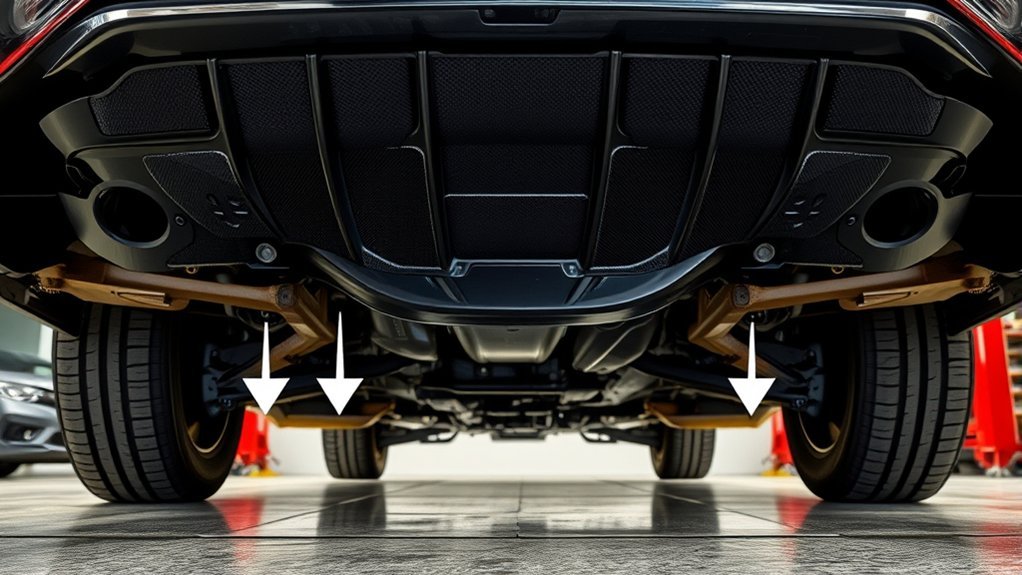
Start with the jacking diagram for your exact Camry. Side tire-jack points are normally reinforced sections of the rocker-panel pinch weld near the wheels. Floor-jack points for lifting an entire end are farther inboard and can change with the generation or drivetrain. Toyota’s 2025 Camry manual, for example, provides one front diagram and separate rear diagrams for 2WD and AWD models.
Look for the shape and location shown in the manual, not simply the nearest thick-looking part. Do not use thin sheet metal, plastic covers, the oil pan, or an unconfirmed suspension or wheel-bearing area. The jack saddle must sit squarely on the specified point without touching nearby brackets, covers, or high-voltage components. Stop if the point is unclear or begins to deform.
Warning: Do not lift from control arms, the oil pan, the exhaust, the fuel tank, hybrid battery covers, or plastic underbody panels.
Source note: Use the manual for your exact Camry year and drivetrain. Toyota lets owners select a vehicle and open its owner’s manual. The 2025 Camry manual states that incorrect floor-jack placement can damage the vehicle or cause injury, and it shows separate rear locations for 2WD and AWD models. OSHA’s portable-jack standard also requires adequate rated capacity, a legible load marking, and immediate securing of a raised load.
What Do Camry Jack Point Notches Look Like?
Side jack points sit along the rocker-panel seam near the wheels. Depending on the year, the manual may show small notches, a short reinforced section, or a recessed area that centers the factory jack. Dirt, undercoating, bent trim, or previous damage can hide these markers, so compare both sides of the car with the diagram instead of relying on a generic photo.
At a confirmed pinch weld, the saddle or adapter must contact the reinforced section squarely. A slotted rubber pad or pinch-weld adapter can reduce side loading, slipping, and cosmetic damage. It cannot strengthen rusted metal, repair a crushed seam, or make an unapproved point safe.
What Should You Verify in the Manual Before Lifting?
Before placing the jack, confirm the model year, drivetrain, and the exact type of lift you are performing. Hybrid, non-hybrid, 2WD, and AWD layouts can differ. A diagram for another Camry generation may put the saddle under a bracket, cover, exhaust part, or high-voltage component on your car.
Verify four items: the side tire-jack points; the front and rear floor-jack points; the separate jack-stand support locations; and the required transmission, parking-brake, and wheel-chock setup. Also read the emergency-jack warnings. Toyota limits the vehicle-supplied jack to the roadside tasks described in the manual, not routine under-car maintenance.
Before You Begin: Tools and Safety Checks
Identify the lifting and support points before moving the jack under the car. Make sure the floor jack can reach the central point without the handle, chassis, or saddle contacting a bumper, splash shield, exhaust part, or high-voltage cover. If the jack cannot reach while staying level, use suitable low-profile equipment or have a shop lift the vehicle.
Use the right tools before you start:
- A floor jack with adequate rated capacity and lift range
- Two or four rated jack stands with readable labels and enough height adjustment
- Wheel chocks for the wheels that stay on the ground
- A flat, solid surface such as concrete
- Your Toyota Camry owner’s manual
- A rubber jack pad or pinch-weld adapter if your setup needs one
- Gloves and eye protection
Inspect the jack, saddle, casters, handle, release valve, and stands before use. Do not use equipment with leaks, cracks, bent legs, damaged pins, worn teeth, unstable bases, or unreadable labels. Check whether the stand rating applies to each stand or to the pair, and follow the equipment maker’s instructions.
[Products Worth Considering]

This wheel alignment tool makes it easy to check and adjust toe-in and toe-out at home for better handling, stability, and more even tire wear. Designed for one-person use, it includes tape-measure slots for simple setup and accurate measurements without extra help. Its stainless steel construction and broad vehicle compatibility make it a practical addition to any DIY garage.

This low-profile floor jack delivers strong lifting capacity for routine automotive maintenance, from tire changes to brake work and oil service. Its wide lift range, easy-rolling steel wheels, and single piston hydraulic pump make it practical for cars, SUVs, and light trucks. Built with durable steel and safety-focused features, it offers dependable performance and convenient storage.

This low profile hydraulic floor jack is built for quick and efficient vehicle lifting, making it a practical choice for garage and shop use. Its dual pump design helps raise loads faster, while the steel construction and safety features support reliable performance over time. With a wide lifting range, smooth-rolling casters, and a detachable handle, it offers convenient maneuverability and dependable support for automotive maintenance tasks.
How Do You Lift a Toyota Camry and Place Jack Stands?
Use this sequence only after confirming the model-specific diagram and control settings:
- Choose the correct procedure. Confirm whether you are changing one tire, lifting one end, or raising the full vehicle. Follow the listed gear-selector and parking-brake instructions for that procedure.
- Use a hard, level surface. Concrete is preferred. Do not lift on a slope, soil, asphalt softened by heat, gravel, or a wet surface.
- Chock the wheels. Chock the wheels that remain on the ground on both sides where the procedure requires it.
- Locate both types of point. Identify the lifting point and the separate stand locations before raising the car.
- Center the jack saddle. Roll the jack into position so the saddle rises squarely without pushing the vehicle sideways.
- Raise the Camry slowly. Stop immediately if the saddle walks, the point bends, or the vehicle shifts.
- Place matched stands. Set the stands at equal height under the approved support points with each base flat and each lock fully engaged.
- Transfer the load gradually. Lower the jack slowly until the stands carry the weight. Confirm that the saddles remain centered.
- Test from outside the danger zone. Apply a controlled push at a solid body area. Lower and reset the vehicle if any stand rocks, tilts, or moves.
- Use the jack only as secondary backup. It may remain positioned without carrying the working load if it does not interfere, but the stands must support the vehicle.
For jobs such as Camry front brake-pad replacement, support both sides of the lifted end evenly. Do not combine stands of different heights, capacities, saddle shapes, or locking conditions.
[Products Worth Considering]

This scissor car jack kit provides a dependable solution for emergency tire changes and roadside repairs. With a lifting range suited for low sedans and higher-body SUVs, it comes with essential tools like a ratchet wrench, lug wrench, gloves, tire pressure gauge, and storage bag for convenient use and transport. Built for stability and ease of operation, it is a practical all-in-one kit for cars, SUVs, and MPVs.

These Amazon Basics steel jack auto stands provide dependable support for vehicle maintenance with a self-locking ratchet design for easy height adjustment. Built from durable steel with a rustproof coating, they meet recognized safety standards and are designed for sedans and urban SUVs. The pair offers a stable, easy-to-read solution for routine garage work and comes backed by a limited warranty.
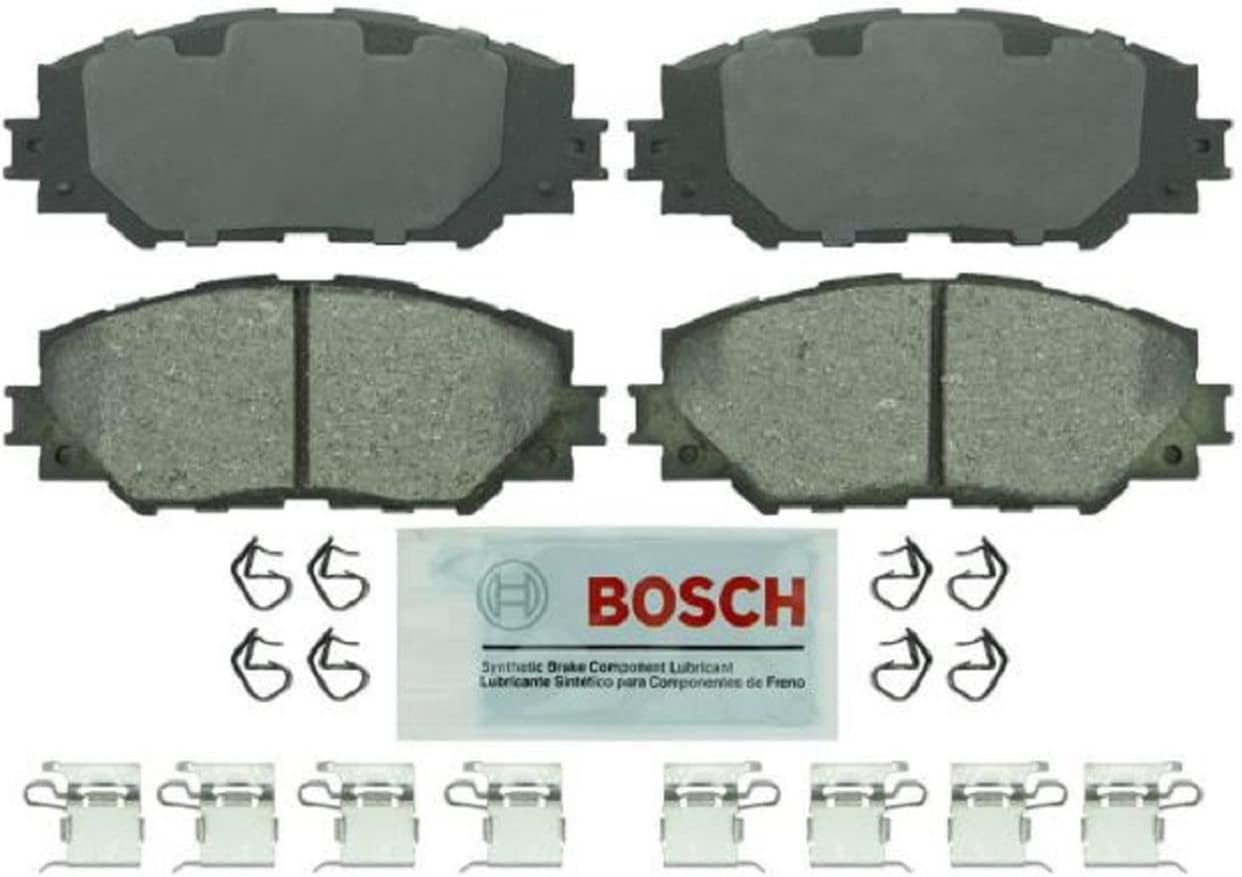
Bosch Blue ceramic front brake pads deliver dependable stopping power with platform-specific friction material designed for select Lexus, Pontiac, Scion, and Toyota vehicles. OE-style shims, slots, and chamfers help promote quiet braking, while the rust-inhibitive coating supports long-lasting performance and cleaner operation. The set includes hardware and synthetic lubricant for easier installation on one axle.
Top Mistakes to Avoid When Lifting Your Camry
Many lifting accidents start with poor jack placement. Avoid lifting your Toyota Camry from control arms, thin metal edges, plastic panels, or underbody covers. These parts can bend, crack, or slip under load.
Do not place stands under the fuel tank, muffler, exhaust pipe, spare tire well, or hybrid battery shielding. These areas do not provide safe support for the vehicle’s weight. Use only the reinforced support points identified in the owner’s manual or year-specific repair information.
Also avoid soft ground, sloped driveways, loose gravel, or wet surfaces. A jack can roll or sink when the surface shifts. If the setup feels unstable at any point, lower the car and start again.
Pro tip: Take a quick photo of the jacking diagram in your manual so you can check it while working.
What Safety Precautions Should You Take During Vehicle Maintenance?

Good safety habits protect both you and your Camry. Work on a flat, stable surface, follow the procedure-specific gear-selector and parking-brake instructions, and chock the wheels exactly as directed. Do not let anyone remain inside the vehicle while it is being raised.
Match the equipment to the load, lift height, and contact shape. A capacity label alone is not enough if the jack cannot reach the approved point or the stand saddle does not fit the support area. If a label is missing or unreadable, use different equipment before beginning Camry tire rotation or other maintenance.
Keep hands, feet, clothing, and tools clear while transferring the load to the stands. Never reach under the vehicle until it rests firmly on stands. A removed wheel may be laid flat under a strong rocker area as an additional last-resort buffer when it does not obstruct the stands or the job, but it is not a rated support and never replaces jack stands.
How to Ensure Stability After Lifting Your Camry
After your Toyota Camry rests on jack stands, check stability before starting maintenance. Confirm that each stand sits straight, locks in place, and contacts a reinforced support point. A tilted stand can shift once you add force during repair work.
Distribute weight evenly across all stands. Lower the jack slowly so the car settles without bouncing or sliding. Then give the vehicle a gentle shake from outside the danger zone.
Keep the floor jack positioned only as a secondary backup when it does not interfere with the repair. Recheck the stands before applying strong sideways or twisting force with a breaker bar. Stop and reset the car if a stand shifts, a saddle rotates, or the contact point deforms.
How Do You Lower the Camry Safely After Maintenance?
Before lowering the Camry, remove tools, drain pans, parts, and backup wheels from underneath. Confirm that nobody is near a tire, rocker panel, jack, or stand. Raise the vehicle only enough to unload the stands without dragging them across the support points.
Remove the stands, verify that the path below the car is clear, and lower the vehicle smoothly with the jack handle under control. Follow the procedure’s gear-selector and parking-brake instructions before removing the chocks. If a wheel was removed, tighten the wheel nuts in the specified sequence and torque them to the exact model-year specification.
When Should You Stop and Call a Professional?
Stop if you can’t find the correct jack point, hear metal cracking, or see the vehicle shift while lifting. You should also stop if your jack stand does not lock fully or the ground feels unstable. A repair can wait, but a lifting accident can cause serious harm.
Call a mechanic or roadside service if a pinch weld is crushed or rusted, the vehicle is partly off the road, the approved point is blocked by damage, or your jack cannot reach the central point while remaining stable. A professional lift is the safer choice for work that needs substantial height, heavy side force, or access beneath the engine, transmission, hybrid system, or exhaust.
Frequently Asked Questions
Where Are the Jack Points on a Toyota Camry?
For a one-wheel roadside lift, the points are reinforced sections of the side pinch weld near the wheels, as marked in the owner’s manual. Floor-jack points for raising the whole front or rear are farther inboard and vary by model year and drivetrain. Use the exact diagram for your Camry.
Are Floor-Jack Points and Jack-Stand Points the Same?
Not necessarily. The floor jack may use a central point while the stands use separate reinforced support locations. Identify both before lifting. Never place a stand under a central point or nearby chassis part unless Toyota repair information approves it as a support location.
Can I Put Jack Stands Under the Pinch Welds on a Camry?
Use stands at a pinch weld only when the reinforced section is an approved support location for your exact Camry and the saddle or adapter fits it correctly. Do not support the car on thin rocker metal, plastic trim, a rusted seam, or an unconfirmed section of the weld.
Can I Lift a Camry From the Front Crossmember?
Only use the front location shown in the manual or year-specific Toyota repair information. Some Camry generations use a central front structural point, but not every visible crossmember, brace, or subframe section is approved. Match the diagram to the year and drivetrain.
Is the Rear Jack Point the Same on 2WD and AWD Camrys?
Do not assume it is. Toyota’s 2025 Camry manual shows separate rear floor-jack diagrams for 2WD and AWD models. Other years can also differ, so confirm the drivetrain before positioning the saddle.
Should the Parking Brake Be On When Jacking a Camry?
It depends on the procedure. For a roadside tire change, Toyota instructs the driver to shift to Park and set the parking brake. Some full-vehicle service-lift procedures require Neutral and the parking brake released, with the wheels securely chocked. Follow the exact instructions for the lift you are performing.
Can I Use the Emergency Scissor Jack for Maintenance?
No. Use the vehicle-supplied jack only for the roadside tasks described in the owner’s manual, such as replacing a tire. Do not crawl under the Camry while it is held by that jack. Garage work requires suitable lifting equipment and rated stands.
How Much Weight Can My Jack Stands Support?
Read the stand label and instructions. Some capacities apply to a matched pair rather than each individual stand. The selected stands must exceed the load they will carry, fit the support points, lock fully, and stand flat at the required height.
What Type of Jack Stands Are Best for a Camry?
Choose stands with adequate capacity, a wide stable base, a reliable locking system, and a saddle that fits the approved support point. Pin-style and quality ratcheting stands can work when used as directed. Do not use damaged, recalled, mismatched, or unlabeled stands.
Is It Safe to Lift the Camry on an Uneven Surface?
No. A slope, gravel, soil, soft asphalt, or a wet surface can let the jack roll, sink, or tip. Move the Camry to hard, level ground before lifting, or use roadside assistance.
How Often Should I Inspect My Jack Stands for Safety?
Inspect the stands before every use. Look for cracks, bent legs, rust damage, worn teeth, damaged pins, unstable feet, and unreadable capacity labels. Stop using any stand that is damaged, recalled, or does not lock securely.
Safety Disclaimer: This article is for general information only and does not replace your Toyota owner’s manual or professional repair guidance. Vehicle lifting can cause serious injury if you use the wrong tools, surface, or support points. When in doubt, contact a qualified mechanic.
Conclusion
Safe Camry lifting starts by separating three things: the roadside tire-jack point, the garage floor-jack point, and the jack-stand support point. Confirm all required locations and control settings for the exact year and drivetrain before raising the car. Use hard level ground, chock the correct wheels, transfer the load to rated stands, and test stability from outside the danger zone. Lower the vehicle immediately if a point bends, a stand tilts, or the setup shifts.
Related Toyota Camry Maintenance Guides
- How to replace Toyota Camry front brake pads
- Toyota Camry tire-rotation interval and pattern
- Toyota Camry wheel-bearing checks and warning signs