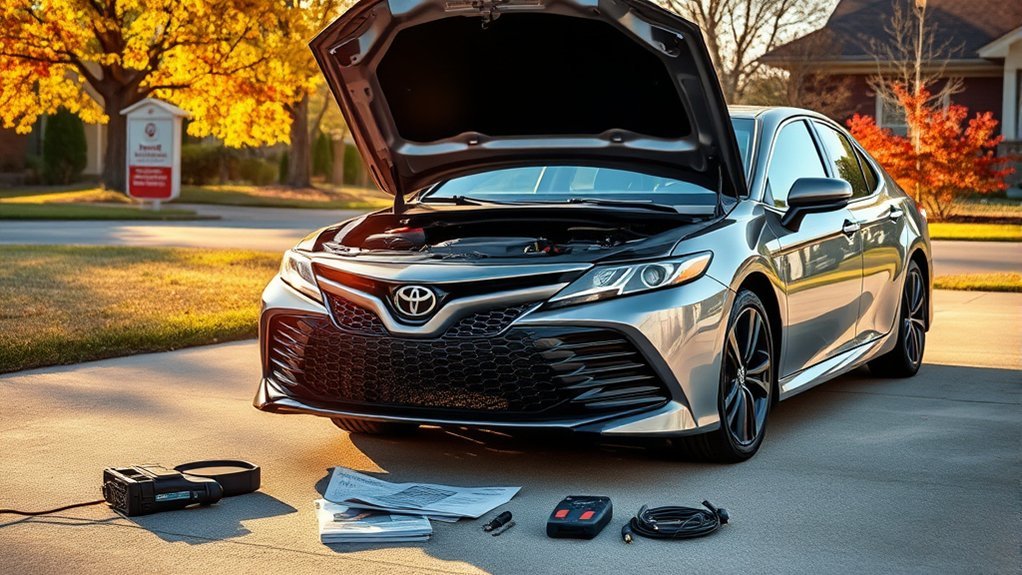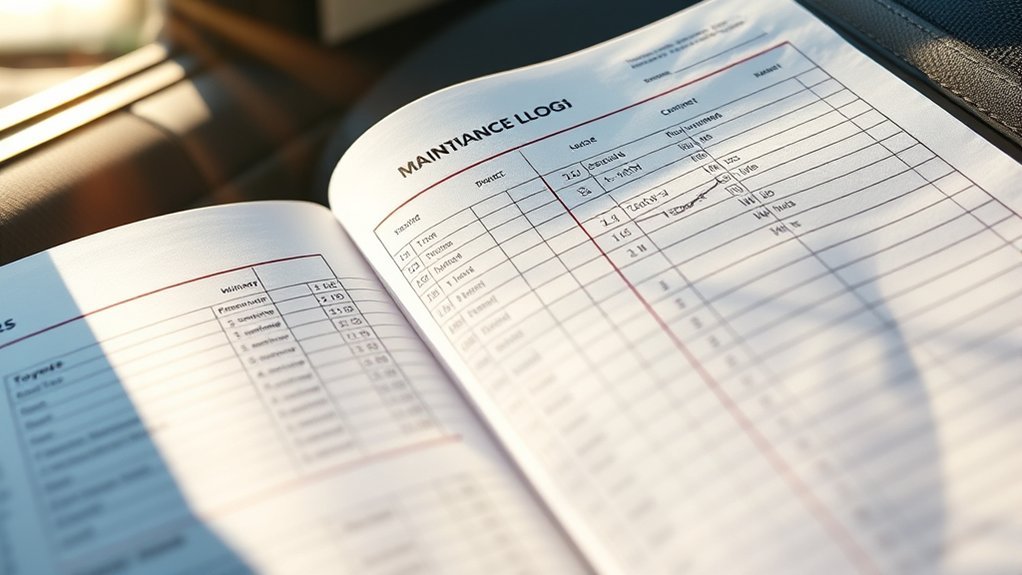
Last updated: September 16, 2026. This guide was checked against Toyota’s official 2018 Camry Warranty & Maintenance Guide and current Toyota Owners and NHTSA resources.
Reading a Toyota Camry maintenance log is mostly about matching the service date, odometer reading, and exact work performed with the correct Toyota maintenance guide for that model year. The important part is not simply seeing the word “service.” You need to know whether an item was inspected or replaced, whether the mileage and date make sense, and whether receipts or repair orders support the entry.
Quick Answer
To read a Toyota Camry maintenance log, check each entry for the service date, mileage, exact work completed, parts or fluids used, and supporting documentation. Then compare it with the Toyota maintenance guide for the correct model year, using miles or months, whichever comes first. Treat “inspected” and “replaced” as different actions, and do not assume a maintenance-reminder reset proves that the engine oil was changed.
Key Takeaways
- Use the maintenance guide for your exact Camry model year, engine, hybrid/AWD setup, and region.
- Toyota’s scheduled maintenance commonly uses 5,000-mile or 6-month checkpoints, whichever comes first.
- An inspection entry is not proof that a part or fluid was replaced.
- A 5,000-mile maintenance-reminder reset does not automatically prove that the engine oil was changed.
- Missing mileage, vague receipts, unsupported “full service” entries, or records listed out of order deserve closer review, especially on a used Camry.
At a Glance
| Time Required | Varies with the number and completeness of the records |
| Difficulty | Easy |
| Tools Needed | Maintenance guide, odometer reading, receipts, service records, VIN |
| Cost | No added cost to review records you already have |
What Does a Toyota Camry Maintenance Log Show?

Your Toyota Camry maintenance log is more than a list of oil changes. It records when the car was serviced, what work was completed, what parts or fluids were installed, and whether that work lines up with Toyota’s recommended schedule.
A useful entry should identify the date of service, mileage at the time of service, and a clear description of the maintenance or parts installed. Toyota’s 2018 Warranty & Maintenance Guide specifically tells owners to keep detailed records with the date, mileage, and description of service or parts installation and to pass those records to the next owner.
Toyota also states that maintenance may be performed by the owner or by another automotive service provider. A Toyota dealer stamp can be useful supporting evidence, but a dealer is not the only valid place to perform maintenance. Detailed records are what let you match the work to the vehicle and schedule.
You can find Toyota owner’s manuals and warranty maintenance guides through the official Toyota Owners manuals and warranties page. For a 2018 Camry, Toyota also provides the official 2018 Camry Warranty & Maintenance Guide.
Which Camry Maintenance Guide Should You Use?
Before deciding whether a maintenance record is “on time,” confirm the exact Camry you are checking. A 2018 Camry, a newer Camry, a hybrid, a V6, an AWD model, and vehicles sold in different regions can have different maintenance notes and service items.
Start with these basics:
- Model year: Use the Toyota guide that matches the year of the car, not a generic Camry schedule.
- Engine and drivetrain: Four-cylinder, V6, hybrid, and AWD versions can have different service items.
- Mileage and months: Toyota maintenance schedules use both. Service is due when either limit is reached.
- Driving conditions: Toyota lists additional maintenance for specific operating conditions such as dusty roads, towing or heavy loading where permitted, repeated short trips in freezing weather, and extensive idling or low-speed use.
Note: Toyota’s 2018 Camry guide calls for scheduled maintenance every 5,000 miles or 6 months, whichever comes first. A low-mileage Camry can therefore be due for service by time even when it has not reached the next mileage mark. For newer Camrys, verify the current schedule for the exact model year.
Factory schedule vs. dealer recommendation: Toyota’s 2018 guide says a dealer may recommend more frequent intervals or additional services beyond the scheduled maintenance log. Those extra dealer-recommended services are not automatically required to maintain warranty coverage. Ask the dealer to identify which recommendations come from Toyota’s maintenance guide and which are additional shop recommendations.
If you need a broader interval overview, see the Toyota Camry service-interval guide. For extra maintenance triggered by demanding use, see the Camry severe-driving maintenance schedule.
How Do You Read Each Maintenance Log Entry?
Most Toyota maintenance logs are built around checklist-style service intervals. Read each entry from top to bottom instead of searching only for the words “oil change.”
- Check the interval: Find the mileage and month mark, such as 5,000 miles/6 months or 10,000 miles/12 months.
- Confirm the service date: The date shows whether the vehicle reached a time-based service limit before the mileage limit.
- Confirm the mileage: Odometer readings should move forward in a logical order. A gap or reading that moves backward needs an explanation.
- Read the exact action: “Inspect,” “replace,” “rotate,” “adjust,” and “check” do not mean the same thing. A brake inspection, for example, does not mean new brake pads were installed.
- Read the footnotes: Toyota logs use footnotes for special operating conditions, oil intervals, coolant, drivetrain components, and other model-specific exceptions.
- Check the supporting record: Look for an itemized repair order, receipt, invoice number, parts record, or dealer verification that matches the date and mileage.
How Strong Is the Maintenance Record?
| Record Type | What It Tells You | What May Still Be Missing |
|---|---|---|
| Itemized invoice or repair order | Usually shows date, mileage, exact service, parts or fluids, shop, and invoice details | Confirm it belongs to the correct vehicle; a VIN on the record makes matching easier but is not itself a Toyota warranty requirement |
| Stamped booklet or digital service entry | Can confirm that a service visit was recorded at a particular mileage or date | May not show exactly which parts or fluids were replaced |
| Handwritten note with little detail | Shows that someone recorded a maintenance event | Does not independently prove the mileage, exact work, parts, fluids, or shop |
Pro Tip: For future services, save an itemized receipt showing the service date, odometer reading, exact work, oil viscosity or fluid specification when applicable, parts or filter information, and the shop or technician. Keep a digital copy in case the paper receipt fades or is lost.
Which Maintenance Intervals Matter When Reading the Log?
Use maintenance intervals as a verification tool, not as a one-size-fits-all schedule. The table below explains common log entries, with 2018 Camry examples where a specific interval is useful. Always confirm the final requirement in the guide for your exact model year and powertrain.
| Log Item | What the Entry Usually Means | What to Watch For |
|---|---|---|
| Scheduled Service | Toyota commonly uses 5,000-mile/6-month maintenance checkpoints | Use whichever comes first: mileage or time |
| Tire Rotation | For the 2018 Camry, Toyota lists tire rotation at the 5,000-mile/6-month checkpoints | Look for skipped rotations and any notes about uneven tire wear |
| Engine Oil and Oil Filter | For a 2018 Camry certified for 0W-16/0W-20 oil, Toyota lists 10,000 miles/12 months under normal conditions | Specified special operating conditions can shorten the oil interval to 5,000 miles/6 months |
| Cabin Air Filter | For the 2018 Camry, Toyota lists cabin-filter replacement at 10,000-mile/12-month intervals in the maintenance log | Do not confuse cabin-filter service with engine-air-filter service |
| Engine Air Filter | For the 2018 Camry, Toyota lists replacement at 30,000 miles/36 months | Dusty-road conditions can add earlier inspections |
| Brake Inspection | Entries can include visual brake checks and, at specified intervals, closer inspection of pads, discs, lines, and hoses | A “passed inspection” note is not the same as new brake parts |
| Automatic Transmission Fluid | For a 2018 Camry, routine records include leakage/condition-related inspections; replacement appears at 60,000 miles/72 months under specified special operating conditions | Do not assume every Camry has a universal 50,000- or 60,000-mile fluid-change requirement |
| Spark Plugs | For a 2018 Camry with the 2GR-FKS V6, Toyota lists spark-plug replacement at 60,000 miles/72 months | Do not apply the V6 interval automatically to a different Camry engine |
| Engine Coolant | For the 2018 Camry, initial engine-coolant replacement is listed at 100,000 miles/120 months | Later replacement timing depends on the Toyota-specified coolant and the model-year guide |
Special-condition adjustments should come from Toyota’s maintenance notes, not guesswork. Toyota’s 2018 guide says the extra items apply when the vehicle is driven primarily under the listed condition. Occasional exposure does not automatically mean the full special-condition schedule applies.
How Do You Read Camry Oil-Change Records?
Oil-change records can reveal whether the maintenance history matches Toyota’s schedule, but the mileage alone is not enough. Check the date, oil specification, filter entry, and whether the vehicle was driven under conditions that require shorter oil-service intervals.
- Oil-change frequency: Toyota’s 2018 guide states that a Camry certified for 0W-16/0W-20 motor oil can use a 10,000-mile/12-month oil-change interval when that oil is being used. The listed special operating conditions can require oil and filter replacement every 5,000 miles/6 months.
- Oil viscosity and specification: If the entry only says “oil,” check the receipt or repair order for the actual oil used.
- Oil filter: A useful invoice should clearly show that the engine oil filter was replaced with the oil when required.
- Maintenance reminder: Toyota’s 2018 guide instructs the maintenance reminder to be reset after maintenance at every 5,000 miles.
- Special-use clues: Dusty roads, towing or heavy loading where applicable, repeated short freezing-weather trips, and extensive idling or low-speed operation can change the oil-service requirement in the 2018 guide.
Important distinction: A maintenance-reminder reset is not proof that the engine oil was changed. On the 2018 Camry, Toyota uses 5,000-mile maintenance checkpoints and instructs the reminder to be reset after those visits, while the normal oil-and-filter interval with the specified 0W-16/0W-20 oil is 10,000 miles/12 months. Look for an actual “replace engine oil and oil filter” entry or supporting invoice.
Discrepancies in recorded maintenance should trigger a request for more documentation rather than an immediate conclusion. For example, if a Camry has 45,000 miles but only two documented oil changes, ask for missing receipts, dealer records, or other service history before deciding that the oil changes were skipped.
[Products Worth Considering]

Genuine OEM - direct fit

PAKAGE LIST: Heavy duty oil filter wrench, genuine oil filter for Toyota 04152-YZZA1, oil drain plug and gasket.

Oil Change Tool Kit: Includes 2pcs 04152-YZZA1 oil filter, 64mm 14-flute oil filter wrench, drain plug, and gaskets. The oil change kit compatible with Toyota and Lexus vehicles.
How Do You Read Air-Filter Entries?

Air-filter entries are easy to misread because a Camry has more than one filter. The engine air filter helps keep dirt and debris out of the engine’s intake air. The cabin air filter filters air entering the passenger compartment through the HVAC system.
| Filter | How It Appears in the Log | How to Interpret It |
|---|---|---|
| Engine Air Filter | For a 2018 Camry, Toyota lists replacement at 30,000 miles/36 months and extra inspection under dusty-road conditions | Do not treat a cabin-filter replacement as proof that the engine filter was serviced |
| Cabin Air Filter | For the 2018 Camry, Toyota lists replacement at 10,000-mile/12-month intervals | Look for an invoice description or part line that identifies the cabin filter specifically |
If a record simply says “air filter,” check the invoice or part number to determine which filter was actually replaced. For example, Toyota’s 2018 log lists cabin-filter replacement at 10,000 miles, while the 30,000-mile service lists replacement of both the cabin and engine air filters.
[Products Worth Considering]

Compatible Auto List: Our cabin air filter is compatible with Toyota: Avalon (2019-2022), Camry (2018-2026), Corolla (2019-2026), Corolla Cross(2022-2026), CROWN(2023-2026), Highlander (2020-2026), Prius (2016-2026), Prius AWD-E (2019-2022), Prius Prime (2017-2024), RAV4 (2019-2025), RAV4 Prime (2021-2024), Sienna (2021-2026), Venza (2021-2024), Grand Highlander (2024-2026), GR Corolla (2023-2026), Crown Signia (2025-2026), C-HR (Japan Built Models Only) (2018-2022).

Compatible Auto List: Our cabin air filter is compatible with Toyota: Avalon (2019-2022), Camry (2018-2026), Corolla (2019-2026), Corolla Cross(2022-2026), CROWN(2023-2026), Highlander (2020-2026), Prius (2016-2026), Prius AWD-E (2019-2022), Prius Prime (2017-2024), RAV4 (2019-2025), RAV4 Prime (2021-2024), Sienna (2021-2026), Venza (2021-2024), Grand Highlander (2024-2026), GR Corolla (2023-2026), Crown Signia (2025-2026), C-HR (Japan Built Models Only) (2018-2022).

[Vehicle Fitment]: Replacement for Toyota: Avalon (2019-2022), Camry (2018-2025), Corolla (2019-2025), Corolla Cross (2022-2025), CROWN (2023-2024), C-HR (2018-2022) [IMPORTANT: Fits Japan Built Models ONLY, VIN starts with 'J'],Highlander (2020-2025), Prius (2016-2025), Prius AWD-E (2019-2022), Prius Prime (2017-2024), RAV4 (2019-2025), RAV4 Prime (2021-2024), Sienna (2021-2025), Venza (2021-2024), Grand Highlander (2024-2025), GR Corolla (2023-2025).
What Do Transmission, Brake, and Coolant Entries Mean?
Transmission, brake, and coolant records need extra care because these systems are often inspected before a fluid or part is replaced. A log that says “inspected” does not mean that the fluid was exchanged or that new parts were installed.
- Automatic transmission fluid: For a 2018 Camry, Toyota lists automatic-transmission-fluid replacement at 60,000 miles/72 months for specified special operating conditions, including towing/heavy loading where applicable and extensive idling or low-speed driving. Under normal use, the maintenance log instead includes transmission leakage-related inspection at major checkpoints.
- Brake fluid: Toyota’s maintenance-guide footnotes include brake-fluid level and condition checks. If the fluid was actually exchanged, the repair order should say so clearly.
- Brake inspection: Look for the exact action and any measurements or technician comments. Inspection notes may cover pad or lining condition, discs, lines, hoses, and related components depending on the service interval.
- Engine coolant: For a 2018 Camry, Toyota lists the initial engine-coolant replacement at 100,000 miles/120 months and then every 50,000 miles/60 months afterward when the specified coolant is used.
Warning: Do not open a hot cooling system, guess at sealed-transmission service, or ignore brake-system warnings. These systems can affect vehicle safety and should be inspected or serviced by a qualified technician when the required procedure is unclear.
How Should You Track Camry Maintenance Notes?
To keep maintenance notes useful, use a consistent format that shows what was done, when it was done, the vehicle mileage, and what documentation supports the entry.
Consistent Mileage Tracking
A consistent mileage log makes it easier to spot missing or out-of-sequence services. Use the odometer reading shown on the day of service instead of a rounded estimate whenever possible.
- Record the date and odometer reading for every service.
- Mark whether the service was due by mileage, time, or both.
- Note any Toyota-defined special operating conditions that affected the maintenance performed.
- Keep the log in one consistent place, such as the Toyota booklet, a spreadsheet, a notes app, or a maintenance-tracking app.
Document Service Dates
Tracking service dates matters because Toyota schedules use both mileage and months. A low-mileage vehicle can reach its time limit before reaching the corresponding mileage limit.
After each service, record the date, mileage, shop or technician, invoice number, and exact work completed. For oil changes, note the oil specification and oil-filter replacement. For filters, identify whether the entry refers to the engine air filter or cabin air filter.
Note Specific Services
Specific service descriptions are easier to verify than vague labels such as “maintenance” or “full service.”
- Use clear descriptions such as “rotated tires,” “replaced engine oil and oil filter,” or “replaced cabin air filter.”
- Save receipts or repair orders showing the parts, fluids, and labor performed.
- Record useful technician observations such as brake-pad measurements, tire tread depth, leaks, or recommended future repairs.
- Keep dealer-recommended extras separate from items that actually appear in Toyota’s maintenance schedule.
How Do You Read a Used Camry’s Maintenance Log?
If you are reviewing a used Toyota Camry, the maintenance history can show whether services were documented consistently, but it cannot prove the entire mechanical condition of the car by itself. Treat the log as one evidence source alongside the physical inspection, current condition, recall status, and supporting invoices.
Watch for these red flags:
- Large gaps: Long mileage or time gaps between documented services need an explanation.
- Missing mileage: A receipt without an odometer reading is harder to place in the maintenance timeline.
- Vague services: “Tune-up” or “full service” should be backed by an itemized invoice explaining what was performed.
- Mileage inconsistency: Odometer readings should move forward logically across records.
- Records that cannot be tied to the vehicle: Confirm that receipts and repair orders belong to the Camry being reviewed. A VIN on the record is especially useful for matching it to the vehicle.
- Dealer extras presented as factory requirements: Compare any recommendation with Toyota’s maintenance guide for that model year.
Missing documentation is not the same as proof that maintenance was skipped. Toyota’s 2018 guide states that it will not deny a warranty claim solely because maintenance records are missing, although damage or failure caused by lack of proper maintenance is not covered. When buying a used vehicle, missing records still increase uncertainty, so request whatever supporting history is available.
If the paper history is incomplete, also sign in to Toyota Owners with the vehicle information and check the service-history resources available for that VIN. You can also request records from shops or dealers that previously serviced the vehicle.
Maintenance records are separate from recalls. Before buying or selling a Camry, use the official NHTSA recall lookup or Toyota’s recall tool to check the VIN for unrepaired safety recalls or applicable campaigns.
[Products Worth Considering]


What Should a 2018 Camry Log Show at 50,000, 90,000, and 100,000 Miles?
These checkpoints are useful examples for interpreting a 2018 Camry maintenance history. They are not universal Camry intervals for every model year, so use the correct Toyota guide when reviewing a different year.
| Mileage Point | What Toyota’s 2018 Log Lists | How to Read the Record |
|---|---|---|
| 50,000 miles / 60 months | Engine oil and filter replacement, cabin air filter replacement, tire rotation, fluid checks, wiper inspection, and visual brake inspection, plus applicable special-condition items | Do not assume automatic-transmission-fluid replacement is a standard 50,000-mile requirement |
| 90,000 miles / 108 months | Engine oil and filter, cabin and engine air filters, tire rotation, brake inspection, and inspections covering transmission leakage, coolant, drive belts, fuel/exhaust, radiator, steering, and other listed components | A major inspection entry should distinguish the components inspected from parts actually replaced |
| 100,000 miles / 120 months | Engine coolant, engine oil and filter, cabin air filter, tire rotation, fluid and wiper checks, and visual brake inspection, plus applicable special-condition items | For the 2018 Camry, this is the initial scheduled engine-coolant replacement point |
If your Camry was covered by ToyotaCare when new, the early dealer history may include ToyotaCare maintenance visits. Toyota currently explains ToyotaCare and its available maintenance plans on its maintenance plans page. Coverage terms can vary by vehicle and program, so verify the terms that applied when the specific Camry was new.
How Should You Keep a Camry Maintenance Log?
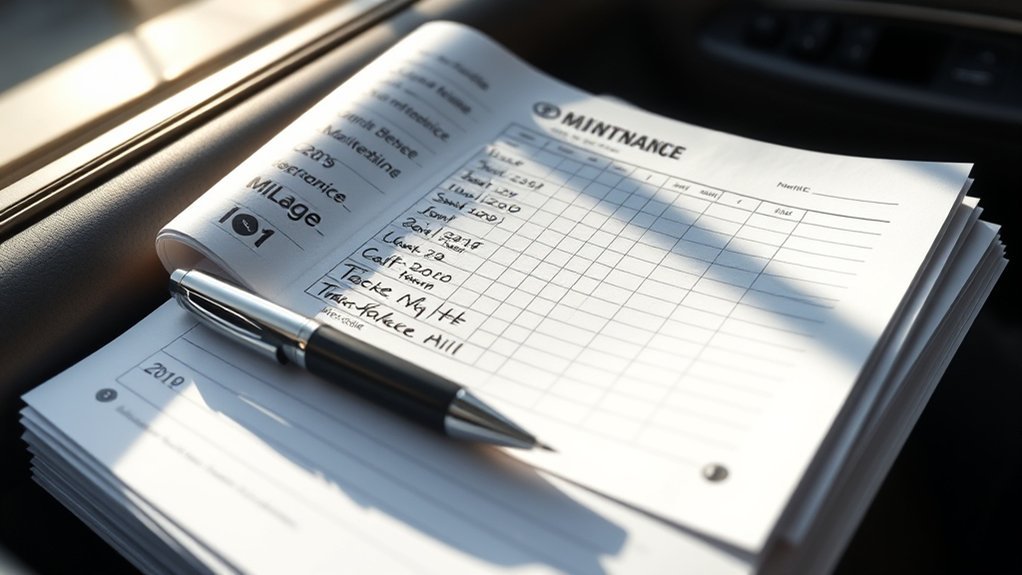
Update the maintenance log immediately after each service while the mileage, work performed, and invoice details are easy to confirm.
Organize records by category, such as oil and filter, tires, brakes, air filters, fluids, inspections, and repairs. Save photos or PDFs of receipts in folders labeled by year or mileage. If you use a spreadsheet, useful columns include the date, mileage, service performed, parts or fluids, shop, invoice number, and the next due mileage or date.
Good records can support warranty discussions, help technicians understand previous work, and give a future buyer a clearer picture of the vehicle’s history. Toyota’s maintenance guide specifically recommends keeping detailed maintenance records and giving them to the next owner.
A useful Camry maintenance log does not merely say “serviced.” It connects a date and mileage to the exact work performed and gives you enough documentation to compare that work with Toyota’s schedule.
Frequently Asked Questions
How do I tell what maintenance my Toyota needs?
Use the official Toyota maintenance guide for your model year and compare it with the current mileage and the number of months since the last service. Then check whether the log documents each required inspection or replacement at the applicable interval.
What maintenance do I have to do when my 2018 Toyota Camry hits 90,000 miles?
Toyota’s 2018 Camry 90,000-mile/108-month log lists engine oil and filter replacement, cabin and engine air filters, tire rotation, brake inspection, fluid checks, and inspections covering items such as transmission leakage, coolant, brake lines, drive belts, fuel-system components, exhaust, radiator, and steering. Confirm the complete checklist in the official 2018 guide.
What is Toyota maintenance at 50,000 miles?
For a 2018 Camry, Toyota’s 50,000-mile/60-month log lists engine oil and filter replacement, cabin air filter replacement, tire rotation, fluid checks, wiper inspection, and a visual brake inspection, plus additional items when specified special operating conditions apply.
Does a Toyota Camry need an oil change every 5,000 or 10,000 miles?
It depends on the model year, oil specification, and operating conditions. For a 2018 Camry certified for 0W-16/0W-20 oil, Toyota lists a 10,000-mile/12-month oil-and-filter interval when the specified oil is used, while listed special operating conditions can require 5,000-mile/6-month oil service.
Should I change Camry transmission fluid at 50,000 miles?
Do not assume 50,000 miles is a universal Camry transmission-fluid interval. For a 2018 Camry, Toyota lists automatic-transmission-fluid replacement at 60,000 miles/72 months under specified special operating conditions such as towing or heavy loading where applicable and extensive idling or low-speed driving. Under normal use, follow the exact Toyota maintenance guide for the vehicle.
What should I do if the maintenance log has missing entries?
Ask for receipts, repair orders, dealer records, and any available digital service history. You can also check Toyota Owners resources using the VIN. Missing documentation does not prove that maintenance was skipped, but major unexplained gaps increase uncertainty when evaluating a used Camry.
Does resetting the maintenance reminder prove the oil was changed?
No. On the 2018 Camry, Toyota instructs the maintenance reminder to be reset after maintenance at every 5,000 miles, while the normal engine-oil interval with the specified 0W-16/0W-20 oil is 10,000 miles/12 months. Look for a separate oil-and-filter replacement entry or supporting invoice.
Do I need Toyota dealer stamps for maintenance records?
No. Toyota’s 2018 guide says maintenance and repairs may be performed by the owner or by another automotive service provider, and Toyota will not deny a warranty claim solely because a non-Toyota provider performed the work. Keep detailed records showing the date, mileage, and exact service performed.
How to Use the Log at Your Next Service
Use your Toyota Camry maintenance log as a verification tool. Start with the correct model-year guide, match each service to its date and mileage, separate inspections from replacements, and check the supporting invoice before assuming that work was completed. If an entry is missing or vague, look for receipts, repair orders, Toyota Owners history, or previous-shop records. Once the history is clear, mark the next service by both mileage and date so the log stays useful instead of becoming a collection of disconnected receipts.
Sources
- Toyota 2018 Camry Warranty & Maintenance Guide — primary source for recordkeeping guidance, 5,000-mile/6-month maintenance checkpoints, oil intervals, special operating conditions, 50,000-/60,000-/90,000-/100,000-mile items, transmission-fluid notes, V6 spark plugs, and coolant intervals.
- Toyota Maintenance Schedule — Toyota’s current factory-maintenance resource and general 5,000-mile/6-month guidance.
- Toyota Owners Manuals and Warranties — official source for model-year owner manuals and warranty/maintenance publications.
- Toyota Maintenance Plans — current ToyotaCare and maintenance-plan information.
- Toyota Owners — official owner dashboard and vehicle-resource portal.
- NHTSA Recalls Lookup — official VIN-based safety-recall resource.