
What’s in This Article
- What the Camry Hybrid eCVT Does
- Which eCVT Fluid Your Camry Hybrid Needs
- Where the eCVT Drain and Fill Ports Are
- How to Change the eCVT Fluid
- Recommended Change Intervals
- How to Spot Fluid Trouble
- Cost, Parts, and Tools
- When Fluid Analysis Helps
- When to Get Professional Help
- Frequently Asked Questions
- Conclusion
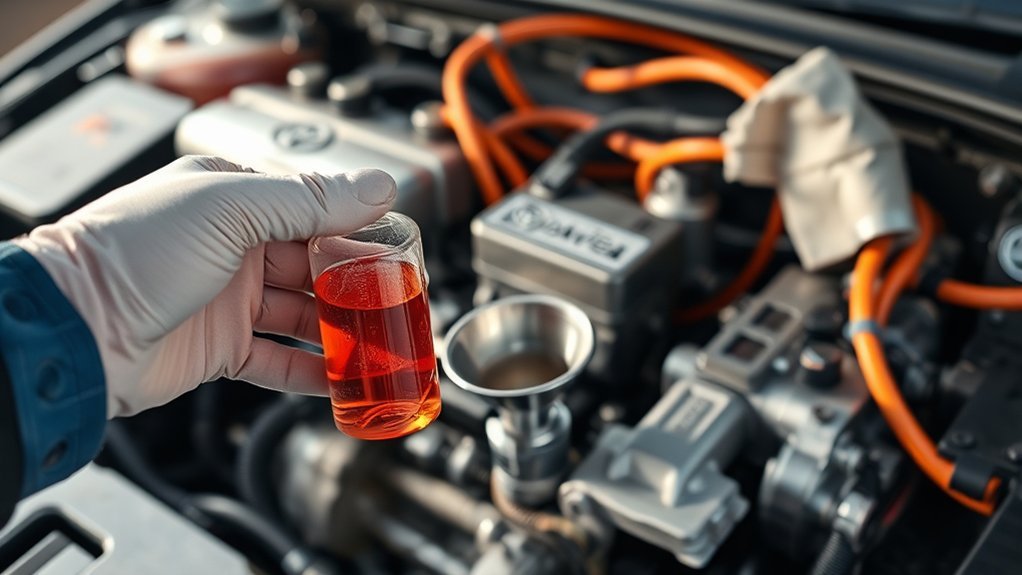
Your Camry Hybrid transaxle fluid choice depends on the model year, not just the Camry Hybrid name. Many older models call for Toyota Genuine ATF WS, while the 2025 Camry Hybrid owner’s manual lists Toyota Genuine e-Transaxle Fluid TE. The eCVT has no dipstick, so you set the level through the drain, fill, and overflow procedure. Use the exact factory fluid for your VIN before you service it.
Quick Answer
Check your owner’s manual before buying Camry Hybrid eCVT fluid. Older Camry Hybrid models commonly use Toyota Genuine ATF WS, but 2025 and newer models may require Toyota Genuine e-Transaxle Fluid TE. The transaxle has no dipstick, so you must set the level with the overflow method on a level vehicle at the specified fluid temperature.
Key Takeaways
- Check your model year and VIN before you buy eCVT fluid.
- Use only the Toyota fluid specification listed in your manual.
- Set fluid level with the overflow method because the eCVT has no dipstick.
- Shorter service intervals make sense for heat, heavy traffic, hills, or high-mileage use.
- Get professional help if you see leaks, metal debris, warning lights, or unusual noise.
What the Camry Hybrid eCVT Does and Why Fluid Matters
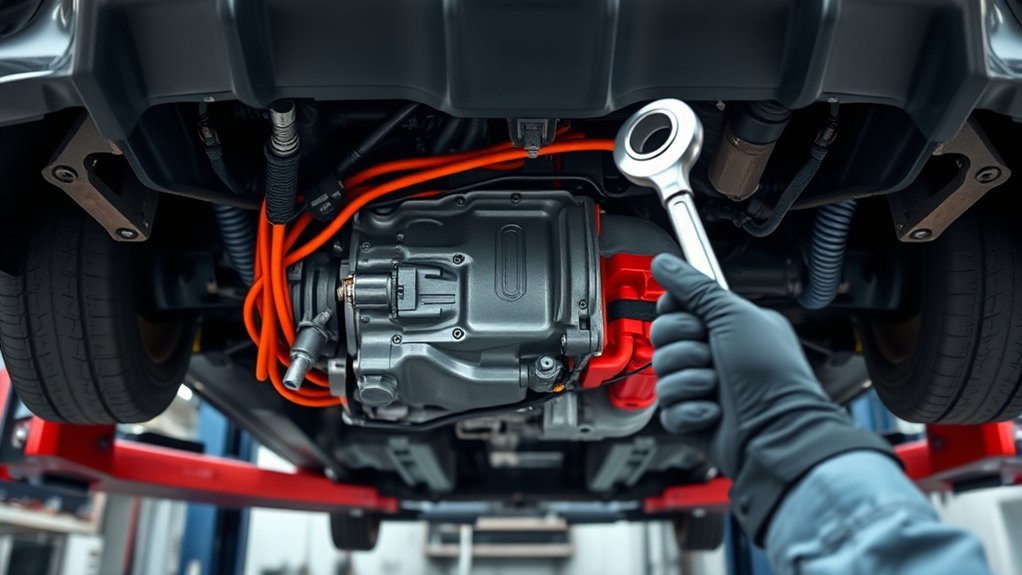
The Camry Hybrid uses an electronically controlled continuously variable transmission (eCVT). This unit blends engine power and electric motor power without the stepped gear changes you feel in a regular automatic transmission.
The fluid helps cool, lubricate, and protect the transaxle. It also supports smooth power transfer inside a system that uses electric motor-generators, bearings, gears, seals, and a differential.
You can’t check this fluid with a dipstick. You need the correct fluid, a level vehicle, the right temperature range, and the factory procedure. Guessing can lead to overfill, underfill, leaks, noise, or poor operation.
Note: The word eCVT describes Toyota’s hybrid power-split transaxle, not a belt-and-pulley CVT used in many gas-only cars.
Which eCVT Fluid Your Camry Hybrid Needs
Your Camry Hybrid may not use the same transaxle fluid as every other Camry Hybrid. Many earlier Camry Hybrid models specify Toyota Genuine ATF WS. The 2025 Camry Hybrid owner’s manual lists Toyota Genuine e-Transaxle Fluid TE with a listed capacity of 3.88 qt. (3.67 L).
That change matters because Toyota fluids match specific friction, viscosity, seal, and thermal needs. A fluid that works in one Toyota transaxle may not meet the spec for another model year.
Before you service the car, check the owner’s manual, the under-hood service label if present, or a Toyota parts lookup tied to your vehicle identification number (VIN). If the manual and a parts catalog disagree, ask a Toyota service department to confirm the fluid by VIN before you pour.
[Products Worth Considering]
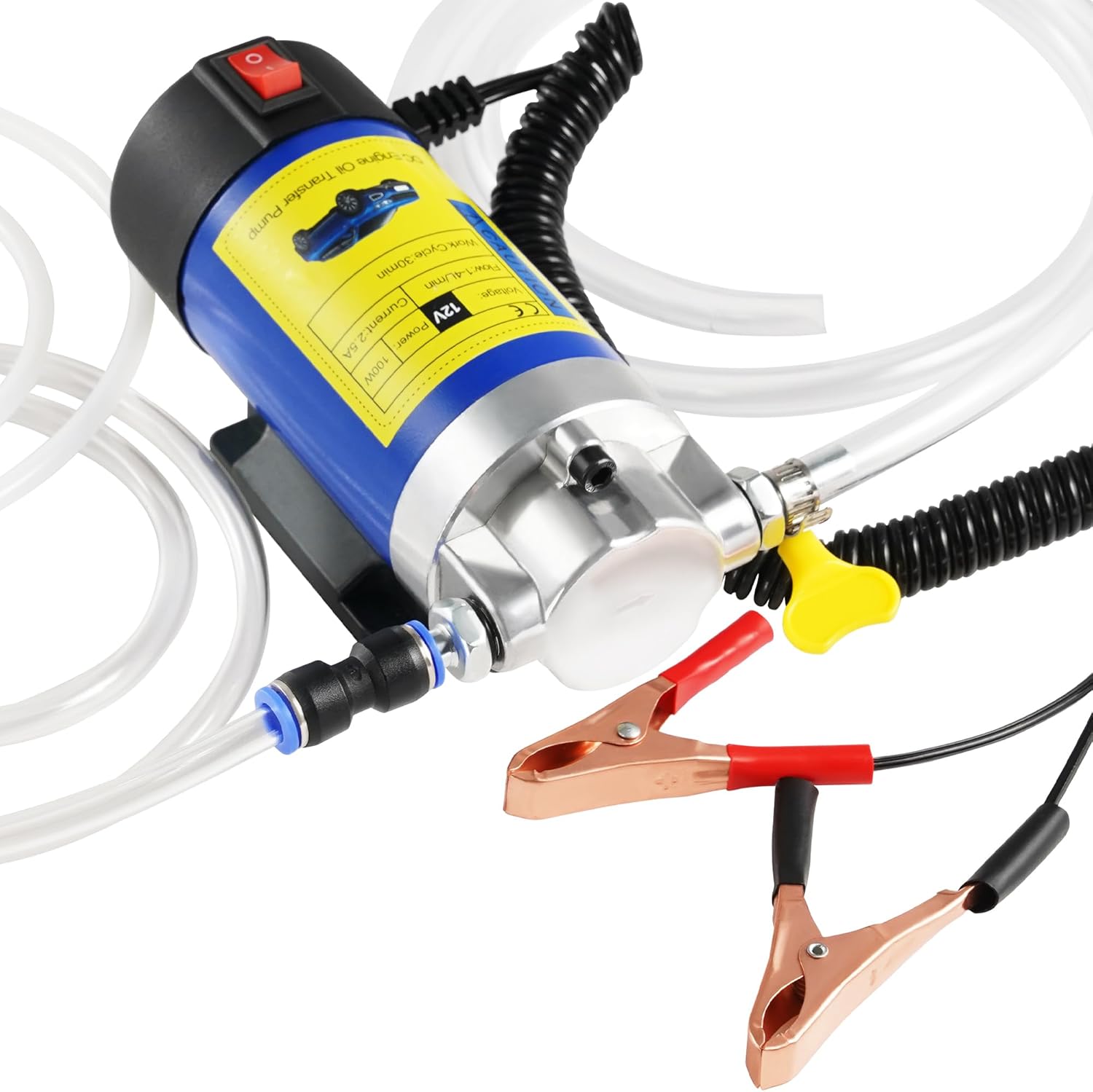
This electric oil extractor pump makes DIY oil changes cleaner and easier by removing old fluid through the dipstick tube, eliminating the need to crawl under the vehicle or deal with messy drain plugs. It is designed for synthetic oil changes and fluid maintenance across cars, motorcycles, lawn mowers, boats, and Jet Skis, while its pure copper motor delivers stable suction and dependable performance. Built for efficient topside oil changes, it supports multiple fluid types and offers continuous operation for longer service tasks.

These genuine Toyota oil drain plug gaskets are designed to help maintain a reliable seal during oil changes, reducing the chance of leaks and supporting proper engine maintenance. With an OEM fit and trusted Toyota quality, they are a practical choice for routine service on compatible vehicles. The convenient quantity pack is ideal for keeping multiple maintenance intervals covered.

The Funnel King 32950 Oil Drain Pan is a compact fluid catch basin designed for clean, easy draining during routine maintenance. Its open shape and pour edge help transfer used oil, coolant, and other shop fluids with less mess, while the lightweight polypropylene construction stands up to common automotive chemicals. Sized to fit under many cars and small engines, it is a practical choice for garages, workshops, and DIY oil changes.
Where the eCVT Drain and Fill Ports Are: No Dipstick
You access the Camry Hybrid eCVT from beneath the vehicle. The drain plug sits low on the transaxle case, and the fill plug sits higher on the case. Some Toyota sealed transmissions also use an overflow or check plug to set the final level.
The exact plug locations, adapters, gaskets, torque specs, and fluid temperature range vary by model year. Use the factory repair manual for your exact Camry Hybrid, not a generic video.
You also need to keep the vehicle level while you set the fluid. Even a small tilt can change the overflow reading and cause an incorrect level.
Location Of Drain Port
The drain port sits on the lower area of the transaxle case so gravity can remove the serviceable fluid. Remove splash shields only as needed, and keep track of clips, bolts, and panel locations.
- Park the car on a flat surface before lifting it.
- Support the car with rated jack stands or a lift.
- Place a drain pan under the transaxle drain plug.
- Replace the drain plug gasket or crush washer if the manual calls for it.
Use the correct socket and keep the plug square as you loosen it. A stripped plug can turn a simple service into a much larger repair.
Location Of Fill Port
The fill port sits higher on the side of the transaxle housing. You usually need a hand pump, hose, or model-specific fill adapter to add fluid cleanly.
Open the fill plug before you drain the fluid. This simple check helps you avoid draining the unit and then finding that you can’t refill it.
Install a new gasket if the repair manual requires one. Tighten the plug to the listed torque, not by feel.
Checking Without Dipstick
Because the eCVT has no dipstick, you set the level through the factory fill and check procedure. On Toyota overflow-style systems, the correct level shows when excess fluid slows to a drip at the inspection point at the specified temperature.
- Keep the vehicle level before you drain or fill.
- Drain the old fluid into a clean pan if you want to inspect it.
- Add the exact Toyota-specified fluid through the fill port.
- Confirm the level by the repair manual procedure before you reinstall plugs.
Do not set the level by measuring only what came out. Leaks, past service errors, and vehicle angle can make that number misleading.
How to Change the eCVT Fluid (DIY Overflow Method)
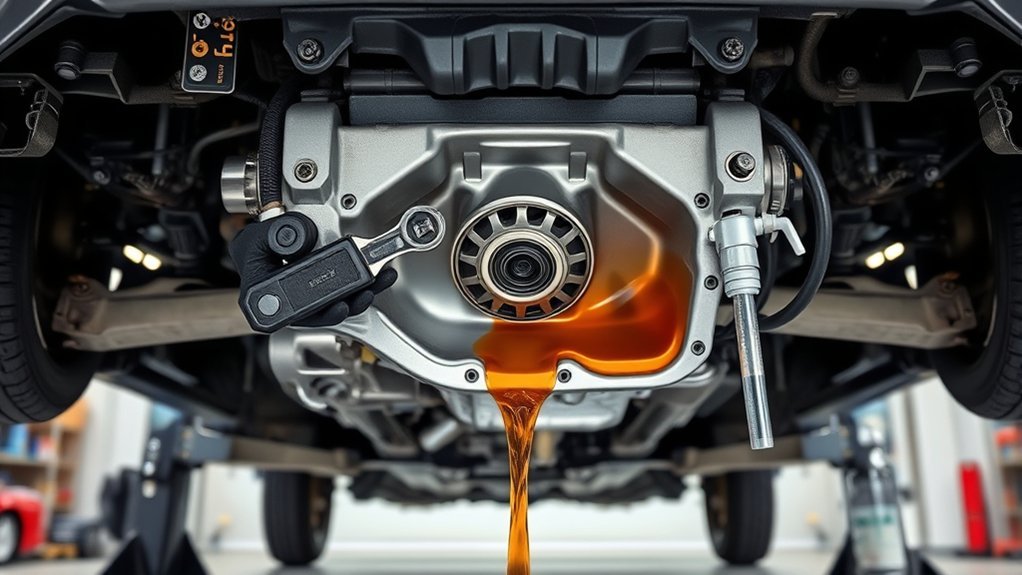
Do-it-yourself (DIY) service can work if you have safe lifting equipment, the right fluid, and the factory procedure. Treat this as a precision service, not a quick drain-and-fill job.
Before you begin, gather the correct Toyota fluid, new plug gaskets, a fluid pump, a drain pan, gloves, eye protection, and a scan tool or procedure for checking transaxle temperature if your manual requires it. Keep the car level from start to finish.
Warning: Never work under a car supported only by a jack, and avoid hot fluid because it can burn skin.
- Confirm the correct fluid by model year and VIN.
- Open the fill plug first to confirm you can refill the transaxle.
- Remove the drain plug and drain the serviceable fluid into a pan.
- Inspect the drained fluid for burnt odor, heavy darkening, or metal debris.
- Reinstall the drain plug with the correct gasket and torque.
- Pump in the specified Toyota fluid through the fill port.
- Set the level with the repair manual’s overflow or check procedure.
- Reinstall plugs, clean residue, lower the car, and check for leaks.
Do not plan on a routine filter change unless the factory manual for your exact model lists a serviceable filter. Many hybrid transaxle fluid services focus on the fluid, plug gaskets, and level check.
[Products Worth Considering]

This replacement filter set is designed for a range of Toyota hybrid vehicles, including popular models like RAV4 Hybrid, Camry Hybrid, Highlander Hybrid, Sienna, Venza, and more. It combines cabin and engine filtration to help support cleaner airflow, reduce dust and odors, and protect your HVAC and engine systems. Built for easy installation and extended service life, it offers a convenient maintenance upgrade for compatible hybrid and gas-only Corolla models.

CHAPIN’s low-profile oil drain pan is designed to slide under low-clearance vehicles and equipment, making fluid changes easier in tight spaces. The large splash-free target area helps reduce mess while the molded carry handles support easier lifting, pouring, and storage. Built for draining oil, coolant, and other automotive fluids, it offers a practical high-capacity solution for routine maintenance.

The Scepter AM07029 Oil Drain Pan makes oil changes cleaner and easier by helping contain spills and reducing mess in the garage or driveway. Its lidded opening, removable drain screen, and gasketed pour spout support convenient collection, transport, and disposal of fluids. Built from durable high-density polyethylene, it resists rust, dents, and corrosion for reliable use with engine oil, transmission fluid, hydraulic fluid, and antifreeze.
Recommended Change Intervals and Real-World Variations
No single mileage interval fits every Camry Hybrid. Toyota tells owners to follow the model-specific maintenance guide and consult a Toyota technician when the car uses a sealed transmission system.
For normal driving, many owners inspect the fluid and plan a proactive service between 60,000 and 100,000 miles. For harder use, a shorter interval can make sense.
- Use a shorter interval if you drive in heavy stop-and-go traffic.
- Use a shorter interval if you drive in high heat, hills, or dusty areas.
- Use a shorter interval if you carry heavy loads or use roof cargo often.
- Use fluid analysis if you want data instead of a fixed guess.
If your Camry Hybrid sits inside a warranty period, follow the owner’s manual and keep receipts. Good service records protect you if a warranty or resale question comes up.
How to Spot Fluid Trouble: Symptoms, Color, and Metal Particles
Watch for leaks, warning lights, unusual humming, whining, vibration, heat-related odor, or delayed engagement when you select Drive or Reverse. These symptoms do not prove the fluid caused the issue, but they do justify a prompt inspection.
Fresh Toyota transaxle fluid often looks clear red or light red. Dark brown fluid, burnt odor, or visible debris points to heat, age, contamination, or wear.
Metal particles need extra care. A light gray paste on a magnet can occur with normal wear, but shiny flakes or a heavy metal load can point to internal damage.
Warning: Stop driving and get a diagnosis if the transaxle makes loud noise, leaks badly, or shows a hybrid system warning.
Cost, Parts, and Tools to Budget for an eCVT Fluid Change
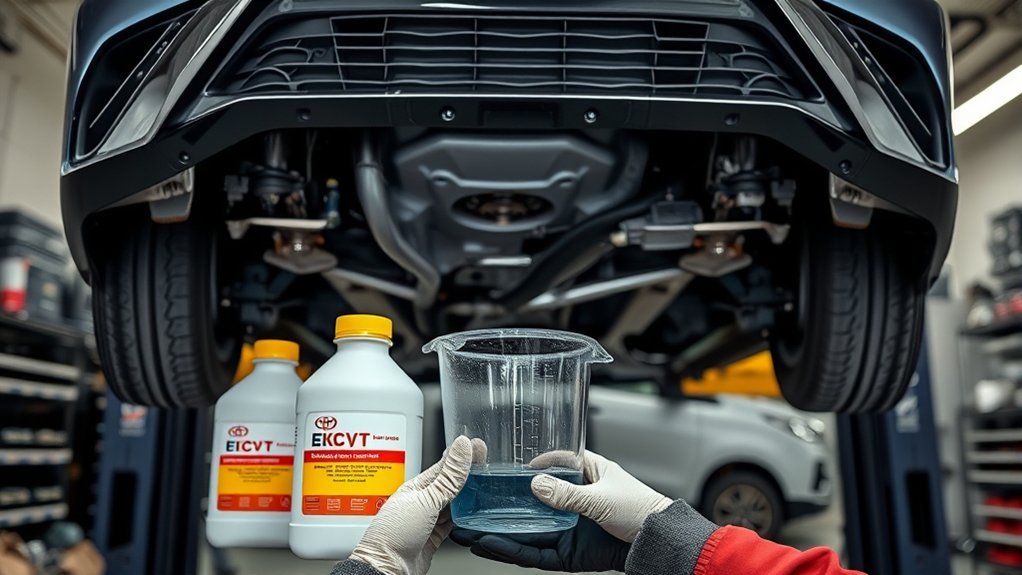
Your budget depends on the model year, local labor rate, fluid type, and whether you service the car yourself. Ask a Toyota dealer or hybrid specialist for a written quote before you compare it with DIY costs.
For DIY service, plan for more than fluid alone. You may need items that you don’t use during a regular engine oil change.
- Correct fluid: Toyota Genuine ATF WS or Toyota Genuine e-Transaxle Fluid TE, based on your manual.
- New seals: Drain, fill, or check plug gaskets listed by the repair manual.
- Fill tool: A hand pump, hose, or model-specific adapter.
- Safety gear: Rated jack stands, wheel chocks, gloves, and eye protection.
- Measurement support: A scan tool or manual procedure for fluid temperature when required.
Keep every receipt and record the mileage. Future buyers and technicians can see exactly which fluid you used and when you serviced it.
[Products Worth Considering]

This ALLWELL engine air filter is designed to help maintain clean airflow for compatible Toyota, Lexus, and Subaru vehicles, supporting engine performance and efficient operation. It serves as a direct replacement for multiple OE part numbers and fits a wide range of hybrid and standard models across several years. Built for broad compatibility, it is a practical maintenance part for keeping your vehicle’s intake system protected.

This flexible oil funnel is designed to make fluid changes cleaner and easier by guiding oil around obstacles like skid plates and crossmembers. Its shape-retaining core and silicone body can be molded for custom positioning, while the heat-resistant, leak-proof design helps prevent spills during draining and filter removal. Reusable and easy to clean, it works well for cars, trucks, motorcycles, and other hard-to-reach fluid fill or drain applications.

ECOGARD XA5786 is a premium engine air filter designed to help protect your engine by trapping dust, dirt, pollen, and road particles before they enter the intake system. It supports smooth airflow for consistent engine response and fuel efficiency, and it is intended for regular replacement to help maintain reliable performance and engine longevity.
When to Get Fluid Analysis and How to Use the Results
Fluid analysis helps when you want more detail than color and smell can give. Labs such as Blackstone Laboratories test lubricants from transmissions, gearboxes, and other systems for wear metals, contamination, viscosity, and solids.
A sample after your first eCVT service can create a baseline. Later samples can show whether iron, copper, aluminum, or other indicators rise faster than expected.
Use the report as one piece of the maintenance picture. Compare results with mileage, driving conditions, service history, symptoms, and the technician’s inspection.
Pro tip: Label every sample with mileage, fluid brand, service date, and driving conditions so the report has useful context.
When to Get Professional Help
Get a Toyota dealer or qualified hybrid technician involved if you lack safe lifting gear, a fluid temperature method, or the correct service data. The same advice applies if a plug feels stuck or damaged.
You should also seek help if the car has warning lights, abnormal noise, leaks, burnt fluid, or metal flakes. A fluid change may not fix internal wear, sensor faults, or electrical problems inside the hybrid transaxle system.
Professional service costs more than DIY, but a correct level check can prevent expensive mistakes. That trade-off makes sense when the procedure feels uncertain.
Frequently Asked Questions
Do Hybrids Need transmission fluid?
Yes, hybrids still need transaxle fluid. Your Camry Hybrid uses fluid to cool, lubricate, and protect the eCVT, even though it does not shift like a regular automatic transmission.
What Kind of Transmission Fluid Does a Toyota Camry Hybrid Take?
It depends on the model year. Many older Camry Hybrid models use Toyota Genuine ATF WS, while the 2025 Camry Hybrid owner’s manual lists Toyota Genuine e-Transaxle Fluid TE.
What Happens if There Is Low Transmission Fluid in a Camry Hybrid?
Low fluid can reduce lubrication and cooling inside the transaxle. You may notice noise, leaks, delayed engagement, warning lights, or poor drivability, so you should inspect the car soon.
Is Toyota CVT Fluid Lifetime?
Toyota says some newer sealed systems need less frequent service unless a problem appears. Real-world heat, age, wear debris, and severe use can still justify inspection or proactive service.
Can You Mix ATF WS and e-Transaxle Fluid TE?
Do not mix fluids unless Toyota service information for your exact vehicle allows it. Drain and refill with the correct specification if you find the wrong fluid in the transaxle.
Safety Disclaimer: This article is for informational purposes only and does not replace the factory repair manual or advice from a qualified hybrid technician. Always use proper lifting equipment and professional help when a procedure exceeds your tools or skill level.
Conclusion
The most important step is simple: match the eCVT fluid to your exact Camry Hybrid model year and VIN. Do not assume ATF WS fits every Camry Hybrid, because newer manuals may list Toyota Genuine e-Transaxle Fluid TE.
Use the overflow method only with the correct tools, level vehicle position, and service data. If you feel unsure, pay a qualified hybrid technician to do the job.
Keep records, watch for leaks or noise, and treat fluid service as preventive care. Your Camry Hybrid will reward careful maintenance with smoother, more reliable miles.
References
- 2025 Camry Hybrid Maintenance Data, Toyota Owner’s Manual, 2025
- How Often Should You Change Your Transmission Fluid?, Toyota, 2026
- WS ATF Level Adjustment for U660E/F and U760E/F Transmissions, Toyota Technical Service Bulletin via NHTSA, 2014 revision
- Oil Analysis Services, Blackstone Laboratories, 2026


[…] family, check the Toyota Camry ATF WS guide for conventional automatic applications or the Camry Hybrid transaxle fluid guide for hybrid models. Fluid type and service procedure must still be verified for the exact […]
[…] temperature range. Use the Camry ATF WS service guide for applicable gas automatics and the Camry Hybrid transaxle fluid guide for eCVT models. If you see a leak, smell burnt fluid, or notice slipping or delayed engagement, […]