Last updated: July 31, 2026 · Reviewed by: [VERIFY: add the real reviewer’s name and automotive credentials]
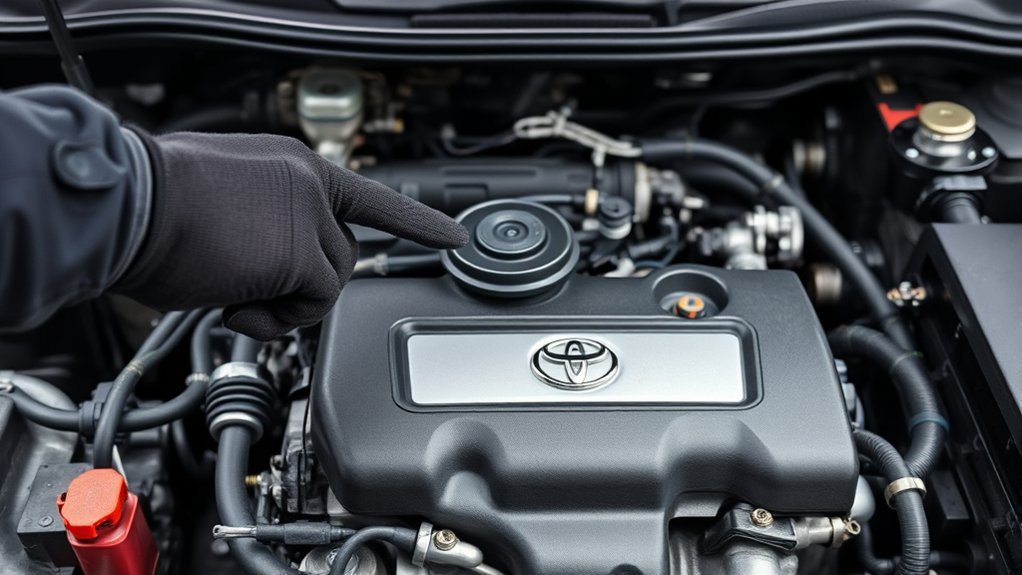
A Toyota Camry active engine mount can cause strong cabin vibration at idle, a clunk when Drive or Reverse engages, fluid leakage, torn rubber, or excessive engine movement. On equipped Camrys, the engine control module operates a vacuum switching valve so the mount can reduce low-speed vibration. A failed sealed mount is replaced rather than refilled, but the vacuum hoses, valve, engine operation, and other mounts should be checked before parts are ordered.
Active-control hardware is not fitted to every Camry. Toyota service information confirms it on several configurations, including certain 2020–2024 A25A-FKS and 2018–2024 2GR-FKS models, with different layouts for some 2WD and AWD versions. Verify the exact system by VIN, engine, drivetrain, and market before diagnosing or buying a mount.
Quick Answer
Suspect a Camry active engine mount when vibration is strongest at idle in Drive or Reverse, the engine otherwise runs smoothly, and inspection finds leakage, torn rubber, collapse, or abnormal movement. If the mount looks intact, a technician can use Toyota’s “Activate the ACM Inhibit” active test, then check the vacuum hoses, vacuum supply, switching valve, wiring, and the mount itself. A leaking hydraulic mount is a sealed assembly and normally requires replacement.
Key Takeaways
- Active-control hardware varies by model year, engine, drivetrain, and market; confirm fitment by VIN.
- Use a three-point confirmation: a repeatable symptom, visible damage or leakage, and abnormal engine movement or a failed service-manual test.
- Do not refill a hydraulic active mount. Replace the sealed mount if its diaphragm leaks, the rubber separates, or the assembly collapses.
- A physical mount can fail without a dashboard warning. The active-control side is checked with Toyota-capable scan-tool tests plus vacuum and circuit checks.
- RepairPal’s Camry estimate, updated June 18, 2026, is $617–$698 before taxes, fees, location adjustments, and related repairs.
At a Glance
| Basic inspection | About 15–30 minutes for symptom logging and visible checks |
| Difficulty | Basic inspection: beginner to intermediate; active testing and replacement: technician-level |
| Useful tools | Flashlight, gloves, wheel chocks, phone for recording, VIN-specific service information, and a Toyota-capable scan tool for active testing |
| Current cost benchmark | $617–$698 for Camry engine-mount replacement before taxes, fees, location differences, and related repairs; year-specific estimates vary widely |
Warning: Do not rev the engine to test a mount. Do not stand in front of or behind the vehicle during a load check. Never get under a car supported only by a hydraulic jack. Mount replacement requires the VIN-specific procedure and approved engine-support equipment; a floor jack or jack stand pressing on the oil pan can damage it.
Which Camry Models Use an Active Engine Mount?
Toyota did not use one active-mount layout across every Camry generation. The service-information examples below confirm several applications, but they are not a complete fitment list. Use the VIN and engine code to identify the correct front mount, rear mount, vacuum switching valve, hoses, and brackets.
| Confirmed service-information example | Active-control hardware shown | Practical takeaway |
|---|---|---|
| 2020–2024 Camry, A25A-FKS | Vacuum switching valve; front and rear mounting insulators on the listed 2WD layout; front insulator on the listed AWD layout | Drivetrain changes the diagnostic path and parts list |
| 2018–2024 Camry, 2GR-FKS | Vacuum switching valve plus front and rear engine mounting insulators | Both active insulators and their vacuum plumbing may need inspection |
| 2012 Camry V6, 2GR-FE | Front active engine mounting insulator with Techstream and vacuum-leak inspection | Earlier V6 applications also used active-control hardware |
Fitment note: A similar-looking mount may have different damping, brackets, vacuum ports, or control requirements. Confirm by VIN rather than relying on appearance or a generic “fits Camry” listing.
What Are the Signs of a Failing Camry Active Engine Mount?
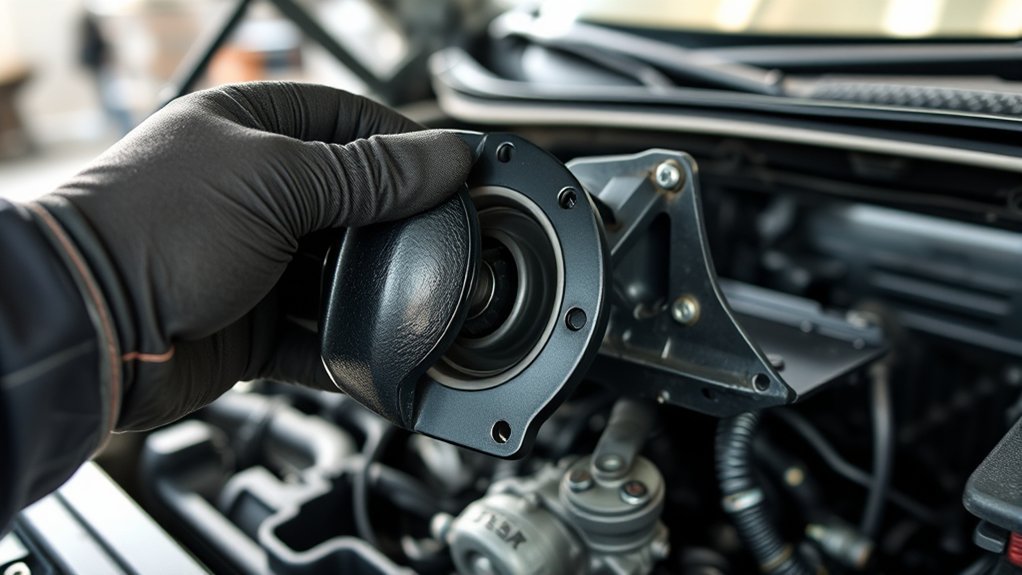
The strongest clue is excessive cabin vibration at idle, especially in Drive or Reverse while the engine itself sounds smooth. A failed mount may also allow a dull clunk when a gear engages, a thud during takeoff, or more powertrain movement than normal.
- Vibration at idle: The steering wheel, seat, dashboard, or floor shakes more than normal.
- Clunking during gear engagement: The powertrain rocks when torque load changes.
- Fluid around the mount: A hydraulic mount may be leaking, but first check whether engine oil or another fluid is running down from above.
- Torn, separated, or collapsed rubber: The mount can no longer hold and isolate the powertrain correctly.
- Harsh takeoff or shift feel: Excess movement can make normal drivetrain engagement feel like a transmission fault.
- More cabin resonance: Engine vibration reaches the body, exhaust, dashboard, and seat structure more directly.
Use the Symptom Pattern Before Replacing Parts
| Pattern | Mount or ACM system is more likely when | Rule out first |
|---|---|---|
| Shakes at idle in Drive or Reverse | RPM is steady, the engine sounds smooth, and vibration drops in Neutral or Park | Misfire, incorrect idle speed, exhaust contact, A/C load |
| Clunks when a gear engages | The engine visibly jumps at the same moment | Transmission mount, torque strut, CV axle, driveline play |
| Vibration changes with road speed | The symptom also changes with acceleration load, not speed alone | Tires, wheels, wheel bearings, CV axles |
| Mount looks intact but idle vibration remains | Toyota’s ACM active test or vacuum checks show the system is not responding correctly | Rough engine operation and other mounts |
Note: A torn or leaking mount often causes no dashboard warning. A vacuum-valve or wiring fault may be found through the Toyota active test and circuit checks, but the absence of a check-engine light does not prove the mount is good.
How Does a Camry Active Engine Mount Work?
A standard engine mount holds the powertrain in position and isolates vibration through rubber and, on some mounts, sealed hydraulic chambers. A Camry Active Control Engine Mount adds vacuum control. In Toyota service information for the 2020–2024 A25A-FKS Camry, the ECM sends a pulse signal to the vacuum switching valve, with pulse frequency matched to engine speed to reduce low-speed vibration.
In simple terms, the system has three jobs:
- Hold the engine securely. The mount and brackets limit how far the engine can move.
- Absorb vibration. Rubber and sealed hydraulic chambers help isolate vibration before it reaches the body.
- Change response when commanded. The vacuum switching valve can change the mount’s low-speed vibration response when the engine computer commands it.
| Component | What It Does | What to Check |
|---|---|---|
| Mount / insulator | Supports the engine and isolates vibration | Cracks, collapse, separation, leakage, loose fasteners |
| Hydraulic chamber | Damps vibration inside a sealed mount assembly | External fluid stains or wet residue |
| Vacuum switching valve | Directs vacuum flow when commanded by the control system | Vacuum hose condition, connector condition, scan-tool active test |
| Vacuum hoses | Carry vacuum to the active mount system | Loose, cracked, disconnected, or blocked hoses |
| Brackets and fasteners | Keep the mount fixed to the engine and body structure | Rust, missing bolts, incorrect torque, bent brackets |
The control system does not replace the mount’s mechanical job. The rubber, hydraulic chambers, brackets, and fasteners still support and restrain the powertrain. Vacuum control only changes how the equipped mount responds under the conditions programmed by Toyota.
How Do You Check a Camry Active Engine Mount?
Use these five checks to decide whether the problem points to the mount, the vacuum-control system, or another source of vibration. The Toyota repair procedure for your exact VIN takes priority over this general workflow.
1. Confirm the Engine, Drivetrain, and Mount Layout
Record the model year, VIN, engine code, and whether the Camry is 2WD or AWD. Then confirm the front and rear mount arrangement in Toyota service or parts information. Do not order an active mount, vacuum valve, or hose from appearance alone.
2. Inspect the Mounts With the Engine Off and Cool
Use a flashlight to look for torn or separated rubber, collapse, metal-to-metal contact, cracked brackets, missing fasteners, and wet residue. If a mount is wet, clean the area and identify the fluid source. Engine oil leaking from above can make a good hydraulic mount look failed.
3. Compare the Symptom in Park, Neutral, Drive, and Reverse
On level ground, chock the wheels, set the parking brake, and keep one adult in the driver’s seat with the service brake firmly applied. With no throttle input, note whether vibration becomes stronger in Drive or Reverse and eases in Neutral or Park. An observer may watch only from beside the fender, clear of belts, fans, wheels, and the vehicle’s path. Stop immediately if the car moves, the engine jumps sharply, or a heavy clunk occurs.
4. Inspect the Vacuum Hoses and Run the Toyota Active Test
Check visible active-mount hoses for cracks, loose connections, kinks, and blockage. A technician with Toyota-capable scan equipment can run Powertrain > Engine > Active Test > Activate the ACM Inhibit and listen for vacuum switching valve operation. For the 2020–2024 A25A-FKS procedure, Toyota’s workflow then checks hoses, vacuum supply, the front or rear mounting insulator, valve power, the valve, and the harness.
Technician-level test: Service information for confirmed Camry applications specifies applying 80 kPa of vacuum to the disconnected mount and checking that it holds for one minute, while also checking for fluid leakage from a damaged diaphragm. Access and hose routing vary, so do not perform this test without the VIN-specific procedure and a hand vacuum pump.
5. Rule Out a Rough-Running Engine and Other Drivetrain Causes
A misfire, vacuum leak, worn spark plug, incorrect idle speed, exhaust contact, transmission mount, torque strut, or CV axle can imitate a mount problem. Read the Camry rough-idle diagnosis guide if RPM is unstable, the exhaust note is uneven, power is reduced, or misfire codes are present. Use the Camry hard-shifting guide when the main complaint is a bang, delay, slip, or harsh engagement.
Three-point confirmation rule: Replace a mount only when the evidence connects a repeatable symptom with visible damage, abnormal movement, leakage, or a failed service-manual test. A single vibration complaint is not enough.
What Parts Fail in a Camry Active Engine Mount System?
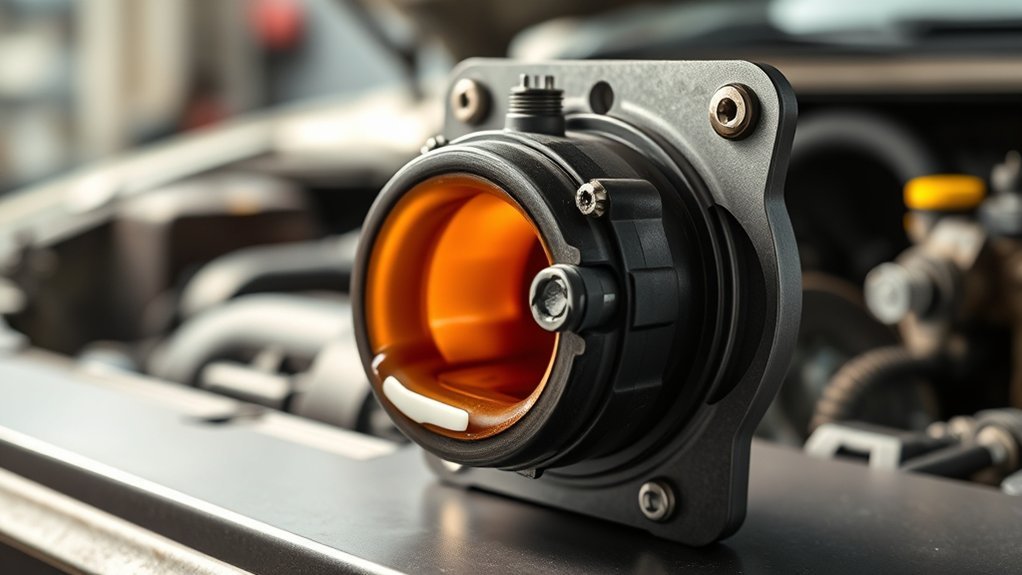
A hydraulic active mount is a sealed assembly. Rubber, fluid chambers, and a diaphragm help absorb vibration. The internal fluid is not a service item. If the diaphragm or housing leaks, the mount loses damping and normally requires replacement.
The vacuum switching valve matters because it controls vacuum flow to the active-control system. If the valve fails electrically, sticks, or loses vacuum because of a cracked hose, the mount may no longer respond correctly at low engine speeds. That can create extra vibration even if the rubber portion of the mount still looks acceptable.
The rubber body of the mount is just as important. Even if the active-control side works, torn rubber can let the engine move too far. Once the rubber separates or collapses, the mount can no longer hold the engine in the correct position.
[Products Worth Considering]

The KZYEE KS40 helps diagnose weak spark plugs, ignition coil problems, and misfires by simulating real engine conditions under load. With adjustable RPM testing and dual-port comparison, it makes it easier to spot hidden ignition faults quickly and accurately. Its enclosed spark-proof design supports safer testing for both professionals and DIY users across a wide range of 12V gasoline engines.

The Autel MaxiCOM MK900BT is a professional bidirectional diagnostic scan tool built for modern vehicles with advanced system coverage and fast, accurate troubleshooting. It supports 3000+ active tests, 40+ service functions, all-system diagnostics, Auto VIN, pre/post scan reports, and newer vehicle protocols for broad compatibility. Designed for technicians and serious DIY users, it delivers efficient maintenance, smarter diagnostics, and expanded service capabilities across a wide range of makes and models.

This front bumper license plate bracket is designed for Toyota Camry and Camry Hybrid models from 2018 to 2026, offering a secure and street-legal way to mount your plate. Built from durable, rust-proof plastic with included screw bolts and a wrench, it helps protect your bumper paint while making installation straightforward. The bracket fits US and Canada plates and is made to keep your license plate and registration sticker visible.
How Can the Vacuum Switching Valve Cause Idle Vibration?
The vacuum switching valve is the control point for the active system. Toyota’s service information describes the valve as ECM-controlled, with pulse frequency matched to engine speed to reduce vibration. In plain language, the engine computer can command the valve so the mount behaves differently when low-speed vibration would otherwise be most noticeable.
What Happens When Vacuum Control Fails?
When the vacuum switching valve and hoses work correctly, the active mount can respond as designed. When the valve does not operate, the hoses leak, or the circuit has a fault, the mount may feel too harsh or may fail to cancel vibration at idle.
Why Is the Symptom Strongest at Low Engine Speed?
Engine mounts are part of the vehicle’s noise, vibration, and harshness system. Active mounts are used because engine vibration changes with engine speed. By changing the mount response during low-speed operation, the system can reduce the vibration that would otherwise be felt in the cabin.
A mount that looks small can make a big difference: once it stops isolating vibration, the steering wheel, seat, dashboard, exhaust, and drivetrain can all feel harsher.
What Fails, What Gets Repaired, and What Does It Cost?
Active engine mount problems usually fall into four groups: the sealed mount leaks, the rubber tears, the vacuum control side fails, or another mount lets the engine move too far.
| Failure | Common Signs | Typical Repair |
|---|---|---|
| Hydraulic fluid leak | Wet mount, more vibration, clunking | Replace the sealed mount assembly |
| Torn or collapsed rubber | Engine rocking, thud on takeoff, harsh idle | Replace the mount or torque strut |
| Vacuum hose leak | Active system does not respond correctly | Repair or replace hoses |
| Vacuum switching valve fault | Failed active test, no valve sound, idle vibration | Test circuit, replace valve if confirmed faulty |
| Loose bracket or fastener | Knock, shifting clunk, visible movement | Inspect threads and brackets; torque to service specification |
[Products Worth Considering]

This Yuirote universal car motor diagnostic tool helps drivers quickly detect engine fault codes and identify system issues for routine inspections and maintenance. It also supports electronic parking brake reset and emergency release functions, making it useful for handling EPB-related problems without a repair shop visit. Its compact, ergonomic design and broad vehicle compatibility make it a practical choice for car owners and DIY repair enthusiasts.

This steering clock spring is designed to restore reliable steering wheel controls across a wide range of Toyota models. It supports audio, cruise control, and other multifunction commands while matching OEM part numbers for confident replacement fitment. Built for dependable signal transfer and straightforward installation, it is an effective solution for repairing steering column control issues.

This upgraded engine oil funnel kit makes oil changes cleaner and easier with a spill-proof design, flow control valve, and transparent body for precise filling. Built from durable polycarbonate and equipped with 12 adapters, two 45-degree elbows, and a debris filter, it fits a wide range of vehicles and works well in tight engine spaces. The secure, hands-free setup helps reduce mess while improving control during oil filling and fluid transfers.
Common Failure Modes
The two most visible failure modes are fluid leakage and rubber separation. A leaking hydraulic mount loses damping ability. A torn rubber mount allows too much engine movement. Either condition can transfer vibration into the body and place extra stress on nearby exhaust, hoses, and drivetrain parts.
Repair Costs Breakdown
Cost depends on the mount location, model year, engine, labor rate, and whether the valve, hoses, brackets, or other mounts also need work. RepairPal’s Toyota Camry engine mount estimate, updated June 18, 2026, lists an average range of $617–$698. Its year-specific estimates vary from the overall range. Taxes, fees, location adjustments, and related repairs are not included.
Before paying out of pocket, check warranty status. The 2025 Camry Warranty & Maintenance Guide lists a 36-month/36,000-mile basic warranty and includes engine mounts under 60-month/60,000-mile powertrain coverage, subject to its exclusions. This warranty example does not prove that a particular 2025 Camry uses the active-mount layout described here. Coverage depends on the model year, in-service date, cause of failure, and Toyota’s diagnosis.
Should You Replace or Rebuild a Camry Active Mount?
For a Camry active or hydraulic mount that leaks, collapses, or separates, replacement is the normal factory-style repair. The mount is sealed, so adding hydraulic fluid is not a service procedure. A specialty rebuilder may offer a non-factory option for some parts, but that does not replace VIN-specific fitment and quality checks.
Use this decision flow:
- Replace the mount if rubber is torn, the mount is collapsed, fluid is leaking, or engine movement is excessive.
- Test the vacuum switching valve if the mount looks intact but active-control operation is suspect.
- Repair vacuum hoses if they are loose, cracked, disconnected, or blocked.
- Check the other mounts if one mount failed; a weak transmission mount or torque strut can mimic an active mount problem.
- Compare OEM with a proven equivalent for an active mount. Fit, damping, hose connections, and control compatibility matter more than the lowest price.
Note: Replacement requires approved engine-support equipment, correct lifting points, torque specifications, and the VIN-specific service procedure. Do not place a jack or jack stand directly under the oil pan to carry the engine’s weight. Read the general Camry motor-mount lifespan and failure guide for non-active mounts and replacement planning.
[Products Worth Considering]

This ignition coil pack and pre-gapped spark plug set is designed for select 3.5L V6 Toyota and Lexus models, helping restore smooth engine performance and reliable starting. Built to meet or exceed OEM specifications, it can help fix common issues like misfires, rough idle, poor fuel economy, and reduced power. The complete 6-piece set offers a convenient replacement solution for compatible vehicles.

This PCV valve and hose kit is designed as a direct replacement for select Toyota, Scion, and Lexus applications, helping restore proper crankcase ventilation and engine performance. Built with durable NBR rubber and made for straightforward installation, it offers a reliable fit for compatible 2.4L models. It is a practical maintenance part for addressing worn or failing PCV components while supporting smoother engine operation.

This coolant electric water pump is designed as a replacement for select Toyota vehicles, helping maintain proper engine cooling performance and reliable temperature control. Built to OE specifications, it offers fitment support for compatible Avalon, Camry, and RAV4 models with 2.5L L4 engines. It also includes cross-reference part numbers for easier matching and comes with after-sales support for covered defects.
Frequently Asked Questions
What does a Camry active engine mount do?
It holds the powertrain in position and reduces vibration transfer into the body. On an equipped Camry, vacuum control lets the mount change its response at low engine speed when commanded by the ECM.
How do I know whether idle vibration is a mount or a rough-running engine?
A mount is more likely when RPM stays steady, the engine sounds smooth, vibration is strongest in Drive or Reverse, and inspection finds leakage, torn rubber, collapse, abnormal movement, or a failed active-control test. Diagnose the engine first when RPM is unstable, power is reduced, the exhaust note is uneven, or misfire codes are present.
How many motor mounts does a Toyota Camry have?
The number and type depend on the year, engine, drivetrain, and market. A Camry may combine engine mounting insulators, a transaxle mount, brackets, and torque-control links. Active front and rear layouts also differ by configuration, so check the VIN before ordering.
Can I drive with a bad active engine mount?
A gentle trip to a repair shop may be reasonable when vibration is mild and the engine is not shifting position. Stop driving and arrange towing if the engine jumps, heavy clunks occur, or movement is pulling on wiring, hoses, exhaust parts, or drivetrain components.
Will a bad active engine mount turn on the check-engine light?
Not necessarily. Torn rubber, collapse, or hydraulic leakage can cause vibration without a warning light. Toyota-capable active testing, vacuum checks, and circuit checks are more useful when the valve or control side is suspected.
Can I refill the hydraulic fluid in an active engine mount?
No. The mount is a sealed assembly. If the diaphragm or housing leaks hydraulic fluid, replacement is normally required.
How much does Camry engine-mount replacement cost?
RepairPal’s Camry estimate, updated June 18, 2026, is $617–$698 before taxes, fees, location adjustments, and related repairs. Year-specific estimates vary, and an active mount, difficult access, or multiple failed mounts can change the total.
Should I use an OEM or aftermarket active mount?
OEM is the lowest-fitment-risk choice. A proven equivalent can also work, but confirm the exact VIN application, bracket geometry, damping design, vacuum connections, warranty, and return policy. A part that bolts in can still transmit more vibration if its stiffness is wrong.
Conclusion
A Camry active engine mount is a sealed vibration-control component, not just a rubber block. When idle vibration, clunking, leakage, or excessive movement appears, first confirm that the engine runs smoothly and that the car actually has the active-control layout. Then inspect the rubber and fluid-filled mount, check the vacuum hoses, and use Toyota’s ACM active test when physical damage is not obvious.
Replace a mount that leaks, collapses, or separates. Repair a confirmed hose, valve, or wiring fault instead of replacing an intact mount. Before authorizing work, ask the shop to identify the failed front or rear mount, show the inspection evidence, and confirm the part by VIN.
Sources
- Toyota/Mitchell service information: 2020–2024 Camry A25A-FKS Active Control Engine Mount System — model application, 2WD/AWD component layout, ACM active test, vacuum checks, and circuit sequence
- Toyota Camry XV70 service information: 2018–2024 2GR-FKS Active Control Engine Mount System — front and rear active mounting insulators, vacuum switching valve, active test, and circuit checks
- 2012 Camry V6 2GR-FE service information: Active Control Engine Mount inspection — Techstream operation and the 80 kPa, one-minute vacuum-hold test
- 2025 Toyota Camry Warranty & Maintenance Guide — basic warranty and engine-mount powertrain-coverage terms
- RepairPal Toyota Camry Engine Mount Replacement Cost — current overall and year-specific cost estimates
- Chinese Journal of Mechanical Engineering: Principle and Control of Active Engine Mount — general active-mount and NVH engineering background