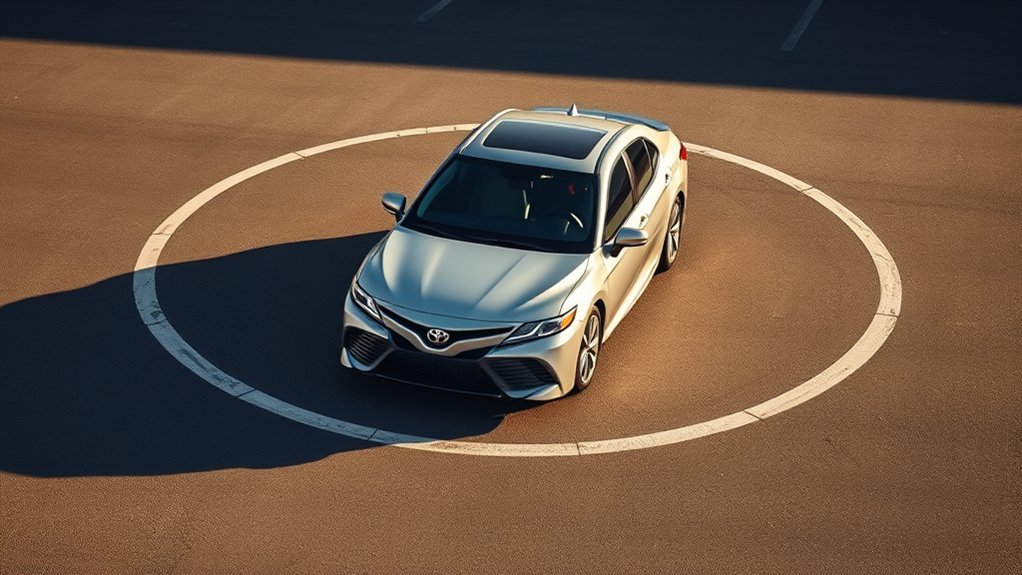
Your 2018 Toyota Camry’s tight-turn ability is mostly set by its wheelbase, steering knuckles, steering stops, suspension layout, tire size, and body clearance. You can improve the way it feels in parking lots with tires, pressure, alignment, and worn-part repairs, but you usually cannot make the factory turning circle dramatically smaller without expensive custom steering work.
Quick Answer
A 2018 Camry can be made sharper and easier to place, but its factory turning circle diameter is basically fixed at 37.4 to 38.0 feet curb-to-curb. Tire pressure, alignment, tire condition, and worn suspension parts can restore lost response; major steering-angle changes are rarely worth the cost or safety trade-off.
Key Takeaways
- Toyota lists the 2018 Camry’s turning circle diameter, not radius, at 37.4 ft on L, LE, and Hybrid LE models and 38.0 ft on most other trims.
- A true smaller turning circle requires more front-wheel steering angle or different steering geometry, not just wider tires or a “sportier” alignment.
- The cheapest useful fixes are tire pressure, tire condition, balancing, alignment, and inspection of tie rods, ball joints, struts, and bushings.
- Do not grind steering stops, force oversized tires, or install random steering parts; rubbing, CV-joint stress, stability issues, and warranty problems can follow.
At a Glance
| Time Required | 10 minutes for basic checks; 1–2 hours for shop inspection/alignment |
| Difficulty | Easy for pressure and tire checks; professional for steering or suspension work |
| Tools Needed | Tire-pressure gauge, tread-depth gauge, tape measure, chalk or cones, flashlight |
| Cost | $0–$20 for checks, usually $100–$200 for alignment, more for worn parts or custom work |
What You Can and Can’t Change on a 2018 Camry
You can make a 2018 Camry feel more precise in tight spaces, but you should separate turning feel from turning circle. Turning feel is how quickly and cleanly the car responds. Turning circle is the physical space the car needs to make the smallest possible circle.
Basic maintenance can improve feel a lot. Correct tire pressure, healthy tires, wheel balance, proper alignment, and tight suspension joints help the car track where you point it. They can also fix a Camry that feels worse than it did when new.
What they usually cannot do is turn a 38-foot curb-to-curb circle into a compact-car-style circle. That kind of change needs more steering lock, different steering arms, altered knuckles, or a redesigned front suspension layout. On a front-wheel-drive daily driver, those changes can create tire rub, CV-joint bind, stability-control problems, and uneven tire wear.
Warning: Do not grind steering stops, bend steering parts, or install unverified steering components to “gain lock.” If the tire, wheel, brake hose, fender liner, strut, or CV axle binds at full lock, the car can become unsafe.
Turning Radius vs. Turning Circle: The Important Difference
Many drivers say “turning radius” when they really mean the full U-turn space. Toyota’s brochure lists the 2018 Camry’s turning circle diameter, curb to curb. That number is the width of the smallest curb-to-curb circle, not the half-width radius.
So when you see 37.4 ft or 38.0 ft for a 2018 Camry, the matching radius is roughly half of that: 18.7 ft or 19.0 ft. For real-world parking and U-turns, the diameter is usually the more useful number because it tells you how much road width the car needs.
For daily driving, think in turning-circle diameter: a 2018 Camry needs about 37.4–38.0 feet curb-to-curb before you add driver error, lane position, curb clearance, or body overhang.
2018 Camry Turning Circle by Trim
The 2018 Camry’s turning circle changes slightly by trim. Toyota’s 2018 Camry brochure lists a 111.2-inch wheelbase for all trims, but the curb-to-curb turning circle differs between the smaller-wheel base trims and many higher trims.
| 2018 Camry Trim | Toyota-Listed Turning Circle Diameter | Approximate Radius |
|---|---|---|
| L | 37.4 ft | 18.7 ft |
| LE | 37.4 ft | 18.7 ft |
| Hybrid LE | 37.4 ft | 18.7 ft |
| XLE / XLE V6 | 38.0 ft | 19.0 ft |
| SE | 38.0 ft | 19.0 ft |
| XSE / XSE V6 | 38.0 ft | 19.0 ft |
| Hybrid SE / Hybrid XLE | 38.0 ft | 19.0 ft |
The difference between 37.4 and 38.0 feet is small on paper, but it can matter in narrow streets, apartment-garage ramps, older parking lots, and tight U-turn lanes. It also explains why two 2018 Camrys can feel slightly different at full lock.
How Turning Radius Is Calculated
A simplified way to understand turning radius is this: a car with a longer wheelbase needs more space to pivot, and a car with more front-wheel steering angle needs less space. Tire size, track width, body overhang, and suspension clearance then affect the final curb-to-curb or wall-to-wall result.
A basic geometry model is:
Turning radius ≈ wheelbase ÷ sin(maximum steering angle)
That formula is useful for understanding the relationship, but it is not the whole vehicle measurement. Real-world turning-circle specs also depend on the outside tire path, steering stops, Ackermann geometry, tire width, wheel offset, bumper overhang, and available clearance inside the wheel well.
Wheelbase Effects
Wheelbase is the distance between the front and rear axles. The 2018 Camry’s 111.2-inch wheelbase gives it good highway stability and cabin space, but a longer wheelbase generally increases the space needed for a tight circle.
You cannot shorten the wheelbase without changing the car itself. That is why a simple alignment or tire swap cannot create a dramatic turning-circle reduction.
Steering Angle Limits
The biggest practical limit is maximum front-wheel angle. That angle is controlled by the steering rack, tie rods, knuckles, steering arms, stops, suspension geometry, CV joints, brake hoses, wheels, tires, and fender clearance.
A “quicker” steering rack can make the wheel require fewer turns from lock to lock, but it does not automatically reduce the turning circle if the maximum wheel angle stays the same. To actually reduce the circle, the front wheels must steer farther without rubbing or binding.
Tire Width and Wheel Offset
Tire width does not magically shorten the Camry’s geometry. A grippier tire can improve confidence and reduce understeer during normal low-speed steering, but a wider tire may also reduce clearance at full lock. If it rubs the fender liner or suspension, it can make the car worse, not better.
Stay close to factory tire sizes unless a qualified tire shop confirms fitment. Toyota also tells owners to use the tire information placard and owner’s manual for the correct cold inflation pressure.
Pro Tip: Before buying tires to “improve turning,” check your current tires at full lock on both sides. Look for shiny rub marks on the fender liner, inner shoulder, strut area, splash shield, and brake hose path.
Why the 2018 Camry’s Radius Increased vs. Some Older Models
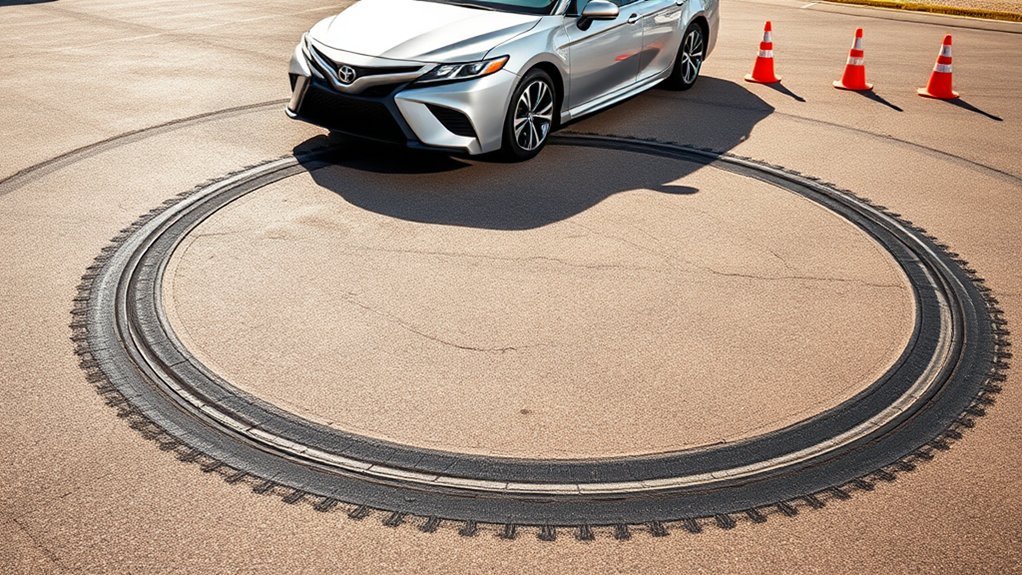
The 2018 Camry moved to a newer platform with a longer wheelbase than some earlier generations, a wider body, different suspension packaging, and electric power steering calibration. Those changes support ride comfort, stability, safety packaging, cabin space, and handling balance, but they also affect tight-turn maneuverability.
Compared with a shorter-wheelbase older Camry, the 2018 model may require more planning in narrow U-turns. The trade-off is that the car feels more settled at speed and has a more modern chassis layout.
Longer Wheelbase and Wider Body
A longer wheelbase increases the arc the car needs to follow. A wider body and track can also increase the swept path, especially when you are close to curbs, walls, or parked vehicles.
This is why a tight U-turn that felt easy in a smaller or older sedan may require one reverse move in the 2018 Camry. The car is not necessarily broken; it may simply be using the space its design requires.
Revised Steering and Suspension Geometry
The 2018 Camry uses electric power steering and front-wheel-drive suspension packaging. Steering lock must leave room for the tire, wheel, strut, brake hose, CV axle, fender liner, and body structure.
Toyota could have tuned the car for more lock in some areas, but every added degree can create trade-offs in tire wear, steering effort, NVH, packaging, and component stress. For a family sedan, the factory balance favors predictable, durable, all-weather behavior over extreme steering angle.
How a Larger Turning Circle Affects U-Turns, Parking, and Daily Driving
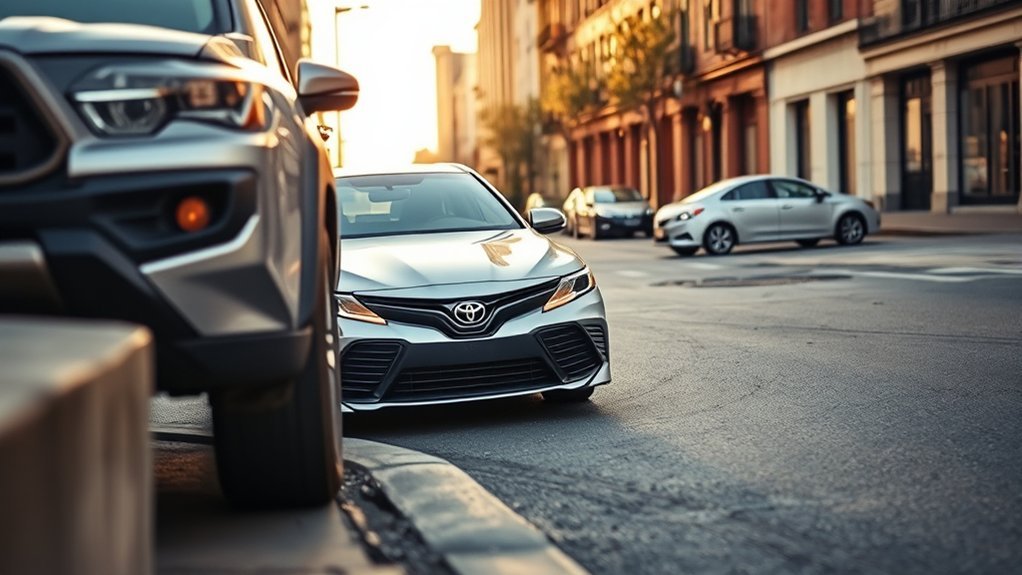
A larger turning circle mainly shows up in low-speed driving. You will notice it most when making U-turns, pulling into narrow driveways, entering angled parking spaces, and maneuvering in garages.
| Driving Situation | What You May Notice | Best Response |
|---|---|---|
| Tight U-turn | You may need one reverse move | Start wider and turn earlier |
| Narrow parking bay | More back-and-forth corrections | Approach at a wider angle |
| Parallel parking | More space needed behind the lead car | Use slow, staged steering inputs |
| Garage ramp | Curb or pillar feels close | Use mirrors and avoid cutting in too soon |
| Driveway turn-in | Front bumper and rear wheel track differ | Watch both front overhang and inside rear tire |
The best daily-driving fix is technique: set up wider, slow down, turn smoothly to full lock only when needed, and leave yourself room for a controlled correction. Do not force the wheel against the stop for long periods; that adds stress without improving the circle.
How to Measure Your Camry’s Turning Circle at Home
If your Camry suddenly feels worse, measure it before assuming the car needs parts. A quick test helps you compare the car to the factory number and spot possible tire, alignment, or steering issues.
- Find a flat open lot. Use an empty parking lot with plenty of space and no traffic.
- Set tire pressures cold. Use the door-jamb placard or owner’s manual pressure, not the maximum pressure printed on the tire sidewall.
- Mark your starting point. Place chalk or a cone next to the outside front tire.
- Turn to full lock gently. Drive slowly in a complete circle without forcing the steering wheel harder once it reaches the stop.
- Mark the outside tire path. Use chalk marks or cones to show the outer edge of the circle.
- Measure across the circle. A curb-to-curb result close to 37.4–38.0 ft is normal for a stock 2018 Camry.
- Repeat the other direction. A major left/right difference can point to alignment, steering, tire, or suspension issues.
Note: A parking-lot chalk test is only an estimate. If one direction is clearly wider than the other, or the steering wheel is off-center, schedule a professional inspection.
[Products Worth Considering]

This front bumper license plate bracket is designed for Toyota Camry and Camry Hybrid models from 2018 to 2026, offering a secure and street-legal way to mount your plate. Built from durable, rust-proof plastic with included screw bolts and a wrench, it helps protect your bumper paint while making installation straightforward. The bracket fits US and Canada plates and is made to keep your license plate and registration sticker visible.

This 121-piece 4-in-1 clip kit provides a versatile replacement solution for Toyota and Lexus body, bumper, fender liner, and splash shield fasteners. It includes multiple clip and screw styles designed to fit common mounting points across popular models, helping restore secure panel attachment and reduce rattles or loose trim. Ideal for maintenance, repair, and restoration projects, this assortment supports a wide range of wheel well and exterior trim applications.

This all-in-one front end service kit is designed to help remove stubborn ball joints, tie rod ends, and pitman arms on a wide range of vehicles. Built from hardened alloy and organized in a portable ABS case, it offers reliable performance for both professional mechanics and DIY repairs.
Quick Checks: Diagnose If Your Camry Actually Handles Worse
A Camry that feels clumsy may not have a bigger factory turning circle. It may have a maintenance issue that makes it feel slow, loose, or reluctant to rotate. Start with these checks before buying upgrades.
- Tire pressure: Check all four tires cold. Underinflation can make steering feel heavy and vague.
- Tire wear: Look for shoulder wear, cupping, feathering, bubbles, cracks, or uneven tread depth.
- Wheel balance: Steering-wheel vibration at highway speed often points to imbalance or tire issues.
- Alignment: Pulling, an off-center steering wheel, or uneven wear suggests toe, camber, or caster problems.
- Suspension wear: Worn struts, lower control-arm bushings, ball joints, or tie rods can make the front end feel loose.
- Rubbing at full lock: Any tire rub can limit usable steering and damage liners or tires.
If the car is stock and mechanically healthy, expect it to match the factory turning-circle range. If it does not, look for bent parts, crash repairs, non-OEM wheel offset, wrong tire size, seized suspension components, or poor alignment.
Cheap Fixes That Often Help
The most useful improvements are usually maintenance fixes, not modifications. They restore the Camry to the way it was designed to steer.
[Products Worth Considering]

This Yangday steering wheel cover is designed for a custom fit on select Toyota models, helping improve grip, comfort, and control during everyday driving. Its breathable leather construction and non-slip inner lining offer a secure feel, while the sport-inspired design adds a stylish upgrade to the car interior. The cover is easy to install and helps protect the original steering wheel from heat, wear, and seasonal discomfort.

This 2-piece suspension tool set combines a compact strut spreader with a high-leverage lower control arm prying tool to help speed up safe suspension service. Designed for many FWD, import, and domestic vehicles, it supports strut, hub, ball joint, and control arm work while helping reduce the risk of damage to surrounding components. Heavy-duty steel construction makes it a dependable choice for mechanics and serious DIY suspension repair.

This steering wheel cover is designed to fit a wide range of Toyota models and any standard-size wheel for a secure, comfortable upgrade. Made with nappa leather and a carbon fiber texture, it helps improve grip, reduce hand fatigue, and protect your original wheel from everyday wear, sun damage, and sweat. The anti-slip design and easy installation make it a practical interior accessory for daily driving.
1. Set the Correct Tire Pressure
Toyota recommends checking the tire information placard or the owner’s manual for the correct pressure, and NHTSA recommends measuring tire pressure when the tires are cold. This is the first thing to do because it costs nothing and affects steering feel immediately.
2. Rotate, Balance, or Replace Bad Tires
A tire with uneven wear can make the Camry feel like it resists turning or wanders after a turn. Balance problems can also hide what the steering is really doing because the wheel shakes or buzzes at speed.
3. Get a Proper Four-Wheel Alignment
Alignment will not redesign the steering geometry, but it can restore straight tracking and reduce scrub. Toe settings are especially important for steering feel and tire wear.
4. Inspect Tie Rods, Ball Joints, Struts, and Bushings
Loose steering or suspension parts can make the car feel larger than it is. Before changing wheels, tires, springs, or sway bars, fix worn parts first.
5. Use Factory-Correct Tire Sizes
If a previous owner installed the wrong tire size or wheel offset, the car may rub at full lock or track poorly. Returning to a correct tire and wheel package can improve tight-space behavior more than a random upgrade.
When to Consider Professional Upgrades
Professional upgrades only make sense after the car is mechanically healthy. Even then, choose upgrades for the right goal.
| Upgrade | What It Can Improve | What It Usually Won’t Do |
|---|---|---|
| Performance tires | Grip, braking, steering confidence | Significantly shrink factory turning circle |
| Quality alignment | Tracking, tire wear, steering-wheel center | Add major steering lock |
| Struts and bushings | Body control and steering precision | Change wheelbase or steering stops |
| Quicker steering rack | Steering response per steering-wheel turn | Reduce circle unless lock angle also changes safely |
| Custom knuckles/steering arms | Potentially more steering angle | Low-cost, low-risk daily-driver reliability |
If you are building a track or drift project, custom steering geometry may be normal. For a daily-driven Camry, it is usually overkill. A careful tire, alignment, and suspension refresh gives the best balance of cost, safety, comfort, and reliability.
[Products Worth Considering]
This custom-fit steering wheel cover is designed for select Toyota models and sized for standard steering wheels to help improve grip and comfort while driving. Made with soft microfiber leather and a non-slip rubber inner ring, it adds control, protects your wheel, and brings a stylish diamond-quilted look to your car interior. Installation is simple and tool-free, making it an easy upgrade for everyday driving.

This universal wheel alignment tool helps you perform precise toe alignment at home with professional-grade accuracy and easy DIY operation. Its no-caliper-removal design simplifies setup, while the heavy-duty stainless steel construction and compact detachable form make it durable, stable, and easy to store. It is suitable for a wide range of vehicles, including cars, trucks, SUVs, ATVs, and UTVs.

This wheel alignment tool makes it easy to check and adjust toe-in and toe-out at home for better handling, stability, and more even tire wear. Designed for one-person use, it includes tape-measure slots for simple setup and accurate measurements without extra help. Its stainless steel construction and broad vehicle compatibility make it a practical addition to any DIY garage.
Realistic Trade-Offs After Each Change
Every change has a trade-off. Wider or stickier tires can improve grip but may add road noise, reduce fuel economy, cost more, and create rubbing if the size or offset is wrong. Firmer struts and springs can sharpen response but may make rough roads less comfortable. Aggressive alignment can improve turn-in but wear tires faster.
Steering-angle modifications carry the highest risk. They can affect brake hose routing, wheel-speed sensor wiring, CV axle angle, inner-fender clearance, stability-control behavior, and insurance or warranty questions. Toyota’s warranty guide also notes that failures related to alteration, tampering, non-Genuine parts, or improper maintenance may not be covered.
The practical goal is not to chase a tiny number on paper. It is to make the Camry predictable, easy to place, and safe in the tight spaces you drive every day.
Frequently Asked Questions
What is the turning radius of a 2018 Toyota Camry?
Toyota lists the 2018 Camry by turning-circle diameter: 37.4 ft for L, LE, and Hybrid LE trims, and 38.0 ft for most other trims. The approximate radius is half of that, or about 18.7 to 19.0 ft.
Can an alignment reduce a Camry’s turning radius?
A normal alignment can restore steering feel, straight tracking, and tire wear, but it usually will not reduce the factory turning circle in a major way. If the car was badly misaligned, the improvement may feel noticeable because the tires scrub less and the steering centers correctly.
Will wider tires help a 2018 Camry make tighter U-turns?
Not by themselves. Wider or grippier tires may improve steering confidence, but they do not change wheelbase or maximum steering angle. If they reduce clearance or rub at full lock, they can make tight turns worse.
Why does my 2018 Camry need a three-point turn where smaller cars do not?
The Camry is a midsize sedan with a 111.2-inch wheelbase and a 37.4–38.0 ft curb-to-curb turning circle. Smaller cars often have shorter wheelbases and smaller turning circles, so they need less road width for the same U-turn.
What is considered a good turning circle for a sedan?
For many midsize sedans, a curb-to-curb turning circle in the high-30-foot range is normal. Smaller compact cars may be tighter, while longer sedans, crossovers, trucks, and performance models with wide tires may need more space.
What should I check first if my Camry suddenly turns worse?
Check cold tire pressure, tire wear, wheel balance, rubbing at full lock, and alignment. If the steering wheel is off-center, the car pulls, or one side turns tighter than the other, have the steering and suspension inspected.
Conclusion
You can tighten a 2018 Camry’s steering feel, but you should not expect a dramatic reduction in the factory turning circle. Toyota lists the car at 37.4–38.0 feet curb-to-curb, and that number is mostly built into the chassis and steering geometry. Start with pressure, tires, balance, alignment, and worn suspension parts. Those fixes make the car easier to place without creating the safety and comfort problems that come with aggressive steering modifications.
Sources
- 2018 Toyota Camry eBrochure — factory trim table for turning circle diameter, wheelbase, dimensions, steering, and suspension specifications.
- Toyota Owners Manuals and Warranties: 2018 Camry — official Toyota owner-resource page for manuals and warranty information.
- Toyota Support: Recommended Tire Pressure — guidance to use the owner’s manual or tire information placard for correct pressure.
- NHTSA TireWise — tire-pressure, tire-safety, and cold-inflation guidance.
- U.S. Tire Manufacturers Association: Tire Care Essentials — tire pressure, tread, rotation, alignment, and balance maintenance guidance.
- 2018 Toyota Camry Warranty and Maintenance Guide — warranty and maintenance context for modifications, non-Genuine parts, and required maintenance.