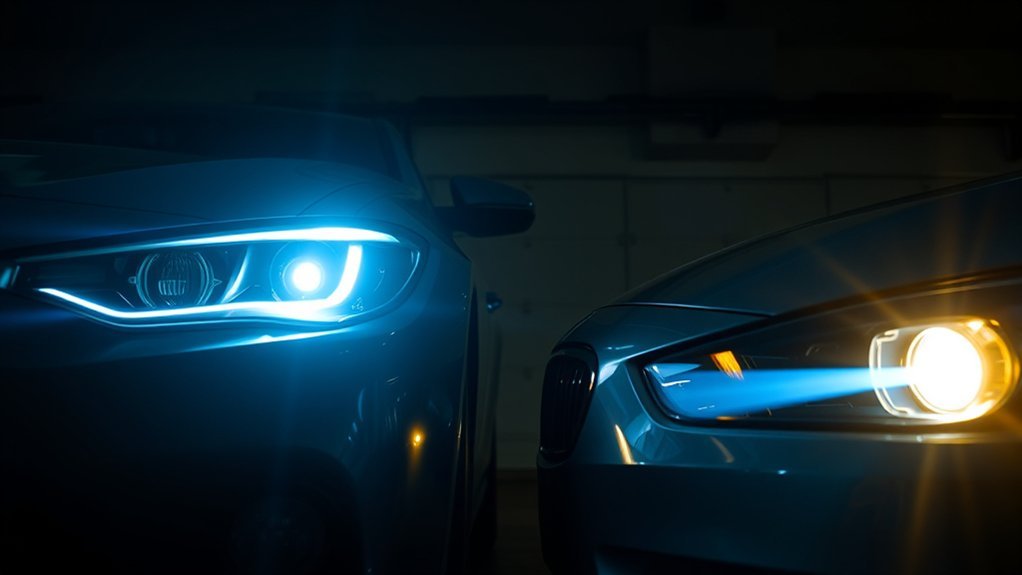
Choosing between LED and halogen headlights is not just about which one looks brighter. The right choice depends on your vehicle’s original headlamp design, your budget, how often you drive at night, and whether the upgrade is legal where you live. LEDs can offer stronger visibility and lower power use, but halogen bulbs still make sense for many older and budget cars.
Quick Answer
LED headlights are usually better for brightness, efficiency, and long-term durability when they are factory-fitted or installed as a legal, type-approved headlamp system. Halogen headlights are cheaper, simpler to replace, and often best for cars originally designed around halogen bulbs.
Key Takeaways
- LEDs generally produce more light per watt than halogens, but the whole headlamp design matters more than the bulb alone.
- Halogen bulbs are cheap and easy to replace, but they run hotter and usually need replacing more often.
- In the UK, converting an existing halogen headlamp unit to LED bulbs can cause an MOT failure on vehicles first used on or after 1 April 1986.
- A legal LED upgrade usually means factory LED lights or a complete, approved headlamp unit designed for LED light sources.
- Poorly aimed headlights, cloudy lenses, high vehicle ride height, and illegal retrofit bulbs can all increase glare.
LED vs Halogen Headlights: Quick Comparison
| Feature | Halogen Headlights | LED Headlights |
|---|---|---|
| Light colour | Warmer yellow-white light | Cooler white light, often closer to daylight |
| Visibility | Adequate when lenses and aim are good | Often stronger, but only if the beam pattern is well designed |
| Power use | Higher power draw and more heat | Usually lower power draw for the light produced |
| Replacement cost | Usually low for a bulb-only replacement | Can be high if the car uses sealed LED headlamp units |
| Lifespan | Shorter, although long-life halogen bulbs exist | Often longer, but it varies by product and heat management |
| Best for | Older cars, tight budgets, easy DIY bulb changes | Newer cars, frequent night driving, factory-approved systems |
| Main caution | Lower output if the bulb, lens, or aim is poor | Illegal or badly aimed retrofits can cause glare and MOT issues |
What You Need to Know About Halogen Headlights
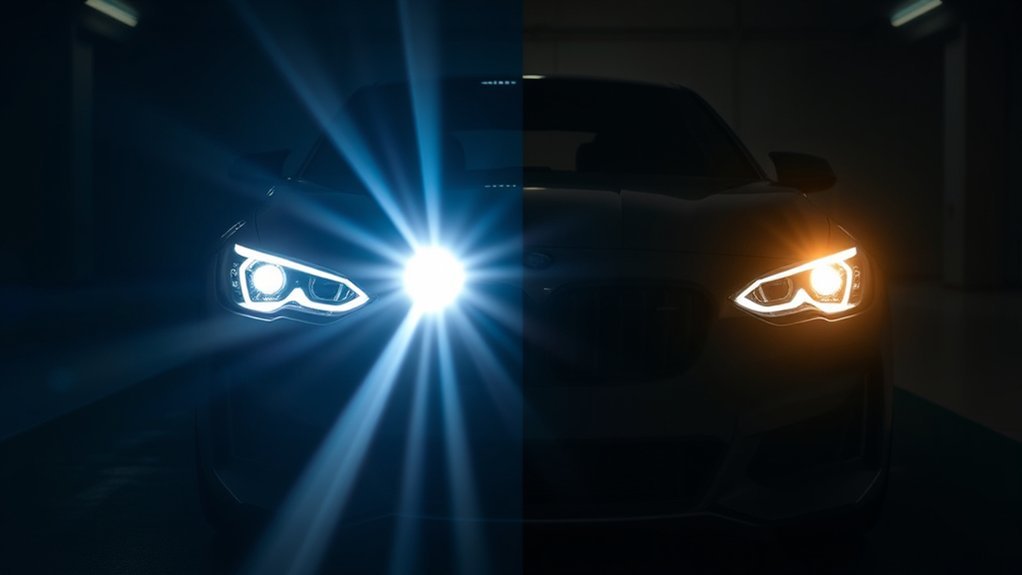
Halogen headlights are a refined form of incandescent lighting. Inside the bulb, an electric current heats a tungsten filament until it glows. The halogen gas helps slow filament wear, which is why halogen bulbs last longer than older basic incandescent bulbs.
The biggest advantage is cost. Halogen bulbs are widely available, usually inexpensive, and often simple to replace. Many entry-level cars and older used vehicles still use them because the headlamp units are straightforward and affordable to manufacture.
The trade-off is efficiency. Halogen bulbs create a lot of heat, so less of the electrical energy becomes useful light. For example, a Philips H7 LongLife EcoVision halogen bulb is listed as a 12 V, 55 W bulb with up to 1,500 hours of use. That is good for a halogen product, but LED systems can still offer longer service life when designed and cooled properly.
Note: If one halogen dipped-beam bulb has failed, replacing both sides together is usually the safer choice. A fresh bulb on one side and an old bulb on the other can create uneven colour and brightness.
Pros and Cons of LED Headlights
LED stands for light-emitting diode. Instead of heating a filament, LEDs produce light through semiconductors. This allows them to create strong light output from smaller units, use power efficiently, and support advanced headlamp designs such as adaptive beams, matrix lighting, and sharp cut-off patterns.
The main benefits are visibility, efficiency, and durability. The U.S. Department of Energy explains that LED lighting is highly efficient, directional, and produces much less heat than incandescent lighting in general applications. In automotive use, the final result still depends on the headlamp optics, cooling, and electronics, not just the LED chip itself.
LED headlights also have drawbacks. They cost more to buy or repair, especially when the vehicle uses sealed LED headlamp assemblies. Some LED systems require cooling fans, heat sinks, control modules, or software calibration. Philips, for example, describes heat dissipation and correct positioning as important parts of LED bulb performance and beam quality in its UltinonSport LED product guidance.
The biggest safety issue is glare. LEDs are not automatically dazzling, but a bright LED in the wrong housing, a poorly aimed headlamp, or a dirty lens can scatter light into other drivers’ eyes. That is why the best LED headlights are engineered as a complete system, not just a bright bulb pushed into a housing designed for halogen light.
[Products Worth Considering]
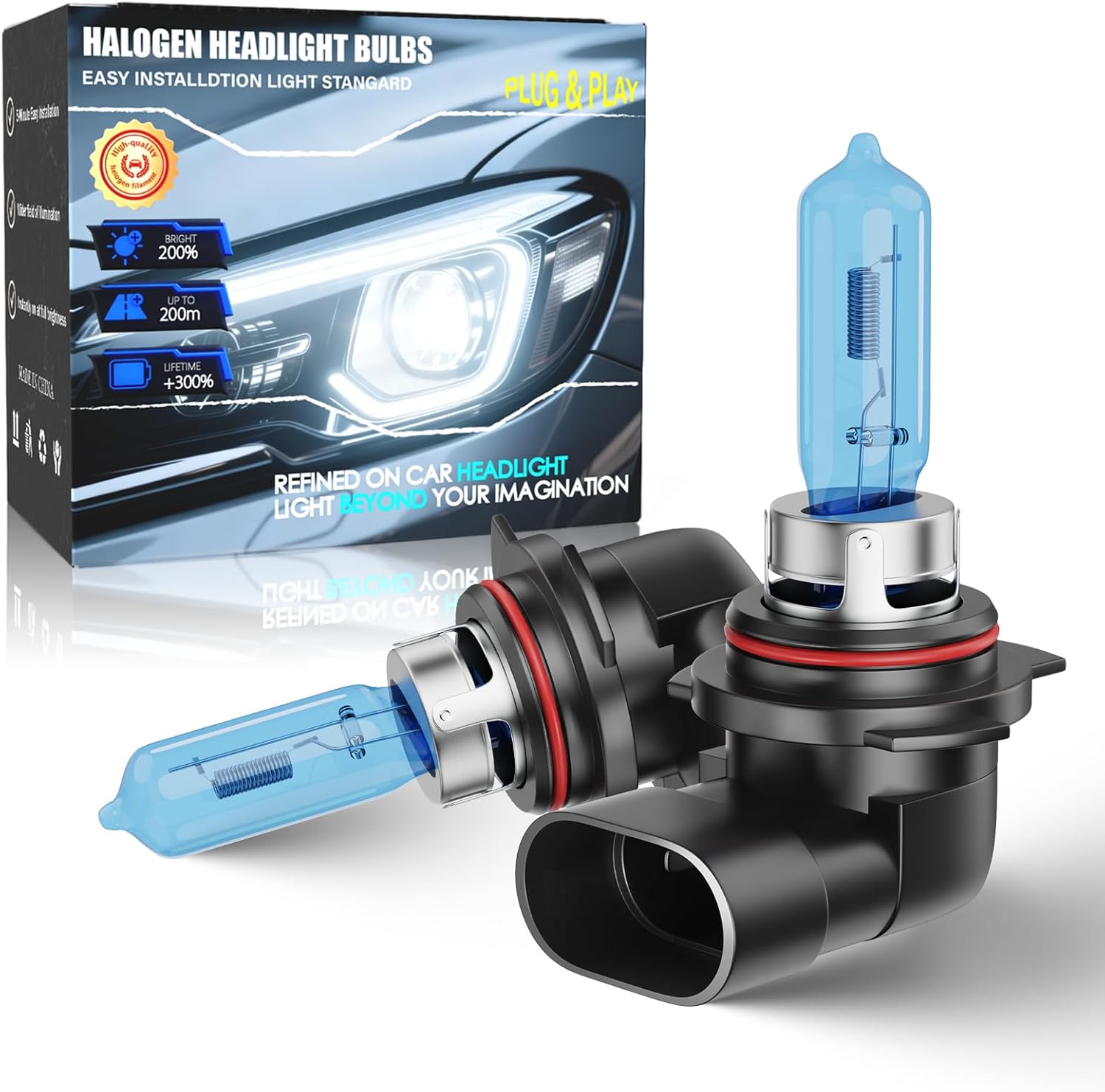
Upgrade your nighttime driving with these halogen headlight bulbs designed for 2016-2019 Toyota RAV4 models. The HIR2/9012 high and low beam combo delivers a brighter white light, a safer beam pattern, and broader road coverage for improved visibility. With plug-and-play installation and durable construction, this two-bulb set is built for a fast, hassle-free replacement.
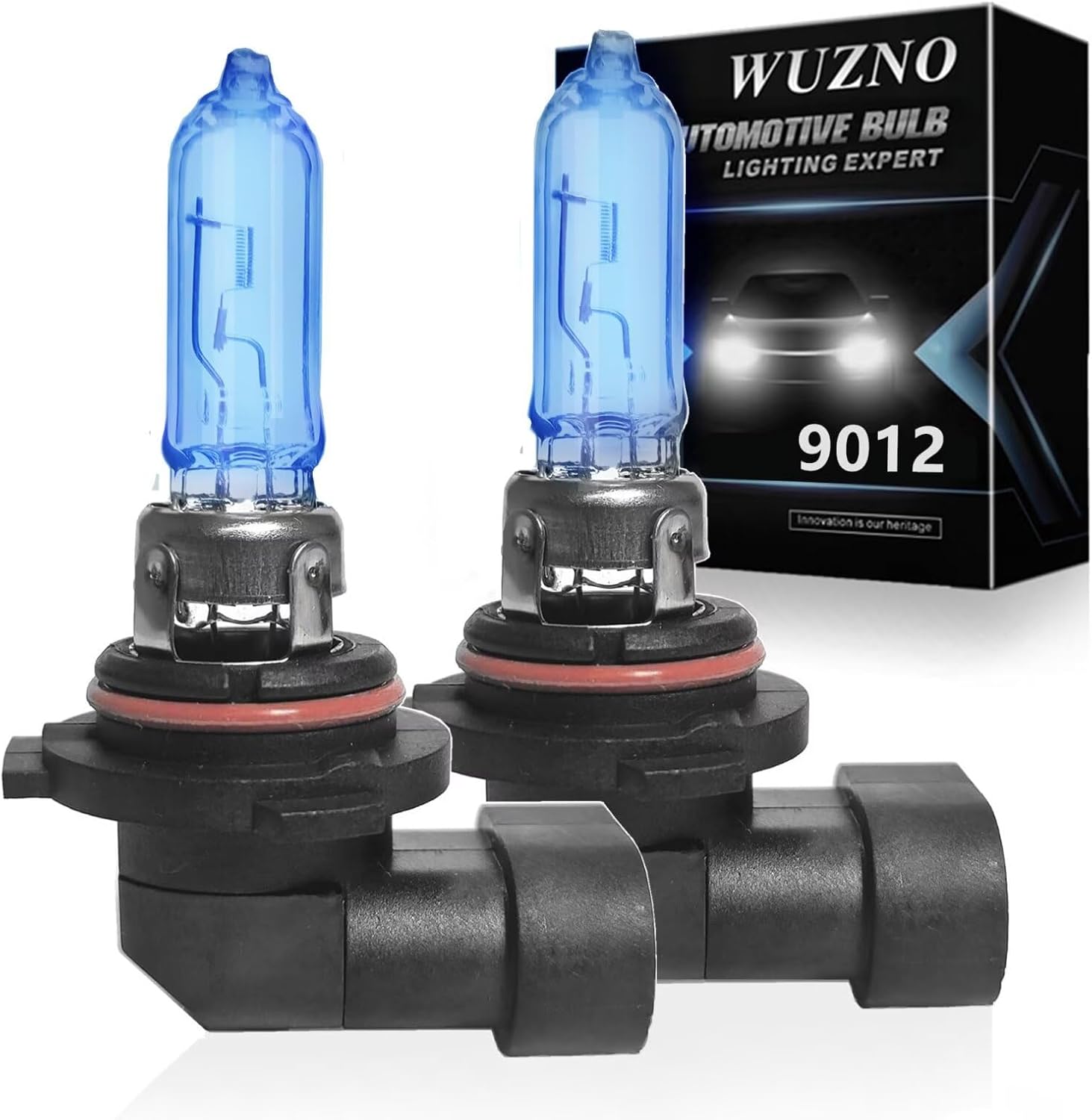
These halogen headlight bulbs are designed as a direct replacement for compatible Toyota models, offering plug-and-play installation with the same base and connector as the original bulbs. They deliver brighter, whiter light for improved visibility and a more modern look while helping reduce eye fatigue during night driving. Built for long life and reliable performance, this two-pack is ideal for restoring or upgrading your vehicle's headlight output.

These SYJIIP halogen headlight bulbs are designed for Toyota RAV4 models from 2013 to 2015, offering a plug-and-play replacement with stock-size fitment for easier installation. They deliver brighter warm white light for improved night visibility while maintaining a safe beam pattern with reduced flicker and fewer CANBUS issues. The four-pack makes it convenient to refresh multiple bulbs or keep spares on hand for reliable driving performance.
Can You Legally Switch From Halogen to LED?
In the UK, the answer depends on whether you are changing a bulb inside an existing halogen headlamp unit or replacing the whole headlamp with a unit designed and approved for LED light sources.
The current GOV.UK MOT inspection manual says existing halogen headlamp units on vehicles first used on or after 1 April 1986 must not be converted to use HID or LED bulbs. If that conversion has been done, the headlamp must fail for “light source and lamp not compatible.”
However, the same MOT guidance also says this does not refer to complete replacement headlamp units that were manufactured with HID or LED light sources. In simple terms, factory-fitted LED headlights are legal, and a complete replacement LED headlamp unit can be acceptable if it is designed, approved, fitted, and aligned correctly for that vehicle.
Warning: Do not assume an “LED upgrade” bulb is road legal just because it fits the socket. In the UK, putting LED bulbs into a halogen headlamp unit can fail an MOT and may dazzle other road users. Check your vehicle handbook, MOT rules, and local regulations before modifying headlights.
Rules vary outside the UK. Some countries allow specific approved LED retrofit bulbs only for listed vehicles and headlamp approval numbers. Others restrict them for road use. Always check your local roadworthiness rules before buying a conversion kit.
LED vs Halogen Performance: Brightness, Beam Pattern and Glare

LED headlights often look brighter than halogens because they produce a whiter, sharper light. But brightness alone does not tell you whether a headlight is good. The beam must put enough light on the road without throwing too much light upward or into oncoming traffic.
The Insurance Institute for Highway Safety makes this point clearly: its headlight ratings are technology-neutral, and using LED, HID, or halogen technology does not guarantee a good rating. The headlamp’s optics, aim, and glare control matter just as much as the light source.
IIHS reports that vehicles with good-rated headlights are associated with 19% fewer nighttime single-vehicle crashes and 23% fewer nighttime pedestrian crashes than vehicles with poor-rated headlights.
That is why a well-designed halogen projector can sometimes outperform a poor LED setup. It is also why an illegal LED retrofit in a halogen reflector can make visibility worse for everyone: the driver may see a bright foreground hotspot, while other road users get glare and the road farther ahead is not lit properly.
What Affects Real-World Visibility?
- Beam aim: Even a good headlamp can dazzle others if it is aimed too high.
- Reflector or projector design: The housing must match the light source.
- Lens clarity: Cloudy plastic lenses scatter light and reduce distance vision.
- Colour temperature: Very cool white light can feel harsher to other drivers.
- Vehicle height: Taller vehicles can put headlamps closer to eye level for drivers in lower cars.
- Weather: Heavy rain, fog, and wet roads can increase reflected glare.
Recent glare research also shows why this issue matters. The College of Optometrists reported RAC-backed findings in February 2026 showing that many drivers feel dazzled by modern headlights, with whiter light from newer vehicles frequently blamed. That does not mean every LED headlamp is unsafe, but it does mean correct design and alignment are essential.
Cost and Maintenance: Bulb Price vs Whole Headlamp Price
Halogen headlights are usually cheaper to maintain because most systems use replaceable bulbs. If a bulb fails, the repair can often be as simple as buying the correct H7, H4, H11, or other bulb type and fitting it properly.
LED costs are more complicated. Some LED products are replaceable bulbs, but many factory LED systems use sealed headlamp units. If a sealed LED headlamp fails or is damaged in a collision, the repair may involve replacing the whole unit rather than a small bulb. That can make the bill far higher than a basic halogen bulb replacement.
| Cost area | Halogen | LED |
|---|---|---|
| Bulb purchase | Low | Varies widely; legal compatibility matters |
| DIY replacement | Often simple on older cars | Can require more space, cooling, coding, or alignment checks |
| Whole unit replacement | Usually less complex | Can be expensive on sealed or adaptive LED systems |
| Long-term maintenance | More frequent bulb changes | Less frequent light-source failure, but higher repair cost if the unit fails |
Pro Tip: Before upgrading from halogen, inspect the headlamp lenses and beam aim. Restoring cloudy lenses and fitting fresh, quality halogen bulbs in pairs can noticeably improve night visibility without creating legal or glare problems.
[Products Worth Considering]

Upgrade your Toyota RAV4 with bright, road-clarifying LED lighting designed for 9012/HIR2 sockets and compatible with both high and low beam applications. These plug-and-play bulbs deliver cool white illumination, quick installation, and dependable performance in challenging weather, while the built-in cooling system helps support long service life.

【Vacuum Precision Optical Blue Film Technology】Engineered with a micron-level optical blue coating, this technology filters the yellowish tint typical of conventional halogen bulbs, producing a whiter, crisper beam output. The coating also acts as a thermal insulator with enhanced UV protection, effectively slowing oxidation, yellowing, and premature aging of the headlight housing. Please note: this bulb delivers an enhanced warm white halogen output — not the cool white appearance of HID lighting
Choosing Between Halogen and LED Headlights: Which Is Right for You?
Choose halogen headlights if your car was built for halogen bulbs, you want the cheapest maintenance, or you mainly drive in well-lit areas. A good halogen setup with clean lenses and correct aim is still safe and practical for many drivers.
Choose LED headlights if your car came with them from the factory, you are buying a vehicle with a well-rated LED system, or you can fit a complete approved LED headlamp unit designed for your vehicle. LEDs make the most sense for frequent night driving, rural roads, and drivers who want longer service life with modern lighting features.
The safest answer is not “LED always wins” or “halogen is always outdated.” The best headlight is the one that is legal, correctly aimed, compatible with the housing, and able to light the road ahead without dazzling everyone else.
[Products Worth Considering]

High Brightness: Staaricc headlamp is equipped with upgraded chips that provides super bright illumination. 4 working modes include high, low, strobe and sos, which can meet your lighting needs in different scenes. After the head lamp stays on for 10 seconds, it can be turned off by pressing the ON/OFF button without cycling four light modes.

●3-Pack, Perfect Gift Choice●: The LED beanie comes packaged in a gift box, with 3 hats in different colors—offering exceptional value. It's a practical and cool gift/stocking stuffer for man dads, husband, or friends on Thanksgiving, Christmas, or New Year. Ideal for running, camping, cycling, fishing, or any other winter night activity requiring hands-free lighting. Not only does it keep you warm and illuminate your path at night, but it also adds a stylish touch to your look.

230° WIDE BEAM HEADLIGHT & SPOTLIGHT - The new 230° wide beam headlight allows you to illuminate the viewing area without moving your head. Unlike traditional headlights, it has a better view, and you can also use its spotlight to focus on specific areas.
Frequently Asked Questions
What are the disadvantages of LED headlights?
LED headlights can cost more to buy or repair, especially when the vehicle uses sealed LED headlamp units. They also need proper heat management and precise optical design. If LED bulbs are fitted into the wrong halogen housing, the beam pattern can scatter and cause glare.
Why do new cars still use halogen bulbs?
Some new cars still use halogen bulbs because they keep purchase prices and repair costs down. Halogen systems are simple, familiar, and cheap to service, which makes them useful for entry-level models, commercial vehicles, and markets where low maintenance cost matters more than advanced lighting features.
Are LED headlights legal in the UK?
Factory-fitted LED headlights are legal when the vehicle and headlamp system meet the required standards. The problem is converting an existing halogen headlamp unit to LED bulbs. For vehicles first used on or after 1 April 1986, the UK MOT manual says those halogen units must not be converted to HID or LED bulbs.
Do LED headlights always improve night visibility?
No. A good LED headlamp can improve visibility, but a poor LED retrofit can create glare, uneven light, or a short foreground-heavy beam. Real visibility depends on the full headlamp unit, lens condition, beam aim, cut-off pattern, and whether the light source matches the housing.
Should I replace both halogen headlight bulbs at the same time?
Yes, it is usually best to replace halogen bulbs in pairs. If one bulb has failed, the other may be near the end of its life too. Replacing both also helps keep the colour and brightness balanced from left to right.
Conclusion
LED headlights are usually the better technology when they are factory-fitted or part of a properly approved headlamp system. They can deliver strong visibility, efficient power use, and long service life. Halogen headlights remain a smart choice for many older vehicles because they are affordable, easy to replace, and already matched to the car’s original headlamp design.
If your goal is safer night driving, do not focus only on bulb brightness. Check legality, lens condition, beam aim, and headlamp compatibility first. A legal, well-aimed headlight will always beat a brighter but poorly controlled one.
Sources
- GOV.UK MOT inspection manual: lamps, reflectors and electrical equipment — UK MOT rules for headlamp compatibility, LED/HID conversions, alignment, levelling, and cleaning devices.
- Insurance Institute for Highway Safety: Headlights — headlight performance, glare, technology-neutral ratings, and crash reduction data.
- U.S. Department of Energy: LED Lighting — LED efficiency, directionality, heat, and general lighting lifetime context.
- Philips LongLife EcoVision H7 halogen bulb — example halogen bulb wattage and claimed service life.
- Philips UltinonSport LED product guidance — LED heat management, beam positioning, and product lifetime example.
- College of Optometrists: Headlight glare research — 2026 driver glare findings and safety context.