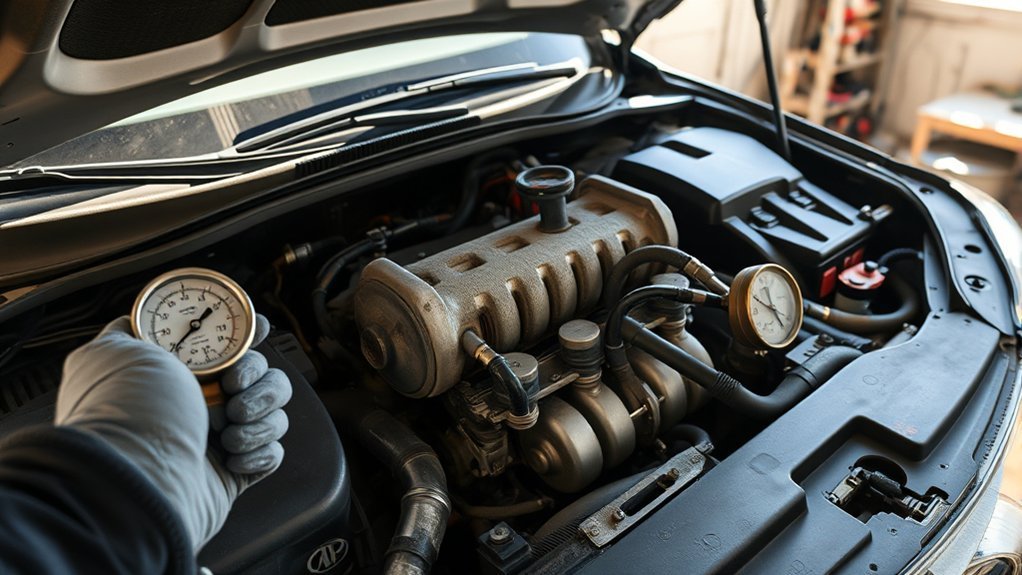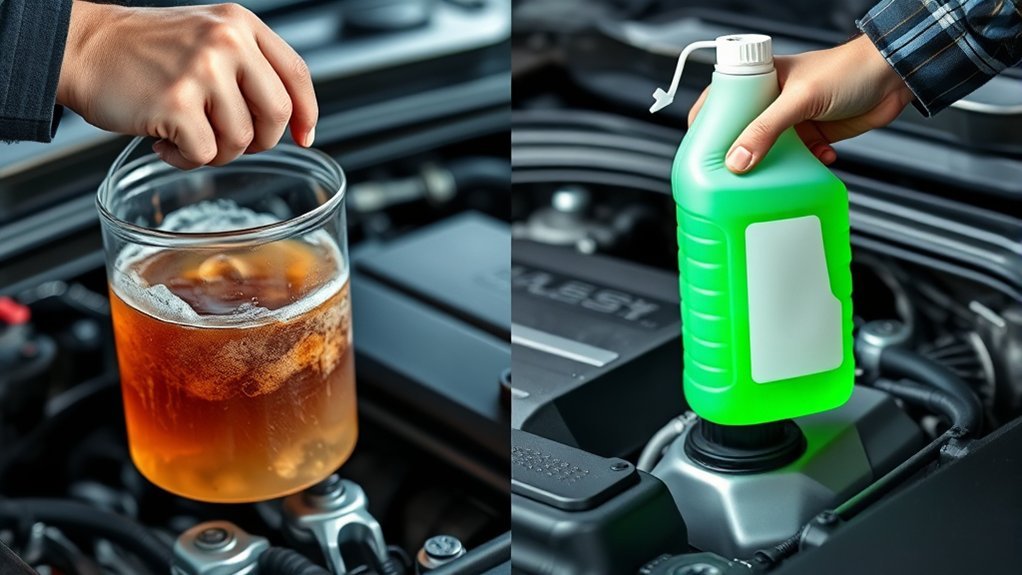
A coolant top-off, a scheduled drain-and-fill, and a corrective coolant flush solve different problems. Top off only when the cold coolant level is low and you can add the exact approved coolant. Follow the owner’s manual for routine replacement. Choose a flush only when the manufacturer specifies one or the system is contaminated, contains the wrong coolant, or needs cleaning after the underlying fault is repaired. Repeated coolant loss or overheating needs diagnosis—not repeated refills or an automatic flush.
Last updated: July 22, 2026 — safety guidance, service definitions, decision rules, and cost references reviewed.
Quick Answer
Top off the coolant only when the engine is fully cool, the level is low, and you have the exact coolant specification. For routine maintenance, use the replacement method in the owner’s manual—often a drain-and-fill. If the coolant is rusty, sludgy, oily, mixed with an incompatible product, or full of debris, diagnose and repair the cause first, then perform the manufacturer-approved cleaning and refill procedure.
Key Takeaways
- A top-off only restores the cold coolant level; it does not renew depleted additives or repair a leak.
- A scheduled drain-and-fill replaces part of the coolant; a corrective flush removes more old fluid and contamination when the vehicle procedure calls for it.
- Follow your owner’s manual first because coolant intervals vary by vehicle, coolant type, engine design, and driving conditions.
- Never open a hot radiator or pressurized coolant reservoir; hot coolant and steam can cause serious burns.
- If the cold level keeps dropping, the system must be inspected for an external leak, a pressure-cap problem, trapped air after service, or an internal fault.
At a Glance
| Typical Time | Top-off: a few minutes; drain-and-fill or flush: varies by cooling-system layout and bleeding procedure |
| Difficulty | Top-off: basic maintenance when the correct reservoir and coolant are known; full service: vehicle-specific and often better handled professionally |
| Core Supplies | Exact approved coolant, gloves, eye protection, funnel, and—when draining—a sealable drain pan and the vehicle-specific bleeding instructions |
| Cost | A top-off may cost only the coolant. Professional estimates vary sharply by vehicle, location, coolant capacity, and whether the quote is for a change, exchange, flush, or diagnosis. |
Warning: Never remove a radiator cap or pressurized coolant-reservoir cap while the engine is running or the cooling system is hot. Steam and hot liquid can escape forcefully. Shut the vehicle off, let the system cool as directed by the owner’s manual, keep your face and hands away from the cap, and open it slowly with a thick cloth only after the system is cool.
How to Know When Your Vehicle Needs a Coolant Flush
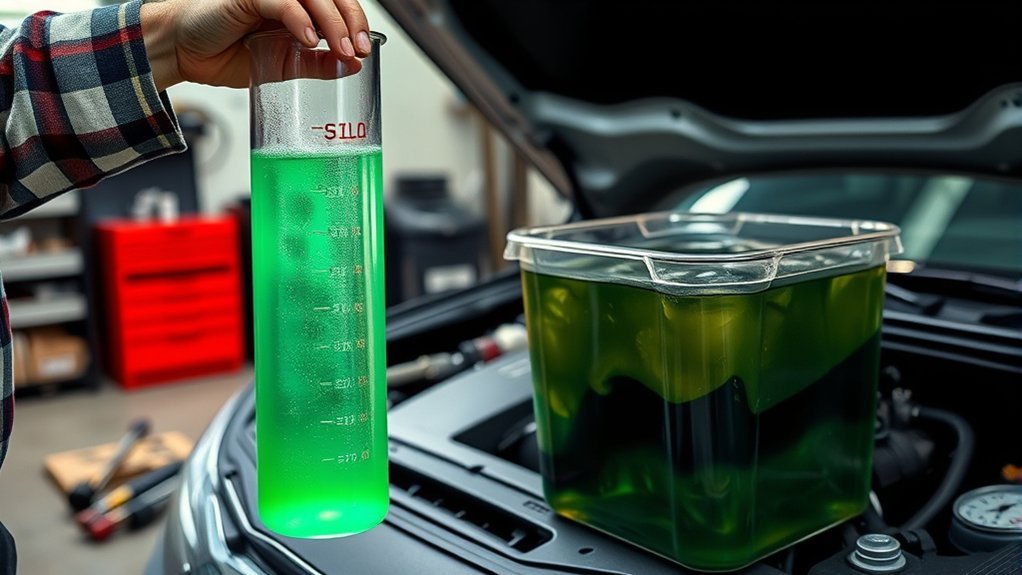
Your vehicle may need corrective cooling-system service when the coolant is contaminated or the wrong chemistry is present. Do not judge condition by dye color alone. The fluid should match the expected appearance for the approved product and be free of rust, sediment, sludge, oil, and unexplained cloudiness. Brown, gritty, sludgy, or oily coolant is not a simple top-off problem.
Common signs that point toward a coolant flush or professional cooling-system inspection include:
- Rusty, muddy, or discolored coolant: Rust or sediment can reduce heat transfer and increase corrosion inside the radiator, heater core, water pump, and engine passages.
- Visible debris in the reservoir: Floating particles or sludge can mean the coolant additives are depleted or the system has contamination.
- Frequent overheating: Stop driving and diagnose the cause. Low coolant, trapped air, a thermostat or fan fault, poor pump circulation, a blocked radiator, or an internal engine problem can cause overheating; a flush is not a diagnosis.
- Sweet smell or visible leaks: A puddle, damp hose connection, crusty residue, or repeated cold-level drop calls for leak testing before any routine fluid service.
- Coolant service is overdue: If your owner’s manual says coolant service is due, do not rely on color alone.
- Major cooling-system repairs were done: After replacing a radiator, water pump, thermostat, heater core, hose assembly, oil cooler, or head gasket, the system may need the specified refill, bleed, and contamination-removal procedure.
Note: A sealed cooling system should not need routine, repeated top-offs. A small level change can occur after recent service as trapped air leaves the system, but any continuing cold-level drop needs inspection.
What Is a Coolant Flush and Why Is It Important?
A coolant flush is a corrective cleaning and fluid-replacement service, but the term is not used consistently. One shop may circulate water or a chemical cleaner; another may use exchange equipment; a manufacturer may specify only a controlled drain-and-fill. The correct procedure is the one approved for the vehicle. Every complete service should finish with the exact coolant concentration, the required air-bleeding or vacuum-fill procedure, a stable cold level, and a leak check.
Coolant does more than prevent freezing. The water-and-antifreeze mixture carries heat, raises the mixture’s boiling point, lowers its freezing point, and contains inhibitors that help limit corrosion and deposits. Those protective properties do not last forever. Toyota advises following the vehicle-specific interval and notes that service life depends on the coolant and vehicle, while Ford directs owners to use the approved specification and scheduled interval.
There are three related services people often mix up:
| Service | What It Does | Best For |
|---|---|---|
| Top-Off | Adds coolant to bring the level back to the proper range. | A one-time low cold level when the correct coolant is known and the cause is monitored. |
| Drain-and-Fill | Drains old coolant from accessible points and refills with fresh coolant. | Routine replacement when the owner’s manual specifies draining and refilling. |
| Flush / Exchange | Removes more old fluid and, when specified, uses water, cleaner, or exchange equipment to address contamination. | Rust, sludge, incompatible coolant, or post-repair cleanup when the approved procedure calls for it. |
A flush can remove contamination, but it is not the default answer every time a shop offers “coolant service.” RepairPal notes that many manufacturers simply call for a coolant change and that a drain-and-fill is often enough for a maintained vehicle. If the coolant is clean and no service is due, no fluid service may be needed.
Coolant Flush vs. Refill: Key Differences Explained
The biggest difference is that a coolant refill fixes the level, while a coolant flush addresses the condition of the coolant and the cleanliness of the cooling system.
| Factor | Coolant Refill | Coolant Flush |
|---|---|---|
| Purpose | Restores a low cold level with the approved coolant. | Removes old coolant and contamination using the approved procedure. |
| Best timing | Only when the engine is cool, the correct coolant is known, and the cause of the low level is monitored. | When specified by the manufacturer or needed after contamination and repair. |
| Problem it solves | Low level after a verified one-time cause, such as normal settling after recent service. | Rust, sludge, incompatible coolant, or contamination remaining after the fault is repaired. |
| Cost | Usually lower because little fluid and labor are required. | Usually higher because it may require more fluid, labor, cleaner, diagnosis, and bleeding time. |
| Risk if used wrongly | Can hide a leak or internal fault if repeated instead of diagnosed. | Can be unnecessary—or use the wrong method—if sold outside the vehicle’s maintenance schedule without a documented reason. |
Use a top-off to correct level, a scheduled coolant change to renew the fluid, and a corrective flush to remove contamination. Diagnose leaks and overheating before choosing any of them.
[Products Worth Considering]

This spill-proof radiator coolant filling funnel kit helps you refill cooling systems cleanly while reducing trapped air pockets that can affect heater and engine performance. It includes a 5-inch extension bar and 45-degree elbow for easier access under shrouds or at awkward angles. Color-matched caps for dedicated adapters make setup simpler and more organized.

This long-neck automotive funnel makes pouring oil, gas, and lubricants cleaner and easier from different angles. Its wide neck and raised sides help reduce spills, dirt entry, and leaks, while the flexible, reusable plastic design stands up to regular use. Sized for convenient handling, it’s a practical tool for routine vehicle maintenance across cars, trucks, and SUVs.
When to Opt for a Coolant Flush vs. Refill
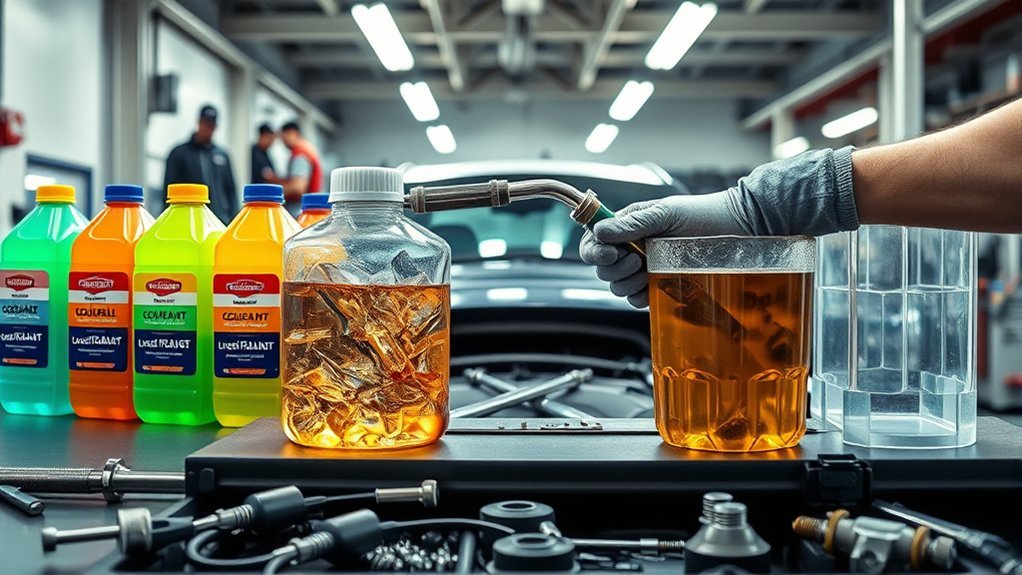
Choose the service based on what you see, what your owner’s manual says, and how the vehicle behaves. Do not choose based only on mileage or coolant color.
| Situation | Best Choice | Why |
|---|---|---|
| Cold level is slightly low; coolant specification and recent service history are known | Refill / top-off | Restore the level with the exact approved product, then monitor it at the same cold condition. |
| Coolant is rusty, muddy, oily, or sludgy | Diagnosis and repair, then approved flush/refill | Oil or heavy contamination can point to a failed gasket, cooler, or component; cleaning alone will not fix the source. |
| Vehicle overheats repeatedly | Professional diagnosis | Overheating may involve a leak, thermostat, fan, pump, radiator, head gasket, or air pocket. |
| Wrong coolant was added | Verify compatibility; drain/flush as specified | Do not assume color proves compatibility. Use the manufacturer’s correction procedure for the actual products mixed. |
| Coolant service is due by the owner’s manual | Manufacturer-specified replacement | Routine service should follow the exact drain, refill, concentration, and bleeding instructions for the vehicle. |
| Reservoir empties again after topping off | Cooling-system diagnosis | A top-off will not repair a hose, radiator, water pump, heater core, pressure cap, oil cooler, head gasket, or other internal leak. |
Pro Tip: Ask the shop to write the procedure on the estimate: top-off, gravity drain-and-fill, chemical flush, water flush, or fluid exchange. Also ask for the coolant specification, quantity, bleeding method, and reason the service is needed.
Signs Your Vehicle Needs a Coolant Refill
A top-off is appropriate only when the cold coolant level is below the specified mark, the exact coolant is known, and there is no active overheating or unresolved recurring loss. Most vehicles have a translucent reservoir with cold-level markings, but reservoir design and checking instructions vary. Park on level ground and use the owner’s manual.
Your vehicle may need a refill when:
- The cold level is below the manual’s specified line, and the correct coolant is available.
- The level settled slightly after a recent cooling-system repair and then remains stable after the approved bleeding procedure.
- A low-coolant message appears, but the engine is not overheating; add coolant only after the system is fully cool and the manual permits it.
- You can document the cold level and recheck it under the same conditions to confirm whether the loss continues.
How to Check and Refill Coolant Safely
- Let the engine cool completely. Do not open a hot pressurized cap.
- Find the coolant reservoir. Look for MIN and MAX markings on the side of the tank.
- Check the level and condition. Compare the cold level with the correct marks. Rust, sludge, oil sheen, debris, or an empty reservoir calls for diagnosis rather than a routine top-off.
- Use the exact approved coolant. Match the specification in the owner’s manual or manufacturer service information. Brand color alone is not a compatibility standard.
- Add coolant slowly. Stop at the cold-fill range specified for that reservoir. Do not overfill.
- Recheck cold. After the vehicle has completed a heat cycle and cooled fully, compare the level under the same conditions. A new drop needs inspection.
If the reservoir is empty, the temperature warning appears, steam is present, or coolant is on the ground, do not keep topping off and driving normally. Shut the vehicle off safely and arrange diagnosis or towing as needed.
Hybrid and EV caution: Some electrified vehicles use more than one cooling circuit. Do not assume every reservoir serves the engine, and do not work near orange high-voltage cables or power-electronics components unless the owner’s manual identifies the task as owner-serviceable.
How Often Should You Flush Coolant?
The safest answer is: replace coolant at the interval and with the method listed in your owner’s manual or maintenance guide. “Replace” does not automatically mean a chemical or machine flush. Toyota’s general guidance illustrates the range: some silicate coolants may be changed around two years or 30,000 miles, while extended-drain coolant may last up to five years or 100,000 miles. Vehicle-specific schedules can differ.
Do not apply a generic mileage rule to every vehicle. For example, Toyota maintenance guides for some current models specify an initial coolant replacement at 100,000 miles or 120 months and shorter intervals afterward. Other manufacturers and coolant chemistries use different schedules. Contamination, incompatible coolant, overheating, or a system-opening repair can require earlier corrective service.
Use these timing rules:
- Owner’s manual says coolant service is due: Schedule the recommended service.
- Coolant looks normal but is due: Replace it by the manual; appearance alone does not prove the additives are still within service life.
- Coolant is rusty, sludgy, or oily: Diagnose the source, repair it, and then use the approved cleaning and refill procedure.
- Coolant keeps dropping: Diagnose the leak before choosing a flush or refill.
Benefits of Regular Coolant Maintenance for Engine Life
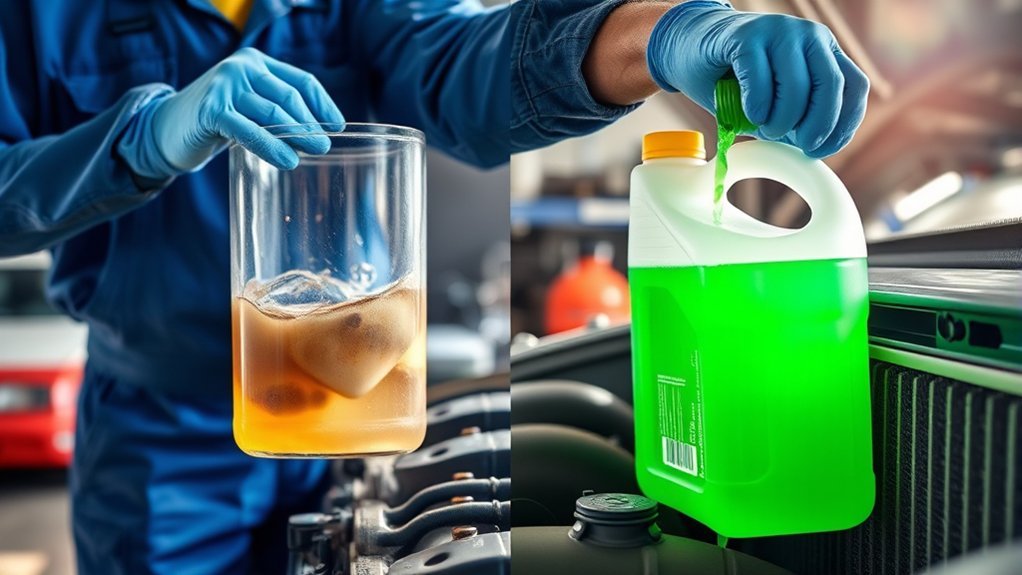
Regular coolant maintenance protects the parts that keep engine temperature under control. When coolant becomes old, diluted, contaminated, or chemically depleted, it cannot protect the system as well.
Improved Engine Efficiency
Coolant carries engine heat to the radiator and also flows through the heater core on many vehicles. Rust, scale, sludge, or trapped air can restrict flow or reduce effective heat transfer, but overheating still requires diagnosis because coolant condition is only one possible cause.
Reduced Overheating Risks
Operating an engine while it is overheating can damage gaskets, seals, hoses, radiators, cylinder heads, and other components. Correct level and scheduled coolant replacement reduce preventable risk, but they do not replace checks of the fan, thermostat, pump, pressure cap, and coolant flow.
Better Corrosion Protection
Coolant contains an inhibitor package intended to protect the metals and components used in the specified cooling system. As the fluid ages or becomes diluted or contaminated, corrosion and deposits can become more likely. That is why specification, concentration, condition, and service interval all matter.
Common Mistakes in Coolant Flushes to Avoid
A coolant flush can help, but only when it is done correctly. Avoid these common mistakes:
- Opening the system while hot: Always wait until the engine and cooling system are cool.
- Using the wrong coolant: The correct coolant is based on vehicle specification, not just color.
- Mixing by color: Dye color is not a chemistry or approval standard. Match the manufacturer specification and verify the actual products before deciding whether a flush is needed.
- Skipping leak inspection: A flush will not fix a cracked hose, leaking radiator, bad cap, or failing water pump.
- Leaving air in the system: Air pockets can cause poor heater output, unstable coolant level, or overheating after service. Follow the vehicle’s bleed or vacuum-fill procedure.
- Using chemicals or pressure without approval: A routine coolant change may not require a cleaner or power-flush method. Use only a procedure and product compatible with the vehicle.
- Dumping used coolant: Used antifreeze should be recycled or disposed of according to local rules and should never go into storm drains.
Warning: Coolant may contain ethylene glycol. Ingestion can cause severe health effects. Keep new and used coolant away from children and animals, clean spills immediately, store drained fluid in a sealed labeled container, and use an approved recycling or disposal site. The EPA says used antifreeze should not be dumped on land, into storm drains, or into surface water.
Tips for Choosing the Right Coolant for Your Vehicle
Choosing the right coolant is one of the most important parts of the job. Modern coolants use different additive technologies, and the wrong formula can reduce protection or create compatibility issues.
Use these coolant selection tips:
- Check the owner’s manual first. Look for the required coolant specification, not just the color.
- Do not rely on color alone. Green, orange, pink, blue, yellow, and purple coolants can use different chemistries depending on the brand and vehicle.
- Use premix only when it produces the required final concentration. A 50/50 premix is convenient for a top-off, but residual water after a flush can dilute it below the target concentration.
- If using concentrate, calculate the final system concentration. Use the water type, capacity, and ratio specified by the vehicle or coolant manufacturer.
- Avoid universal assumptions. A coolant line may cover many vehicles, but you still need the exact formula for your make, model, year, and engine.
Aftermarket product families may divide coolant by regional or manufacturer technology, but a marketing category is not enough by itself. Use the PEAK/OWI application information only as a cross-check; the vehicle manufacturer’s specification remains the deciding requirement.
[Products Worth Considering]
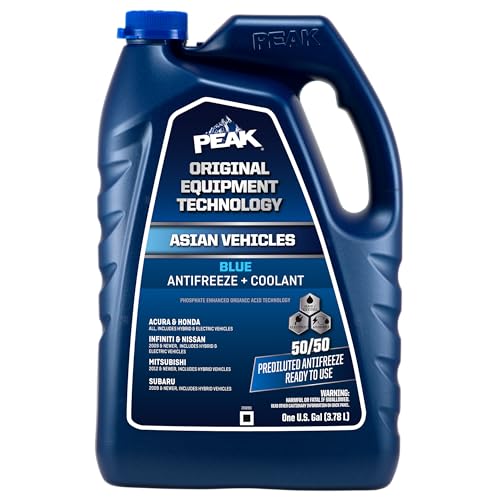
1 GALLON ENGINE ANTIFREEZE/COOLANT: Fully compatible with other extended life antifreeze/coolants. This item contains a bittering agent called Denatonium Benzoate.

PREDILUTED ANTIFREEZE AND COOLANT: Efficient formula is compatible with all vehicle cooling systems, providing fast-acting and long-lasting protection on all cooling system metals against rust and corrosion

1 GALLON ENGINE ANTIFREEZE/COOLANT: Fully compatible with other extended life antifreeze/coolants. This item contains a bittering agent called Denatonium Benzoate.
Coolant Flush Cost and Shop Questions
Coolant-service prices are not directly comparable unless the procedure and vehicle are the same. Kelley Blue Book lists an average radiator-flush range of $131–$209, while RepairPal’s coolant-change estimate was $437–$508 when updated June 18, 2026. The gap shows why a national range can mislead: coolant capacity, vehicle access, labor rate, cleaner or exchange equipment, bleeding time, diagnosis, taxes, and related repairs all change the quote. Get an itemized local estimate.
Before approving service, ask the shop:
- Is this a top-off, drain-and-fill, chemical flush, or machine exchange?
- What exact coolant specification, concentration, and quantity will be used?
- Will the system be pressure-tested for leaks?
- Will the thermostat, radiator cap, hoses, and reservoir be inspected?
- Will the system be vacuum-filled or bled using the manufacturer procedure, and will the cold level be rechecked?
- Are diagnosis, cleaner, replacement seals, shop supplies, taxes, and coolant disposal included in the price?
[Products Worth Considering]

Include two clamps, multiple tees, a garden hose adapter, an elbow and a cap
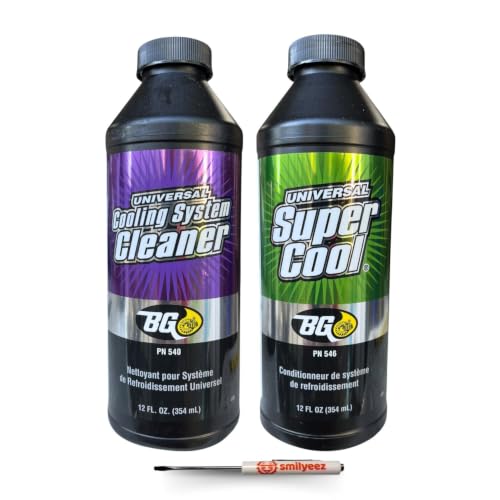
TWO-STEP COOLING SYSTEM SERVICE — Includes BG Universal Cooling System Cleaner PN 540 and BG Universal Super Cool PN 546 (12 fl oz / 354 mL each), plus a pocket screwdriver. Clean the cooling system first, then restore coolant protection.

Clear Out Cooling System Buildup: Orion Motor Tech's coolant system flush gun combines compressed air and water flow to help remove rust, scale, sludge, and debris from radiators, heater cores, and cooling passages, helping coolant move more freely
Expert Recommendations for Ongoing Cooling System Care
Good coolant maintenance is simple: keep the level correct, use the right coolant, fix leaks early, and follow the manufacturer’s service interval.
Regular Maintenance Schedule
Check the owner’s manual or maintenance guide for the coolant specification, interval, capacity, and replacement method. Record every top-off, coolant change, flush, leak repair, and part replacement so a future technician can see whether a level change is new.
Monitor Coolant Condition
Check the cold level at the interval recommended by the manufacturer and before a long trip. Compare it under the same conditions. Look for a trend, damp connections, crusty residue, sludge, oil sheen, or a sweet odor. Investigate abnormalities before the next long drive.
Use Recommended Products
Use coolant that meets the vehicle’s exact requirement. One Ford owner-manual example directs owners to keep the cold level within the marked range, use approved prediluted coolant, and avoid mixing different coolant types or colors. Your vehicle may specify a different product, concentration, or procedure.
For model-specific examples, see the guides to Toyota Camry coolant types and RAV4 coolant-loss diagnosis. This page should remain the general decision guide, while those pages handle model-year and engine-specific details.
Know When to Stop Driving
If the temperature gauge enters the hot zone, a temperature warning appears, steam is visible, or the vehicle loses power, pull over safely and shut it off. Do not open the pressure cap. Follow the owner’s manual and arrange towing when the engine cannot be confirmed safe to drive.
Frequently Asked Questions
Should I flush my coolant or refill it?
Top off only when the engine is fully cool, the level is low, the exact approved coolant is known, and the level remains stable afterward. Follow the manual for routine coolant replacement. Use a corrective flush when the manufacturer specifies it or after rust, sludge, incompatible coolant, or other contamination has been diagnosed and the source repaired.
Does a coolant flush mean refilling my coolant reservoir?
Yes, a complete flush ends with a refill, but filling the reservoir alone is only a top-off. A proper flush follows the vehicle-approved cleaning method, restores the specified coolant concentration, removes trapped air, verifies a stable cold level, and checks for leaks.
How much should a coolant flush and refill cost?
A DIY top-off may cost only the correct coolant. Professional prices vary widely because “coolant service” can mean a drain-and-fill, chemical flush, exchange, or diagnostic repair. Compare itemized local quotes that name the coolant specification, quantity, labor, bleeding procedure, and disposal charges.
What is the difference between a coolant flush and a coolant drain-and-fill?
A drain-and-fill removes coolant from accessible drains and then refills and bleeds the system, so some old fluid may remain. A flush or exchange removes more old fluid and may use water, cleaner, or equipment. Routine maintenance often uses a drain-and-fill; a flush is reserved for the manufacturer’s procedure or a documented contamination problem.
Can I add water instead of coolant in an emergency?
Some owner manuals allow clean water as a temporary emergency substitute when approved coolant is unavailable, but only after the system has cooled and only to reach service. Do not add cold water to a hot engine or keep driving an overheating vehicle. Restore the approved coolant concentration as soon as possible.
Can I mix different coolant colors?
Do not decide by color. Different products can share a dye color while using different chemistry or approvals. Match the vehicle manufacturer’s specification and verify the products already in the system; when compatibility is unknown, get manufacturer or professional guidance before adding anything.
Is a coolant flush safe for a high-mileage vehicle?
Mileage alone does not make a flush unsafe. The risk comes from an already weak or contaminated system and from using an unapproved method. Inspect for leaks, brittle hoses, a damaged pressure cap, corrosion, and failing components first, then follow the vehicle-specific replacement or cleaning procedure.
Conclusion
Top off only to correct a low cold level with the exact approved coolant. For scheduled maintenance, use the drain, refill, concentration, and bleeding method in the owner’s manual. Reserve a corrective flush for a manufacturer requirement or documented contamination, and repair the source of oil, rust, sludge, coolant loss, or overheating before treating the fluid. When the temperature warning or steam appears, stop driving, keep the pressure cap closed, and arrange diagnosis.
Sources
- Toyota — How Often to Change Engine Coolant — owner-manual-first interval guidance, coolant function, and emergency overheating advice.
- Ford Owner’s Manual — Engine Coolant Check — hot-system warnings, approved-coolant cautions, level checks, emergency water guidance, bleeding, and disposal.
- RepairPal — Coolant Drain or Flush — distinction between routine drain-and-fill service and corrective flushing.
- Ford Owner’s Manual — Hybrid Coolant Check — example of separate engine and inverter cooling-system service points.
- Kelley Blue Book — Coolant Flush Prices — national cost context and factors that change an estimate.
- RepairPal — Coolant Change Cost Estimate — current coolant-change estimate and vehicle-specific cost variation.
- U.S. EPA — Antifreeze Recycling — recycling and prohibited disposal guidance for used antifreeze.
- U.S. EPA — Ethylene Glycol Fact Sheet — health effects from ethylene-glycol exposure.
- PEAK / OWI — Original Equipment Technology Coolants — aftermarket application information used only as a cross-check against the vehicle specification.