
What’s in This Article
- What the Camry Cooling System Is and Why It Matters
- How Camry’s Closed-Loop Cooling Works
- Camry Cooling Symptoms at a Glance
- Main Parts: Radiator, Water Pump, and Cooling Jacket
- Thermostat Operation: About 80°C to 95°C
- Camry Radiator Design: Fins, Tubes, Tanks, Valves, and Fans
- Radiator vs. Expansion-Tank Caps: Pressure and Coolant Loss
- Common Failure Points and Overheating Warning Signs
- Routine Maintenance and When to Replace Parts
- Quick On-Road Cooling Troubleshooting
- When to Seek Professional Help
- Frequently Asked Questions
The Toyota Camry cooling system controls engine temperature with a sealed, pressurized coolant loop. Coolant absorbs heat in the engine, the thermostat meters flow, and the radiator releases that heat through tubes, fins, airflow, and electric fans. On many non-hybrid Camry engines, an engine-driven water pump circulates coolant; some hybrid and newer systems may use electric pumps or separate cooling loops, so verify the layout for your exact model year. If the temperature gauge rises, coolant keeps dropping, or steam appears, stop safely before a small cooling fault becomes engine damage.
Quick Answer
The Camry cooling system moves coolant through the engine to absorb heat, then sends it to the radiator so airflow can remove that heat. The thermostat controls when coolant flows through the radiator. The pressure cap and expansion tank help raise the boiling point and manage coolant volume as temperatures change.
Key Takeaways
- Check coolant level only when the engine feels cool and safe to touch.
- Use the coolant type and service interval listed in your Camry owner’s manual.
- Watch for warning signs such as steam, leaks, low coolant, fan failure, or a rising temperature gauge.
- Replace weak hoses, bad caps, leaking pumps, and faulty thermostats before they cause overheating.
- Stop driving if the temperature gauge climbs high or the Camry overheating warning signs appear.
What the Camry Cooling System Is and Why It Matters
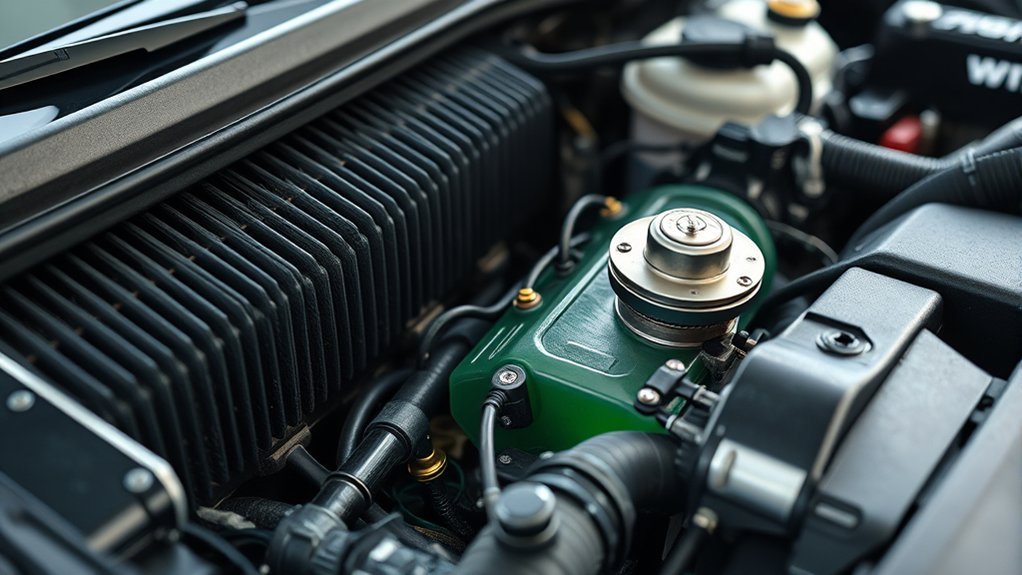
Think of the Camry cooling system as the engine’s thermal management network. It moves coolant through passages in the engine block and cylinder head, absorbs combustion heat, and sends that heat to the radiator.
The radiator then releases heat into moving air. Electric fans help when you drive slowly, sit in traffic, or run the engine under higher load.
The system also protects metal parts from corrosion when you use the right coolant. Toyota tells owners to use the manuals for their exact vehicle, and coolant service timing depends on the vehicle and coolant formula.
When this system works well, your engine keeps a stable temperature. That helps protect oil viscosity, reduce wear, support fuel economy, and prevent costly heat damage.
How Camry’s Closed-Loop Cooling Works
Your Camry uses a closed-loop liquid system. Coolant stays inside a sealed circuit while the pump, thermostat, radiator, hoses, pressure cap, and reservoir manage flow, heat, and pressure.
You can understand the system in three simple stages. The pump moves coolant, the radiator removes heat, and the pressure system controls expansion.
Closed-Loop Coolant Flow
A continuous circuit moves coolant through the Camry engine, radiator, hoses, and expansion tank. The water pump pushes coolant through the cooling jackets in the block and head.
Hot coolant leaves the engine and enters the radiator. The radiator tubes and fins spread heat across a large surface, and airflow carries that heat away.
After the coolant loses heat, it returns to the engine and repeats the cycle. This loop gives you steady thermal control during warm-up, traffic, highway driving, and hill climbs.
Pressure Regulation Components
The Camry pressure system keeps coolant under controlled pressure. Higher pressure raises the coolant boiling point and helps the system move heat without forming vapor pockets.
The radiator pressure cap and expansion tank manage this pressure on many layouts. When hot coolant expands, the cap routes excess volume into the reservoir. When the system cools, coolant can return to the loop.
Visible reservoir marks help you check level fast. A steady drop usually points to a leak, a weak cap, or another system fault.
| Component | Function | Benefit |
|---|---|---|
| Pressure cap | Controls system pressure | Raises boiling margin |
| Expansion tank | Stores expanded coolant | Helps maintain level |
| Level indicator | Shows coolant range | Supports quick checks |
| Relief path | Routes excess coolant | Reduces overpressure risk |
| Return path | Pulls coolant back | Helps prevent air entry |
Thermostat Circuit Control
The thermostat limits coolant flow when the engine starts cold. This helps the engine warm up faster and reach its normal operating range.
As temperature rises, the thermostat opens and sends more coolant through the radiator. Some older genuine Toyota thermostat listings show an 82°C to 95°C wax element range, but you should verify the correct value for your engine and part number.
This staged flow helps balance warm-up speed, cabin heat, emissions control, and engine protection. A thermostat that sticks open can delay warm-up, while one that sticks closed can cause overheating.
Camry Cooling Symptoms at a Glance
Use this table as a first-pass map, not a final diagnosis. Check the safest and simplest items first: coolant level, visible leaks, cap condition, hose condition, and fan operation.
| What You Notice | Most Likely Area | First Safe Check | Keep Driving? |
|---|---|---|---|
| Gauge climbs in traffic | Cooling fan, relay, fuse, sensor, or low airflow | Let engine cool, then confirm fan operation | Stop if gauge stays high |
| Gauge rises fast after startup | Low coolant, stuck thermostat, trapped air, or flow restriction | Check reservoir level and leaks after cooling | Do not keep driving hot |
| Coolant level drops repeatedly | External leak, weak cap, pump seal, hose, radiator, or internal leak | Look for stains, puddles, crust, or sweet smell | Service soon |
| Heater blows cold while gauge rises | Low coolant, air pocket, poor circulation, or thermostat issue | Stop, cool engine, then check level | Stop safely |
| Steam or coolant smell | Leak, boil-over, cap fault, or overheat event | Stay clear until fully cool | No, call for help |
Main Parts: Radiator, Water Pump, and Cooling Jacket
The cooling system depends on three major heat-control areas: the radiator, the water pump, and the cooling jackets. Each part has a clear job, and one weak part can affect the whole loop.
Radiator Core Design
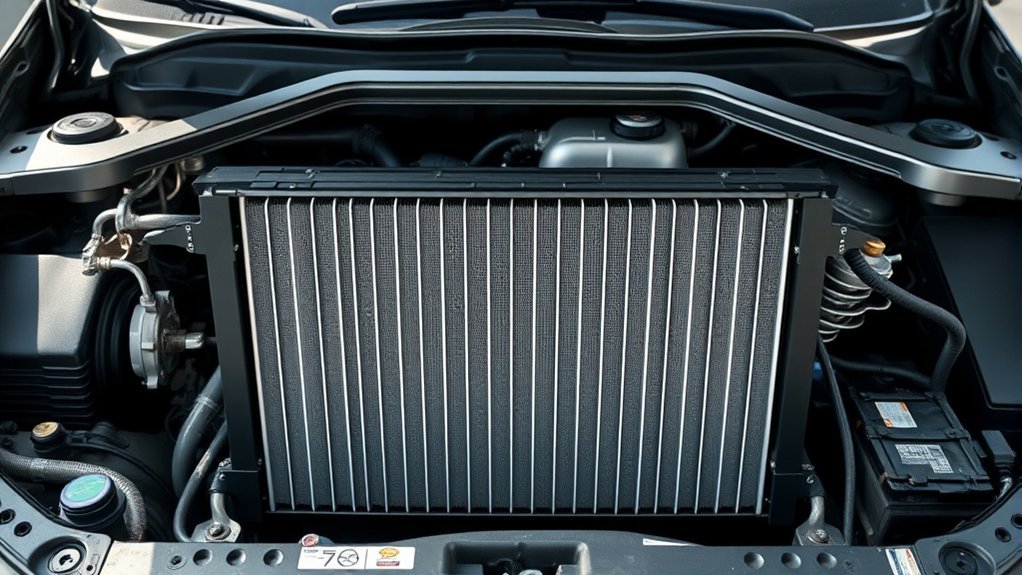
The radiator core acts as the engine’s main heat exchanger. It uses narrow tubes and thin fins to move heat from hot coolant into outside air.
Air passes through the fins as you drive. The fans pull more air across the core when road speed does not provide enough airflow.
Fin density, tube size, and core thickness all affect cooling performance. A clogged or damaged core can reduce heat transfer even when coolant level looks normal.
Water Pump Operation
Many non-hybrid Camry engines use an engine-driven water pump, while some hybrid or newer designs may use electric pumps or separate cooling loops. That difference matters because an electric pump can fail without belt noise.
You rely on coolant flow to prevent hot spots around the cylinder head and combustion chambers. A weak pump can cause overheating, heater problems, bearing noise, or coolant leaks near the pump housing. See this Camry water pump signs guide if pump symptoms are your main concern.
- The pump moves coolant through the engine and radiator circuit.
- The coolant absorbs heat in the engine jackets.
- The radiator releases heat through tubes and fins.
- Regular checks help you catch leaks, noise, and bearing wear.
Cooling Jacket Pathways
The cooling jacket routes coolant around the hottest engine areas. These passages surround the cylinder walls, combustion chambers, and cylinder head surfaces.
The pump pushes coolant through these passages so heat does not build up in one area. Then the thermostat controls how much coolant moves toward the radiator.
Clean coolant matters here. Old or incorrect coolant can leave deposits, reduce heat transfer, and speed up corrosion inside narrow passages.
Thermostat Operation: About 80°C to 95°C
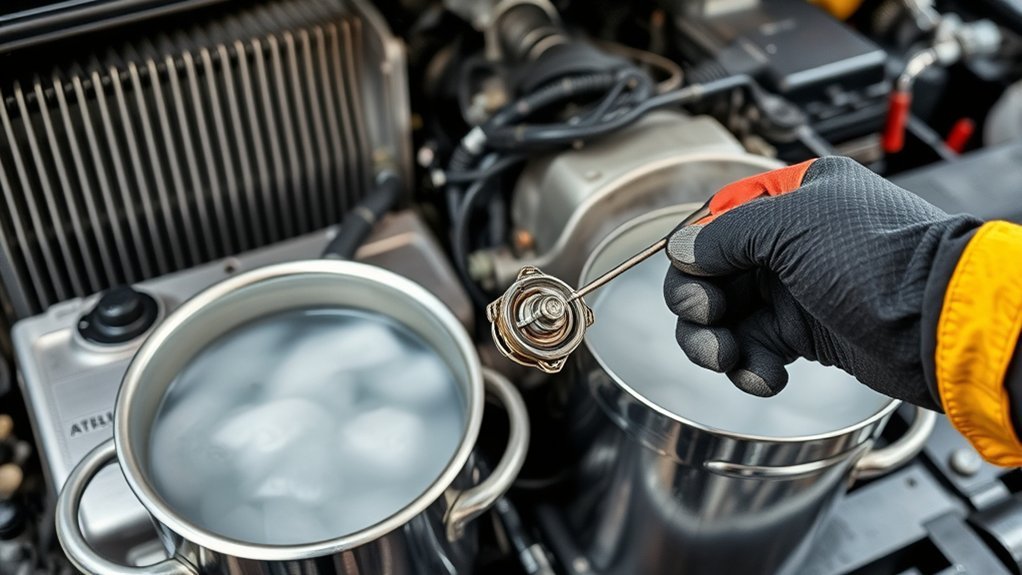
The thermostat stays mostly closed at cold start. This helps the engine warm up quickly instead of sending all coolant through the radiator right away.
Some older genuine Toyota thermostat listings show a wax-element range of 82°C to 95°C, and one parts Q&A lists a 180°F opening point for a specific thermostat. Do not apply those numbers to every Camry without checking your model year, engine, market, and part number.
Use your owner’s manual, repair information, or a qualified technician to confirm the correct thermostat for your Camry. Installing the wrong temperature rating can cause poor warm-up, unstable temperature, or overheating.
- Check thermostat operation when warm-up takes too long.
- Test the thermostat if overheating happens without a clear leak.
- Use the correct thermostat rating for your engine.
- Replace the thermostat when it sticks, opens late, or leaks.
Note: A thermostat can fail open or closed, and each failure creates different symptoms.
Camry Radiator Design: Fins, Tubes, Tanks, Valves, and Fans
The radiator works as a compact heat exchanger. It routes hot coolant through tubes while fins increase the air-facing surface area.
Plastic or metal tanks at each side or end of the core direct coolant through the radiator. Inlet and outlet pipes keep flow moving in the right direction.
A drain valve helps you remove coolant during service on many models. Electric fans and shrouds pull air through the core when the Camry needs more cooling at low speed.
The pressure cap helps keep coolant in the system and raises the boiling margin. If the cap seal weakens, coolant can escape and the engine can overheat sooner.
Radiator vs. Expansion-Tank Caps: Pressure and Coolant Loss
The radiator cap and expansion-tank cap do not always perform the same job. The exact layout depends on your Camry year and engine, so check your owner’s manual before service.
On systems with a pressure-rated radiator cap, the cap seals the pressurized loop and controls pressure relief. The reservoir stores expanded coolant and helps the system recover coolant as it cools. If cap pressure is your main question, compare this separate Camry radiator cap pressure guide.
- Radiator cap: Seals the pressure side and helps control boil-over risk.
- Expansion tank cap: Covers the reservoir and may help vent or seal the recovery tank, depending on design.
- Failure modes: Weak springs, cracked seals, wrong pressure ratings, and damaged threads can cause coolant loss.
- Inspection: Check the cap rating, gasket, seating surface, and reservoir level when the engine cools.
Replace a suspect cap with the correct pressure rating. A cheap cap can cause expensive engine damage when it fails.
Common Failure Points and Overheating Warning Signs
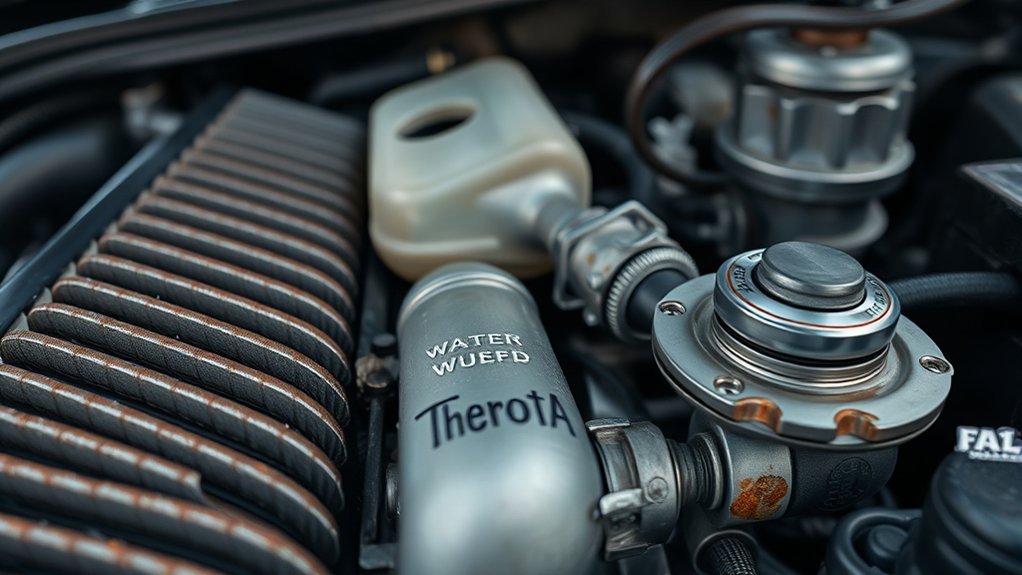
Cooling systems usually warn you before major engine damage occurs. You may see a rising temperature gauge, a warning light, steam, coolant smell, weak cabin heat, or puddles under the car.
A stuck thermostat can block flow or delay warm-up. A leaking hose, radiator, water pump, or cap can lower coolant level and reduce heat transfer. For leak-focused diagnosis, use this Camry coolant leaking guide.
Debris on the radiator face can block airflow. A failed fan, relay, fuse, or temperature sensor can let temperatures rise during traffic or idle.
| Failure Point | Common Symptom | Immediate Action |
|---|---|---|
| Thermostat failure | Fast gauge rise or slow warm-up | Stop, cool engine, test thermostat |
| Radiator leak | Puddles or low coolant | Inspect, repair, and refill correctly |
| Water pump | Noise, leak trail, or overheating | Inspect bearing, seal, and impeller |
| Clogged fins | Poor cooling at speed or idle | Clear debris and check core damage |
| Fan fault | Overheating in traffic | Check fan, fuse, relay, and sensor |
Warning: Never open a hot radiator cap or coolant reservoir cap because pressurized coolant can spray out and burn you.
[Products Worth Considering]
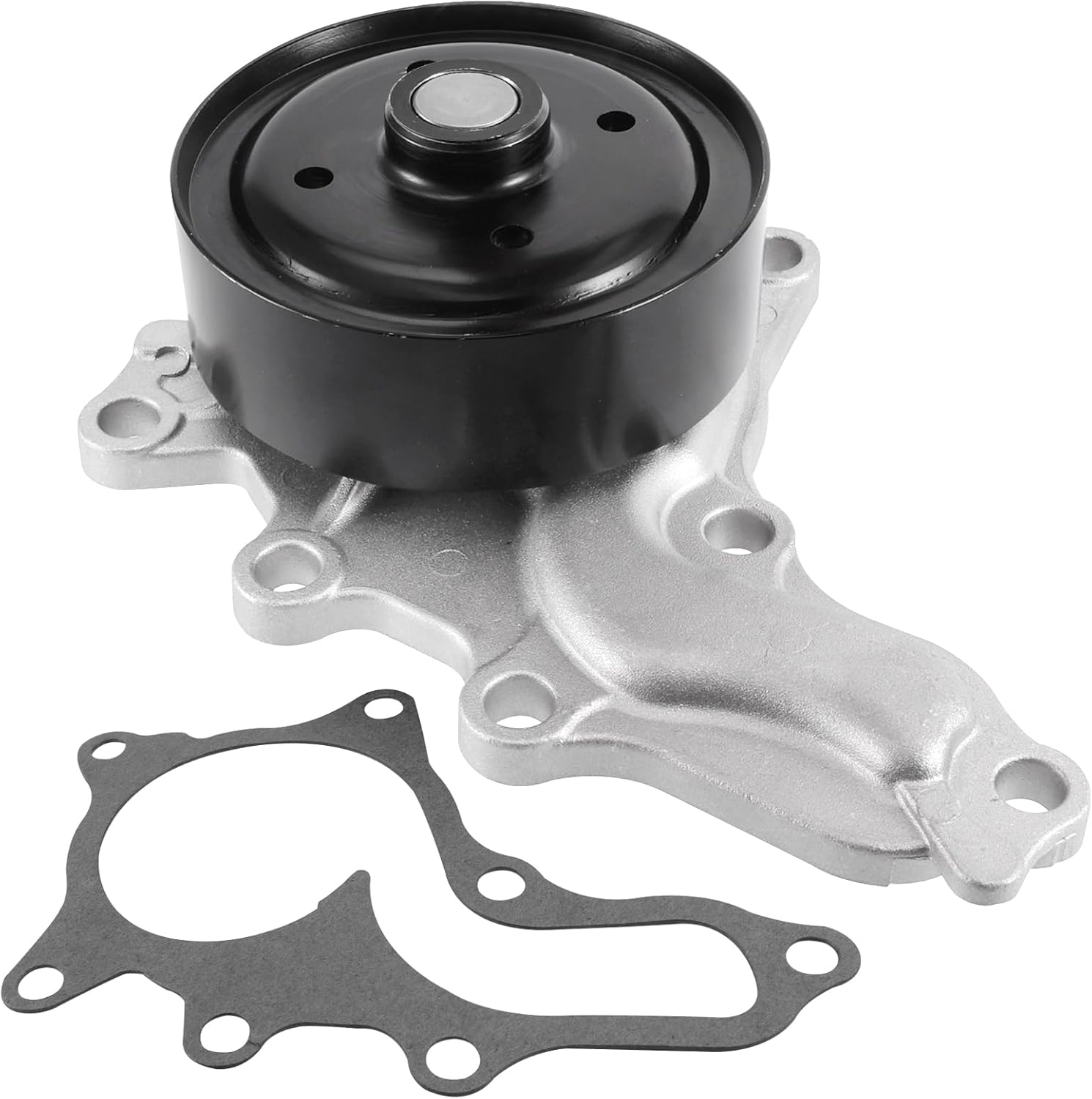
This AW6252 water pump is designed for a wide range of Toyota, Scion, and Lexus applications, helping maintain reliable engine cooling across compatible models. It features case hardened bearings for durability, a graphite-impregnated gasket for a secure seal, and 100% function and leakage testing for dependable performance. Built in TS16949 certified facilities, it offers a strong replacement option backed by service support.

This coolant electric water pump is designed as a replacement for select Toyota vehicles, helping maintain proper engine cooling performance and reliable temperature control. Built to OE specifications, it offers fitment support for compatible Avalon, Camry, and RAV4 models with 2.5L L4 engines. It also includes cross-reference part numbers for easier matching and comes with after-sales support for covered defects.

This engine water pump kit is designed to help maintain reliable cooling performance across a wide range of compatible Toyota, Lexus, Scion, and Pontiac vehicles. Built with aluminum and tested for leak-free operation, it offers a direct replacement solution that supports engine efficiency and long-term service life. The kit includes a professional water pump and gasket for a convenient installation-ready repair.
Routine Maintenance and When to Replace Parts
Follow the Camry maintenance schedule for your model year, not a one-size-fits-all mileage rule. Toyota advises owners to use the coolant interval listed in the vehicle owner’s manual.
Toyota’s general coolant guidance says service timing depends on coolant type and vehicle. Silicate coolants may need service around two years or 30,000 miles, while extended-drain coolants can last up to five years or 100,000 miles in many vehicles. Your Camry manual gives the final rule.
- Check the expansion tank level when the engine cools.
- Inspect hoses for swelling, cracks, soft spots, and white crust.
- Look at the radiator face for leaves, bugs, bent fins, or damage.
- Use Toyota-approved coolant or a coolant that matches Toyota specifications.
- Replace leaking caps, weak hoses, noisy pumps, and faulty thermostats promptly.
Do not mix random coolant types by color alone. Coolant color can mislead you because formulas can overlap across brands.
Pro tip: Write coolant service dates and mileage in a maintenance log so you don’t guess later.
[Products Worth Considering]

This coolant thermostat is a direct replacement designed for a wide range of Toyota, Lexus, and Scion vehicles. It helps maintain proper engine temperature, supports reliable cooling system performance, and installs easily without special tools or programming. Built to meet OEM standards, it offers durable, stable operation and dependable fitment for compatible models.

AISIN OE matched engine coolant thermostat delivers consistent temperature control for reliable cooling system performance. Built with high-quality materials and designed for perfect OE form, fit, and function, it helps maintain efficient engine operation across a wide range of compatible Lexus, Scion, and Toyota vehicles. The correct OE specified operating temperature supports dependable cooling, while note that a gasket is not included.

This replacement engine thermostat is designed for a wide range of Toyota, Lexus, and Scion vehicles, offering direct-fit compatibility and dependable cooling-system performance. It is rigorously tested before shipping and built from durable materials to support long-lasting reliability. Verify your part number and vehicle fitment before purchase for the best installation experience.
Quick On-Road Cooling Troubleshooting
If your Camry’s temperature gauge climbs above normal while driving, move to a safe place and stop. Turn off the engine if the gauge stays high, the warning light comes on, or you see steam.
Let the engine cool before you inspect anything under the hood. Check the expansion tank level only after the system cools enough to handle safely.
Look for wet hoses, coolant stains, puddles, or a sweet coolant smell. Listen for grinding or whining near the water pump after the engine runs again.
Check the radiator face for debris that blocks airflow. Watch whether the radiator fan runs when the engine reaches operating temperature.
Top off coolant only with the correct fluid and only when the engine cools. If you must use water in an emergency, use it only to reach a safe repair point and schedule proper coolant service as soon as possible.
[Products Worth Considering]

This all-in-one radiator pressure tester and vacuum refill kit helps diagnose cooling system leaks, measure temperature, and refill coolant efficiently. It includes a wide range of adapters for broad vehicle compatibility, plus a pressure tester, vacuum refiller, thermometer, and storage case for organized use. Designed for DIY mechanics and professionals, it simplifies coolant service while reducing guesswork and unnecessary repairs.

This spill-proof radiator coolant filling funnel kit helps you refill cooling systems cleanly while reducing trapped air pockets that can affect heater and engine performance. It includes a 5-inch extension bar and 45-degree elbow for easier access under shrouds or at awkward angles. Color-matched caps for dedicated adapters make setup simpler and more organized.

This engine coolant thermostat with seal is designed to help maintain proper engine temperature and support efficient cooling system performance. It is compatible with a wide range of Toyota, Lexus, Ford, Chevrolet, Mitsubishi, Scion, and Pontiac models, making it a versatile replacement choice for many vehicles. With included seal and durable metal-and-rubber construction, it offers a convenient fitment solution for cooling system repairs and maintenance.
When to Seek Professional Help
Get professional help when overheating repeats, coolant keeps dropping, or you see steam from the engine bay. You should also seek service if the heater blows cold while the gauge rises.
A technician can pressure-test the system, check cap rating, test the thermostat, inspect the water pump, and scan coolant temperature sensor data. These tests help find leaks and flow problems that a visual check can miss.
Do not keep driving a hot engine to reach your destination. That choice can turn a small leak into a head gasket, cylinder head, or engine replacement issue.
Frequently Asked Questions
How does a Toyota Camry cooling system work?
The water pump moves coolant through the engine, where it absorbs heat from the block and cylinder head. The thermostat controls flow to the radiator, and the radiator releases heat into outside air.
What are the main parts of a Camry cooling system?
The main parts include the radiator, water pump, thermostat, cooling jackets, hoses, fans, pressure cap, and expansion tank. Each part helps control heat, pressure, flow, or coolant storage.
What coolant should you use in a Toyota Camry?
Use the coolant type listed in your Camry owner’s manual. Do not choose coolant by color alone because different formulas can share similar colors.
Can you drive a Camry when the temperature gauge is high?
You should not keep driving when the gauge climbs high or the warning light comes on. Stop safely, let the engine cool, and check for leaks or low coolant before you continue.
How often should you change Camry engine coolant?
Follow the interval in your owner’s manual because coolant life depends on the vehicle and coolant formula. Toyota’s general guidance says some coolants need service around two years or 30,000 miles, while extended-drain coolants can last up to five years or 100,000 miles in many vehicles.
Why does a Camry overheat when the coolant is full?
A Camry can overheat with a full reservoir if the thermostat sticks, the water pump cannot circulate coolant, the radiator is restricted, the fan fails, or air is trapped after service. Start with safe checks, then have the system pressure-tested if the problem repeats.
Is Camry coolant color enough to choose the right fluid?
No. Color can help identify some coolant families, but it is not a reliable specification by itself. Match the Toyota specification and mixture listed for your model year.
Safety Disclaimer: This article is for informational purposes only and does not replace professional automotive advice. Always let the engine cool before checking coolant, and ask a qualified technician to inspect overheating, leaks, pressure faults, or unsafe roadside conditions.
Conclusion
Your Camry cooling system protects the engine by moving heat away before it causes damage. Check coolant level, hoses, caps, fans, and warning signs on a regular schedule.
Use the correct coolant and service interval for your exact model year and engine. If the gauge rises, the heater blows cold while the engine runs hot, or coolant keeps dropping, stop driving and get the system tested.
A few careful checks can keep your Camry reliable, cool, and ready for daily driving.
References
- How Often to Change Engine Coolant, Toyota, accessed 2026
- Toyota Owner’s Manuals and Warranty Information, Toyota, accessed 2026
- Toyota 90916-03090 Thermostat Specifications, ToyotaPartsDeal, accessed 2026
- How to Check Your Engine Coolant and Top It Up, The AA, updated 2023


[…] air blows strongly but stays cold, check coolant level, engine temperature and cooling-system flow, thermostat operation, heater-core flow, and the air-mix […]
[…] explanation of the radiator, pressure cap, reservoir, fans, pump, and coolant paths, see the Camry cooling system […]
[…] the right cap, decode its pressure marking, and test it without confusing cap pressure with a full Camry cooling system pressure […]
[…] For a broader explanation of the radiator, thermostat, pump, coolant loop, and airflow path, see the Camry cooling system guide. […]
[…] damaged cap, or coolant-control-valve problem can produce similar symptoms. See the site’s Camry cooling-system guide for an overview of how these parts work […]