When your tire pressure warning light turns on, it’s essential to act quickly. First, check each tire’s pressure using a gauge; make sure they’re at the recommended levels. Look for visible damage, like punctures. If the light persists after correcting pressure, you might have a sensor issue. Remember, cold weather can lower tire pressure. If the light continues to blink, it’s time to consult a professional. Keep exploring to learn more about maintaining tire safety and addressing TPMS concerns.
What Does the TPMS Light Mean?

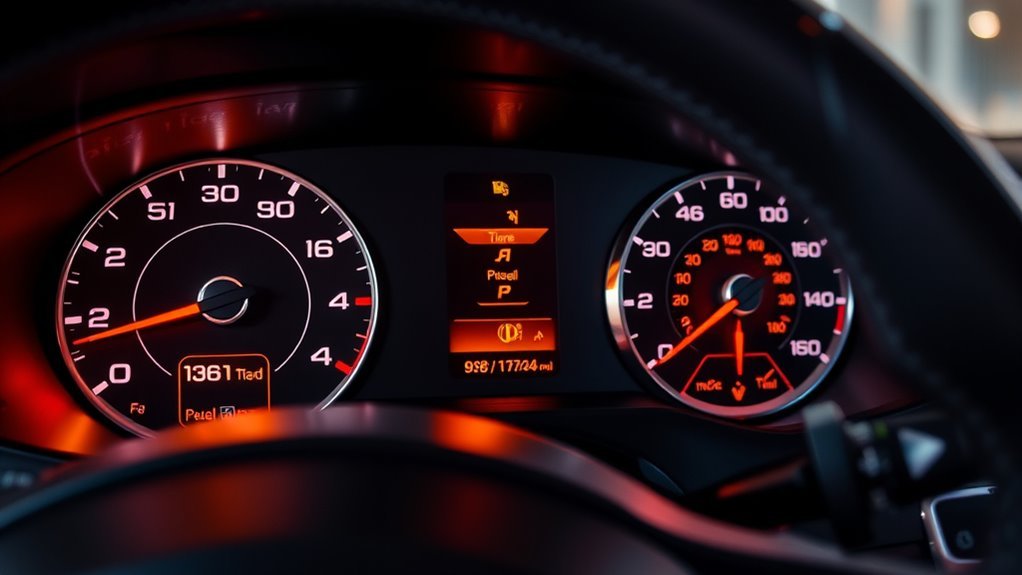
The Tire Pressure Monitoring System (TPMS) light is an essential alert designed to keep you safe on the road. This warning light activates when tire pressure in one or more tires drops 25% below the manufacturer’s recommended cold-tire pressure. Typically displayed as a horseshoe-shaped icon with an exclamation point, the TPMS light may also indicate which specific tire is low in newer vehicles, enhancing your awareness. If the light flashes or remains on even after you inflate your tires, it could signal a malfunction in the monitoring system itself. Regularly check your tire pressure, as the TPMS serves as a warning system but doesn’t replace the need for manual inspections to guarantee peak safety on the road.
Checking and Adjusting Your TPMS Tire Pressure
When checking and adjusting your tire pressure, it’s essential to use a tire pressure gauge while your tires are cold, as heat from driving can lead to inflated readings. Start by inspecting the TPMS warning light; if it’s on, check each tire’s pressure, including the spare. You can find the recommended pressure in your owner’s manual or on the sticker located on the driver’s side door jamb. Inflate or deflate your tires to meet the manufacturer’s specifications. Regularly checking your tire pressure, especially during seasonal temperature changes, is vital since pressure can decrease approximately 1 PSI for every 10°F drop. After adjusting, drive above 25 mph for a few miles to reset the TPMS; if the light persists, further inspection may be necessary.
What Causes Your TPMS Light to Activate?
If your TPMS light activates, it typically indicates a significant issue with your tire pressure, often dropping around 25% below the recommended level. This low pressure can result from normal air loss, small leaks, or visible damage like cracks and bulges in your tires. Additionally, sudden cold weather can affect the pressure in your tires, causing a drop of 1-2 PSI for every 10°F decrease. Sometimes, a malfunctioning tire pressure monitoring system sensor may trigger the light without real pressure issues. If multiple tires experience air loss simultaneously, the TPMS light may illuminate even if only one tire is underinflated. It’s essential to check your tires promptly to avoid potential tire failure.
Troubleshooting Persistent TPMS Light Issues

While you may have adjusted your tire pressures, a persistent TPMS light can still cause concern. Start by checking the air pressure in each tire with a reliable gauge to verify they’re at the recommended levels. Next, inspect tires for visible damage, such as punctures or bulges that could lead to slow leaks triggering the warning light. If the TPMS light continues to activate, fluctuations in temperature might be affecting your tire pressure; make it a habit to check regularly during seasonal changes. A blinking TPMS light could indicate a malfunctioning sensor or low battery, suggesting a need for sensor replacement. Finally, remember that some vehicles require you to manually reset the TPMS after addressing issues, so consult your owner’s manual for guidance.
When to Call in the Pros for TPMS Help?
Persistent issues with the TPMS light can indicate underlying problems that require professional intervention. If the TPMS light stays on after adjusting tire pressures, you’re likely facing a malfunctioning sensor, necessitating professional assistance for diagnostics. A blinking TPMS light typically signals a system issue that must be evaluated to guarantee your safety. Should you observe visible tire damage, such as bulges or cracks, it’s essential to consult a tire specialist for proper inspection and potential replacement. Additionally, if you’re uncertain about resetting TPMS after adjustments, a professional service can guide you through the correct procedures tailored to your vehicle model. Don’t delay seeking help; addressing these issues promptly guarantees safe driving conditions.
Frequently Asked Questions
Why Is My Tire Pressure Light on if My Tires Are Fine?
Your tire pressure light might be on due to sensor malfunctions, air loss, or temperature changes. Check for valve issues, tire wear, and wheel alignment. Use a pressure gauge and consider a system reset for accurate readings.
Can I Still Drive if My Tire Pressure Light Is On?
You shouldn’t drive with the tire pressure warning light on. Ignoring it compromises driving safety, vehicle performance, and fuel efficiency. Check tire inflation immediately—proper tire maintenance guarantees ideal handling and reduces risks during emergency stops.
How Much Would It Cost to Fix a Tire Pressure Sensor?
Tire sensor replacement costs range from $45 to $65 per sensor, with potential calibration fees. Consider DIY installation or aftermarket options for savings. Always compare dealership service prices and check warranty coverage for additional benefits.
What Is the First Thing You Should Do When a Low Air Pressure Warning Comes On?
When that tire pressure warning light flickers like a disco ball, you’ve gotta pull over immediately. Check air pressure with a gauge, confirm proper inflation, and maintain your tires for peak driving safety and sensor functionality.
Conclusion
In summary, when that tire pressure warning light flickers on, don’t ignore it—it’s like a siren calling for immediate attention. By checking and adjusting your tire pressure, you not only guarantee your safety but also enhance your vehicle’s performance. If the light persists despite your efforts, it’s essential to consult a professional. Remember, maintaining ideal tire pressure is key to a smooth ride and can prevent costly repairs down the road. Stay safe and vigilant!