

Last updated: July 31, 2026
Reviewed against NHTSA tire-pressure guidance and the official Pittsburgh 70680 and Milwaukee M18 2848-20 operator manuals. This update rechecked duty-cycle wording, stop-use signs, sources, internal links, and the diagnostic flow.
A tire inflator making a loud noise is not automatically failing. A steady sound that has not changed, with normal pressure rise and no unusual heat, odor, or vibration, may be normal for that model. A new rattle, continuous hiss, grinding, harsh buzzing, slower inflation, or stronger vibration can indicate a loose exterior part, air leak, blocked airflow, unsuitable power source, overheating, or internal damage.
Turn the inflator off, disconnect its power, and let it cool before checking accessible parts. Stop using it if you notice smoke, sparks, melted plastic, a burning smell, repeated shutdowns, or grinding that returns after basic external checks. Diagnose the problem by considering sound, pressure behavior, heat, odor, and vibration together.
Quick Answer
A tire inflator may be naturally loud, but a sudden change in sound needs investigation. Rattling often points to a loose exterior part or unstable surface. Continuous hissing suggests an air leak. Humming without pressure rise can indicate a power, airflow, hose, or internal problem. Grinding, smoke, sparks, burning odor, melted material, severe heat, or repeated shutdowns are stop-use signs.
Key Takeaways
- A steady motor and pump rhythm may be normal. A new sound or sudden change needs investigation.
- Judge the unit using sound change, pressure rise, heat, odor, and vibration together.
- Continuous hissing usually means air is escaping at the chuck, hose, fitting, valve, or another seal.
- Operating and cooling limits vary by model. Use the duty cycle in your own manual.
- Do not diagnose a sealed internal part from sound alone.
- Smoke, sparks, burning smells, melted plastic, grinding, or repeated shutdowns mean stop using the inflator.
Fast Decision Check
- Same sound, steady pressure rise, no unusual heat or odor: The noise may be normal. Follow the model’s duty cycle and continue monitoring it.
- Continuous hiss with slow or falling pressure: Switch the unit off, reseat the chuck, and inspect the hose, fitting, and tire valve.
- Sound becomes harsher as heat rises or the unit shuts down: Stop, allow the full required cooling period, and check the intake, vents, workload, and approved power source.
- Grinding, smoke, sparks, melting, burning odor, or severe vibration: Stop using the inflator and use manufacturer or authorized service.
What’s in This Article
- Before You Begin: Safety Checks
- What Does Each Tire Inflator Noise Mean?
- Why Is My Tire Inflator Making a Loud Noise?
- How to Troubleshoot a Noisy Tire Inflator
- Why Tire Inflators Make Noise
- Intake Filter and Airflow Maintenance
- Lubrication and User-Service Limits
- Loose Parts and Electrical Problems
- Prevention and Noise Reduction
- Repair, Replacement, and Professional Help
- Frequently Asked Questions
How this guide was checked: This guide uses external-only checks and does not identify a failed bearing, piston, valve, seal, or electronic controller from sound alone. Internal diagnosis requires a manufacturer-approved procedure or qualified service.
Before You Begin: Safety Checks
Unplug the inflator or remove its battery before inspecting the case, hose, intake, power cord, or accessible connections. Let the unit cool first because the hose, chuck, and pump housing may become hot during use.
Inspect only the parts your manual allows you to reach. Do not remove a sealed motor cover, bypass a safety switch, place tools through an intake vent, or probe the housing while the inflator is running.
Use the recommended cold pressure on the vehicle’s Tire and Loading Information label or in the owner’s manual. Do not use the maximum pressure molded into the tire sidewall as the vehicle’s target. The National Highway Traffic Safety Administration also advises checking pressure with an accurate gauge because TPMS normally warns only after a tire becomes significantly underinflated.
Warning: Do not keep using an inflator that smells burned, smokes, sparks, melts plastic, grinds, has damaged wiring, or repeatedly shuts itself off.
What Does Each Tire Inflator Noise Mean?
A compact inflator normally produces motor, fan, airflow, pump, and pressure-pulse noise. Do not diagnose it from volume alone. Use three main signals together: whether the sound has changed, whether pressure rises normally, and whether unusual heat, odor, or vibration appears.
This guide does not use one dBA number as a failure threshold. Distance, surface, housing design, load, and measurement method can change a sound reading. For troubleshooting, a new sound combined with slower pressure rise, excess heat, odor, or stronger vibration is more useful than volume alone. For measured sound ranges and quieter-model buying factors, see our tire inflator noise-level guide.
Use this table as an initial check, not as proof that a specific internal part has failed.
| Noise Type | Pressure or Behavior | Possible Area | First Safe Action |
|---|---|---|---|
| Steady rhythmic motor or pump sound | Pressure rises steadily and vibration remains consistent | Normal pump, motor, fan, and airflow noise | Follow the manual’s duty cycle and monitor the unit. |
| Rattling or buzzing | Pressure may still rise, but vibration sounds or feels different | Feet, handle, hose clip, screws, housing, supporting surface, or internal damage | Disconnect power and inspect accessible exterior parts. |
| Continuous hissing | Inflation slows, pressure falls, or air escapes after shutdown | Chuck, hose, fitting, tire valve, or another seal | Switch the unit off and locate the leak without opening the housing. |
| Grinding or scraping | Pressure may rise slowly, fluctuate, or fail to increase | Debris contact or internal mechanical damage | Stop using the unit and inspect only accessible areas. |
| Humming or buzzing without pressure rise | Gauge remains steady or the unit stops under load | Power connection, restricted hose, blocked airflow, or internal fault | Check the approved power source and accessible air path. |
| Sound becomes harsher as the unit heats | Inflation slows or temperature protection activates | Duty-cycle overrun, restricted airflow, unsuitable workload, or overload | Turn it off and follow the manual’s full cooling instructions. |
Why Is My Tire Inflator Making a Loud Noise?

A sudden rattle can come from accessible exterior parts such as the feet, handle, hose clips, screws, or housing panels. A hard or hollow surface can amplify normal vibration. If every accessible exterior part is secure and the rattle continues, the unit may have internal damage that requires manufacturer service or replacement.
Hissing points to escaping air. A brief puff while attaching or removing some air chucks can be normal. Continuous hissing after the connection is secured may come from the air chuck, hose, threaded fitting, tire valve, or another seal. A hiss at the valve during inflation often means the chuck is not seated squarely, so switch the unit off and reconnect it before assuming the pump has failed. For more connector-specific checks, see our tire inflator connector guide.
A leak can slow inflation and make the motor run longer, increasing heat. Noise can also rise when airflow is restricted or the inflator runs beyond its permitted duty cycle. Operating limits are not universal.
| Manual Example | Published Operating Limit | Additional Note | Source |
|---|---|---|---|
| Pittsburgh 70680 | 10 minutes on, then 10 minutes off | The manual says to stop further use when abnormal noise or vibration occurs until the problem is corrected. | Operator’s manual |
| Milwaukee M18 2848-20 | 20 minutes of continuous use, then 40 minutes of cooling | If the temperature-protection indicator activates, the manual separately says to allow at least 10 minutes of cooling before continuing. | Operator’s manual |
There is no universal portable-inflator duty cycle. Two tools performing the same basic job can require very different cooling periods. Follow the limit and warning indicator instructions for your exact model instead of using a runtime copied from another inflator.
For a component-by-component explanation of the hose, chuck, motor-driven pump, gauge, fittings, and controls, see our guide to tire inflator parts.
[Products Worth Considering]

ADVANCED TRUEGAUGE SCREEN: This battery tire inflator includes updated sensor technology, capable of collecting pressure data from tire inflators at a frequency of 200 times per second. Its valid data rate is higher than 80%, which is 60% better than the market average. From routine maintenance to roadside emergencies, its accurate readings ensure confident pressure checks and a safer driving experience.Suitable as a Father's Day gift for your dad.
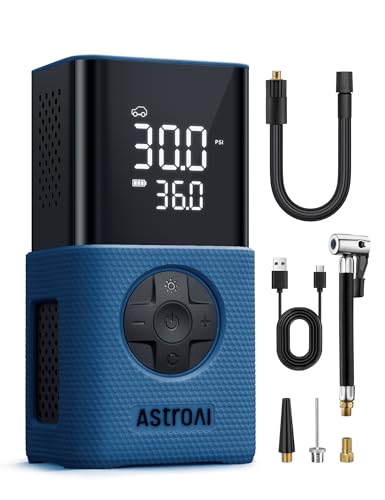
Anti-Slip & Shock-Resistant Silicone Protection: This silicone sleeve shields the tire inflator fromdrops, bumps and scratches while improving grip and reducing noise and vibration. It also boosts durability, portability, and safety to deliver a better user experience.Suitable as a Father's Day gift for your dad.

[Fast & Efficient Inflation] The OlarHike tire inflator features a high-performance motor that delivers rapid airflow—inflate a standard car tire (195/65 R15) from 30 to 35 PSI (+5 PSI) in just 55 seconds, or a larger SUV tire (235/65 R17) from 30 to 35 PSI (+5 PSI) in only 2.2 minutes. Ideal for cars, SUVs, light Pickup(Within 51 PSI), motorcycles, bicycles, and sports balls. Its practical everyday usefulness also makes it a thoughtful car gift for men who value reliable tools for their vehicles. Important Note: The unit can only inflate car and pickup truck tires up to 51 PSI and is not compatible with heavy-duty pickup trucks or RVs.
How Do You Troubleshoot a Noisy Tire Inflator?
Start with external checks that do not require opening the sealed pump or motor housing. Change one condition at a time. Use the same tire, a similar starting pressure, the approved power source, and the same stable surface when comparing behavior. Do not repeatedly run a suspect unit merely to collect more data.
Note: A steady sound with normal pressure rise may be expected. Grinding, smoke, sparks, a burning smell, or a sudden loss of pressure requires immediate shutdown.
- Turn off the inflator. Unplug it or remove its battery before touching the case, hose, connections, or intake.
- Let it cool. Wait until the housing, hose, and air chuck feel safe to touch. Use the full cooling period in the manual.
- Compare the sound with its usual baseline. Decide whether the noise is genuinely new or the unit’s normal pump rhythm.
- Check pressure behavior. Note whether the reading rises steadily, increases slowly, fluctuates, or remains unchanged.
- Place it on a stable surface. A level rubber mat can reduce transferred vibration, but it must not cover an intake or cooling vent.
- Check accessible fasteners. Inspect screws, feet, handles, hose clips, and outer housing panels. Do not overtighten plastic parts.
- Inspect the hose and air chuck. Look for cracks, kinks, loose couplers, damaged threads, heat damage, or a worn sealing washer.
- Locate any hiss. Switch the inflator off while it remains connected. A brief puff during connection or removal may be normal. Continuous hissing near the chuck may indicate a poor seal or tire-valve leak. Hissing from inside the housing is a stop-use condition.
- Test exposed pneumatic connections only when appropriate. With power disconnected, apply a small amount of soapy water only to exposed air joints. Skip this test near electrical parts or when the manual prohibits it. Keep liquid away from vents, switches, plugs, batteries, contacts, and the housing. Wipe every tested area dry.
- Clean the intake area. Remove loose dust and lint with a soft brush or dry cloth. Do not push debris farther into the unit.
- Check the approved power source. Use only the outlet, vehicle socket, battery, charger, or adapter permitted for the model. Follow the manual’s instructions about whether a vehicle should be off, in accessory mode, or running.
- Confirm tire pressure separately. Compare the inflator reading with an accurate pressure gauge and the cold pressure on the vehicle placard.
- Run one short supervised test only when no stop-use sign is present. Remain within the model’s operating limit. Stop immediately if the abnormal noise returns with excess heat, odor, smoke, strong vibration, slow output, pressure loss, or shutdowns.
[Products Worth Considering]

Accurate: Spurtar tire inflator air pressure gauges with rubber hose are performance-tested and calibrated to the ANSI B40.1 Grade B (2%) international accuracy standard. This device allows you to measure your tire pressure accurately and inflate your tires without the need to drive to a gas station or garage. Easily use the tire pressure gauge with an air pump or compressor to inflate your tires efficiently

250 PSI RATED BRASS COMPONENTS are designed for heavy-duty use with tire inflators and gauges

AMERICAN OWNED, FAMILY OPERATED - Join the Rhino USA Family and Support a Father/Son Business With USA-Based Live Phone Support.
Record the Conditions Before Contacting Support
A short diagnostic record can help the manufacturer distinguish a connection problem from a power, heat, or internal fault. Compare like with like. A different tire size, starting pressure, battery charge, power source, or ambient temperature can change both sound and inflation time.
| Record | What to Note | Why It Helps |
|---|---|---|
| Exact model and power source | Model number, battery type, outlet, vehicle socket, charger, or adapter used | Confirms whether the setup matches the manual. |
| Tire and starting pressure | Tire size, cold starting PSI, and target PSI | Prevents unfair comparisons between different workloads. |
| Pressure behavior | Starting and ending pressure during one short, manual-compliant test | Shows whether output is steady, weak, or absent. |
| Sound and vibration | Rattle, hiss, grind, buzz, scrape, location, and whether vibration changed | Helps separate an exterior rattle from a leak or internal symptom. |
| Heat and protection behavior | Odor, unusual housing heat, warning indicator, slowdown, or shutdown | Shows whether workload, airflow, or temperature protection is involved. |
If the inflator remains abnormally noisy after these checks, review its warranty and contact the manufacturer or an authorized service provider. Do not continue testing a unit that shows electrical or internal-mechanical warning signs.
Why Do Tire Inflators Make Noise?
A tire inflator uses an electric motor to drive a small air pump. The moving pump, cooling fan, airflow, and pressure pulses create sound and vibration. Compact housings place these components close together, so the unit may sound louder than its size suggests.
The surface beneath the inflator changes what you hear. A loose shelf, hollow panel, vehicle body surface, or hard floor can amplify normal vibration. Damaged rubber feet, loose case panels, and a hose striking the housing can make the sound harsher.
Some change in pitch or load sound may occur as tire pressure rises and the pump works against greater back pressure. A sudden grind, scrape, knock, severe vibration, slowing output, burning odor, or overheating is not explained by normal pressure rise.
Inflator design also affects sound and performance. Our piston-versus-diaphragm inflator guide explains how the pump type can change vibration, airflow, durability, and noise characteristics.
When Should You Clean or Replace the Tire Inflator Intake Filter?

Not every tire inflator has a removable or replaceable filter. Most still have an intake or cooling vent that must remain clear. Inspect the intake after dusty use, when inflation becomes slower, or when the unit sounds harsher as it heats.
Disconnect power before cleaning. Use a soft brush or dry cloth on exposed surfaces. Remove or wash a filter only when the manual provides that procedure. Allow an approved washable filter to dry completely before reinstalling it.
Warning: Do not reinstall a damp filter or direct liquid into an intake vent, motor housing, switch, plug, or battery compartment.
| Action Required | When to Do It | Notes |
|---|---|---|
| Inspect intake | Before heavy use and after dusty use | Remove visible lint, dust, and loose debris. |
| Clean removable filter | At the manual’s interval or when visibly dirty | Use only the cleaning method approved for the model. |
| Replace filter | When damaged, brittle, clogged, or required by the manual | Use the correct replacement part for the model. |
| Check performance | After cleaning | Monitor pressure rise, heat, sound, and vibration. |
Should You Lubricate a Tire Inflator?
Do not add oil or another lubricant unless the manufacturer identifies a service point, approved product, and maintenance interval. Many compact inflators use sealed or oil-free assemblies that are not designed for user lubrication.
Why Proper Lubrication Matters
A serviceable compressor may require manufacturer-specified lubrication to control friction and wear. That does not mean every portable tire inflator needs oil. Adding lubricant to an oil-free or sealed unit can contaminate components, attract debris, damage seals, or create a repair problem.
Which Lubricant Should You Use?
Use only the lubricant named in the operator’s manual for your exact model. Do not substitute automotive oil, penetrating oil, grease, silicone spray, or another product unless the manufacturer specifically approves it for that service point.
Pro tip: If the manual describes the inflator as oil-free or provides no lubrication procedure, do not add oil to the pump or motor housing.
How Often Should You Lubricate It?
Follow the service interval in the manual. Some portable inflators require no user lubrication during their service life. A model that does require it should identify the approved product, location, amount, and interval.
How Do You Inspect Loose or Damaged Components?
Start with parts you can inspect without opening the motor housing. Check accessible screws, rubber feet, handles, hose clips, the air chuck, and housing seams. Loose exterior parts can create rattling or amplify normal vibration.
Inspect the hose and chuck for cracks, kinks, worn seals, loose threads, or heat damage. A leaking connection can create hissing, reduce airflow, and force the inflator to run longer.
Check Fasteners and Screws
Disconnect power before tightening anything. Use the correct driver bit and apply only enough force to secure the part. Overtightening a screw in a plastic housing can strip the mounting point or crack the case.
- Check visible screws, feet, handles, hose clips, and housing seams.
- Use the correct screwdriver or driver bit.
- Use only replacement hardware permitted for the model.
- Stop if the housing is cracked or cannot be secured properly.
Check for Internal-Wear and Seal Symptoms
Grinding, scraping, rough vibration, or a sound that remains after exterior parts are secured can indicate internal mechanical damage. Hissing, weak output, or pressure loss may indicate a leak at a connection, valve, hose, or inaccessible seal.
Do not open a sealed motor or pump housing unless the manufacturer authorizes user service and provides the procedure. Contact the manufacturer when abnormal sound continues after exterior cleaning and inspection.
Which Electrical Problems Can Cause Loud Inflator Noise?
An unsuitable power source or damaged electrical connection can make an inflator slow down, buzz, cut out, or fail to build pressure. Use only the voltage, battery, charger, adapter, outlet, or vehicle socket approved for the model.
- An unsuitable outlet, battery, adapter, or vehicle socket may not provide the power required by the inflator.
- Loose, dirty, corroded, or overheated contacts can interrupt power and cause uneven operation.
- A damaged cord, plug, switch, charger, or battery contact can create heat or intermittent operation.
- Restricted airflow can activate temperature or overload protection on equipped models.
- An internal pump, motor, or controller fault can cause humming without normal pressure buildup.
Inspect only user-accessible parts listed in the manual. If you see damaged wiring, melted insulation, sparks, smoke, or a swollen or damaged battery, stop using the inflator. For odor-specific checks, see our guide to a burning smell from a tire inflator. If the main problem is an early or failed cutoff, use the separate automatic-shutoff troubleshooting guide.
How Can You Prevent Excess Tire Inflator Noise?
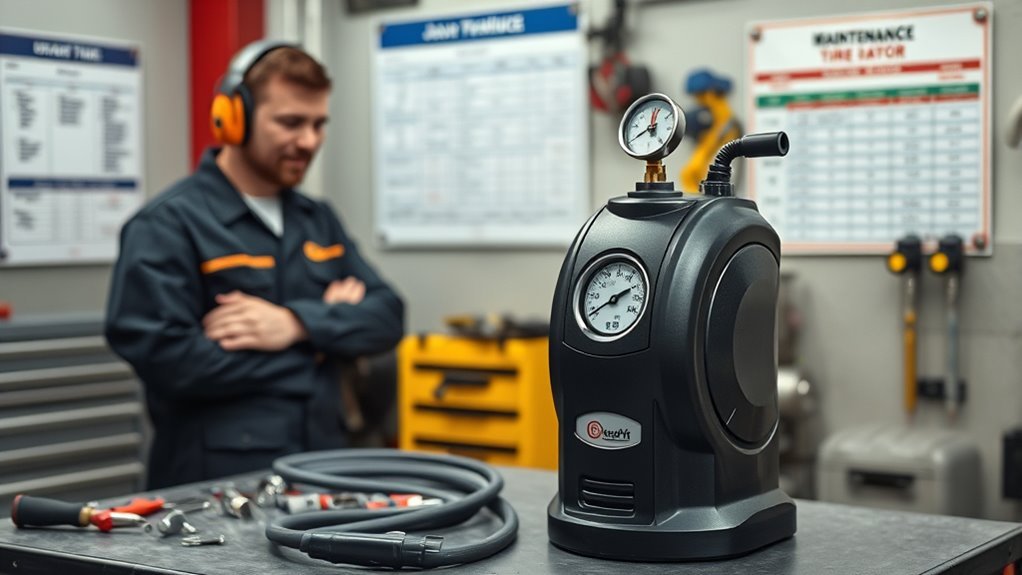
Keep the intake clear, follow the model’s duty cycle, inspect the hose and electrical connections, and store the unit in a clean, dry place. These habits reduce avoidable heat, leakage, vibration, and power problems.
Clean the Intake Safely
Check the intake after dusty use and before a long inflation job. Disconnect power, then remove visible debris with a soft brush or dry cloth. Do not cover vents while the inflator is operating.
- Keep cooling vents and the intake clear.
- Check the hose and chuck for cracks, looseness, and heat damage.
- Use only the filter-cleaning method stated in the manual.
- Store the inflator dry and protected from loose dirt.
Inspect Electrical Connections
Check cords, plugs, battery contacts, chargers, and approved adapters for fraying, looseness, corrosion, discoloration, or heat marks. Disconnect the power source before wiping accessible contacts.
| Action | Purpose |
|---|---|
| Inspect cords, plugs, chargers, and contacts | Find fraying, corrosion, looseness, discoloration, and heat damage. |
| Inspect hose and chuck | Find air leaks, cracks, damaged threads, and worn seals. |
| Record unusual behavior | Track repeat noise, heat, vibration, pressure loss, or shutdowns. |
Follow the Published Duty Cycle
The duty cycle tells you how long the inflator can run and how long it must cool. It varies by design, workload, and operating conditions. Do not substitute a general internet runtime for the limit in your manual.
- Check the duty cycle before inflating several tires in one session.
- Allow the full cooling period stated by the manufacturer.
- Stop early if the unit slows down, smells hot, changes sound, or activates temperature protection.
- Use equipment rated for the tire size, target pressure, and repeated workload you need to handle.
How Can You Reduce Tire Inflator Noise?
Place the inflator on a flat, stable rubber mat or vibration-damping pad. Keep every intake and cooling vent uncovered. A loose board, hollow shelf, concrete floor, or vehicle body panel can amplify normal vibration.
Secure accessible screws, keep the hose from striking the case, clean the intake, and remain within the published duty cycle. Do not wrap the inflator in fabric, place it in a closed container, or block airflow to make it quieter.
Noise reduction should not hide a fault. Stop and inspect the unit when the sound changes suddenly or appears with slower inflation, stronger vibration, heat, odor, or shutdowns.
Should You Repair or Replace a Noisy Tire Inflator?
Start with the warranty and operator’s manual. Whether repair is reasonable depends on the fault location, the parts the manufacturer makes serviceable, and whether the housing is sealed.
| Condition | Best Next Step | Reason |
|---|---|---|
| Approved replaceable hose, chuck, sealing washer, filter, battery, or other external part | Repair may be reasonable using the specified part and procedure. | The fault can be corrected without entering a sealed electrical or mechanical assembly. |
| Inflator is under warranty or uses a sealed housing | Contact the manufacturer before opening or modifying it. | Unauthorized disassembly can create a hazard or affect warranty coverage. |
| Grinding, smoke, sparks, melted wiring, cracked housing, swollen battery, or repeated overheating | Stop using it and choose authorized service or replacement. | These signs can involve internal mechanical, electrical, or battery damage. |
Do not bypass protection systems or improvise repairs to a pressurized, electrical, or battery-powered component.
[Products Worth Considering]

INSTANT FLAT TIRE FIX: Stop roadside emergencies in minutes with our professional-grade tire repair sealant that seals punctures up to 6mm instantly - works like flat tire repair kit alternative but with superior OEM-approved formula trusted by major vehicle manufacturers worldwide

Heavy-duty brass construction allows for strength and durability.

The 1/4'' ID lock on air chuck with open flow 90 degree thumb-press design
When Should You Stop and Seek Professional Help?
Basic exterior maintenance can solve some rattles, leaks, and vibration problems. Stop using the inflator and contact the manufacturer, an authorized service provider, or a qualified repair technician when you notice any of these signs:
- Grinding or scraping continues after the intake and accessible exterior parts are checked.
- A burning smell, smoke, sparks, melted plastic, or damaged insulation appears.
- The unit hums or buzzes but does not build pressure with an approved power source.
- The inflator repeatedly overheats or shuts down within its published operating limit.
- The cord, plug, battery, switch, housing, hose, or chuck has significant damage.
- The abnormal noise begins while the inflator remains under warranty.
Warning: Stop immediately when you notice smoke, sparks, a burning smell, melted material, battery damage, or damaged wiring. Disconnect power only when you can do so safely.
Do not rely on a noisy or unreliable inflator for roadside emergencies until the cause has been corrected or the unit has been replaced.
Frequently Asked Questions
Why is my tire inflator so loud?
Portable tire inflators use a compact motor, pump, cooling fan, and fast-moving airflow, so normal operation can be loud. Investigate the unit when its sound changes suddenly, vibration increases, pressure rises more slowly, or the noise appears with excess heat, odor, smoke, or shutdowns.
Is it safe to keep using a loud tire inflator?
It may be safe when the inflator has always sounded the same, pressure rises normally, and no unusual heat, odor, vibration, leakage, or shutdown occurs. Stop using it when the sound is new or appears with grinding, smoke, sparks, burning odor, melted material, pressure loss, severe vibration, or repeated overheating.
Why is my tire inflator rattling?
Rattling can come from loose screws, rubber feet, handles, hose clips, housing panels, vibration against a hard surface, or internal damage. Disconnect the power, let the unit cool, and inspect accessible exterior parts. Stop using it if the housing is cracked or the rattle continues after those parts are secured.
Why is my tire inflator hissing?
A brief puff while attaching or removing some air chucks can be normal. Continuous hissing usually means air is escaping from the chuck, hose, fitting, tire valve, or another seal. Switch the unit off and listen for the leak location. A hiss from inside the housing requires you to stop using the unit.
Why does my tire inflator hum but not inflate?
Humming without pressure buildup can indicate an unsuitable power source, poor electrical contact, blocked airflow, a restricted hose, a major air leak, or an internal pump or motor fault. Check the approved power source and accessible air path. Stop if the unit heats, smells, vibrates strongly, or still produces no pressure.
Is some tire inflator vibration normal?
Some steady vibration is normal because the motor and pump contain fast-moving parts. Investigate vibration that is new, much stronger, moves the inflator across a stable surface, or appears with slow pressure rise, heat, odor, grinding, or shutdowns.
Why does my tire inflator get louder as tire pressure rises?
Some change in pitch or load sound may occur as the pump works against increasing tire pressure. Stop and investigate if the change is abrupt or appears with grinding, scraping, slowing output, severe vibration, excess heat, burning odor, or repeated shutdowns.
How long can I run a portable tire inflator?
Use the duty cycle in the manual for your exact model. Limits vary. The Pittsburgh 70680 manual specifies 10 minutes on and 10 minutes off. The Milwaukee M18 2848-20 manual specifies 20 minutes of continuous use followed by 40 minutes of cooling and provides separate instructions when its temperature-protection indicator activates.
Can a noisy tire inflator give the wrong tire pressure?
Noise alone does not prove that the pressure reading is wrong. However, a damaged gauge, sensor, hose, chuck, air connection, or power system can affect operation. Confirm the result with a separate accurate gauge and use the cold pressure listed on the vehicle placard or in the owner’s manual.
Safety Disclaimer: This article provides general information and does not replace the instructions for your tire inflator or professional electrical and mechanical advice. Disconnect power before inspection, follow the model-specific duty cycle, and seek qualified help for smoke, sparks, damaged wiring, battery damage, severe heat, or internal grinding.
Conclusion
A tire inflator may be naturally loud, but a new sound deserves attention. Judge it using sound change, pressure behavior, heat, odor, and vibration together. Disconnect the power, let the unit cool, inspect accessible fasteners, check the hose and air chuck, clear the intake, confirm the approved power source, and verify tire pressure with a separate gauge.
Stop using the inflator when grinding, smoke, sparks, burning odor, melted material, severe vibration, pressure loss, or repeated shutdowns continue. Follow the exact duty cycle and service instructions in your manual before repairing, replacing, or relying on the unit again.
References
- Tire Safety Ratings and Awareness, National Highway Traffic Safety Administration, accessed July 31, 2026
- Dual Power Home 120V/Auto 12V Tire Inflator Manual, model 70680, Harbor Freight Tools, accessed July 31, 2026
- M18 Inflator Operator’s Manual, model 2848-20, Milwaukee Tool, accessed July 31, 2026
- How to Fill Tires Using an Air Compressor, O’Reilly Auto Parts, accessed July 31, 2026


[…] tire inflator‘s automatic shutoff protects your tires from over-inflation, but a faulty shutoff can leave […]
[…] fault, or a restricted pump. Stop using the unit rather than continuing until it fails. The related unusual tire inflator noise guide covers sound-specific […]