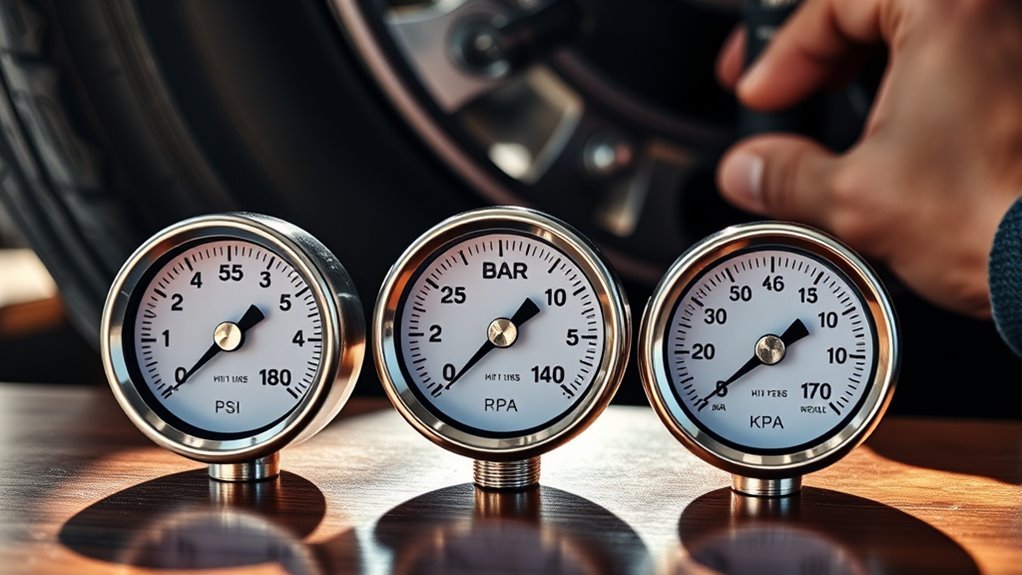
Tire pressure units—PSI, BAR, and kPa—are essential for maintaining your vehicle’s performance and safety. PSI, or pounds per square inch, is the most common unit in the U.S., while BAR and kPa are often used in metric countries. Understanding the differences helps you guarantee ideal tire inflation. For example, 1 BAR equals approximately 14.5 PSI, and 1 kPa equals about 0.145 PSI. Keeping your tires inflated correctly enhances safety and efficiency. More insights await in the details.
What Is Tire Pressure and Why Does It Matter?
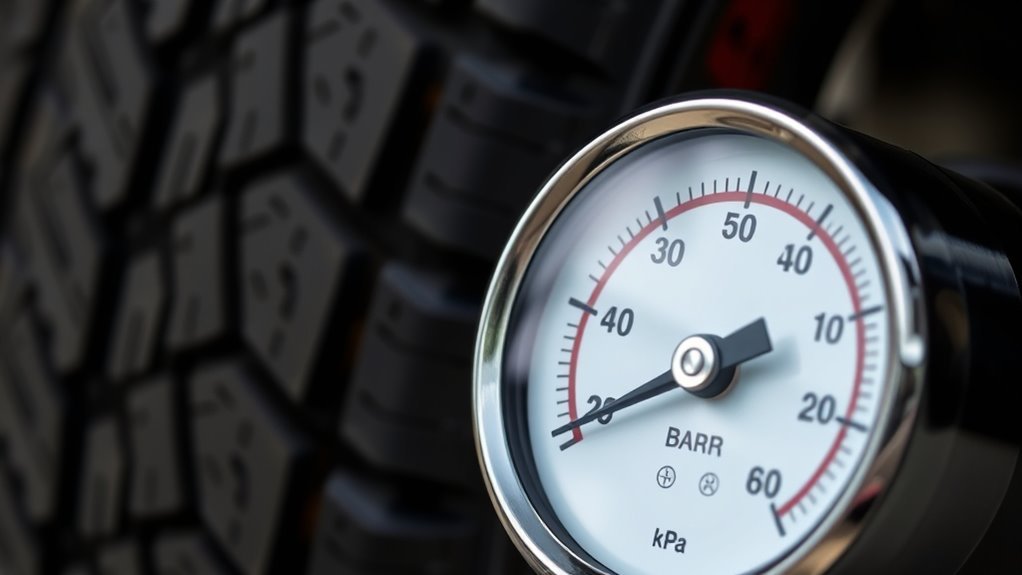
Tire pressure represents the amount of air within a tire, exerting force against its walls, which is essential for ideal vehicle performance. Maintaining the correct tire pressure is vital for achieving optimal traction and handling. Underinflated tires not only increase rolling resistance but also contribute to accelerated tire wear and diminished fuel efficiency. Manufacturers provide recommended tire pressure values, often located in the owner’s manual or inside the driver’s door frame, guiding you toward proper tire maintenance. Regularly measuring atmospheric pressure in your tires can prevent blowouts and flat tires, enhancing your vehicle’s safety. By understanding and adhering to these parameters, you liberate your vehicle’s performance, ensuring a smoother, more efficient driving experience.
Understanding PSI: The Basics of Pounds per Square Inch
PSI, or pounds per square inch, quantifies the pressure within your tires, directly affecting vehicle safety and performance. It’s essential to maintain the recommended PSI values, typically between 32 to 35 for most passenger cars, to guarantee optimal handling and fuel efficiency. Understanding this measurement not only helps you avoid uneven tire wear but also enhances your overall driving experience.
PSI Measurement Definition
Understanding pressure measurements is essential for maintaining ideal tire performance, and one of the most common units used in the United States is pounds per square inch (PSI).
PSI represents the force of air inside the tire exerted over a one-square-inch area, and it’s critical for optimal vehicle operation. Here are some key points regarding PSI:
- One PSI equals approximately 6,895 pascals (Pa).
- Recommended tire pressures typically range from 32 to 35 PSI.
- Underinflated tires can lead to increased wear and reduced fuel efficiency.
- A tire pressure checker calibrated to PSI is important for accurate measurements.
Importance for Vehicle Safety
Maintaining the correct tire pressure is essential for guaranteeing vehicle safety on the road. Tire Pressure Units, specifically PSI, play a critical role in determining your tires’ health. The recommended PSI for typical passenger car tires is between 32 to 35. Regularly checking tire pressure prevents underinflated tires, which can lead to increased rolling resistance and a higher risk of blowouts. This risk compromises your vehicle safety and overall performance. Ideal performance hinges on proper tire pressure, enhancing traction, fuel efficiency, and even tire wear.
| Tire Condition | PSI Range | Impact on Safety |
|---|---|---|
| Underinflated Tires | Below 32 PSI | Increased blowout risk |
| Recommended PSI | 32-35 PSI | Ideal traction and handling |
| Overinflated Tires | Above 35 PSI | Reduced contact with the road |
| Regular Checks | Monthly | Guarantees consistent performance |
| Environmental Factors | Varies | Adjust accordingly |
Recommended PSI Values
Tire pressure, measured in pounds per square inch (PSI), is a critical factor in ensuring ideal vehicle performance and safety. Each vehicle has a manufacturer-specified recommended PSI, typically ranging from 32 to 35 PSI for passenger cars. You can find this information in your owner’s manual or on a sticker inside the driver’s side door frame.
Maintaining the proper PSI is essential for:
- Enhancing fuel efficiency
- Reducing tire wear
- Minimizing the risk of blowouts
- Ensuring maximum driving comfort
Understanding kPa: Its Role in Tire Pressure Measurement
Pressure measurement in automotive contexts often hinges on the kilopascal (kPa), a metric unit essential for ensuring proper tire inflation. When measuring tire pressure, understanding kPa is imperative, especially if you’re in a region using metric values. One kPa equals about 0.145 PSI, and typical tire pressure for passenger vehicles ranges from 220 to 250 kPa, translating to roughly 32 to 36 PSI. Many tire pressure gauges in metric countries display these readings in kPa, emphasizing its relevance. By familiarizing yourself with kPa and its recommended values, you can maintain ideal tire pressure, enhancing both safety and vehicle performance. Ultimately, understanding kPa is a significant step toward mastering tire maintenance and ensuring a smooth driving experience.
What Is Bar and How Does It Compare to Other Units?
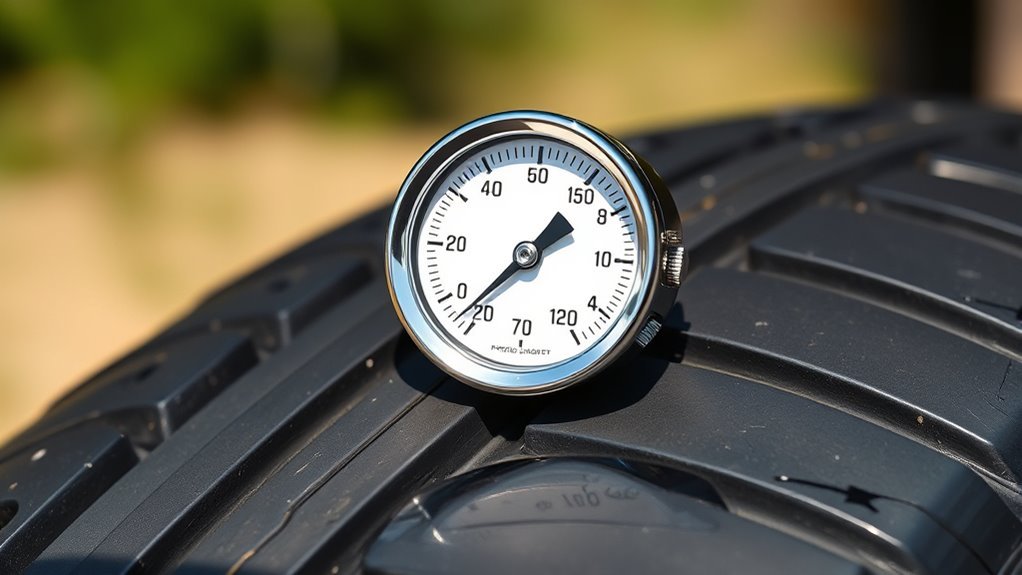
Bar is a metric unit of pressure that equals approximately 14.5 PSI and 100 kPa, making it a convenient reference for tire inflation. While it’s commonly used in European vehicles, its precision falls short compared to kilopascal (kPa). Understanding bar‘s relationship with other units like PSI and kPa is essential for accurate tire pressure management.
Bar Measurement Overview
Understanding pressure measurement is essential for optimizing vehicle performance and safety. The bar is a metric unit of pressure, vital for tire pressure evaluation. Here’s a quick overview:
- One bar equals 100 kilopascals (kPa) and approximately 14.5 PSI.
- It derives from the Greek word “baros,” meaning weight.
- One bar is roughly equal to atmospheric pressure at sea level.
- Typical tire pressures for passenger vehicles range from 2.2 to 2.5 bar.
While bar is widely accepted in Europe, it’s generally seen as less precise than kPa for tire pressure measurements. This bar measurement overview clarifies its role in evaluating air pressure and ensuring your vehicle operates safely and efficiently.
Bar Versus PSI and kPa
When comparing tire pressure units, it’s important to recognize how bar, PSI, and kPa serve different regions and applications. Bar, a metric unit, measures pressure with 1 bar equating to approximately 14.5 PSI or 100 kPa, making it a standard in Europe. Conversely, PSI (pounds per square inch) dominates in the United States and the UK, reflecting the force exerted by air within tires. kPa, or kilopascal, is another metric pressure unit, with 1 kPa equal to about 0.145 PSI or 0.01 bar. Understanding these differences is vital for accurately inflating tires, ensuring the best vehicle safety and performance. Knowing when to convert between these measurements can liberate you from confusion while maintaining proper tire pressure.
Practical Steps for Converting Tire Pressure Units
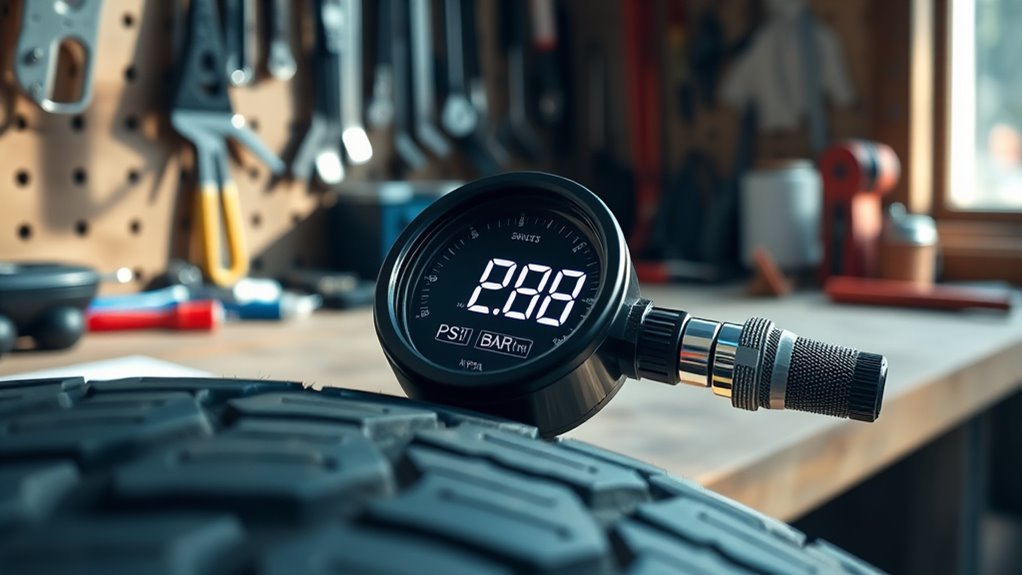
Converting tire pressure units can seem intimidating, but with a few straightforward steps, you can easily navigate between BAR, PSI, and kPa. Here’s how to make those conversions effortlessly:
Converting tire pressure units is simple with a few easy steps, helping you manage BAR, PSI, and kPa effortlessly.
- To convert from BAR to pounds per square inch (PSI), multiply the BAR value by 14.504.
- If you need to convert PSI to kPa, multiply the PSI value by 6.895.
- For switching from kPa to PSI, simply divide the kPa value by 6.895.
- Remember, 1 BAR equals 100 kPa, simplifying your metric conversions.
Utilizing online conversion tools or mobile apps can further facilitate these easy conversions, ensuring you maintain ideal tire pressure efficiently. Understanding these relationships empowers you to manage your vehicle’s performance with precision.
How to Find Your Vehicle’s Correct Tire Pressure
Finding the correct tire pressure for your vehicle is essential to maintaining ideal performance and safety. You can typically find the recommended tire pressure in your owner’s manual or on a sticker inside the driver’s side door frame. Most passenger vehicles use a recommended tire pressure ranging from 30 to 35 PSI, or 2.0 to 2.5 BAR, depending on your region’s measurement system. It’s vital to check tire pressure when the tires are cold, as heat from driving can inflate these readings. Regularly monitoring and adjusting your tire pressure not only enhances vehicle performance but also improves safety and fuel efficiency. Understanding these specifications empowers you to make informed decisions about your vehicle’s maintenance.
Common Misconceptions About Tire Pressure Measurements
How often do misconceptions about tire pressure measurements lead to confusion among drivers? Many misunderstandings can impact your vehicle’s performance and safety:
- Not all vehicles use the same tire pressure unit; PSI is standard in the U.S., while BAR and kPa dominate elsewhere.
- Tire pressure readings aren’t interchangeable; 1 BAR equals about 14.5 PSI, and 1 kPa is around 0.145 PSI.
- The values on your tire’s sidewall aren’t necessarily the recommended pressures; always check your vehicle’s manual or door sticker.
- Higher tire pressure doesn’t always mean better fuel efficiency—over-inflation can cause reduced traction and uneven wear.
Understanding these misconceptions helps guarantee you’re operating your vehicle under ideal conditions. Stay informed and prioritize your safety on the road.
Checking Your Tire Pressure: A Simple Guide
Maintaining ideal tire pressure is essential for safety and performance. To check your tire pressure, first, consult your vehicle’s manual or the sticker inside the driver’s door frame for the recommended PSI, BAR, or kPa values. Use a reliable tire pressure gauge to accurately measure each tire’s inflation level. Remember to check when the tires are cold for the most precise reading, as heat from driving can artificially inflate pressure. If you find the tire pressure below the recommended level, inflate accordingly. Conversely, if it’s too high, release some air to achieve the proper pressure. Regularly measuring your tire pressure can enhance vehicle safety, improve fuel efficiency, and extend tire life by preventing uneven wear.
The Importance of Regular Tire Pressure Maintenance
Regular tire pressure maintenance greatly impacts your vehicle’s performance and safety. By committing to regular checks, you can guarantee ideal handling and longevity of your tires. Here’s why it matters:
- Proper tire pressure enhances fuel efficiency, potentially saving you money.
- Under-inflation can lead to a 25% increase in tire wear.
- Regular monitoring reduces the risk of blowouts, enhancing safety on the road.
- Most manufacturers recommend checking pressure at least once a month.
Ignoring these checks can result in inefficient fuel use and costly replacements. By adhering to the recommended pressure levels, you not only maintain vehicle performance but also contribute to your overall safety. Make tire pressure checks a priority to enjoy a smoother, safer driving experience.
Tips for Using a Tire Inflator Correctly and Safely
Using a tire inflator can seem straightforward, but ensuring proper and safe inflation requires attention to detail. First, consult your vehicle’s manual for the recommended tire pressure. Select the correct units—PSI, BAR, or kPa—on the inflator. Connect the air compressor securely to the tire valve, checking for leaks before inflating. Continuously monitor the tire pressure using the inflator’s gauge to prevent over-inflation, which can compromise safety.
| Unit | PSI | BAR | kPa |
|---|---|---|---|
| Low | 30 | 2.07 | 207 |
| Medium | 35 | 2.41 | 241 |
| High | 40 | 2.76 | 276 |
After inflating, verify all tires, including the spare, maintain ideal pressure for performance.
Frequently Asked Questions
Can I Mix Different Units for Tire Pressure Measurements?
You shouldn’t mix different units for tire pressure. Unit conversion can lead to pressure inaccuracies, impacting tire performance and safety. Consistent measurements align with user preferences, ensuring ideal tire performance and reducing potential safety implications.
How Often Should I Check My Tire Pressure?
Imagine a ship steering through turbulent seas; checking your tire pressure weekly guarantees smooth sailing. Using tire pressure gauges, you enhance driving safety, fuel efficiency, and tire longevity—critical seasonal checks for ultimate liberation on the road.
Does Temperature Affect Tire Pressure Readings?
Yes, temperature impacts tire pressure readings considerably. Seasonal changes cause pressure fluctuations, as tire expansion occurs with heat. Regular calibration guarantees measurement accuracy, helping you maintain ideal performance and safety regardless of temperature variations.
What Happens if My Tire Pressure Is Too Low?
Driving on low tire pressure is like sailing a ship with a torn sail—it compromises handling performance and fuel efficiency, increases tire wear, and heightens safety risks. Regular pressure monitoring and maintenance tips can prevent these issues.
Are There Digital Tools for Measuring Tire Pressure?
Yes, you can use digital gauges, smartphone apps, and tire inflators for measuring tire pressure. For accuracy comparison, check user reviews to guarantee reliable performance and effective pressure monitoring tailored to your needs.
Conclusion
In summary, understanding tire pressure units like psi, kPa, and bar is essential for maintaining peak vehicle performance and safety. As the saying goes, “A stitch in time saves nine”—regularly checking and adjusting your tire pressure can prevent costly repairs and enhance fuel efficiency. By familiarizing yourself with these measurements and practicing consistent maintenance, you guarantee a smoother ride and extend the life of your tires. Remember, a well-maintained tire is key to a safe journey.