For off-road driving, it is crucial to adjust your tire pressure for peak performance. Air down to 12-15 PSI for deep sand, 15-20 PSI for muddy conditions, and 15-25 PSI for rocky terrain. Lower pressures increase traction and flexibility but risk tire unseating and punctures. Always keep an eye on your tire pressure and use reliable tools for airing down and reinflating. Discover more about the best practices and tools to enhance your off-roading experience.
Understanding the Importance of Tire Pressure for Off-Roading
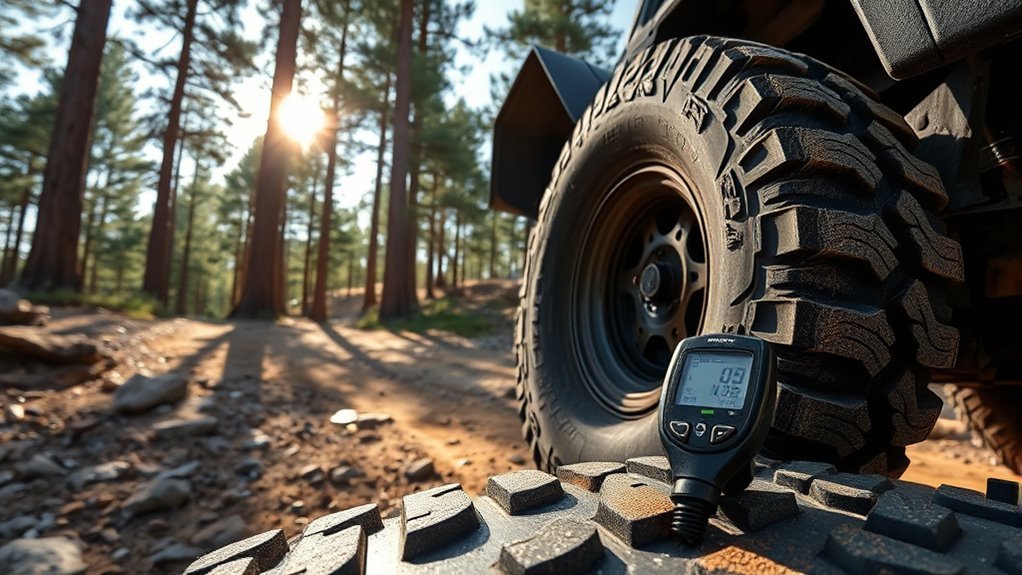
Tire pressure is a critical factor in off-road driving that directly influences your vehicle’s performance on challenging terrains. Maintaining suitable tire pressure is essential for maximizing traction and handling. For off-roading, you’ll want to think about airing down your tires, which increases the contact surface area with the ground, improving grip on loose surfaces like sand and mud. Depending on the terrain, ideal tire pressure typically ranges from 12 to 25 PSI. Lower pressures allow for enhanced flexibility, helping tires absorb shocks and reducing the risk of tire damage. However, be aware of safety risks; under-inflated tires can lead to increased wear and should be returned to recommended levels before hitting paved roads. Stay vigilant about your tire pressure for the best off-roading experience.
What Does It Mean to Air Down Your Tires?
Airing down your tires refers to the practice of intentionally reducing tire pressure to enhance traction and improve handling on off-road terrains. Lowering tire pressure increases the tire’s surface area in contact with the ground, allowing for better grip on loose surfaces like sand and mud. Typically, you’d air down by about 10 PSI from the manufacturer’s recommended on-road pressure, adjusting based on terrain conditions.
| Tire Pressure Adjustment | Benefits |
|---|---|
| Air down by 10 PSI | Increased traction |
| Enhanced flex | Improved ride comfort |
| Regular monitoring | Maintained safety |
Remember to reinflate your tires to recommended levels before hitting paved roads to avoid safety hazards and excessive tire wear.
Key Benefits of Airing Down Tires Before Off-Roading
When you air down your tires before off-roading, you release several key advantages that greatly enhance your driving experience. Lower tire pressure increases the surface area in contact with the ground, markedly improving traction on loose surfaces like sandy terrain and mud. Softer tires absorb shocks from obstacles, leading to a more comfortable ride and minimizing damage to your vehicle’s suspension. Additionally, airing down decreases the likelihood of punctures, as flexible tires navigate sharp rocks and debris more effectively. By optimizing tire pressure, you enhance vehicle stability and reduce the chances of getting stuck, making it essential for successful off-road navigation. Embrace these benefits, and make your off-road adventures smoother and more enjoyable.
How Much Should You Air Down: Guidelines for Different Terrains?
How much should you air down your tires for best performance on different terrains? For deep sand, aim for 12-15 PSI to enhance flotation and prevent sinking. In muddy conditions, an ideal pressure of 15-20 PSI boosts traction while minimizing tire damage. When traversing rocky terrains, lowering to 15-25 PSI offers flexibility and improved grip on uneven surfaces. For loose dirt roads and trails, reduce your tire pressure by 10-25% from the manufacturer’s recommendation for better comfort and traction. If you’re tackling extreme rock crawling or soft sand, using beadlock wheels allows you to go as low as 6-12 PSI, maximizing tire contact and handling for ultimate off-road driving performance.
When to Air Down Your Tires for Best Performance?
When you encounter loose surfaces like sand or mud, it’s essential to air down your tires to around 12-15 PSI for better traction. On rocky terrain, adjusting to 15-25 PSI enhances grip and comfort while maneuvering obstacles. Always evaluate the terrain conditions to select the best tire pressure for your specific driving scenario.
Terrain Type Considerations
Understanding the right tire pressure for different terrain types is essential for enhancing off-road performance. In sandy terrain, you should air down to 12-15 PSI to improve flotation and prevent getting stuck. For rocky terrain, reducing tire pressure to 15-25 PSI boosts traction and absorbs impacts from sharp rocks. In muddy conditions, a pressure of 15-20 PSI helps maintain grip and prevents sinking. When maneuvering dirt roads, lowering tire pressure by up to 25% from standard on-road PSI improves handling and comfort. For extreme off-roading, like rock crawling, beadlock wheels allow you to drop pressures as low as 6-12 PSI, maximizing traction and flexibility. Adjusting tire pressure based on terrain is vital for achieving ideal off-road performance.
Recommended PSI Adjustments
Airing down your tires can greatly enhance off-road performance, especially in challenging conditions. Proper PSI adjustments are essential for maximizing traction and grip based on terrain types.
| Terrain Type | Recommended PSI Range | Benefits |
|---|---|---|
| Deep Sand | 12-15 PSI | Improves flotation and traction |
| Muddy Conditions | 15-20 PSI | Enhances grip; reduces stuck risk |
| Rocky Terrain | 15-25 PSI | Balances traction and tire protection |
| Dirt Roads/Trails | Up to 25% reduction | Increases ride comfort and stability |
| General Use | Varies by vehicle weight | Tailor pressure for best performance |
Always consider vehicle weight and specific terrain conditions when reducing air pressure to achieve the best off-road driving experience.
Risks of Over Deflating Your Tires
While the allure of increased traction might tempt you to deflate your tires excessively for off-road adventures, over-deflation poses significant risks that can compromise your safety. Going below 20 PSI can lead to tire unseating from the rims, especially during cornering or at higher speeds, increasing accident risks. Excessive air loss also heightens the likelihood of punctures or blowouts from sharp objects on the trail. Additionally, driving on under-inflated tires on paved roads can result in poor vehicle control and accelerated tire wear, shortening their lifespan. The integrity of your tires is vital; maintaining proper air pressure is essential for peak performance and safety. Remember, liberation on the trail starts with well-inflated tires.
Must-Have Tools for Airing Down and Reinflating Your Tires
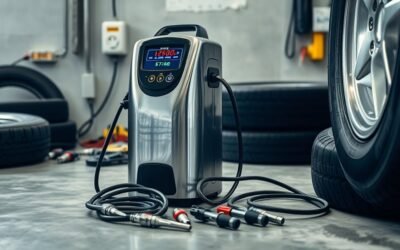
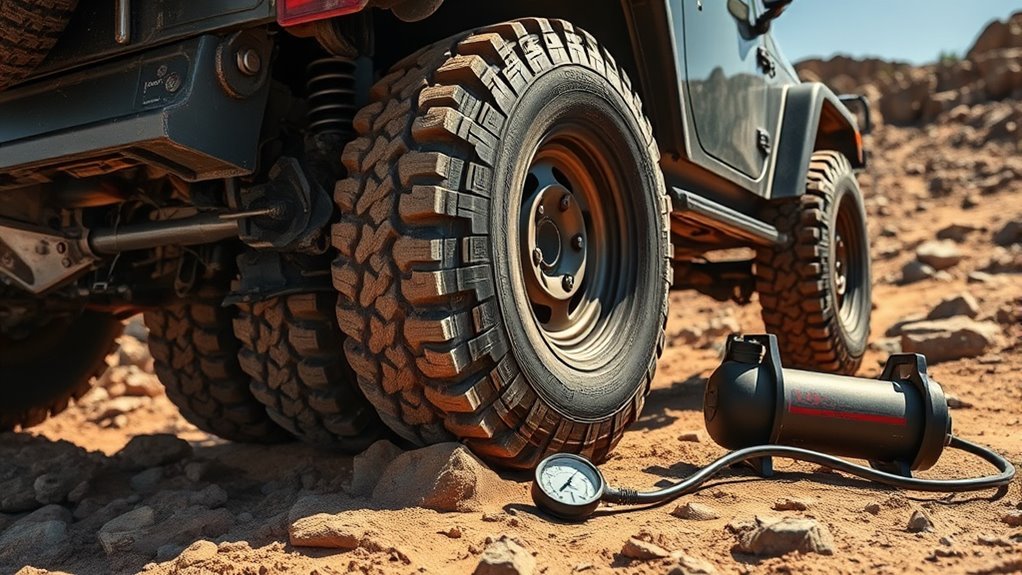
When you venture off-road, having the right tools for airing down and reinflating your tires is vital for both performance and safety. A tire pressure gauge is important for accurately measuring tire pressure before and after airing down, guaranteeing peak performance on rugged terrains. Tire deflators, like the ARB E-Z Deflator, provide quick and precise air release, streamlining the airing down process. For reinflating tires, a portable air compressor is indispensable, with some models capable of inflating 33” tires to 40 PSI in just three minutes. A tire inflator should include a pressure gauge to monitor inflation levels, and carrying a tire plug kit assures you’re prepared for emergencies, enhancing safety and convenience on your adventures.
Step-by-Step Guide: How to Properly Air Down Your Tires
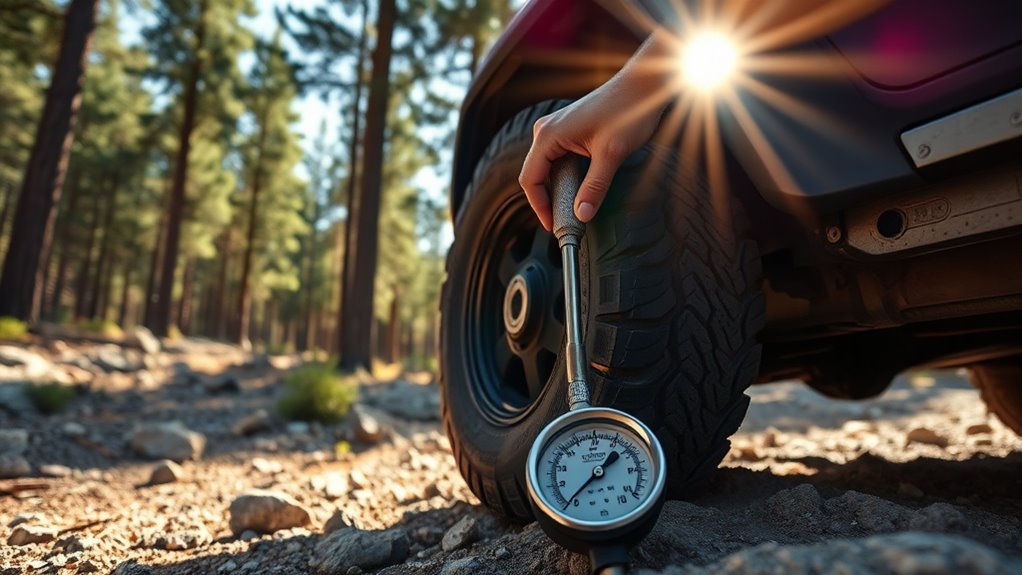
To guarantee peak performance and safety during off-road driving, it’s essential to properly air down your tires. Start by checking your initial tire pressure with a reliable gauge to determine your starting PSI. Next, use a tire deflator tool to quickly release air, monitoring the pressure with your gauge as you go. Gradually deflate each tire, typically reducing it by 10 PSI from the manufacturer’s recommended on-road pressure. After reaching your desired PSI, double-check each tire for uniformity and adjust as needed. Keeping a tire pressure gauge handy throughout your trip allows you to monitor changes and secure peak performance on varying terrains. Properly airing down enhances traction and stability, giving you the freedom to conquer the wild.
Tips for Reinflating Your Tires Safely After Off-Roading
After enjoying your off-road adventure, the next step is reinflating your tires to guarantee safety and peak performance on paved roads. Always check the manufacturer’s recommended tire pressure before you start. Use a reliable tire inflator to connect securely to the valve stem and gradually reinflate your tires to the specified pressure, typically 30-35 PSI, depending on your vehicle and tire specs. As you reinflate, monitor tire pressure with a gauge to confirm accuracy, preventing safety risks from over-inflation or under-inflation. Finally, make a last pressure check for all tires to verify uniformity, which is essential for ideal performance. Reinflating correctly will keep you safe and enhance your driving experience on paved surfaces.
Frequently Asked Questions
How Much to Air Down Tires for Off-Roading?
For off-roading, air down to 12-25 PSI depending on terrain. This boosts tire flexibility, traction improvement, and grip enhancement while enhancing ride comfort, aiding obstacle navigation, and minimizing tire wear, ensuring safety throughout your adventure.
What PSI Should My Tires Be When off Roading?
For off-roading, aim for 12-25 PSI depending on terrain—12-15 PSI for sand, 15-25 PSI for rocks. Proper air pressure enhances traction control, vehicle stability, and minimizes tire wear during mud driving and rock crawling. Always prioritize safety.
What Is the 3% Tire Rule?
The 3% Tire Rule says for every 10 PSI you lower your tires, reduce speed by 3%. This balances traction control and vehicle stability, essential for off-road techniques, terrain types, and driving safety.
Why Deflate Tires When off Roading?
Deflating tires enhances traction improvement and ground pressure, boosting tire flexibility for terrain adaptation. This reduces tire wear, improves vehicle stability, and guarantees better handling control during obstacle navigation, all while increasing driving comfort despite potential air loss.
Conclusion
In off-road driving, keeping your tire pressure in check is essential for peak performance. By airing down your tires, you enhance traction and absorb shocks, ensuring a smoother ride over rough terrain. However, remember that too much deflation can lead to blowouts or rim damage. With the right tools and techniques, you can navigate the wild like a pro. So, don’t let your tires be the weak link—take charge and hit the trails confidently!