Maintaining proper tire pressure is essential for your highway driving. Even a 1 PSI drop reduces fuel economy by 0.2% and jeopardizes your vehicle’s stability. Under-inflated tires lead to increased rolling resistance, resulting in higher fuel consumption and uneven wear, which shortens tire lifespan. Ideally, keep your tires inflated between 30 to 36 psi for peak performance. Pay attention to those pressures to guarantee safety and efficiency on the road. There’s more to learn about maximizing your tire’s potential.
Why You Should Care About Tire Pressure on the Highway
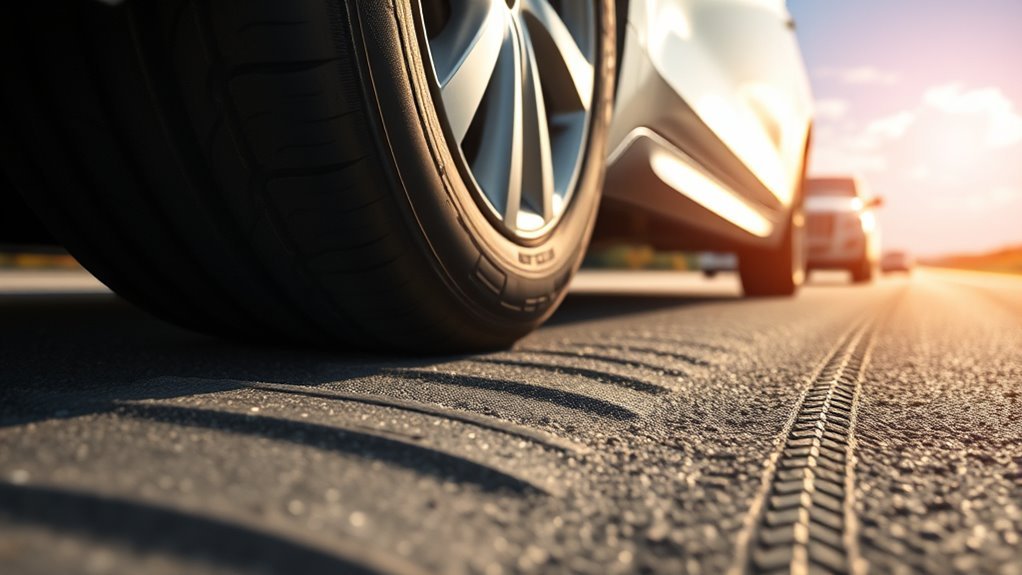
When you hit the highway, maintaining the correct tire pressure isn’t just a good idea—it’s vital for safety and efficiency. Keeping your tires at the recommended psi, typically around 36 psi, notably enhances fuel efficiency, potentially saving you up to 3% on gas. Under-inflated tires increase rolling resistance, slashing fuel economy by about 2% for every 10 PSI drop. Regularly checking tire pressure is important; even a 1 PSI decrease can impact gas mileage by 0.2%. Properly inflated tires also minimize uneven wear, extending their lifespan and reducing maintenance costs. By prioritizing tire pressure, you’re not only ensuring stability on the road but also liberating yourself from the financial burdens of frequent fuel and tire replacements.
How Tire Pressure Affects Stability and Handling on the Road
Maintaining the correct tire pressure is essential for ensuring ideal vehicle stability and handling on the highway. Proper tire pressure optimizes contact with the road surface, enhancing control at high speeds. Underinflated tires compromise stability, increasing the risk of skidding and extending braking distances, which can lead to accidents in emergencies. Even a 1 PSI drop can reduce fuel economy by 0.2%, emphasizing the connection between tire pressure and handling. Conversely, overinflation results in a harsh ride and uneven tire wear, endangering stability and increasing blowout risks. Regularly check and adjust tire pressure per manufacturer recommendations; this simple tire maintenance step greatly improves your handling and safety, especially on long journeys. Prioritize these measures for a more liberated driving experience.
How Proper Tire Inflation Saves You Money on Fuel
Proper tire inflation directly impacts your vehicle’s fuel efficiency, making it a crucial factor for cost-conscious drivers. Maintaining proper tire pressure can improve fuel efficiency by up to 3%, translating to significant savings on fuel over time. Just a 1 PSI drop can reduce gas mileage by 0.2%, emphasizing the need for regular checks.
| Tire Condition | Fuel Efficiency Impact | Recommended Action |
|---|---|---|
| Properly Inflated | Ideal savings | Check monthly |
| Under-inflated by 10 PSI | -2% gas mileage | Inflate to recommended |
| High-quality tires | Up to +9% fuel economy | Consider when buying |
Proper tire pressure guarantees ideal contact with the road, enhancing stability and reducing the engine’s workload, leading to better fuel economy under various driving conditions.
How Tire Pressure Affects Tire Longevity

Tire pressure greatly influences tire longevity, with correct inflation preventing uneven wear that can drastically shorten their lifespan. Maintaining your tires at the recommended level of 30 to 35 psi guarantees peak performance and minimizes tread wear. Under-inflated tires can lead to a staggering 25% increase in tread wear, rapidly diminishing their longevity and necessitating more frequent replacements. Regularly checking tire pressure not only enhances safety on the road but also boosts fuel efficiency and contributes to a smoother ride. This reduced stress on the tire structure promotes longer tire life, allowing your tires to reach their expected lifespan of 50,000 miles or more. Prioritizing proper inflation is essential for maximizing both performance and durability.
Tips for Maintaining Tire Pressure During Long Trips
Before hitting the highway for a long trip, ensuring that your tires are properly inflated plays a significant role in optimizing both safety and fuel efficiency. Start by checking your tire pressure, aiming for the recommended 30 to 35 psi from your owner’s manual. Adjust tire pressure to around 36 psi for maximum efficiency on highways. During your journey, stop every few hours to recheck tire pressure, as temperature and altitude changes can affect inflation levels. A 1 PSI drop can reduce fuel economy by 0.2%, so maintaining accurate pressure is essential. Use high-quality tire inflator gauges for precise readings. By prioritizing these practices, you’ll promote even tire wear and enhance the overall safety and performance of your vehicle.
Frequently Asked Questions
What Should the Tire Pressure Be for Fuel Efficient Driving?
For fuel-efficient driving, maintain tire pressure at the ideal psi of 36. Proper inflation impacts fuel consumption and highway efficiency, reducing tire wear. Regular tire maintenance and seasonal adjustments guarantee eco-friendly driving under varying conditions.
What Is the 3% Tire Rule?
“An ounce of prevention is worth a pound of cure.” The 3% tire rule guarantees ideal inflation for highway safety, enhances driving performance, reduces tire wear, and maximizes fuel savings through diligent tire maintenance and pressure monitoring.
What Is the 7 7 Rule for Tires?
The 7 7 Rule for tires recommends checking tire pressure and tread wear every 7,000 miles or six months. Regular monitoring enhances vehicle stability, fuel economy, and safety while extending tire lifespan under various driving conditions.
What Is the 5 PSI Rule?
The 5 PSI Rule states that for every 5 PSI drop in tire pressure, fuel consumption decreases by about 2%. Maintaining ideal pressure enhances highway stability, reduces wear patterns, and guarantees adherence to safety standards.
Conclusion
Maintaining the right tire pressure is like tuning a fine instrument; it guarantees harmony between stability, fuel efficiency, and tire longevity. Just as a musician adjusts strings for ideal sound, you need to monitor and adjust your tires for peak performance. By keeping your tires properly inflated, you’re not just enhancing your vehicle’s handling—you’re also saving money and extending tire life. Ultimately, a well-maintained tire is your vehicle’s steadfast companion on the highway, guiding you safely toward your destination.