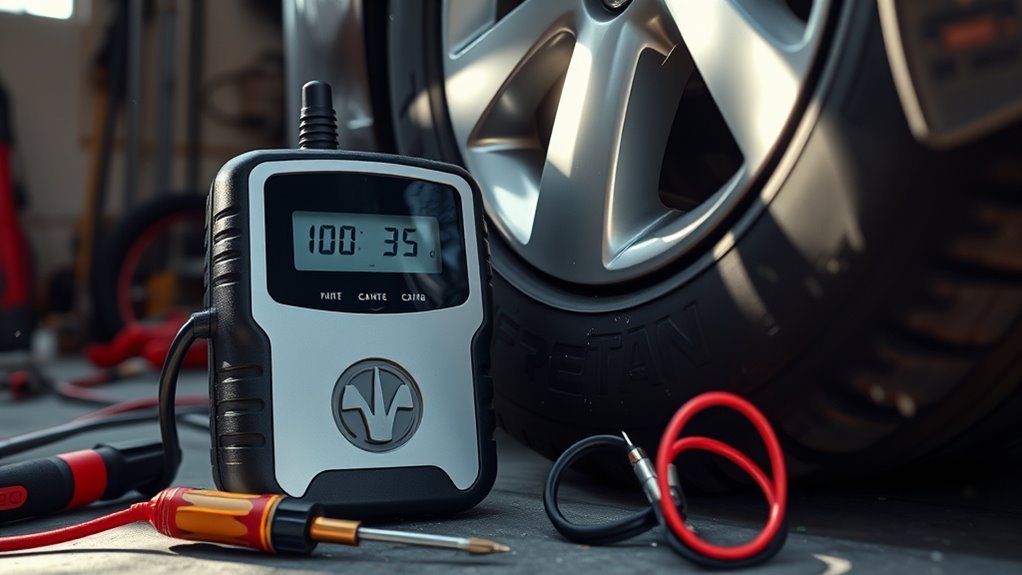
If your tire inflator won’t turn on, start by checking the power source. Verify the inflator’s plugged into a functioning 12V outlet. Inspect the power cord and connections for any damage. Look for blown fuses in the vehicle’s fuse box. If it’s battery-operated, confirm it’s fully charged. Overheating could also cause shutdowns; let it cool down before retrying. For more insights on effective troubleshooting steps, keep exploring the details below.
Troubleshooting Common Tire Inflator Issues
When your tire inflator won’t turn on, it’s essential to troubleshoot the issue systematically. First, confirm it’s properly connected to a power source. If you’re using a vehicle outlet, check for any blown fuses that might prevent operation. For cordless models, inspect the battery charge; a depleted battery will halt functionality. Look for signs of corrosion or loose connections at the power outlet, as these can obstruct electrical flow. Verify that the power switch is functional and not stuck, since a malfunctioning switch can lead to inactivation. If you’ve checked all these factors and the tire inflator still won’t turn on, it may indicate a defect in the internal components, requiring further investigation or warranty claims.
How to Check the Power Source Effectively
To troubleshoot a tire inflator that won’t power on, checking the power source is essential. Start by ensuring the inflator’s plugged securely into the 12V outlet; a loose connection can hinder power flow. Test the outlet by using another device, like a phone charger, to confirm it’s functioning. If that checks out, inspect the vehicle’s fuse box for any blown fuses, especially the one linked to the 12V outlet. A blown fuse interrupts power supply. If your inflator has a built-in battery, confirm it’s adequately charged and operational. Finally, review the manufacturer’s manual for specific troubleshooting steps related to power issues, as they may provide tailored insights. Don’t forget to press the power button after confirming all checks!
Inspecting Your Tire Inflator’s Power Cord and Connections
Start by checking the integrity of your tire inflator‘s power cord for any signs of wear or damage. Next, inspect the connections for corrosion, as this can hinder proper electrical flow. Ensuring both the cord and connections are in good condition is essential for your inflator to function properly.
Check Power Cord Integrity
Before troubleshooting your tire inflator further, it’s essential to check the integrity of the power cord and its connections. A faulty power cord can prevent your inflator from receiving the necessary power. Here’s what to inspect:
- Look for visible signs of wear, like fraying or exposed wires.
- Verify all connections between the power cord and the inflator are secure.
- Test the vehicle’s 12V outlet with another device to confirm it works.
- If your inflator has a fuse, check that it hasn’t blown.
Regularly cleaning and inspecting the power cord not only helps you avoid issues but also guarantees your tire inflator operates at its best when you need it.
Inspect Connections for Corrosion
After ensuring the power cord is intact, focus on inspecting the connections for corrosion or dirt buildup that can impede electrical flow. Examine all connection points, particularly the plug linking to your vehicle’s outlet. Corrosion or debris at these connections can greatly block electricity, preventing your tire inflator from turning on. Make sure all connections are secure and tightly fitted; loose connections often lead to intermittent power issues. If you spot any corrosion, use a wire brush or contact cleaner to clean the affected contacts, enhancing conductivity and restoring functionality. Regularly inspecting these connections as part of your maintenance routine will help you avoid unexpected failures when you need your inflator most.
How to Identify Overheating in Your Tire Inflator
While using your tire inflator, it’s essential to recognize the signs of overheating to prevent damage and secure efficient operation. Overheating can result from extended use without breaks, leading to significant performance issues. Here’s how to identify it:
- Notice a decrease in airflow while inflating.
- Listen for unusual sounds coming from the motor.
- Watch for the inflator shutting off unexpectedly during inflation.
- Confirm the inflator is in a well-ventilated area, as poor airflow can worsen heating.
How to Prevent Air Hose and Nozzle Issues
To prevent air hose and nozzle issues, regularly inspect your air hose for wear, cracks, or kinks that could disrupt airflow. Make sure your nozzle is securely attached to the tire valve stem to avoid air leaks during inflation. Additionally, clean and maintain these components after each use to guarantee peak performance.
Regular Hose Inspection
Regular inspections of your air hose are essential for maintaining optimal performance of your tire inflator. By verifying the hose remains in top condition, you can prevent airflow issues that hinder inflation. To keep your air hose functioning effectively, follow these guidelines:
- Inspect for wear, cracks, or kinks that can disrupt airflow.
- Clean the hose after each use to eliminate dirt and debris.
- Check the nozzle for damage or blockages to confirm a secure fit on the tire valve.
- Avoid exposing the hose to extreme temperatures to prevent material degradation.
Secure Nozzle Connection
Ensuring a secure nozzle connection is essential for effective tire inflation. Start by firmly attaching the nozzle to the tire valve stem to prevent air leaks and enhance efficiency. Regularly inspect both the air hose and nozzle for visible damage; cracks or kinks can severely impede airflow. Clean the nozzle and valve connections often to remove any debris that might obstruct a tight fit, which is vital for proper inflation. If your nozzle has a locking mechanism, make sure it’s engaged correctly to avoid accidental disconnection while inflating. Before you start, always perform a quick test of the nozzle connection to verify a tight seal, ensuring you achieve the desired tire pressure without unnecessary delays.
Clean and Maintain Components
While maintaining your tire inflator, it’s crucial to focus on cleaning and inspecting the air hose and nozzle to prevent performance issues. Neglecting these components can lead to inefficiencies in your air pump. Here are some key practices to follow:
- Regularly inspect the air hose for wear, cracks, or kinks to guarantee maximum airflow.
- Clean the air hose and nozzle after each use to remove debris that could block airflow.
- Verify all connections, including the nozzle and valve stem, fit tightly to prevent air leaks.
- Store the tire inflator in a cool, dry place to avoid damage from extreme temperatures.
Evaluating Battery Performance and Lifespan
Evaluating the battery performance and lifespan of your tire inflator is essential for guaranteeing reliable operation. The lifespan of a rechargeable battery can be greatly impacted by how often you use it and your charging practices. Regularly charging the battery according to the manufacturer’s guidelines prevents issues like overcharging or undercharging that lead to premature failure. If the battery depletes below its threshold, it may not accept a charge, making your inflator inoperable until you replace the battery. Conducting functionality checks helps identify potential battery issues early, allowing timely replacements. When it’s time to replace the battery, make sure you select the correct type and voltage rating for compatibility with your inflator’s charging system.
What to Try If Your Outlet Isn’t Working?
After checking your tire inflator’s battery performance, it’s important to contemplate other factors if your inflator won’t turn on. If your outlet isn’t working, try these steps:
- Check for a blown fuse; many outlets are protected by fuses needing replacement.
- Verify the vehicle’s ignition is on, as some outlets only operate when the key’s in the “on” position.
- Test the outlet with another device, like a phone charger, to pinpoint the issue.
- If both front and back seat cigarette lighter ports are non-functional, consult your owner’s manual for the specific fuse location.
If the problem persists after these checks, consider seeking professional assistance or visiting a dealership for a thorough diagnosis.
Maintenance Tips for Your Tire Inflator
To keep your tire inflator functioning at its best, regular maintenance is essential. Start by checking and cleaning the air hose for any wear, cracks, or kinks that could hinder airflow. Store your inflator in a cool, dry place, and remember to remove the battery to protect it from extreme temperatures and humidity. Follow the manufacturer’s guidelines for charging to avoid overcharging or undercharging, which can diminish battery performance. Periodically test the inflator by inflating a tire; this helps identify any issues early. Finally, adhere to the specific care instructions for your model—tailored maintenance will prevent common problems and extend the life of your tire inflator, ensuring reliable performance when you need it most.
When to Seek Professional Help or Replace Your Inflator?
When should you consider seeking professional help or replacing your tire inflator? If your inflator won’t turn on after checking the power source and battery, it likely needs a professional assessment. Here are some signs that indicate it’s time for action:
- The vehicle’s outlet fuse is blown and requires replacement.
- The inflator shows signs of overheating after extensive use.
- You hear unusual noises or experience persistent operational failures despite troubleshooting.
- Regular maintenance hasn’t resolved ongoing issues.
In these cases, evaluating the cost of repairs versus investing in a new, reliable model may be wise. Prioritize your safety and performance, and don’t hesitate to consult a professional if you’re unsure about your inflator’s condition.
Frequently Asked Questions
Why Is My Tire Inflator Not Working?
Your tire inflator isn’t working due to possible power issues, a depleted battery, blown fuses, or blockages in the air hose. Regular tire maintenance guarantees peak function and safety, so check these elements promptly.
Why Won’t My Portable Air Compressor Turn On?
Your portable air compressor won’t turn on due to battery issues. Check if the battery’s charged, inspect connections for damage, and verify any related fuses are intact to restore functionality.
How to Reset a Portable Tire Inflator?
To reset a portable tire inflator, unplug it, wait a few minutes, then plug it back in. For troubleshooting tips, consult your user manual for specific reset instructions tailored to your model.
Why Is My Air Compressor Not Powering On?
If your air compressor isn’t powering on, check the power supply first. Confirm connections are secure, inspect for a dead outlet or blown fuse, and verify the battery charge if it’s cordless.
Conclusion
To sum up, ensuring your tire inflator functions properly is essential for maintaining your vehicle’s safety and performance. Did you know that properly inflated tires can improve fuel efficiency by up to 3%? By regularly checking power sources, inspecting cords, and performing routine maintenance, you can extend your inflator’s lifespan. If you encounter persistent issues, don’t hesitate to seek professional help or consider replacing your inflator to avoid potential roadside emergencies. Stay proactive and keep your tires in top shape.