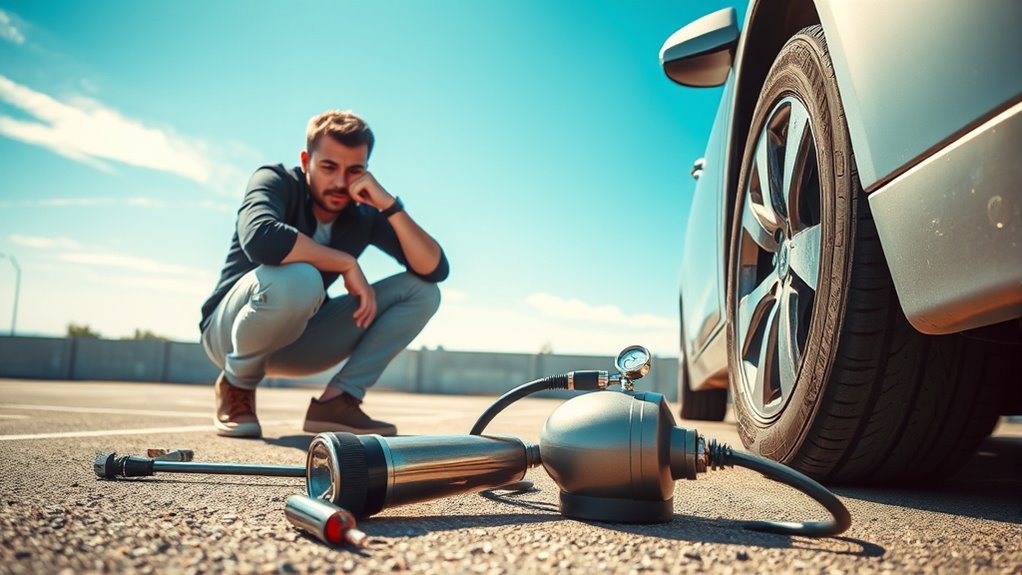
If your tire inflator isn’t working, check the power source first—make sure it’s plugged in or the batteries are charged. Inspect the air hose for kinks or blockages and confirm secure connections at the tire valve. Examine the valve stem for leaks with soapy water; hissing sounds may indicate a faulty valve core. If these checks don’t resolve the issue, you’re likely facing deeper problems. Discover more ways to troubleshoot your inflator efficiently.
How to Troubleshoot Tire Inflator Malfunctions
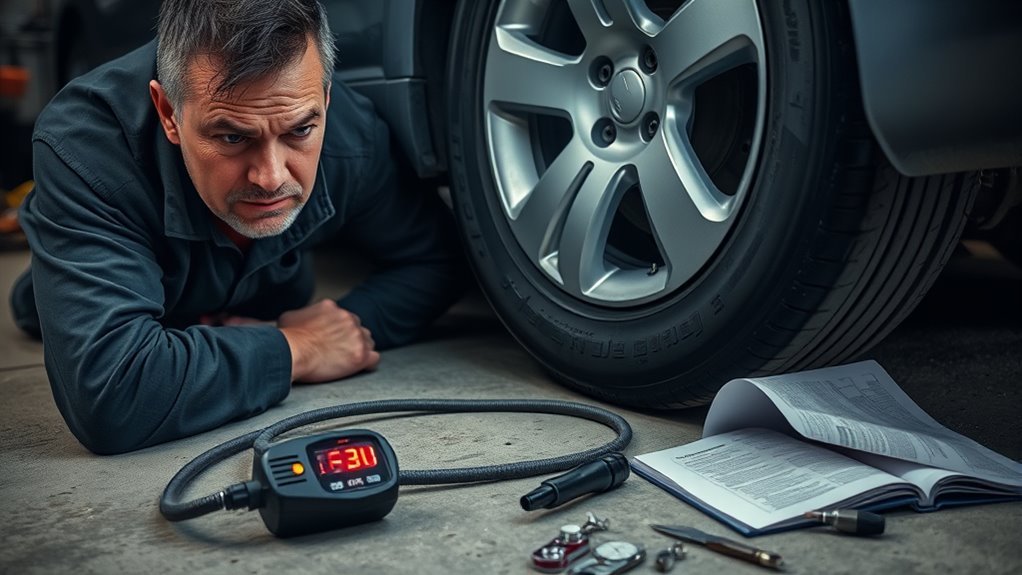
When your tire inflator isn’t working, the first step is to check the power source. Confirm it’s securely connected; a loose connection can prevent operation. Next, inspect the air hose for blockages or leaks, as dirt or damage can hinder airflow and affect inflation performance. Make certain the nozzle fits tightly on the tire valve stem; a proper seal is essential for effective inflation. Listen for a “click” or hissing sound to confirm a good connection. If you’re still experiencing issues, test the inflator on different tires or outlets to rule out power problems. Finally, verify that the inflator meets your tire’s PSI requirements for ideal use. If all else fails, consult the manufacturer’s guidelines for support.
Diagnosing Your Tire Inflator: Quick Checks to Perform
When your tire inflator isn’t working, start by checking the power source connection to verify it’s plugged in and the outlet is functional. Next, inspect the hose for any blockages that could impede airflow. Finally, test the seal at the valve stem to confirm a tight fit—listen for that reassuring click.
Check Power Source Connection
Checking the power source connection is essential for diagnosing why your tire inflator isn’t functioning. Start by ensuring that your portable tire inflator is properly connected to the vehicle’s 12V outlet; a loose connection can disrupt power flow. Next, inspect the vehicle’s fuse box for any blown fuses that might interrupt the power supply. If your inflator runs on a battery, confirm that it’s charged and operational, as a low or dead battery will impede performance. Also, look for corrosion or dirt on the power connections, as these can hinder electrical flow. Finally, if you’re using an extension cord, make sure it meets the power requirements of your inflator to prevent voltage drops.
Inspect Hose for Blockages
A thorough inspection of the air hose can reveal issues that might prevent your tire inflator from working effectively. Start by checking for kinks, cracks, or blockages that could impede airflow. Use soapy water to identify leaks around the hose and connections; bubbles indicate escaping air. Verify the hose is securely connected to both the inflator and the tire valve, as any gaps can hinder air transfer. After each use, clean the air hose to remove debris that may clog the nozzle or restrict airflow in future inflations. If you continue to experience problems, consider replacing the hose, as wear and tear can diminish performance over time. Regular maintenance will keep your inflator ready for action.
Test Valve Stem Seal
After ensuring the air hose is free from blockages, the next step involves examining the valve stem seal. A faulty or damaged valve stem can prevent proper air sealing, leading to inflation issues. To check for air leaking, perform a soapy water test on the valve stem; look for bubbles forming, which indicate a leak. If you hear a hissing sound or notice rapid air escape during inflation, the valve core might not be tightened properly or could be malfunctioning. Regular inspection of the valve stem and core is essential to prevent future inflation problems. If air isn’t entering the tire even with the valve core removed, you may need to investigate potential obstructions within the tire itself.
How Tire Damage and Valve Issues Affect Inflation
When tire damage or valve issues arise, they can greatly hinder your ability to inflate tires properly. Punctures or sidewall cracks can obstruct airflow, causing leaks that prevent successful inflation with tire inflators. If you hear hissing sounds or notice a tire losing pressure rapidly, inspect the valve core and valve stem for faults. Performing a soapy water test is a simple yet effective method to identify leaks; bubbles will form at damaged areas, signaling the need for repair. If a tire won’t accept air even after removing the valve, it likely indicates severe internal damage. Regular inspections and maintenance of both tires and valve components are essential for peak performance and safety, helping you avoid frustrating inflation issues.
Essential Maintenance Tips for Your Tire Inflator
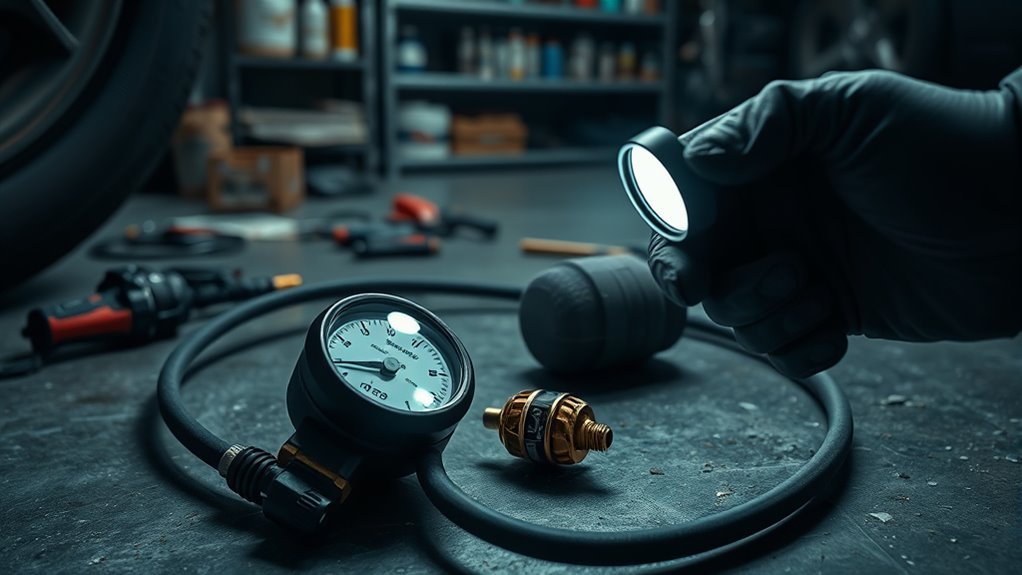
To guarantee your tire inflator operates efficiently, regular maintenance is essential. Start by checking and cleaning the air hose for wear, cracks, or kinks. Debris can block airflow and hinder inflation performance. Store your inflator in a cool, dry place to prevent damage from extreme temperatures and humidity. Follow the manufacturer’s guidelines for battery care, avoiding overcharging and storing the battery at a 50% charge during long periods of non-use. Perform periodic functionality checks by inflating a tire to monitor for weak airflow or unusual sounds. Address any issues promptly to maintain reliability. By adhering to specific maintenance requirements for your model, you enhance durability and prevent common tire valve issues from escalating over time.
When to Seek Professional Help for Tire Inflation Problems
Maintaining your tire inflator helps catch many issues before they escalate, but there are times when professional assistance becomes necessary. If multiple inflators fail to inflate a tire, it may signal underlying tire problems, such as a faulty valve stem or internal blockage, requiring expert evaluation. Additionally, a significant drop in tire pressure that troubleshooting can’t resolve suggests the need for a professional check for punctures or serious sidewall damage. If your inflator consistently fails to work, even with different power sources, you should seek professional help to assess potential defects. Finally, if you suspect a frozen or malfunctioning valve core and can’t fix it yourself, consulting a tire shop will guarantee proper repair and prevent further damage.
Common Solutions for Tire Inflator Problems
To troubleshoot your tire inflator issues, start by inspecting the hose and connections for any leaks or blockages that could impede airflow. Next, check the power source to guarantee the unit is receiving adequate energy. If these steps don’t resolve the problem, consider replacing a faulty valve core, as it may be limiting inflation efficiency.
Inspect Hose and Connections
When your tire inflator isn’t working properly, one of the first steps is to inspect the hose and connections. Examine the air hose for any cracks, kinks, or blockages that could obstruct airflow, hindering proper inflation. Tighten all connections, especially the nozzle to the valve stem, to prevent air leaks during inflation. Regularly clean the air hose to eliminate dirt or debris that might impede airflow. Look for any damage to the hose or nozzle, as these can result in inconsistent inflation performance. Additionally, verify the hose is securely attached to the inflator, checking for loose fittings that could compromise the seal. Addressing these issues can greatly enhance your inflator’s efficiency and reliability.
Check Power Source Status
After ensuring the hose and connections are in good condition, the next step is to check the power source status. Start by confirming that your tire inflator is securely connected to a functioning power source, like your vehicle’s 12V outlet. Loose or corroded connections can disrupt operation. If the inflator won’t turn on, inspect the vehicle’s fuse linked to the outlet; a blown fuse can halt functionality. For cordless air pumps, make sure the battery is fully charged and properly seated. Also, check the power cable for any visible damage or fraying. If your inflator supports multiple power options, such as AC and DC, try using an alternative source to eliminate power source issues.
Replace Faulty Valve Core
If you’re experiencing inflation issues despite a functioning tire inflator, the problem might lie with the valve core. A faulty valve core can block air from entering your tire, causing frustration. Thankfully, replacing it is simple and cost-effective. Here are three signs to look for:
- Hissing sounds during inflation.
- Inability to inflate even with the valve removed.
- Rapid air loss when the tire is not in use.
Regularly inspecting your valve cores can prevent these issues. Keeping spare valve cores on hand allows you to quickly resolve inflation problems without delays. With the right tools, you can easily guarantee your tires are ready to roll, liberating you from the stress of unexpected inflation failures.
Frequently Asked Questions
Why Is My Portable Tire Inflator Not Inflating?
If your portable tire inflator isn’t inflating, check for power issues, nozzle connections, or leaks. Regular tire pressure maintenance and portable inflator troubleshooting can help you identify problems and guarantee effective inflation for your tires.
Why Is My Air Compressor Not Putting Air in My Tire?
Your air compressor might not be putting air in your tire due to air leaks or incorrect tire pressure. Check for valve issues, leaks, and make certain your compressor’s power source is functioning properly.
How to Reset a Portable Tire Inflator?
To reset your portable tire inflator, follow the reset procedure outlined in your manual, ensuring all connections are secure. If issues persist, consider inflator troubleshooting or consult a professional for deeper inspection.
Why Is My Air Compressor Tank Not Filling Up?
Your air compressor tank isn’t filling up due to issues like a faulty pressure gauge, leaks, or clogged filters. Regular compressor maintenance guarantees peak performance, preventing these problems and keeping your tank efficiently filled.
Conclusion
To sum up, if your tire inflator isn’t working, don’t panic. By performing quick checks and understanding common issues, you can often resolve the problem yourself. Many people worry that troubleshooting is too complicated, but with a little guidance, you can confidently tackle these malfunctions. Regular maintenance will keep your inflator in top shape, ensuring you’re always ready for any tire emergencies. Don’t hesitate to seek professional help if needed—your safety is paramount.