If your tire inflator is making loud noises, it could signal mechanical or electrical issues. Common causes include worn bearings, air leaks, and debris obstructing components. Humming sounds might indicate a jammed pump or electrical problems. Regular maintenance, like cleaning air filters and lubricating parts, helps minimize noise and enhance performance. If problems persist or abnormal sounds occur, it may be time to consult a professional. Discover more about effective troubleshooting and maintenance strategies.
Common Causes of Loud Noises in Tire Inflators

When you notice loud noises coming from your tire inflator, it’s essential to identify the underlying causes to prevent further damage. Mechanical problems often stem from worn bearings, misaligned parts, or debris obstructing internal components. If you hear rattling sounds, it might indicate loose screws or fasteners, which can exacerbate damage if ignored. Additionally, air leaks in hoses, fittings, or valves can create hissing noises, increasing operational sound levels. A humming noise could suggest electrical issues, like a faulty capacitor or a jammed pump, jeopardizing the compressor’s efficiency. Regular maintenance—cleaning air filters and lubricating moving parts—helps minimize noise and enhances the inflator’s overall performance, ensuring a smoother, quieter experience.
Troubleshooting Steps for Noisy Tire Inflators
Identifying the source of noise in your tire inflator is the first step in troubleshooting. Start by listening for rattling or grinding sounds, which may indicate worn bearings or misaligned components. Inspect the air compressor for loose parts or blockages in the air intake. If you hear a humming noise without effective inflation, check for electrical issues or a jammed pump; inspecting the motor and compressor is essential. Regularly clean air filters to prevent restricted airflow, which can cause excess noise. If you’ve addressed these issues and the noise persists, reach out to the manufacturer for warranty support or replacement options, especially if your inflator is still under warranty.
How Tire Inflators Create Noise: A Mechanical Overview
Tire inflators generate noise primarily through their motor-driven pump mechanisms, which compress air during operation. The type of air pump you use greatly affects the noise level; diaphragm pumps tend to be noisier than rotary vane or piston pumps. Mechanical components like bearings, pistons, and valves also contribute to sound production, and worn parts can exacerbate the noise. The inflator’s casing design and materials play an essential role in sound transmission—insulated casings usually help reduce overall noise. Regular maintenance, including lubricating moving parts, can minimize operational noise and enhance your inflator’s lifespan. By understanding these mechanical aspects, you can make informed choices about your tire inflator and navigate noise concerns effectively.
When to Clean or Replace Your Tire Inflator Air Filter

Maintaining ideal performance of your tire inflator involves more than just monitoring noise levels; regular attention to the air filter is crucial. Check your air filter every few months or after extensive use. If inflation speed drops or you hear unusual noises, it’s time to clean or replace air filters. Cleaning is simple—just rinse with water and allow it to dry completely. However, if the filter looks damaged or overly worn, replacement is necessary. A clean air filter prevents overheating and guarantees efficient motor operation, extending your inflator’s lifespan. Always consult your manufacturer’s guidelines for specific maintenance recommendations.
| Action Required | Frequency | Notes |
|---|---|---|
| Clean Air Filter | Every few months | Rinse and dry thoroughly. |
| Replace Air Filters | As needed | When damaged or excessively worn. |
| Performance Check | After extensive use | Monitor inflation speed and noise. |
| Consult Manufacturer | As recommended | Follow specific guidelines. |
The Role of Lubrication in Reducing Tire Inflator Noise
Proper lubrication is essential for minimizing noise in your tire inflator by reducing friction among its internal components. Using the right type of lubricant, such as silicone-based or light machine oil, guarantees compatibility and prevents damage. To maintain peak performance, you should lubricate your inflator regularly, ideally after a few uses or as per the manufacturer’s recommendations.
Importance of Proper Lubrication
When it comes to reducing noise in tire inflators, understanding the importance of lubrication is essential. Proper lubrication minimizes friction between moving parts, greatly lowering operational noise levels during inflation. When components like bearings and pistons are well-lubricated, they operate smoothly, reducing vibrations that contribute to loud sounds. Insufficient lubrication can cause excessive wear, leading to increased noise and potential mechanical failures over time. Regular maintenance, including lubrication checks, enhances your tire inflator’s longevity, ensuring it runs quietly and efficiently. To achieve peak performance and noise reduction, always use the manufacturer-recommended lubricant. By prioritizing lubrication, you’re not just ensuring quieter operation; you’re also investing in effective air solutions for your tire inflator.
Types of Lubricants Used
Lubrication plays a significant role in the performance and noise levels of tire inflators, and understanding the types of lubricants available can help you make informed choices. Common lubricants include synthetic oils, which offer excellent thermal stability and resist breakdown at high temperatures. These oils reduce friction between moving parts, thereby minimizing noise. Silicone-based lubricants are another option, as they effectively reduce wear and further dampen sound. It’s essential to apply the correct amount of lubricant, as over-lubrication can create excess buildup, obstructing moving components. Adhering to the manufacturer’s guidelines guarantees ideal lubrication, extending the lifespan of your tire inflator while maintaining quiet and efficient operation. Choose wisely to enhance your inflator’s performance.
Maintenance Frequency Recommendations
Maintaining your tire inflator with regular lubrication is essential for ideal performance and noise reduction. It’s recommended to lubricate your inflator every 20 to 30 hours of use. This regular maintenance greatly reduces friction, which decreases noise levels during operation. Always use manufacturer-recommended lubricants to prevent damage to internal mechanisms. Insufficient lubrication can lead to increased noise and overheating, risking device failure. By performing routine maintenance, including lubrication, you not only extend the lifespan of your tire inflator but also enhance its efficiency and quietness. Staying on top of this maintenance schedule will guarantee your inflator operates smoothly, keeping your driving experience pleasant and stress-free. Remember, a well-maintained inflator is a quiet inflator.
Inspecting Loose or Damaged Components
When inspecting your tire inflator, start by checking fasteners and screws for tightness, as loose components can lead to rattling and potential damage. Next, inspect bearings and seals for any signs of wear or damage, since these issues may increase noise and indicate mechanical failure. Regular attention to these components guarantees peak performance and longevity of your inflator.
Check Fasteners and Screws
A thorough inspection of fasteners and screws is essential for guaranteeing your tire inflator operates smoothly and quietly. Loose components can lead to annoying rattling noises during operation. To maintain peak performance, make it a habit to:
- Regularly check fasteners and screws for tightness.
- Use a torque wrench to guarantee screws are tightened to the manufacturer’s specifications.
- Replace any damaged or stripped screws promptly.
- Monitor air filters regularly, as they can also affect overall performance.
Inspect Bearings and Seals
After ensuring all fasteners and screws are secure, the next step is to inspect the bearings and seals of your tire inflator. Worn or damaged bearings can produce excessive noise and reduce operational efficiency. Rotate the bearings and feel for any roughness; this may indicate the need for lubrication or replacement. Additionally, inspect seals carefully, as they prevent air leaks. Any signs of wear or damage here could lead to air pressure loss, further contributing to noise issues. Regularly inspecting bearings and seals is essential for prolonging your tire inflator’s lifespan and maintaining peak performance. If noise persists after this inspection, deeper mechanical issues may require professional evaluation and repair.
What Electrical Problems Lead to Loud Noises in Your Inflator?
Electrical problems in tire inflators can lead to loud noises that indicate underlying issues. Recognizing these electrical issues is vital for ensuring smooth operation. Here are some common electrical problems you might encounter:
- Faulty capacitors or loose wiring can prevent the motor from starting properly, causing humming or loud operational noises.
- Overloaded circuits may supply insufficient power, resulting in abnormal sounds during operation.
- Damaged motor brushes create excessive friction, leading to loud noises while the inflator pumps air.
- Intermittent electrical connections due to wear or damage can generate rattling or grinding noises.
Regularly inspecting these components is important to prevent issues that can lead to loud noises and potential motor failure in your tire inflator.
Best Practices for Preventive Maintenance of Tire Inflators
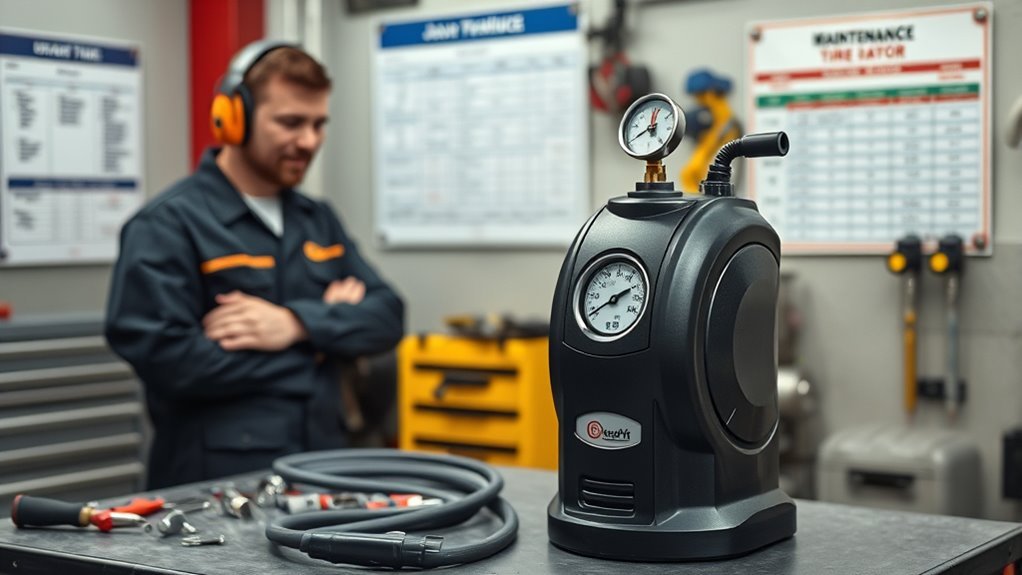
To maintain your tire inflator’s performance and minimize noise, regularly clean the air filter to prevent blockages. You should also inspect electrical connections for wear and guarantee you monitor the usage duration to avoid overheating. Implementing these practices will enhance the longevity and efficiency of your inflator.
Regular Filter Cleaning
Maintaining ideal airflow in your tire inflator is essential for efficient operation and noise reduction, and regular filter cleaning is a key component of this process. To guarantee your inflator runs smoothly, follow these best practices:
- Clean or replace the air filter regularly to avoid overheating.
- Check the air intake for blockages before each use, as debris can restrict airflow.
- Use a soft brush or compressed air to remove dust and dirt from the filter and intake area.
- Implement a cleaning schedule based on usage frequency, inspecting filters at least once every few months.
Always refer to the manufacturer’s guidelines for specific cleaning instructions. By maintaining your tire inflator, you’ll enhance its performance and extend its lifespan.
Inspect Electrical Connections
Inspecting electrical connections is essential for guaranteeing your tire inflator operates safely and effectively. Regular checks for wear, fraying, or corrosion can prevent performance issues. Always make sure wiring is tightly secured, as loose connections can lead to noise problems. Utilize a multimeter to identify any electrical faults, like damaged wiring or faulty capacitors, impacting functionality.
| Action | Purpose |
|---|---|
| Inspect for wear | Ensure peak performance |
| Clean contacts | Prevent poor conductivity |
| Document maintenance | Aid future troubleshooting |
Monitor Usage Duration
Keeping your tire inflator in top shape goes beyond just checking electrical connections; monitoring usage duration also plays a key role in preventive maintenance. To keep your compressor running smoothly, follow these best practices:
- Regularly track total operation time, ideally keeping it under 5 to 7 hours.
- Allow your inflator to cool down between uses, especially after extended periods.
- Inspect and clean the air filter and intake to guarantee ideal airflow.
- Adhere to the manufacturer’s guidelines for usage intervals to avoid premature wear.
Tips for Reducing Noise From Your Tire Inflator
While you might not be able to eliminate noise entirely, there are several effective strategies you can implement to considerably reduce the sound produced by your tire inflator. Regularly inspect and clean the air filter and intake to prevent blockages that can increase noise from the compressor. Utilize rubber mats or vibration-damping pads under the inflator; this minimizes sound transmission. Ascertain all screws and components are tightly fastened, as loose parts can create disruptive rattling noises. Contemplate operating the inflator in a well-ventilated, separate area to lessen the noise impact on your surroundings. If noise persists, consult the manufacturer’s guidelines for maintenance, or reach out to customer support for troubleshooting options tailored to your compressor.
When to Seek Professional Help for Your Tire Inflator Issues?
Even with all the noise reduction techniques in place, there are times when your tire inflator might signal that it needs professional attention. If you hear loud noises or notice troubling signs, don’t hesitate to get help. Consider seeking a technician when:
- Your inflator consistently rattles or grinds, indicating internal mechanical issues.
- A burning smell or smoke appears during operation, suggesting electrical failure.
- The inflator struggles to maintain air pressure or stops shortly after starting, hinting at worn components.
- Abnormal sounds arise after the warranty period, risking further damage.
If you lack the tools or expertise for troubleshooting, consulting a professional is vital to guarantee safety and peak function.
Frequently Asked Questions
Why Is My Air Compressor Making a Loud Sound?
Your air compressor’s loud sound likely stems from mechanical issues or airflow restrictions. To address this, implement noise reduction strategies like soundproofing and regular maintenance, ensuring efficient operation and a quieter working environment.
Why Are Tire Inflators so Loud?
When it comes to noise levels, tire inflators can be quite loud due to their motor and compressor types. Vibration and airflow restrictions also contribute, making them sound like a freight train on a mission.
What Does a Failing Compressor Sound Like?
A failing compressor sounds like loud humming, rattling, grinding, or clicking noises. These indicate potential mechanical issues. Regular compressor maintenance can help identify problems early, ensuring efficient operation and preventing further damage to your equipment.
How to Quiet a Loud Air Compressor?
To quiet a loud air compressor, implement noise reduction techniques like soundproofing enclosures, using intake silencers, relocating the unit, and placing it on vibration-damping pads. Regular maintenance also minimizes mechanical noise effectively.
Conclusion
In summary, a loud tire inflator can signal underlying issues that shouldn’t be ignored. Just like a warning light on your dashboard, it’s essential to address these noises promptly to guarantee safe and efficient operation. By following troubleshooting steps and performing regular maintenance, you can minimize disruptions and extend the life of your inflator. Remember, a well-maintained inflator not only operates quietly but also keeps your tires properly inflated, ensuring your vehicle’s performance and safety.