RV tire pressure is not a number you guess, copy from another rig, or set only because it appears on the tire sidewall. The safe cold PSI depends on your exact tire, wheel rating, RV weight ratings, and the real weight carried by each axle or wheel position when the RV is loaded for travel.
Quick Answer
To set RV tire pressure safely, load the RV as you travel, weigh each wheel position if possible, find your exact tire in the manufacturer’s current load and inflation table, and set the same cold PSI across each axle using the heaviest side. Never exceed the tire or wheel pressure limit.
Key Takeaways
- The tire sidewall shows a maximum load at a stated pressure, not a custom PSI recommendation for your loaded RV.
- Wheel-position weighing is the best method because side-to-side loading can be uneven even when axle weight looks acceptable.
- CAT scales are useful for gross and axle weights, but they do not provide individual wheel-position weights.
- Check RV tire pressure cold, before long trips, and during travel mornings. Do not bleed air from hot tires.
- A TPMS is helpful, but it does not replace manual pressure checks and visual tire inspections.
At a Glance
| Time Required | 10–20 minutes for a public axle-weight scale; longer if scheduling wheel-position weighing |
| Difficulty | Moderate: the weighing is simple, but the pressure must be matched to the correct tire table |
| Tools Needed | Accurate tire pressure gauge, access to a scale, RV placard/manual, tire sidewall details, and manufacturer load/inflation table |
| Cost | Usually low for a public axle-weight scale; wheel-position weighing services may cost more but provide better tire-load data |
Understanding RV Tire Load Ratings
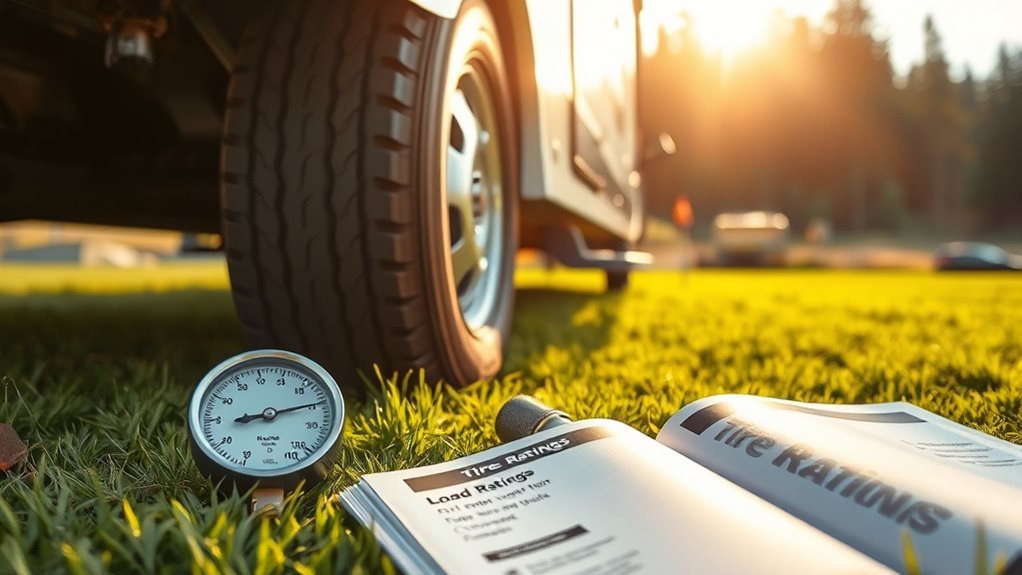
Every RV tire has markings on the sidewall that identify its size, load range or load index, maximum load, and maximum cold inflation pressure. These markings matter, but they are only part of the answer. The tire must also match the RV manufacturer’s requirements and the wheel’s pressure rating.
The most important weight ratings to understand are:
- GVWR: Gross Vehicle Weight Rating, or the maximum total loaded weight of the RV.
- GAWR: Gross Axle Weight Rating, or the maximum weight allowed on each axle.
- GCWR: Gross Combination Weight Rating, or the maximum combined weight of a motorhome plus towed vehicle, or a tow vehicle plus trailer.
- UVW: Unloaded Vehicle Weight, which does not include all cargo, passengers, water, propane, or dealer-installed accessories.
- Load range/load index: tire markings that describe how much load the tire can carry at specified inflation pressures.
The correct RV tire pressure is based on the load the tire is actually carrying. Michelin’s RV guidance says inflation pressure depends on the weight of the fully loaded vehicle, including passengers, cargo, fuel, and water. It also recommends weighing each wheel position to understand side-to-side loading and then using the correct load and inflation table for the tire.
Warning: Never exceed the maximum load or pressure limit stamped on the tire or wheel. If the load table says you need more PSI than the tire or wheel allows, the RV is overloaded for that tire-and-wheel setup and needs a load or equipment correction.
How to Weigh Your RV for Accurate Tire Pressure
Weigh the RV in the same condition you drive it. That means passengers, fuel, water, propane, food, tools, camping gear, pets, bicycles, towed vehicles, and normal cargo should be onboard or accounted for.
- Start with the RV placard and owner’s manual. Record the original tire size, recommended cold pressure, GVWR, GAWR, and any wheel pressure limits.
- Record the tire sidewall details. Write down tire size, load range or load index, maximum load, and maximum cold PSI.
- Weigh the RV loaded for travel. Wheel-position weighing is best because it shows how much each tire position carries.
- If wheel-position weighing is not available, get axle weights. A public truck scale can help you confirm gross and axle weights, but it is not the same as individual wheel weights.
- Compare your weights with GVWR and GAWR. If any rating is exceeded, reduce weight or correct the setup before adjusting tire pressure.
- Use the tire manufacturer’s current table. Match the exact sidewall marking to the correct table and choose the pressure that supports the heaviest wheel position or axle end.
- Set the same cold PSI across each axle. Do not run different pressures left-to-right on the same axle unless your tire manufacturer or RV manufacturer gives a specific instruction.
Note: CAT Scale is useful for gross and axle weights, but it states that it cannot provide individual wheel weights. For individual RV wheel-position data, use a service such as RV Safety & Education Foundation wheel-position weighing or another qualified RV weighing provider.
How to Set RV Tire Pressure After Weighing
Once you know your loaded weight, do not simply inflate every tire to the sidewall maximum. The safer method is to match the load to the tire maker’s data.
- Find the exact tire table. Use the tire size and markings on your sidewall. For Michelin RV tires, use the current Michelin RV load and inflation tables.
- Use the heaviest side of the axle. If the left rear axle end is heavier than the right rear axle end, use the heavier side to choose pressure for all tires on that axle.
- Account for dual tires correctly. “Single” means one tire on each axle end. “Dual” means two tires on each axle end. Use the correct column for your setup.
- Set pressure cold. Cold means the tire has not been driven recently and has not heated up from road use.
- Recheck with a quality gauge. A TPMS is a helpful warning system, but a manual gauge check is still necessary.
Pro Tip: Keep a small note in the RV with your tire size, wheel rating, loaded axle or wheel-position weights, chosen cold PSI, date weighed, and the load table used. Reweigh after major cargo changes, new batteries, solar upgrades, added tools, or a different towing setup.
[Products Worth Considering]

The JACO ElitePro Digital Tire Pressure Gauge delivers shop-grade accuracy with a clear digital readout, making it easy to maintain proper tire pressure for safer driving and better performance. Built with rugged brass and steel components, a protective guard, and a flexible air hose, it is designed for reliable use across cars, trucks, motorcycles, bikes, RVs, and trailers. The lock-on display, built-in bleeder valve, and bright backlit screen add convenience in any lighting condition.
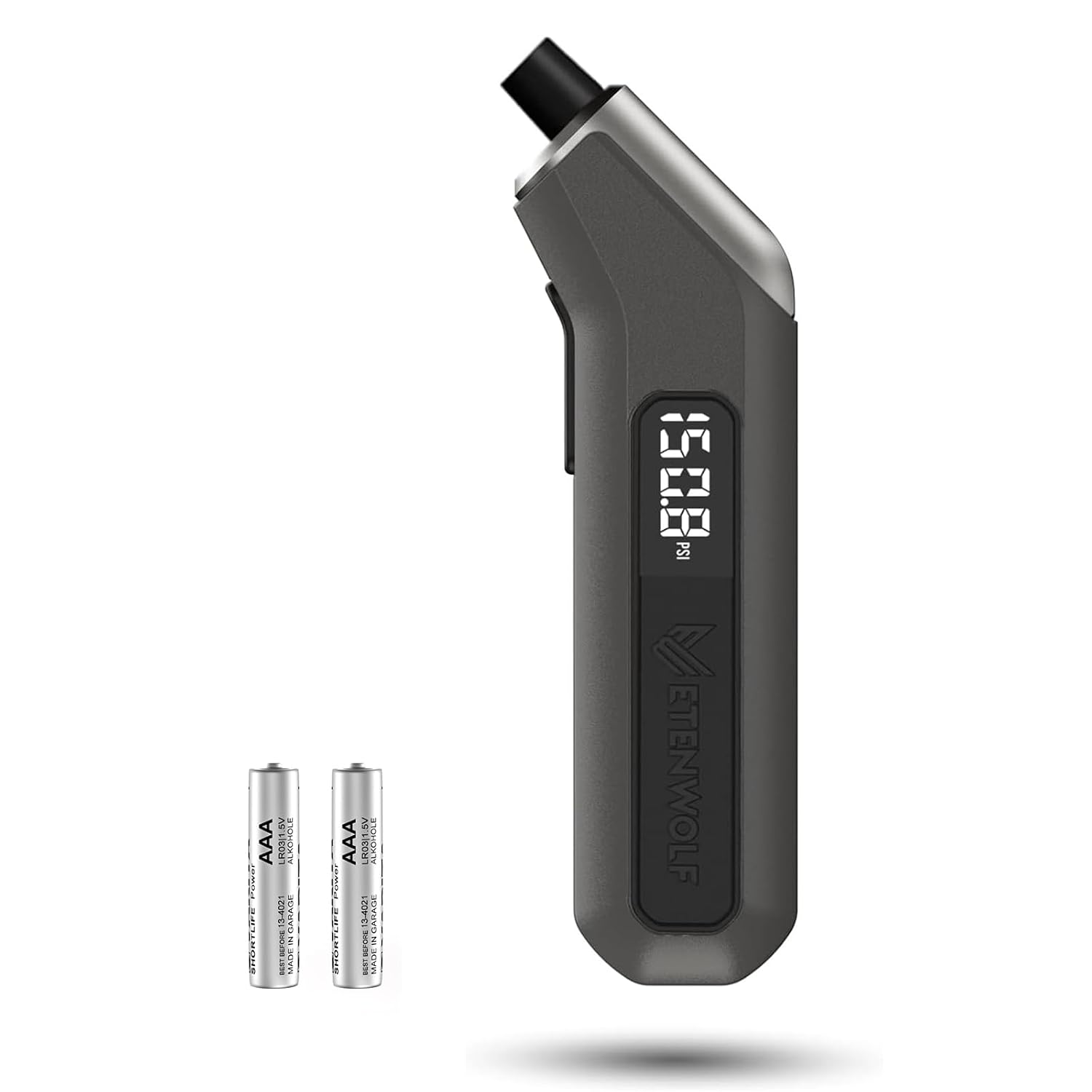
The ETENWOLF T300 digital tire pressure gauge delivers precise readings for cars, RVs, trucks, bikes, and heavy-duty vehicles with a wide measuring range and consistent accuracy. It is built to perform in extreme temperatures, includes a bright LED light for low-visibility use, and uses replaceable AAA batteries for convenient long-term operation. Durable enough to withstand rugged use, it is a practical tool for maintaining proper tire pressure across a variety of vehicles.

This foldable dog car ramp is designed to help pets enter and exit vehicles more safely and comfortably, reducing strain on joints and paws. Built with a sturdy aluminum frame, anti-slip walking surface, and a gentle longer incline, it supports everyday use for small to large dogs. Its four-fold design and built-in carry handle make it easy to store, transport, and use at home or on the go.
Why Correct Tire Pressure Matters
Correct tire pressure affects safety, handling, braking, ride comfort, fuel economy, and tire life. The goal is not “more air is always better” or “less air rides softer.” The goal is enough cold inflation pressure to support the actual load without exceeding the tire or wheel limits.
Preventing Tire Blowouts
Underinflated and overloaded tires flex more, build more heat, and can fail suddenly. NHTSA TireWise reports that 511 people died in tire-related crashes in 2024, and NHTSA identifies proper tire pressure, load limits, and regular inspection as key tire-safety practices.
The safest RV tire pressure is the pressure that supports your actual loaded weight according to the tire manufacturer’s current data, while staying within tire and wheel limits.
Enhancing Vehicle Performance
Proper inflation helps preserve steering response, braking, traction, and stability. Too little pressure can cause heat buildup and poor handling. Too much pressure for the load can reduce the tire’s contact patch, which may hurt ride quality, braking, and tread wear.
Fuel economy can also be affected. FuelEconomy.gov says proper tire inflation can improve gas mileage by 0.6% on average and up to 3% in some cases, while underinflated tires can lower mileage by about 0.2% for every 1 PSI drop in the average pressure of all tires.
Prolonging Tire Lifespan
Correct pressure helps the tire wear evenly and reduces heat stress. Michelin warns that underinflation can cause poor handling, faster or irregular wear, and reduced fuel economy, while overinflation for the load can reduce traction and make the tire more prone to harsh ride, uneven wear, and impact damage.
Reading and Using Tire Load and Inflation Tables
Load and inflation tables are manufacturer-specific. Do not use a random chart unless it matches your tire size, tire type, and load range. Printed tables can also become outdated, so use the tire maker’s current online chart when available.
| What to Check | Why It Matters |
|---|---|
| Exact tire size and load range | A similar-looking tire size may have a different load capacity. |
| Single vs. dual column | Dual tires have separate load values because two tires share one axle end. |
| Heaviest wheel position or axle end | The heavier side determines the minimum cold PSI for all tires on that axle. |
| Wheel pressure limit | The wheel may have a lower pressure limit than the tire. |
Warning: If your loaded weight requires a pressure above the tire or wheel rating, do not “solve” it by exceeding the rating. Reduce weight, redistribute cargo, or consult a qualified RV tire professional about a correct tire-and-wheel upgrade.
Avoid These Common Mistakes in Tire Pressure Management
- Using one universal PSI: RV trailer and motorhome tire pressures vary by tire, wheel, load, and manufacturer guidance.
- Relying only on sidewall maximum pressure: The sidewall shows the tire’s maximum load at a stated pressure, not always the best pressure for your actual load.
- Ignoring side-to-side weight: One side of an RV can be much heavier because of slides, appliances, tanks, batteries, or storage compartments.
- Bleeding hot tires: Pressure rises after driving. Releasing air from a hot tire can leave it underinflated when it cools.
- Trusting TPMS alone: A TPMS can warn you of pressure loss, but it does not replace manual cold checks and visual inspections.
- Forgetting the spare: The spare tire should be checked for pressure, age, and cracking before long trips.
Why Regular Tire Maintenance and Inspections Are Essential
Check RV tire pressure when the tires are cold. For many RV owners, that means checking before a trip, at least monthly during use, every morning on long travel days, and before and after storage.
During every inspection, look for:
- Cracks or weather checking on the sidewall
- Bulges, cuts, punctures, exposed cords, or impact damage
- Uneven tread wear
- Valve stem damage or missing valve caps
- Loose or damaged valve extensions on dual wheels
- Pressure loss faster than normal
Tire age matters even when tread depth looks acceptable. Michelin recommends annual inspection by a qualified tire specialist once RV tires have been in service 5 years or more, and replacing RV tires that are 10 years or more from the DOT manufacture date as a precaution, including spares. Replace tires sooner if they show damage, deep cracking, repeated pressure loss, or abnormal vibration.
Note: The DOT date code is molded on the tire sidewall. The last four digits show the week and year of manufacture. For example, “0322” means the tire was made in the third week of 2022.
Effective Strategies for Balancing Weight Distribution in Your RV
Weight distribution affects both tire load and handling. A rig can be under its total GVWR but still have one axle or one side overloaded. That is why wheel-position weighing is so valuable.
Assess Weight Distribution Regularly
Reweigh the RV after major changes such as adding lithium batteries, solar equipment, a generator, heavy tools, cargo trays, a motorcycle carrier, or different water-tank habits. Even a few hundred pounds added behind an axle can change handling and tire loading.
Utilize Storage Solutions Wisely
Store heavy items low and close to the axles when possible. Avoid loading one side heavily with tools, bottled water, spare parts, or outdoor gear. Keep cabinets latched and avoid storing heavy loose items high in the RV.
Redistribute Cargo as Needed
If one side or axle is heavy, move cargo before increasing tire pressure. Tire pressure cannot fix an axle that exceeds GAWR or a tire that exceeds its load rating. Use tire pressure to support the load only after the load is within all ratings.
How to Pick the Best Tires for Your RV
The best RV tire is the one that matches the RV manufacturer’s required size, load capacity, speed rating, wheel rating, and use case. A higher load range can help only when the tire and wheel are compatible and the size is approved for your RV. It is not automatically better if it creates harsh ride, fitment issues, or pressure requirements your wheels cannot handle.
Before buying RV tires, confirm:
- The tire size matches the RV placard or an approved replacement size.
- The load rating supports the actual loaded axle and wheel-position weights.
- The wheel is rated for the tire’s required cold PSI.
- The speed rating matches how the RV will be driven.
- The tire type is appropriate for the vehicle: ST for many trailers, LT for some towables and vans, and commercial/RV-specific tires for many motorhomes.
- The tire is not old stock; check the DOT manufacture date before installation.
[Products Worth Considering]

The KONNWEI KW208 is a versatile 12V battery tester designed to quickly analyze battery health, cranking performance, and charging system status for cars, trucks, boats, motorcycles, and more. It supports multiple battery types and provides clear guidance on whether a battery should be recharged or replaced, helping you diagnose issues before they become failures. With plug-and-play use, high accuracy, and multilingual support, it offers a convenient way to test batteries in-vehicle or out-of-vehicle.

This automatic 12V charger and maintainer delivers a full charge before switching to float mode to help keep powersports batteries ready for storage and regular use. Its four-step charging program is designed for lead-acid, flooded, AGM, and gel cell batteries, helping prevent overcharging while supporting longer battery life. Compact and easy to use, it includes both ring terminal and alligator clip connections plus smart safety features for dependable charging.
What to Do if Your RV Tire Pressure Is Wrong
| Problem | Best Response |
|---|---|
| One tire is low before driving | Inflate to the correct cold PSI and check for leaks, valve issues, punctures, or sidewall damage. |
| One tire repeatedly loses pressure | Have the tire and valve system inspected by a qualified tire technician before travel. |
| Hot pressure is higher after driving | Do not bleed air from hot tires. Recheck cold pressure before the next travel day. |
| Required PSI exceeds tire or wheel limit | Do not drive overloaded. Reduce weight, redistribute cargo, or consult an RV tire professional. |
| Tire has bulges, deep cracks, cuts, or exposed cords | Remove it from service and have it replaced or professionally inspected. |
Frequently Asked Questions
What’s better for an RV tire: Load Range D or E?
Load Range E usually carries more load at a higher maximum pressure than Load Range D in the same tire size, but it is not automatically “better.” The right choice is the tire that matches your RV placard, wheel pressure rating, actual loaded weight, and tire manufacturer’s load table. Do not upgrade load range without confirming wheel compatibility and fitment.
What PSI should my RV trailer tires be at?
There is no single correct PSI for every RV trailer. Start with the RV certification label and owner’s manual, then confirm the pressure using your tire maker’s load and inflation data. Many trailer tires are run at the placard or sidewall cold pressure, but the safe answer depends on tire size, load range, wheel rating, and actual loaded weight.
What is the 5 PSI rule for RV tires?
The “5 PSI rule” is often misunderstood. It should not replace the tire manufacturer’s recommended cold pressure. Michelin guidance says tires across an axle should be kept at the same pressure and that the maximum allowable difference across an axle is 5 PSI. If a tire is noticeably low, check it cold, inflate correctly, and inspect for leaks or damage.
What is the 3% tire rule?
There is no universal RV “3% tire pressure rule” that replaces manufacturer guidance. For RV tire inflation, use the RV placard, actual loaded weight, wheel limits, and the tire maker’s load and inflation table. Keep pressures the same across an axle unless your manufacturer gives a different instruction.
Should I inflate RV tires to the maximum PSI on the sidewall?
Not always. The sidewall pressure is the pressure associated with the tire’s maximum rated load, not a custom pressure for every RV. Some trailer applications may use the placard or sidewall cold pressure, while many motorhomes should use actual weight and a manufacturer load table. Never exceed the tire or wheel limit.
How often should RV tires be replaced?
Replace RV tires immediately if they are damaged, deeply cracked, repeatedly losing pressure, worn to unsafe tread depth, or professionally judged unsafe. For age, Michelin recommends yearly professional inspections once RV tires have been in service 5 years or more and replacement at 10 years from the DOT manufacture date as a precaution, including spares.
Conclusion
Safe RV tire pressure starts with real weight, not guesswork. Load your RV as you travel, weigh it, confirm that every axle and tire is within rating, and use the current manufacturer load and inflation table for your exact tire. Check pressures cold, keep the same pressure across each axle, inspect tires often, and treat any overload, damage, or unexplained pressure loss as a safety issue before the next trip.
Sources
- NHTSA TireWise — tire safety, maintenance, pressure checks, crash fatality context, and TPMS limitations
- Michelin RV Load and Inflation Tables — current tire load and cold inflation table guidance
- Michelin RV Tires Guide — RV tire pressure, weighing, hot/cold pressure, dual tire, inspection, and service-life guidance
- RV Safety & Education Foundation Wheel Position Weighing — RV wheel-position weighing and load-safety process
- CAT Scale: How to Weigh — public scale use and limitation on individual wheel weights
- FuelEconomy.gov Gas Mileage Tips — tire inflation and fuel-economy impact