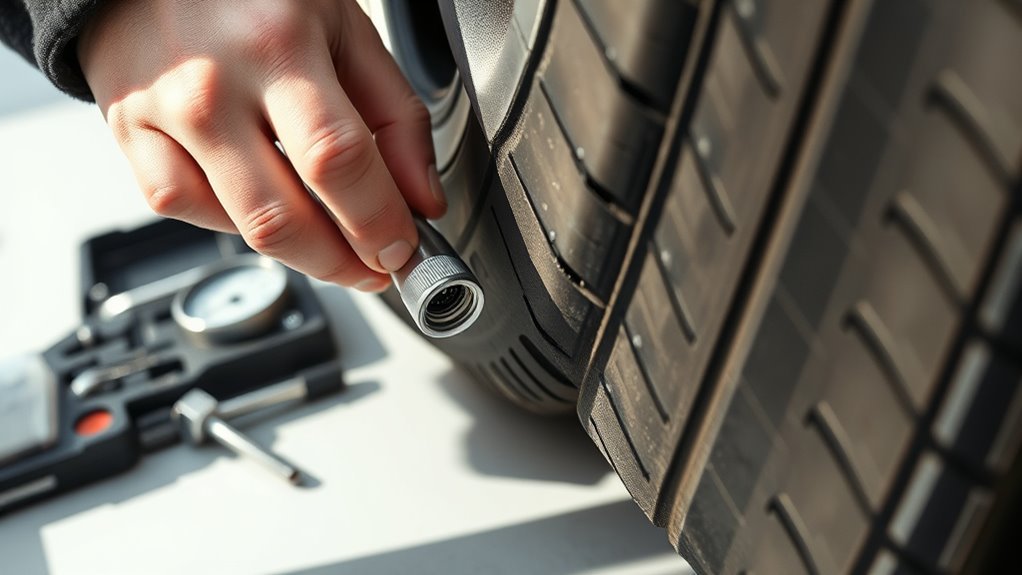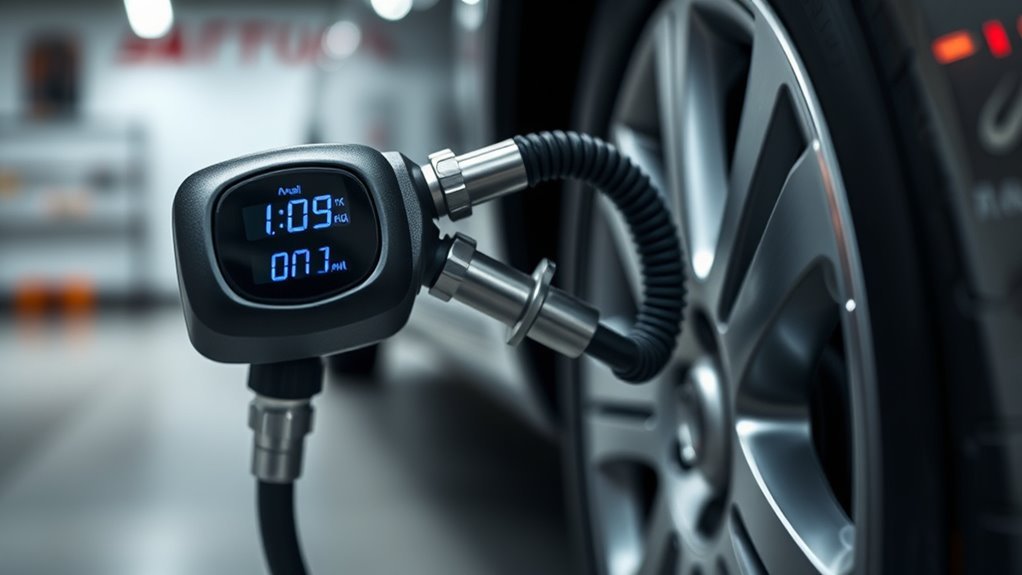
An automatic shutoff tire inflator lets you choose a target PSI, start the pump, and have the unit stop when it reaches that preset pressure. It is useful because it reduces guesswork and helps prevent accidental overinflation, but it still depends on setting the correct cold tire pressure from your vehicle placard or owner’s manual.
Quick Answer
An automatic shutoff tire inflator uses a pressure sensor to monitor PSI while it pumps. You set the target pressure, attach the air hose, start inflation, and the unit stops when the tire reaches the preset PSI. It is safest when used on cold tires and checked against the vehicle’s recommended pressure.
Key Takeaways
- Automatic shutoff is a convenience and safety feature, but it does not replace knowing the correct PSI.
- Use the cold tire pressure on the driver’s door placard or owner’s manual, not the maximum PSI printed on the tire sidewall.
- The best inflator for you depends on tire size, power source, duty cycle, hose length, gauge accuracy, and whether you need deflation mode.
- If an inflator keeps shutting off, the cause may be the target PSI, overheating, low battery, a loose valve connection, blocked airflow, or tire damage.
At a Glance
| Time Required | About 3–10 minutes for one passenger-car tire, depending on tire size, starting PSI, and inflator output |
| Difficulty | Easy, as long as you know the correct cold PSI and follow the inflator’s duty-cycle limits |
| Tools Needed | Automatic shutoff tire inflator, valve-cap access, and ideally a separate tire pressure gauge for verification |
| Cost | Usually low to moderate for portable consumer units; higher for shop-grade or multi-tire systems |
Understanding Tire Pressure Importance
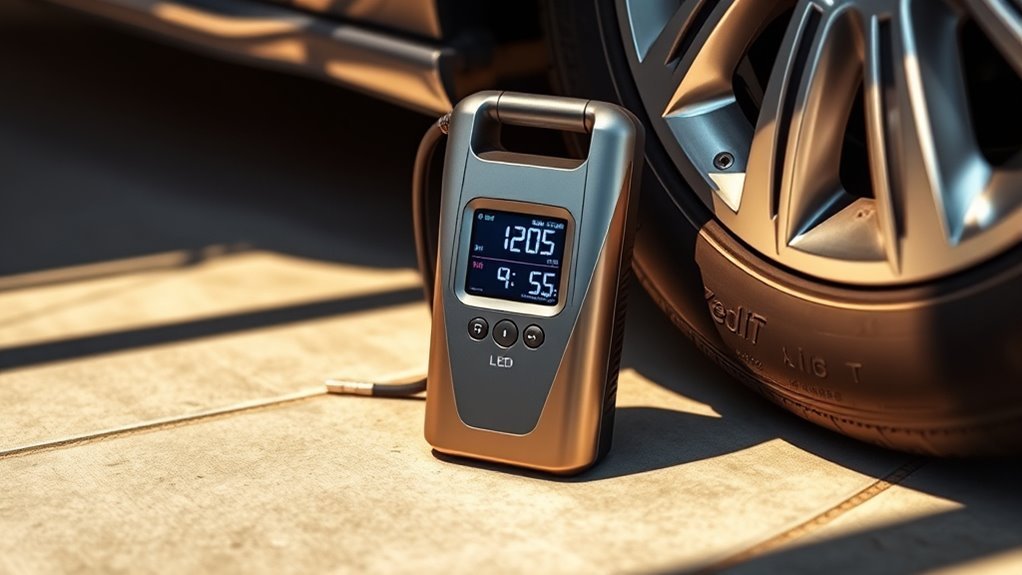
Proper tire pressure affects handling, braking, fuel economy, tread wear, and tire temperature. According to NHTSA TireWise, accurate pressure readings should be taken when tires are cold, and the correct pressure is the vehicle manufacturer’s recommended cold inflation pressure shown on the tire information placard or certification label.
Underinflated tires flex more as they roll. That extra flexing can build heat, increase rolling resistance, reduce fuel economy, and raise the risk of tire failure. FuelEconomy.gov notes that properly inflated tires are safer and last longer, and that keeping tires inflated to the proper pressure can improve gas mileage by 0.6% on average and up to 3% in some cases.
Overinflation is also a problem. Too much pressure can make the center of the tread carry more load, which can speed up center wear. Michelin identifies center tread wear as a common sign of overinflation and recommends checking tires when they are cold.
Warning: Do not inflate a tire that has a visible bulge, deep cut, exposed cords, damaged valve stem, cracked sidewall, or repeated rapid pressure loss. Install the spare or call roadside assistance instead.
What an Automatic Shutoff Tire Inflator Does
An automatic shutoff tire inflator is a portable or shop-style air pump that lets you set a target pressure before inflation. Once the tire reaches the preset PSI, the inflator stops pumping automatically. This makes it easier to top off tires without constantly squeezing a trigger, watching an analog gauge, or guessing when to stop.
The feature is most common on digital tire inflators, 12V portable air compressors, cordless inflators, and some garage air-line inflator gauges. It is especially helpful for routine maintenance because you can set the correct pressure, attach the hose securely, and let the inflator do the final stop for you.
Still, auto shutoff is not magic. The inflator can only aim for the number you enter. If you set the wrong PSI, use it on hot tires without understanding the difference, or rely on a poorly calibrated gauge, your tire pressure can still end up wrong.
Key Features of Automatic Shutoff Tire Inflators
The best automatic shutoff tire inflators combine convenience with enough power and accuracy for your tires. Look for these features before you buy:
- Preset PSI control: Lets you choose a target pressure before inflation.
- Digital pressure display: Shows real-time PSI, often with selectable units such as PSI, bar, or kPa.
- Auto shutoff: Stops the motor when the preset pressure is reached.
- Power source: Common options include 12V car outlet, battery-powered cordless, AC wall plug, or connection to a shop air compressor.
- Airflow and duty cycle: Larger SUV, truck, RV, and off-road tires need more airflow and a longer safe run time than small passenger-car tires.
- Hose and cord length: The hose and power cord must comfortably reach all four tires.
- Deflation mode: Useful for off-roading, beach driving, and trail use, but not available on every model.
- Accessories: Extra nozzles help inflate bicycles, sports balls, and small inflatables, but always confirm pressure limits first.
Note: The maximum PSI printed on a tire sidewall is not the recommended daily driving pressure. Use the pressure listed on the vehicle placard, usually found near the driver’s door jamb, or in the owner’s manual.
[Products Worth Considering]
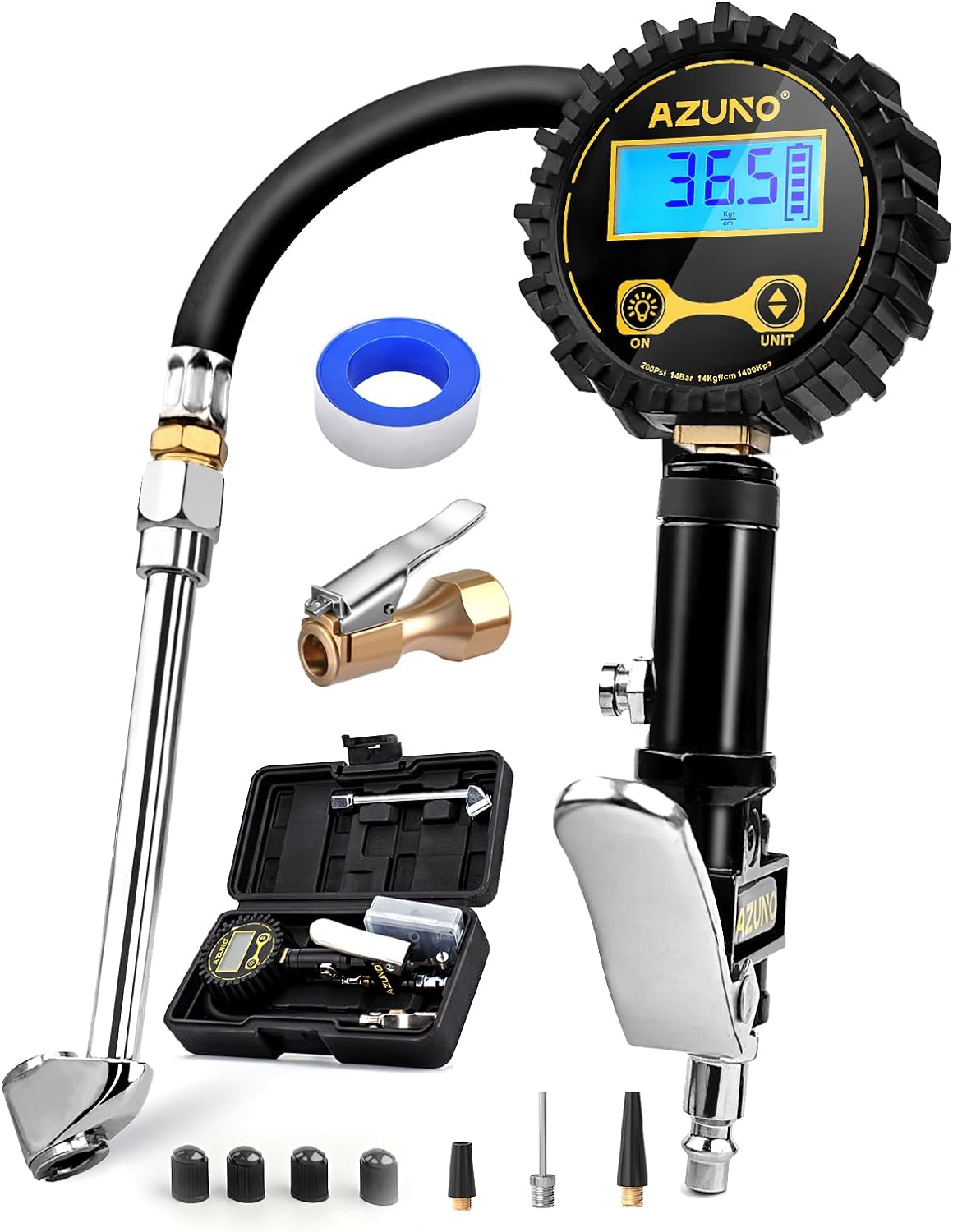
This digital tire inflator delivers accurate, easy-to-read pressure measurements with a bright backlit LCD and precise 0.1 resolution for confident inflation. Designed for single-handed use, it makes it simple to inflate or deflate tires while staying organized in the included portable carrying box. Built for a wide range of vehicles, it is a practical air compressor accessory for cars, trucks, SUVs, motorcycles, and more.

The Drymate XL Oil Spill Mat is designed to trap and contain messy liquid leaks while protecting your garage floor from stains and damage. Its absorbent surface wicks away moisture, and the waterproof, slip-resistant backing helps keep motor oil, brake fluid, gasoline, and coolant from soaking through. Reusable, durable, and easy to clean, it offers a practical long-term solution for garage and shop spill protection.

Castrol GTX Full Synthetic 5W-30 motor oil is designed to deliver maximum engine protection in severe driving conditions. It helps fight wear, control sludge, and resist viscosity breakdown while supporting longer intervals between oil changes. Formulated to meet or exceed key industry and vehicle manufacturer specifications, it offers dependable performance for modern engines.
Understanding How Automatic Shutoff Tire Inflators Operate
Most digital automatic shutoff inflators use a pressure sensor and control circuit to compare the current tire pressure with the target PSI you entered. When the measured pressure reaches the preset target, the inflator cuts power to the pump or closes the airflow path.
The basic process is simple:
- You connect the air chuck to the tire valve stem.
- The inflator reads the tire’s current pressure.
- You set the target PSI.
- The pump adds air while the display updates.
- The control circuit stops the pump when the target pressure is reached.
Some inflators stop exactly at the displayed target, while others stop slightly above or below because of sensor tolerance, hose pressure, temperature, or normal measurement delay. For best results, let the reading settle for a few seconds after shutoff, then confirm with a quality gauge if accuracy is critical.
Automatic shutoff reduces guesswork, but the safest tire pressure still starts with the correct cold PSI from your vehicle—not the maximum number printed on the tire.
How to Use an Automatic Shutoff Tire Inflator Safely
Follow these steps when topping off a car, SUV, light truck, motorcycle, or trailer tire:
- Find the correct cold PSI. Check the driver’s door placard, fuel door, glove box, or owner’s manual. Front and rear tires may have different pressures.
- Check tires when cold. A cold tire is generally one that has not been driven for several hours. Hot tires can read higher because pressure rises as the tire warms.
- Inspect the tire first. Look for nails, cuts, bulges, cracked rubber, or a damaged valve stem.
- Connect the inflator firmly. Remove the valve cap, press or lock the chuck onto the valve stem, and listen for air leaks.
- Set the target PSI. Enter the placard pressure for that tire position.
- Start inflation. Keep the inflator on a stable surface and avoid kinking the hose.
- Let auto shutoff stop the pump. Do not walk away for long periods; stay nearby in case the hose disconnects or the unit overheats.
- Verify the reading. Let the pressure settle, then recheck with the inflator display or a separate gauge.
- Replace the valve cap. This helps protect the valve from dirt and moisture.
- Repeat for all tires, including the spare if accessible. Many spares are ignored until they are needed.
Pro Tip: Check tire pressure monthly and before long trips. The Tire Industry Association recommends checking tire pressure once a month and before long trips.
Exploring the Benefits of Automatic Shutoff Tire Inflators
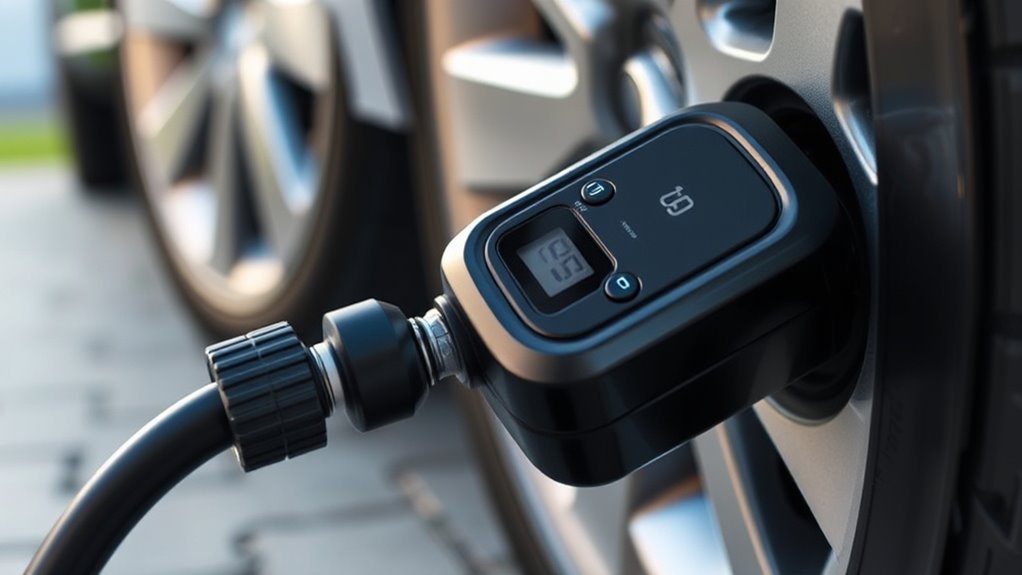
An automatic shutoff tire inflator makes tire maintenance easier because it gives you a clear target and stops the pump for you. That helps reduce accidental overinflation, especially for drivers who are not comfortable reading a manual gauge while air is flowing.
It can also save time. Instead of filling, stopping, checking, bleeding air, and checking again, you can set the target PSI and let the inflator handle the stop point. This is useful in a driveway, parking lot, campsite, or roadside situation where you want a simple and repeatable process.
Automatic shutoff also reduces unnecessary motor runtime because the pump stops when the target pressure is reached. However, you still need to respect the duty cycle. If the manual says to let the inflator cool after several minutes of use, follow that instruction, especially when inflating large tires or several tires in a row.
Temperature, TPMS, and Why Pressure Still Needs Checking
Tire pressure changes with temperature. Bridgestone states that tire pressure changes by approximately 1 PSI for every 10°F change in ambient temperature. That means a tire set correctly during warm weather may read low after a cold night, and a hot tire may temporarily read higher after highway driving.
Your vehicle’s tire pressure monitoring system helps, but it is not a replacement for manual checks. Under 49 CFR § 571.138, passenger-vehicle TPMS requirements are designed to warn drivers of significant underinflation, not necessarily small 1–3 PSI differences that still affect wear and efficiency.
For everyday driving, use your automatic shutoff inflator as part of a simple routine: check pressure monthly, check before long trips, and recheck after major temperature swings.
Typical Use Cases for Automatic Shutoff Tire Inflators
Automatic shutoff inflators work well in several common situations:
- Daily drivers: Quick monthly top-offs and seasonal pressure corrections.
- Commuters: Easy driveway maintenance before work or a weekend trip.
- Road trips: A compact backup tool when service-station air pumps are unavailable or inaccurate.
- Off-roading and overlanding: Helpful for airing tires back up after trail use, especially when paired with a deflator or multi-tire hose system.
- Motorcycles and bicycles: Useful when the inflator supports the correct pressure range and valve type.
- Towing and RV use: Helpful for maintaining consistent pressure across multiple tires, but make sure the inflator has enough power and duty cycle for larger tires.
For fleets and commercial vehicles, do not confuse a handheld automatic shutoff inflator with an onboard automatic tire inflation system. A portable inflator fills tires while parked. Onboard fleet systems are installed on the vehicle and can monitor or adjust tire pressure during operation.
Choosing the Right Tire Inflator for Your Common Uses
When choosing a tire inflator, match the tool to your vehicle rather than buying only by maximum PSI. A tiny cordless inflator may be fine for a compact car or bicycle, but it may struggle with large truck tires. A heavier-duty 12V compressor may be better for SUVs, pickups, trailers, and off-road tires.
Use this checklist:
- Recommended tire pressure: Make sure the inflator comfortably supports your vehicle’s PSI range.
- Tire size: Larger tires need more air volume, not just higher PSI.
- Inflation speed: Look for realistic inflation times for tires similar to yours.
- Duty cycle: Check how long the unit can run before it needs to cool.
- Power source: A 12V plug is common for car use; cordless is convenient but battery life matters; AC is useful in a garage.
- Reach: Confirm the power cord and air hose can reach all tires without stretching.
- Gauge accuracy: Digital displays are convenient, but a separate quality gauge is useful for verification.
- Auto shutoff behavior: Check whether the unit stops at the exact target, slightly above it, or requires manual confirmation.
- Deflation feature: Helpful for off-roaders, but unnecessary for many daily drivers.
- Storage and lighting: A carrying case and LED light can help during roadside use.
[Products Worth Considering]

Castrol EDGE 0W-20 advanced full synthetic motor oil is engineered for drivers seeking strong wear protection, excellent viscosity control, and thermal stability. It delivers superior performance in critical engine areas, including fuel economy, high-temperature protection, sludge control, and wear defense. Designed for extended oil-change intervals, it helps keep modern engines running smoothly under demanding conditions.

This automotive circuit tester checks low-voltage DC systems from 3-65V, making it useful for diagnosing headlights, taillights, fuses, sockets, and other vehicle wiring issues. The digital backlit display provides clear voltage readings with fine accuracy, while the bidirectional polarity indicator helps you test from either ground or positive. Built with a durable probe, insulated tip, and extra-long spring wire, it is designed for dependable everyday use in automotive and household electrical work.

RAPID INFLATION & ROAD-READY PORTABILITY: Powerful 120W motor delivers 35L/min airflow—inflates a standard car tire (195/65 R15) from 30 to 36 PSI in under 1 minute. Weighs only 2.2 lbs and fits glove compartments or trunks for daily commutes, road trips, and emergencies. Plugs into standard 12V DC car outlet with 15A fuse protection.AIRUN H features its cordless counterpart H2 Pro.
Why Your Portable Tire Inflator Keeps Shutting Off
If your portable tire inflator keeps shutting off before the tire is properly inflated, the cause is usually one of these:
- The preset PSI has already been reached: The inflator may be doing exactly what it is designed to do.
- The target PSI is set too low: Recheck the number you entered against the vehicle placard.
- The motor is overheating: Many portable compressors shut down or slow down when they exceed their duty cycle.
- The battery is low: Cordless inflators may stop early when the battery cannot maintain power.
- The 12V outlet is weak or interrupted: Some outlets require the ignition to be in accessory mode or the engine to be running.
- The air chuck is not sealed: A loose connection can cause a bad pressure reading or constant air leak.
- The hose or valve is blocked: Dirt, ice, a clogged valve core, or a kinked hose can restrict airflow.
- The pressure sensor is inaccurate: If readings are far off from a known-good gauge, the inflator may need calibration or replacement.
- The tire has damage: A puncture or valve leak can prevent pressure from rising normally.
If the inflator repeatedly stops, smells hot, or sounds strained, turn it off and let it cool. Do not keep forcing a small compressor to fill large tires beyond its rated capacity.
[Products Worth Considering]

What You Will Get: Presta valve adapter ×1, Ball needle ×1, Inflatable adapter ×1, Extra fuse ×1, Cigarette lighter cord 10ft *1, USB type-c cord *1, Inflatable hose *1, Storage bag *1.

RAPID INFLATION & ROAD-READY PORTABILITY: Powerful 120W motor delivers up to 35L/min airflow—inflates a standard car tire (195/65 R15) from 30 to 36 PSI in under 1 minute under ideal operating conditions. Weighs only 2.2 lbs and fits glove compartments or trunks for daily commutes, road trips, and emergencies. Plugs into standard 12V DC car outlet with 15A fuse protection. AIRUN H features its cordless counterpart H2 Pro.
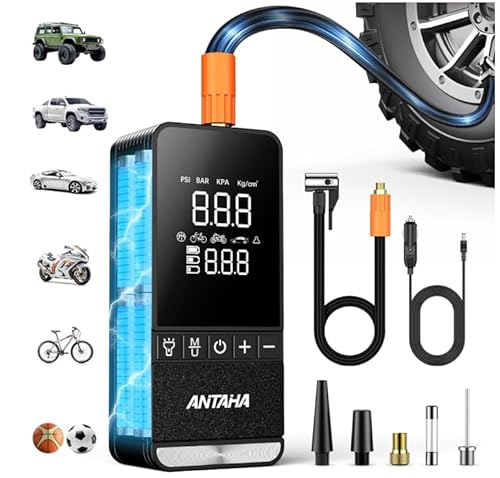
【3X FASTER INFLATION】ANTAHA portable air pump features a powerful motor and high-performance chip, providing 150PSI and inflating a tire from 30 to 36 PSI in under 1 minute—3X faster than others
Tips to Extend Your Tire Inflator’s Lifespan
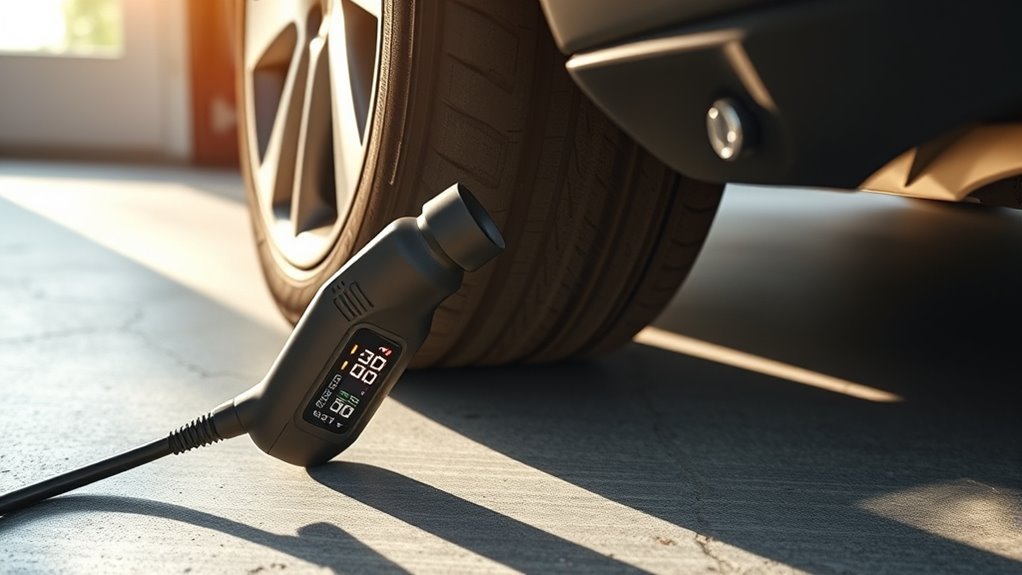
To get the most out of your tire inflator, treat it like a small compressor rather than a disposable gadget. Heat, dust, moisture, and long run times are the biggest enemies of compact inflators.
- Follow the duty cycle: Let the unit cool when the manual tells you to.
- Keep vents clear: Do not run the inflator inside a bag or against soft materials that block airflow.
- Clean dusty parts: Wipe down the casing, hose, and fittings after off-road or roadside use.
- Inspect hoses and connectors: Replace cracked hoses, damaged chucks, or loose fittings.
- Store it dry: Moisture can damage electronics, connectors, and metal fittings.
- Protect the power cord: Avoid shutting it in doors, stretching it across sharp edges, or wrapping it too tightly.
- Check accuracy occasionally: Compare the display with a reliable tire pressure gauge.
Addressing Common Misconceptions About Tire Inflators
Automatic shutoff tire inflators are simple tools, but a few myths can lead to poor results.
Nitrogen-Filled Tires Impact
You do not need a special automatic shutoff inflator just because your tires are filled with nitrogen. The inflator measures pressure, not the gas type. Normal air is already mostly nitrogen, and Tire Rack notes that regular air is about 78% nitrogen. If you top off nitrogen-filled tires with regular air, you may dilute some nitrogen benefits, but maintaining the correct PSI is more important than driving on an underinflated tire.
Automatic Shutoff Functionality
Automatic shutoff does not mean “set it and forget it forever.” It simply stops the pump at the pressure you choose. You still need to enter the right target, connect the hose securely, and check pressure regularly.
| Feature | What It Helps With | What It Does Not Do |
|---|---|---|
| Automatic Shutoff | Stops inflation at the preset PSI | Choose the correct PSI for you |
| Digital Display | Shows pressure while inflating | Guarantee perfect calibration forever |
| Deflation Mode | Lets air out for off-road or pressure correction | Come standard on every inflator |
Overinflation Risks Explained
Overinflation can reduce ride comfort and contribute to uneven center tread wear. It can also make the tire more sensitive to impacts from potholes or sharp road edges. Automatic shutoff helps because it stops at your preset pressure, but it only works well when the preset pressure is correct.
If you accidentally overinflate a tire, use a tire gauge and release small amounts of air until the tire matches the recommended cold PSI. Never bleed pressure from a hot tire just because it reads above the placard number after driving; pressure normally rises as tires warm up.
Frequently Asked Questions
Do tire air pumps turn off automatically?
Some do, but not all. Basic air pumps may run until you turn them off manually. A digital automatic shutoff tire inflator lets you set a target PSI and stops when the tire reaches that pressure.
Why does my portable tire inflator keep shutting off?
Common reasons include reaching the preset PSI, low battery, overheating, a weak 12V outlet, a loose valve connection, a blocked hose, or a faulty pressure sensor. If the tire will not hold air, inspect it for punctures or valve damage.
What is Challenge Xtreme Digital Tyre Inflator with Auto Cut Off?
It refers to a digital tyre inflator model or product line with an auto cut-off feature. In practical terms, it works like other automatic shutoff inflators: you set a target pressure, connect the hose, start the pump, and the unit stops when it reaches the preset PSI. Always check the exact manual for pressure range, power requirements, and duty cycle.
How do automatic tire inflators work?
Automatic tire inflators use a pressure sensor to read tire pressure while air is being added. A control circuit compares the current pressure with your preset target. When the target is reached, the inflator stops the pump automatically.
What PSI should I set on an automatic shutoff tire inflator?
Set the PSI listed on your vehicle’s tire information placard or owner’s manual. The placard is usually near the driver’s door jamb. Do not use the maximum PSI printed on the tire sidewall as your normal driving pressure.
Can I leave an automatic tire inflator unattended?
No. Auto shutoff makes inflation easier, but you should stay nearby. Hoses can leak, connectors can pop loose, batteries can run down, and compact compressors can overheat if used beyond their duty cycle.
Are automatic shutoff tire inflators accurate?
Many are accurate enough for routine top-offs, but accuracy varies by model, age, temperature, and sensor quality. For best results, compare the inflator display with a separate quality tire pressure gauge from time to time.
Can an automatic shutoff inflator deflate tires too?
Only some models can deflate. A built-in bleed valve, deflation button, or dedicated deflator is useful for off-road driving and pressure correction, but it is not included on every automatic shutoff inflator.
Conclusion
An automatic shutoff tire inflator is a smart tool for routine tire maintenance because it lets you set a target PSI and reduces the chance of accidental overinflation. The key is using it correctly: check tires when cold, use the vehicle placard pressure, stay nearby while it runs, and verify the reading when needed. Choose a model that matches your tire size, power needs, and duty-cycle demands, and it can make tire pressure maintenance faster, safer, and far less frustrating.
Sources
- NHTSA TireWise — cold tire pressure, vehicle placard guidance, and tire safety basics
- FuelEconomy.gov: Keeping Your Vehicle in Shape — fuel economy impact of proper tire inflation
- Tire Industry Association: Tire Inflation Pressure — monthly pressure-check recommendation and safety guidance
- Bridgestone: Proper Tire Inflation — temperature effects and cold tire checking
- 49 CFR § 571.138: Tire Pressure Monitoring Systems — TPMS underinflation warning requirements
- Michelin: Wear Problems — Symptom Wear in Center — overinflation and center tread wear