Last updated: September 16, 2026 · Author: [VERIFY: add the real author name and relevant automotive or tire-safety credentials]
Update note: This guide was revised to clarify tire-age guidance, DOT/TIN decoding, winter-tire speed ratings, and M+S, 3PMSF, and XL sidewall markings.
To read a Hyundai Sonata tire sidewall, start with the size and service description, such as P215/65R16 95H. In this example, 215 is the tire width in millimeters, 65 is the aspect ratio, R means radial construction, 16 is the wheel diameter, 95 is the load index, and H is the speed rating. The example is not a universal Sonata tire size. Use the sidewall to identify what is installed now, the driver-side Tire and Loading Information label to confirm Hyundai’s approved size and recommended cold pressure, and the model-year owner’s manual for vehicle-specific exceptions. The PSI molded on the tire is a maximum tire marking, not the Sonata’s normal inflation target.
| Sidewall Marking | What It Means | What a Sonata Owner Should Do |
|---|---|---|
| P215/65R16 | Tire type, width, aspect ratio, construction, and wheel diameter | Compare it with the driver-side vehicle placard before replacing a tire |
| 95H | Load index and speed rating, also called the service description | Meet Hyundai’s required load capacity and confirm the approved speed specification for the model year |
| DOT/TIN ending in 1023 | The final four digits identify the manufacturing week and year; 1023 means the 10th week of 2023 | Check tire age and inspect the inward-facing sidewall if the full code is not visible |
| MAX LOAD / MAX PRESS | The tire’s load and inflation limits | Do not use MAX PRESS as the Sonata’s everyday PSI |
| TREADWEAR / TRACTION / TEMPERATURE | Uniform Tire Quality Grading information | Use the grades for comparison, not as an exact mileage prediction |
| M+S / 3PMSF / XL | Mud-and-snow, severe-snow, or extra-load markings | Do not treat M+S and 3PMSF as equivalent, and do not use XL as an instruction to inflate to MAX PRESS |
| Manufacturer / model | Identifies the tire brand and product line | Record it when comparing a replacement with the tire currently installed |
| Ply composition / materials | Identifies construction materials such as polyester, steel, or nylon where marked | Use it as construction information; vehicle approval still comes from Hyundai’s specification |
How Do You Read a Hyundai Sonata Tire Size?
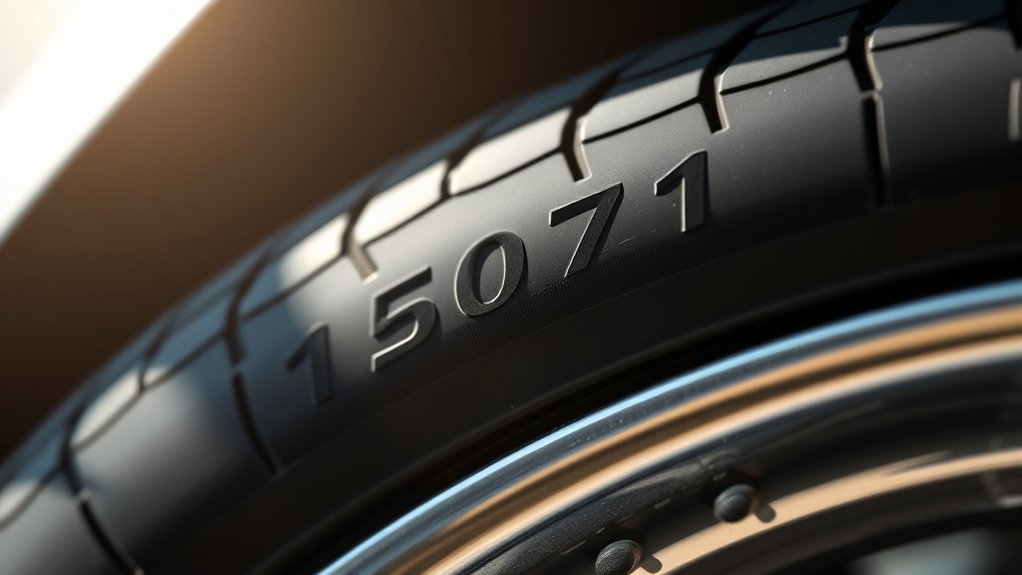
A tire code such as P215/65R16 describes the tire’s dimensions and construction. It identifies the tire currently installed, but it does not prove that the tire is the factory-approved size for every Sonata model year or trim. Use the sidewall for identification and the driver-side placard or owner’s manual for vehicle-specific confirmation.
- P: Passenger-metric tire. Some modern passenger tires omit the P.
- 215: The nominal section width in millimeters.
- 65: The sidewall height is 65% of the tire’s width. In this example, 215 × 0.65 equals about 140 mm for one sidewall.
- R: Radial construction.
- 16: The tire fits a 16-inch-diameter wheel.
Aspect ratio affects sidewall height. A shorter sidewall may produce quicker steering response and a firmer ride, but tire construction, compound, inflation pressure, wheel width, suspension, and overall diameter also affect the result. Do not change tire size or wheel diameter without confirming clearance, load capacity, overall diameter, and vehicle compatibility.
For the vehicle-specific factory size, read the tire label on the driver-side center pillar. Hyundai’s official tire specification and pressure guidance identifies that label as the source of the recommended tire information.
Where Are the Load Index and Speed Rating?
The load index and speed rating appear immediately after the tire size. Together, they are commonly called the tire’s service description. In P215/65R16 95H, 95 is the load index and H is the speed symbol.
- Load index: This numerical code corresponds to the maximum load one properly inflated tire can carry under its rated conditions. A load index of 95 corresponds to 690 kg or 1,521 pounds per tire.
- Speed rating: The letter identifies the tire’s published maximum speed capability under specified test and operating conditions. An H-rated tire corresponds to 130 mph or 210 km/h.
- Replacement rule: For a normal replacement, meet Hyundai’s required load capacity and use the approved tire specification for your model year. Do not assume a lower speed rating is acceptable merely because the tire has the same width and wheel diameter. Some winter or M+S tires may have a lower maximum allowable speed; when that setup is permitted, never exceed the tire’s lower speed limit and follow the Sonata owner’s manual.
- Operating limits: A speed rating does not override speed limits, tire condition, inflation pressure, vehicle load, weather, heat, or road conditions.
The load index is a code rather than the tire’s weight capacity written directly in pounds. Use a recognized load-index chart when decoding it. Hyundai’s tire sidewall labeling guide also explains the size designation and common speed symbols.
[Products Worth Considering]
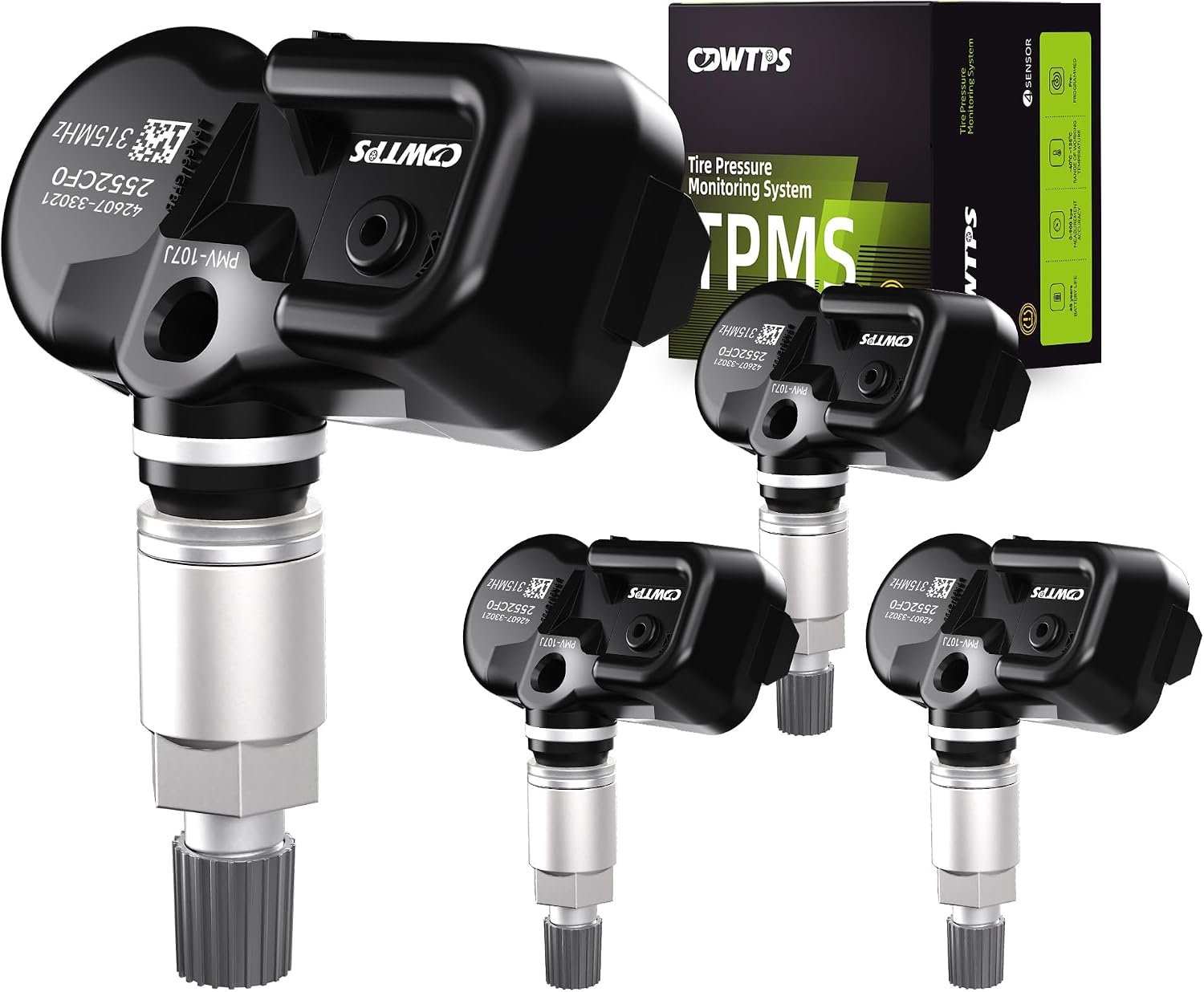
This set of four pre-programmed TPMS sensors is designed as a direct-fit replacement for compatible Toyota, Lexus, and Scion vehicles. It helps restore accurate tire pressure monitoring without sensor programming, and each unit is factory-tested for dependable performance. Built for long service life, these sensors offer a convenient solution for replacing worn or failed tire pressure monitors.

This AstroAI digital tire pressure gauge delivers factory-calibrated readings with dependable ±1 PSI accuracy, helping you keep cars, trucks, motorcycles, and spare tires at the right pressure. Its bright backlit LCD and illuminated nozzle make nighttime checks easy, while the one-button unit switch and auto-off design add convenience and battery efficiency for routine maintenance.

Be ready for roadside emergencies with this comprehensive car safety kit designed to help you handle common breakdown situations quickly and confidently. It includes a portable air compressor for fast tire inflation, jumper cables for dead batteries, and a self-contained emergency set with essential tools and first aid supplies. Built for all-weather preparedness, this kit helps keep drivers, passengers, and families safer on the road.
What Do the Other Sonata Tire Sidewall Markings Mean?
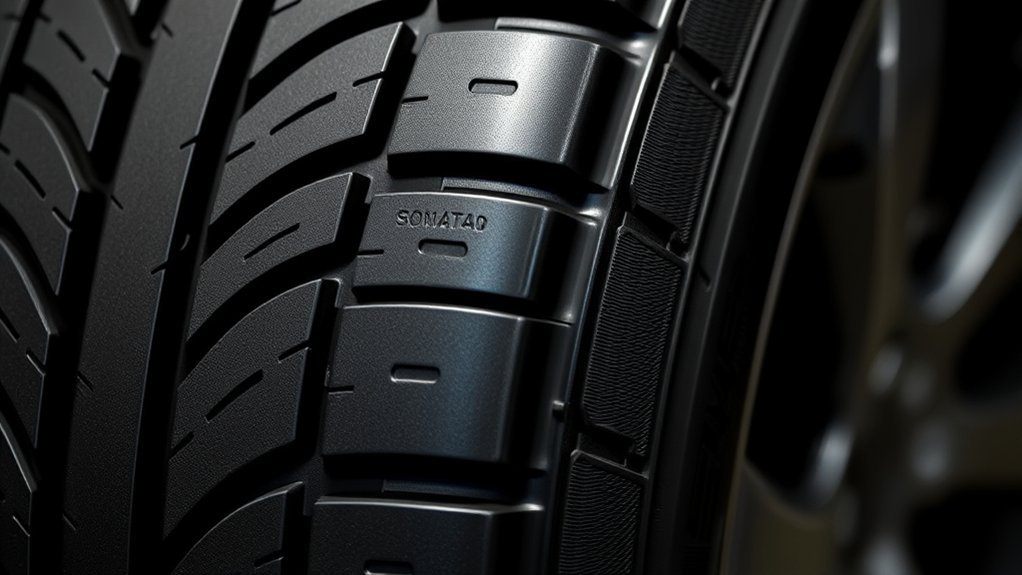
The size and service description are only part of the sidewall. The remaining markings identify the tire’s manufacturer, age, manufacturing information, load and pressure limits, quality grades, construction, and intended conditions.
| Component | Meaning and Safety Use |
|---|---|
| Manufacturer / Model | Identifies the company and tire product line |
| Tire Size | Shows the tire’s width, aspect ratio, construction, and required wheel diameter |
| Load Index | Identifies the rated load capacity of one tire |
| Speed Rating | Identifies the tire’s tested speed category under specified conditions |
| DOT/TIN | Provides manufacturing traceability and a production-date code used for identification and recalls |
| Maximum Load and Pressure | Shows tire limits, not the Sonata’s recommended everyday pressure |
| UTQG Grades | Provides comparative treadwear, wet-traction, and temperature-resistance grades where applicable |
| M+S and 3PMSF | Indicates mud-and-snow labeling or qualification for severe-snow service |
| XL or Reinforced | Identifies a tire designed for a higher load capability at its specified inflation conditions |
| Ply Composition / Materials | Lists construction materials such as polyester, steel, nylon, or other tire-cord materials where applicable |
How Do You Read the DOT Tire Date Code?
Find the full DOT Tire Identification Number, also called the TIN. For modern tires, the final four digits identify the production week and year. A code ending in 1023 means the tire was manufactured during the 10th week of 2023. The complete TIN and date code may appear on only one sidewall, so inspect the inward-facing side if you see an incomplete DOT marking.
The DOT/TIN supports manufacturing traceability and tire recalls. The DOT marking also relates to compliance with applicable U.S. tire-safety requirements. The code does not, by itself, prove that a tire is safe to keep using. Consider its age together with tread depth, cracking, bulges, pressure retention, vibration, storage conditions, and the replacement guidance in your Sonata’s model-year manual.
What Do Treadwear, Traction, and Temperature Mean?
Passenger tires sold in the United States may display Uniform Tire Quality Grading information. Treadwear is a comparative test grade rather than a guaranteed mileage figure. Traction grades describe wet straight-line braking performance under standardized testing. Temperature grades describe the tire’s resistance to heat generation and its ability to dissipate heat under test conditions. These grades can help compare tires, but they do not replace the Sonata’s required size, load index, approved speed specification, or tire type.
What Do M+S, 3PMSF, and XL Mean on a Tire?
M+S means mud and snow and is commonly found on all-season and winter-oriented tires. It is not the same qualification as the Three-Peak Mountain Snowflake (3PMSF) symbol. A tire carrying 3PMSF has met a defined severe-snow traction performance requirement. The U.S. Tire Manufacturers Association explains the severe-snow marking in its snow-tire guidance. XL means Extra Load or reinforced construction and indicates additional load capability at specified inflation conditions. It does not mean a Sonata owner should automatically inflate the tire to the sidewall’s MAX PRESS. Use Hyundai’s placard pressure unless the vehicle or tire manufacturer gives a different approved instruction for the exact setup.
How Do You Check Whether Your Sonata Tires Are Safe?
Check inflation, tread, damage, age, and wear pattern. The sidewall provides useful limits and identification information, but the vehicle placard supplies the Sonata’s recommended cold pressure.
- Check pressure when the tires are cold: Use the PSI on the driver-side Tire and Loading Information label or in the owner’s manual. Do not inflate to the sidewall’s MAX PRESS simply because that number is visible.
- Measure tread depth: Replace a tire when tread reaches 2/32 inch (1.6 mm). Consider earlier replacement if wet or winter traction is no longer adequate for your driving conditions.
- Inspect the tread and both sidewalls: Look for punctures, cracking, cuts, bulges, exposed cords, trapped objects, irregular wear, or repeated pressure loss.
- Check the manufacturing date: Decode the final four digits of the full DOT/TIN. Recent Hyundai Sonata manuals use six years from the manufacturing date as the tire-age replacement point, including the spare. Confirm the wording in your exact model-year manual and follow any more restrictive tire-manufacturer guidance.
- Rotate only as recommended: Hyundai’s instructions and the tire arrangement determine the correct interval and pattern. NHTSA notes that 5,000 to 8,000 miles is a common interval when the vehicle manufacturer recommends rotation.
- Respond to warning signs: Do not continue normal driving on a tire with a sidewall bulge, exposed cords, a deep cut, rapid pressure loss, or severe vibration. Install the spare safely or obtain roadside assistance.
For the correct pressure source, see the site’s door-jamb tire pressure sticker guide. For warning-light diagnosis, use the Hyundai Sonata TPMS guide. TPMS is a warning system and does not replace regular checks with a pressure gauge.
[Products Worth Considering]
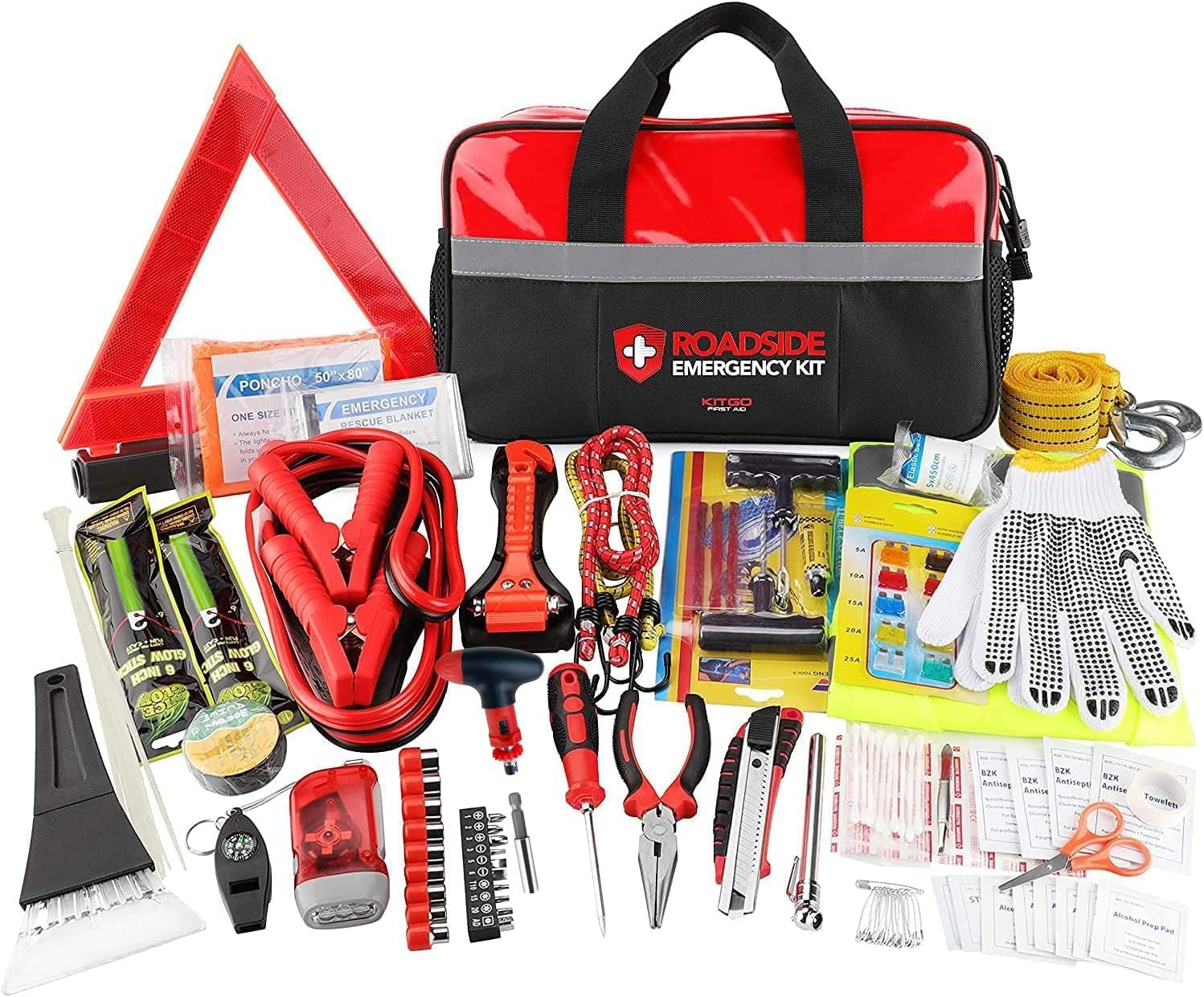
This all-in-one car emergency kit is designed to help drivers handle unexpected roadside problems with confidence. It includes essential tools and medical supplies such as jumper cables, a warning triangle, a flashlight, a shovel, and a screwdriver set, making it useful for cars, trucks, RVs, and outdoor travel. The compact, durable storage bag is easy to keep in a trunk or backseat for quick access when emergencies happen.

These aluminum alloy tire valve stem caps provide durable, corrosion-resistant protection for your vehicle’s valve stems while helping maintain stable tire pressure. The rubber seal design helps block dust, moisture, and debris, reducing the risk of air leakage and valve damage. Easy to install and styled for a clean look, they fit a range of cars, SUVs, trucks, and motorcycles.

This car emergency roadside assistance kit helps drivers handle unexpected breakdowns and roadside incidents with confidence. It includes jumper cables and a tire inflator to support quick, practical solutions in emergencies, while the compact bag keeps everything organized in the trunk. Ideal for new drivers, families, road trips, and seasonal travel, it is a thoughtful and useful safety essential for any vehicle.
How Do You Use the Sidewall When Replacing a Sonata Tire?
Use three sources before buying a replacement: the sidewall identifies what is installed now, the driver-side placard identifies Hyundai’s original tire size and cold pressure, and the model-year owner’s manual provides vehicle-specific limitations and maintenance instructions.
- Read the complete installed size: Record the prefix, width, aspect ratio, construction letter, wheel diameter, load index, and speed rating.
- Compare it with the vehicle placard: Do not assume the installed tire is original, especially on a used Sonata or a car with aftermarket wheels.
- Match the wheel diameter exactly: An R16 tire fits a 16-inch wheel and cannot be installed on a 17- or 18-inch wheel.
- Meet the required load capacity and approved speed specification: Do not reduce the load requirement. Do not assume a lower speed rating is acceptable unless the Sonata’s model-year guidance permits the specific tire type or winter setup, and never exceed the tire’s own speed limit.
- Check the DOT date before installation: A tire sold as unused may still have spent time in storage.
- Confirm tire type and markings: Check whether the vehicle and climate call for an all-season, winter, 3PMSF severe-snow, extra-load, or another approved specification.
- Set pressure from the placard: After installation, inflate the tires to Hyundai’s specified cold pressure rather than the MAX PRESS molded on the tire.
Keep the tires clean enough to reveal cracking, damage, and markings, but do not use harsh chemicals or dressings that conflict with the tire manufacturer’s care instructions. Monitor wear across the full tread width. Center wear, shoulder wear, feathering, or cupping can point to pressure, alignment, balance, suspension, or rotation problems that need diagnosis.
If a damaged tire cannot be used, follow the site’s step-by-step Hyundai Sonata flat-tire guide only when the vehicle is safely away from traffic and on firm, level ground.
[Products Worth Considering]

Designed for Toyota RAV4 models from 2013 through 2018, this three-piece windshield wiper set delivers clear, quiet performance for dependable visibility in changing weather. The precision-fit blades provide streak-free wiping, simple installation, and durable all-season use with reduced wind noise and consistent pressure across the windshield.
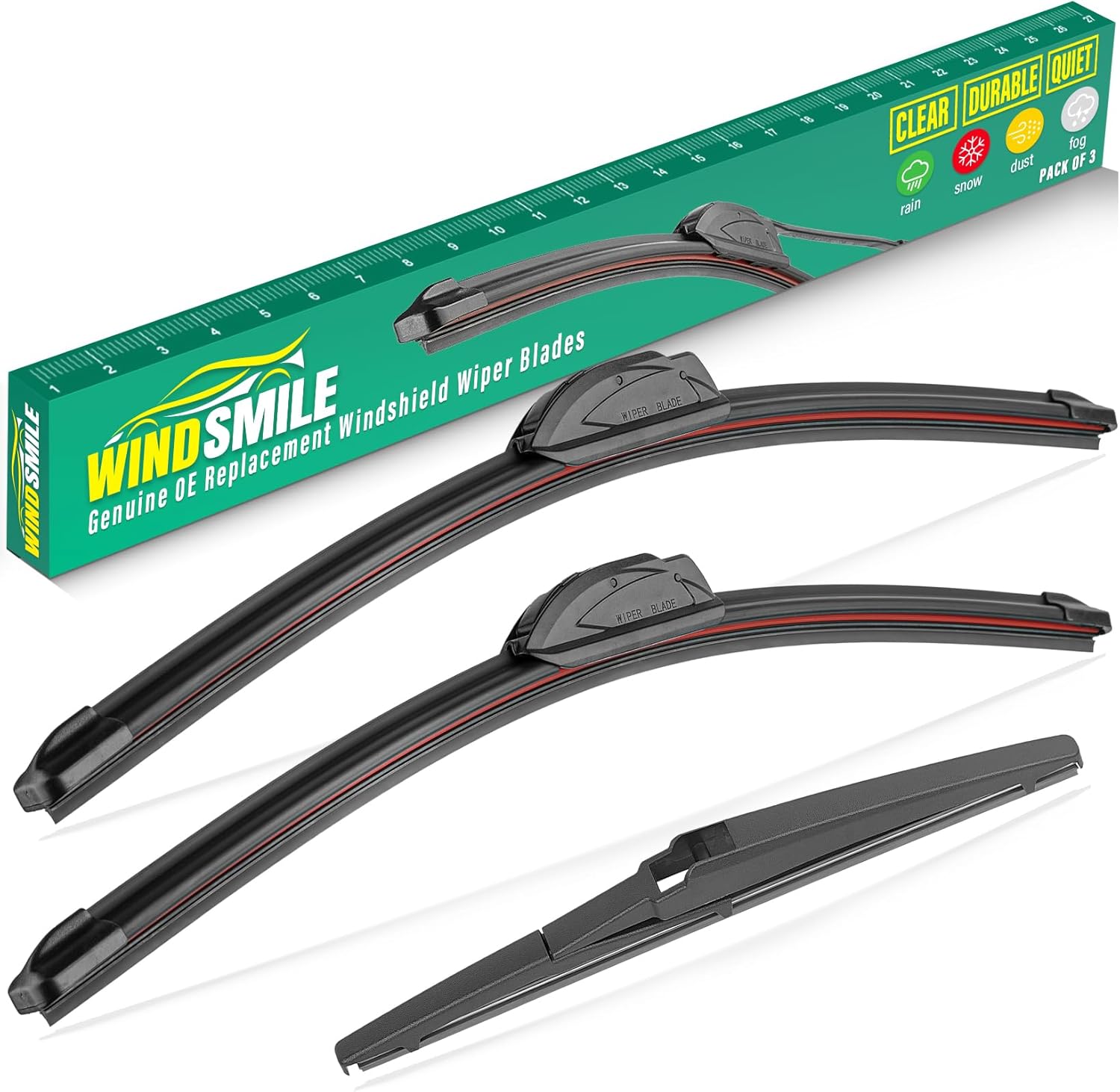
This replacement windshield wiper blade set is designed for Toyota RAV4 models from 2006 to 2012, offering a complete front and rear fit for dependable all-weather visibility. The premium rubber blades help deliver streak-free, quiet wiping while the aerodynamic design reduces wind lift and noise for smoother performance. Built for easy installation and long service life, it is a convenient upgrade for restoring clear driving vision.

This three-piece windshield wiper set is designed for compatible Toyota RAV4 and Highlander models to help deliver clear visibility in everyday driving. The natural rubber blades feature a graphite-treated surface for quiet, smooth wiping performance and reliable weather resistance. Installation is quick and tool-free, making it easy to replace worn blades on the front and rear of your vehicle.
Frequently Asked Questions
How Do You Read a Hyundai Sonata Tire Sidewall?
Start with the size and service description. In P215/65R16 95H, P identifies a passenger-metric tire, 215 is the nominal width in millimeters, 65 is the aspect ratio, R means radial construction, 16 is the wheel diameter, 95 is the load index, and H is the speed rating. Then check the DOT/TIN date code, maximum load and pressure markings, UTQG grades, and weather or extra-load symbols. Use the sidewall to identify the installed tire, then confirm the approved specification on the Sonata’s driver-side placard or in its model-year manual.
Which PSI Number Should You Use for a Hyundai Sonata?
Use the recommended cold PSI on the driver-side Tire and Loading Information label or in the Sonata owner’s manual. The MAX PRESS molded on the tire sidewall is a tire limit, not the normal pressure target for the vehicle. Check pressure when the tires are cold and adjust the front and rear tires to the placard values.
How Do You Read the DOT Date Code on a Tire?
Find the full DOT Tire Identification Number and read its final four digits. The first two digits are the manufacturing week, and the last two are the year. A code ending in 1023 means the tire was produced during the 10th week of 2023. The full date code may be molded on only one sidewall.
Can You Use a Different Load Index or Speed Rating?
Do not use a tire that falls below Hyundai’s required load capacity. For the speed rating, use the approved specification for your Sonata’s model year and do not assume a lower rating is acceptable simply because the tire size matches. Some approved winter or M+S setups may have a lower maximum allowable speed; if so, follow the owner’s manual and never exceed the tire’s lower speed limit. A higher rating does not mean you should change the placard inflation pressure.
What Do M+S, 3PMSF, and XL Mean on a Tire?
M+S means mud and snow. The Three-Peak Mountain Snowflake, or 3PMSF, is a separate marking showing that the tire met a defined severe-snow traction requirement. XL means Extra Load or reinforced construction and identifies additional load capability at specified inflation conditions. None of these markings replaces Hyundai’s vehicle placard when choosing the Sonata’s normal cold tire pressure.
Conclusion
A Sonata tire sidewall tells you what tire is installed, how it is constructed, its load and speed category, winter or extra-load markings, and when it was manufactured. It does not replace the driver-side vehicle placard. Use the sidewall to identify the tire, the placard to confirm Hyundai’s approved size and cold PSI, and the model-year owner’s manual for replacement and winter-tire exceptions. Have any bulge, exposed cord, deep cut, rapid pressure loss, or severe vibration inspected immediately.
Sources
- Hyundai Owner’s Manual: Tire Sidewall Labeling
- NHTSA TireWise: Tire Safety, Maintenance, and Aging
- Tire Industry Association: Reading a Tire Sidewall
- U.S. Tire Manufacturers Association: Snow Tire Definition
- Michelin: Tire Markings and Sidewall Codes