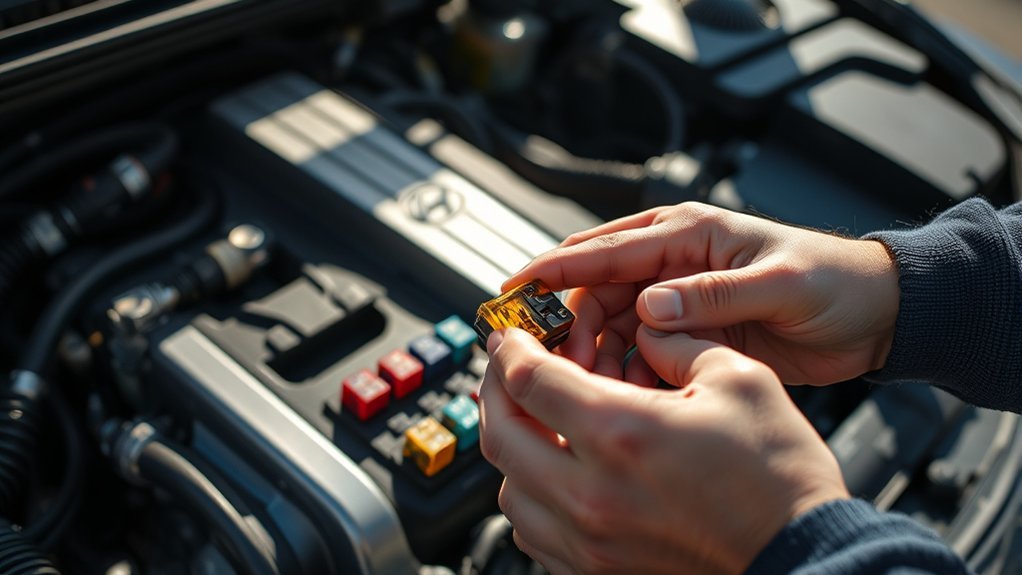
A blown fuse in a 2015 Hyundai Sonata can shut down lights, power outlets, windows, audio equipment, or other electrical functions. Replacing a standard plug-in fuse is usually straightforward, but the important parts are identifying the correct circuit, matching the exact fuse rating and type, and knowing when a repeat failure means you should stop troubleshooting and get the circuit inspected.
Quick Answer
To replace a blown fuse in a 2015 Hyundai Sonata, turn the engine and all electrical switches off, disconnect the negative battery cable, identify the correct fuse from the panel label, remove it with the fuse puller, and install a fuse with the exact same amperage rating. If it blows again, stop and diagnose the circuit.
Key Takeaways
- Use the fuse-panel label on your actual Sonata to identify the correct fuse and amperage.
- Always replace a blown fuse with the same amperage rating and matching physical fuse type.
- Hyundai’s 2015 Sonata manual instructs owners to turn the engine and switches off and disconnect the negative battery cable before replacing a blown fuse.
- Never substitute wire, foil, a metal object, or a higher-amperage fuse.
- If the new fuse blows again, stop using that circuit and have the underlying electrical fault diagnosed.
At a Glance
| Time Required | About 10–20 minutes for a standard fuse once the correct circuit is identified; diagnosis may take longer. |
| Difficulty | Easy for a normal plug-in fuse; professional help is recommended for main/multi-fuses or repeated failures. |
| Tools Needed | Fuse puller, fuse-panel label or owner’s manual, replacement fuse, flashlight, and an appropriate wrench/socket for the negative battery terminal if required. |
| Cost | Usually limited to the cost of the correct replacement fuse unless an underlying electrical problem requires diagnosis or repair. |
Warning: Hyundai’s 2015 Sonata owner’s manual says to turn the engine and all switches off and disconnect the negative battery cable before replacing a blown fuse. Never install a higher-rated fuse, wire, aluminum foil, or another metal substitute. An incorrect fuse can damage wiring and create a fire risk.
Understanding Fuse Functions in Your Hyundai Sonata
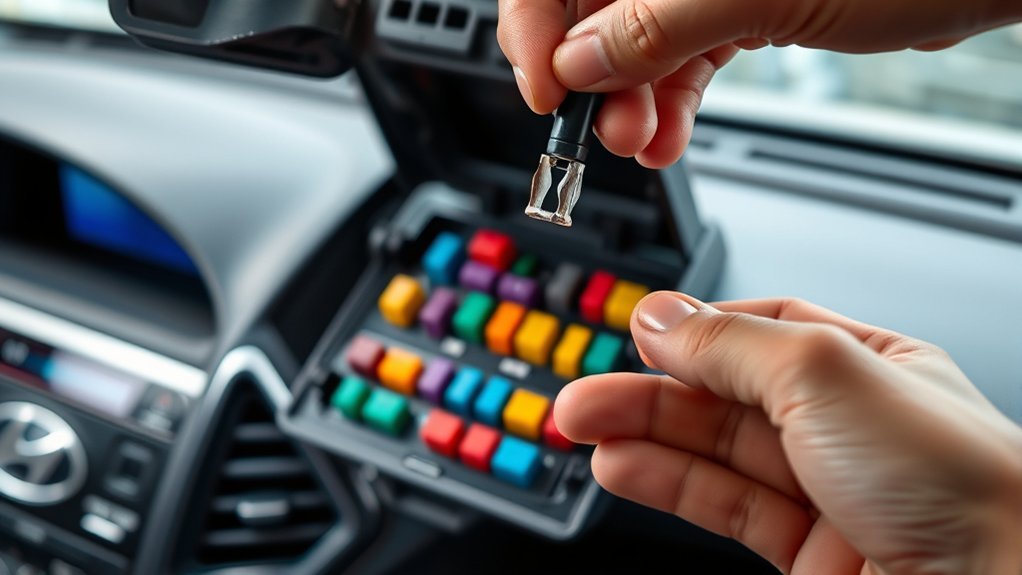
Fuses in your Hyundai Sonata protect electrical circuits from excessive current. Each fuse has a specific amperage rating. When current rises beyond what the protected circuit is designed to handle, the fuse element opens and interrupts the circuit before the overload can cause more extensive wiring or component damage.
Hyundai’s 2015 Sonata owner’s manual explains that the car uses different fuse arrangements for lower- and higher-current circuits. The vehicle has a driver’s-side fuse panel and an engine-compartment fuse panel near the battery, with some configurations using additional high-current fuse arrangements. Because equipment varies by trim and powertrain, always use the label inside your own fuse-panel cover as the final reference.
A fuse normally does not need routine replacement. You usually inspect one when a protected light, accessory, control, or group of related electrical functions stops working. If a replacement fuse opens again, the fuse itself is not the root problem; the circuit may have a short, overload, damaged component, or wiring fault that needs diagnosis.
Note: The 2015 Sonata Hybrid has a different electrical layout from the conventional Sonata. If you have a Hybrid, verify the procedure and fuse locations in the manual for that exact vehicle rather than relying on a gasoline-model diagram.
Identifying a Blown Fuse: Signs and Symptoms for Fuse Replacement
Inspect the appropriate fuse when a light, accessory, control, power outlet, audio function, or other electrical circuit suddenly stops working. If several components on the same protected circuit fail at once, a fuse becomes a stronger possibility, although wiring, relays, switches, modules, or the components themselves can produce similar symptoms.
Common Electrical Failures
Typical symptoms that can lead you to inspect a fuse include non-functioning convenience lights, turn signals, power outlets, audio equipment, or other accessories. A single failed bulb does not automatically mean the fuse is bad; if only one lamp is out while others on the circuit still work, inspect the bulb and connection as well.
If multiple related components stop working at the same time, use the fuse-panel label to identify the circuit that protects them. Hyundai specifically advises checking the appropriate circuit fuse when lights, accessories, or controls do not work.
Visual Inspection Techniques
After safely de-energizing the vehicle and removing the suspected fuse, inspect the element through the fuse body. A blown fuse usually has a melted or broken internal metal strip. Dark discoloration or visible heat damage can also indicate failure.
Do not identify a replacement by color alone. Fuse colors commonly correspond to amperage, but you should read the number stamped on the fuse and confirm the rating and physical type against the panel label.
If the internal element is difficult to see, a continuity or resistance check with a suitable meter can provide a more certain answer. Many automotive blade fuses also provide test points that allow electrical checking. Perform resistance or continuity testing only with the circuit safely de-energized and according to the meter manufacturer’s instructions.
Pro Tip: Before pulling several fuses at random, photograph the fuse-panel label and identify the circuit associated with the failed feature. This reduces unnecessary removal and helps prevent putting a fuse back in the wrong position.
How to Locate the Fuse Boxes in Your Vehicle
The conventional 2015 Hyundai Sonata has two primary fuse-panel areas owners commonly access: the driver’s-side instrument-panel area and the engine compartment near the battery. Hyundai warns that fuse-panel descriptions can differ with equipment, so refer to the label inside the cover of your actual vehicle before removing anything.
| Fuse Panel | How to Access It | Typical Circuits |
|---|---|---|
| Driver’s-Side Instrument Panel | Open/remove the fuse-panel cover on the driver’s-side panel bolster. | Interior and convenience circuits, power-window/accessory circuits, modules, outlets, and other cabin functions depending on equipment. |
| Engine Compartment | Locate the fuse/relay box near the battery and release the cover tabs. | Engine-management, starting, blower, horn, wiper, power-distribution, and other higher-current circuits depending on configuration. |
Inside each cover, look for the fuse/relay label. That label identifies the fuse name and amperage for the vehicle in front of you. Do not depend solely on a generic internet diagram, because optional equipment and powertrain variations can change what appears in a particular slot.
If you need vehicle-specific documentation, Hyundai provides a Digital Owner’s Manual portal, while MyHyundai provides manual and warranty resources that can be matched to a vehicle.
[Products Worth Considering]

This assorted blade fuse kit provides a wide range of clearly color-coded replacements to help protect vehicle electrical systems from overloads and short circuits. It includes standard, mini, and low-profile mini fuses with amperages from 2A to 40A, making it a versatile choice for cars, RVs, boats, trucks, and other marine or automotive applications. A fuse puller is included for easier removal and replacement when needed.
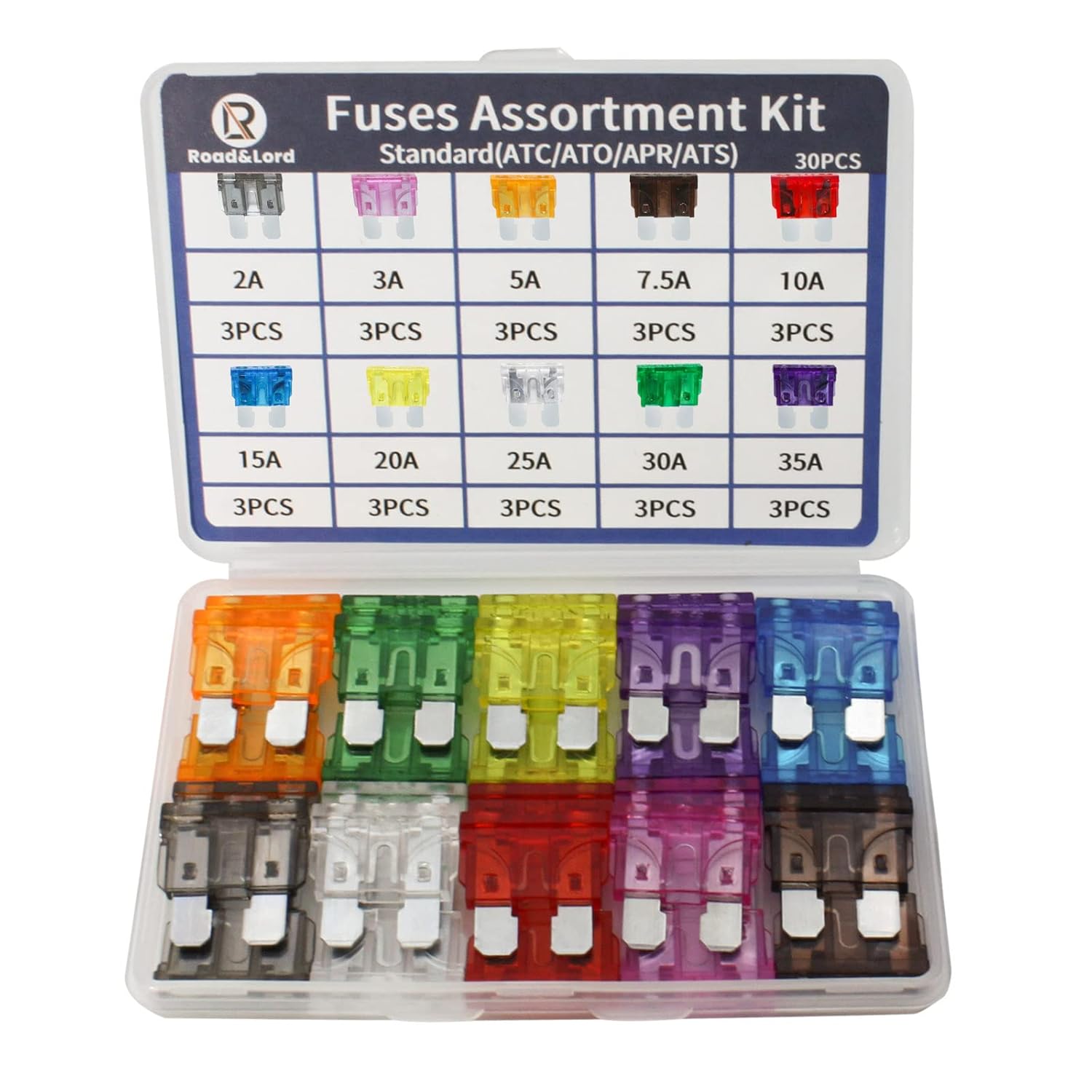
This standard blade fuse assortment kit provides a convenient selection of common amp ratings to help protect vehicle electrical systems from overloads, short circuits, and wiring damage. With transparent, color-coded housings and clearly marked ratings, it makes blown fuse replacement fast and easy for cars, trucks, boats, RVs, and other DC applications. The durable compact case keeps the fuses organized for reliable storage and quick access when needed.

This 12V relay box provides six organized relay slots and six fuse positions, helping you build cleaner, safer electrical setups for vehicles and marine systems. Pre-wired, color-coded 12 AWG wiring simplifies installation while the sealed cover and gasket help protect against dust and splashing water in demanding environments. It is a versatile solution for controlling lights, pumps, motors, and other accessories in automotive, truck, RV, or boat applications.
How to Remove and Replace Fuses
Once you have identified the correct fuse, use the following procedure for a normal removable fuse. Higher-current main or multi-fuse assemblies may require a different procedure and are better left to a qualified technician if you are not experienced with automotive electrical work.
- Park safely. Put the vehicle in Park, apply the parking brake, turn the engine off, remove the key if applicable, and switch all electrical accessories off.
- Disconnect the negative battery cable. Hyundai’s 2015 manual includes this precaution before replacing a blown fuse. Use the correct battery-service procedure and tool for your vehicle.
- Open the correct fuse-panel cover. Use the panel label to locate the fuse associated with the failed circuit.
- Remove the suspected fuse. Pull it straight out with the fuse puller supplied in the engine-compartment fuse panel. Do not pry it out with a screwdriver or another metal object.
- Inspect or test the fuse. Look for a melted or broken element. If necessary, verify continuity with a suitable tester or meter.
- Confirm the replacement. Match the physical fuse type and use the exact same amperage rating as the original circuit requires.
- Install the new fuse. Push it straight into the correct slot until it is fully seated. If it feels loose in the terminals, do not bend the fuse blades to compensate; have the fuse-panel connection inspected.
- Reinstall the panel cover securely. The engine-compartment cover should be fully seated to help prevent water and contamination from entering the fuse box.
- Reconnect the battery and test the circuit. Restore the negative battery connection correctly, then test the affected electrical feature.
If disconnecting the battery resets stored features such as the clock, audio settings, windows, or other convenience systems, restore them according to your owner’s manual.
Note: The 2015 Sonata also has a fuse switch in the driver’s-side fuse area. Hyundai says this switch should remain in the ON position while driving. If it is switched off, some electrical functions may stop operating or require resetting.
[Products Worth Considering]

This automotive fuse assortment kit provides a convenient way to replace blown fuses across a wide range of vehicles and equipment. With multiple common amperage ratings, clear color-coded identification, and included fuse pullers, it helps make electrical maintenance quicker and easier for cars, trucks, RVs, marine applications, and more.

This car fuse assortment kit provides a handy mix of micro, mini, and standard blade fuses to help replace blown fuses across a wide range of vehicles and equipment. With multiple current ratings, color-coded identification, and an included puller, it is designed to make emergency repairs and routine maintenance faster and easier. It is a practical backup solution for cars, RVs, trucks, boats, motorcycles, and more.

This 6-way marine fuse block helps protect branch circuits from short circuits and overloads while keeping automotive and marine wiring organized. It includes LED blown-fuse indicators, a transparent cover, and label stickers for easier circuit identification. Designed for 12V to 36V systems, it supports dependable use in boats, cars, trucks, and other electrical setups.
How to Troubleshoot Electrical Problems After Replacing Fuses
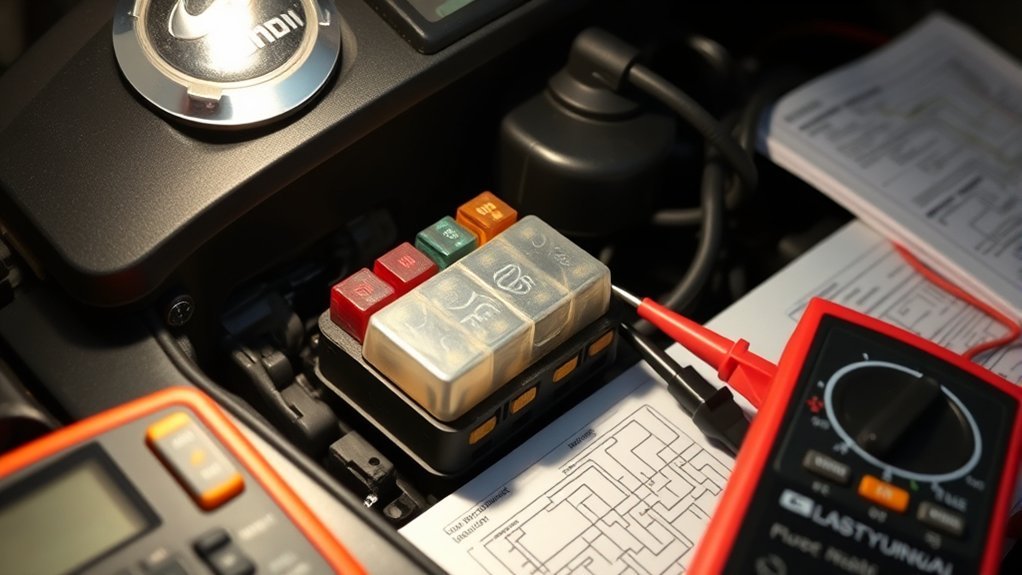
After replacing the blown fuse, test the affected feature. If it works normally and the replacement fuse remains intact, reinstall the cover and continue monitoring the circuit.
If the component still does not operate, confirm that you replaced the correct fuse and that the new fuse is seated tightly. If the fuse is good, the fault may involve another fuse panel, a relay, bulb, connector, switch, ground, wiring harness, or the electrical component itself.
Warning: If the replacement fuse blows again, do not install a larger fuse and do not keep feeding the circuit new fuses. A repeat failure indicates an electrical problem that can include a short circuit or overloaded component. Stop using the affected system and have the circuit properly diagnosed.
Also stop troubleshooting and seek professional service if you find melted fuse-panel plastic, scorched terminals, damaged wiring, unusual heat, smoke, or a burning smell. Those signs can indicate a high-resistance connection or serious electrical fault rather than a simple failed fuse.
If several electrical symptoms persist, write down which functions fail, which fuse opened, its amperage, and when the failure occurs. That information can help a technician isolate the fault more quickly.
For a persistent safety-related electrical issue, you can also check the vehicle’s 17-character VIN using the NHTSA recall lookup to see whether an unrepaired safety recall applies to your specific vehicle.
Essential Maintenance Tips for Fuse Longevity
Automotive fuses are not normally replaced according to a scheduled maintenance interval. Instead, focus on protecting the electrical system and responding correctly when a circuit stops working.
- Inspect the appropriate fuse when a protected electrical function fails rather than routinely removing every fuse.
- Always replace a blown fuse with the exact amperage specified for that circuit.
- Match the physical fuse type as well as the amperage rating.
- Keep fuse-panel covers correctly installed, especially in the engine compartment.
- Do not force a fuse into a damaged or loose terminal.
- Investigate recurring fuse failures instead of treating them as normal wear.
- Check a failed bulb, connector, or component when only one item on a protected circuit stops working.
Using a properly rated fuse preserves the protection engineered into the circuit. A larger fuse may allow wiring or components to overheat before the fuse opens, which is why increasing the amperage is never an acceptable troubleshooting method.
Emergency Fuse Replacement: What You Need to Know
If a fuse fails and you do not have a spare, Hyundai’s 2015 Sonata manual allows a same-rated fuse to be borrowed temporarily from a circuit you do not need to operate the vehicle. The replacement must have the same amperage and compatible physical type.
Choose only a genuinely non-essential circuit. Do not borrow a fuse from airbags, ABS/braking systems, engine-management circuits, steering-related systems, required exterior lighting, or another safety-critical function. Replace the borrowed fuse as soon as possible.
For future emergencies, keep a small set of quality automotive replacement fuses only after confirming the fuse types and amperages used by your particular Sonata. Do not assume that a generic “mini,” “low-profile mini,” or other blade-fuse assortment automatically matches every position in the car.
If the fuse you need is part of a high-current main or multi-fuse assembly rather than a normal removable blade-style fuse, avoid improvising a roadside repair. Those assemblies may require battery disconnection, fastener removal, and additional service procedures.
A fuse that blows twice is a warning, not a request for a higher-amperage fuse. Find the electrical fault before continuing to use the circuit.
[Products Worth Considering]
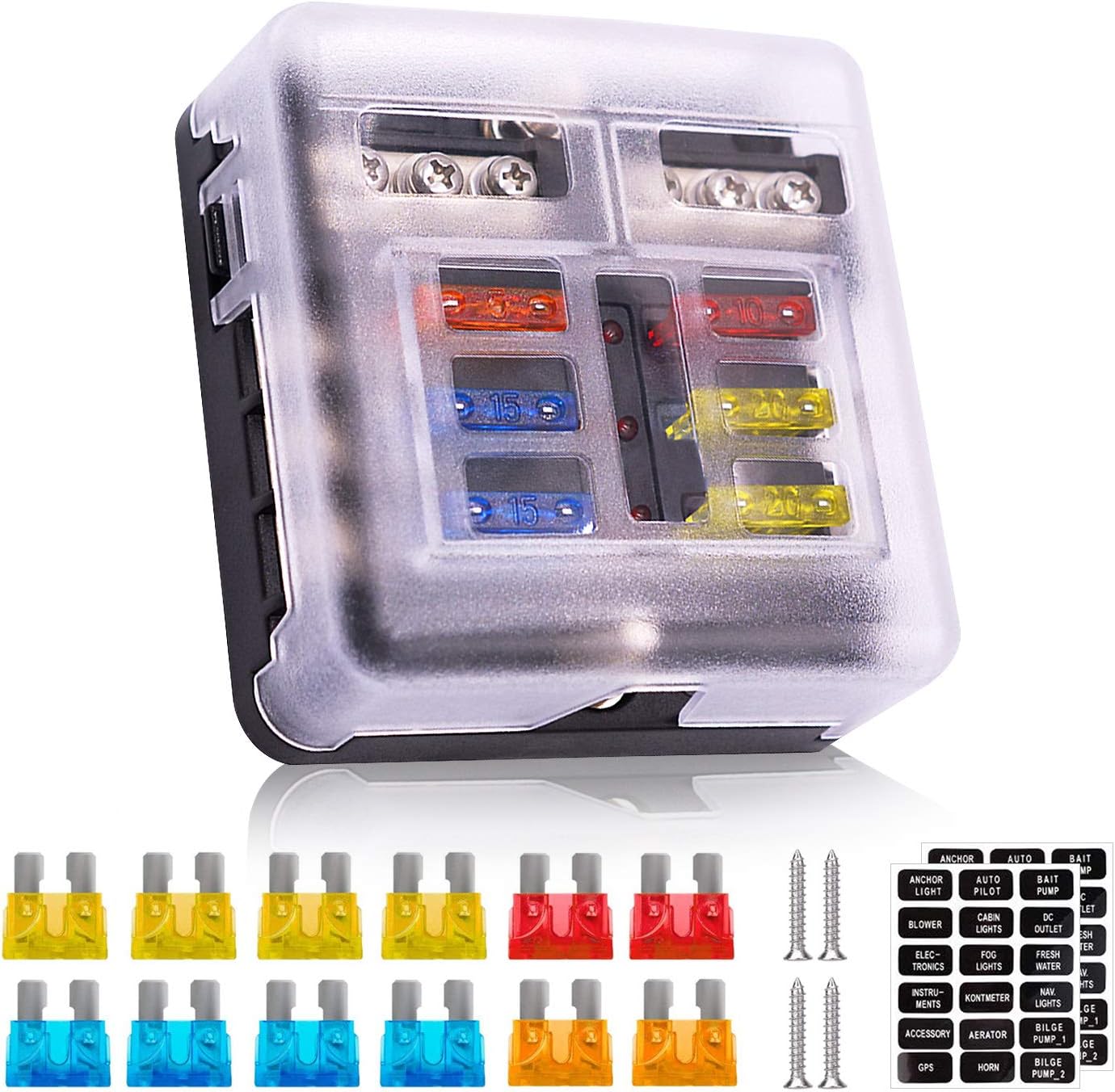
This 6-way fuse block provides organized circuit protection for marine, automotive, boat, truck, and other 12V or 24V electrical systems. Built with a fire-resistant housing and a ground bus, it helps keep wiring neat while the LED indicators quickly show when a fuse has blown for fast troubleshooting. It includes assorted blade fuses, labels, and mounting screws for an easier installation.

This 6-way fuse block helps organize and protect low-voltage wiring in vehicles, boats, and RVs while making blown fuses easy to spot with red LED indicators. It is built from fire-resistant PBT material for dependable insulation, heat resistance, and added safety. With included blade fuses, labels, and mounting hardware, it offers a clean, convenient solution for electrical repairs and upgrades.

The V500 Pro is an all-in-one automotive electrical diagnostic tool that combines circuit testing, wire tracing, oscilloscope analysis, multimeter functions, injector testing, relay and fuse checks, and component activation in one device. It helps technicians and DIY users quickly find open circuits, short circuits, broken wires, and current leaks while reducing disassembly and guesswork. With a rotating screen, built-in flashlight, and adjustable low-voltage power supply, it is designed to speed up troubleshooting in tight and low-light work areas.
Frequently Asked Questions
Can You Just Replace a Blown Fuse?
Yes, if it is a normal removable fuse and you use the correct procedure. Turn the vehicle and electrical switches off, follow Hyundai’s battery-disconnection precaution, identify the circuit from the panel label, and install the same fuse type and amperage. If the replacement blows again, stop and diagnose the circuit instead of installing another fuse.
How Do You Replace a Fuse in a Hyundai Sonata?
Locate the correct driver’s-side or engine-compartment fuse panel, identify the fuse from the cover label, safely de-energize the vehicle, remove the fuse with the supplied fuse puller, inspect it, and push a new fuse of the exact same rating into the same position. Reinstall the cover securely and test the affected circuit.
What Precautions Must Be Taken When Replacing a Blown Fuse?
Turn the engine and all electrical switches off, follow Hyundai’s instruction to disconnect the negative battery cable, use the supplied fuse puller rather than a metal screwdriver, and replace the fuse only with the same amperage rating. Never substitute foil, wire, or a higher-capacity fuse.
What Type of Fuse Does a 2015 Hyundai Sonata Use?
The Sonata uses more than one fuse arrangement and rating depending on the circuit and vehicle configuration. Do not buy a replacement based only on a generic fuse-type description. Check the fuse-panel label and the removed fuse, then match both its physical type and amperage rating.
Why Does My New Fuse Keep Blowing?
A replacement fuse that opens again usually means the protected circuit still has an electrical problem, such as a short, overload, damaged wire, faulty motor, or failing component. Do not install a larger fuse. Stop using that circuit and have the underlying fault diagnosed.
Can I Use a Higher-Amperage Fuse Temporarily?
No. Hyundai specifies replacement with the same rating. A higher-capacity fuse can allow excessive current to flow through wiring and components, increasing the risk of damage or fire.
How Can I Tell if a Fuse Is Blown When It Looks Normal?
Remove the fuse safely and inspect the internal element carefully under good light. If the break is not visible, use a suitable continuity or resistance tester with the circuit de-energized. A fuse can sometimes have a break that is difficult to see through the plastic housing.
Conclusion
Replacing a blown fuse in a 2015 Hyundai Sonata is a manageable job when you follow the vehicle’s fuse-panel label and use the correct safety procedure. Switch the vehicle off, disconnect the negative battery cable as Hyundai directs, remove the failed fuse with the proper puller, and install the exact same amperage and fuse type. If the new fuse blows again, treat that as evidence of an electrical fault rather than normal fuse wear. Stop using the affected circuit and have the cause diagnosed before replacing anything else.
Sources
- Hyundai 2015 Sonata Owner’s Manual — fuse locations, replacement procedure, amperage requirements, fuse-switch guidance, and safety precautions.
- Hyundai Digital Owner’s Manual — current manufacturer resource for finding vehicle-specific manual information.
- MyHyundai Manuals & Warranties — Hyundai USA resource for matching documentation to a specific vehicle/VIN.
- National Highway Traffic Safety Administration Recall Lookup — VIN-based lookup for unrepaired safety recalls and related vehicle-safety information.
- Littelfuse Automotive Blade Fuse Technical Information — automotive fuse construction, visual inspection features, and electrical test points.