
What’s in This Article
- Before You Begin
- Fold the 60/40 Rear Seats: Quick Steps
- Cargo Floor Heights: Lowered vs. Normal
- How to Load Long, Tall, and Heavy Items
- How to Secure Cargo with Tie-Downs and Straps
- Packing Order and Balance Tips for Maximum Space
- Console vs. Cargo Area: What to Stow Where
- Common Mistakes to Avoid
- Frequently Asked Questions
For most 2019-2025 Toyota RAV4 models, you fold the 60/40 rear seats by pulling the release lever at the top of each seatback, guiding the section forward, and checking that it locks before you drive. The cargo area can handle far more once the rear seats are down, but exact room depends on model year, trim, spare-tire setup, and cargo-floor position. Use the lower floor for tall gear, keep heavy items low and forward, and strap every loose item to the factory tie-down points.
Quick Answer
Pull the release lever at the top of the RAV4 rear seatback, lower that 60/40 section forward, and confirm the seatback locks before driving. This guide focuses on 2019-2025 RAV4 and RAV4 Hybrid cargo layouts. For 2026 and newer redesigned models, check your owner’s manual before relying on exact cargo dimensions.
Key Takeaways
- Fold either 60/40 section on its own, so you can keep one rear passenger seat open while carrying long gear.
- Common 2019-2025 RAV4 cargo specs list up to 37.6 cu ft behind the rear seats; folded-seat capacity should be checked against your exact model year.
- RAV4 Plug-in Hybrid models offer less cargo room than gas and standard Hybrid trims because the larger battery takes up floor space — confirm your trim’s exact cubic-foot figure before relying on the numbers above. [VERIFY: current RAV4 Plug-in Hybrid cargo cu ft]
- Use the lowered cargo floor for taller loads, but measure your own opening before hauling furniture, boxes, or equipment.
- Place heavy gear low, centered, and forward to help keep steering and braking predictable.
- Clip straps to the factory tie-down rings, tighten them firmly, and re-check tension after your first stop.
Before You Begin
You don’t need tools to fold the RAV4 rear seats. Clear loose items from the rear seat, cargo floor, and footwells first, so nothing gets pinched under the seatback. Remove or adjust child seats, cargo mats, and tall headrests if they block the seatback from folding cleanly.
Pick your cargo floor height before loading. Keep straps, moving blankets, and a tape measure nearby if you’re carrying long, tall, or heavy items. If your RAV4 is a different generation, or a 2026 and newer redesigned model, confirm the folding procedure and cargo limits in your owner’s manual.
Fold the 60/40 Rear Seats: Quick Steps
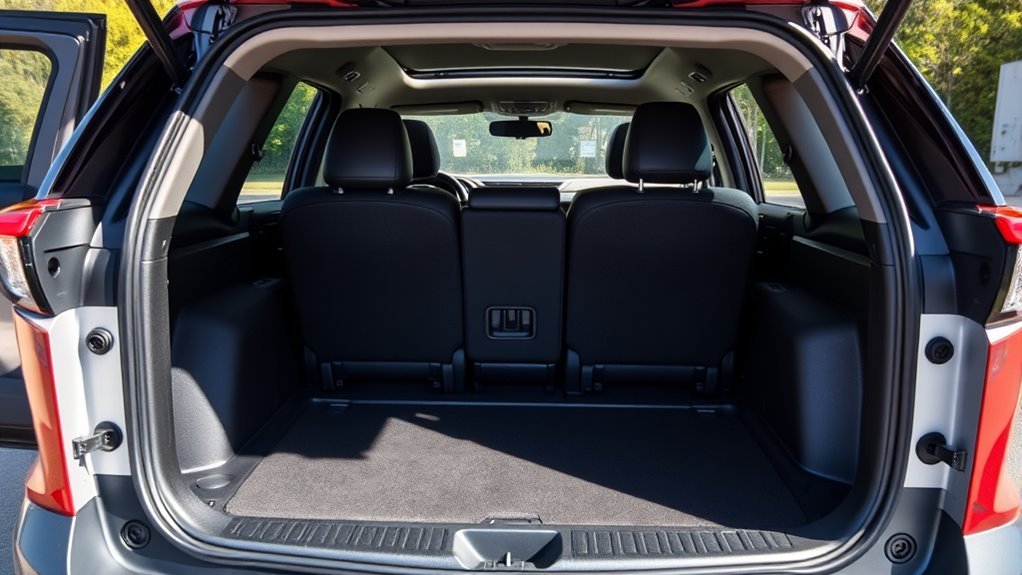
Locate the release levers at the top of each rear seatback. Pull the lever for the section you want to fold, then guide the seatback forward until it lies flat. Each 60/40 section folds independently, so you can carry one passenger and longer gear at the same time.
- Clear the area. Move bags, mats, and loose items away from the rear seat hinges and cargo floor.
- Choose the section. Fold the 40% side for narrow items or the 60% side for wider gear.
- Pull the release lever. Keep one hand on the seatback so it doesn’t drop suddenly.
- Lower the seatback. Guide it down until the surface is stable and close to flat.
- Check the lock before driving. Raise and latch any seatback you plan to use for a passenger.
Warning: Confirm every passenger seatback clicks firmly into its locked position before driving. An unlatched seat can move during hard braking and injure passengers.
Fold one side first if you need partial seating, then fold both sections for the largest cargo footprint. Before loading, press gently on the folded seatback and cargo floor to check for wobble, trapped straps, or items hidden under the hinge area. Some model years use a color-coded pop-up tab near the seatback hinge as a visual lock indicator [VERIFY: confirm the exact indicator color/mechanism for your model year against the owner’s manual] — get familiar with your RAV4’s indicator before you need to rely on it in a hurry. The seats also fold flat enough that many owners use the space for car-camping; if you’re setting up to sleep back there, a folded blanket or foam mat over the small step between the seatback and cargo floor (see the FAQ below) makes the surface noticeably more comfortable.
Cargo Floor Heights: Lowered vs. Normal
The RAV4 cargo floor can sit in different positions on many trims. Use the setting that matches your load before you start packing, because changing it after loading usually means unloading the cargo area again.
Note: Cargo-floor height, spare-tire packaging, and folded-seat height can vary by trim and model year. Treat online measurements as planning estimates, then measure your own RAV4 before loading anything that barely fits.
[Products Worth Considering]

This universal rear cargo net helps keep trunks, cargo areas, and truck beds neat by securing groceries, tools, luggage, and other loose items. Its stretchable double-layer mesh and reinforced hooks provide reliable hold and easy installation, making it a practical storage solution for SUVs, jeeps, trucks, and everyday travel.

This all-weather cargo liner is designed to fit Toyota RAV4 hybrid and non-hybrid models from 2019 to 2025, helping protect the rear cargo area from dirt, spills, scratches, and everyday wear. Its textured anti-slip surface and raised edges add extra coverage and keep luggage more secure, while the waterproof TPE construction makes cleanup simple with a quick rinse.

This custom-fit windshield sun shade is designed for Toyota RAV4 models from 2013 to 2026, helping block sunlight and reduce interior heat for a more comfortable cabin. Its double-layer construction reflects UV rays and protects your dashboard and seats, while the foldable design makes it easy to install, remove, and store. Made with eco-friendly, odor-free materials, it offers a practical everyday solution for parking, camping, and hot-weather driving.
Lowered Cargo Floor
The lowered cargo floor gives you more vertical room for coolers, storage bins, tools, pet crates, and tall boxes. Use it when height matters more than a perfectly even transition from the folded rear seats. Add a blanket or mat under sharp items so they don’t dig into the floor panel.
Normal Cargo Floor
The normal floor position usually works best for groceries, luggage, sports bags, and everyday cargo. It can make the load surface easier to reach and may reduce the step between the cargo floor and the folded seatbacks. Use a tape measure across the tailgate opening before loading anything wide or rigid.
How to Load Long, Tall, and Heavy Items
Fold the 60/40 seats to match your load, choose the floor height, and plan the tie-down path before cargo goes in. Heavy items should sit low, centered, and as far forward as practical, while lighter soft bags can fill the gaps around them.
[Products Worth Considering]

This custom-fit cargo liner with backrest mat is designed for Toyota RAV4 models from 2019 to 2025, including hybrid versions, for complete trunk coverage without trimming. Made from durable TPE material, it helps protect against mud, snow, spills, and everyday wear while staying flexible in extreme conditions. The raised edges, groove channels, and anti-slip texture make it a practical all-weather solution that is easy to clean and built for long-lasting use.

These all-weather front floor mats are designed to help protect your vehicle’s interior from spills, mud, snow, and everyday debris. The trimmable universal fit makes them easy to customize for a wide range of cars, SUVs, trucks, and vans, while the no-slip backing and contoured design help keep them in place. Odorless construction adds comfort and convenience for daily driving.

Cartman 12-foot long-by-1-inch wide lashing strap in 6-pack
Fold the 60/40 for Length
Fold the larger 60% seat section when you need more width for long gear, or fold the smaller 40% side when you want to keep more seating. Slide long items in straight, protect the seatback with a blanket, and avoid resting hard cargo against the front seats.
Use the Lowered Floor for Bulk
Use the lowered floor for bulky items that need extra height. Keep tall pieces aligned with the vehicle, not leaning across the cabin. If the item reaches near the liftgate glass, close the liftgate slowly the first time and stop if you feel resistance.
| Configuration | Best Use | Check Before Driving |
|---|---|---|
| 40% side folded | Narrow long items plus two rear seats | Passenger seatback locked |
| 60% side folded | Wider gear plus one rear seat | Load centered and strapped |
| Both sections folded | Largest cargo footprint | Nothing can slide into the front seats |
| Lowered cargo floor | Tall bins, crates, and bulky boxes | Liftgate clears the load |
Secure with Tie-Downs
Attach straps to the factory tie-down points and cinch firmly to keep long or heavy items from shifting. Do not hook straps to plastic trim, the cargo cover, child-seat hardware, or seat latches unless your owner’s manual allows it. Use straps with a visible working load rating for heavy gear, and replace frayed straps before your next trip.
How to Secure Cargo with Tie-Downs and Straps
Clip cargo straps to the factory tie-down rings, route the straps over or around the load, then tighten until the item cannot slide by hand. A strap should control forward movement, side movement, and bounce. For boxy items, cross two straps in an X pattern when the shape allows it. Unsecured cargo isn’t just a packing inconvenience: the National Highway Traffic Safety Administration reports that objects falling from vehicles kill about 850 people and injure almost 19,000 more every year in the U.S., with passenger vehicles involved in roughly 73% of those crashes — see NHTSA’s load-securement guidance for the full breakdown.
Pro tip: Re-check strap tension after your first stop. Loads settle slightly on the road, and straps can loosen in the first few miles.
Fold the 60/40 rear seats as needed and use the tie-downs closest to the load. Place heavier objects low and toward the front of the cargo area to maintain balance. Keep the rear camera, mirrors, and driver sightlines clear whenever possible.
[Products Worth Considering]

STANDARD RATCHET STRAPS - Locking tie down straps with a precision manual crank-and-release mechanism, anodized ratchet, and positive locking system. Feed the webbing, crank it tight, and release with a single tab.
Packing Order and Balance Tips for Maximum Space
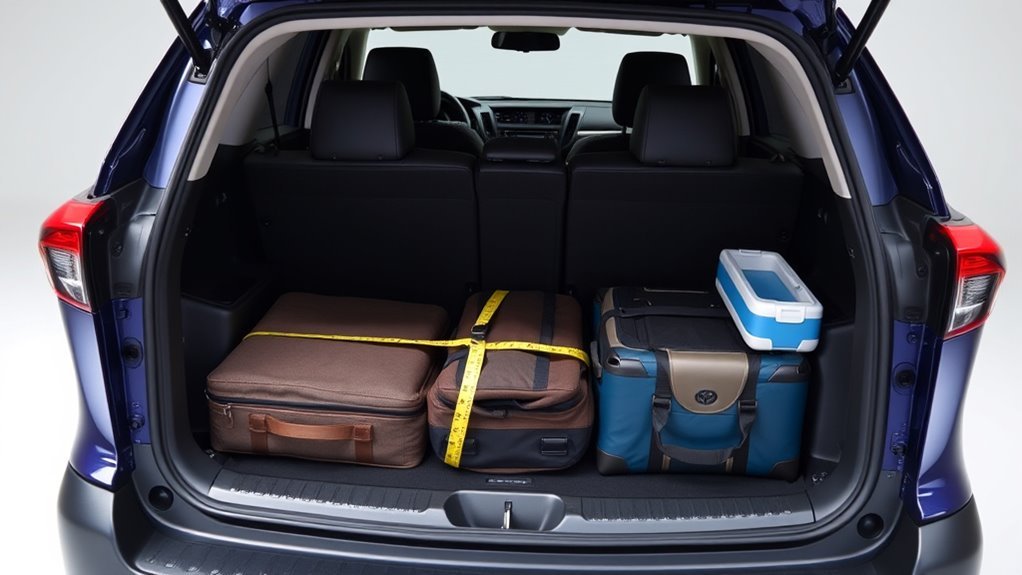
Fold the 60/40 seats to suit the mix of passengers and gear, then load heavy items low and forward to keep the vehicle balanced. Put the flattest heavy items in first, then add long items, soft bags, and quick-access gear last.
Place heavy boxes or equipment directly behind the rear seats, centered and low, to support predictable steering and braking. Lighter bulky items can sit on top or toward the tailgate. Keep fragile items in soft bags or bins so straps don’t crush them.
Build your packing order around stability first, access second. This keeps the cabin uncluttered, protects passengers, and makes it easier to unload without rebuilding the whole cargo area.
Console vs. Cargo Area: What to Stow Where
Keep small, frequently used items in the center console so you can grab them without stopping. Reserve the cargo area for bulk items secured to the tie-down points, with heavy pieces placed low for balance.
| Console (quick access) | Cargo Area (bulk and secure) |
|---|---|
| Snacks and bottled water | Backpacks and duffels |
| Charging cables and power bank | Foldable chairs and coolers |
| Sunglasses and paperwork | Long items (rods, skis) |
| Small tools and flashlight | Heavy gear, low and centered |
| First aid kit and phone mount | Items tied to anchor points |
For long items, fold one 60/40 seat and keep the other up for a passenger. Keep anything hard, sharp, or heavy out of the console and door pockets, where it can become distracting or unsafe.
Common Mistakes to Avoid
Even small loading or seat-folding errors can affect safety and handling. Watch out for these common mistakes.
- Driving with an unlatched seatback. Always confirm any passenger seatback clicks into place before someone sits there.
- Loading weight too far back. Heavy items near the tailgate can make steering feel lighter. Keep heavy gear forward.
- Skipping straps for short trips. Cargo can shift hardest during sudden stops and sharp turns. Strap loose items down every time.
- Overloading one side. Uneven weight can affect handling and tire wear. Center the load whenever possible.
- Using the cargo cover as a restraint. A cargo cover hides items, but it does not secure heavy cargo.
- Blocking visibility. Keep the rear camera, mirrors, and driver sightlines clear when possible.
Frequently Asked Questions
Does folding both rear seats leave a completely flat floor?
The folded seats create a mostly flat surface, but a small step may remain between the seatbacks and cargo floor. The gap depends on cargo-floor position, trim, mats, and model year. Move the floor to the position that gives your load the most stable contact.
Can you sleep in the back of a RAV4 with the seats folded?
Many owners do, but the folded seats don’t create a perfectly flat floor — expect a small step between the seatbacks and the cargo floor that varies by trim and cargo-floor position. A foam mat, folded blanket, or dedicated sleeping pad over that step makes the space more comfortable, and it’s worth test-fitting your gear and height before counting on it for a trip.
How much vertical clearance do I get with the cargo floor lowered?
The lowered cargo floor gives you extra vertical room, but the exact clearance varies by trim and model year. Measure from the floor to the lowest part of the opening or roof trim before loading tall bins, crates, or furniture.
Does the RAV4 Plug-in Hybrid have the same cargo space as the gas and Hybrid models?
No. The RAV4 Plug-in Hybrid’s larger battery takes up some of the cargo floor, so it offers less room than the gas and standard Hybrid RAV4 both behind the rear seats and with them folded. The exact cubic-foot difference varies by model year, so check Toyota’s spec sheet for your specific trim. [VERIFY: confirm current Plug-in Hybrid cargo cu ft]
Where are the tie-down anchor points located in the RAV4?
The RAV4 has factory tie-down rings in the cargo area, usually near the corners of the load floor. Clip straps directly to those rings, route the strap over or around the load, and tighten until the item cannot slide by hand.
Can I fold one rear seat and still carry a passenger?
Yes. The 60/40 split lets you fold one section and keep the other rear section upright for a passenger. Before driving, confirm the passenger seatback is locked, the seat belt is clear, and cargo cannot slide into that passenger’s space.
Can I close the liftgate on long cargo?
Only close the liftgate if the item fits without pressure against the glass, trim, or latch. Close it slowly the first time, stop if you feel resistance, and never drive with cargo blocking the latch unless your owner’s manual gives a safe procedure for that load.
Fold the 60/40 seats, pick the cargo floor height that fits your load, and tie everything down before you move. Keep heavy gear low and forward, store everyday items in the console, and re-check your straps after your first stop. These habits help your RAV4 handle more cargo safely, without guesswork.


[…] space is about 37.6 cubic feet with the rear seats up and 69.8 cubic feet with them folded. The rear cargo floor sits roughly 29.9 inches high. Rear legroom is about 37.8 inches, and the rear door opening is […]
[…] radar modules mounted in the RAV4’s rear corners scan defined blind-spot zones. They report object range, relative speed, and azimuth to the […]
[…] physical fit test. Exact fit still requires measurements from your vehicle and crate. See the RAV4 cargo area and folding-seat guide for related cargo-floor and rear-seat setup […]
[…] need a long-item channel while keeping part of the second row available. The related guide to the RAV4 rear-seat folding and cargo-floor positions explains how the seat and floor setup affects usable […]