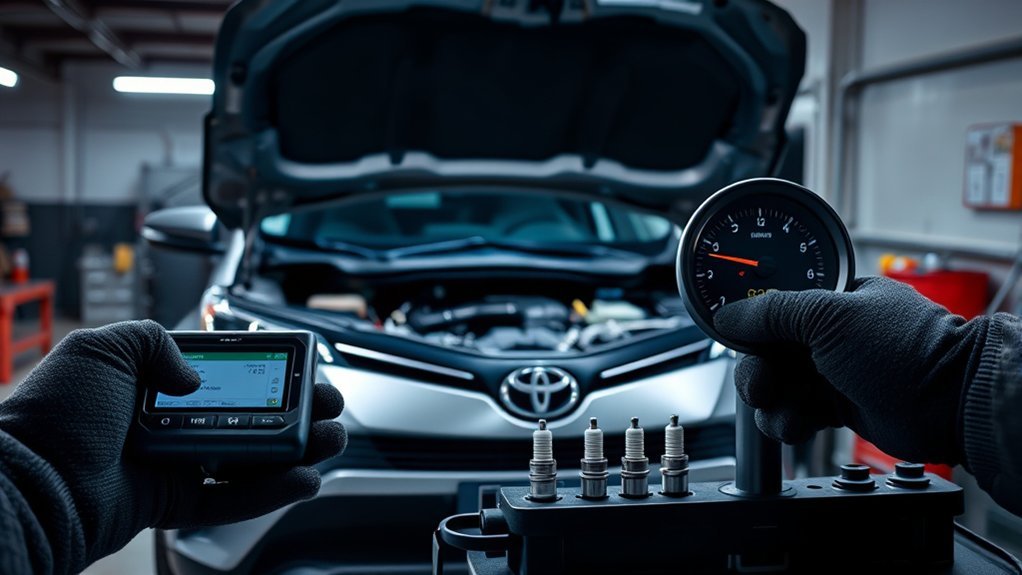
If your RAV4 is using more fuel than usual, start with a measured MPG test before replacing parts. A dashboard MPG number can be misleading, especially after short trips, cold weather, idling, towing, roof cargo, or a tire-pressure change. Once you confirm the drop is real, work from the simple causes first: tire pressure, extra weight, idling, air filter condition, driving habits, and maintenance history. If MPG is still low, scan for codes and check live data for fuel trims, oxygen/air-fuel sensor behavior, MAF readings, fuel pressure, ignition misfires, exhaust restriction, brake drag, and AWD rear-drive resistance.
Quick Answer
A RAV4 usually burns excess fuel because of underinflated tires, frequent idling, aggressive driving, cold short trips, extra weight, a clogged air filter, worn spark plugs or coils, bad oxygen/air-fuel or MAF sensors, incorrect fuel pressure, a restricted catalytic converter, dragging brakes, or AWD drivetrain drag.
Key Takeaways
- Measure real MPG with the fill-up method before assuming the RAV4 has a mechanical problem.
- Fix low-cost causes first: tire pressure, excess weight, roof cargo, idling, air filter condition, and driving style.
- If the check-engine light is on, scan codes before replacing sensors or parts.
- Use fuel trims, O2/air-fuel sensor data, MAF readings, fuel pressure, and spark plug condition to confirm whether the engine is running rich, lean, or misfiring.
- Do not ignore brake drag, alignment problems, exhaust restrictions, or AWD rear-drive noise; mechanical resistance can waste fuel even when the engine is healthy.
At a Glance
| Time Required | 30 minutes for basic checks; 1–2 hours for scan-tool diagnosis |
| Difficulty | Beginner for MPG, tire, and air-filter checks; intermediate for live-data diagnosis |
| Tools Needed | Tire-pressure gauge, fuel log or app, flashlight, OBD-II scanner with live data, basic hand tools |
| Cost | $0–$100 for DIY checks; $100–$200+ for a shop diagnosis; repairs vary by fault |
Check Your RAV4’s Real MPG in 5 Steps

Start by proving the fuel-economy loss with a manual calculation. The RAV4’s dashboard estimate is useful for trends, but it can be skewed by short trips, remote start, cold weather, idling, recent battery disconnects, and stop-and-go driving.
- Fill the tank completely. Stop when the pump clicks off the first time. Do not keep topping off.
- Reset Trip A. Also reset the dashboard fuel-economy display so you can compare it against the manual number.
- Drive normally for at least half a tank. A short 20-mile sample is too small to trust.
- Refill at the same pump position if possible. Use the gallons shown on the pump receipt.
- Divide miles driven by gallons added. For example, 310 miles ÷ 10.5 gallons = 29.5 MPG.
Repeat the test for two or three tanks before chasing expensive repairs. Compare your result with your own past MPG, not just the EPA sticker. Fuel economy varies by trim, tire type, weather, terrain, speed, driving mix, and load. The U.S. Department of Energy notes that aggressive driving, high speeds, idling, roof cargo, heavy cargo, and poor maintenance can all reduce gas mileage, even when the vehicle has no broken part.
Note: If your MPG dropped only during winter or mostly on short trips, the cause may be conditions rather than a defect. FuelEconomy.gov reports that cold weather can reduce fuel economy because engines, fluids, tires, and cabin heat systems work less efficiently until warmed up.
Quick Fixes to Improve MPG Now: Tires, Pressure, Reset, Idle, and Load
Before replacing sensors, do the simple checks that often restore a noticeable amount of fuel economy.
[Products Worth Considering]

ECOGARD XA5786 is a premium engine air filter designed to help protect your engine by trapping dust, dirt, pollen, and road particles before they enter the intake system. It supports smooth airflow for consistent engine response and fuel efficiency, and it is intended for regular replacement to help maintain reliable performance and engine longevity.

This set of four ignition coils is designed to restore smooth engine performance and reliable starting for compatible Toyota, Scion, and Lexus applications. Built to meet or exceed OE specifications, these coil packs help reduce misfires, hesitation, and check engine light issues while supporting stronger ignition output. The direct-fit design makes installation straightforward, and the package includes a warranty for added peace of mind.

This oxygen O2 sensor set is designed for select Toyota Camry and RAV4 models with 2.4L engines, providing upstream and downstream replacement coverage in one package. Built to OEM specifications for plug-and-play installation, it helps improve fuel efficiency, support accurate air-fuel monitoring, and restore reliable engine performance. The stainless steel and heat-resistant construction is made for long-lasting durability and stable operation.
1. Check Tire Pressure Cold
Measure tire pressure when the tires are cold, ideally before driving more than a mile. Inflate to the pressure listed on the driver-door placard or in your Toyota owner’s manual, not the maximum pressure printed on the tire sidewall. Underinflated tires increase rolling resistance, wear faster, and make the engine work harder. NHTSA also notes that tire design and rolling resistance affect fuel efficiency.
Warning: Do not overinflate tires to chase MPG. Overinflation can reduce traction, worsen ride quality, and cause uneven tire wear. Use the vehicle placard pressure.
2. Remove Excess Weight and Roof Cargo
Take out heavy items you do not need. Remove roof boxes, bike racks, and crossbar accessories when they are not in use. Roof cargo creates aerodynamic drag, which hurts highway MPG more than city MPG. If you must carry cargo, placing it inside the vehicle is usually more efficient than putting it on the roof.
3. Reduce Idling
Idling burns fuel while the RAV4 travels zero miles. The U.S. Department of Energy says idling can use roughly a quarter to a half gallon of fuel per hour, depending on engine size and A/C use. If you are safely parked and waiting, shut the engine off instead of letting it sit for long periods.
4. Check the Engine Air Filter
Inspect the air filter if it has not been changed recently or if you drive in dusty conditions. A severely clogged filter can restrict airflow and affect performance. On newer fuel-injected vehicles, the engine computer can compensate for some restriction, so an air filter is not always a magic MPG fix, but a dirty filter is still cheap to correct and helps protect the engine.
5. Reset and Track After Each Fix
After tire, load, air-filter, or driving changes, reset the trip meter and track another tank. Do not judge a repair from one commute. A good fuel log should include miles, gallons, route type, weather, tire pressure, roof cargo, fuel grade, and whether the A/C or heater was heavily used.
Pro Tip: Use one variable at a time. For example, correct tire pressure first, then drive a full tank before changing anything else. That makes it easier to see what actually helped.
Top Mechanical Causes of Poor RAV4 MPG and How to Spot Them
If the simple fixes do not help, move to diagnostics. A scan tool with live data is the fastest way to separate a true engine-fueling problem from a tire, brake, exhaust, or driving-condition problem.
| Possible Cause | Common Clues | Best First Check |
|---|---|---|
| Low tire pressure or poor alignment | Uneven tire wear, pulling, low PSI, lower highway MPG | Cold tire-pressure check and alignment inspection |
| Dragging brakes | Hot wheel, burning smell, reduced coasting, brake dust on one wheel | Wheel-temperature comparison and caliper inspection |
| Worn spark plugs or weak coils | Rough idle, misfire codes, hesitation, poor acceleration | Scan for misfire counts and inspect plugs |
| Bad oxygen/air-fuel sensor | Check-engine light, abnormal fuel trims, rich or lean codes | Compare sensor data with fuel trims |
| Dirty or inaccurate MAF sensor | Poor throttle response, lean/rich codes, incorrect load readings | Read MAF data and inspect for contamination or intake leaks |
| Fuel pressure or injector fault | Hard starts, fuel smell, rich trims, black smoke, rough running | Fuel pressure and injector leak-down test |
| Catalytic converter restriction or exhaust leak | Loss of power, sulfur smell, P0420, rattling, high backpressure | Exhaust inspection, backpressure test, and O2 sensor comparison |
| AWD rear-drive drag | Whine, groan, clunk, binding sensation, poor coasting | Inspect rear differential or rear drive unit, depending on model |
Worn Ignition Components
Worn spark plugs, weak coils, or ignition misfires waste fuel because combustion is incomplete. You may notice rough idle, shaking, poor acceleration, hard starts, or a flashing check-engine light. Scan for misfire codes such as P0300, P0301, P0302, P0303, or P0304, then inspect the plugs and coils for the affected cylinders.
Do not assume all RAV4 spark plugs need replacement at 30,000 miles. Many modern Toyota engines use long-life iridium plugs, and the correct interval depends on model year, engine, and maintenance schedule. Check the Toyota maintenance guide for your exact RAV4 before replacing parts early.
| Component | Symptom | Action |
|---|---|---|
| Spark plug | Fouled tip, worn electrode, oil or carbon deposits | Inspect and replace at the Toyota-specified interval |
| Ignition coil | Misfire, power loss, rough idle | Test or swap coils to confirm the fault |
| Scan data | Misfire counts or fuel-trim changes | Use live data before buying parts |
Faulty Oxygen or Air-Fuel Sensors
A failing oxygen sensor or air-fuel ratio sensor can make the engine computer command the wrong mixture. Some RAV4 engines use wideband air-fuel sensors upstream rather than a simple narrowband O2 sensor, so the scan-tool display may show current, lambda, equivalence ratio, or a calculated value instead of the familiar 0.1–0.9 volt swing. Use the correct data interpretation for your model year.
Do not replace oxygen sensors only because fuel economy dropped. Compare upstream sensor response, downstream sensor behavior, short-term fuel trim, long-term fuel trim, MAF data, coolant temperature, and trouble codes. A sensor code can be caused by exhaust leaks, misfires, wiring problems, vacuum leaks, or a catalytic converter issue.
MAF and Air-Intake Problems
The mass airflow sensor helps the engine computer calculate how much fuel to inject. A dirty MAF sensor, cracked intake hose, loose airbox, or unmetered air leak can distort that calculation. If the MAF underreports airflow, the engine may run lean and the computer may add fuel. If readings are erratic, drivability and MPG can suffer.
Inspect the intake duct between the airbox and throttle body for cracks or loose clamps. Use only MAF-safe cleaner if cleaning is needed, and never touch the sensor wire or element. After repairs, clear codes only after recording them, then confirm fuel trims return closer to normal during a test drive.
How to Test for a Rich Condition: O2, Fuel Trims, MAF, Fuel Pressure, and Spark Checks
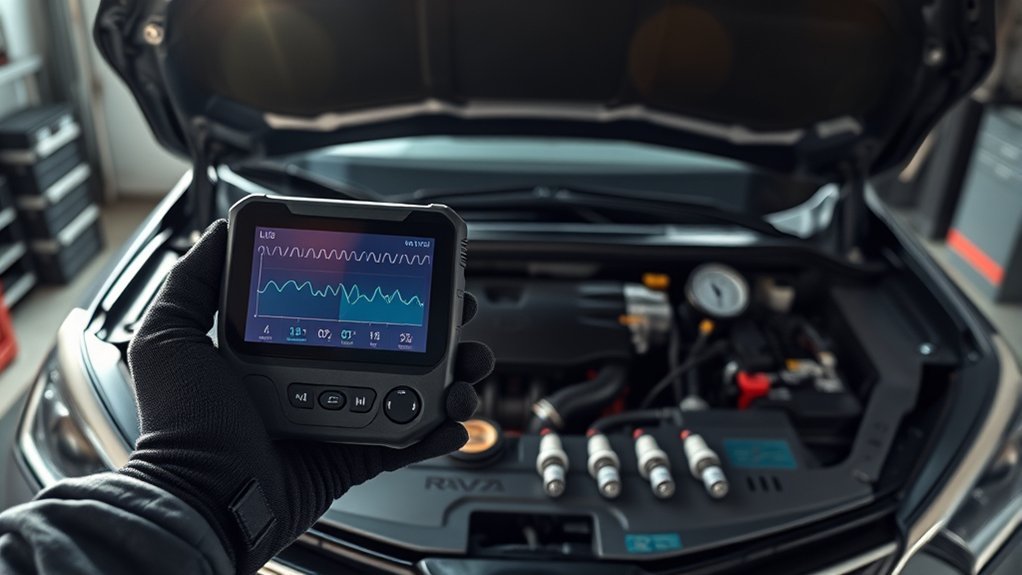
A rich condition means the engine is getting too much fuel, too little air, or incomplete combustion is leaving excess oxygen/fuel signals in the exhaust. The key is to confirm it with data instead of guessing.
[Products Worth Considering]

This ignition coil and iridium spark plug kit is designed to restore smooth engine performance, reliable starts, and efficient combustion for compatible Toyota models. Built for a precise fit across select Camry, RAV4, Sienna, Highlander, and Venza applications, it helps improve idle stability, fuel economy, and emissions. The kit includes durable replacement parts backed by a one-year unlimited-mileage guarantee for added confidence on the road.
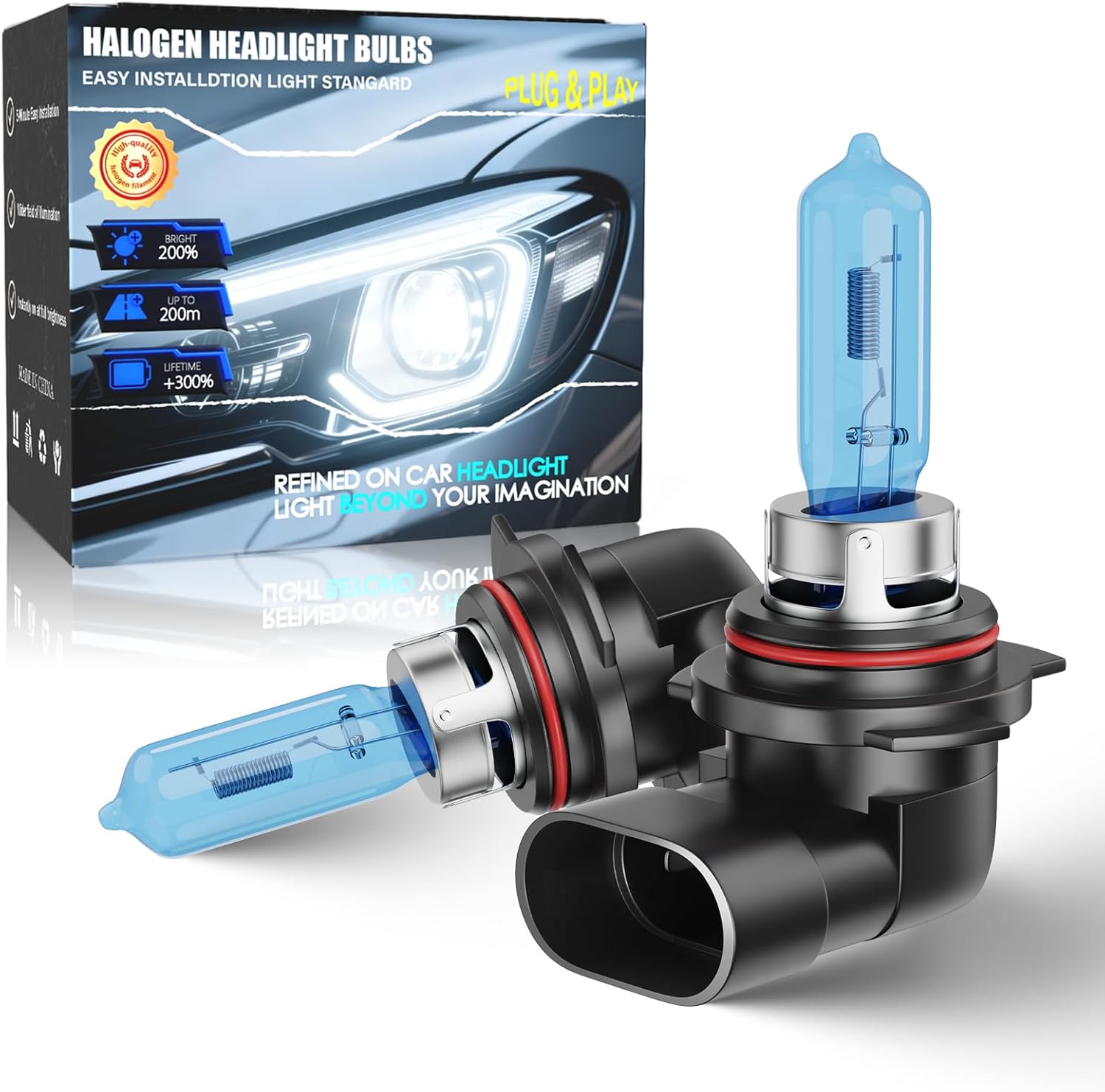
Upgrade your nighttime driving with these halogen headlight bulbs designed for 2016-2019 Toyota RAV4 models. The HIR2/9012 high and low beam combo delivers a brighter white light, a safer beam pattern, and broader road coverage for improved visibility. With plug-and-play installation and durable construction, this two-bulb set is built for a fast, hassle-free replacement.
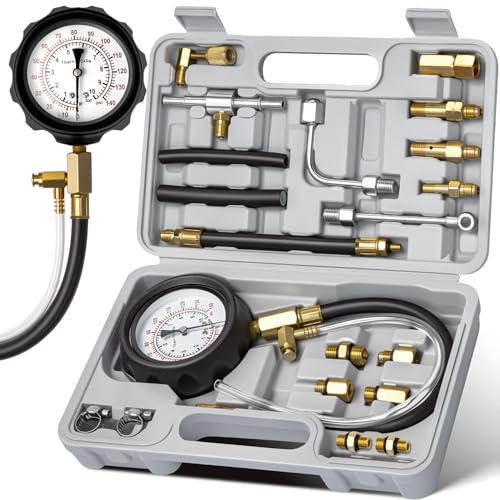
ACCURATE DUAL-SCALE GAUGE: Features a shock-resistant dry gauge with built-in damping mechanism, providing clear 0–140 PSI and 0–10 BAR dual scales for precise fuel system diagnostics
O2 Sensor Behavior
On many gasoline vehicles with narrowband oxygen sensors, a healthy upstream O2 sensor switches between lean and rich once the engine is warm and in closed loop. A reading that stays rich, responds slowly, or does not match fuel-trim behavior needs more testing. On RAV4 models with wideband air-fuel sensors, use manufacturer-specific live-data values rather than applying narrowband voltage rules.
The downstream O2 sensor should generally be steadier than the upstream sensor when the catalytic converter is working properly. If the downstream signal closely mirrors the upstream signal, the catalyst may not be storing oxygen well, but exhaust leaks, sensor faults, and misfires should be ruled out first.
Fuel Trim Readings
Fuel trims show how much the engine computer is adjusting fuel delivery. Short-term fuel trim reacts quickly; long-term fuel trim shows learned correction over time.
- Negative fuel trims usually mean the computer is subtracting fuel because the mixture appears rich.
- Positive fuel trims usually mean the computer is adding fuel because the mixture appears lean.
- Large trim corrections should be diagnosed with MAF readings, fuel pressure, O2/air-fuel sensor data, intake leaks, exhaust leaks, and misfire data.
As a general diagnostic clue, trims that stay far from zero after warm-up deserve investigation. Exact “normal” ranges vary by engine, load, fuel, altitude, and scan tool, so compare readings at idle, 2,500 rpm, and under light load.
Spark and Ignition
Weak spark can mimic a rich fuel problem because unburned fuel enters the exhaust. Inspect spark plugs for black, dry soot, fuel wetness, oil fouling, or worn electrodes. A single-cylinder misfire points toward a plug, coil, injector, compression, or wiring issue. A random misfire may point toward fuel quality, air metering, vacuum leaks, or broader ignition problems.
Fuel Pressure and Injectors
High fuel pressure, a leaking injector, or an injector stuck partly open can make a RAV4 run rich. Symptoms can include fuel smell, hard starts after sitting, black exhaust smoke, rough idle, and negative fuel trims. A shop can perform a fuel pressure test, pressure hold test, injector balance test, and leak-down check to confirm the fault before replacing injectors.
Warning: Stop driving and get help if the check-engine light is flashing, the vehicle smells strongly of fuel, the engine is overheating, or power drops suddenly. A flashing check-engine light can indicate a misfire severe enough to damage the catalytic converter.
Check Exhaust & Emissions: CAT, Downstream O2, and Delete Signs
Exhaust and emissions problems can hurt MPG by confusing sensor feedback or increasing engine load. Inspect the exhaust system for leaks, dents, loose heat shields, missing parts, rattles, and signs of previous cutting or welding.
The catalytic converter should not be removed or bypassed on a street-driven RAV4. The EPA explains that tampering with emissions controls is illegal under the Clean Air Act and can greatly increase pollution. A missing, gutted, or poorly installed converter can also create check-engine lights, fuel-trim problems, exhaust noise, and inspection failure.
A P0420 code means the computer sees catalyst efficiency below the expected threshold. It does not automatically mean the catalytic converter is the only bad part. Before replacing the converter, check for exhaust leaks, misfires, oil or coolant burning, fuel control problems, and faulty O2/air-fuel sensors. Replacing a converter without fixing a rich condition or misfire can ruin the new converter.
A catalytic converter code is a diagnosis starting point, not a parts-shopping list. Fix misfires, leaks, and fuel-control problems before condemning the converter.
[Products Worth Considering]
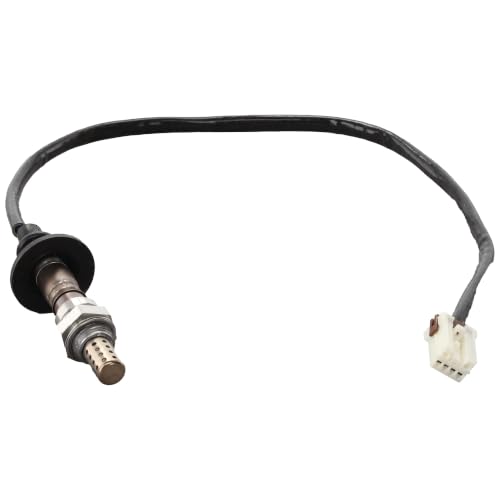
Garage-Pro Aftermarket Replacement Oxygen Sensor Compatible with 2000-2005 Mitsubishi Eclipse, Fits 1999-2003 Mitsubishi Galant, Fits 2001-2005 Chrysler Sebring, Fits 2001-2005 Dodge Stratus

A key step in your PREVENTIVE MAINTENANCE ROUTINE. Safe and effective for all gasoline- and diesel-fuel vehicles
Check Tires, Brakes & Rear Differential for Drag and Noise
Not every MPG problem starts in the engine. Anything that makes the RAV4 harder to roll will use more fuel.
Inspect Tires and Alignment
Look for feathered tread, cupping, inner-edge wear, outer-edge wear, mismatched tire sizes, or tires with unusually high rolling resistance. A RAV4 with alignment problems may pull to one side, wander, or wear tires unevenly. Correct tire pressure and alignment can improve fuel economy and tire life.
Check for Brake Drag
After a normal drive, carefully compare wheel heat without touching hot brake parts directly. One wheel that is much hotter than the others can point to a sticking caliper, seized slide pin, collapsed brake hose, parking-brake issue, or dragging pad. Brake drag wastes fuel and can become a safety issue.
Listen to the Rear Drive System
On AWD RAV4 models, inspect the rear differential, rear coupler, or rear drive unit depending on the generation and drivetrain. Hybrid AWD models may use an electric rear drive unit rather than a conventional driveshaft setup. Listen for whining, groaning, clunking, grinding, or binding during low-speed turns and acceleration. Low fluid, bearing wear, binding components, or mismatched tires can add drag and reduce MPG.
Note: Front-wheel-drive RAV4 models do not have the same rear differential checks as AWD models. Match the inspection to your exact drivetrain.
When to See a Mechanic: What Tests to Request and Expected Costs
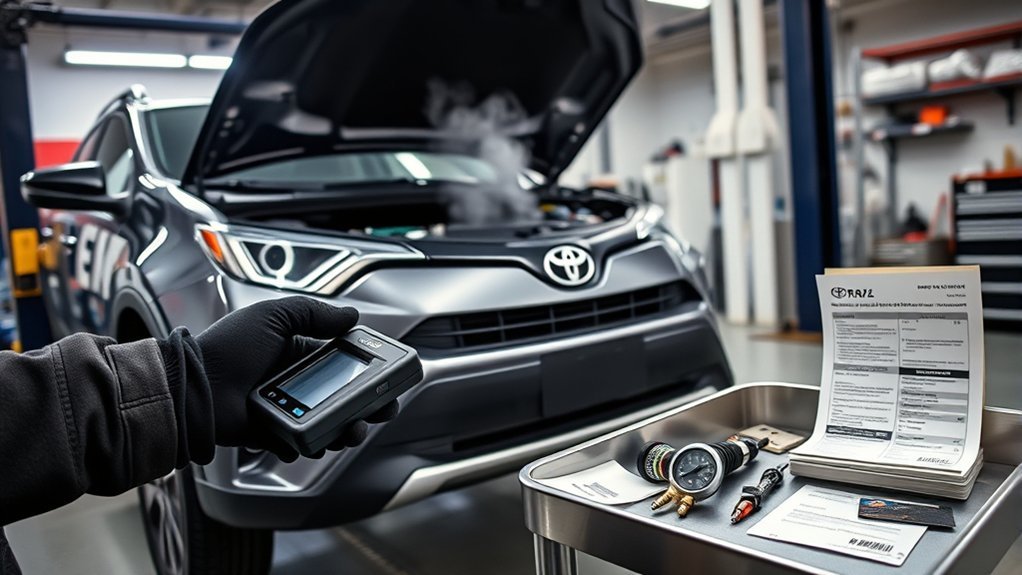
See a mechanic if MPG stays low after two or three measured tanks, the check-engine light is on, the RAV4 runs rough, fuel smell is present, braking feels abnormal, or you hear drivetrain noise. Ask for diagnostic results, not just a parts recommendation.
| Test or Check | Purpose | Typical U.S. Cost Range |
|---|---|---|
| OBD-II code scan with live data | Find stored codes, fuel trims, misfires, O2/air-fuel sensor behavior, coolant temperature, and MAF data | Free–$200, depending on depth |
| Fuel pressure and injector test | Confirm pump, regulator, injector leak, or fuel-delivery fault | $100–$250 diagnostic labor |
| Smoke test or intake-leak test | Find intake leaks that distort air-fuel calculations | $100–$200 |
| Exhaust leak or backpressure test | Check for catalytic converter restriction, leaks, or tampering | $100–$250 diagnostic labor |
| Brake drag inspection | Find sticking calipers, seized slide pins, or parking-brake drag | $50–$150 inspection; repairs vary |
| Alignment check | Correct tire scrub and uneven wear | $100–$200 |
| AWD rear-drive inspection | Check rear differential, coupler, rear motor drive unit, fluid leaks, and bearing noise | $100–$250 diagnostic labor |
Ask the shop to document codes, freeze-frame data, fuel trims, sensor graphs, pressure readings, and inspection photos. Good documentation helps you avoid paying for guesses.
What to Check First by Symptom
| Symptom | Most Likely First Checks |
|---|---|
| MPG dropped after weather turned cold | Short trips, tire pressure, warm-up idling, winter fuel, heater/defroster use |
| MPG dropped after new tires | Tire pressure, tire size, rolling resistance, alignment |
| Check-engine light is on | Scan codes, freeze-frame data, fuel trims, misfire data |
| Rough idle or shaking | Misfires, spark plugs, coils, vacuum leaks, MAF data |
| Fuel smell or black smoke | Rich condition, injector leak, fuel pressure, EVAP fault, misfire |
| Car does not coast well | Brake drag, tire pressure, wheel bearing, alignment, AWD drivetrain drag |
| Power feels weak at higher rpm | Clogged catalytic converter, restricted exhaust, MAF issue, fuel delivery |
Frequently Asked Questions
How do I fix excessive fuel consumption in a Toyota RAV4?
Start by measuring real MPG with the fill-up method. Then check tire pressure, remove extra weight, reduce idling, inspect the air filter, and confirm maintenance is current. If MPG is still low, scan for codes and review live data for fuel trims, O2/air-fuel sensor behavior, MAF readings, fuel pressure, misfires, brake drag, and exhaust restriction.
What is the most common reason a RAV4 suddenly gets bad MPG?
The most common causes are simple: low tire pressure, more city driving, cold weather, longer idling, roof cargo, extra weight, or aggressive acceleration. If the drop is sudden and the check-engine light is on, scan for codes before replacing parts.
Can a bad oxygen sensor make a RAV4 use more gas?
Yes. A faulty oxygen sensor or air-fuel ratio sensor can cause incorrect fuel control and lower MPG. However, oxygen-sensor codes can also be triggered by exhaust leaks, misfires, wiring faults, intake leaks, or catalytic converter problems, so confirm the cause with live data before replacing the sensor.
Why does my RAV4 MPG drop in winter?
Cold weather lowers MPG because the engine takes longer to warm up, fluids are thicker, tire pressure drops, cabin heat and defrost use more energy, and short trips spend more time below ideal operating temperature. Extra warm-up idling makes the drop worse.
Should I replace spark plugs to improve RAV4 fuel economy?
Replace spark plugs if they are worn, fouled, causing misfires, or due by the Toyota maintenance schedule for your exact model year. Do not replace them early based only on poor MPG unless inspection or scan data supports it.
Can brake drag reduce fuel economy?
Yes. A sticking caliper, seized slide pin, dragging parking brake, or collapsed brake hose can make the engine work harder all the time. Warning signs include one wheel getting hotter than the others, a burning smell, poor coasting, or uneven brake dust.
Conclusion
Do not accept a gradual MPG decline as normal until you have measured it and checked the basics. Start with a real MPG log, correct tire pressure, remove extra cargo, reduce idling, and review recent driving conditions. If the loss remains, move to scan-tool diagnostics: codes, freeze-frame data, fuel trims, O2/air-fuel sensor readings, MAF data, fuel pressure, misfires, exhaust backpressure, brake drag, and AWD rear-drive resistance. The fastest path is not replacing random parts; it is proving which system is wasting fuel, fixing that fault, and confirming MPG improves on the next tank.
Sources
- FuelEconomy.gov — Driving More Efficiently — supports driving style, speed, roof cargo, excess weight, and idling effects on fuel economy.
- U.S. Department of Energy — Fuel Economy — supports idling guidance, maintenance effects, tire pressure guidance, and check-engine-light importance.
- FuelEconomy.gov — Fuel Economy in Cold Weather — supports cold-weather MPG loss and winter driving factors.
- NHTSA TireWise — Tire Safety Ratings and Awareness — supports tire maintenance, rolling resistance, and fuel-efficiency impact.
- Toyota Owners — Warranty & Maintenance Guides — supports using the exact Toyota maintenance schedule for the RAV4 model year and drivetrain.
- EPA — Tampering and Aftermarket Defeat Devices — supports the warning that removing or defeating emissions controls is illegal and increases emissions.