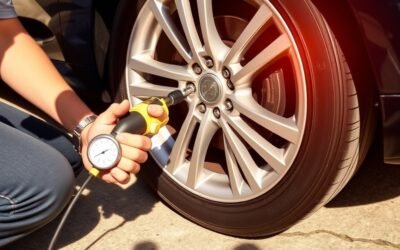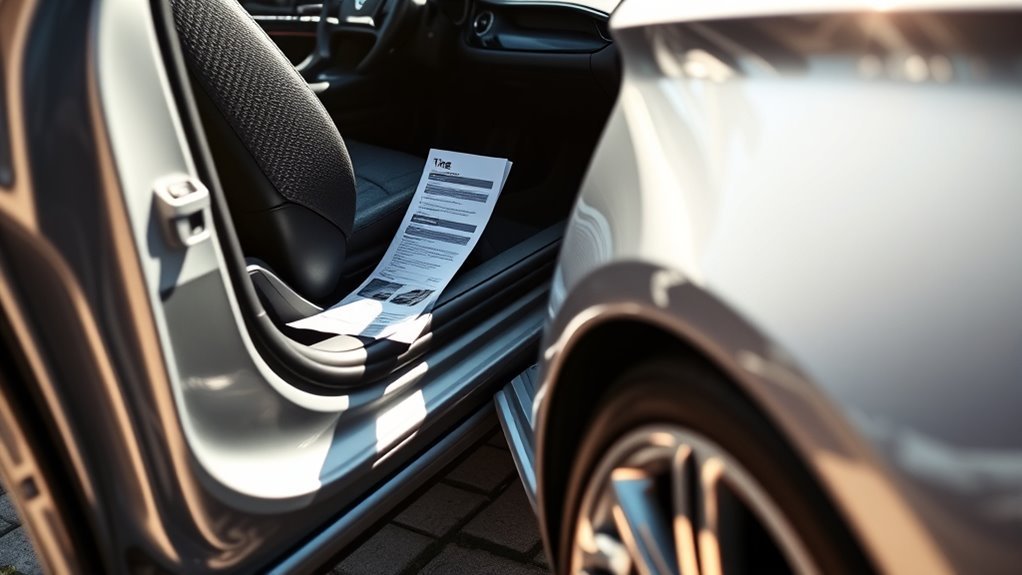
To find your vehicle’s recommended tire pressure, check the sticker inside the driver’s side door or consult the owner’s manual. This information typically includes the ideal psi for your specific model and can help guarantee safety and performance. Maintaining proper tire pressure reduces rolling resistance, enhances fuel efficiency, and extends tire life. If you’re unsure about tire care, there’s more to know that can keep your vehicle running smoothly.
How to Use a Digital Tire Gauge Effectively
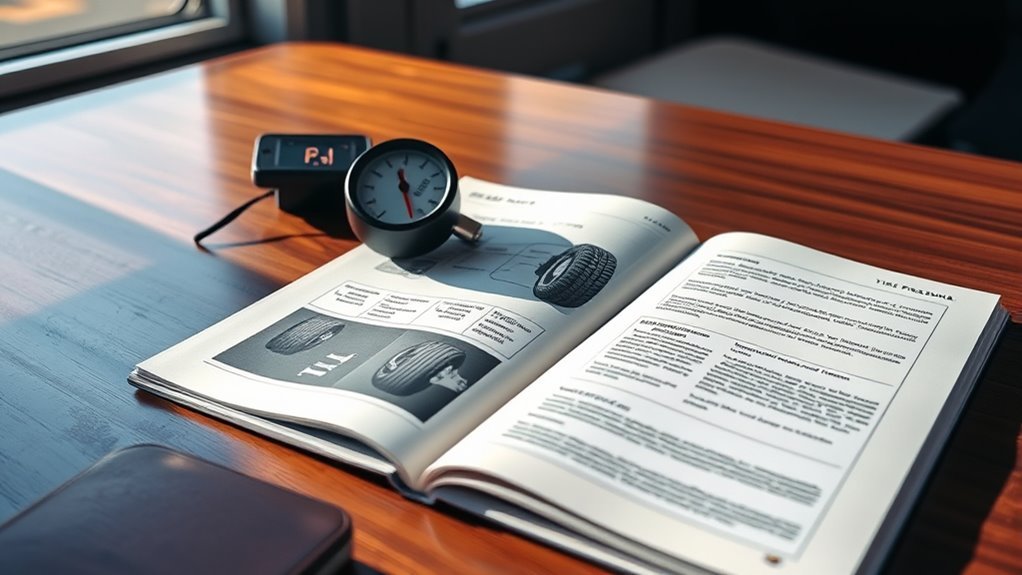
Using a digital tire gauge effectively can streamline your tire maintenance routine. First, verify your gauge is set to the psi setting; this avoids confusion with kPa or bar. To take a measurement, unscrew the valve cap from the tire, then place the digital tire gauge firmly on the valve stem. Read the displayed pressure, which appears almost instantly, allowing you to check multiple tires quickly. After recording the pressure, replace the valve cap securely to keep dirt and debris out. Familiarizing yourself with your digital tire gauge enhances your ability to monitor tire pressure over time. Consistent use helps maintain peak tire health, ultimately improving your vehicle’s performance and safety on the road.
Where to Find Your Vehicle’s Recommended Tire Pressure
You can find your vehicle’s recommended tire pressure on a sticker inside the driver’s side door. If the sticker isn’t accessible, consult your owner’s manual for the specific PSI for your model. Always make sure your tires are inflated to this recommended pressure for ideal performance.
Manufacturer’s Specifications Sticker
Finding your vehicle’s recommended tire pressure is vital for peak performance, and the manufacturer’s specifications sticker is the key resource for this information. You’ll typically find this sticker on the driver’s side door jamb, offering easy access to the recommended tire pressures and sizes for maximum performance. Common values range from 32 to 34 PSI, but these can vary based on your vehicle’s make and model. Regularly consulting this manufacturer’s specifications sticker is important for maintaining safety and fuel efficiency. If the tire pressure warning light activates, adjust the pressures to the values indicated on the sticker; this can help reset the light after driving, ensuring you stay informed and in control of your vehicle’s performance.
Owner’s Manual Reference
While the manufacturer’s specifications sticker provides immediate tire pressure information, the owner’s manual serves as a thorough guide for understanding your vehicle’s tire requirements. Typically, you’ll find a dedicated section in the owner’s manual that outlines the recommended tire pressure for both front and rear tires. Look for a chart or table that specifies ideal PSI for various driving conditions or load capacities. Additionally, the manual often includes instructions on checking and inflating your tires to maintain that recommended pressure. Many manufacturers make it easy to find this information in the index, under “Tire Maintenance” or “Tires.” Always refer to the owner’s manual for the most accurate, vehicle-specific tire pressure recommendations.
What Are Tire Pressure Ratings and Why Do They Matter?
Tire pressure ratings, expressed in pounds per square inch (psi), are critical indicators of the ideal inflation level for your vehicle’s tires. Maintaining the correct pressure not only guarantees safety and performance but also affects your fuel efficiency. Here’s why these ratings matter:
Tire pressure ratings in psi are essential for safety, performance, and fuel efficiency in your vehicle.
- Safety: Proper inflation enhances traction and braking responsiveness.
- Fuel Efficiency: Correct tire pressure reduces rolling resistance, improving mileage.
- Tire Longevity: Adhering to recommended psi can extend the lifespan of your tires.
- Optimal Performance: Properly inflated tires contribute to better handling, especially with varying tire sizes.
You can typically find tire pressure ratings in your owner’s manual, on a sticker inside the driver’s side door, or by looking up your specific tire model online.
Tire Pressure: Why Regular Checks Matter
Regularly checking your tire pressure is essential for enhancing fuel efficiency and ensuring vehicle safety. Properly inflated tires can improve your mileage by up to 3% while also providing better handling on the road. By monitoring tire pressure, you not only lengthen tire lifespan but also reduce the risk of blowouts, keeping you safe during your travels.
Enhanced Fuel Efficiency
Maintaining the correct tire pressure is essential for enhancing your vehicle’s fuel efficiency. Regular checks can lead to significant savings at the pump. Here’s why you should keep an eye on air pressure:
- Properly inflated tires can improve fuel efficiency by about 3% for every 1 psi drop.
- Reduced rolling resistance means less energy and fuel consumption while driving.
- Under-inflated tires increase friction and heat, harming fuel economy and risking tire damage.
- Keeping tire pressure within the recommended range of 32-34 psi optimizes fuel consumption and performance.
Improved Vehicle Safety
Ensuring your vehicle’s tires are properly inflated is vital not just for efficiency but also for safety on the road. Regularly checking tire pressure greatly improves vehicle handling, reducing the risk of accidents. When tires are inflated to the recommended levels, you’re less likely to experience blowouts or failures, which can lead to severe safety hazards. Low tire pressure can cause accelerated wear, necessitating more frequent replacements and compromising both safety and value. By maintaining proper tire pressure, you enhance your vehicle’s overall performance, extending tire lifespan while promoting a safer driving experience. Stay vigilant about your tire specifications; it’s an important step toward safeguarding yourself and others on the road.
What to Do If You Find Low Tire Pressure?
If you discover low tire pressure, the first step is to accurately measure the psi of each tire with a digital tire gauge before adding air. Next, consult the sticker inside the driver’s side door, your owner’s manual, or search online for the recommended tire pressure.
- Inflate the tires to the specified PSI.
- Verify all tires match the correct pressure for peak performance.
- After inflating, drive the vehicle briefly to reset any low tire pressure warning lights.
- Regularly check tire pressure, particularly before long trips, to enhance fuel efficiency and minimize tire wear.
What Happens If You Don’t Maintain Proper Tire Pressure?
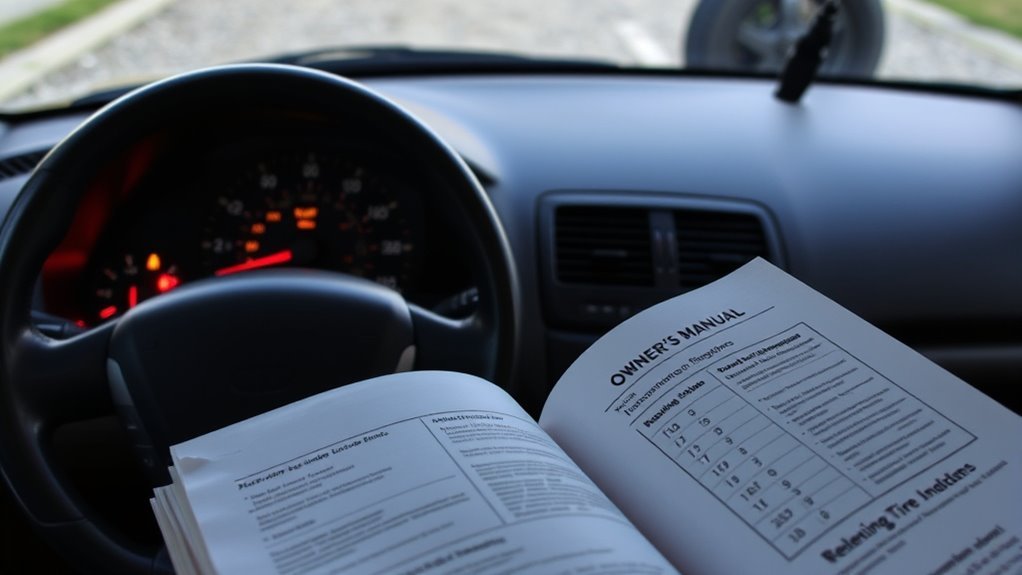
Neglecting proper tire pressure can lead to a cascade of issues that compromise both safety and performance. Under-inflated tires can decrease fuel efficiency, reducing your mileage by up to 3% for every 1 psi drop. Additionally, incorrect tire pressure causes uneven wear, potentially shortening the lifespan of your tires by 25% and increasing replacement costs. Driving on under-inflated tires also compromises handling and braking, greatly raising the risk of accidents. Moreover, low tire pressure heightens the likelihood of blowouts, which can be catastrophic at high speeds. Maintaining proper tire pressure is crucial for ideal traction and stability, especially in adverse conditions, ultimately enhancing your safety on the road. Prioritize tire pressure to guarantee a safer, more efficient driving experience.
Tips for Maintaining Tire Health Beyond Pressure Checks
While maintaining proper tire pressure is essential, your tires also require consistent care to guarantee peak performance and longevity. Here are some tips to keep your tires in top shape:
- Regularly inspect for wear signs like uneven tread, bulges, or cracks.
- Rotate your tires every 5,000 to 7,500 miles for even wear and extended lifespan.
- Keep tires clean by removing debris and dirt to maintain traction and prevent surface damage.
- Check and replace valve caps to prevent air loss and protect valve stems from dirt and moisture.
Frequently Asked Questions
How Do You Tell What PSI Your Tires Should Be At?
To determine your tires’ PSI, check the sticker inside the driver’s door or consult your owner’s manual. If unsure, search online for your tire model’s specifications. Maintaining proper tire pressure guarantees peak vehicle performance.
What Is the 5 PSI Rule?
The 5 PSI rule emphasizes maintaining your tire pressure within 5 PSI of the manufacturer’s recommendation. This approach enhances tire maintenance, guarantees safety, and optimizes performance, accommodating temperature fluctuations and load variations for better handling.
How to Read a Manual Tire Pressure Gauge?
Reading a manual tire pressure gauge’s like interpreting a secret code. Verify gauge calibration’s correct, press it firmly on the valve stem, and note the psi reading to maintain ideal tire performance and safety.
What Is the 3% Tire Rule?
The 3% Tire Rule means your tire pressure shouldn’t stray more than 3% from the manufacturer’s recommended PSI. This practice is essential for effective tire maintenance, ensuring safety, performance, and extending tire lifespan.
Conclusion
Maintaining proper tire pressure isn’t just about safety; it also enhances fuel efficiency and prolongs tire life. Regularly checking your tire pressure can prevent the costly consequences of under-inflation, such as decreased handling and increased wear. By following your owner’s manual for recommended pressure and using a reliable digital gauge, you can keep your tires in prime condition. Remember, neglecting tire maintenance can lead to serious issues, so stay proactive for a smoother, safer ride.