When comparing hybrid and gas cars, you’ll find that hybrids often have lower maintenance costs due to reduced engine wear and fewer oil changes. They also provide a smoother driving experience, especially in urban settings thanks to regenerative braking. While hybrids initially cost more, they save you money at the pump and in maintenance over time. Plus, their lower emissions make them eco-friendlier. Stick around to explore more about how these vehicles stack up in various aspects.
Understanding Hybrid vs. Gas Cars: How They Operate
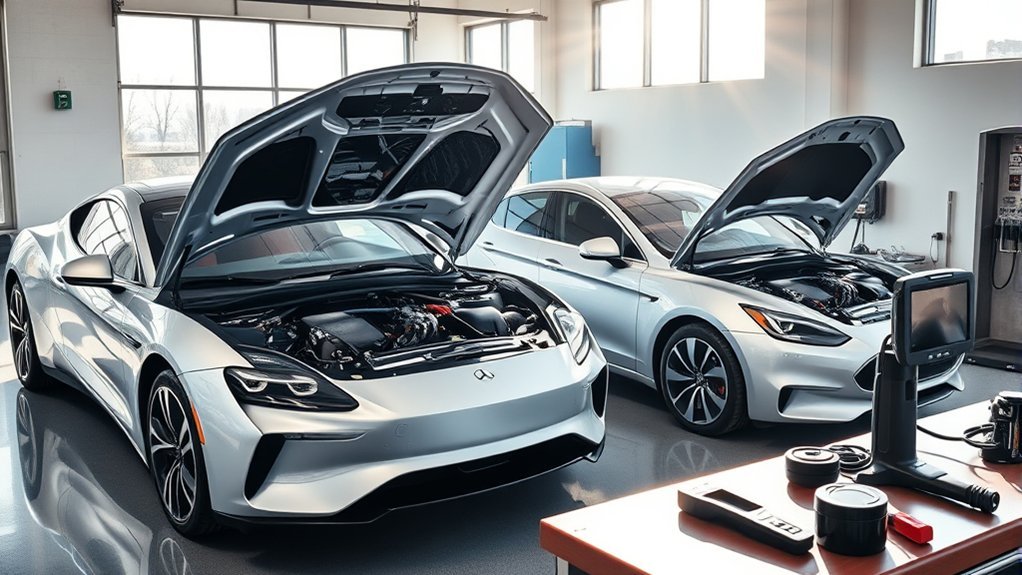
When comparing hybrid and gas cars, it’s essential to understand their distinct operations. Hybrid cars combine an internal combustion engine with an electric motor, allowing you to switch between gas and electric power depending on your driving conditions. This flexibility optimizes fuel efficiency and enhances your driving experience. On the other hand, gas cars rely solely on internal combustion engines, burning fuel to generate power.
Hybrids also utilize regenerative braking, capturing energy during braking to recharge the electric motor, which reduces wear on the gasoline engine and improves miles per gallon (MPG). While hybrids typically come with a higher purchase price, the long-term savings on fuel can be significant. This blend of engine types and energy sources positions hybrids as a compelling choice for those seeking efficiency and sustainability, empowering you to make an informed decision about your vehicle’s impact on the environment.
Maintenance Needs: What Sets Hybrids Apart From Gas Cars?
While both hybrid and gas cars require regular maintenance, their needs differ markedly due to their distinct engineering. Hybrids typically offer lower overall maintenance costs, thanks to reduced wear on their gasoline engines. Here’s what you should keep in mind:
Hybrid and gas cars have unique maintenance needs, with hybrids generally offering lower costs due to reduced engine wear.
- Battery maintenance is essential for hybrids, as monitoring battery health can prevent costly repairs.
- Oil changes are less frequent in hybrids, reducing your upkeep time.
- Regenerative braking decreases brake wear, extending the life of brake components.
- Gas vehicles often incur higher costs due to more complex engines and frequent part replacements.
- Specialized technicians are usually necessary for hybrid repairs, especially for high-voltage systems.
Comparing Fuel Costs and Savings Over Time
When you compare fuel costs between hybrid and gasoline cars, the savings can be substantial. With hybrids costing about $1,137 annually versus $2,425 for gas vehicles, it’s clear you’ll spend less at the pump. Over time, these savings add up, making hybrids an appealing option for both your wallet and the environment.
Fuel Efficiency Comparison
Fuel efficiency is an essential factor to take into account when comparing hybrid and gasoline cars, as it directly impacts your wallet over time. Hybrids offer significant advantages over traditional gasoline vehicles, making them a smart choice for cost-conscious drivers.
- Many hybrids exceed 35 MPG for SUVs and 45 MPG for sedans.
- Average yearly fuel costs for hybrids are around $1,137, compared to $2,425 for gasoline cars.
- The 2024 Toyota RAV4 shows projected savings of $400 for hybrid models.
- Fuel savings break-even point for hybrids is just over four years.
- City driving boosts hybrids’ efficiency, highlighting gasoline drawbacks.
Choosing a hybrid not only saves money but also promotes a more sustainable driving experience.
Long-Term Savings Analysis
Over the course of ownership, many drivers can expect to save thousands by choosing a hybrid over a gasoline vehicle. With hybrids averaging $1,137 in yearly fuel costs compared to $2,425 for gas cars, the financial analysis reveals significant long-term benefits. Although the 2024 Toyota RAV4 hybrid costs $1,650 more upfront, you can break even in just over four years. Consider these savings scenarios:
| Expense Type | Hybrid |
|---|---|
| Yearly Fuel Costs | $1,137 |
| Yearly Savings | $1,288 |
| Break-Even Period | ~4 Years |
| Total Savings (10yr) | $12,880 |
| Tax Credits | Varies by State |
How Do Hybrid and Gas Car Insurance Rates Stack Up?
How do insurance rates for hybrid and gas cars compare? Generally, hybrids come with about a 9% higher insurance premium than gasoline vehicles, largely due to elevated repair costs and vehicle prices. Here’s a quick breakdown:
- National average car insurance premium: $1,529
- Hybrid average premium: $1,637
- Electric vehicle average premium: $2,280
- Factors influencing rates: driving history, location, vehicle type
- Potential for “green car” insurance discounts
Despite their advanced technology, hybrids and electric vehicles often carry higher insurance costs. However, it’s important to shop around and compare quotes, as many insurers offer discounts for eco-friendly vehicles. By doing so, you might find significant savings, making the premium comparison worthwhile. With some research, you can enjoy the benefits of hybrid driving without breaking the bank on insurance.
How Hybrid and Gas Cars Compare in Acceleration and Handling
When you compare hybrid and gas cars, you’ll notice distinct differences in acceleration and handling. Hybrids often provide smoother starts thanks to their electric motors, while gasoline vehicles excel in high-speed performance. Understanding these nuances can greatly enhance your driving experience, whether you’re traversing city streets or hitting the highway.
Acceleration Performance Differences
Acceleration performance varies considerably between hybrid and gasoline cars, shaping your driving experience in distinct ways. While hybrids excel in fuel efficiency, they often come with an acceleration delay due to their dual powertrains. Here’s how they stack up:
- Gasoline cars tend to offer quicker acceleration times.
- Hybrids provide a smoother, quieter start, ideal for urban driving.
- The added weight of hybrids can impact responsiveness.
- Gasoline vehicles typically achieve higher top speeds.
- Performance trade-offs exist, especially for those prioritizing speed.
Ultimately, if you crave rapid bursts and agility, gasoline might be your best bet. However, for a serene urban commute, hybrids shine, balancing efficiency with a unique driving experience.
Handling Characteristics Comparison
While acceleration plays a significant role in driving dynamics, handling characteristics are equally important in determining your overall experience behind the wheel. Hybrid cars generally provide excellent steering feedback at lower speeds, thanks to their electric motors, while gasoline cars shine at higher speeds with quicker responses. However, hybrids tend to be heavier, which can impact cornering stability, especially during sharp turns. Their regenerative braking enhances handling by stabilizing the vehicle during deceleration, unlike traditional systems in gasoline cars. Here’s a quick comparison:
| Feature | Hybrid Cars | Gasoline Cars |
|---|---|---|
| Weight | Generally heavier | Lighter |
| Steering Feedback | Smooth at low speeds | Quicker response |
| Cornering Stability | Enhanced by regenerative braking | Consistent but less stable |
| Power Distribution | Seamless electric/gas switch | Steady from the engine |
| Best Environment | Urban settings | Highways |
Driving Experience Insights
Hybrid and gas cars offer distinct driving experiences, each with its own set of advantages in acceleration and handling.
- Acceleration: Hybrids shine in urban commuting with instant torque delivery, providing smooth starts.
- Handling: Gas cars typically feel lighter, enhancing cornering stability compared to heavier hybrids.
- Driving Modes: Hybrids often feature selectable modes that optimize performance for city driving, allowing electric-only operation.
- Regenerative Braking: This technology captures energy during deceleration, offering unique driving sensations that differ from traditional gas braking.
- Fuel Efficiency: Hybrids excel in stop-and-go traffic, maximizing fuel efficiency where gas cars often struggle.
Ultimately, your choice depends on what driving sensations you crave and the environments you navigate most often.
Are Hybrids Better for City Driving?
When traversing the bustling streets of a city, the efficiency of hybrid cars becomes evident, especially in stop-and-go traffic. Hybrids excel in urban environments, leveraging electric efficiency to maximize fuel economy. You’ll often find these vehicles surpassing 45 MPG in city traffic, considerably reducing fuel consumption compared to traditional gas cars.
Their regenerative braking system captures energy during stops, enhancing efficiency while minimizing wear on brakes. This means you not only save on fuel but also enjoy a smoother driving experience, as hybrids operate quietly in electric mode, providing a pleasant respite amid congestion.
Moreover, with less reliance on gasoline, hybrids contribute to lower urban emissions, improving air quality in your surroundings. If you’re maneuvering city streets, choosing a hybrid can lead to both personal and environmental benefits, creating a more liberated driving experience in the heart of the urban landscape.
Environmental Impact: Emissions and Sustainability Considerations
As the world grapples with climate change and air quality issues, the environmental impact of vehicle choice has become more critical than ever. Choosing a hybrid over a gas car can considerably enhance your commitment to emission reduction. Here’s what you should know:
- Lower emissions: Hybrids cut greenhouse gases by about 40% during operation.
- Fuel efficiency: Achieving up to 35 MPG for SUVs and over 45 MPG for sedans, hybrids excel in urban environments.
- Regenerative braking: This technology captures energy typically lost, further reducing emissions.
- Battery production: While the production process has a higher environmental impact, the lifecycle emissions remain lower than traditional gas cars.
- Shifting trends: Nearly 60% of Americans are leaning toward hybrids, influenced by new environmental policies and sustainability goals.
How to Choose Between Hybrid and Gas Cars for Your Lifestyle
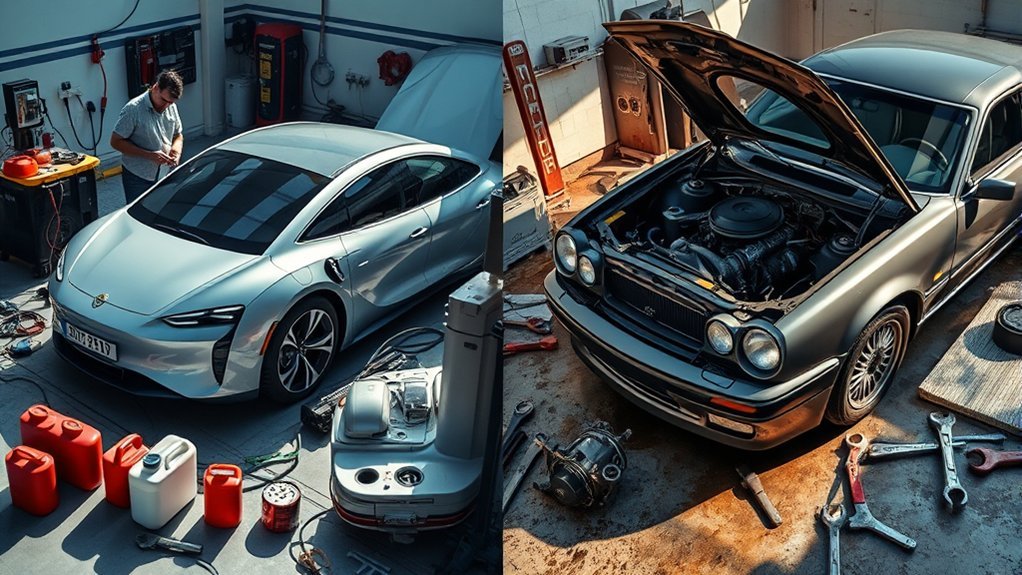
How do you determine the best vehicle for your lifestyle? Start by considering your commuting habits and lifestyle preferences. If you mainly drive in the city, a hybrid’s superior fuel efficiency can save you money over time, despite its higher initial cost. Think about your driving range; hybrids excel in urban environments, offering a quiet, smooth ride while reducing emissions, aligning with your environmental values.
Budget constraints also play a role; while hybrids may have higher upfront costs, lower fuel and maintenance expenses can provide long-term savings. Evaluate technology features as well—hybrids often come equipped with advanced options that enhance your driving experience. Finally, consider resale value; hybrids tend to hold their worth better as demand for eco-friendly cars rises. Weighing these factors can guide you to the right choice for your performance needs.
Frequently Asked Questions
Are Hybrid Cars Harder to Maintain Than Gas Cars?
Hybrid cars aren’t necessarily harder to maintain, but their engine complexity can be intimidating. You’ll benefit from battery longevity and reduced wear on other components, making them generally easier on your wallet in the long run.
Is Maintenance on a Hybrid More Expensive?
Maintenance on a hybrid isn’t generally more expensive. While battery replacement can be costly, fluid changes are similar to gas cars. You’ll likely enjoy lower overall costs due to fewer repairs and reduced wear.
Conclusion
Ultimately, choosing between a hybrid and a gas car really boils down to your lifestyle and preferences. If you often find yourself traversing city streets, a hybrid might just be your best friend. But if you love the thrill of open roads, a gas car could be calling your name. Whichever you choose, both options have their perks—like running into an old friend at the gas station or discovering a new route that takes your breath away.