Choosing between a hybrid and a gas car is really a question of how you drive, how long you plan to keep the vehicle, and which costs matter most to you. Hybrids usually shine in city traffic because they can recover braking energy and reduce idling, while gas cars can still make sense for lower upfront cost, simple repairs, and highway-heavy driving.
Quick Answer
A hybrid is usually the better choice if you drive a lot in stop-and-go traffic, want better MPG, and plan to keep the car long enough for fuel savings to matter. A gas car may be better if you want the lowest purchase price, simpler repairs, or mostly drive steady highway miles.
Key Takeaways
- Hybrids combine a gasoline engine with an electric motor, while gas cars rely only on an internal combustion engine.
- Routine maintenance is often similar, but hybrids can reduce brake wear because regenerative braking helps slow the vehicle.
- Fuel savings depend on the exact vehicle, gas price, annual mileage, and city/highway mix.
- Insurance can be higher for some hybrids because of vehicle value and specialized parts, so compare quotes before buying.
- Standard hybrids generally do not qualify for federal clean-vehicle tax credits; state, utility, or local incentives vary.
Understanding Hybrid vs. Gas Cars: How They Operate
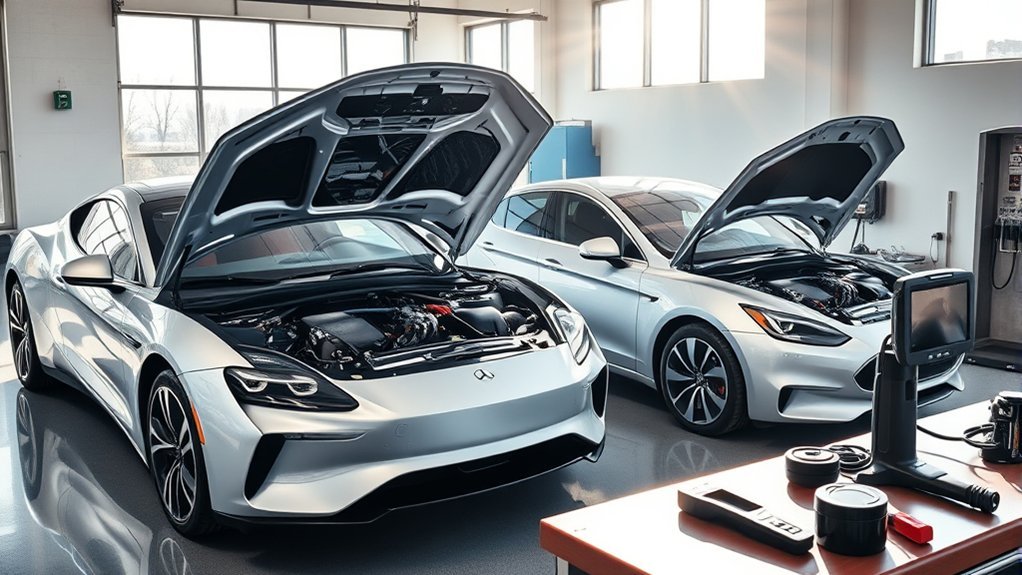
A traditional gas car uses an internal combustion engine to burn gasoline and move the vehicle. A hybrid electric vehicle, or HEV, uses a gasoline engine plus one or more electric motors. According to FuelEconomy.gov, hybrids can use electric motor assist, automatic stop/start, and regenerative braking to improve efficiency.
The important detail is that not all hybrids work the same way. A mild hybrid can help the engine and reduce idling, but it usually cannot drive on electric power alone. A full hybrid can often move at low speeds for short distances using electric power. A plug-in hybrid, or PHEV, has a larger battery and can be charged from an outlet, but it is a different ownership case because charging habits strongly affect fuel savings.
| Category | Hybrid Car | Gas Car |
|---|---|---|
| Power source | Gas engine plus electric motor | Gas engine only |
| Best driving environment | City and mixed driving | Highway driving and simple ownership |
| Fuel use | Usually lower, especially in traffic | Usually higher for comparable models |
| Maintenance | Similar routine service, often less brake wear | Familiar service, often more brake wear |
| Upfront cost | Often higher | Often lower |
Maintenance Needs: What Sets Hybrids Apart From Gas Cars?
Hybrids are not maintenance-free. They still have gasoline engines, oil, filters, coolant, tires, and other wear parts. The better way to compare maintenance is this: a hybrid keeps many gas-car service needs but adds high-voltage components, while also reducing wear in some areas.
The Alternative Fuels Data Center notes that HEVs and PHEVs have maintenance needs similar to conventional vehicles because they still include internal combustion engines. However, the electric system usually requires minimal scheduled maintenance, and brake systems generally last longer because regenerative braking helps slow the vehicle.
- Oil changes: Follow the owner’s manual. Some hybrids may run the engine less often in city driving, but oil-service intervals are not universally longer.
- Brakes: Hybrids often use regenerative braking first, so pads and rotors may wear more slowly than in a comparable gas car.
- Battery system: The high-voltage battery is designed for long service life, but battery cooling systems and warning lights should not be ignored.
- Tires: Hybrids can be heavier than gas-only versions, so tire pressure, alignment, and rotation still matter.
- Specialized repairs: High-voltage diagnosis should be handled by trained technicians.
Warning: Never work on orange high-voltage hybrid cables or battery components unless you are trained and equipped for high-voltage vehicle service. Use the owner’s manual and a qualified technician for hybrid-system repairs.
[Products Worth Considering]
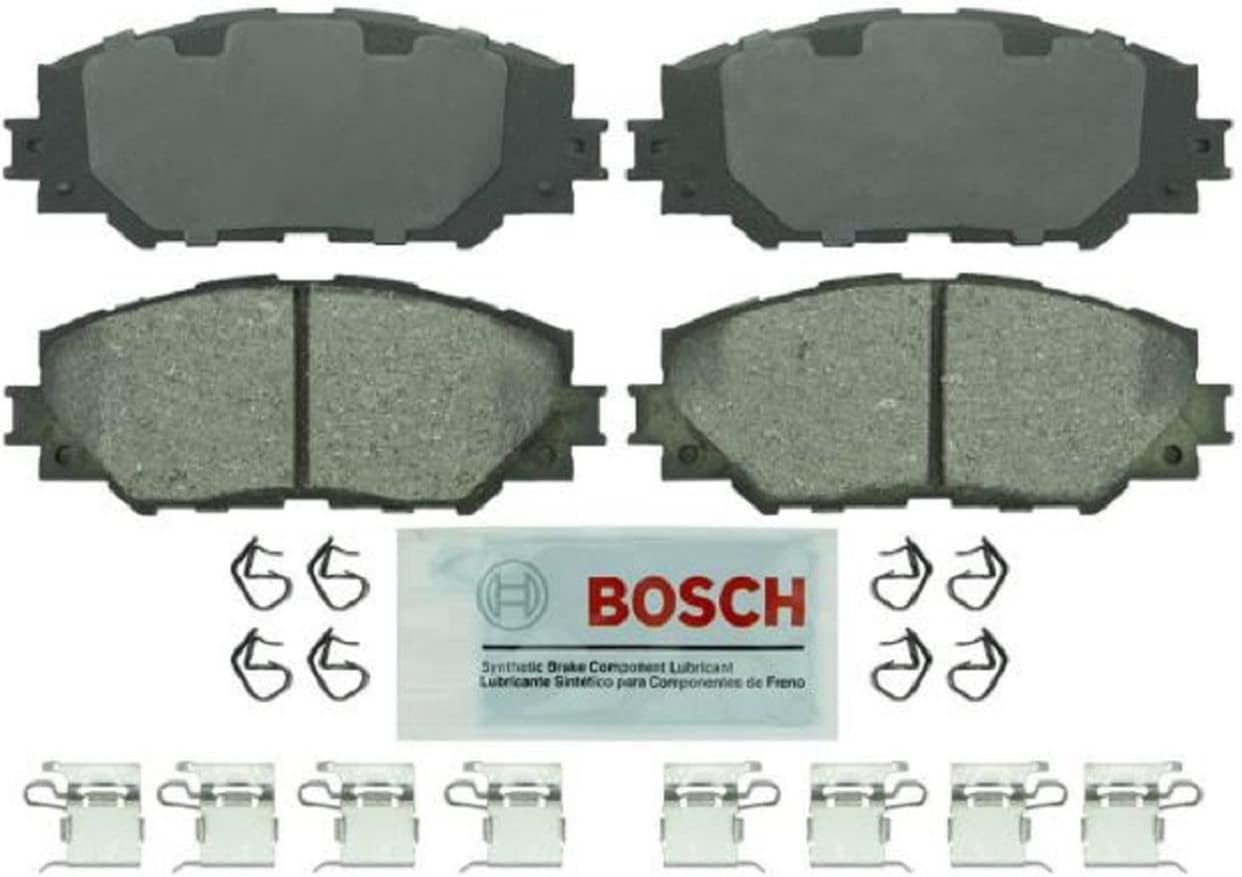
Bosch Blue ceramic front brake pads deliver dependable stopping power with platform-specific friction material designed for select Lexus, Pontiac, Scion, and Toyota vehicles. OE-style shims, slots, and chamfers help promote quiet braking, while the rust-inhibitive coating supports long-lasting performance and cleaner operation. The set includes hardware and synthetic lubricant for easier installation on one axle.

FOCUSFILTER 04152-YZZA1 OEM grade oil filter is designed to help protect your engine with reliable filtration and 10K mile protection. It cross references multiple OE part numbers and fits a wide range of Toyota and Lexus applications, making it a practical replacement for routine maintenance. Built for compatible vehicles including Camry, Avalon, Highlander, Tacoma, RAV4, Sienna, ES 350, and RX 350.

ECOGARD X5608 is a premium cartridge oil filter designed for a wide range of Toyota, Lexus, and Scion vehicles. It helps protect your engine by screening out harmful contaminants and is built for use with both synthetic and conventional oils. Included O-rings support a proper housing seal for dependable maintenance between oil changes.
Comparing Fuel Costs and Savings Over Time
Fuel savings are where hybrids usually make their strongest case, but the math should be model-specific. Do not rely on a generic “hybrids save $X per year” claim unless you know the MPG, fuel price, annual miles, and trim being compared.
A simple break-even formula is:
Hybrid break-even time = extra purchase price ÷ estimated annual fuel savings.
For example, FuelEconomy.gov’s 2024 Toyota RAV4 listings show the regular 2024 RAV4 at up to 30 combined MPG for front-wheel drive and the 2024 RAV4 Hybrid AWD at 39 combined MPG. The hybrid uses less fuel, but the exact payback period depends on the actual purchase price difference and your local gasoline price.
[Products Worth Considering]

ECOGARD XA5786 is a premium engine air filter designed to help protect your engine by trapping dust, dirt, pollen, and road particles before they enter the intake system. It supports smooth airflow for consistent engine response and fuel efficiency, and it is intended for regular replacement to help maintain reliable performance and engine longevity.

This CF10285 cabin air filter is designed to help keep your vehicle's interior air cleaner by capturing dust, pollen, soot, and road grime. It is compatible with a wide range of Toyota, Lexus, Jaguar, Land Rover, Subaru, Scion, and Pontiac models, making it a versatile replacement choice. The activated carbon design and easy glove-box installation make it a practical upgrade for fresher driving comfort.
Fuel Efficiency Comparison
Hybrids are often most efficient in city driving because they reduce idling and recover some braking energy. FuelEconomy.gov explains that hybrids are especially efficient in stop-and-go traffic due to regenerative braking, electric motor drive/assist, and stop-start technology.
Gas cars can narrow the gap on steady highway drives because the gasoline engine runs continuously and there is less braking energy to recover. That does not mean hybrids are bad on highways; it simply means their biggest advantage usually shows up in traffic, errands, school runs, delivery routes, and commutes with frequent stops.
Long-Term Savings Analysis
To estimate your own savings, compare two specific vehicles and use this process:
- Find the combined MPG for each vehicle on FuelEconomy.gov.
- Estimate annual miles driven.
- Use your local gasoline price.
- Calculate annual gallons: annual miles ÷ MPG.
- Calculate annual fuel cost: annual gallons × gas price.
- Subtract the hybrid’s annual fuel cost from the gas car’s annual fuel cost.
- Divide the hybrid’s extra upfront cost by the annual savings.
| Factor | Why It Matters |
|---|---|
| Annual mileage | The more you drive, the faster fuel savings can add up. |
| City vs. highway mix | Hybrids usually gain more advantage in stop-and-go driving. |
| Gas price | Higher fuel prices shorten the payback period. |
| Purchase price difference | A small hybrid premium is easier to recover than a large one. |
| Insurance quote | A higher premium can reduce fuel-savings gains. |
Pro Tip: Before buying, price the gas and hybrid version with the same trim level, drivetrain, and options. Comparing a base gas model to a loaded hybrid can make the hybrid look more expensive than it really is.
How Do Hybrid and Gas Car Insurance Rates Stack Up?
Hybrid insurance can cost more than insurance for a comparable gas vehicle, but it is not automatic. Insurers consider the vehicle’s value, repair costs, theft risk, safety features, your driving record, your location, your coverage limits, and your deductible.
Hybrids may carry higher premiums when the hybrid version costs more to replace or uses specialized parts. On the other hand, some hybrid models have strong safety ratings, moderate repair costs, or insurer discounts that narrow the gap. The only reliable answer is to get quotes for the exact VIN or trim before you buy.
- Compare at least three insurers for the exact gas and hybrid models you are considering.
- Ask about low-mileage, safe-driver, telematics, bundling, and green-vehicle discounts.
- Check the cost difference for comprehensive and collision coverage, not just liability.
- Consider whether a higher deductible makes sense for your budget.
Note: Insurance savings or increases can erase part of your fuel savings. Treat insurance as part of total ownership cost, not a separate afterthought.
How Hybrid and Gas Cars Compare in Acceleration and Handling
There is no single winner for acceleration and handling because the answer depends on the model. Some hybrids feel quick from a stop because electric motors deliver immediate torque. Some gas cars feel more responsive at higher speeds because they are lighter or tuned for performance.
Acceleration Performance Differences
In city driving, many hybrids feel smooth and responsive because the electric motor can help the car move from a stop. This makes low-speed driving feel quiet and relaxed. In performance-focused gas cars, the engine may deliver stronger sustained power at higher speeds, especially when the vehicle is designed for sport driving rather than fuel economy.
For everyday buyers, the best test is simple: drive both versions on the same route. Include a stoplight launch, a hill, a merge onto a highway, and a short stretch of rough pavement.
Handling Characteristics Comparison
Hybrid components can add weight, but battery placement may also lower the center of gravity in some designs. Gas cars may feel lighter, while hybrids may feel more planted. Steering feel, suspension tuning, tire choice, and drivetrain layout often matter more than whether the badge says hybrid or gas.
| Driving Trait | Hybrid Tendency | Gas-Car Tendency |
|---|---|---|
| Low-speed response | Often smooth and quick because of electric assist | Depends on engine and transmission tuning |
| High-speed passing | Good in many modern hybrids, but model-specific | Strong in larger engines or performance trims |
| Brake feel | Can feel different because regenerative and friction braking blend together | Usually more traditional brake feel |
| Ride and cornering | Can feel heavier or more settled | Can feel lighter, depending on trim |
Driving Experience Insights
If you want a quiet commute, lower fuel use, and smooth city driving, a hybrid may feel better every day. If you value the lowest weight, a traditional engine sound, or a specific sport-tuned trim, a gas car may be more satisfying. The best choice depends less on the powertrain label and more on the exact model you test-drive.
Are Hybrids Better for City Driving?
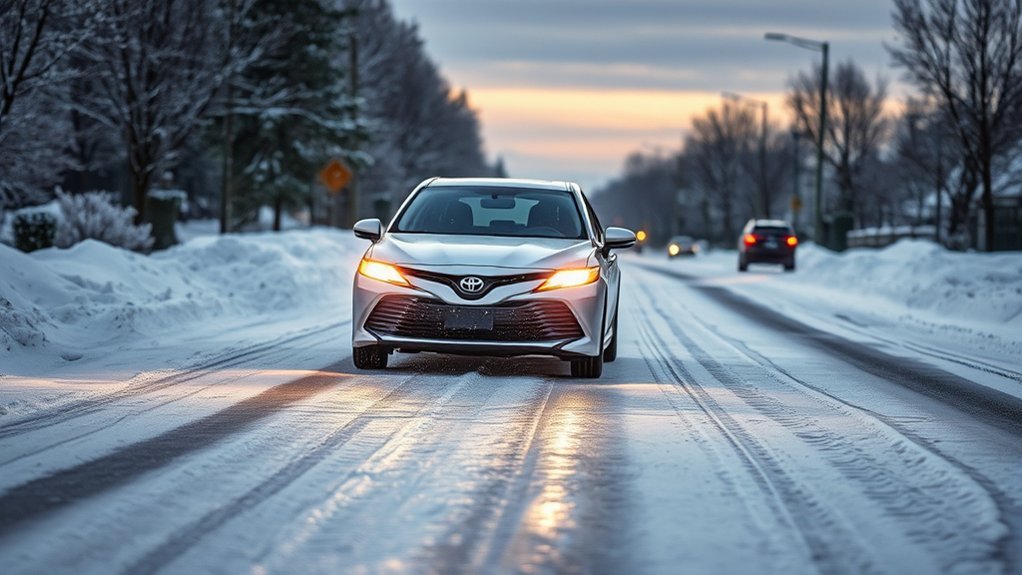
Yes, hybrids are often better for city driving. Stop-and-go traffic gives the hybrid system more chances to shut off the engine, use electric assist, and recover energy while braking. FuelEconomy.gov explains that hybrids recover energy normally lost during braking and are most efficient in city driving because more braking happens in stop-and-go traffic.
That is why many hybrid sedans and crossovers show a larger MPG advantage in city ratings than in highway ratings. For drivers who spend most of their time on short trips, errands, school pickup lines, rideshare work, or urban commuting, a hybrid can be a strong fit.
For drivers who mostly travel long highway distances at steady speeds, the fuel savings may still exist but can be smaller. In that case, compare the highway MPG, not just the combined MPG.
Environmental Impact: Emissions and Sustainability Considerations
Hybrids usually produce less tailpipe CO₂ than comparable gas cars because they burn less fuel. The exact reduction depends on the model and how it is driven. The U.S. Environmental Protection Agency states that every gallon of gasoline burned creates about 8,887 grams of CO₂, and a typical passenger vehicle emits about 4.6 metric tons of CO₂ per year.
That makes the basic emissions math straightforward: if a hybrid burns fewer gallons over the same miles, it usually produces less tailpipe CO₂. However, “eco-friendlier” should not be treated as automatic in every situation. Vehicle size, annual mileage, battery production, driving style, and how long you keep the car all affect the full environmental picture.
- Lower fuel use: Less gasoline burned usually means lower tailpipe CO₂.
- City advantage: Regenerative braking and stop/start help most in traffic.
- Battery impact: Hybrid batteries require materials and manufacturing, so long ownership helps spread that impact over more miles.
- Vehicle size still matters: A smaller efficient gas car may use less fuel than a large hybrid SUV.
Tax Credits, Incentives, and Battery Warranty
Standard hybrids generally do not qualify for the same federal clean-vehicle credits that applied to qualifying plug-in vehicles. Current IRS guidance says the New Clean Vehicle Credit, Previously-Owned Clean Vehicle Credit, and Qualified Commercial Clean Vehicle Credit are not available for vehicles acquired after September 30, 2025. State, utility, and local incentives may still vary, especially for plug-in hybrids or electric vehicles.
Battery warranty is also worth checking before you buy. Coverage varies by automaker and model year. For example, Toyota states that every Toyota hybrid battery is supported by a 10-year/150,000-mile limited warranty, whichever comes first. Other manufacturers may offer different coverage, so always read the warranty booklet for the exact vehicle.
Note: When buying a used hybrid, ask for service records and check whether the hybrid battery warranty transfers to the next owner. A pre-purchase inspection should include a scan for hybrid-system codes.
[Products Worth Considering]

OBD2 SCANNER & BATTERY TESTER IN ONE – The INNOVA 5210 OBD2 scanner not only reads and clears check engine light and ABS codes (coverage may vary) but also functions as a car battery tester to check alternator health and prevent unexpected breakdowns.

❀ Suitable for carbon, , alkaline and rechargeable batteries.

Your Car's Personal Doctor: Say Goodbye to Check Engine Light Troubles! The YM319 OBD2 scanner swiftly reads and clears engine fault codes, pinpointing the root cause of issues. Monitor your engine's every "breath" like a pro—view freeze frame data, check I/M readiness status, run oxygen sensor tests, and more. With a built-in database of over 63,000 fault codes, it delivers precise and reliable diagnostics, making it your trusted partner for vehicle maintenance and repair.
How to Choose Between Hybrid and Gas Cars for Your Lifestyle
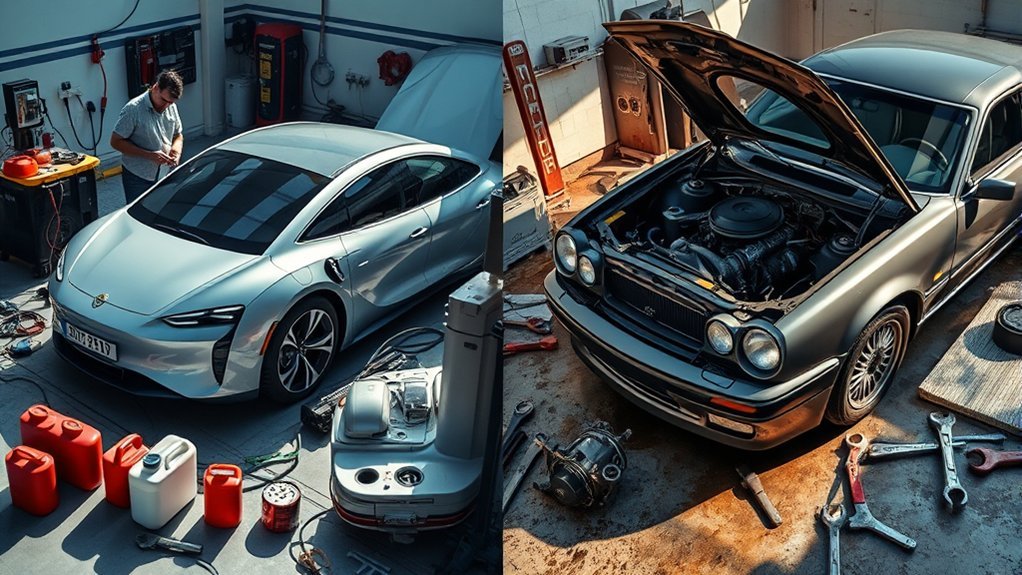
Start with your real driving pattern, not the average buyer’s. A hybrid can be a smart purchase if your daily routine includes traffic, short trips, high annual mileage, or expensive fuel. A gas car can still be the right choice if you drive fewer miles, mostly take highways, want a lower purchase price, or plan to own the vehicle only briefly.
Choose a Hybrid If
- You drive mostly in city or suburban stop-and-go traffic.
- You plan to keep the car long enough to benefit from fuel savings.
- You want better MPG without relying on public charging.
- You are comfortable using a shop that can service hybrid systems.
- You compare insurance first and the premium difference is reasonable.
Choose a Gas Car If
- You want the lowest upfront purchase price.
- You drive mostly steady highway miles where the hybrid advantage may be smaller.
- You prefer simpler, widely available repair options.
- You drive so few miles that fuel savings would take too long to recover the hybrid premium.
- You are buying an older used vehicle and battery warranty coverage is expired or unclear.
Frequently Asked Questions
Are hybrid cars harder to maintain than gas cars?
Not usually for routine service. Hybrids still need oil changes, filters, tires, coolant checks, and inspections like gas cars. The main difference is that hybrids add high-voltage components that require trained technicians, while regenerative braking can reduce brake wear.
Is maintenance on a hybrid more expensive?
Routine maintenance is often similar to a gas car, and brake service may be less frequent. Expensive repairs can happen if high-voltage components fail outside warranty, so battery coverage, service history, and a pre-purchase inspection matter when buying used.
Do hybrids really save money on gas?
They often do, especially in city driving, but savings depend on MPG, gas prices, annual mileage, and the price difference between the hybrid and gas version. Use the break-even formula before buying: extra hybrid cost divided by annual fuel savings.
Are hybrids better than gas cars for highway driving?
Hybrids can still be efficient on highways, but their biggest advantage usually appears in stop-and-go driving. If you mostly drive highways, compare the highway MPG and purchase price closely before assuming the hybrid will pay for itself.
Do standard hybrids qualify for tax credits?
Standard non-plug-in hybrids generally do not qualify for federal clean-vehicle credits. Federal clean-vehicle credit rules have also changed for vehicles acquired after September 30, 2025. Check current IRS, state, utility, and local incentive rules before buying.
Conclusion
A hybrid is often the smarter pick for drivers who spend a lot of time in traffic, drive enough miles to benefit from fuel savings, and want better efficiency without plugging in. A gas car can still be the better value if you drive fewer miles, want a lower purchase price, or prefer simpler repair options.
The best choice is not “hybrid always wins” or “gas is always cheaper.” Compare the exact models, calculate fuel savings with your real mileage, get insurance quotes, check warranty coverage, and test-drive both versions. That gives you the real answer for your budget and lifestyle.
Sources
- FuelEconomy.gov — How Hybrids Work — supports hybrid operation, regenerative braking, electric assist, and stop/start explanations.
- FuelEconomy.gov — Where the Energy Goes: Hybrids — supports city-driving efficiency and stop-and-go advantages.
- Alternative Fuels Data Center — Maintenance and Safety of Electric Vehicles — supports hybrid maintenance and brake-wear discussion.
- U.S. EPA — Greenhouse Gas Emissions from a Typical Passenger Vehicle — supports gasoline CO₂ and annual emissions context.
- FuelEconomy.gov — 2024 Toyota RAV4 Fuel Economy — supports the RAV4 gas vs. hybrid MPG example.
- IRS — Clean Vehicle Tax Credits — supports current federal clean-vehicle credit timing and eligibility caution.