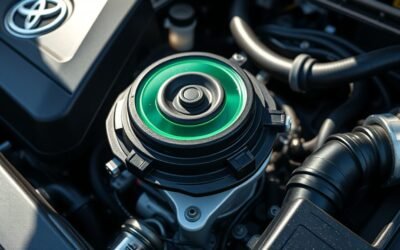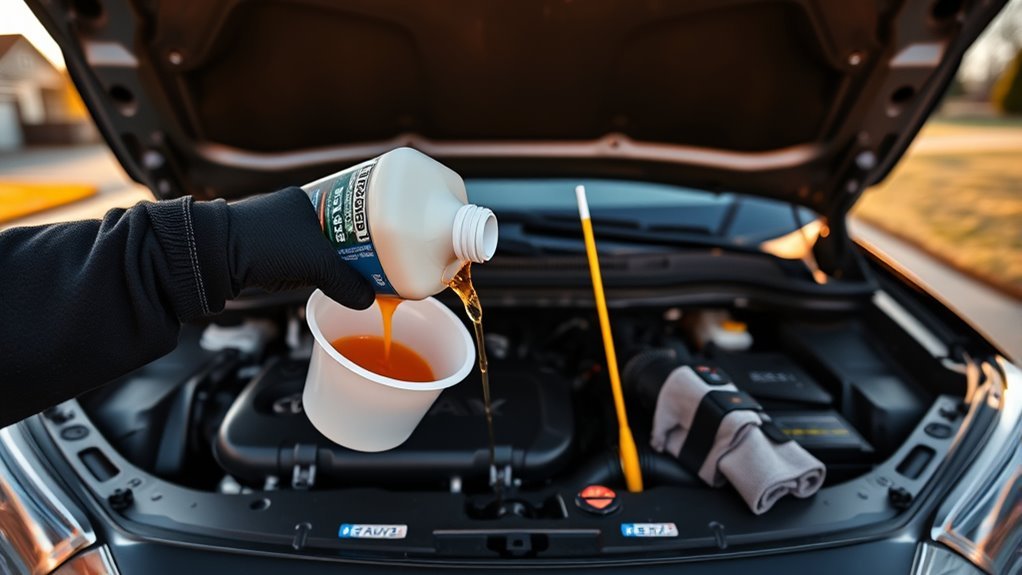
Let the engine cool about 15 minutes, park on level ground and set the parking brake; you’ll avoid burns and an inaccurate reading. Pull the yellow dipstick, wipe it, reinsert and check the oil between the low and full marks. If low, remove the oil cap and add 0W‑20 in half‑quart increments using a funnel, rechecking after each pour to prevent overfilling. Watch for leaks or warning lights, and continue below for step‑by‑step tips and troubleshooting.
Quick Steps: Top Off Engine Oil in a RAV4
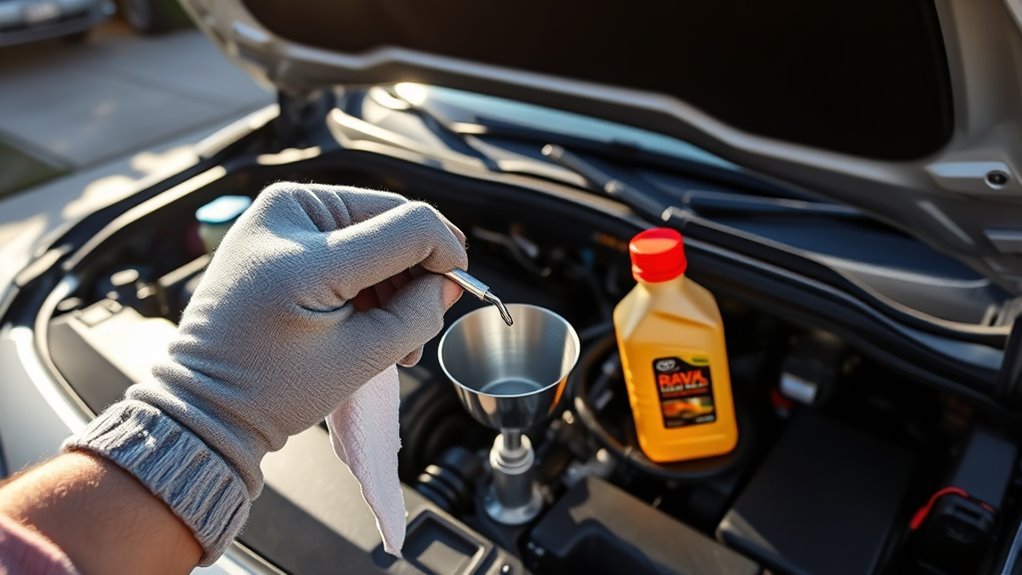
Start by letting the engine cool for at least 15 minutes to avoid burns, then pop the hood and find the dipstick with the yellow handle. You’ll pull the dipstick, wipe it clean, and reinsert it to read between the minimum and maximum dots; this quick check keeps your oil change or interim topping off precise. If the level’s low, remove the oil cap and add the manufacturer-recommended 0W-20 oil in half-quart to one-quart increments, pausing to recheck the dipstick after each addition. Don’t overfill—overfilling harms performance and wastes effort. Once the level sits within the correct range, securely replace the oil cap and inspect under the engine for leaks before closing the hood. These steps put you in control of routine engine maintenance without dependence on shops, so you’re freed from unnecessary appointments while protecting your RAV4’s longevity. Follow them deliberately and you’ll maintain safety and independence.
When and Why to Check Your RAV4’s Oil
Because engine oil is your RAV4’s lifeblood, check the level at least every 1,000 miles and anytime you notice unusual noise or a drop in performance; do this after the engine has cooled for at least 15 minutes so your reading is accurate. You’ll protect engine performance and extend freedom on the road by staying proactive. Maintain the oil between the dipstick’s min and max marks — low oil invites wear, warning lights, and potential failure.
- Check oil level at every oil change frequency interval or sooner if performance slips.
- Inspect after 15 minutes cool-down for an accurate dipstick reading.
- Watch for dashboard warnings or new engine noise; treat them as urgent.
- Top off to bring level within marks; never overfill, which can harm seals.
Be deliberate and regular: consistent checks liberate you from unexpected breakdowns and keep your RAV4 reliable.
Tools & Supplies You’ll Need
Before you open the oil cap, gather the essentials: a clean cloth, the yellow-handled dipstick, an oil funnel, and a quart of the recommended 0W‑20 engine oil. Have a small container or drip tray and gloves on hand to catch spills and protect your hands. Double-check the oil cap for the specified grade and work on a level surface with the engine cool.
Essential Tools Checklist
You’ll need a few specific items on hand to top off your RAV4’s oil safely and cleanly: 0W-20 motor oil (as stated on the oil cap), the yellow-handled dipstick for checking level, a funnel to prevent spills, a clean cloth or rag to wipe the dipstick and around the cap, and a spare container or bottle to hold excess oil or catch drips.
- 0W-20 motor oil — keep a single sealed bottle; topping off between oil change timing avoids unnecessary engine wear.
- Yellow-handled dipstick — confirm level before adding; you’ll resist overfilling.
- Funnel — steady, spill-free pouring protects components and your freedom from mess.
- Clean cloth & spare container — wipe seals, catch drips, and store leftovers responsibly; safety first.
Recommended Oil Types
Now that you’ve got the basic tools ready, pick the right oil to keep the engine running as intended. Use 0W-20 as specified on the oil cap for peak performance and fuel efficiency; that viscosity minimizes friction across temperatures and helps reduce engine wear. If 0W-20 isn’t available, you can temporarily use 5W-30 or 5W-20, but don’t make mixing oils a habit — inconsistent oil viscosity raises risk. Keep a quart of the recommended oil in your vehicle for quick response to low-oil situations. Bring a funnel to add oil cleanly and a clean cloth to wipe the dipstick for accurate readings. Choosing the correct oil is practical self-reliance; it protects the engine and preserves your freedom on the road.
Safety Gear And Prep
When working on your RAV4, put on safety gloves and goggles to protect your hands and eyes from hot parts and oil splashes, and lay out a clean cloth or paper towels for wiping the dipstick and any spills. You’ll want deliberate workspace organization so you can move freely and finish quickly. Confirm you have 0W-20 oil (or 5W-30/5W-20 only for emergencies), a funnel, and a catch pan. Treat every step as intentional—liberate yourself from hesitation by being prepared.
- Safety gear: gloves, goggles, and clothes you don’t mind staining.
- Funnel: prevents messy pours in tight engine bays.
- Catch pan/container: captures drips and keeps the area clean.
- Clean cloths/paper towels and correct oil type.
How to Prepare the Engine and Park Safely

Before you start, park the RAV4 on level ground, set the parking brake, and turn off the engine so you can let it cool for at least 15 minutes to avoid burns from hot components. Use deliberate parking techniques: choose a firm, level surface and engage the brake to keep the vehicle immobile while you work. That stability protects you and guarantees accurate oil measurement once the oil settles.
While the engine is cooling, open the hood carefully—watch for residual heat around the exhaust manifold and other hot parts. Keep hands and loose clothing clear of sharp or hot surfaces. Confirm the vehicle is in a safe, stable position before performing any maintenance: chock wheels if needed and retract keys to prevent accidental starts.
Respect engine cooling time; rushing risks burns and inaccurate readings. These practical steps free you to work confidently and safely, preserving both your well-being and the RAV4’s integrity.
Read the Dipstick Correctly (RAV4)
Because accurate oil readings depend on technique, locate the yellow-handled dipstick, pull it out, wipe it clean with a lint-free cloth, reinsert it fully, and remove it again to check whether the oil level falls between the minimum and maximum dots; if it’s below the minimum, plan to add oil. You’ll practice disciplined dipstick maintenance so your engine stays reliable and you remain free from avoidable breakdowns. Read the oil level indicators calmly and without hurry.
Locate the yellow dipstick, wipe, reinsert, and recheck calmly—keep oil between min and max to avoid breakdowns
- Inspect the tip: confirm oil is clean enough to judge level; heavy sludge means service.
- Note the markers: the full zone sits at or just below the max dot—do not overfill.
- Repeat check: after a minute, reinsert and remove to verify consistency; one read isn’t enough.
- Record and act: if below min, add oil in small increments and recheck to restore safe level.
Treat this as an act of empowerment—regular checks protect your mobility and liberty.
How Much Oil to Add: Estimating Quarts
If your dipstick sits below the minimum dot, plan to add about one quart of oil and then recheck—the level often rises close to the safe range after a quart, but never assume it’s exact. You’ll act deliberately: add oil in increments, wait a few minutes for it to settle, and remeasure. If the stick is halfway between dots, add roughly half a quart; if it’s completely dry, expect to add about a full quart to reach the max. Topping off regularly protects your engine and keeps your oil capacity within design limits. Avoid overfilling by using small pours and pauses. Also respect oil viscosity recommendations when selecting what to add so the engine breathes free and runs clean.
| Dipstick reading | Estimated addition | Action |
|---|---|---|
| Below minimum | ~1.0 qt | Add, wait, recheck |
| Halfway | ~0.5 qt | Add, wait, recheck |
| Dry | ~1.0 qt | Add, wait, recheck |
| Near max | 0 qt | No add; monitor |
Which Oil to Use (0W‑20 + Acceptable Alternatives)
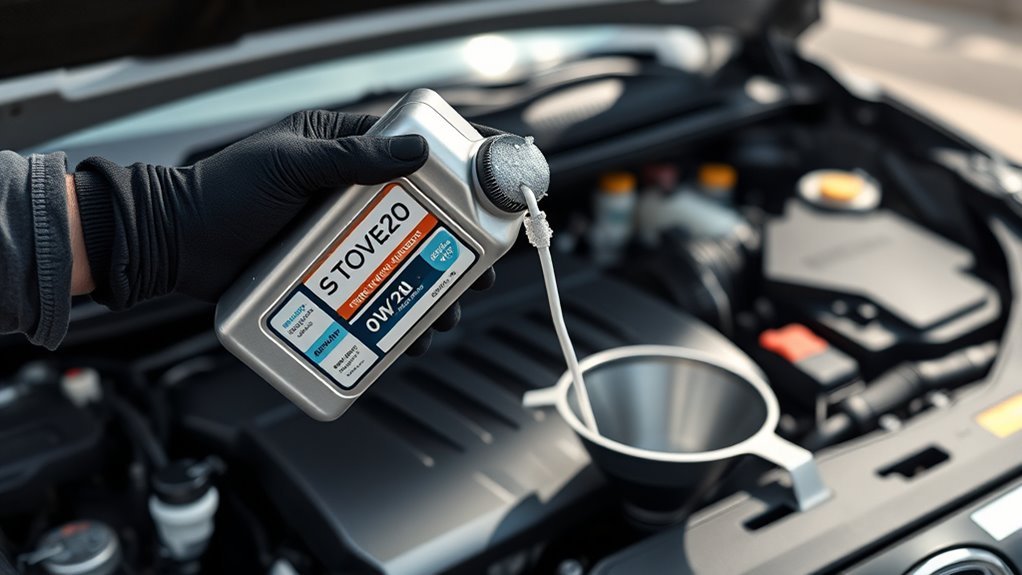
Once you’ve topped the level to the safe zone, pick the right oil to keep it there—Toyota specifies 0W‑20 for RAV4 engines because it balances protection and fuel economy across temperatures. Choose 0W‑20 whenever possible; it’s engineered for the engine’s tolerances and helps prevent wear.
- Use 0W‑20 as the standard: it matches recommended oil viscosity and preserves efficiency.
- If 0W‑20 isn’t available, consider 5W‑30 or 5W‑20 as emergency alternatives only — they’ll protect the engine short term.
- Don’t mix oils unless you must; mixing alters viscosity and additive balance, so plan a proper change soon if you’ve used an alternative.
- Verify recommendations on the oil cap and service manual to confirm compatibility.
Be deliberate: using the right oil liberates you from avoidable damage. In emergencies, a temporary alternative beats low oil, but return to 0W‑20 at the earliest opportunity to maintain engine life.
Step‑By‑Step: Add Oil Without Overfilling
Start by confirming the engine’s cooled and then pull the yellow-handled dipstick, wipe it clean, reinsert it fully, and note whether the oil sits between the min and max marks. If the level’s low, clean and remove the oil cap and add 0W‑20 in small increments—about half a quart at a time—then wait a minute and recheck the dipstick. Repeat until the level is within the safe range, then securely replace the oil cap to prevent spills.
Locate Dipstick And Cap
- You’ll first claim control by locating the dipstick location—look for the yellow handle in the engine bay and grasp it firmly.
- Pull the dipstick out, wipe it clean with a cloth, and reinsert it fully so your reading will be accurate and liberating.
- Remove the oil cap, confirm it’s clean, and keep it nearby; note the dipstick’s two dots marking minimum and maximum to decide if topping is needed.
- If the level sits below the minimum, you’ll add the recommended 0W-20 oil, but stop at small amounts and recheck; after pouring, reinsert the dipstick and confirm the level falls between the dots to avoid overfilling and preserve control over your vehicle.
Add Oil In Small Amounts
With the dipstick showing low oil and the cap removed, add the 0W-20 in small amounts—about half a quart at a time—to prevent overfilling. You’re choosing the correct oil viscosity, so pour deliberately and pause after each increment. Wait a minute, reinsert the dipstick, then pull it to verify the level between the minimum and maximum marks. If still low, repeat topping techniques in controlled steps until the level sits safely within range. Keep the vehicle on level ground and the engine cool; that accuracy frees you from guessing and keeps your RAV4 reliable. Once satisfied, securely replace the oil cap to prevent leaks or contamination. This method protects the engine and gives you confident, liberated control over maintenance.
Troubleshooting: Oil Light or Persistent Low Level
If the oil warning light comes on or you notice the dipstick consistently reads low, don’t ignore it—low oil pressure can quickly damage the engine and needs immediate attention. You’ll act fast: stop driving, park safely, and check the level and condition of the oil. Low readings signal low oil pressure and risk of engine damage; topping off may help short-term but isn’t a cure.
- Verify level with the dipstick on a level surface; add small amounts until in range.
- Inspect for visible leaks, pooling oil, or blue smoke—signs of loss you won’t accept.
- If topping doesn’t extinguish the light, don’t keep driving; have a mechanic test pressure and consumption.
- Preserve your freedom: insist on diagnostics for leaks, worn seals, or faulty pumps rather than temporary fixes.
Respect warnings, avoid catastrophic failure, and demand thorough repairs so your vehicle serves you reliably.
Preventing Frequent Top‑Ups: Maintenance Tips
Keep to the manufacturer’s oil-change interval (usually 5,000–7,500 miles) and use the specified 0W‑20 oil and a quality filter to reduce consumption and protect the engine. Check your oil level every 1,000 miles or at each fill‑up and inspect under the car for drips so you catch leaks early. If you’re topping off more than usual, address the underlying issue promptly to avoid engine damage.
Regular Oil Change Schedule
Although sticking to Toyota’s recommended interval—generally every 5,000 to 7,500 miles—won’t eliminate all oil top‑ups, scheduling changes at those mileage points and using the specified 0W‑20 oil will greatly reduce low‑oil events and protect engine components. You’ll control oil change frequency and understand oil quality impact by following a strict schedule and choosing high‑quality synthetic 0W‑20. Keep a concise maintenance log and check levels monthly or before long trips.
- Record miles and date at each change to spot consumption trends.
- Use OEM‑specified 0W‑20 synthetic to maximize protection and interval length.
- Check oil monthly; top off only to reach safe mark, not overfill.
- Replace filter with every oil change to preserve oil integrity.
Stay vigilant; a disciplined routine frees you from emergency top‑ups.
Monitor For Leaks
Because a slow leak can turn into a major problem, inspect under the vehicle and around the engine bay regularly for puddles, dark stains, or fresh oil on seals and gaskets. You’ll perform basic oil leak detection by checking beneath the RAV4 after it’s parked and wiping around the oil filter and drain plug during each oil change to reveal hidden seepage. Check oil level every few weeks so you catch unusual consumption early; needing a top‑up more than once a month signals a fault. If seals or gaskets show wear, prioritize seal maintenance and replace them promptly to stop loss and protect the engine. These steps free you from surprise breakdowns and keep topping‑offs intentional, not continual.
Use Correct Oil Grade
Noticing leaks or unusual consumption is a good prompt to review what oil you’re using, since the correct grade helps prevent frequent top‑ups and premature wear. Use the manufacturer‑recommended 0W-20 to match oil viscosity and preserve engine longevity. If you’ve got to top off between changes, don’t mix grades unless temporary: 5W-30 or 5W-20 can work briefly, but return to 0W-20 at the next service.
- Always confirm 0W-20 for RAV4 models; check the owner’s manual.
- Log each top‑up and change to spot rising consumption or leaks.
- Change oil every 5,000–7,500 miles to reduce topping needs.
- If you notice abnormal consumption, stop driving and inspect to protect engine longevity.
Stay deliberate; choose the right viscosity and reclaim control.
Frequently Asked Questions
Can I Just Top up My Car Engine Oil?
Yes — you can top up engine oil, but check the oil level first, use the right type, add slowly, recheck, and follow maintenance tips; don’t ignore repeated low levels, as they could signal leaks or bigger issues.
Can I Top off Engine Oil Myself?
Yes — you can, like tending a campfire, top off oil yourself: follow oil maintenance tips, check dipstick, add slowly, use correct grade, avoid overfill; you’re asserting engine care essentials while staying cautious and empowered.
Conclusion
Keep it simple and stay safe: check oil when the engine’s cool, park level, and wipe the dipstick before reading so you don’t get a false low. Use 0W‑20 unless your owner’s manual allows an alternative, and add small amounts—one ounce at a time—checking the dipstick between fills. Don’t overfill; too much oil can bite you back. If the oil light stays on or levels drop fast, see a pro to avoid bigger trouble down the road.