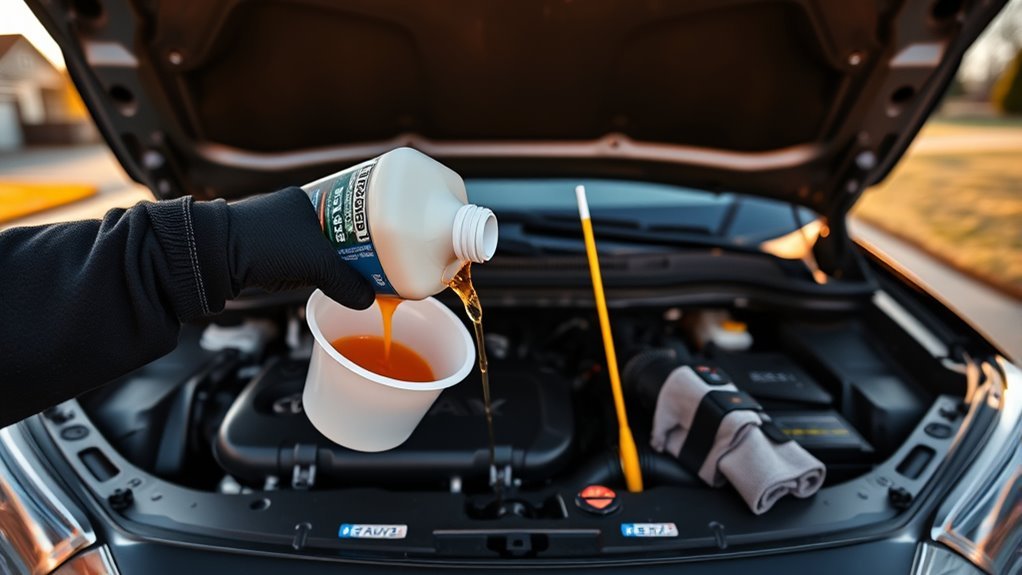
Adding oil to a Toyota RAV4 is a simple owner-maintenance job, but the details matter: the vehicle must be level, the oil level must be read correctly, and the oil grade must match your exact model year and engine. Newer RAV4 models often specify SAE 0W-16, while some older models specify SAE 0W-20, so check the oil filler cap and your owner’s manual before pouring.
Quick Answer
To top off engine oil in a RAV4, park on level ground, shut the engine off, wait about 5 minutes for oil to drain back, check the dipstick, then add the same oil type already in the engine a little at a time. Stop when the level is between the low mark and refill upper limit mark.
Key Takeaways
- Always confirm the correct oil grade on the oil cap or in the Toyota owner’s manual for your exact RAV4 year and powertrain.
- For many newer RAV4 models, Toyota lists SAE 0W-16 as the recommended oil, with SAE 0W-20 allowed only when 0W-16 is not available.
- Add oil slowly and recheck the dipstick after each small pour; overfilling can cause engine problems.
- If the oil warning light stays on, the level drops quickly, or you see leaks or smoke, stop driving and have the vehicle inspected.
At a Glance
| Time Required | 10–15 minutes |
| Difficulty | Easy |
| Tools Needed | Correct engine oil, clean funnel, clean cloth or paper towel, gloves, flashlight |
| Cost | Usually the cost of one quart of oil |
Quick Steps: Top Off Engine Oil in a RAV4
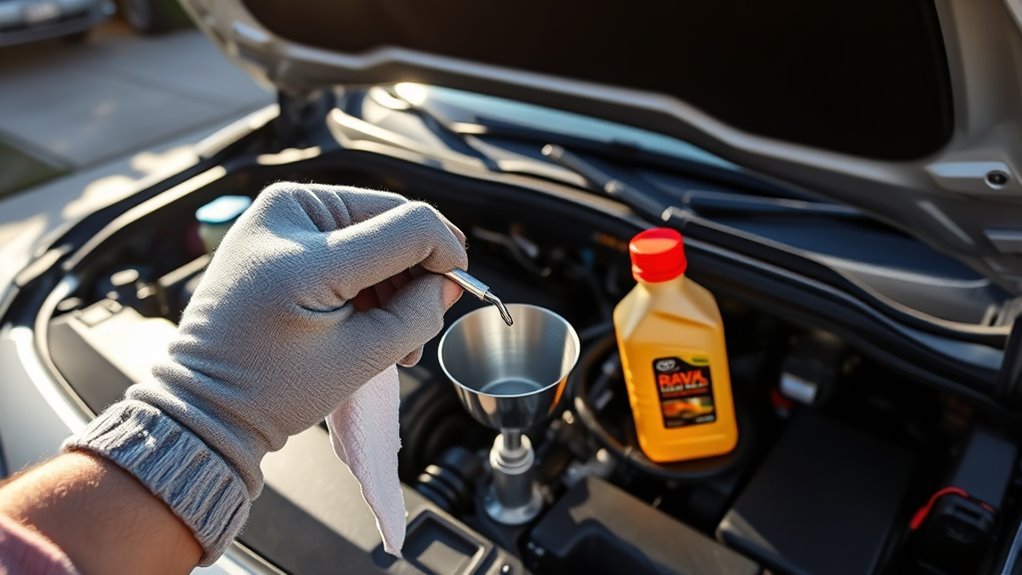
Start by parking your RAV4 on a firm, level surface and setting the parking brake. Turn the engine off and wait about 5 minutes so the oil can drain back into the oil pan. If the engine or exhaust area is hot, give it more time before reaching into the engine bay.
- Open the hood and locate the engine oil dipstick and oil filler cap.
- Pull the dipstick, wipe it clean, reinsert it fully, then pull it again to read the oil level.
- Confirm the oil grade on the oil cap or in your owner’s manual. Use the same oil type that is already in the engine whenever possible.
- Add oil slowly through a clean funnel if the level is below or near the low mark.
- Recheck the dipstick after each small pour and stop before the oil level exceeds the refill upper limit mark.
- Reinstall the oil cap, wipe spills, close the hood, and check for warning lights or leaks.
Warning: Do not keep driving if the red oil pressure warning light is on. A low oil-pressure warning can mean the engine is not being lubricated properly, and topping off may not solve the problem.
When and Why to Check Your RAV4’s Oil
Engine oil lubricates moving parts, helps control heat, and reduces internal wear. A RAV4 with too little oil can develop noisy operation, poor performance, oil-pressure warnings, or severe engine damage. A RAV4 with too much oil can also have problems, so the goal is not “as full as possible” — it is the correct range on the dipstick.
Check the oil level at least once a month, before long trips, after a long towing or mountain-driving day, and anytime you notice a burning-oil smell, oil spots under the vehicle, smoke from the exhaust, or an oil warning message. Toyota’s manual guidance for checking oil is to warm the engine, shut it off, wait about 5 minutes, and then check the level on the dipstick.
- Check on level ground for the most accurate reading.
- Use a clean dipstick reading, not the first oil smear you see when you pull it out.
- Keep the level between the low level mark and the refill upper limit mark.
- Investigate repeated low readings instead of treating constant top-offs as normal.
Tools & Supplies You’ll Need
Before removing the oil cap, gather everything you need so the job is clean and controlled. The most important supply is the correct engine oil for your specific RAV4.
[Products Worth Considering]

NGK Iridium IX spark plugs are designed to deliver a stable spark, reliable ignition, and long-lasting performance for compatible Toyota Camry 2.5L engines. The fine-wire iridium center electrode helps improve durability and efficient combustion, making these plugs a smart replacement choice for maintaining smooth engine operation. Sold in a convenient four-pack, they are built for consistent performance and dependable fitment.

Castrol EDGE 0W-20 advanced full synthetic motor oil is engineered for drivers seeking strong wear protection, excellent viscosity control, and thermal stability. It delivers superior performance in critical engine areas, including fuel economy, high-temperature protection, sludge control, and wear defense. Designed for extended oil-change intervals, it helps keep modern engines running smoothly under demanding conditions.

Castrol GTX Full Synthetic 5W-30 motor oil is designed to deliver maximum engine protection in severe driving conditions. It helps fight wear, control sludge, and resist viscosity breakdown while supporting longer intervals between oil changes. Formulated to meet or exceed key industry and vehicle manufacturer specifications, it offers dependable performance for modern engines.
Essential Tools Checklist
- Correct engine oil: Check the oil filler cap, owner’s manual, or Toyota’s manual lookup for your exact year and engine.
- Clean funnel: Prevents spills into tight areas of the engine bay.
- Clean cloth or paper towel: Needed for wiping the dipstick and cleaning small drips.
- Gloves and eye protection: Helpful when working near hot parts or messy fluids.
- Flashlight: Useful for reading the dipstick and checking around the oil cap.
Recommended Oil Types
The safest answer is always the oil grade listed for your exact RAV4. Toyota’s official information for the 2024 RAV4 lists ILSAC GF-6B multigrade engine oil with SAE 0W-16 as the recommended viscosity. It also says SAE 0W-20 may be used if 0W-16 is not available, but it should be replaced with SAE 0W-16 at the next oil change.
Some earlier RAV4 models specify 0W-20, and older generations may differ. Do not rely only on a generic internet answer. Use your oil cap, owner’s manual, or VIN-based service information as the final authority.
Note: When topping off, Toyota says to add engine oil of the same type already in the engine. If you used an emergency substitute, return to the recommended oil at the next oil change.
Safety Gear and Prep
Wear gloves, keep loose sleeves away from moving or hot parts, and work in a well-lit area. Do not smoke while working around the engine bay. Keep the oil bottle capped until you are ready to pour, and never leave the oil filler cap off after the top-off is complete.
How to Prepare the Engine and Park Safely

Park the RAV4 on level ground, shift into Park, set the parking brake, and turn the engine off. A level surface matters because oil pools differently when the vehicle is parked on a hill, which can make the dipstick reading look too low or too high.
If the engine has just been running, wait about 5 minutes before checking. This lets oil drain back into the oil pan. If the engine bay is very hot, wait longer so you can work without burning your hands. Keep children and pets away from the work area, and do not crawl under the vehicle for a simple top-off.
Read the Dipstick Correctly in a RAV4
Most RAV4 dipsticks use a low mark and an upper/refill limit mark. The exact shape can vary by model and engine, so read the marks rather than assuming every dipstick looks the same.
- Pull the dipstick out and wipe the end clean with a lint-free cloth or paper towel.
- Reinsert it fully until it is seated all the way down.
- Pull it out again and hold it level so the oil does not run along the stick.
- Read both sides if needed; use the lower, more consistent wet line if oil is smeared.
- Confirm the level is between the low level mark and the refill upper limit mark.
A correct dipstick reading is the difference between a smart top-off and an accidental overfill. Wipe, reinsert, recheck, and add oil only when the reading is truly low.
How Much Oil to Add: Estimating Quarts
Do not pour in a full quart automatically unless the dipstick clearly shows the level is very low and your manual supports that amount. Toyota’s instructions for adding engine oil emphasize adding slowly and checking the dipstick so the level does not exceed the refill upper limit mark.
For a top-off, start small. A quarter quart to a half quart is usually a safer first pour than a full quart. Wait a minute or two after adding, then recheck the dipstick.
| Dipstick Reading | Estimated First Addition | What to Do Next |
|---|---|---|
| Near or slightly below low mark | About 1/4 quart | Add, wait, recheck |
| Clearly below low mark | About 1/2 quart | Add, wait, recheck |
| No oil visible on dipstick | Add small amounts carefully | Recheck often; inspect for leaks before driving |
| Between low and upper mark | Usually 0 quart | Do not top off unless your manual indicates otherwise |
| At or above upper mark | 0 quart | Do not add oil |
Pro Tip: Mark the side of a one-quart bottle in quarters before pouring. It makes small top-offs easier and helps prevent accidental overfilling.
Which Oil to Use: 0W-16, 0W-20, and Acceptable Alternatives
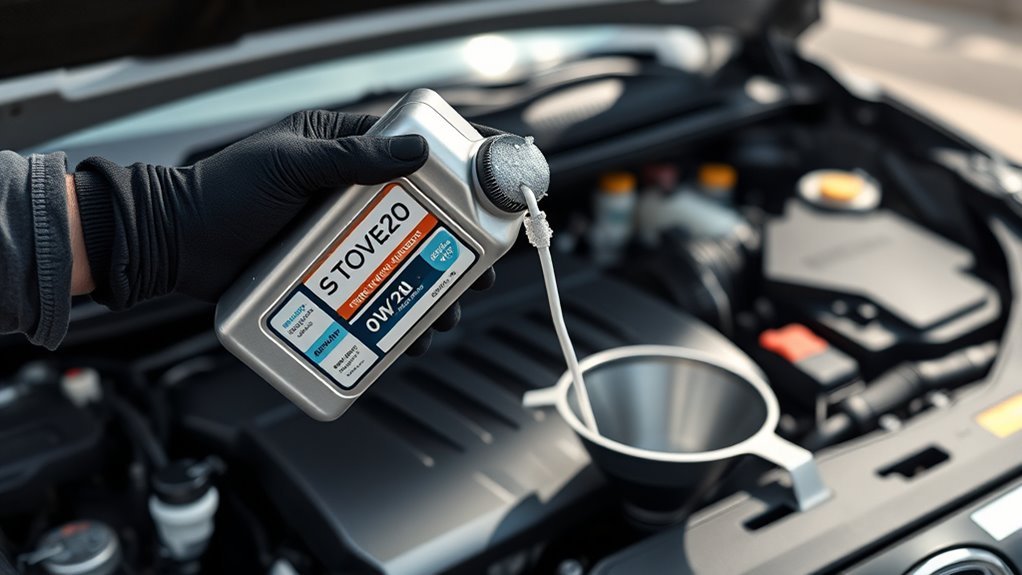
The original advice to “use 0W-20” is not correct for every RAV4. Many newer RAV4 models specify 0W-16, while some older RAV4 models specify 0W-20. That difference is important because modern engines are designed around specific oil viscosity and certification requirements.
- For newer RAV4 models that specify SAE 0W-16: Use 0W-16 that meets the manual’s listed oil grade, such as ILSAC GF-6B where specified.
- If 0W-16 is not available: Toyota allows SAE 0W-20 for certain newer RAV4 models, but says to replace it with SAE 0W-16 at the next oil change.
- For RAV4 models that specify SAE 0W-20: Use 0W-20 meeting the required performance standard.
- For older RAV4 models: Check the manual. Do not assume the current-generation oil recommendation applies.
The American Petroleum Institute explains current gasoline-engine oil categories such as API SP and ILSAC GF-6. When buying oil, look for the correct viscosity and the correct certification listed in your manual.
[Products Worth Considering]

This spill-proof radiator coolant filling funnel kit helps you refill cooling systems cleanly while reducing trapped air pockets that can affect heater and engine performance. It includes a 5-inch extension bar and 45-degree elbow for easier access under shrouds or at awkward angles. Color-matched caps for dedicated adapters make setup simpler and more organized.

The EcoNour foldable car windshield sun shade helps block UV rays and reduce interior heat, keeping your vehicle cooler while protecting the dashboard and seats from sun damage. Its compact, collapsible design makes it easy to install, remove, and store, and the broad coverage is ideal for many cars and SUVs.

Mobil 1 0W-16 is a low viscosity, advanced full synthetic motor oil
Step-by-Step: Add Oil Without Overfilling
Once you know the oil level is low and you have the correct oil, pour slowly. The goal is controlled maintenance, not speed.
[Products Worth Considering]

Free Hands - This funnel can be fixed where it should be, freeing your hands.

Fitment – Shonee Threaded oil funnel perfect fit fort Toyota, Lexus, and Scion vehicles with threaded oil filler caps (does not fit Prius or engines with half-turn tab style oil filler caps)

Compatible Models: Our car oil funnels are compatible with Toyota 2002-2008 Solara, 2002-2025 Camry, 2019-2021 Prius, 2005-2022 Avalon, 2017-2018 Corolla IM, 2007-2014 FJ Cruiser, 2001-2005 Echo, 2005-2025 4Runner, 2005-2022 Rav4, 2005-2019 Hilux, 2003-2014 Matrix, 2008-2022 Sienna, and more
Locate the Dipstick and Oil Filler Cap
- Open the hood and secure it properly.
- Find the dipstick and oil filler cap. The cap may show the recommended viscosity.
- Wipe the area around the oil cap so dirt does not fall into the engine.
- Remove the oil cap by turning it counterclockwise and place it somewhere clean.
Add Oil in Small Amounts
- Place a clean funnel in the oil filler opening.
- Pour about 1/4 to 1/2 quart of the correct oil.
- Wait a minute or two for the oil to settle.
- Wipe, reinsert, and reread the dipstick.
- Repeat only if the level is still below the safe range.
- Stop before the oil rises above the refill upper limit mark.
After the level is correct, remove the funnel, reinstall the oil filler cap firmly, wipe away spills, and start the engine briefly. Shut it off, wait a few minutes, and check once more if you want to confirm the final level.
What If You Added Too Much Oil?
If the dipstick shows oil above the upper mark, do not keep adding or assume it will “burn off.” Overfilled oil can foam, increase crankcase pressure, contaminate intake components, and trigger drivability problems. If the level is only slightly high, check again on level ground after the vehicle has been off for several minutes. If it is still above the upper mark, have the excess oil drained or extracted before normal driving.
Troubleshooting: Oil Light or Persistent Low Level
If the oil warning light comes on, the oil level keeps falling, or the dipstick reads low soon after a top-off, treat it as a problem to diagnose. Topping off can protect the engine temporarily, but it does not repair a leak, burning-oil issue, or oil-pressure problem.
- Check the level correctly: Park level, wait a few minutes, wipe and recheck the dipstick.
- Look for leaks: Check for oil spots under the vehicle, wet areas around the drain plug, oil filter, valve cover, or engine splash shield.
- Watch the exhaust: Blue smoke can point to oil burning inside the engine.
- Do not ignore warning lights: If the oil-pressure light remains on after the level is corrected, stop driving and get professional help.
- Track consumption: Record mileage and how much oil you add. A pattern helps a technician diagnose the cause.
Preventing Frequent Top-Ups: Maintenance Tips
Regular maintenance reduces the chances of being surprised by a low oil level. Toyota’s maintenance schedule for recent RAV4 models includes routine fluid inspections and scheduled oil and filter changes. Driving conditions can also affect how often service is needed, so use the schedule for your exact model and driving pattern.
Regular Oil Change Schedule
Follow the maintenance guide for your year, mileage, engine, and driving conditions. Many Toyota maintenance schedules include service checkpoints every 5,000 miles, with engine oil and filter replacement due at specified intervals depending on oil type and operating conditions. If you drive in heavy traffic, dusty areas, extreme temperatures, short-trip conditions, or under heavy load, service may be needed sooner.
- Keep receipts and log the date, mileage, oil type, and amount added.
- Use a quality oil filter that meets Toyota specifications.
- Reset the maintenance reminder only after the required service has been completed.
- Do not use topping off as a replacement for oil and filter changes.
Monitor for Leaks
Look under the RAV4 after it has been parked overnight. Fresh amber or dark brown spots can indicate engine oil. During oil changes, check the drain plug, filter housing, valve cover area, and lower engine area for wetness. A slow leak may start as a minor stain, but it can become a serious low-oil issue if ignored.
Use the Correct Oil Grade
Using the correct oil grade helps maintain fuel economy, cold-start lubrication, and engine protection. If your RAV4 calls for 0W-16, do not switch to thicker oil because it “feels safer.” If your RAV4 calls for 0W-20, do not assume 0W-16 is automatically better. Match the manual.
Frequently Asked Questions
Can I just top up my RAV4 engine oil?
Yes, you can top up the oil if the dipstick shows the level is low. Use the same oil type already in the engine, add slowly, and recheck the dipstick after each small pour. If the level keeps dropping, inspect for leaks or have the vehicle checked.
Can I top off engine oil myself?
Yes. Topping off engine oil is one of the easier maintenance tasks for a RAV4 owner. The key is to park level, read the dipstick correctly, use the correct oil, pour through a clean funnel, and avoid overfilling.
Does a Toyota RAV4 use 0W-16 or 0W-20 oil?
It depends on the model year and engine. Many newer RAV4 models specify SAE 0W-16, while some older models specify SAE 0W-20. Check the oil cap and owner’s manual for your exact vehicle before buying oil.
How long should I wait before checking the oil?
Toyota’s guidance for recent RAV4 models is to warm the engine, shut it off, wait about 5 minutes, and then check the oil level on the dipstick. If the engine bay is very hot, wait longer before touching components.
What happens if I overfill the oil?
Too much oil can cause foaming, pressure problems, leaks, smoke, or drivability issues. If the dipstick level is above the upper mark after a correct check, do not add more oil. Have the extra oil drained or extracted.
Conclusion
Keep the process simple: park level, wait a few minutes after shutdown, wipe and recheck the dipstick, confirm the correct oil grade, and add oil slowly. For many newer RAV4 models, that means 0W-16 rather than the older blanket advice of 0W-20, but your own oil cap and owner’s manual are the final authority. If the oil light stays on, oil disappears quickly, or you see leaks or smoke, stop relying on top-offs and get the RAV4 inspected.
Sources
- Toyota Manuals and Warranties — official Toyota owner’s manual lookup by vehicle.
- Toyota 2024 RAV4 Maintenance Data — engine oil grade, viscosity, and checking guidance.
- Toyota 2024 RAV4 Prime Engine Compartment — official adding-oil procedure and dipstick range warning.
- Toyota 2024 RAV4 Prime Warranty & Maintenance Guide — maintenance schedule and service-log references.
- American Petroleum Institute Latest Oil Categories — API and ILSAC oil-category information.