
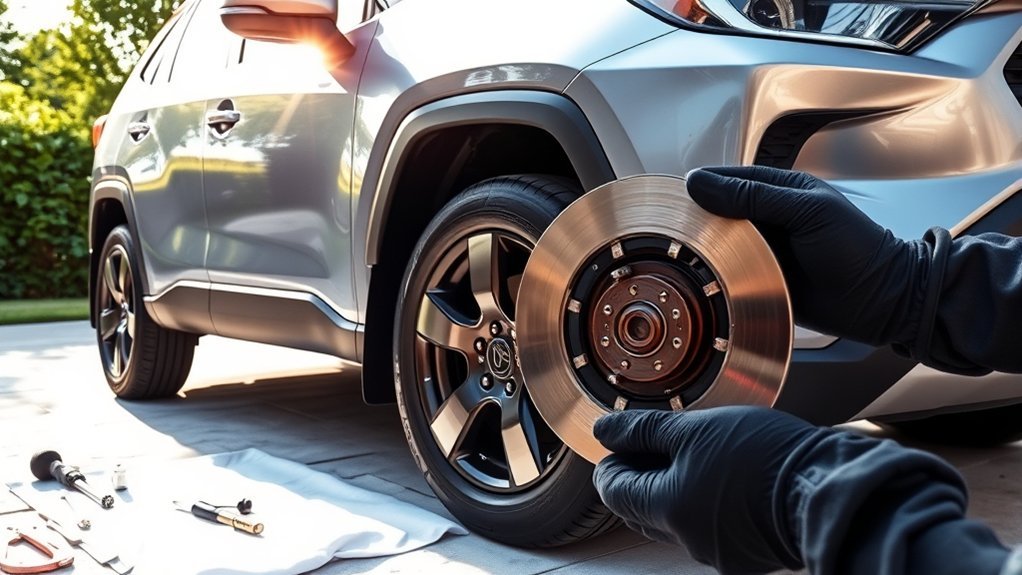
For a Toyota RAV4, brake maintenance should follow inspection results, not one guessed replacement mileage. For many recent U.S.-market models, the Toyota Warranty & Maintenance Guide schedules recurring brake checks and deeper measurements at longer intervals. Replace pads, rotors, fluid, hoses, or hardware when measurements, symptoms, leaks, damage, or your model-year guide show they are due.
Last updated: July 14, 2026 · Method: Reviewed against Toyota owner resources, Toyota brake-pad guidance, federal brake-fluid standards, and NHTSA recall tools.
Quick Answer
For many recent U.S.-market RAV4s, inspect the brake pads, discs, fluid, lines, and hoses during scheduled service, with pad-thickness and disc-runout measurements at the intervals listed in the model-year maintenance guide. Replace parts or flush fluid only when measurements, test results, leaks, damage, warning lights, noise, vibration, or poor pedal feel show a real need.
Key Takeaways
- Toyota does not publish one universal mileage for replacing every RAV4’s pads, rotors, or brake fluid.
- For many recent U.S.-market models, routine service includes visual brake checks, while longer intervals call for pad-thickness and disc-runout measurements.
- The 60,000- and 90,000-mile points repeat the deeper inspection cadence; they are not automatic replacement deadlines.
- Brake fluid should be evaluated for level, contamination, moisture, clarity, and boiling performance, then replaced when the manual or test results require it.
- Grinding, vibration, pulling, a soft or sinking pedal, leakage, or a brake warning light means the RAV4 needs service before the next scheduled visit.
At a Glance
| Time Required | 5–10 minutes for a basic visual owner check; 30–60 minutes for a professional wheel-off brake inspection |
| Difficulty | Easy for visual checks; professional-level for pad measurement, rotor runout, brake bleeding, and hybrid/Prime brake work |
| Tools Needed | Flashlight, gloves, maintenance log, and a qualified shop for lift, caliper tools, micrometer, dial indicator, and fluid testing |
| Cost | Visual checks are often included with routine service; pad, rotor, and fluid service costs vary by model year, region, and parts used |
Why Does Regular Brake Maintenance Matter for Your RAV4?
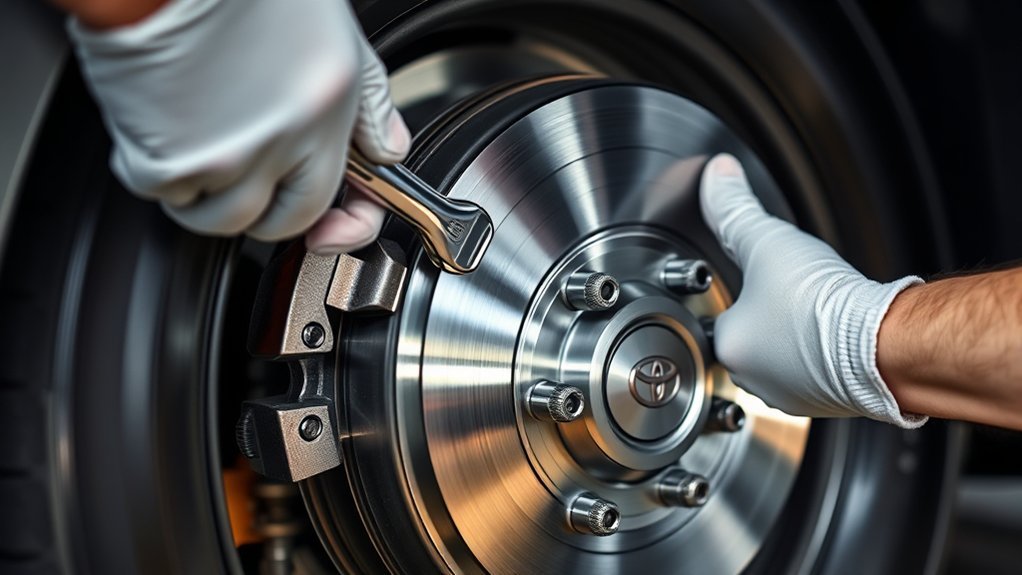
When you prioritize regular brake maintenance for your RAV4, you help protect stopping power, tire control, and confidence during sudden stops. Worn brake pads, damaged rotors, leaking hoses, or poor brake fluid condition can lead to longer stopping distances, pedal vibration, uneven braking, or expensive damage to nearby parts.
Toyota’s recent RAV4 maintenance guidance also makes one point clear: scheduled maintenance is not just about fixing problems after they happen. It is a system of recurring checks that helps you find worn pads, rotor runout, leaks, and fluid issues before they become major repairs.
For many recent RAV4 models, Toyota lists brake lining, drum, pad, and disc inspection at every 5,000-mile maintenance visit, with thickness and disc runout inspection every 30,000 miles.
Keeping a maintenance log is also smart. Toyota recommends keeping records that show the date, mileage, service performed, and parts installed. Those records help you track brake wear, support warranty discussions, and reassure a future buyer that the vehicle was cared for properly.
Warning: Do not keep driving normally if your RAV4 has grinding brakes, a brake warning light, visible brake fluid leakage, a pedal that sinks toward the floor, or a major loss of braking response. Stop in a safe place and arrange professional service.
Toyota RAV4 Brake Maintenance Schedule
The schedule below gives a practical owner-friendly view of what to expect. Always confirm the exact requirements for your model year, trim, engine, and market in the official Toyota owners manual and maintenance guide.
| Mileage / Time | Schedule Status | Brake Service Focus | What It Means |
|---|---|---|---|
| Every 5,000 miles or 6 months | Factory cadence for many recent U.S. models | Visual brake inspection and fluid check | Look for obvious pad wear, rotor damage, leaks, damaged hoses, low fluid, warning lights, and abnormal pedal feel. |
| Every 30,000 miles | Deeper factory inspection for many recent U.S. models | Measure pad thickness and disc runout | A technician should measure the inner and outer pads and the rotors instead of relying only on a view through the wheel. |
| 60,000 miles | Repeat of the 30,000-mile cadence | Repeat measurements; inspect fluid, lines, hoses, calipers, and hardware | Replace pads, resurface or replace rotors, or flush fluid only if specifications, symptoms, or test results show a need. |
| 90,000 miles | Repeat of the 30,000-mile cadence | Another complete measurement and condition review | Pay extra attention after city driving, mountain use, towing, heavy loads, winter-road exposure, or a history of uneven wear. |
| 100,000 miles | Practical high-mileage checkpoint, not a universal Toyota deadline | Review service history and age-related wear | Check pad and rotor history, fluid condition, hoses, calipers, slide pins, boots, corrosion, and any recurring symptoms. |
Note: Dealer-recommended services may be more frequent than the factory chart. Ask the service advisor to show pad thickness, rotor measurements, fluid test results, or leak evidence before approving extra brake work.
How Do You Know Whether to Inspect, Service, or Replace RAV4 Brakes?
Use the inspection result to choose the next step. Mileage tells you when to look; measurements and symptoms tell you what to repair.
| Finding | Best Next Step | Why |
|---|---|---|
| Pads wear evenly and remain above Toyota’s service limit | Record the measurements and recheck at the next interval | Replacement would be premature without a wear, noise, or performance problem. |
| One pad is much thinner than its pair | Inspect slide pins, caliper movement, hose condition, and hardware before installing pads | New pads can wear unevenly again if the underlying fault remains. |
| Rotor is below specification, cracked, deeply scored, or cannot remain above minimum thickness after machining | Replace the affected axle’s rotors and service the pads as required | A rotor must remain within Toyota’s dimensional and condition limits. |
| Fluid test shows excessive moisture, contamination, or inadequate boiling performance | Flush with the specification required by the model-year manual | Fluid condition, not color or mileage alone, determines whether service is justified. |
| Leak, sinking pedal, red brake warning light, or major loss of response | Stop driving normally and arrange immediate diagnosis | These symptoms can indicate a hydraulic or mechanical safety fault. |
[Products Worth Considering]

The Mityvac MV8500 Silverline Elite is a versatile automotive service kit for brake and clutch bleeding, diesel fuel priming, and vacuum or pressure testing. Its dual-capability pump streamlines diagnostics and maintenance across motorcycles, cars, trucks, and SUVs, while the ergonomic design supports comfortable use during longer jobs. Built with a durable zinc-aluminum die-cast body and a 4.5oz fluid reservoir, it delivers reliable performance for professional and DIY repair work.

This universal brake bleeder kit makes one-person brake and clutch line bleeding simple by using compressed air to create stable vacuum-assisted fluid flow. Its extra-large 3L tank helps complete full-system flushes with fewer interruptions, while the included refill bottle, flexible hose, and universal adapter support clean, efficient use on standard and ABS brake systems.

This universal brake bleeding kit lets you flush brake, clutch, and other hydraulic systems by yourself with fast, efficient vacuum-assisted operation. Built with a durable aluminum alloy pump, silicone tubing, and secure fittings, it helps maintain a tight seal for cleaner, easier service. The included blow-molded case keeps every part organized for convenient storage and transport between jobs.
What Brake Parts Should You Check Regularly?
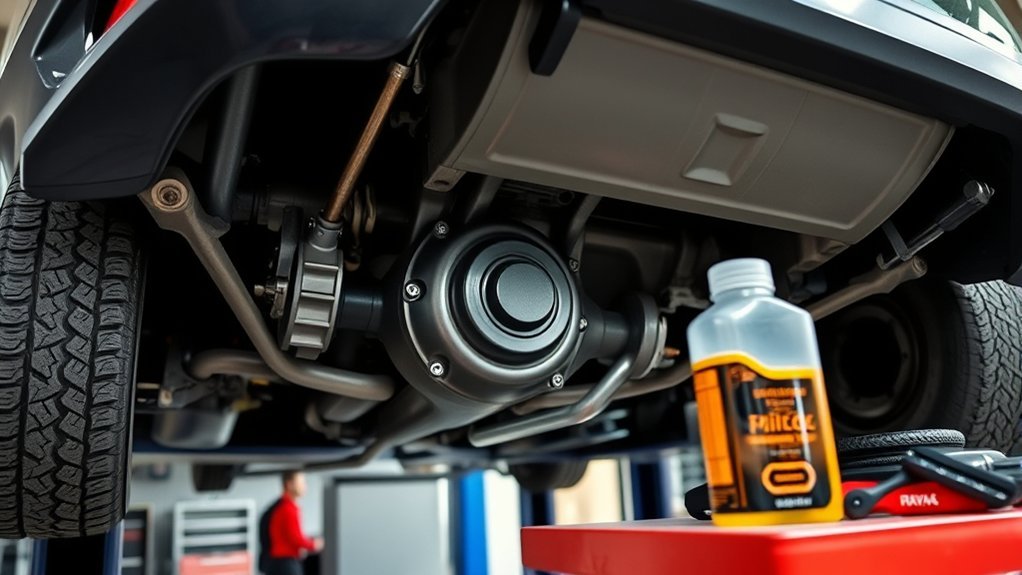
To keep your RAV4’s braking system working effectively, check the full system instead of focusing only on pads. A complete brake inspection should include:
- Brake pads or shoes: Check remaining friction material, uneven wear, cracks, glazing, and wear indicator noise.
- Rotors or drums: Look for scoring, cracks, hot spots, rust buildup, thickness issues, and runout that can cause pedal pulsation.
- Brake fluid: Check the level, color, clarity, and test results. Fluid that is dark, cloudy, contaminated, or moisture-heavy should be evaluated for replacement.
- Brake lines and hoses: Inspect for chafing, cracks, corrosion, swelling, wet spots, and leakage.
- Calipers and hardware: Check for sticking slide pins, torn boots, uneven pad wear, seized hardware, and fluid seepage.
- Pedal feel and warning lights: A soft pedal, sinking pedal, ABS light, brake light, or reduced response needs prompt diagnosis.
A basic owner check can spot obvious warning signs, but wheel-off measurement is more reliable. Ask the technician for actual numbers: inner and outer pad thickness, rotor thickness, rotor runout, and brake fluid condition.
[Products Worth Considering]
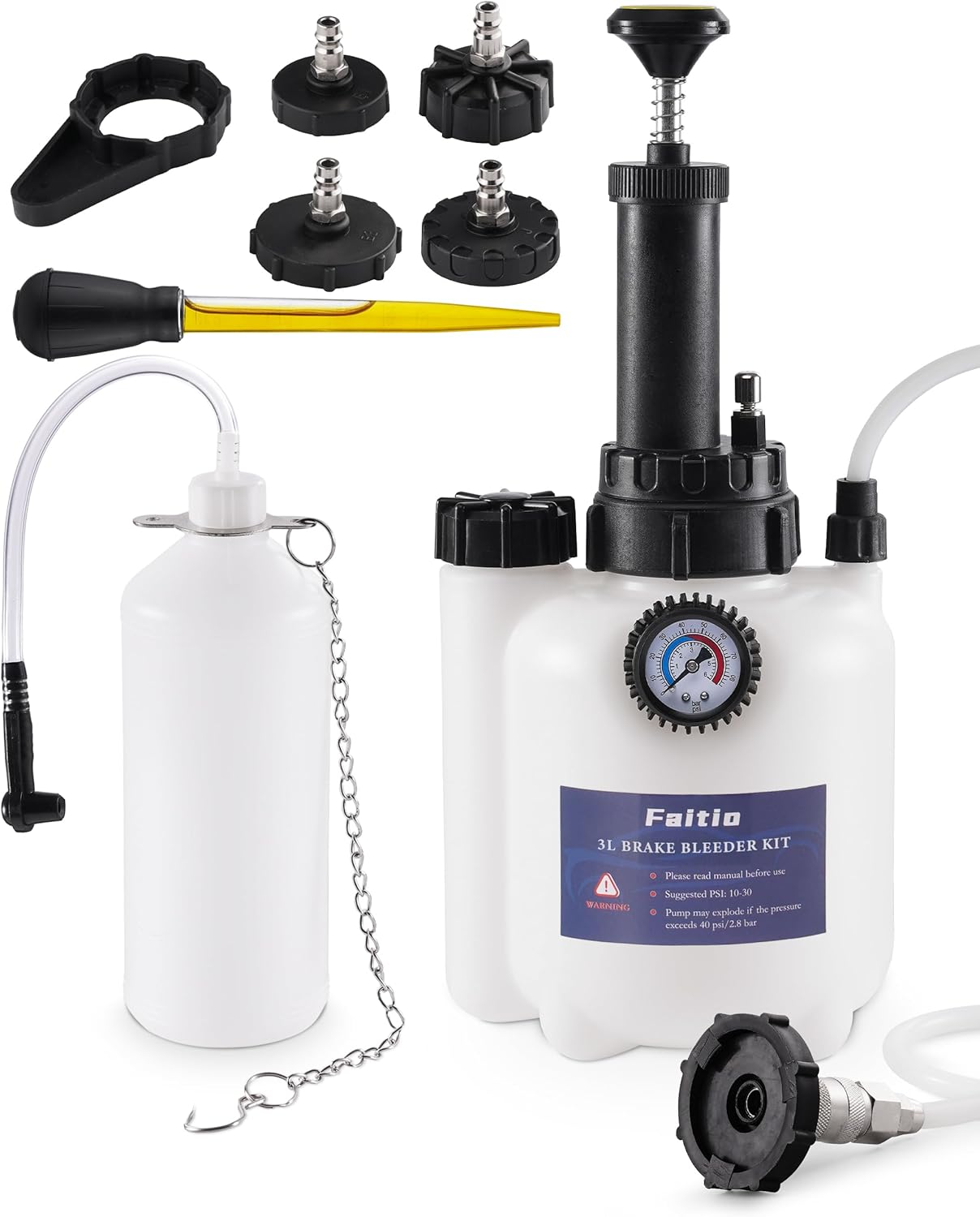
This one-man brake bleeding kit helps flush old brake fluid and remove trapped air for firmer, more responsive braking without the hassle of a second person. Its improved sealing and translucent catch bottle help prevent leaks while making fluid level checks easy during use. With multiple adapter sizes for many vehicle makes, it is a practical tool for clean, efficient brake system maintenance.
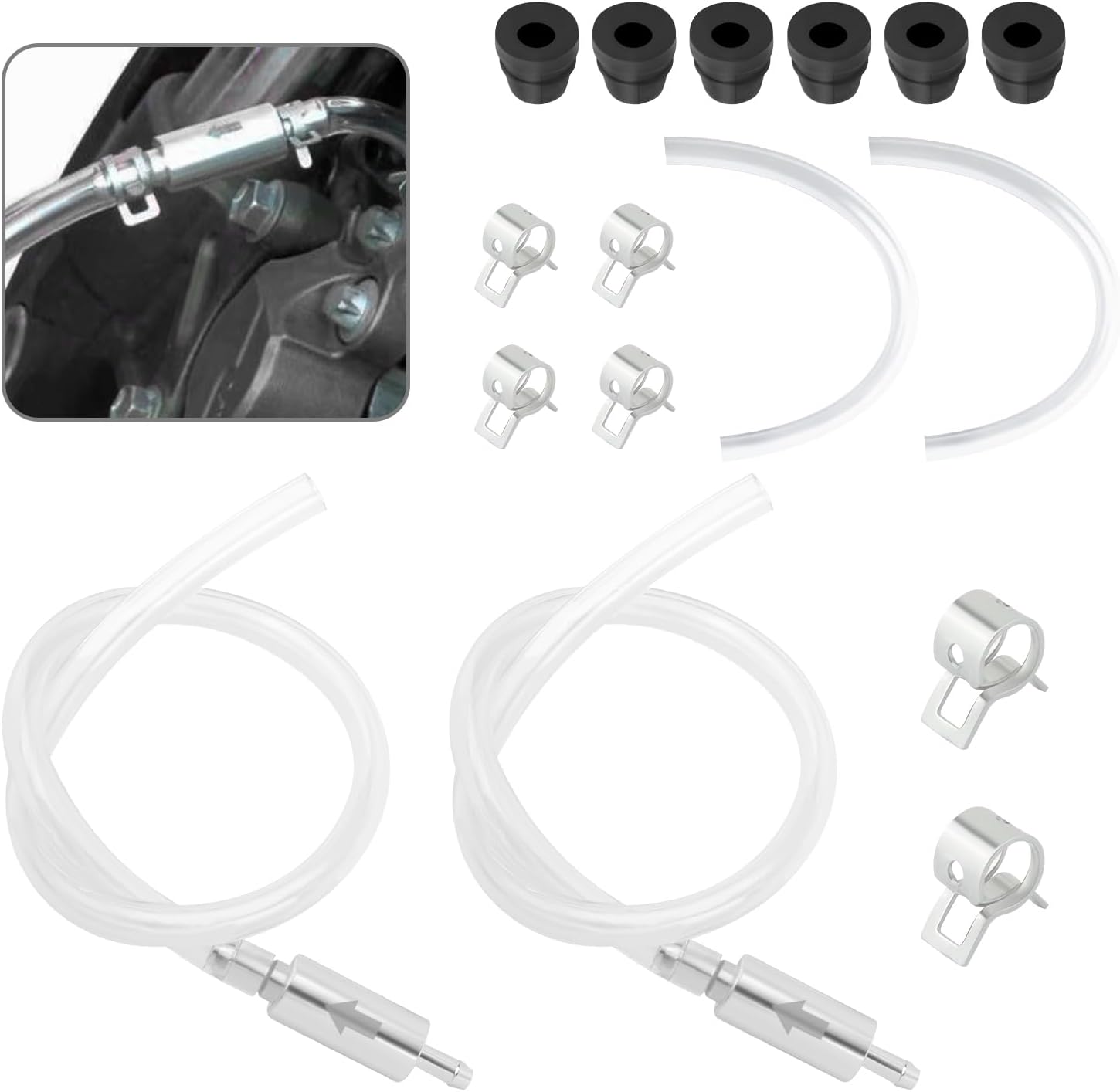
This brake bleeder kit helps make hydraulic brake bleeding easier on motorcycles, cars, and bikes with a simple one-way valve setup that helps prevent air and contamination from entering the system. It includes multiple hoses, clamps, and dust-proof screw caps for a cleaner, more controlled bleeding process. Durable rubber tubing and rust-resistant valves support repeated use and flexible installation around different brake layouts.

【Precision Measurement】: Equipped with a meticulously crafted and evenly marked scale, this tool provides highly accurate readings of the thickness of your brake pad down to the millimeter. Thus, you can monitor brake wear proactively, ensuring timely replacements that avoid potential brake failure.
What Changes the RAV4 Brake Service Interval?
Your RAV4 may need inspection or repair sooner when heat, load, corrosion, or repeated stops increase wear. The most important modifiers are:
- Stop-and-go traffic: Frequent braking increases pad and rotor use.
- Mountain driving, towing, and heavy cargo: More heat and vehicle load can accelerate wear and expose fluid or hardware problems.
- Salt, humidity, and long parking periods: Corrosion can affect rotor surfaces, caliper hardware, and brake lines even when mileage is low.
- Aggressive braking or riding the pedal: Extra heat can shorten pad life and contribute to vibration or uneven deposits.
- Hybrid or Prime operation: Regenerative braking may slow friction-pad wear, but low-use brakes still need checks for rust, sticking hardware, fluid condition, and uneven contact.
Use these conditions to shorten the inspection interval, not to guess a replacement date. A written wheel-off inspection remains the best basis for approving brake work.
RAV4 Brake Service Recommendations at 30,000 Miles
At 30,000 miles, your RAV4 should receive more than a casual glance at the brakes. Toyota’s maintenance notes for recent models call for brake pad/disc thickness and disc runout inspection at 30,000-mile intervals. That matters because uneven wear can hide on the inner pads where you may not see it through the wheel.
During this service, ask for a written inspection that includes:
- Front and rear pad thickness measurements
- Rotor thickness and runout readings
- Signs of rotor scoring, cracking, rust ridges, or heat damage
- Brake hose and line condition
- Brake fluid level and appearance
- Caliper slide pin and hardware condition
If the pads still have healthy material, the rotors are within specification, and the fluid tests well, you may not need any brake parts replaced at 30,000 miles. If the pads are close to the service limit, the rotors are scored, or the vehicle vibrates while braking, schedule the repair before the wear damages more expensive parts.
Pro Tip: If a shop recommends brakes at 30,000 miles, ask for the measured pad thickness in millimeters and whether the inner and outer pads are wearing evenly. Uneven wear can point to sticking hardware or caliper issues, not just normal pad use.
What to Expect During Brake Care at 60,000 Miles
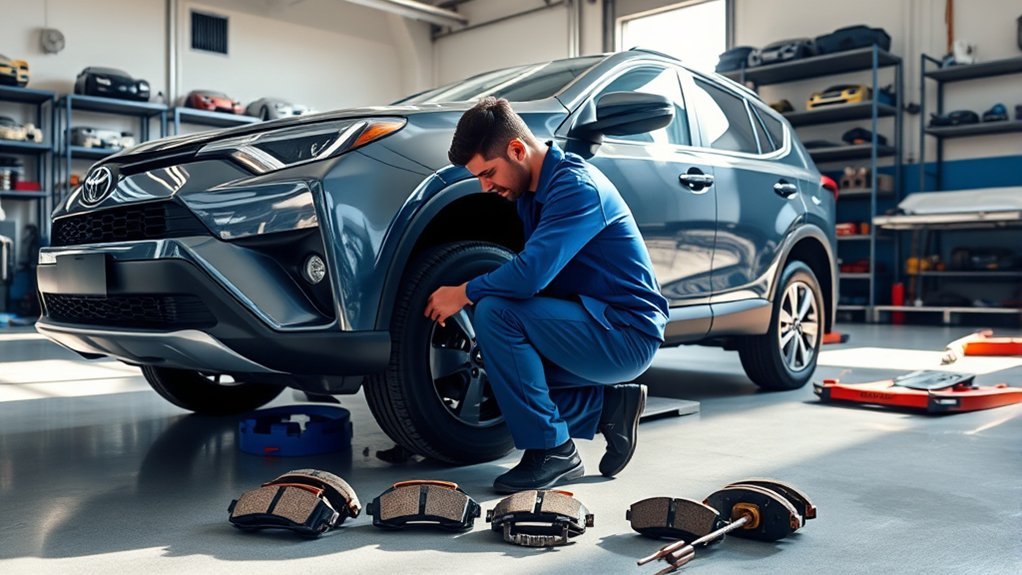
The 60,000-mile brake service is best treated as a major inspection point, not an automatic replacement point. A technician should repeat the 30,000-mile checks, inspect the brake lines and hoses, review the brake fluid condition, and look for uneven wear patterns that suggest caliper or hardware problems.
If the brake pads are worn, replacement is appropriate. If the rotors are grooved, warped, cracked, or below minimum thickness, they may need resurfacing or replacement. Resurfacing is only safe when the rotor remains within Toyota’s specification after machining. If it does not, replacement is the better repair.
A brake fluid flush may be recommended at this mileage if the fluid is contaminated, moisture-heavy, discolored, or has a low boiling point. However, do not assume every RAV4 automatically needs brake fluid replaced at exactly 60,000 miles. The better approach is to follow your year-specific manual and the actual fluid test results.
Critical Brake Checks at 100,000 Miles
At 100,000 miles, your RAV4 deserves a careful high-mileage brake review, even though 100,000 miles is not a universal Toyota brake replacement interval. By this point, the vehicle may have had one or more pad sets, original rotors may be near their limit, and rubber hoses or caliper hardware may show age-related wear.
Brake Pad Inspection
During a 100,000-mile brake inspection, check the pad thickness on all four corners, not just the easiest visible pad. Inner pads can wear faster if slide pins stick or calipers do not release smoothly. Also check whether the front and rear brakes are wearing at similar rates, because uneven wear can reveal a hydraulic, hardware, or driving-condition issue.
RAV4 Hybrid and RAV4 Prime models may show slower friction pad wear because regenerative braking can do some of the slowing during normal driving. That does not mean the brakes can be ignored. Low-use brakes can still develop rust, sticking slide pins, uneven rotor surfaces, or fluid issues.
Brake Fluid Analysis
Brake fluid transfers pedal force through the hydraulic system, so its condition matters. During a 100,000-mile service, ask for a brake fluid condition check rather than relying only on the reservoir level. The fluid should be evaluated for clarity, contamination, moisture, and boiling-point performance. Use only the brake fluid specification listed in your owner’s manual or on the reservoir cap; U.S. DOT brake fluid categories are defined under FMVSS No. 116.
| Test Parameter | Recommended Action |
|---|---|
| Boiling point | Replace fluid if the boiling point is below acceptable service limits. |
| Moisture content | Flush if moisture is excessive or the shop’s tester shows the fluid has degraded. |
| Fluid clarity | Investigate discoloration or cloudiness, then replace the fluid when contamination or test results show service is required; color alone should not be the only criterion. |
| Fluid level | Do not simply top off a low reservoir; inspect for pad wear or leaks first. |
| Leak check | Repair leaks before flushing or bleeding the system. |
Warning: Brake fluid can damage paint, and brake bleeding can introduce air if done incorrectly. Hybrid and Prime brake systems may require Toyota repair procedures or scan-tool support, so leave fluid flushing and bleeding to a qualified technician if you are not fully equipped.
Warning Signs Your RAV4 Needs Brake Service Sooner
Do not wait for the next scheduled interval if your RAV4 shows symptoms. Toyota’s brake pad guidance notes that pad life varies by driving habits, road conditions, brake pad type, and maintenance history, and it highlights warning signs such as squeaking, grinding, and reduced brake responsiveness in its brake pad warning guide.
- Squealing or screeching: Often caused by a wear indicator contacting the rotor.
- Grinding: May mean pad material is gone and metal is contacting the rotor.
- Vibration or pulsation: Can point to rotor runout, uneven rotor surfaces, or uneven pad deposits.
- Pulling while braking: May indicate uneven brake force, tire issues, suspension problems, or a sticking caliper.
- Soft or sinking pedal: Can signal air, fluid contamination, low fluid, or a leak.
- Brake warning light: Needs diagnosis before routine driving continues.
- Burning smell after braking: May indicate overheated brakes or a dragging caliper.
[Products Worth Considering]

GM-recommended replacement part for your GM vehicle's original factory component
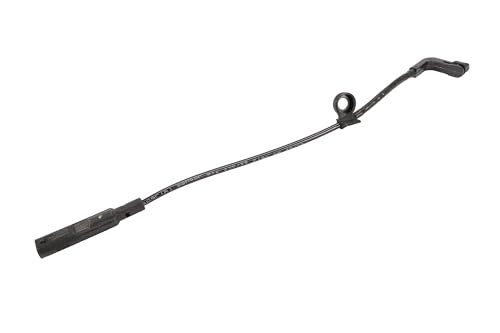
GM-recommended replacement part for your GM vehicle's original factory component

SUPER PREMIUM GRADE: Raybestos Element3 Brake Pads combine the best attributes of both ceramic and semi-metallic all in one brake pad
Budget-Friendly Brake Maintenance Tips
To keep your Toyota RAV4’s braking system in good shape without wasting money, focus on inspection quality and repair timing. Replacing pads a little before they damage the rotors can save money. Replacing parts too early without measurements can waste money.
- Request measurements: Ask for pad thickness, rotor thickness, and runout before approving brake work.
- Bundle inspections: Brake checks are easiest during tire rotations because the wheels are already being handled.
- Use parts that meet Toyota specifications: Toyota recommends genuine Toyota parts for repairs, but quality aftermarket parts that meet the required specifications may also be used when appropriate.
- Keep service records: Record date, mileage, parts, fluid type, and shop name.
- Fix uneven wear causes: New pads will wear quickly if sticking slide pins, seized calipers, or damaged hoses are ignored.
- Check recalls: Use the NHTSA recall lookup with your VIN to confirm whether your specific RAV4 has an open safety recall.
Note: Brake pad wear depends heavily on driving style. Stop-and-go traffic, mountain roads, towing, heavy cargo, aggressive braking, and salted roads can shorten brake life. Smooth braking and regular inspections help pads, rotors, and hardware last longer.
Frequently Asked Questions
How often should I change the brake pads on my RAV4?
Replace RAV4 brake pads based on measured wear, not mileage alone. Many pads last tens of thousands of miles, but driving habits, road conditions, load, brake hardware condition, and whether the vehicle is gas, Hybrid, or Prime can change the timing. Inspect visually at routine service visits and measure pad thickness at 30,000-mile intervals.
How often should brake fluid be changed on a Toyota RAV4?
For many recent RAV4 models, Toyota’s maintenance chart calls for checking brake fluid level and condition at scheduled visits rather than replacing it at one universal mileage. Flush or replace the fluid if it is contaminated, moisture-heavy, dark, low-boiling, affected by a repair, or required by your year-specific manual.
Is it necessary to change brake fluid every two years on a Toyota?
Not as a blanket rule for every Toyota RAV4. Some shops recommend a two- to three-year brake fluid interval, especially in humid climates or severe use, but the safest answer is to follow your owner’s manual and fluid test results. If the fluid fails a moisture, clarity, contamination, or boiling-point check, replace it.
What is the RAV4 maintenance schedule for brakes?
Toyota recommends scheduled maintenance every 5,000 miles or six months for many recent RAV4 models. Brake linings, drums, pads, and discs are visually inspected at those visits, while pad thickness and disc runout are checked at 30,000-mile intervals. Always confirm your exact model year in the official Toyota guide.
Does a RAV4 Hybrid need brake service less often?
A RAV4 Hybrid or RAV4 Prime may wear friction pads more slowly because regenerative braking can help slow the vehicle in normal driving. Even so, the hydraulic brakes still need regular inspection because rotors, calipers, hoses, fluid, and slide pins can age, rust, leak, or stick.
Can I check my RAV4 brakes myself?
You can do a basic visual check for noises, warning lights, fluid level, leaks, rotor scoring, and obvious pad wear. However, accurate pad measurement, rotor runout checks, brake bleeding, caliper repair, and hybrid/Prime brake procedures should be handled by a qualified technician with the right tools and repair information.
Can I keep driving if the RAV4 brake warning light is on?
Do not continue normal driving if a red brake warning light stays on, especially with low fluid, leakage, grinding, a soft or sinking pedal, pulling, or reduced braking. Stop in a safe place, check the owner’s manual for the warning, and arrange professional diagnosis. An ABS warning may leave basic braking available, but the fault still needs prompt service.
Conclusion
Keeping your RAV4’s brakes in good condition means following the model-year inspection schedule, recording actual measurements, and acting quickly when symptoms appear. At the next tire rotation or service visit, ask for the inner and outer pad thickness, rotor condition and measurements, fluid condition, and any evidence of leaks or sticking hardware. Approve replacement or flushing when those results, Toyota’s specifications, or a safety symptom show the work is due.
Sources
- Toyota 2025 RAV4 Warranty & Maintenance Guide — factory maintenance intervals, brake inspection notes, fluid checks, records, and Toyota service guidance
- Toyota Owners Manuals & Warranties — official source for year-specific RAV4 owner manuals and maintenance guides
- Toyota: Signs You May Need New Brake Pads — brake pad wear factors and symptoms such as squeaking, grinding, and reduced brake response
- eCFR 49 CFR § 571.116 Motor Vehicle Brake Fluids — U.S. federal brake fluid standard reference
- NHTSA Recall Lookup — official VIN-based safety recall check for vehicles, tires, and equipment

[…] routine inspection timing, see the RAV4 brake maintenance schedule and confirm the schedule against the guide for your exact model […]