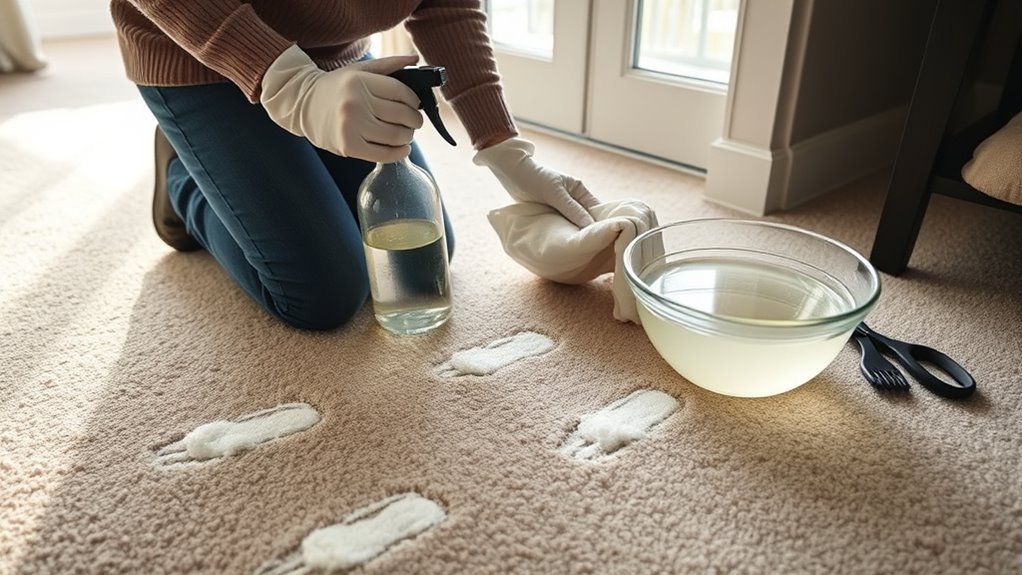
Vacuum loose salt and debris, then mist stains with a warm water and white vinegar mix and let it sit 2–3 minutes. Agitate fibers with a soft brush, then extract the slurry with a wet vac or hot-water extractor until suction runs clear. For stubborn deposits use high‑temperature steam or repeat extraction; pretreat persistent residue if needed. Finish by thoroughly drying and deodorizing mats before reinstalling. Continue for step‑by‑step tools, prevention, and advanced tips.
Quick Salt-Spot Fix for Tacoma Carpet Now
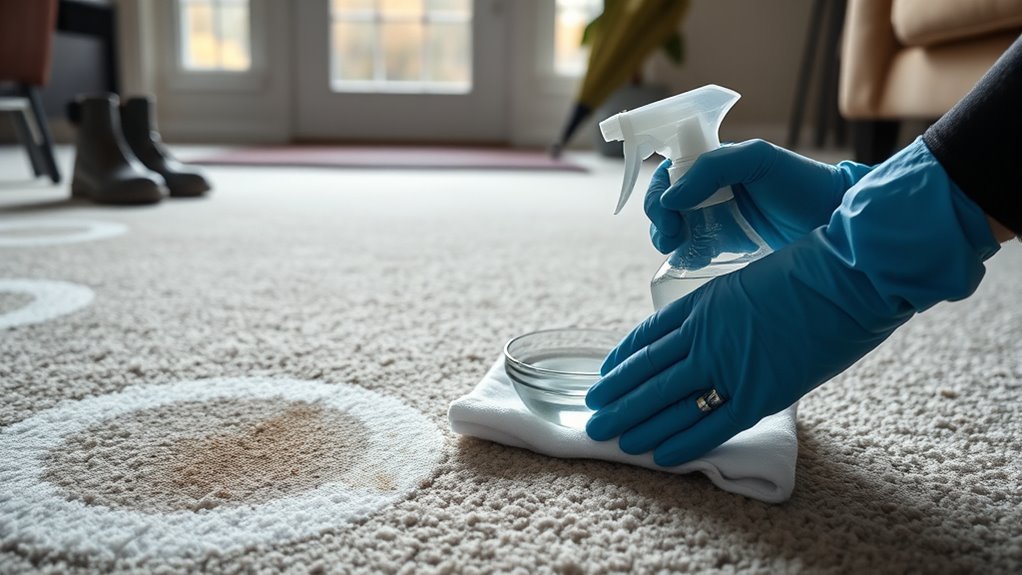
Start by vacuuming the Tacoma carpet to lift loose salt and debris, then spray a warm water–white vinegar solution onto the stained areas and let it sit for 2–3 minutes so the acetic acid can dissolve the salt. You’ll follow a compact, repeatable sequence: vacuum, apply, dwell, agitate, extract, dry. Use a soft scrub brush to work the solution into fibers with short, controlled strokes—don’t overwork the pile. After agitation, employ a wet vac to remove dissolved salts and moisture; make multiple passes until suction returns clear. Carry out these quick fixes decisively to prevent salt crystallization and fiber damage. Finish by removing the carpet and drying it completely outside the truck to avoid residual odor and trapped moisture. This methodical approach gives you actionable carpet care that restores function and frees you from recurring salt buildup, letting you reclaim a clean, resilient interior without complicated products or downtime.
Gather Tools & Protect Your Tacoma Interior
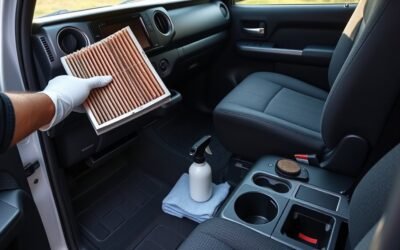
Start by removing the seat and door sill trim so you can access the carpet edges and work methodically. Gather your tool checklist—hot water extractor, vacuum, soft drill brush, spray bottle with warm water and white vinegar—and keep them organized for quick use. Protect the Tacoma interior with towels over sensitive areas to prevent moisture damage while you treat salt stains.
Tool Checklist
Gather a compact set of tools before you begin: a vacuum and hot-water extractor for deep cleaning, soft drill brush attachments for agitating fibers, a HARRIS continuous hand pump pressure sprayer or spray bottle with warm water and white vinegar for applying solution, and a commercial Krown salt remover for stubborn deposits. You’ll work efficiently and liberate your Tacoma’s interior from salt without excess gear.
- Inventory: vacuum, hot-water extractor, soft drill brushes.
- Solutions: HARRIS sprayer or spray bottle with warm water + white vinegar; Krown for resistant deposits.
- Prep items: removable floor mats and seat covers to access edges and seams.
Note the carpet materials and set cleaning frequency based on exposure. Follow a methodical sequence: vacuum, apply, agitate, extract, repeat if needed.
Interior Protection Tips
When you’re protecting your Tacoma’s interior, assemble a compact kit—vacuum, hot-water extractor, soft drill-brush attachments, a pressure sprayer (or spray bottle), and a DIY warm-water/white-vinegar solution—so you can address salt intrusion immediately and consistently. Keep that kit accessible; store mats or liners in the cab and deploy them before salty trips. Vacuum weekly to remove abrasive salt particles that degrade fibers and underpadding. Use the pressure sprayer for uniform application of your vinegar mix, then agitate with soft drill brushes and extract with hot-water equipment for full removal. Replace or clean protective mats regularly to avoid transferring salt back to carpet. These disciplined steps give you control, reduce long-term damage, and support effective carpet maintenance and winter preparedness.
Clean With Hot Water, Vinegar & Extraction
After vacuuming to remove loose salt, mix warm water and white vinegar in a spray bottle, generously mist the stained areas, and let the solution sit for 2–3 minutes to break down the salts. You’ll use vinegar benefits and focused extraction techniques to liberate fibers from corrosive residue. Agitate with a soft scrub brush in short, controlled strokes to lift dissolved salts without damaging pile.
After vacuuming, mist warm water and vinegar, wait 2–3 minutes, then gently brush to lift dissolved salt.
- Spray and dwell: apply solution, wait 2–3 minutes to chemically weaken salt bonds.
- Agitate: brush lightly to dislodge particles into the wet matrix for removal.
- Extract and dry: run a hot water extractor over the area, removing moisture and salts; then air-dry the carpet outside for at least 24 hours to prevent odor or mildew.
Work methodically, repeating spray–agitate–extract cycles until visual residue is gone. This disciplined approach frees your interior from salt damage while preserving carpet integrity and preventing long-term corrosion.
Tackle Stubborn Stains: Steam, Extractors, Krown
Although stubborn salt stains often resist simple spot treatments, you can loosen and remove them by combining high-temperature steam or boiling-hot water with a hot-water extractor and, when needed, a commercial product like Krown. You’ll apply steam cleaning or pouring controlled boiling-hot water to rehydrate and dissolve salt crystals, then immediately follow with extractor passes that inject pressure and remove the saline solution. Maintain consistent pressure and nozzle contact; that mechanical action plus suction pulls dissolved salt from fiber and backing. If residues persist, pretreat with Krown per manufacturer instructions, allow dwell time, then repeat steam-plus-extraction cycles. For entrenched areas, alternate targeted steam bursts with extractor passes until readings (visual and tactile) indicate no gritty residue. Be methodical: mark treated zones, work in overlapping passes, and don’t rush cycles; repeated treatment is often necessary. This approach frees you from stubborn stains while minimizing fiber damage and restoring usable carpet surface.
Dry, Deodorize & Reinstall Mats Safely
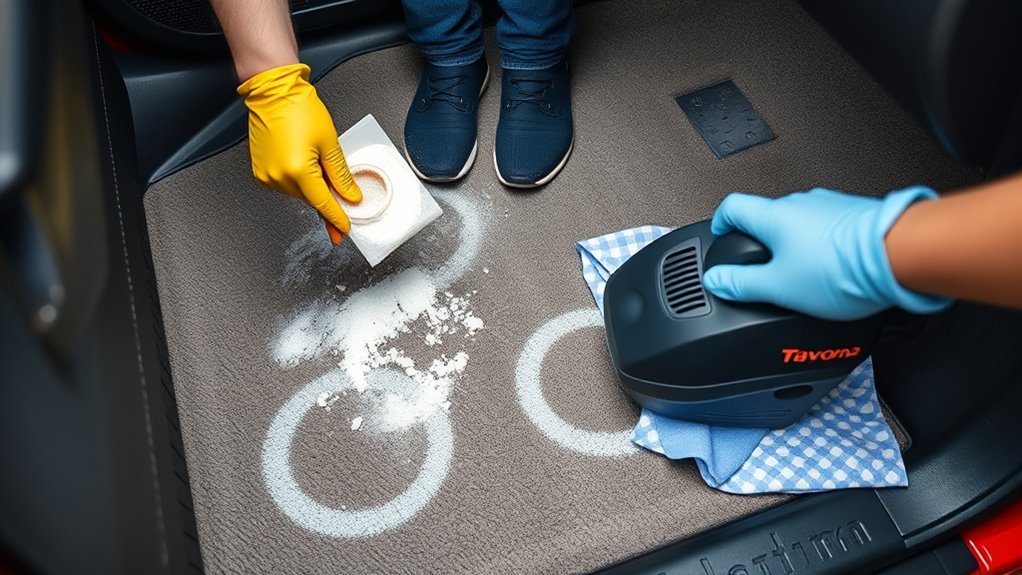
Let the mats dry fully for at least 24 hours outside the Tacoma to prevent mold and odors; use a wet vac first to extract as much moisture as possible, then air-dry in a warm, ventilated area. You’re reclaiming control over your cabin—don’t rush reinstallation. Wet mats trap salt-laden moisture, undermining mold prevention and odor elimination efforts.
- Use a wet vac to remove residual water, working slowly and overlapping passes; repeat until suction shows minimal return.
- Sprinkle baking soda evenly for deodorizing; let it sit 3–6 hours, then vacuum thoroughly to remove trapped salts and powder.
- Verify dryness with touch and weight comparison to a known-dry mat; only reinstall when mats feel dry and regain original weight.
Handle mats individually to speed drying and avoid cross-contamination. Proper sequencing—extract, deodorize, confirm dryness—protects your interior, extends mat life, and delivers the liberation of a fresh, odor-free Tacoma.
Prevent Salt Buildup on Tacoma Carpet
Keep your Tacoma’s carpets protected by removing and shaking out mats regularly to prevent trapped salt from abrading fibers. Fit durable, all-weather liners that channel moisture and salt away from carpet edges and fasten securely to avoid migration. Combine scheduled mat cleaning with liners for a systematic reduction in salt exposure and easier seasonal maintenance.
Regular Mat Cleaning
Vacuum your Tacoma’s mats at least once a week during winter to remove loose salt and grit before they abrade fibers. You’ll keep mats maintenance efficient and carpet care proactive by following a short, repeatable routine that prevents salt consolidation and fiber degradation.
- Mix warm water and white vinegar (3:1), apply, scrub with a firm brush, then rinse; this neutralizes salt residues before they bond to fibers.
- After heavy exposure, use a hot water extractor for deep cleaning to lift embedded salt; repeat until runoff is clear.
- Air-dry mats completely outside for 24+ hours and store your DIY cleaning solution nearby so you can treat fresh stains immediately.
Maintain discipline; this liberates you from cumulative, irreversible carpet damage.
Protective Floor Liners
After you’ve been regular about mat care, protect the underlying carpet by installing molded floor liners designed for the Tacoma’s contours; they block salt, grit, and moisture from contacting fibers and simplify cleanup. You’ll gain clear floor liner benefits: durable materials resist abrasion and chemical attack from road salts, raised edges and channels contain liquids and debris, and a precise fit prevents migration of contaminants. Install liners, then remove them periodically as part of liner maintenance: rinse with water, use mild detergent on stubborn deposits, and inspect for trapped residue along seams. Consistent removal and cleaning prevents salt buildup, preserves the carpet’s integrity, and reduces long-term restoration labor so you stay free of preventable maintenance burdens.
Frequently Asked Questions
How to Get Salt Out of Truck Carpet?
Start by vacuuming loose grit, then spray a warm water and white vinegar carpet cleaning solution; let soak, scrub gently with a soft brush, extract with a wet vacuum, repeat as needed—these salt removal techniques free your truck.
Will Salt Damage My Carpet?
Yes — salt can damage your carpet. Picture crystalline grit slicing fibers; you’ll prevent progressive weakening by prompt salt carpet treatment, using methodical cleaning and damage prevention steps so your Tacoma’s interior stays liberated and resilient.
Conclusion
Salt stains cut fiber life: research shows road salt accelerates wear, increasing carpet degradation risk by about 30%. You’ve learned to gather tools, protect trim, and use hot water with vinegar plus extraction to lift salts. For stubborn spots, apply steam or a carpet extractor and approved cleaners like Krown, then dry and deodorize before reinstalling mats. Prevent recurrence with regular vacuuming and rinse-offs. Follow the steps methodically to preserve your Tacoma’s interior.