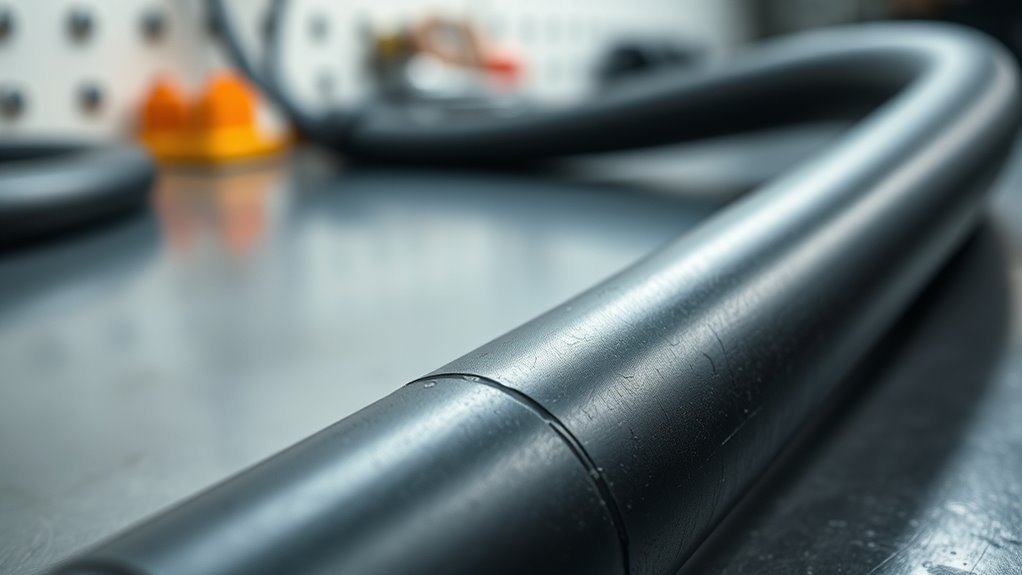
To inspect your tire inflator hose for damage, start with a visual check for cracks, bulges, and signs of wear at stress points. Listen for air leaks—high-pitched whistles indicate issues. Perform a squeeze test, feeling for soft spots, and check for bubbles with a soapy water mix applied to a pressurized hose. If you notice visible damage or signs of corrosion, it’s essential to replace the hose immediately. There’s more important info to help you guarantee safety.
Conduct a Visual Inspection for Hose Damage

When you conduct a visual inspection of the tire inflator hose, start by looking for any visible signs of damage such as cracks, bulges, abrasions, or punctures. Focus on areas near ferrules and bends, as these stress points are prone to system failure. Check for discoloration or brittleness, which may indicate dry rot or environmental degradation affecting the rubber hose. Examine the end fittings and connections for rust, corrosion, or loose clamps that could lead to leaks or weaken the hose’s integrity. Additionally, perform the soapy water test on pressurized hoses to reveal hidden leaks by observing for bubbling at compromised areas. This thorough approach guarantees your tire inflator hose remains reliable and safe for use.
Identify Common Signs of Hose Wear: Cracks, Bulges, Leaks
As you inspect the tire inflator hose, be vigilant for common signs of wear, such as cracks, bulges, and leaks. These issues can jeopardize your safety and the effectiveness of the hose. Pay close attention to:
- Cracks that may appear as fine lines or splits on the surface.
- Bulges near the ferrules, indicating internal damage or weak spots.
- Leaks that might manifest as air escaping, often accompanied by a hissing sound.
- Bubbles forming during a soapy water test, revealing compromised sections.
Regularly conducting these visual inspections helps guarantee your tire inflator hose remains in prime condition, allowing you to inflate tires confidently and safely. Don’t ignore these signs; they’re critical for your safety.
Perform the Squeeze and Flex Test: What to Feel For?
After identifying signs of hose wear, it’s time to perform the squeeze and flex test to further assess the integrity of your tire inflator hose. Start by applying pressure to different sections of the flexible hose. Feel for soft spots that indicate potential internal damage or hidden leaks. If you encounter areas that feel unusually soft or spongy, these may signal compromised structural integrity. Listen for any high-pitched whistles during the squeeze, which can reveal micro-leaks. While flexing the hose, inspect for bulging or uneven thickness, especially around the crimped brass ferrules, as these deformities often indicate wear. Regularly performing this test will help you catch potential issues early, extending the life of your inflator hose.
Use the Soapy Water Test to Find Air Leaks
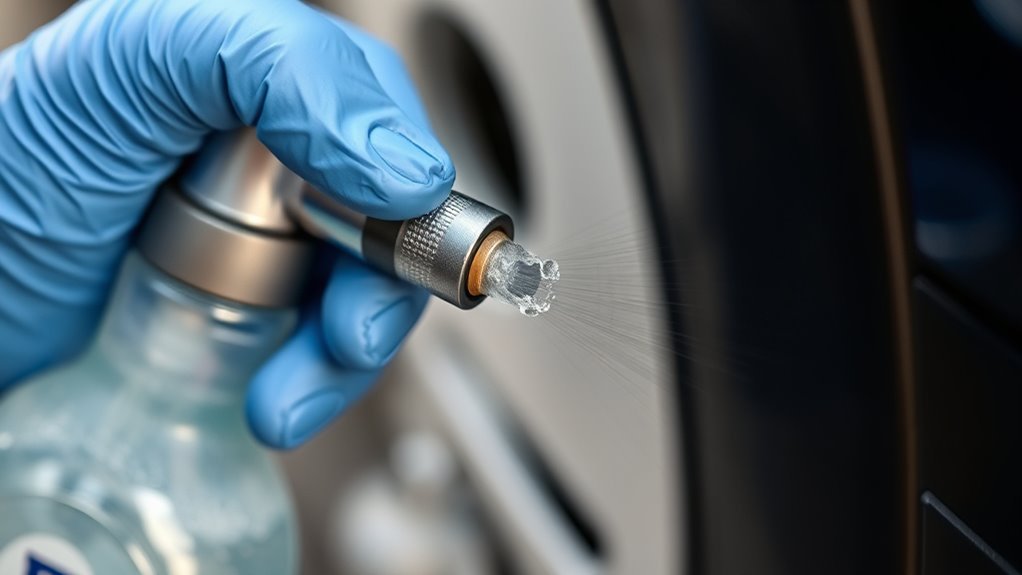
To effectively detect air leaks in your tire inflator hose, the soapy water test offers a straightforward and reliable method. Start by ensuring your hose is pressurized to its normal operating level. Then, apply a mixture of soap and water along the length of the hose. As air escapes, you’ll see visible bubbles forming, pinpointing the exact locations of any damage.
- Thick foam glistening in the sunlight
- Tiny bubbles rising like magic
- Sudden bursts of air escaping with a whisper
- Dark spots revealing hidden vulnerabilities
Use this soapy water test regularly to inspect for small or microscopic air leaks that might go unnoticed. Promptly address any identified leaks to maintain your tire inflator’s reliability and performance.
Signs It’s Time to Replace Your Tire Inflator Hose
Detecting air leaks with the soapy water test is just one part of maintaining your tire inflator hose. Pay attention to these signs; they indicate it’s time to replace your rubber hoses:
| Signs of Damage | Action Required | Frequency of Inspection |
|---|---|---|
| Visible cracks | Replace immediately | Monthly |
| High-pitched whistles | Replace immediately | Monthly |
| Bulging sections | Replace immediately | Monthly |
| Rust or corrosion | Replace immediately | Monthly |
| Soft spots or dry rot | Replace immediately | Monthly |
Your hose must be specifically designed for tire inflators. Regular inspections guarantee that you identify these issues early, maintaining safe operation and performance. Don’t wait; prioritize your safety.
Frequently Asked Questions
What Should You Look for When Inspecting Hoses?
When inspecting hoses, look for cracks, bulges, or abrasions. Pay attention to loose fittings and corrosion. If you notice soft spots or leaks, it’s time for hose maintenance or replacement to guarantee safety and performance.
How Do I Know if I Have a Cracked Hose?
You’ll know you have a cracked hose if you see bulges, hear high-pitched whistles, or feel soft spots. Regular maintenance extends your inflator hose lifespan, helping you detect symptoms early and prevent failures.
How to Check Hoses on a Car?
To check hoses on a car, inspect for cracks or bulges and perform a squeeze test. Look for rust on connections. Stay vigilant; replacing a worn hose can prevent costly breakdowns and guarantee safety.
How to Check Car Belts and Hoses?
To check car belts and hoses, look for cracks, fraying, and discoloration. Flex them while damp, guarantee secure connections, and follow car maintenance tips for peak performance. Regular inspections enhance tire safety practices and inflator usage guidelines.
Conclusion
In summary, regularly inspecting your tire inflator hose is essential for safe and efficient operation. You might think a small crack won’t cause issues, but even minor damage can lead to significant air leaks, compromising your tire pressure. By performing visual inspections, squeeze tests, and the soapy water method, you can catch problems early. If you spot any signs of wear, don’t hesitate to replace the hose—it’s a small investment for your safety on the road.