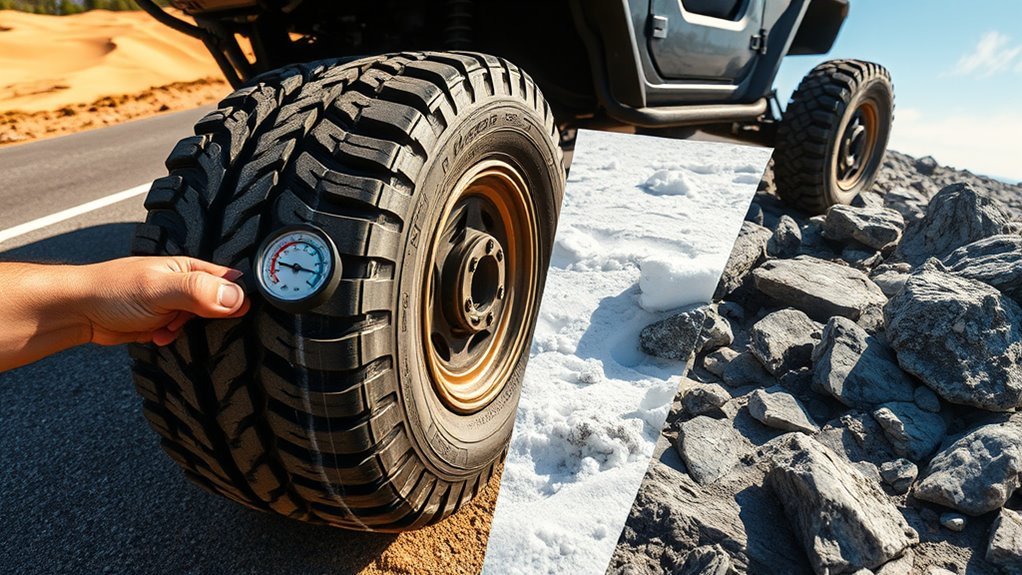
To adjust your tire pressure for different terrains, aim for 26-30 PSI for street driving, 12-15 PSI for sand (6-10 PSI if using beadlock wheels), 5-15 PSI for snow (5-10 PSI for deep snow), and 10-15 PSI for rocky terrain (6-8 PSI for beadlocks). Always check pressure regularly, especially after driving on significant surfaces. Proper adjustments enhance traction and performance. Stay tuned for more detailed guidelines on maintaining tire pressure as conditions change.
Understanding the Importance of Tire Pressure
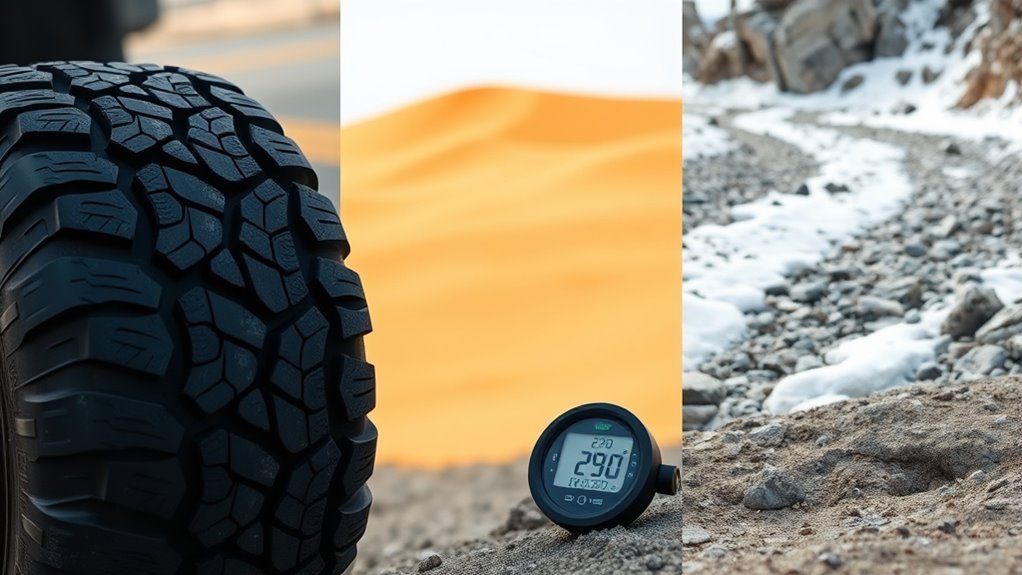
When you venture off-road, understanding the importance of tire pressure becomes essential for maintaining peak vehicle performance and safety. Proper tire pressure directly impacts your contact patch, which is the area where your tires meet the terrain. By lowering tire pressure, you increase this contact patch, enhancing grip on loose surfaces like sand and mud, and improving your ride over rocky terrains. Each terrain demands specific pressure adjustments; for instance, 12-15 PSI suits sandy conditions, while 6-8 PSI is better for extreme rock crawling with beadlocked tires. However, be cautious—too low a pressure risks tire unseating, particularly on non-beadlock wheels. Regularly checking and adjusting tire pressure guarantees top-notch off-road performance and keeps you safe on your adventures.
Optimal Tire Pressure for Street Driving
Ideal tire pressure for street driving typically falls between 26 and 30 PSI, depending on your vehicle’s load and the manufacturer’s specifications. Maintaining recommended tire pressures is essential for peak handling and traction on paved roads. Under-inflation can lead to increased tire wear, decreased fuel efficiency, and compromised safety due to poor handling characteristics. While higher pressures, around 30 PSI, may enhance stability, they can also create uneven contact patches that negatively impact grip. To guarantee you’re getting the most out of your ride, regularly check your tire pressure with a reliable gauge. This simple practice fosters not only safety but also elevates your driving experience, allowing you to navigate the streets with confidence.
Adjusting Tire Pressure for Sand
Adjusting tire pressure for off-roading in sand requires a different approach than street driving. For ideal performance, lower your tire pressure to between 12-15 PSI for non-beadlock wheels, and 6-10 PSI if you have beadlock wheels. This reduction increases the tire’s footprint, offering better traction and preventing your vehicle from sinking into loose sand. Softer tires allow for better flotation, maintaining momentum and stability over sandy terrains. However, monitor your tire pressure closely to avoid de-beading with non-beadlock tires. After your adventure, remember to reinflate your tires to the manufacturer’s recommended pressure for safety and performance on paved roads. Embrace the liberation of sand driving, but always prioritize your vehicle’s integrity.
Adjusting Tire Pressure for Snow
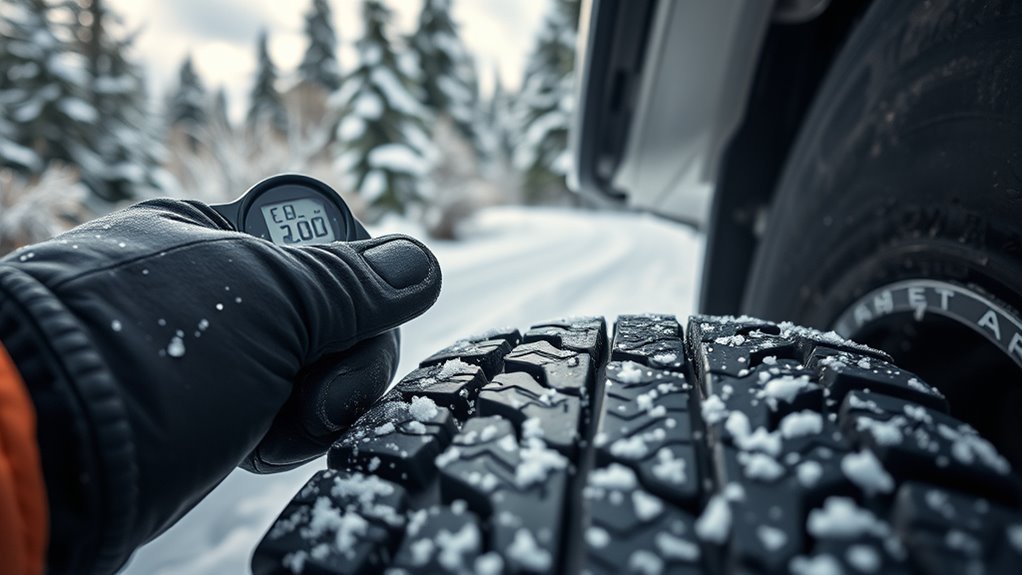
When adjusting tire pressure for snow, aim for a range of 5-15 PSI depending on the snow’s depth and your tire type. Lower pressures improve flotation and traction, but be cautious not to go below 10 PSI without beadlocks to avoid tire unseating. Regularly check your tire pressure to guarantee peak performance and minimize safety risks.
Ideal PSI Range
Having the right tire pressure is vital for maneuvering snowy terrains effectively. For deep snow wheeling, you should lower tire pressures to between 5-10 PSI. This adjustment enhances flotation and traction on soft surfaces, allowing your tires to conform better to snow-covered obstacles, improving grip and stability. However, be cautious when deflating below 10 PSI without beadlocks, as the risk of tire unseating increases considerably. While higher pressures might provide stability on packed snow, they can hinder performance in loose, deeper conditions. Personal experimentation is essential to find your ideal balance between traction and handling, tailored to your specific vehicle and tire setup. Adjusting tire pressure wisely can liberate your driving experience in snowy environments.
Tire Type Considerations
Choosing the right tire type greatly impacts your vehicle’s performance in snowy conditions, as different tread patterns and rubber compounds can affect traction and handling. To optimize your tire pressure for snow, consider these factors:
- Lower your tire pressure to 5-10 PSI to enhance flotation and traction in deep snow.
- A larger footprint helps prevent your vehicle from sinking into the snow.
- Be cautious with pressures below 10 PSI without beadlock wheels to avoid the risk of tire damage.
- Experiment to find the ideal tire pressure for different snow conditions and vehicle setups, balancing traction and stability for better handling.
Adjusting tire pressure can considerably improve your winter driving experience.
Safety Precautions Needed
Adjusting tire pressure for snow can greatly enhance your vehicle’s performance, but it also requires careful attention to safety precautions. Lowering pressures to 5-10 PSI can improve flotation and traction on soft snow, but be cautious if you lack beadlock wheels, as the risk of tire unseating increases. It’s essential to maintain a balance between lower pressures for traction and higher pressures for stability, especially when shifting between snow and harder surfaces. Monitor your tire performance regularly and adjust as needed. Personal experimentation can yield better results due to variations in vehicle setup and weight distribution.
| Tire Pressure (PSI) | Traction | Stability |
|---|---|---|
| 5-10 | High | Low |
| 11-15 | Moderate | Moderate |
| 16+ | Low | High |
Tire Pressure Guidelines for Rocky Terrain
When traversing rocky terrain, understanding the right tire pressure is essential for maximizing traction and performance. Lowering your tire pressure can provide better grip and help your tires adapt to uneven surfaces. Here are some guidelines to follow:
Understanding the right tire pressure is crucial for enhancing traction and performance on rocky terrain.
- For non-beadlock wheels, maintain tire pressure between 10-15 PSI.
- Use beadlock wheels with a lower range of 6-8 PSI for enhanced grip and flexibility.
- Opt for C-rated or D-rated tires with softer sidewalls for better deformation and traction.
- Regularly check tire pressure, as fluctuations can occur due to temperature changes and terrain conditions.
Identifying When to Adjust Tire Pressure Based on Terrain Types
Understanding the terrain you’re driving on is essential, as it directly impacts the performance of your tires. For street driving, maintain a tire pressure of 26-28 PSI to guarantee ideal handling and safety. In sandy conditions, drop your pressure to 12-15 PSI for non-beadlock tires, or 6-10 PSI for beadlock tires, enhancing flotation to navigate effectively. When traversing snowy terrain, reduce tire pressure to 5-10 PSI for improved grip, but be cautious to avoid unseating the bead. On rocky paths, starting with 10-15 PSI for non-beadlock tires and 6-8 PSI for beadlock tires helps maximize traction while minimizing tire damage. Adjusting tire pressure for different terrains is key to releasing your vehicle’s full potential.
Essential Tools for Adjusting Tire Pressure
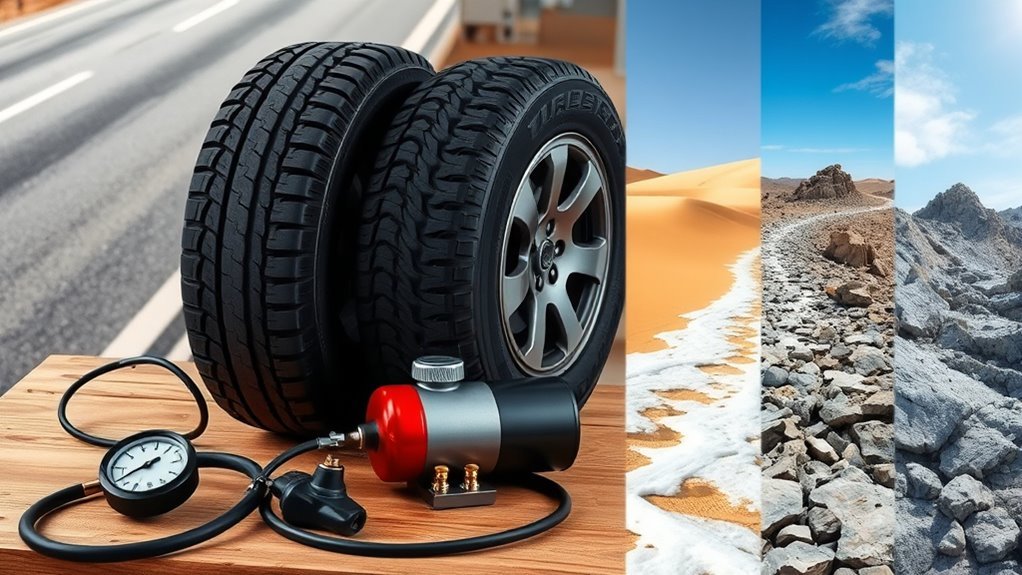
To effectively adjust tire pressure, you’ll need a few vital tools that make the process quick and accurate. Here are the key items you should have:
- Tire Deflators: These allow you to lower tire pressure efficiently, especially for off-road conditions.
- Tire Pressure Gauge: A reliable gauge is important for measuring PSI accurately before and after adjustments to guarantee safety and performance.
- Portable Air Compressors: Necessary for reinflating tires after off-roading, these can quickly restore pressure to recommended levels.
- Quick-Release Deflators: Ideal for frequent off-road travelers, they streamline the airing-down process, saving you valuable time.
Investing in high-quality inflators and gauges is vital for maintaining tire health and enhancing traction on various terrains.
What Happens If You Don’t Get Tire Pressure Right?
If you don’t get your tire pressure right, you’re putting yourself at an increased risk of flats and compromised handling. Under-inflated tires can lead to damage from debris, while over-inflated tires may cause your vehicle to handle poorly. Maintaining the correct pressure is essential for maximizing performance and safety on any terrain.
Increased Risk Of Flats
When tire pressure isn’t properly adjusted, you greatly increase the risk of flats, especially on rough terrain. Lower pressures compromise tire integrity, making it easier for them to fail. Here are some key issues you might face:
- De-beading: Tires can lose their seal from the rim, particularly on uneven surfaces.
- Punctures: Under-inflated tires have reduced sidewall stiffness, increasing vulnerability to sharp objects.
- Accelerated Wear: Excessive under-inflation leads to faster tire degradation, shortening lifespan and raising replacement costs.
- Blowouts: Over-deflation considerably raises the chance of blowouts, particularly at high speeds or on hard surfaces.
Maintaining appropriate tire pressure is essential for safety and performance on any terrain.
Poor Vehicle Handling
Improper tire pressure not only heightens the risk of flats but also severely affects vehicle handling. Under-inflated tires create sluggish response and diminish steering precision, especially at higher speeds. Conversely, over-inflated tires increase the risk of losing traction, leading to a harsher ride and difficulty maintaining control on uneven or slippery surfaces. This poor vehicle handling can be especially dangerous in off-road conditions where stability is essential. Driving on under-inflated tires accelerates tread wear and causes uneven contact patches, straining suspension components and inviting costly repairs. Furthermore, low tire pressure raises the risk of tire unseating during sharp turns, potentially resulting in blowouts. Maintaining the correct tire pressure is vital for your vehicle’s safety and performance.
Frequently Asked Questions
How to Air Down Tires for Sand?
To air down tires for sand, use tire deflation techniques like reducing pressure to 12-15 PSI for non-beadlock tires. This optimizes tire width, enhancing traction. Always monitor pressure to prevent de-beading during sand driving.
What Psi Should Your Tires Be at to Drive on Sand?
For sand driving, set your tire pressure between 12-15 PSI, considering tire size and vehicle weight. Lower pressures enhance traction and flotation, preventing getting stuck while improving ride comfort on uneven sandy surfaces.
What Psi Should My All-Terrain Tires Be At?
Imagine gliding smoothly over varied landscapes; your all-terrain tires thrive at ideal PSI ranges. For performance, aim for 26-28 PSI on streets, and adjust lower for sand, snow, or rocks as needed.
What Is the Best Drive Mode for Sand Driving?
The best drive mode for sand driving is often Off-Road. This optimizes sand traction, taking into account tire width and vehicle weight. It enhances your control and helps prevent getting stuck in loose sand.
Conclusion
Adjusting your tire pressure for different terrains is essential for peak performance and safety. Whether you’re maneuvering through streets, gliding over sand, tackling snow, or conquering rocky paths, proper pressure makes all the difference. So, why risk damage or poor handling by ignoring this important aspect? Regularly check and adjust your tire pressure according to the terrain to enhance your vehicle’s capability and longevity. Stay informed, stay safe, and enjoy every adventure with confidence.