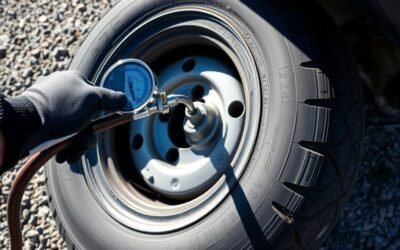
A tire inflator works by connecting its hose to the tire valve stem. Once you power on the device, the electric motor drives a piston that compresses air and pumps it into the tire. The pressure sensor monitors real-time air pressure, ensuring it matches the manufacturer’s recommended PSI. An automatic shut-off feature stops the inflator once the target pressure is reached. Understanding the components can help you use the inflator more effectively.
How to Use a Tire Inflator to Pump Air Into Tires?
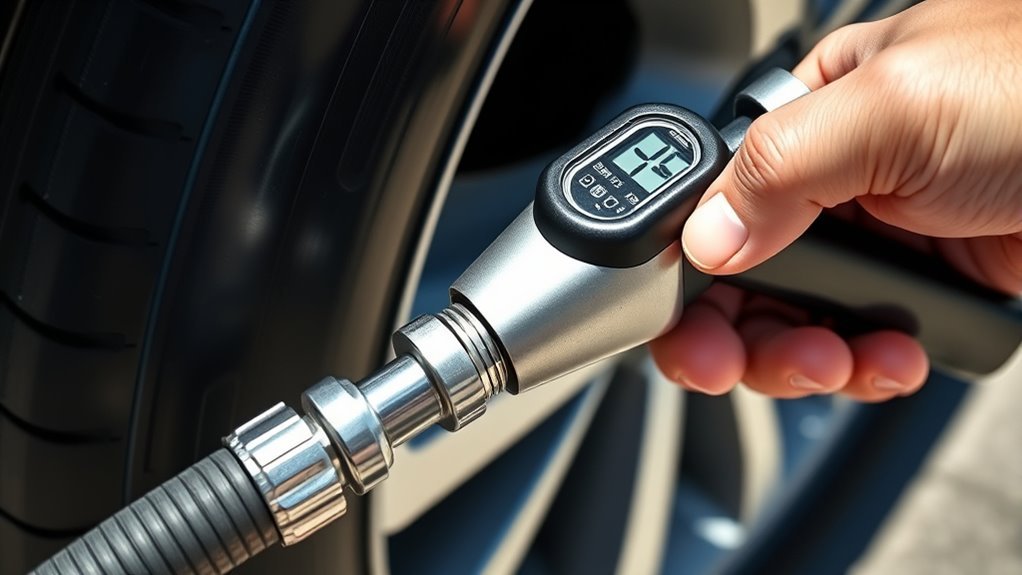
To effectively use a tire inflator, start by locating the tire valve stem on the side of the tire and remove the valve cap. Next, connect the inflator’s hose securely to the tire valve, ensuring it’s straight to avoid kinks that could disrupt airflow. Power on the portable tire inflator using its designated switch or button, activating the electric motor for air compression. Keep an eye on the tire pressure gauge, inflating the tire to the manufacturer’s recommended PSI, often found in your vehicle’s manual or on a sticker inside the driver’s door. Once you reach the desired pressure, power off the inflator, disconnect the hose from the tire valve, and replace the valve cap to seal the tire.
What Components Make Up a Tire Inflator?
While inflating your tires, understanding the components of a tire inflator can enhance your experience and effectiveness. The essential parts include:
| Component | Function |
|---|---|
| Power Source | Supplies energy via a wall outlet, 12V outlet, or battery. |
| Electric Motor | Drives the mechanism, connecting to gears that transfer energy. |
| Piston | Compresses air and pumps it into the tire. |
| Pressure Sensor | Displays tire pressure and controls valve operation. |
| Connector | Attaches to the tire’s valve stem for efficient air transfer. |
Each component plays a crucial role in ensuring your tires are properly inflated, allowing for smoother rides and improved safety. Understanding these elements will empower you to utilize your tire inflator effectively.
How Do Tire Inflator Pressure Sensors Ensure Accurate Inflation?
Tire inflator pressure sensors play an essential role in achieving accurate tire inflation, as they measure the air pressure inside the tire and convert it into electrical signals for precise readings. These pressure sensors enable real-time monitoring of tire pressure displayed on a digital gauge, allowing you to track inflation progress easily. Many models let you preset target pressures, automatically shutting off the inflator once the desired pressure is reached. This feature guarantees that pressure sensors maintain shutdown error within 0.5 PSI, providing exceptional control over the inflation process. Accurate readings are critical to prevent underinflation or overinflation, which can greatly impact your vehicle’s safety and performance on the road.
What Are the Safety Features of Tire Inflators?

Accurate tire inflation is only part of ensuring a safe and effective operation of tire inflators. Many models come equipped with safety mechanisms designed to protect both the user and the device. Automatic shut-off features stop air supply once the preset pressure level is reached, preventing overinflation. Digital pressure sensors provide real-time monitoring, allowing you to avoid damage from incorrect inflation rates. Additionally, some inflators include thermal protection that automatically shuts down the device if it overheats during prolonged use. One-way check valves are essential, ensuring compressed air doesn’t flow back into the inflator, thereby maintaining tire pressure. Finally, built-in LED lights enhance visibility during nighttime emergencies, ensuring you can inflate your tires safely, regardless of conditions.
What Are the Best Tips for Using Your Tire Inflator?
How can you guarantee peak performance from your tire inflator? Follow these essential tips to make certain efficient tire inflation:
- Keep your vehicle engine running while inflating to prevent battery drain, especially for 12V models.
- Make sure the hose remains straight and kink-free to optimize air flow into the tire.
- Inflate tires to the manufacturer’s recommended pressure, found in the owner’s manual or on the driver’s door sticker.
After inflating, use a handheld tire pressure gauge to verify accuracy, as built-in gauges can be unreliable. Allow the inflator to cool down for about 10 minutes post-use to prevent overheating and prolong its lifespan. These practices will help you maintain proper tire air pressure and enhance your driving experience.
Frequently Asked Questions
How Does the Tire Inflator Work?
A tire inflator uses mechanisms like an electric motor and piston to compress air for inflation. You benefit from air pressure regulation and portable inflator advantages, ensuring efficient, convenient tire maintenance wherever you are.
Does a Car Need to Be Running to Use a Tire Inflator?
No, your car doesn’t need to be running with portable inflators. However, for tire pressure monitoring and safety precautions, it’s wise to keep the engine on when using a 12V inflator, ensuring consistent power during maintenance.
What Is the 3% Tire Rule?
The 3% tire rule means your tire pressure shouldn’t vary more than 3% from the recommended PSI. Follow inflation tips and safety precautions to maintain peak performance, ensuring traction, handling, and tire longevity.
Do Cordless Tire Inflators Really Work?
Yes, cordless tire inflators work effectively, especially for quick top-offs. However, their battery performance impacts inflation speed, and you’ll appreciate their portability benefits for emergencies, though they’re less efficient than corded models for fully inflating tires.
Conclusion
In conclusion, using a tire inflator is a straightforward process that can enhance your driving safety. Did you know that properly inflated tires can improve fuel efficiency by up to 3%? By understanding the components, pressure sensors, and safety features of your tire inflator, you guarantee accurate and safe inflation. Remember to follow the best practices to get the most out of your inflator, keeping your tires in peak condition for every journey.