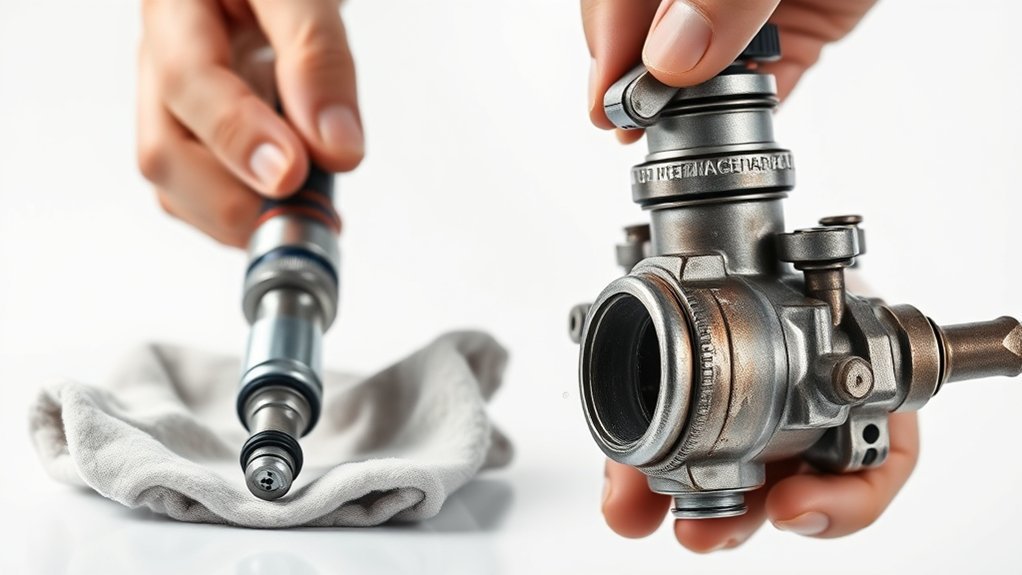
Fuel injector cleaning targets deposits that disrupt fuel spray patterns, boosting combustion efficiency, while throttle body cleaning tackles carbon buildup affecting airflow and throttle response. You should clean fuel injectors every 15,000 to 30,000 miles and the throttle body at 75,000 miles. Both services are essential for maintaining engine performance and preventing costly repairs. Understanding when and how to perform these tasks can enhance your vehicle’s longevity, and there’s more important info ahead to help you manage it effectively.
Common Symptoms of Fuel System Issues
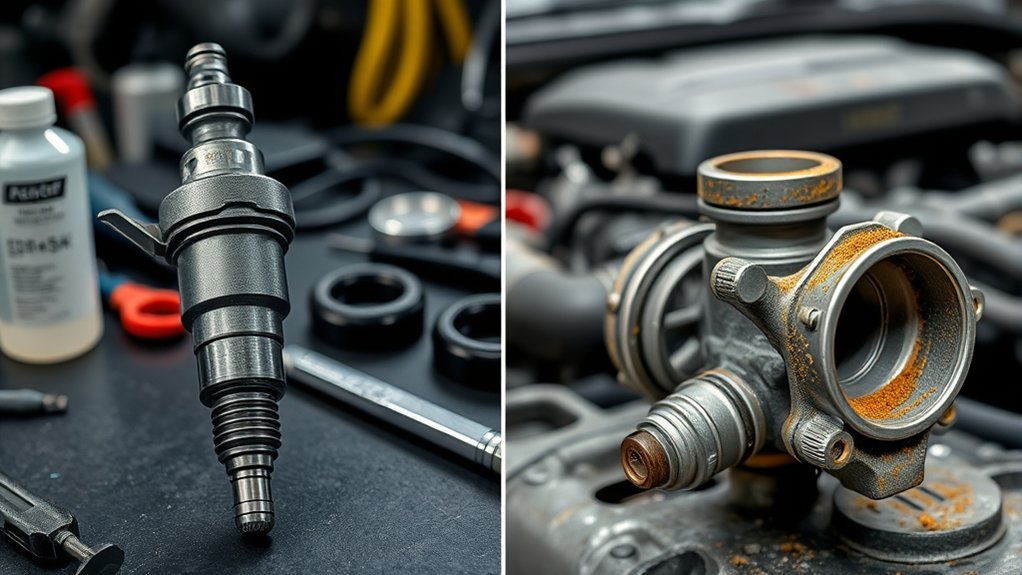
When your vehicle’s fuel system encounters issues, you might notice several telltale signs that demand attention. Rough idling is often the first symptom, indicating disrupted airflow caused by carbon buildup on the throttle body or injectors. If you see the check engine light activate, it may signal incomplete combustion linked to clogged injectors or intake valves. You might also experience a loss of power and acceleration, which can stem from restricted airflow due to dirty throttle bodies or malfunctioning injectors. Additionally, poor fuel economy could arise as the engine compensates for carbon deposits, leading to increased fuel consumption. Finally, if you encounter engine misfires, it’s likely that fuel injectors aren’t spraying fuel properly, often a result of buildup or clogging in the fuel system. Recognizing these symptoms early can help you maintain your vehicle’s performance and efficiency.
Understanding the Roles of Fuel Injector and Throttle Body Cleaning
Understanding the roles of fuel injector and throttle body cleaning is essential for maintaining peak engine performance. Fuel injector cleaning focuses on removing injector deposits that can disrupt the fuel spray pattern, which is critical for efficient combustion. This service enhances engine performance and fuel efficiency, especially in vehicles with direct injection systems.
On the other hand, throttle body cleaning addresses carbon buildup on the throttle body plate. This buildup can greatly hinder airflow and throttle response, leading to sluggish acceleration and rough idling. For vehicles over 75,000 miles or those showing performance issues, both cleaning services are highly recommended.
Regular maintenance, ideally every 15,000 to 30,000 miles, can prevent costly repairs and extend your engine’s lifespan. While professional cleaning typically costs between $225 and $250, neglecting these services could lead to more severe issues requiring expensive treatments, like walnut blasting.
Key Differences Between Fuel Injector and Throttle Body Cleaning
When comparing fuel injector and throttle body cleaning, you’ll notice distinct cleaning processes and performance impacts. Throttle body cleaning typically requires physical access to the component and a specific chemical solution, while fuel injector cleaning often involves specialized solutions injected through the fuel system. Understanding these differences helps you optimize engine performance and maintenance schedules.
Cleaning Process Variations
Although both fuel injector and throttle body cleaning aim to enhance engine performance, they involve distinct processes and techniques. Throttle body cleaning requires physically accessing the throttle body by removing the air intake, using cleaning techniques that scrub away carbon deposits with a throttle body cleaner. In contrast, fuel injector cleaning typically employs specialized solutions injected through the fuel system, restoring ideal spray patterns without disassembling engine components. Cleaning frequency also varies; throttle body cleaning is recommended for vehicles over 75,000 miles, while fuel injector cleaning is advised every 15,000 to 30,000 miles, depending on fuel quality. Tools for throttle body cleaning include screwdrivers and brushes, whereas fuel injector cleaning often necessitates a professional-grade cleaning kit.
Impact on Engine Performance
The cleaning processes of fuel injectors and throttle bodies directly influence engine performance, and their impacts can vary considerably.
- Throttle Body Cleaning: Enhances airflow and improves throttle response, especially in vehicles over 75,000 miles, preventing issues like rough idling and poor acceleration.
- Fuel Injector Cleaning: Targets deposits that disrupt fuel spray patterns, leading to smoother engine operation and better fuel efficiency.
- Neglecting Maintenance: Can result in engine misfires and reduced power, ultimately affecting overall vehicle performance.
Regular maintenance, including these cleaning processes, is essential for maximizing throttle response and fuel efficiency. Investing in high-quality fuel helps minimize the need for frequent cleanings, extending your engine’s life and maintaining its peak performance.
Ideal Cleaning Intervals for Your Fuel System
How often should you clean your fuel system to keep your engine running smoothly? To maintain peak performance, aim for cleaning every 15,000 to 30,000 miles. If you have direct injection, consider cleaning as frequently as every 15,000 miles due to carbon buildup on intake valves.
Here’s a quick reference for ideal cleaning intervals:
| Mileage Interval | Cleaning Type | Maintenance Tips |
|---|---|---|
| 15,000 miles | Fuel System Cleaning | Use cleaners 1-3 times/year |
| 30,000 miles | Injector Cleaning | Schedule a professional clean |
| 75,000 miles | Throttle Body Cleaning | Prevent rough idling |
| 100,000 miles | thorough Check | Inspect entire fuel system |
| Ongoing | Regular Maintenance | Monitor engine performance |
Proactive cleaning is more cost-effective than reactive repairs, saving you from costly fixes that can exceed $1,000.
Should You DIY or Hire a Pro for Cleaning?
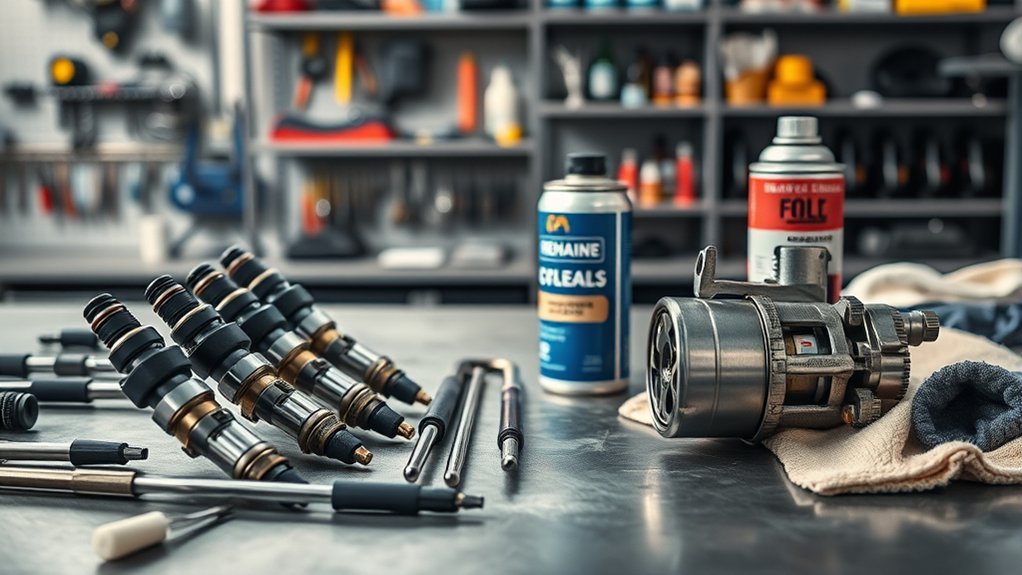
When considering whether to tackle fuel injector or throttle body cleaning yourself or hire a professional, it’s vital to weigh the benefits and drawbacks of each option. Here’s a quick comparison:
- DIY Techniques: Effective for older vehicles, you can use throttle body cleaner and basic tools, but results may vary.
- Professional Advantages: Pros guarantee thorough cleaning, especially for severe carbon buildup, restoring performance with specialized equipment.
- Cost Considerations: While DIY saves money, improper cleaning can lead to costly repairs down the road.
Regular maintenance every 15,000 to 30,000 miles is essential for engine health. Hiring professionals not only provides a detailed service but also offers tailored recommendations based on your vehicle’s condition and fuel quality. Ultimately, investing in professional cleaning can enhance long-term performance, allowing you to maintain your vehicle’s efficiency without the risks associated with DIY techniques.
What Are the Costs of Fuel System Cleaning?
Considering the costs of fuel system cleaning is essential for maintaining your vehicle’s performance and longevity. Professional fuel system cleaning, which includes both throttle body and fuel injector cleaning, typically ranges from $225 to $250. For severe carbon buildup, specialized methods like walnut blasting can escalate costs to $800 or more. Manufacturers recommend this service every 15,000 to 30,000 miles to guarantee peak engine efficiency.
When you weigh the cost comparison, proactive maintenance through regular cleaning offers significant cleaning benefits. It’s far cheaper than reactive repairs, which can exceed $1,000 due to neglect. By investing in routine fuel system cleaning, you not only enhance your vehicle’s performance but also prevent costly future repairs. In the long run, maintaining a clean fuel system is a smart financial decision, promoting both your vehicle’s health and your peace of mind.
Frequently Asked Questions
Will Throttle Body Cleaner Clean Fuel Injectors?
No, throttle body cleaner won’t effectively clean fuel injectors. For proper injector maintenance, you need specialized cleaners that restore spray patterns and remove deposits, ensuring peak engine performance and cleaner effectiveness. Don’t compromise your engine’s health.
What Is the Difference Between Throttle Body and Injector?
Did you know that over 75,000 miles, throttle operation becomes vital? The injector function delivers precise fuel spray, while throttle bodies manage airflow. Both are essential for ideal engine performance, but they serve distinct roles.
What Is a Fuel Injection and Throttle Body Service?
Fuel injection and throttle body services involve cleaning essential components to enhance engine performance. By addressing build-up in the fuel system, you guarantee ideal fuel spray and airflow, vital for effective fuel system maintenance and overall efficiency.
Conclusion
In conclusion, maintaining your fuel system is essential for peak performance. Did you know that a clean fuel injector can improve fuel efficiency by up to 15%? Regular cleaning of both the fuel injectors and throttle body not only enhances engine performance but also prolongs its lifespan. Whether you choose to tackle the job yourself or hire a professional, staying proactive about these services can save you from costly repairs down the line. Keep your engine running smoothly!