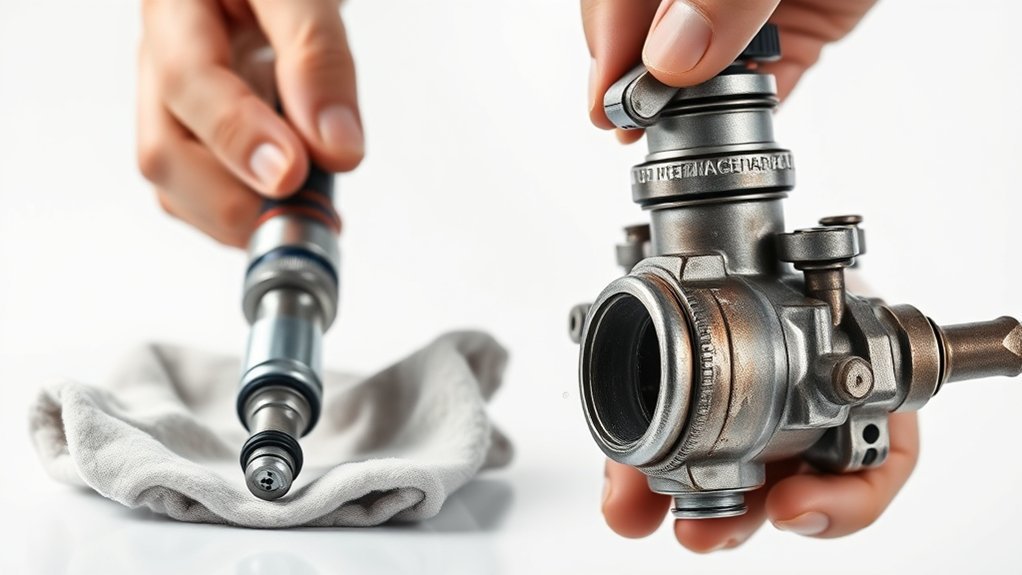
Fuel injector cleaning and throttle body cleaning solve different problems. Fuel injector cleaning targets deposits on the fuel-delivery side so the injectors can meter and spray fuel correctly. Throttle body cleaning targets deposits on the air-intake side so the throttle plate can meter airflow smoothly. If your car has rough idle, misfires, hesitation, or poor fuel economy, symptoms alone do not prove either part is dirty—diagnose the problem before paying for a cleaning service.
Last updated: August 31, 2026
Editorial basis: This guide synthesizes current SAE and Applied Energy research, AAA fuel-quality testing, U.S. Department of Energy maintenance guidance, and current throttle-body-cleaner instructions. It does not claim hands-on diagnosis of a specific vehicle.
Quick Answer
Fuel injector cleaning removes deposits from the fuel-delivery side. Throttle body cleaning removes carbon, varnish, and oily residue around the throttle plate and bore on the air-intake side. Choose between them using symptoms, inspection, trouble codes, fuel-trim or misfire data, and your vehicle’s service information—not a universal mileage rule.
Key Takeaways
- Fuel injector cleaning can help when deposits are affecting injector spray or fuel flow and diagnosis points to the injectors.
- Throttle body cleaning can help when visible deposits interfere with airflow around the throttle plate.
- There is no single perfect cleaning interval for every vehicle. Check the maintenance schedule first, then use symptoms and inspection to decide.
- Gasoline direct-injection engines can develop intake-valve deposits that fuel-tank injector cleaner cannot directly wash because fuel is injected downstream of the intake valves.
- If the check engine light is on, scan and save the codes before paying for a cleaning service or clearing diagnostic information.
At a Glance
| Time Required | Fuel additive: about 5 minutes to add; typical throttle body DIY guidance: about 45 minutes; professional cleaning varies by vehicle and procedure |
| Difficulty | Easy for a basic fuel additive; moderate for throttle body cleaning; professional for pressurized injector service, injector removal, or specialized GDI intake cleaning |
| Tools Needed | Owner’s manual or service information, scan tool if a warning light is on, throttle body cleaner, gloves, eye protection, lint-free towels, soft brush, screwdriver or socket set |
| Cost | DIY cleaner is usually the lowest-cost option; shop pricing depends on diagnosis, labor rate, access, and the cleaning method |
What Symptoms Point to Dirty Injectors or a Dirty Throttle Body?
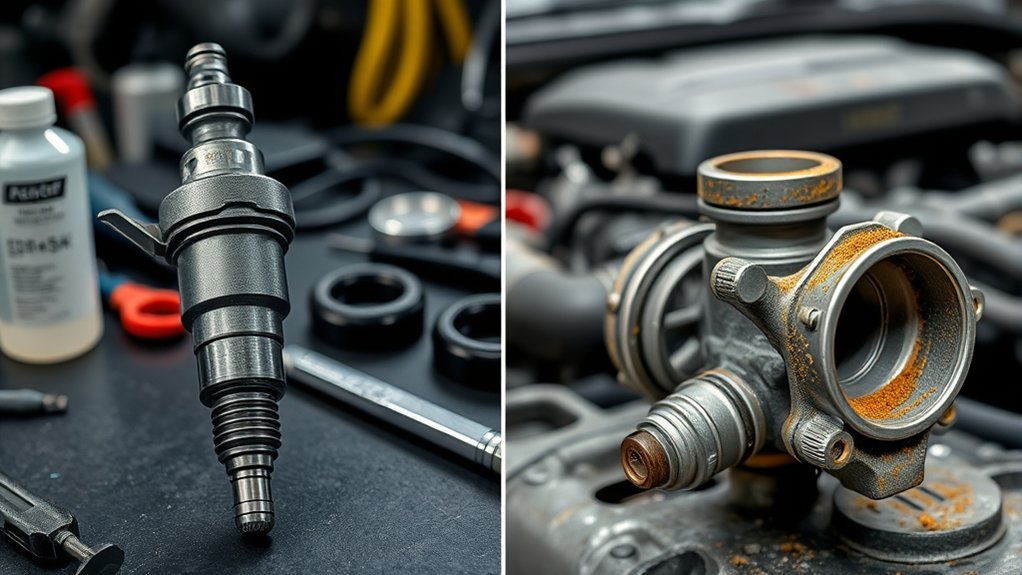
Dirty injectors, a sticky throttle body, vacuum leaks or misfires, weak ignition parts, bad sensors, and low fuel pressure can create overlapping symptoms. That is why inspection and scan data matter before you buy a cleaning service.
Watch for these signs:
- Rough idle or stalling: A dirty throttle body can disturb airflow at idle, but spark-plug faults, vacuum leaks, electronic-throttle adaptation issues, and other engine-control problems can do the same.
- Hesitation or weak acceleration: Restricted airflow, poor fuel delivery, low fuel pressure, ignition faults, or sensor problems can all make the engine feel lazy.
- Check engine light: Do not guess. Scan and save the codes first. Misfire, lean-mixture, throttle-position, and airflow codes point toward different diagnostic paths.
- Poor fuel economy: Deposits can contribute, but tire pressure, oxygen sensors, spark plugs, brakes, driving habits, and other maintenance issues can also affect MPG. The U.S. Department of Energy recommends keeping the engine properly tuned and the vehicle maintained for efficient operation.
- Engine misfires: Dirty injectors can cause uneven fuel delivery, but ignition coils, spark plugs, compression issues, air leaks, and GDI intake-valve deposits can also cause misfires.
- Hard starting: Injector leakage, restricted fuel delivery, intake deposits, ignition faults, or fuel-pressure problems may be involved.
Note: If the check engine light is flashing and the engine is running badly, reduce load and follow the vehicle manufacturer’s warning guidance. A severe active misfire can overheat and damage the catalytic converter.
Fuel Injector Cleaning vs Throttle Body Cleaning
The easiest way to understand the difference is to separate fuel delivery from airflow control.
| Service | What It Cleans | What It Can Improve | What It Will Not Fix |
|---|---|---|---|
| Fuel injector cleaning | Injector tips, internal injector passages, and fuel-related deposits reached by the cleaning method | Poor spray or uneven fuel delivery when deposits are the verified cause of rough running, hesitation, misfires, or efficiency loss | Electrically or mechanically failed injectors, weak fuel pump, ignition problems, vacuum leaks, compression faults, or GDI intake-valve deposits |
| Throttle body cleaning | Throttle plate, throttle bore, and deposits around the air-intake opening | Sticky throttle response, unstable idle, stalling, or airflow-related drivability problems when deposits are interfering with airflow | Clogged injectors, low fuel pressure, faulty sensors, damaged electronic throttle hardware, ignition faults, or mechanical engine problems |
Injector fouling has measurable effects. A 2017 Applied Energy study found that deposits on the examined GDI injector caused a 2.21% fuel-flow loss at 150 bar, increased spray penetration and mean droplet size, and worsened hydrocarbon and particulate emissions. A newer 2026 SAE study also found that deposit-control additives could improve injector cleanliness and recover performance in fouled GDI testing.
Throttle body deposits are different. Carbon, varnish, oil mist, and intake residue can collect around the throttle plate and bore. If that buildup changes the small airflow needed at idle, the engine computer may have more difficulty maintaining a stable idle.
Which Service Do You Need?
Use symptoms as a starting point, not as proof. The same rough idle can come from a dirty throttle body, injector problem, vacuum leak, worn spark plug, bad coil, contaminated MAF sensor, low fuel pressure, mechanical fault, or adaptation issue.
| What You Notice | Possible Direction | Best Next Step |
|---|---|---|
| Idle surges, stalls at stops, or throttle feels sticky | Throttle body, intake leak, airflow, or adaptation issue | Scan first, then inspect the throttle plate and intake system for visible deposits, leaks, or disturbed connections |
| Misfire, hard start, hesitation, or uneven power | Injector, ignition, compression, airflow, or fuel-pressure issue | Save codes and check misfire data, spark plugs, coils, fuel trims, fuel delivery, and compression as appropriate |
| GDI engine has cold-start misfires or rough running | Possible intake-valve deposits, injector issue, ignition fault, air leak, or another engine-control problem | Diagnose the fault before cleaning; a fuel-tank additive does not directly wash the back of GDI intake valves |
| No symptoms, but a shop recommends a “fuel system cleaning” during routine service | Maintenance recommendation that needs justification | Check your maintenance schedule and ask exactly what is being cleaned and what evidence supports the service |
Pro Tip: Ask the shop to show you the trouble codes, fuel-trim readings, misfire counts, injector test results, or visible throttle-body buildup before approving a cleaning service. A good recommendation should come with evidence.
[Products Worth Considering]

The ANCEL AD410 helps drivers quickly read and clear engine-related fault codes, view live data, and understand why the check engine light is on before heading to a repair shop. With built-in code definitions, readiness checks, and support for common OBD2 functions, it makes basic diagnostics straightforward for beginners and DIY users. Powered directly from the vehicle and easy to use with no app required, it offers practical value for everyday vehicle troubleshooting.
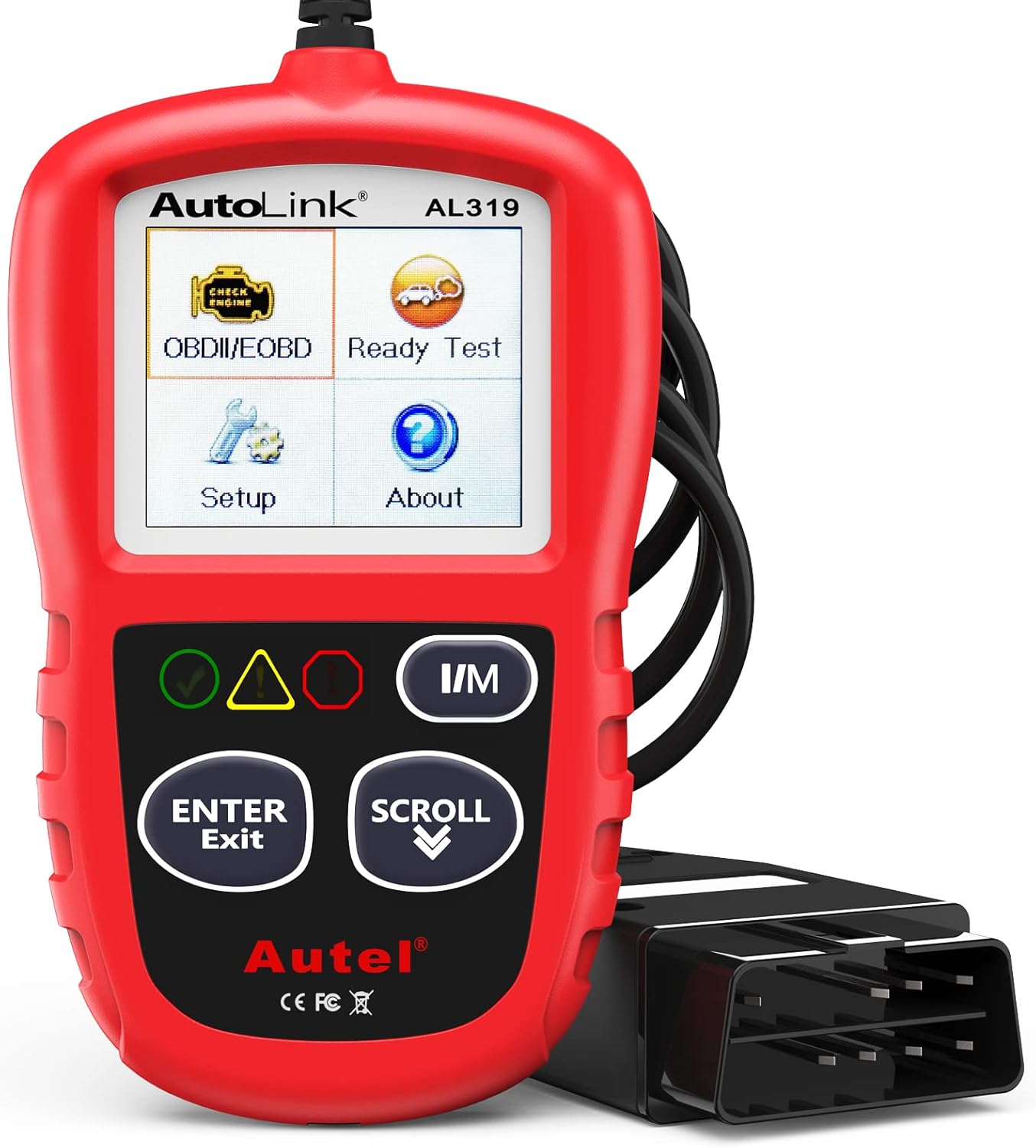
The Autel AL319 is a user-friendly OBD2 scan tool designed to help drivers quickly diagnose check engine light issues and understand vehicle fault codes. It supports reading and clearing DTCs, live data, freeze frame, I/M readiness, and vehicle information, making it a practical choice for DIYers and everyday car owners. With plug-and-play operation, a color display, built-in speaker, and broad vehicle compatibility, it delivers fast, reliable diagnostics without complicated setup.

The ANCEL AD410 PRO combines engine diagnostics and 12V battery testing in one easy-to-use tool, helping you read and clear check engine codes while checking battery health, cranking, and charging performance. It also provides live data, freeze frame details, and I/M readiness checks to help you diagnose issues faster and prepare for emissions testing. With plug-and-play operation, a clear screen, and broad vehicle compatibility, it is a practical solution for home mechanics and everyday drivers.
What Evidence Should Justify Cleaning?
- Throttle body: Visible buildup plus a symptom that fits an airflow or idle-control problem makes cleaning more reasonable than cleaning a throttle body that is already clean.
- Fuel injectors: Injector balance testing, cylinder-specific misfire evidence, abnormal fuel delivery, or other testing should point toward injector deposits before a professional injector service is approved.
- GDI intake valves: Cold-start or airflow symptoms alone are not proof. Diagnosis should separate intake-valve deposits from injector, ignition, compression, PCV, and air-leak problems.
- No symptoms: If the vehicle runs normally and the service is not required by its maintenance schedule, ask what measurable problem the proposed cleaning is intended to correct.
What Does Each Cleaning Service Actually Do?
Fuel injector cleaning focuses on the fuel side of combustion. Injectors must deliver the commanded amount of fuel with a suitable spray pattern. Deposits on an injector tip or within passages can alter flow or spray behavior, but cleaning only helps when deposits—not an electrical, mechanical, pressure, wiring, or engine problem—are causing the fault.
There are three common injector-cleaning approaches:
- Fuel-tank additives: These are poured into the gas tank and may help control or remove some fuel-system deposits when used according to the product label.
- Pressurized fuel-system cleaning: A shop uses dedicated equipment and cleaning chemistry to target the fuel-delivery system. Procedures vary by engine and equipment.
- Off-car cleaning and flow testing: Injectors are removed, cleaned, and compared for flow or operation. This is generally reserved for diagnosis that points specifically to injector performance.
Throttle body cleaning focuses on the air side. The throttle body sits between the intake duct and intake manifold. Its plate regulates airflow. When deposits build up around the plate and bore, they can interfere with the small amount of airflow required for stable idle and low-speed operation.
A correct throttle body cleaning uses a product approved for the application and follows the vehicle’s service procedure. CRC, for example, lists its Throttle Body & Air-Intake Cleaner as a product formulated to remove carbon, varnish, and gum buildup from throttle bodies and throttle-body bores.
Why Do GDI Engines Need Different Cleaning Advice?
Gasoline direct injection, or GDI, changes the cleaning conversation. In port-fuel-injected engines, fuel is delivered upstream of the intake valve, so the valve receives a fuel-washing effect. In a GDI engine, the injector sprays fuel directly into the combustion chamber instead. SAE research on GDI intake-valve deposits specifically identifies the lack of this fuel-washing process as an important difference from port injection.
This means a fuel-tank detergent can reach the fuel-delivery path and injector, but it does not directly wash the back of the intake valve on a GDI engine. The 2026 SAE deposit-control study supports the ability of detergent chemistry to improve injector cleanliness; that should not be confused with cleaning deposits located on the upstream side of the intake valves. If intake-valve deposits are actually confirmed, follow the engine manufacturer’s approved intake or mechanical cleaning procedure.
The key question is not “Has the car reached a certain mileage?” It is “Which part is dirty, and is that dirt actually causing the symptom?”
How Are the Cleaning Processes Different?
Fuel injector and throttle body cleaning differ in location, chemistry, equipment, risk, and the evidence that should justify the service.
Cleaning Process Variations
Throttle body cleaning usually begins by gaining safe access through the intake duct. Depending on the vehicle and product instructions, deposits may be removed with throttle-body cleaner, a lint-free towel, and a soft brush. Some throttle bodies can be serviced in place, while others require a different manufacturer procedure.
Fuel injector cleaning does not use throttle body cleaner. It uses fuel-system detergent, dedicated pressurized equipment, or off-car injector-cleaning and testing equipment. If an injector has an electrical fault, internal mechanical damage, leakage, or another failure that cleaning cannot correct, replacement may be the proper repair.
Warning: Work on a cool engine in a well-ventilated area and follow the product label and vehicle service information. Throttle body cleaner is flammable. Do not spray the mass airflow sensor with throttle body cleaner, do not substitute an unapproved solvent, and do not pry or force an electronic throttle plate against resistance.
Impact on Engine Performance
The best result happens when the cleaning matches a verified problem.
- Throttle Body Cleaning: Can restore smoother idle or low-speed response when deposits around the throttle plate are actually interfering with airflow.
- Fuel Injector Cleaning: Can improve injector cleanliness and fuel delivery when deposits are affecting injector operation.
- Detergent Gasoline: Can help control deposit formation. In AAA laboratory testing, non-TOP TIER gasoline produced 19 times more intake-valve deposits than TOP TIER gasoline after 4,000 miles of simulated driving. See AAA’s fuel-quality research.
Cleaning is not a cure-all. A vacuum leak, failing sensor, weak fuel pump, ignition fault, compression problem, damaged throttle body, or wiring issue will still need diagnosis and repair.
How Often Should You Clean Fuel Injectors or the Throttle Body?
Start with the maintenance schedule and service information for your exact vehicle. General guides sometimes suggest mileage-based inspections, but there is no single mileage that proves every injector or throttle body needs cleaning. Symptoms, visible deposits, scan data, fuel quality, engine design, and manufacturer guidance matter more than a universal number.
Here is a safer maintenance framework:
| Mileage or Situation | What to Consider | Maintenance Tip |
|---|---|---|
| Every fuel fill-up | Deposit prevention | Use the octane grade required by the manufacturer and consider TOP TIER detergent gasoline where available |
| At routine service | Early warning signs | Watch for rough idle, hesitation, misfires, hard starting, unusual fuel-trim behavior, or warning lights |
| At major maintenance intervals | Inspection | Follow the vehicle’s maintenance schedule and inspect relevant intake, ignition, PCV, and fuel-system components when symptoms justify it |
| When symptoms appear | Diagnosis | Save trouble codes and determine whether the fault is related to fuel, air, ignition, sensors, wiring, or engine mechanics before cleaning |
| GDI engine with relevant symptoms | Injector deposits versus intake-valve deposits | Determine where the deposits are before choosing injector cleaning or a separate intake-valve procedure |
Fuel additives can be useful when used according to their labels, but more is not automatically better. Avoid mixing cleaners unless the manufacturers explicitly permit it, and never use an additive as a substitute for diagnosing a persistent misfire or warning light.
How to Clean a Throttle Body Safely
Throttle body cleaning is often the more realistic DIY job; professional injector work may involve pressurized fuel or injector removal. Mobil’s throttle-body cleaning guide estimates about 45 minutes for its general procedure and stresses ventilation, eye protection, the correct cleaner, and careful access. Your vehicle’s own service information takes priority over a generic procedure.
- Read the owner’s manual or service information. Check for model-specific precautions, electronic-throttle instructions, and any required adaptation or idle-learning procedure.
- Park safely and let the engine cool. Work in a ventilated area away from sparks, flames, cigarettes, and other ignition sources.
- Preserve diagnostic information. If a warning light is on, save trouble codes and freeze-frame information before disconnecting the battery or clearing anything.
- Disconnect the negative battery cable only if the vehicle procedure recommends it. Battery disconnection can erase learned values on some vehicles and may create additional relearn requirements.
- Remove the intake duct carefully. Do not crack plastic tubes, tear hoses, damage clamps, or disturb sensor wiring.
- Inspect before cleaning. If the throttle plate and bore are already clean, continue diagnosing the symptom rather than cleaning by default.
- Use the correct cleaner and method. Follow the product label and vehicle procedure. Use lint-free material and a soft brush where appropriate rather than flooding electrical components with solvent.
- Do not force an electronic throttle plate. If safe movement is not permitted or the plate resists movement, stop and follow model-specific service information.
- Keep throttle-body cleaner away from the MAF sensing element. A mass airflow sensor requires a cleaner specifically approved for that sensor when cleaning is justified.
- Reassemble and check for air leaks. Fully seat the intake duct, clamps, hoses, and electrical connections.
- Start and verify operation. Idle may change temporarily after service. Follow any model-specific relearn procedure and scan again if warning lights or unstable operation remain.
Note: If idle problems become worse immediately after cleaning, first recheck every intake duct, clamp, vacuum or PCV hose, gasket, and electrical connector that was disturbed. An air leak or disconnected component can mimic a throttle-body problem.
[Products Worth Considering]

The ANCEL AD310 is a compact, easy-to-use OBD II code reader designed to help drivers quickly identify check engine light causes, read and clear fault codes, and review key vehicle data. It supports major OBD2 protocols and works with many 1996-and-newer cars, light trucks, SUVs, and other OBD2 vehicles. Built for fast diagnostics at home or on the go, it runs directly from the vehicle and provides clear results on a large screen.

Masoll’s TPMS sensor set includes four advanced sensors and a relearn tool to help GM vehicle owners replace factory tire pressure sensors at home. Designed for broad compatibility with GM vehicles after 2006, it supports dual-frequency operation for easier fitment across Chevy, GMC, Buick, Cadillac, Pontiac, and select trucks. With low power use, high accuracy, and DIY installation, it offers a convenient way to clear TPMS warnings and restore proper tire pressure monitoring.

QD ELECTRONICS CLEANER: A precise cleaner made from petroleum distillate and alcohol that is fast evaporating and leaves no residue.
Should You DIY or Hire a Pro for Cleaning?
Match the job to your skill level, the evidence you have, and the risk involved.
- DIY fuel additive: This is the simplest option. Use a product compatible with your engine and fuel, and follow its label. It may address some deposit-related problems but cannot repair failed hardware.
- DIY throttle body cleaning: This can be reasonable when visible buildup is present, access is safe, and the vehicle procedure permits the work.
- Professional injector diagnosis and cleaning: Choose this when testing points toward injector deposits or uneven injector operation. Professional options may include targeted cleaning, balance testing, flow testing, or off-car service.
- Professional GDI intake-valve service: Choose this only when diagnosis supports intake-valve deposits and use the procedure appropriate for that engine.
Professional diagnosis is especially sensible if the check engine light is flashing, the vehicle repeatedly stalls, it enters reduced-power or limp mode, misfire codes return, fuel pressure must be tested, the throttle body is difficult to access, or the electronic-throttle system requires a manufacturer-specific procedure.
What Are the Costs of Fuel System Cleaning?
The cost depends on what is actually being cleaned and how much diagnosis or disassembly the job requires.
- Fuel-tank cleaner: Usually the lowest-cost option and most appropriate for product-label use rather than repairing an undiagnosed fault.
- Throttle body cleaner and basic supplies: Often inexpensive for DIY if you already own the necessary hand tools.
- Shop throttle body cleaning: Labor depends on access, the electronic-throttle procedure, and whether adaptation or relearning is needed.
- Professional injector service: Costs rise when diagnosis, pressurized equipment, balance testing, injector removal, or flow testing is involved.
- GDI intake-valve cleaning: Can require more labor because it is a separate intake-side procedure rather than a bottle added to the fuel tank.
Before approving any service, ask three questions:
- What symptom, inspection, or test result shows I need this?
- Is this service required or recommended in my vehicle’s maintenance information?
- What is the next diagnostic step if cleaning does not change the symptom?
A good shop should be able to explain whether it is cleaning injectors, the throttle body, another part of the induction system, or GDI intake valves. Those are not interchangeable services.
[Products Worth Considering]

Upgraded Universal Fuel Injector Tester and Cleaner Tool Kit---Operates injectors individually to diagnose fuel delivery problems on petrol vehicles with electronic fuel injection, such as blockage, leakage, damage, and burnout of the injectors. The included 8-size cleaning adapters combined with the tester pulse mode can quickly clean the injectors. TURN OFF THE ENGINE BEFORE USE.

[High-quality materials] : This fuel injector cleaner is made of high-quality materials and has a long service life. The wire is made of high quality silicone resin with high toughness and better resistance to high and low temperatures. Crocodiles have large opening range and strong bite force. Joint with high hardness corrosion resistant plastic, polygonal convex groove design, enhance friction and anti-slip.

Fixes rough running and hard-to-start engines: Breaks down gum and varnish that cause rough running, hard starts, sputtering, and no-start issues in small engines, helping restore performance quickly
How Can You Reduce Fuel and Air-Intake Deposits?
You cannot prevent every deposit, but correct fuel, maintenance, and repairs can reduce avoidable buildup.
- Use the correct fuel: Use the octane grade required by the vehicle manufacturer. Higher octane is not automatically better if the engine does not require it.
- Choose detergent gasoline: TOP TIER fuel standards are designed around deposit-control performance, and AAA testing found a large difference in deposit formation between the fuels it compared.
- Maintain the intake system: Replace the air filter according to the vehicle schedule and repair damaged or poorly sealed intake ducts.
- Address PCV or oil-vapor problems: Excessive oil carryover or a malfunctioning crankcase-ventilation system can contribute to intake contamination.
- Do not ignore misfires: Find the cause rather than repeatedly adding cleaner.
- Keep up with ignition and scheduled maintenance: Weak spark, worn components, sensor faults, and mechanical problems can mimic fuel or throttle-body problems.
Frequently Asked Questions
Will throttle body cleaner clean fuel injectors?
No. Throttle body cleaner is intended for the air-intake side, especially the throttle bore and plate. Fuel injectors require a fuel-system cleaning method, injector testing, or replacement depending on the diagnosed problem.
What is the difference between a throttle body and an injector?
The throttle body controls airflow into the engine. A fuel injector meters and sprays fuel into an intake port or directly into the combustion chamber, depending on the engine design. One primarily manages air; the other delivers fuel.
What is a fuel injection and throttle body service?
It is a service package that may include injector cleaning, throttle-body cleaning, or other induction-system work. Ask exactly which components are being serviced, which method is used, and what inspection or diagnostic result justifies each part of the service.
Can fuel injector cleaner fix GDI intake-valve carbon?
A fuel-tank cleaner does not directly wash the back of the intake valves on a GDI engine because fuel is injected into the combustion chamber. If intake-valve deposits are suspected, confirm the diagnosis and use the manufacturer-approved procedure for that engine.
Can I clean the throttle body without removing it?
Often, yes, but it depends on the vehicle and throttle-body design. Some can be accessed after removing the intake duct, while others have model-specific electronic-throttle precautions or service procedures. Do not force an electronic throttle plate.
Can a dirty throttle body cause a check engine light?
It can contribute to idle or airflow-related problems, but a check engine light does not prove the throttle body is dirty. Injectors, sensors, vacuum leaks, ignition faults, wiring, and mechanical problems can set other codes. Scan and diagnose the vehicle before buying parts or services.
Can the throttle body and fuel injectors both need cleaning?
Yes, separate deposits can exist on both the air and fuel sides, so both services can be justified in the same visit. However, evidence for one problem does not automatically prove the other service is needed. Ask what inspection or test supports each cleaning.
Is fuel system cleaning worth it or just an upsell?
It can be worthwhile when it addresses a diagnosed deposit problem or a service specifically required by the vehicle’s maintenance information. Be cautious when the vehicle runs normally, no relevant evidence is shown, and a generic cleaning package is recommended only because the odometer reached a round number.
Conclusion
Fuel injector cleaning and throttle body cleaning are not interchangeable. Injector cleaning targets the fuel-delivery side; throttle body cleaning targets deposits that interfere with airflow around the throttle plate. Either service can help when deposits are actually responsible for the symptom, but neither will repair unrelated ignition, sensor, air-leak, fuel-pressure, wiring, or mechanical faults.
If your vehicle runs smoothly and has no relevant warning or manufacturer recommendation, cleaning may not be urgent. If it has rough idle, misfires, hesitation, hard starting, or unexplained efficiency loss, save the diagnostic evidence first, identify which system is at fault, and clean only the component that testing points to.
Sources
- AAA: Not All Gasoline Created Equal — supports TOP TIER gasoline and deposit-control discussion.
- U.S. Department of Energy: Consumer Guide to Fuel Economy — supports vehicle-maintenance and fuel-economy guidance.
- CRC Industries: Throttle Body & Air-Intake Cleaner — supports throttle-body cleaner purpose and product-use distinction.
- SAE 2026-01-0349: Study of Deposit Control Additive Efficacy in Gasoline Direct Injection Engines — supports GDI injector-deposit and detergent-additive discussion.
- Applied Energy: Effect of Fuel Injector Deposit on Spray Characteristics, Gaseous Emissions and Particulate Matter — supports measured injector flow, spray, and emissions effects.
- SAE: Formation of Intake Valve Deposits in Gasoline Direct Injection Engines — supports the GDI intake-valve fuel-washing distinction.
- Mobil: Proper Throttle-Body Cleaning Guide — supports general throttle-body cleaning time, tools, safety, and cleaner-selection guidance.