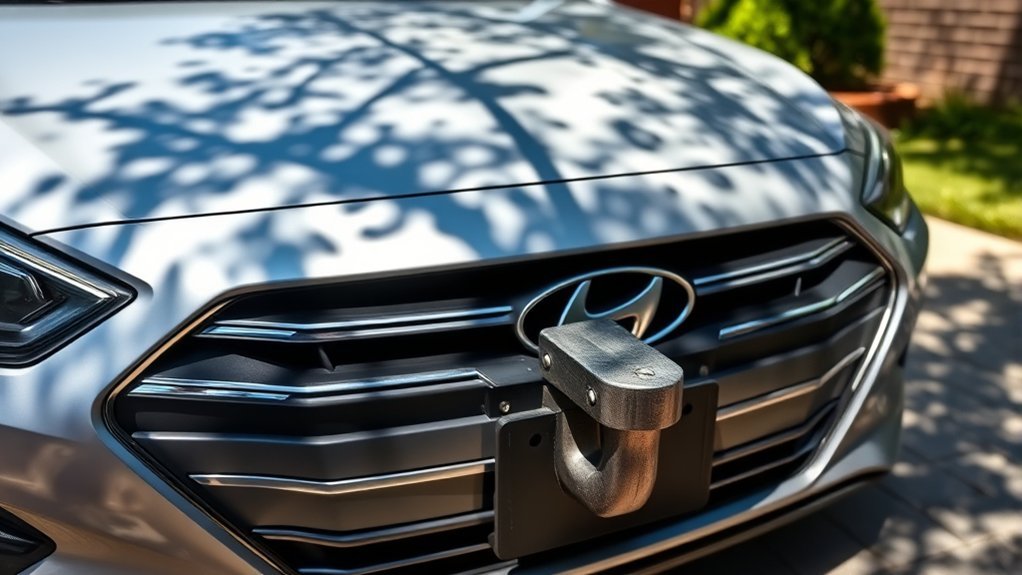
Your Hyundai Sonata’s tow hook is a small threaded recovery eye designed for short, controlled emergency towing, not trailer towing, heavy-duty pulling, or yanking a stuck car out of mud. On equipped Sonata models, the hook is usually stored with the vehicle tool kit, and the threaded mounting point is hidden behind a small removable bumper cover.
Quick Answer
To use a Hyundai Sonata tow hook, find the hook in the trunk or cargo-area tool kit, remove the small bumper cover, screw the hook clockwise into the threaded hole until fully secure, and use it only for slow, straight-line emergency towing. Do not use it as a trailer hitch, recovery shackle, or lifting point.
Key Takeaways
- The Sonata tow hook is for controlled emergency towing only, not heavy-duty recovery, trailer towing, side pulling, or lifting.
- The hook is normally stored with the tool kit, tire mobility kit, or spare-tire equipment, depending on model year and market.
- Always tighten the hook fully clockwise before attaching a tow strap, cable, or chain.
- Pull straight ahead only. Side pulls, vertical pulls, and jerking can damage the bumper, frame area, or tow hook threads.
- If the car is stuck, badly damaged, leaking transmission fluid, or unsafe to roll, call a professional tow service.
At a Glance
| Time Required | 5 to 10 minutes to locate and install the hook |
| Difficulty | Easy installation, but towing should be done carefully |
| Tools Needed | Factory tow hook, vehicle tool kit, soft cloth or trim-safe pry tool if needed |
| Cost | Usually free if the factory hook is present; replacement cost varies by part and model year |
Understanding Your Hyundai Sonata’s Tow Hook Features
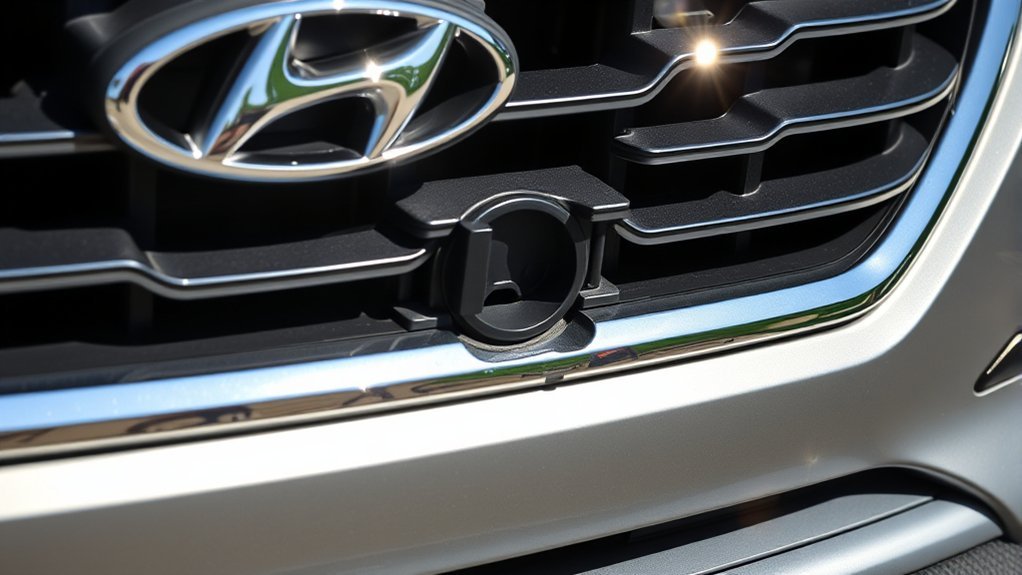
The tow hook on a Hyundai Sonata is a removable threaded eye that screws into a reinforced mounting point behind the front or rear bumper cover on equipped vehicles. Hyundai’s removable towing hook instructions describe removing the bumper hole cover, turning the towing hook clockwise until it is fully secured, and reinstalling the cover after use.
Availability and storage location can vary by Sonata model year, trim, drivetrain, and market. Some vehicles include the hook in the trunk tool case, spare-tire area, or tire mobility kit. Others may have a different towing setup or may not show an obvious bumper access cover. The safest first step is to check your owner’s manual or look up the manual by year, model, and trim through Hyundai’s official Manuals & Warranties resource.
Note: A tow hook is not the same as a trailer hitch. A threaded emergency tow hook is meant for short, controlled towing or loading assistance, while a trailer hitch is a separate rated towing system.
Finding and Installing Your Tow Hook: A Step-by-Step Guide
Before installing the tow hook, park safely, turn on hazard lights, and make sure the towing vehicle, strap, chain, or cable is appropriate for emergency use. If the car is in traffic, on a steep grade, badly damaged, or stuck in deep mud or sand, call a tow-truck service instead of trying to pull it yourself.
[Products Worth Considering]

Built for towing, winching, and off-road recovery, this D-ring shackle set delivers dependable strength in a compact, easy-to-use design. The drop-forged steel construction and protective coated finish help provide reliable performance and resistance to rust in demanding outdoor conditions. Compatible with Jeeps, ATVs, UTVs, trucks, trailers, and SUVs, it is a practical recovery accessory for everyday trail and rescue use.

This aftermarket front bumper tow hook eye cover cap set is designed to fit Toyota RAV4 AX40 models from 2016 to 2018, providing a direct replacement for the original left and right covers. Made from durable ABS plastic, these caps offer a precise fit, weather resistance, and reliable protection while restoring the clean factory look of the bumper.

This recovery tow strap kit is built for dependable vehicle recovery and towing in demanding conditions. The heavy-duty strap features fortified reinforced loops and high break strength for secure pulls, while the included D-ring shackles add versatility and reliable connection options. Designed for trucks, SUVs, ATVs, UTVs, and boats, it also includes protective isolators and a storage bag for safer, quieter transport and easy organization.
Locating the Tow Hook Area
Look for a small square or round cover on the front or rear bumper. This cover hides the threaded hole where the tow hook installs. On many Hyundai models, the cover can be removed by pressing one edge and pulling it outward. Use your fingers when possible. If you need a tool, wrap it in a soft cloth to avoid scratching the paint.
- Check the trunk, spare-tire well, tire mobility kit, or factory tool case for the tow hook.
- Find the removable bumper cover at the front or rear of the vehicle.
- Remove the cover carefully and place it somewhere safe.
- Inspect the threaded hole for dirt, rust, damaged threads, or other damage before installing the hook.
- Do not force the hook if it does not thread smoothly by hand.
Installation Procedures Explained
Insert the threaded end of the tow hook into the bumper opening. Turn it clockwise by hand until it seats fully and feels tight. Hyundai warns that an improperly tightened towing hook can damage vehicle parts and may detach during towing, creating a serious injury or accident risk.
- Open the trunk or cargo-area tool compartment and remove the tow hook.
- Remove the bumper hole cover by pressing or lifting the correct edge.
- Line up the hook with the threaded receiver.
- Turn the hook clockwise until it is fully secured.
- Attach the tow strap, chain, or cable directly to the tow hook eye.
- After use, unscrew the hook, clean it, dry it, and reinstall the bumper cover.
Warning: Never use the Sonata tow hook for snatch recovery, angled pulling, lifting the car, securing cargo, or towing a trailer. Sudden jerks or side loads can bend parts, strip threads, or cause the hook to detach.
Safety Checks Before Towing
Emergency towing should be done slowly, in a straight line, and only when the wheels, steering, brakes, axles, and powertrain are in good working condition. Hyundai advises contacting an authorized Hyundai dealer or commercial tow-truck service whenever possible. If a cable or chain must be used in an emergency, use it only for a short distance and at low speed on a hard-surfaced road.
- Confirm the tow hook is not cracked, bent, rusty, or cross-threaded.
- Make sure the hook is fully tightened before attaching a strap, cable, or chain.
- Use a towing vehicle heavier than your Sonata when emergency cable-or-chain towing is allowed.
- Make sure both drivers can communicate clearly before the vehicle moves.
- Shift to Neutral and release the parking brake only when it is safe to tow.
- Keep a driver in the Sonata to steer and brake during emergency towing.
- Do not leave passengers in the Sonata during emergency cable-or-chain towing.
- Expect reduced braking and more steering effort if the engine or power assist is off.
- Use steady, even force. Do not jerk the cable, strap, chain, or hook.
- Pull straight ahead, not sideways or upward.
- Stop immediately if the hook, bumper, cable, chain, or strap shifts or makes unusual noise.
Speed, Distance, and Cable Limits
Check your exact Sonata owner’s manual before any emergency tow because limits can vary by model year, trim, drivetrain, and market. Hyundai’s emergency towing guidance says cable-or-chain towing should be limited to hard-surfaced roads, low speed, and short distance. It also gives a 10 mph speed limit and a distance limit of less than 1 mile for emergency towing to help avoid serious transmission damage.
If you use a cable or chain in an emergency, Hyundai’s guidance calls for a cable or chain less than 16 ft. long. It also calls for a white or red cloth about 12 inches wide in the middle of the cable or chain so other drivers can see it more easily.
Use the tow hook only for slow, straight emergency movement. If the situation needs speed, momentum, a hard pull, or an angled pull, the tow hook is the wrong tool.
When You Should and Should Not Use the Sonata Tow Hook
The Sonata’s removable tow hook is best understood as an emergency aid. It may help a tow operator guide the vehicle onto a flatbed, move it a short distance, or tow it slowly when no tow truck is available and the vehicle is otherwise safe to roll.
| Use Case | Safe for the Tow Hook? | What to Do |
|---|---|---|
| Short, straight emergency towing on pavement | Only if your manual allows it and the vehicle can roll safely | Tow slowly, keep the pull straight, and follow the owner’s manual. |
| Loading onto a flatbed | Often acceptable when handled by a tow operator | Let the tow operator control the pull and loading angle. |
| Pulling out of mud, sand, snowbank, or ditch | No | Call a recovery service with proper recovery equipment. |
| Trailer towing | No | Use only a vehicle and hitch system rated for trailer towing. |
| Side pulling, vertical pulling, or lifting | No | Use professional towing or recovery equipment. |
Key Safety Tips for Tow Hook Use
Using the tow hook safely is less about strength and more about control. Smooth, straight, low-speed force is the goal. If the situation requires momentum, a running start, or a hard pull, the tow hook is the wrong tool.
Proper Hook Tightening
Proper tightening is critical because the hook threads carry the towing load. Cross-threading, partial tightening, or leaving the hook loose can damage the receiver and may cause the hook to come free under tension.
- Start threading the hook by hand to avoid cross-threading.
- Turn clockwise until the hook is fully seated.
- Do not use the hook if it wiggles after tightening.
- Do not add adapters, shackles, or hardware that changes the pull angle unless approved by the equipment manufacturer.
- After towing, remove the hook and reinstall the bumper cover so debris does not collect in the opening.
Regular Inspection Required
Inspect the tow hook before every use. Look for bent metal, cracked welds, damaged threads, rust, or a distorted eye. Also inspect the bumper opening and threaded receiver. If anything looks damaged, skip the tow hook and use professional towing equipment.
Pro Tip: Keep the tow hook in the same tool-kit location after every use. In an emergency, you do not want to search the trunk while another vehicle is waiting to tow or load your Sonata.
Tow Hook Maintenance and Storage Tips
A tow hook spends most of its life stored away, so it is easy to forget about it until an emergency. A quick inspection every few months can prevent trouble when you actually need it.
- Clean the threads: Wipe dirt, road salt, and moisture from the hook after use.
- Dry before storing: Moisture can cause corrosion inside the tool kit or spare-tire area.
- Inspect the bumper cover: Make sure the cover snaps back into place and does not hang loose.
- Check for missing parts: If you bought the car used, confirm the tow hook is still in the tool kit.
- Replace damaged hooks: Do not straighten or repair a bent tow hook.
Aftermarket Tow Hooks, Replacement Hooks, and Hitch Accessories
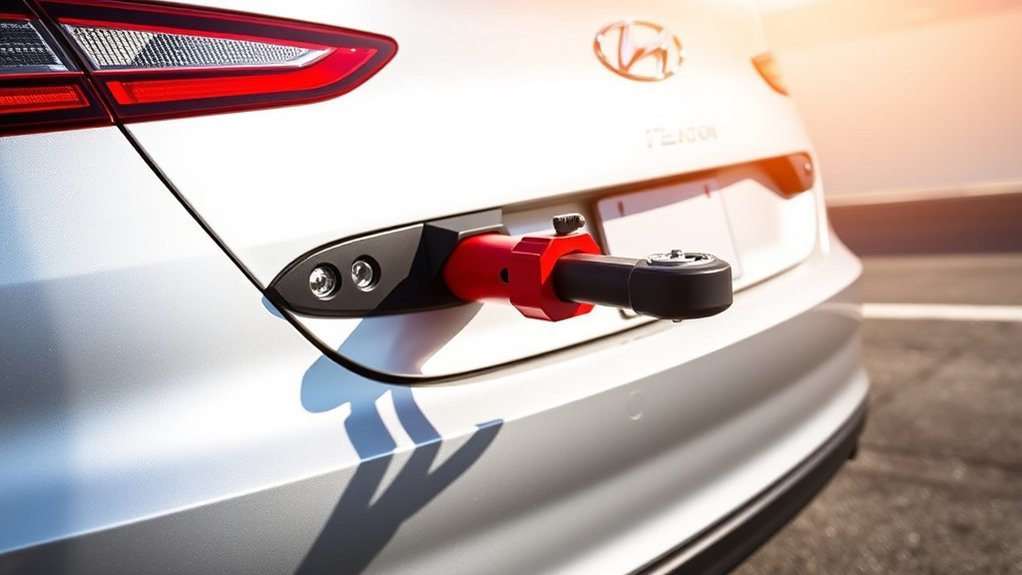
Aftermarket tow hooks, tow straps, and hitch accessories can be useful in the right situation, but they must match the Sonata’s exact model year, thread size, mounting design, and intended use. A brightly colored “racing” tow hook or universal hook may look stronger than the factory piece, but appearance does not prove it is safe or properly rated.
If your original hook is missing, the safest replacement is a genuine Hyundai part or a part verified by VIN through a Hyundai dealer or trusted OEM parts supplier. If you are considering a trailer hitch for a bike rack or cargo carrier, remember that accessory carrying is different from trailer towing. Confirm load ratings, warranty impact, and legal requirements before installing any hitch or towing accessory.
Warning: Do not assume an aftermarket hitch or hook increases your Sonata’s towing capacity. The vehicle, hitch, attachment points, brakes, cooling system, tires, and manufacturer limits all matter.
[Products Worth Considering]

This heavy duty recovery kit is built for safer vehicle extraction with a high-elasticity nylon snatch strap and reinforced loops for dependable performance. It includes two heavy duty D-ring shackles and a storage bag, giving you a complete setup for off-road, towing, and emergency recovery situations. Designed for strength and durability, it offers a high breaking strength and a generous working load limit for rugged use.

This heavy-duty 2-inch shackle hitch receiver adds dependable recovery capability to trucks, SUVs, ATVs, and UTVs. Built from carbon steel with corrosion-resistant finishing and protective isolators, it helps prevent scratches while delivering strong towing support for rugged recovery and hauling tasks. The dual pin-hole design allows flexible positioning for easier use in demanding conditions.

This trailer hitch pin lock is designed to secure Class III and IV 2-inch and 2-1/2-inch tow receivers, helping keep hitch-mounted gear protected during travel and storage. Its rotating head, tubular key design, and weather-resistant cap make it easy to use while helping guard against moisture, dust, and rust. Built from solid carbon steel with a zinc alloy lock core, it offers dependable towing security for trailers, cargo carriers, bike racks, and more.
Common Issues and Tow Hook Troubleshooting
Sonata owners commonly run into a few practical problems: the hook is missing, the bumper cover is hard to find, the cover feels stuck, or the hook starts threading at an angle. Most of these issues are easy to handle if you slow down and avoid forcing parts.
- The hook is missing: Check under the trunk floor, inside the spare-tire area, near the tire mobility kit, and inside any factory tool pouch. If it is gone, order the correct replacement by VIN.
- The bumper cover will not open: Press the edge described in the owner’s manual. Use a cloth-wrapped plastic trim tool only if needed.
- The hook will not screw in: Back it out and restart by hand. Do not force it with a wrench because cross-threading can damage the receiver.
- The bumper flexes during pulling: Stop. The hook may be pulling at the wrong angle or the situation may require a tow truck.
- You cannot find a rear tow point: Some model years or markets may differ. Check your manual rather than guessing under the bumper.
- You see fluid under the vehicle: Do not cable-tow the car. If transmission fluid is leaking, use flatbed equipment or a towing dolly as directed by the manual.
Choosing the Right Towing Solution for Your Hyundai Sonata
The best towing solution depends on the problem. A dead battery in a parking lot, a disabled vehicle on the shoulder, and a car stuck in mud all require different equipment. The tow hook is only one small part of the emergency plan.
For most breakdowns, a professional tow service is the safest option. Hyundai’s towing-service guidance commonly recommends proper wheel-lift, dolly, or flatbed procedures to avoid drivetrain and suspension damage. All-wheel-drive models, damaged suspension parts, and transmission-fluid leaks require extra caution, so tell the tow operator your Sonata’s model year and drivetrain before towing begins.
[Products Worth Considering]

This Rhino USA recovery tow strap is built for reliable vehicle pulling and towing in flat recovery situations. Made from durable polyester with reinforced loop ends, it is designed to help secure safe connection points while resisting wear, abrasion, and stress during recovery use. It is a practical choice for off-road recovery, roadside assistance, and general towing needs.

The MaxxHaul 50563 Threaded Hitch Locking Pin is designed to secure the MaxxHaul 50025 Bike Rack with added stability and peace of mind. Built from solid steel, it helps minimize wobble while protecting your rack with a locking head, hitch pin clip backup, protective cover, and two included keys.
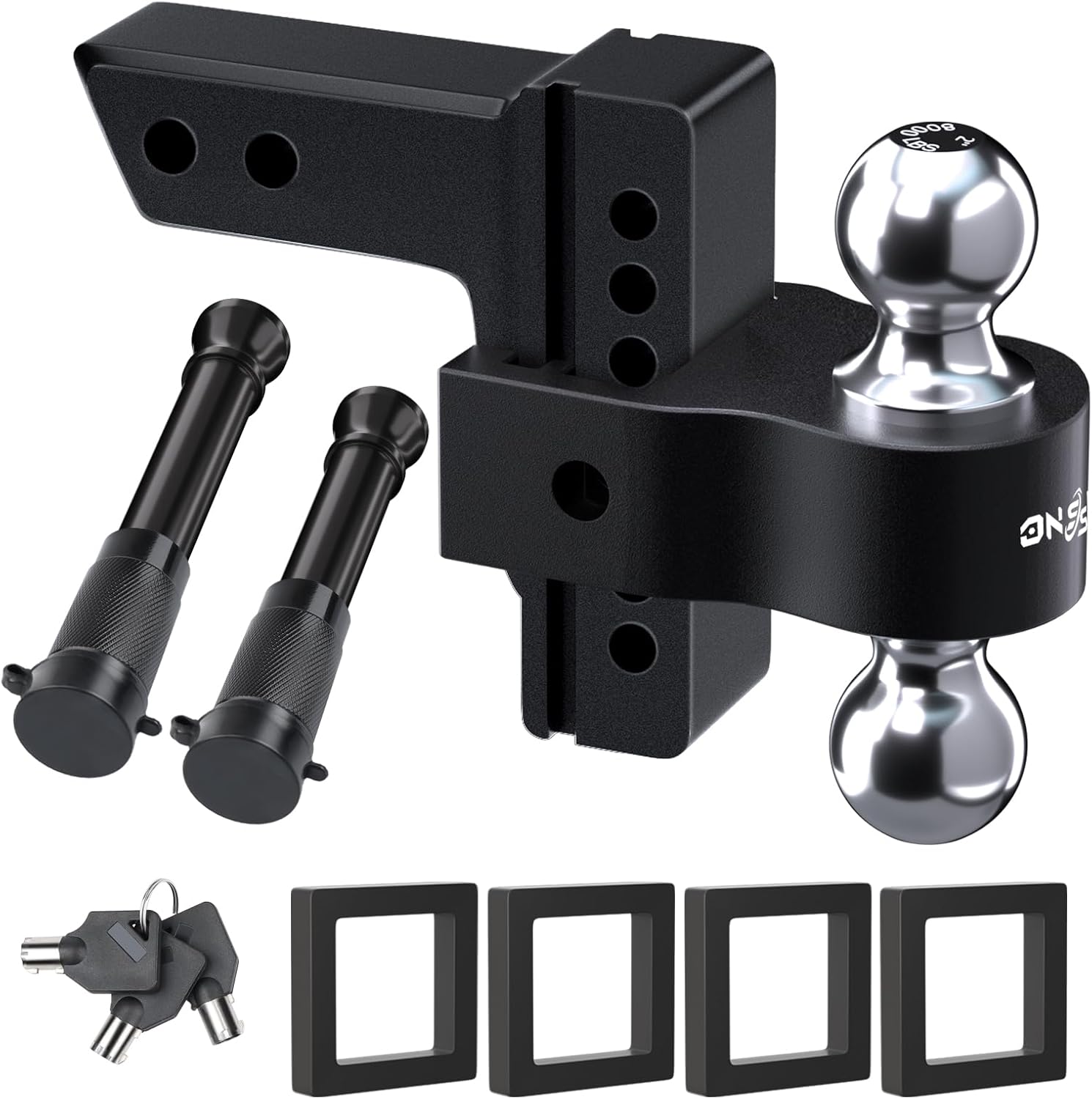
This adjustable trailer hitch is designed for 2-inch receivers and offers flexible towing with a 6-inch drop and rise range. Dual ball sizes help support different trailer setups, while the high-strength aluminum construction is built for dependable performance on tough jobs. Included hitch locks and silencers add security and help reduce noise for a smoother towing experience.
Best Options by Situation
- Dead vehicle on pavement: Use a professional tow truck. The tow hook may help guide the vehicle onto a flatbed.
- Vehicle stuck off-road: Call a recovery service instead of pulling from the tow hook.
- Long-distance transport: Use a flatbed or approved vehicle transport method.
- Bike rack or cargo carrier: Use a properly rated accessory hitch, not the tow hook.
- Trailer towing: Check the owner’s manual and use only a vehicle rated and equipped for trailer towing.
Frequently Asked Questions
Can I use the Hyundai Sonata tow hook for heavy-duty towing?
No. The Sonata tow hook is for controlled emergency towing only. It is not designed for heavy-duty recovery, snatch pulls, lifting, or pulling a vehicle out of deep mud, sand, snow, or a ditch.
How fast and how far can I tow with the Sonata tow hook?
Follow the towing section in your exact owner’s manual. Some Hyundai emergency-towing guidance limits cable-or-chain towing to 10 mph and less than 1 mile. If you need more distance, more speed, or a hard pull, use a professional tow truck.
Are there specific tow hook accessories I should consider?
For emergency towing, use the factory tow hook or a verified replacement that matches your Sonata by VIN. For straps, cables, or chains, use properly rated equipment in good condition and avoid hardware that creates an angled or jerking pull.
What tools are needed to install the tow hook?
Usually, no special tools are needed. The tow hook threads in by hand. A soft cloth or plastic trim tool may help remove the bumper cover without scratching it, but you should not force the hook with a wrench if it will not thread smoothly.
Is there a weight limit for towing with my Sonata tow hook?
Do not treat the tow hook as a trailer-towing rating. The tow hook is for emergency towing under the conditions in your owner’s manual. Trailer capacity, if any, must come from the vehicle’s official manual and equipment ratings, not from the tow hook.
How do I know if my tow hook is compatible?
Match the hook to your Sonata’s exact model year, trim, and VIN. The safest method is to check your owner’s manual or ask a Hyundai parts department to verify the correct replacement part.
Can I tow my Sonata with all four wheels on the ground?
Follow the towing section of your specific owner’s manual. Many situations require a flatbed, wheel lift, or dollies to protect the drivetrain. If the vehicle has drivetrain damage, suspension damage, or fluid leaks, use professional towing equipment.
Can passengers stay in the Sonata during emergency towing?
No. During emergency cable-or-chain towing, only the driver should stay in the Sonata to steer and brake. Passengers should get out and move to a safe location away from traffic and the towing path.
What should I do if the tow hook cover is missing?
Replace the cover with the correct bumper cover cap for your model year and paint color when possible. The cover helps keep dirt and water away from the threaded opening and keeps the bumper looking finished.
What if my Sonata does not have a tow hook in the trunk?
Check the spare-tire area, tire mobility kit, and factory tool pouch first. If it is missing, verify the correct replacement by VIN through a Hyundai dealer or trusted OEM parts supplier. Do not use a universal hook unless it is confirmed to match your exact vehicle.
Conclusion
Your Hyundai Sonata tow hook is useful in the right emergency, but it has clear limits. Find it in the factory tool kit, install it by threading it clockwise until fully secure, and use it only for slow, straight, short-distance emergency towing when the vehicle is safe to roll. For trailer towing, off-road recovery, severe damage, drivetrain concerns, fluid leaks, or any situation that requires a hard pull, skip the tow hook and call a professional tow service.
Sources
- Hyundai Owner’s Manual — Removable towing hook — backs up tow hook location, bumper cover removal, clockwise installation, tightening, and cover replacement guidance.
- Hyundai Owner’s Manual — Emergency towing — backs up low-speed, short-distance, straight-line towing, driver-only operation, cable length, visibility cloth, and mud/sand warnings.
- Hyundai Owner’s Manual — Towing service — backs up professional towing, flatbed, wheel-lift, and dolly guidance.
- MyHyundai Manuals & Warranties — official place to verify Sonata owner’s manual information by vehicle year, model, and trim.
- National Highway Traffic Safety Administration — general U.S. vehicle safety and recall resource.