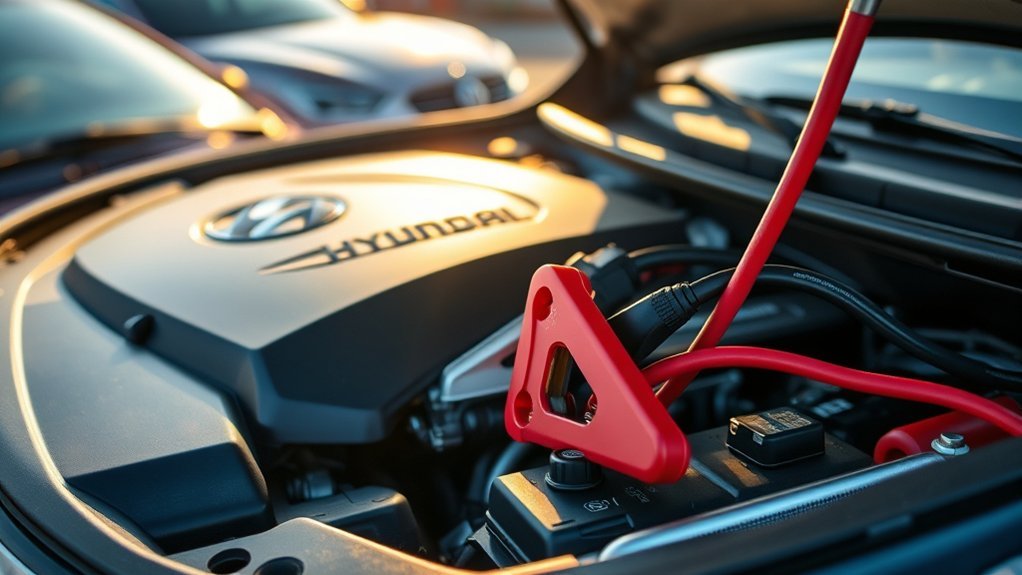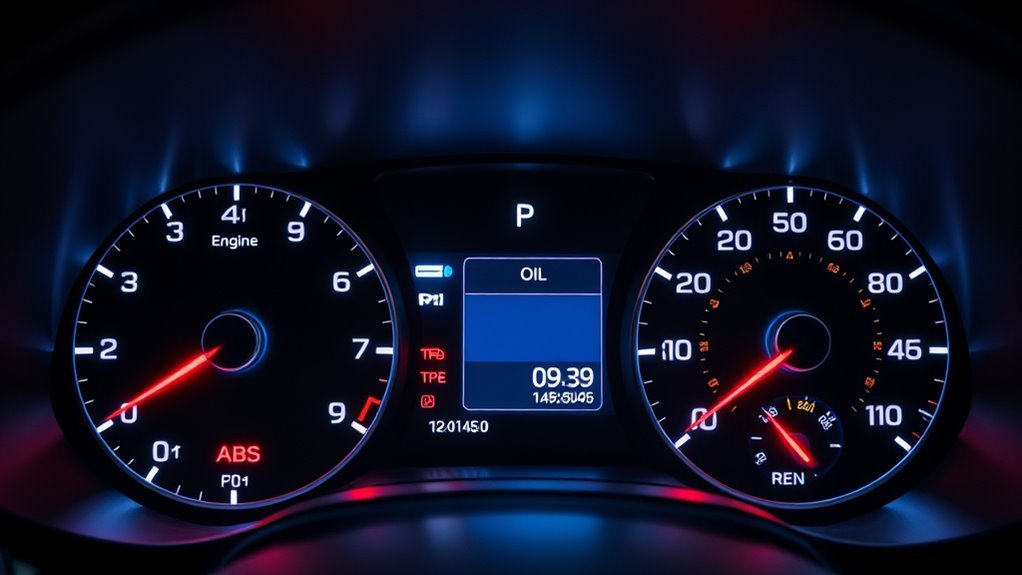
Hyundai Sonata warning lights are easiest to understand by checking the symbol, its color, and whether it is steady or flashing. Stop as soon as it is safe for a low oil-pressure warning, an overheating warning, or a red brake warning that remains on after the parking brake is released. The battery-shaped charging-system warning also calls for a prompt safe stop because the engine may eventually stall if the electrical system is not charging.
A steady amber Check Engine, TPMS, ABS, or driver-assistance warning usually means the system needs diagnosis soon. A flashing Check Engine light, severe shaking, loss of power, steam, an abnormal brake pedal, or several brake warnings together can mean you should stop driving and arrange a tow. Green, blue, white, and gray indicators usually show that a feature is active, ready, or waiting for its operating conditions.
Important: Sonata symbols and colors vary by model year, trim, market, and powertrain. Use this guide for initial triage, then confirm the exact icon and instruction in your model-year owner’s manual.
Last updated: July 31, 2026. This revision was checked against Hyundai’s current warning-light guidance and NHTSA tire-safety information.
Quick Answer: Hyundai Sonata Warning Lights Explained
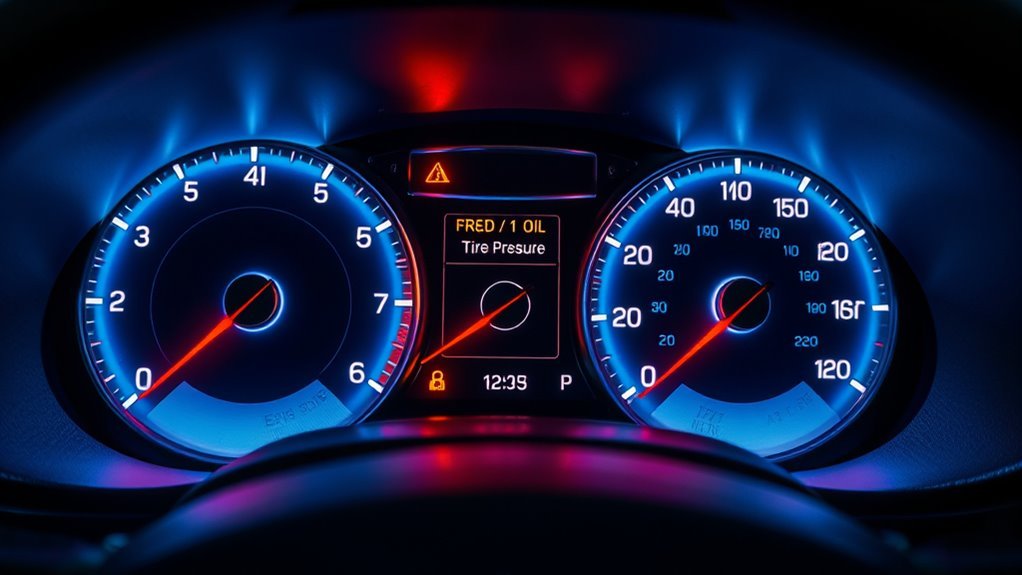
Do not rely on color alone. First identify the symbol. Next, note whether it is steady, flashing, or accompanied by a message. Finally, consider how the car feels. A flashing ESC icon is normally showing that stability control is working, while a flashing Check Engine light can indicate a serious engine or emissions problem.
| Symbol or appearance | Usual color | What it generally means | What to do |
|---|---|---|---|
| Oil can | Red | Engine oil pressure is low | Reach the nearest safe stopping place, turn off the engine, and check the oil level. Do not continue if the light remains on. |
| Thermometer over waves or overheating message | Red | Engine coolant temperature is too high | Stop safely. Turn off the air conditioning. Do not open the coolant cap while the engine is hot. |
| BRAKE, circle with an exclamation point, or parking-brake symbol | Red | Parking brake applied, low brake fluid, or a brake-system fault | Release the parking brake. If the light remains on, the pedal feels abnormal, or fluid is low, do not keep driving. |
| Battery with plus and minus signs | Red | Alternator or electrical charging-system fault | Reduce electrical load, drive carefully to a safe place, stop, and arrange inspection. |
| Engine outline | Amber | Engine, emissions, or powertrain fault | Steady: diagnose soon. Flashing: pull over safely and shut off the engine if it continues. |
| Horseshoe-shaped tire with an exclamation point | Amber | Low tire pressure or TPMS malfunction | Steady: check tires cold. Blinks for about one minute, then stays on: have the TPMS inspected. |
| ABS letters | Amber | Anti-lock braking may be unavailable | Normal hydraulic braking may remain, but avoid hard driving and arrange prompt inspection. |
| Person with an airbag | Red or amber, depending on model | Supplemental Restraint System fault | Arrange prompt inspection because an airbag or pretensioner may not operate correctly. |
| Steering wheel with an exclamation point | Amber or red, depending on model | Motor Driven Power Steering fault | Steering effort may change. Slow down and arrange inspection; stop if steering becomes difficult. |
| Triangle with an exclamation point | Amber | Master Warning Light | Read the accompanying cluster message to identify the affected system. |
| Car with wavy skid lines | Amber | Electronic Stability Control status | Flashing normally means ESC is working. Steady after startup can indicate a fault. |
| Lane or forward-collision symbol | Green, gray, white, yellow, or flashing red | Driver-assistance status, intervention, blockage, disabled function, or fault | Read the cluster message and check that the camera or radar area is clean. |
Many warning lights illuminate briefly when the vehicle is switched on. This startup self-check is normal if the lights go out after a few seconds. A light that stays on, returns while driving, or appears with abnormal vehicle behavior needs attention.
[Products Worth Considering]

The ANCEL AD410 PRO combines engine diagnostics and 12V battery testing in one easy-to-use tool, helping you read and clear check engine codes while checking battery health, cranking, and charging performance. It also provides live data, freeze frame details, and I/M readiness checks to help you diagnose issues faster and prepare for emissions testing. With plug-and-play operation, a clear screen, and broad vehicle compatibility, it is a practical solution for home mechanics and everyday drivers.

Turn your iPhone, Android device, or Windows PC into a professional-grade diagnostic scan tool with this Bluetooth OBD2 adapter. It is designed for broad vehicle compatibility and supports popular apps for deeper diagnostics, live data, and code clearing. Built-in protections and firmware updates help keep your vehicle and scanner safe while delivering reliable performance.
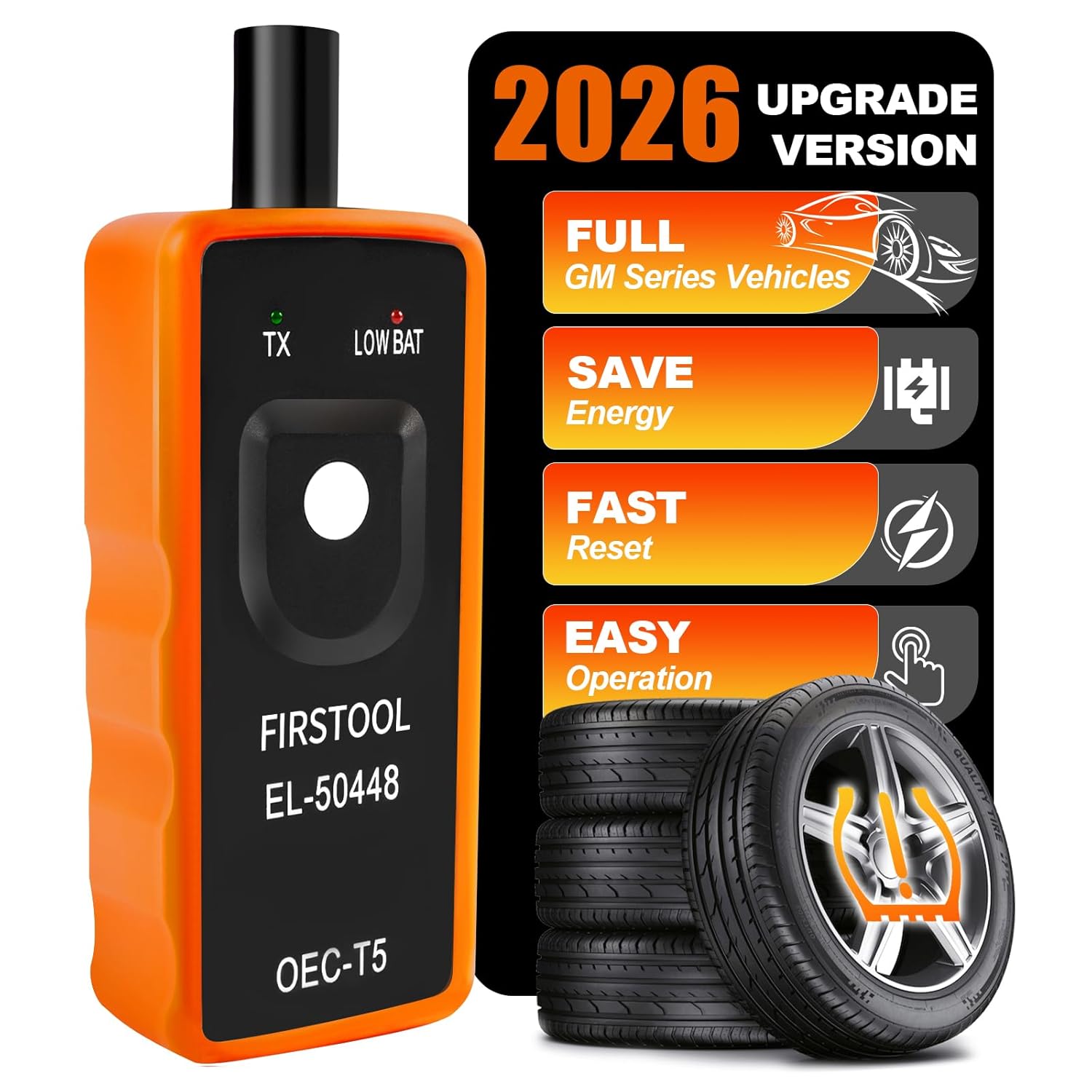
This EL-50448 TPMS relearn tool helps quickly activate and reset tire pressure sensors so your vehicle’s monitoring system stays accurate after tire rotations, sensor replacement, or seasonal tire changes. Designed for many GM-related vehicles and compatible with common 315 and 433 MHz TPMS systems, it offers simple one-button operation and reliable performance for clearing warning lights and relearning sensor positions.
Which Red Sonata Warning Lights Mean Stop Now?
Red does not always mean that the car must be abandoned in its current lane, but it normally means you should respond immediately and reach a safe stopping place. The most urgent Sonata warnings involve oil pressure, overheating, braking, and the charging system.
Engine Oil-Pressure Warning
The red oil-can symbol means the engine may not have adequate oil pressure. Drive carefully only as far as needed to reach the nearest safe place, then turn off the engine. Check the oil level on level ground after allowing the oil to settle.
If the oil level is low, add the correct oil without overfilling. If the level is normal, oil is unavailable, the engine is knocking, or the warning remains on after oil is added, do not restart and continue driving. Low oil pressure can cause severe engine damage even when the dipstick shows oil.
For a safer inspection routine, see the Hyundai Sonata fluid-level checklist.
Engine Coolant Temperature or Overheating Warning
An overheating warning, temperature gauge near H, steam, coolant leakage, or an “Engine overheated” message requires a safe stop. Turn off the air conditioning. If steam or coolant is coming from under the hood, turn off the engine and wait until the steaming or leaking stops before opening the hood.
Never remove the coolant reservoir cap while the engine is hot. Hot coolant can escape under pressure and cause severe burns. Wait for the engine to cool before checking the reservoir. If coolant is leaking, the warning returns, or the cooling fan is not operating, arrange assistance instead of continuing the trip.
See how to check the Sonata coolant level safely for the full cold-engine procedure.
Brake-System Warning
The red brake warning is normal while the parking brake is applied. After releasing the parking brake, the light should go out. If it stays on, the brake-fluid level may be low or the braking system may have a fault.
Stop driving if the pedal feels soft, sinks unusually low, braking performance changes, fluid is below the minimum mark, or the ABS and red brake warnings appear together. Do not treat repeated brake-fluid loss as a normal maintenance issue; it can indicate a leak or worn braking components that require inspection.
Charging-System Warning
The battery-shaped icon is a charging-system warning, not simply a report that the battery is old. It can indicate an alternator, drive-belt, wiring, connection, or charging-control problem.
Turn off nonessential electrical loads and drive carefully to the nearest safe stopping place. Arrange prompt inspection. Stop sooner if the lights dim, several warning lights appear, steering behavior changes, the engine begins to stall, or you smell burning rubber or electrical insulation.
For diagnosis details, see the guide to the Hyundai Sonata alternator and charging system.
What Do Amber and Yellow Sonata Warning Lights Mean?
Amber and yellow warnings generally mean that a system needs attention, but the light’s behavior and the vehicle’s symptoms determine the urgency. A steady amber light may allow careful driving to a safe destination. A flashing light can mean something different and may be more urgent.
[Products Worth Considering]

The AICEL TPMS Relearn Tool helps quickly reset and relearn tire pressure sensors on compatible GM vehicles after tire rotation, sensor replacement, or warning light issues. Designed for easy handheld use, it works with most cars, SUVs, and pickup trucks and can save time by eliminating unnecessary trips to the auto store. Its durable ABS housing and simple activation process make it a practical tool for keeping the tire pressure monitoring system operating properly.
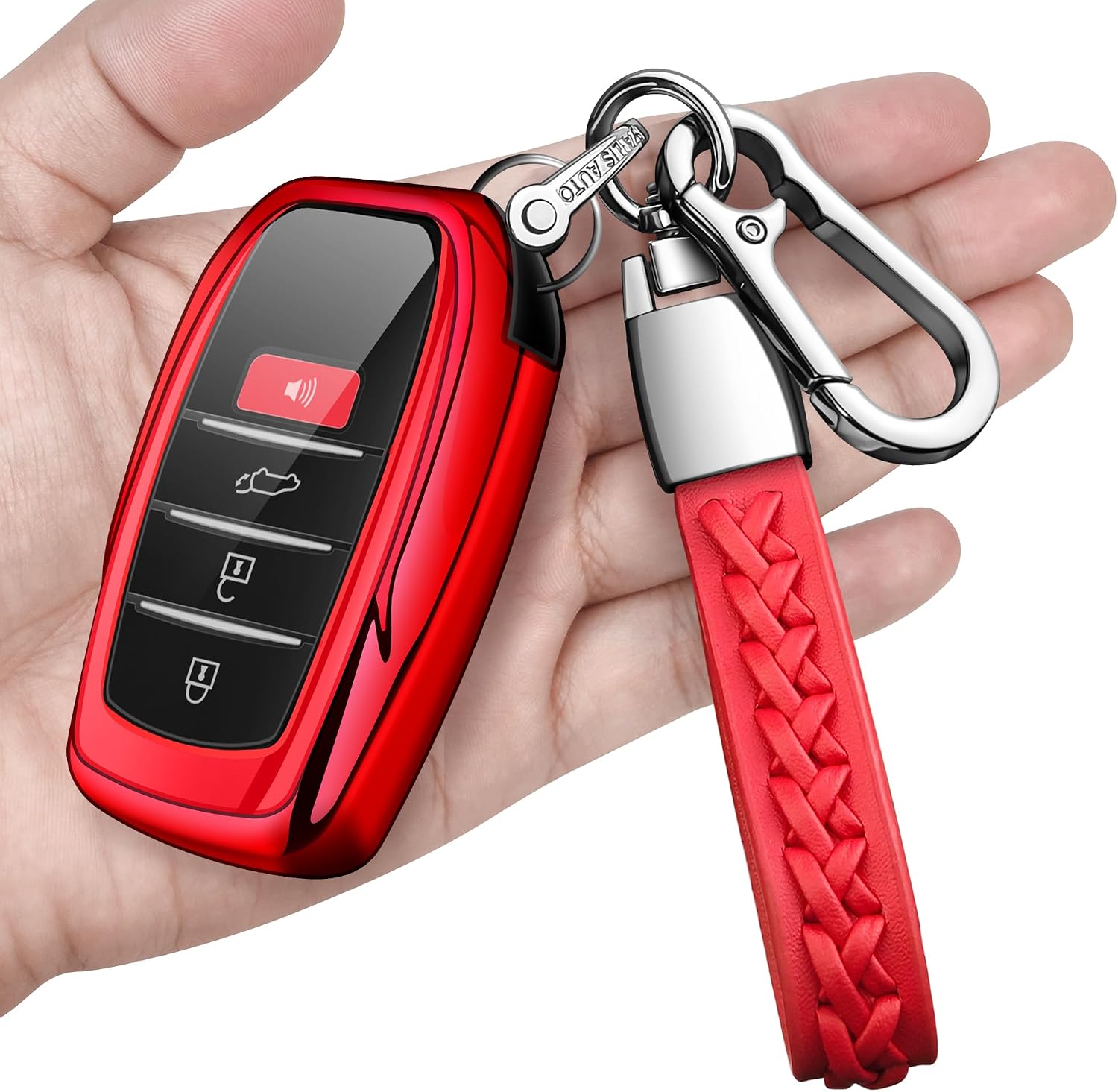
This key fob cover is designed to fit a wide range of Toyota smart key remotes, helping protect your key from scratches, dust, and everyday wear. Its upgraded one-piece construction offers a secure, streamlined fit, while the clear button layer preserves easy access and button response. The transparent back keeps the vehicle logo visible, and the valet key-friendly design allows quick removal when needed.
Check Engine or Malfunction Indicator Lamp
A steady engine-shaped light means the Sonata has detected an engine, emissions, or powertrain fault. If the car runs normally, avoid hard acceleration and arrange a diagnostic scan soon. A loose fuel cap can trigger some emissions faults, but it is only one possible cause.
A flashing Check Engine light is more serious. Reduce engine load, pull over safely, and shut off the engine if the light continues flashing. Arrange roadside assistance if the engine shakes, knocks, loses power, smells strongly of fuel, overheats, or continues flashing after a restart.
Before clearing anything, read and save the diagnostic code, status, and freeze-frame data. A code identifies the circuit or condition detected; it does not automatically identify the part that should be replaced. Follow the site’s procedure for reading and clearing Sonata diagnostic trouble codes.
TPMS Warning
A steady horseshoe-shaped TPMS symbol means one or more tires may be significantly underinflated. Check all tires with an accurate gauge when they are cold. Inflate them to the pressure printed on the driver-door Tire and Loading Information label, not the maximum pressure molded into the tire sidewall.
If the TPMS symbol flashes for about one minute and then remains illuminated, the monitoring system itself may have a fault. The system may be unable to report low tire pressure correctly, so check the tires manually and arrange inspection.
ABS Warning
A steady ABS light means the anti-lock function may not be available. The regular hydraulic brakes may still operate, but the wheels can be more likely to lock during hard braking. Drive cautiously and arrange prompt inspection.
If the ABS light and the red brake warning appear at the same time, the brake-force distribution system may not operate normally. Avoid high-speed driving and abrupt braking. Stop in a safe location and arrange immediate professional inspection.
Airbag and Power-Steering Warnings
An airbag or SRS warning that remains on can indicate a fault in the airbag, sensor, seat-belt pretensioner, or related circuit. The restraint system may not protect occupants as designed, so arrange service promptly.
A Motor Driven Power Steering warning can be accompanied by heavier or inconsistent steering effort. Reduce speed and avoid difficult traffic or tight maneuvers. Stop and arrange assistance if steering becomes hard to control.
Maintenance Reminders
A scheduled-maintenance reminder is not the same as the Check Engine light or a charging-system warning. Review the accompanying message and the maintenance schedule. Reset a maintenance reminder only after the specified service has been completed.
Green, Blue, White, and Gray Lights: When Are They Normal?

Green and blue indicators usually confirm that a lighting, cruise, lane, or convenience feature is active. White and gray often mean a feature is selected, ready, or waiting for its operating conditions. These colors are normally informational, but the same icon may change to yellow when disabled or malfunctioning.
Normal System Indicators
- Green turn-signal arrows: the selected turn signal is operating. A rapid flash can indicate an exterior turn-signal problem.
- Blue high-beam indicator: the regular high beams are on or the flash-to-pass function is being used.
- Green cruise or SET indicator: cruise control is enabled or maintaining the selected speed, depending on the icon and model year.
- Green Auto Hold: Auto Hold is actively holding the vehicle. White commonly means the feature is selected but not currently holding.
- Gray or white driver-assistance icon: the feature may be selected but its operating conditions are not currently met.
Driving Feature Status
Driver-assistance icons can change color as their status changes. Green commonly means the system’s operating conditions are met or the system is actively assisting. Gray or white commonly means standby or unavailable conditions. Yellow can mean the feature is switched off, a sensor is blocked, or a malfunction has been detected.
Do not assume that every yellow SmartSense icon means a failed component. Rain, snow, fog, road spray, windshield contamination, damaged lane markings, or dirt over a camera or radar area can temporarily limit a system. Read the accompanying cluster message before deciding what the symbol means.
High Beam and High Beam Assist
The standard high-beam indicator is blue. Turn the high beams off when approaching or following other road users if the vehicle does not do so automatically.
High Beam Assist uses a separate indicator. On current Hyundai displays, white commonly means the system is ready and green means it is operating. The exact icon and color can differ on older Sonata generations, so confirm the behavior in the model-year manual.
What Do Hyundai SmartSense Icons Mean?
Hyundai SmartSense warnings can represent an active intervention, normal readiness, a disabled feature, blocked sensors, or a malfunction. Read both the icon and the text message on the cluster.
Forward Safety and Forward Collision-Avoidance Assist
The Forward Safety icon relates to Forward Collision-Avoidance Assist. A yellow light can mean Forward Safety is switched off, its camera or radar is blocked, or a malfunction has been detected. A red flashing warning can appear while the system is warning or intervening.
Clean only the sensor areas described in the owner’s manual. Do not assume the system is available merely because the windshield looks clear. Ice, heavy rain, road spray, bumper damage, windshield replacement, or sensor misalignment can affect operation.
Lane Keeping Assist and Lane Following Assist
Lane Safety or Lane Keeping Assist commonly uses green when operating conditions are satisfied. On some current systems, the icon flashes green while steering assistance is operating. Gray or white can mean the operating conditions are not met. Yellow may mean the feature is disabled, blocked, or malfunctioning.
Lane Following Assist may show green while operating and gray while conditions are not met. A temporary change does not always indicate failure; poor lane markings, low visibility, or a blocked front camera can make assistance unavailable.
Electronic Stability Control
A flashing ESC icon normally means the system is actively correcting wheel slip or instability. Ease off the accelerator and steer smoothly while the system works.
A steady ESC icon after the startup check can indicate a malfunction. The normal brakes may still work, but stability assistance may not be available. An ESC OFF indicator means the system has been manually reduced or disabled. Restore normal ESC operation for ordinary road driving.
For more detail, see how ESC works in a Hyundai Sonata.
Master Warning Triangle
The amber triangle with an exclamation point is the Master Warning Light. It is a general alert, not a diagnosis by itself. Check the accompanying cluster message for the actual cause.
Depending on the Sonata’s equipment, the Master Warning Light can accompany blocked or malfunctioning driver-assistance sensors, exterior-light problems, Low Washer Fluid messages, TPMS faults, Smart Cruise Control problems, or other monitored conditions.
What Should You Do When a Warning Light Stays On?
First determine whether the light is part of the normal startup check. Many warning lamps illuminate briefly when the vehicle is switched on and go out after the systems complete their self-test. A warning that remains on, returns while driving, or appears with abnormal symptoms needs investigation.
Immediate Safety Checks
- Read the full cluster message. A Master Warning or SmartSense icon may be explained by text on the display.
- Assess the vehicle. Note shaking, smoke, steam, odors, reduced power, heavy steering, unusual braking, or abnormal sounds.
- Stop for critical symptoms. Pull over for oil pressure, overheating, a flashing Check Engine light with poor running, abnormal braking, or an electrical fault that is affecting operation.
- Check engine oil safely. Turn off the engine, park on level ground, wait for the oil to settle, and use the dipstick. Do not assume adding oil will repair a pressure fault.
- Check coolant only when cool. Never open a hot coolant reservoir. Look for steam or leakage from a safe distance.
- Check tires cold. Use the driver-door pressure label. Inspect for punctures, bulges, sidewall damage, and obvious deflation.
- Record diagnostic data. Read and save codes before erasing them. Clearing a warning does not repair its cause.
When to Call Service or Arrange a Tow
Stop driving and arrange a tow or roadside assistance when:
- The oil-pressure light remains on after the engine is stopped and the oil level is checked.
- The engine is overheating, steaming, leaking coolant, or repeatedly returning to the hot range.
- The Check Engine light is flashing and the engine is shaking, knocking, losing power, or continuing to flash.
- The red brake warning remains on and the pedal feels soft, low, or abnormal.
- The ABS and red brake warnings appear together.
- The charging-system light appears with dim lights, stalling, burning odor, belt noise, heavy steering, or multiple electrical warnings.
- Steering effort changes enough that the car is difficult to control.
- A strong fuel smell, visible fuel leak, smoke, or fire risk is present.
Arrange prompt diagnosis but drive cautiously only if the vehicle otherwise operates normally when:
- The Check Engine light is steady.
- The ABS light is on by itself.
- The ESC light remains steady after startup.
- The TPMS light remains on after correcting all tire pressures.
- The airbag or SRS light remains on.
- A Forward Safety, Lane Safety, LED headlight, or Master Warning remains after checking for an obvious blockage or message.
Frequently Asked Questions
What Does the Triangle With an Exclamation Point Mean on a Hyundai Sonata?
It is normally the Master Warning Light. The triangle tells you that another system or condition needs attention, but it does not identify the fault by itself. Read the accompanying message on the instrument-cluster display.
Can I Drive With a Solid Check Engine Light?
If the light is steady and the Sonata runs normally, you can generally drive cautiously to a safe destination or service appointment. Avoid hard acceleration and diagnose the code soon. Stop if the light begins flashing or the engine develops shaking, knocking, overheating, smoke, fuel odor, or major power loss.
What Does a Flashing Check Engine Light Mean?
A flashing Check Engine light can indicate a potentially severe fault. Reduce engine load, pull over safely, and shut off the engine if the flashing continues. Arrange roadside assistance when the engine runs poorly or the light continues after a restart.
Why Does the TPMS Light Blink and Then Stay On?
A TPMS light that flashes for about one minute and then remains on normally indicates a monitoring-system malfunction rather than only low tire pressure. Check the tires manually and have the TPMS inspected.
Why Is the ESC Light Flashing?
A flashing ESC icon usually means stability control is actively responding to wheel slip or vehicle instability. A steady ESC light after startup is the condition more commonly associated with a malfunction.
How Do I Reset a Persistent Instrument Cluster Light?
Correct the underlying cause first. For a diagnostic warning, read and save the codes and freeze-frame information before erasing anything. After the repair, use a compatible scan tool if the warning does not reset automatically. Maintenance reminders should be reset only after the scheduled service is completed.
Do Aftermarket Bulbs Affect Cluster Symbol Brightness?
Exterior replacement bulbs do not normally control the instrument-cluster brightness. Use the cluster illumination control for overall brightness. If one symbol is dim, missing, or flickering, check the model-year manual and have the cluster or electrical system inspected instead of assuming an exterior bulb caused it.
Can a Dead Key Fob Trigger Instrument Warnings?
A weak smart-key battery can trigger a Low key battery or Key not detected message and may cause the immobilizer indicator to blink. It does not normally explain oil-pressure, brake, charging-system, TPMS, or Check Engine warnings.
Will Disconnecting the Battery Clear Stored Warnings?
Disconnecting the battery may temporarily remove some displayed information or reset unrelated settings, but it will not repair the fault. Some modules retain codes, and emissions-readiness monitors may need to run again. Diagnose the problem and use the correct scan procedure after repair.
Do Software Updates Change Warning-Light Behavior?
Software updates can change menus, messages, driver-assistance behavior, or fault-detection logic on some vehicles. Check the update notes and the model-year manual. Do not assume an update will remove a warning caused by a mechanical, electrical, sensor, or emissions fault.
Conclusion
Identify a Sonata warning by its symbol, color, behavior, accompanying message, and vehicle symptoms. Stop safely for oil pressure, overheating, serious brake warnings, a continuing flashing Check Engine light, or a charging fault that is affecting vehicle operation. Diagnose steady amber warnings promptly, and remember that a flashing ESC light normally means the system is actively working.
Do not erase warnings before saving their diagnostic information, and never open the coolant system while the engine is hot. When the icon or instruction differs from this guide, follow the owner’s manual for your exact Sonata model year and trim.