Overinflated tires can severely impact your ride quality, making it stiffer and harsher. With reduced traction, you’re at greater risk of skidding, especially in wet conditions. Uneven wear leads to compromised grip, while the increased blowout risk stems from excessive pressure and weakened structure. Keeping your tires at the manufacturer’s recommended pressure is essential for safety and performance. Discovering how to maintain proper tire pressure can further enhance your driving experience.
Signs Your Tires Are Overinflated

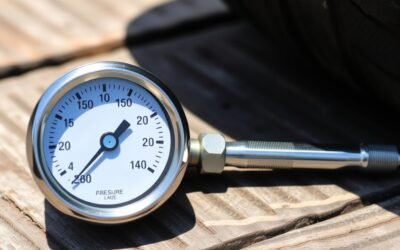
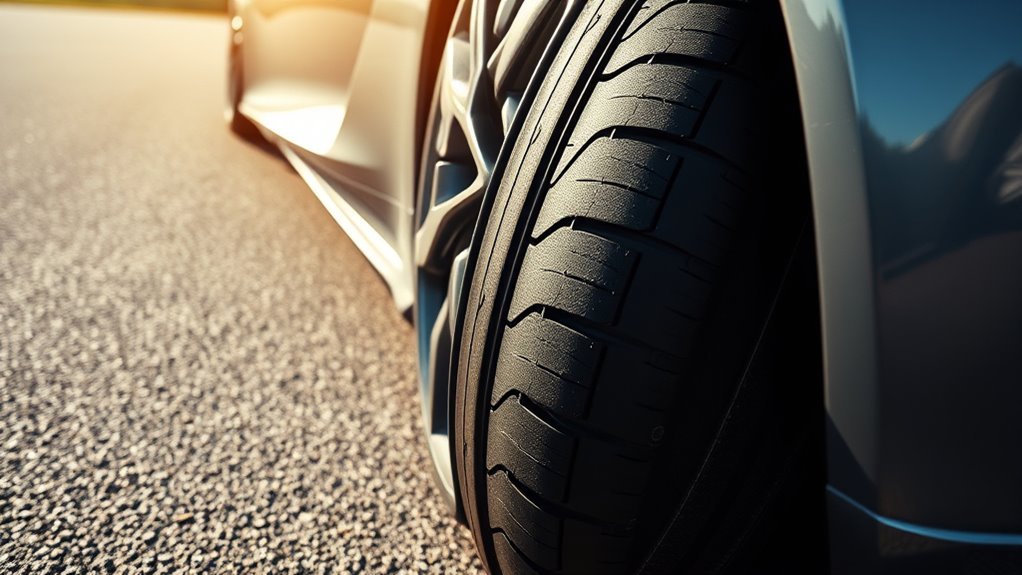
How can you tell if your tires are overinflated? Start by checking the tire pressure gauge; if the reading exceeds the manufacturer-recommended level on your driver’s door placard, you may have overinflated tires. Look closely at the tread; uneven wear—specifically, more wear in the center than on the edges—indicates excessive pressure. You might notice a decrease in traction, as this pressure reduces the tire’s contact area with the road, compromising handling. Additionally, overinflated tires often lead to a harsher ride quality; they struggle to absorb road imperfections, resulting in a bumpier experience. Finally, pay attention to any visible cracks, as overstretched tires are more susceptible to blowouts, especially at high speeds.
What Causes Overinflated Tires?
While maintaining proper tire pressure is essential for safety and performance, several factors can lead to overinflated tires. Understanding these causes can help you prevent potential issues.
- Incorrect Inflation Practices: Setting tire pressure too high without consulting the manufacturer’s recommendations can result in overinflated tires.
- Temperature Changes: Hot weather can cause air inside tires to expand, increasing pressure considerably.
- Faulty Pressure Gauges: Inaccurate gauges may provide misleading readings, leading to unintentional overinflation during checks.
Additionally, altitude changes can exacerbate this issue, as expanding air at higher elevations may push tire pressure beyond safe levels. Regular monitoring is vital to avoid the risks associated with overinflated tires.
How Overinflation Affects Ride Quality
When your tires are overinflated, you’ll notice a significant reduction in shock absorption, resulting in a harsher ride. The increased rigidity means the tires struggle to flex, leading to a jarring experience on uneven surfaces. Ultimately, this can diminish overall ride comfort and affect your vehicle’s handling.
Harsh Ride Experience
Overinflated tires create a stiffer ride, greatly diminishing your vehicle’s ability to absorb road imperfections and bumps. This harsh ride experience not only compromises ride comfort but also leads to a more fatiguing drive. Key impacts include:
- Increased Rigidity: Overinflated tires are rigid, making every pothole and crack feel more pronounced.
- Central Tread Contact: With only the center of the tread on the road, vibrations amplify, causing discomfort.
- Heightened Noise Levels: Studies show that overinflated tires generate greater vibrations and noise, detracting from a peaceful driving experience.
Ultimately, these factors can lead to driver fatigue and decreased focus, jeopardizing your overall safety on the road. It’s essential to maintain proper tire pressure for ideal ride comfort.
Reduced Shock Absorption
Maintaining the correct tire pressure is essential for effective shock absorption, as overinflation stiffens the tire’s sidewalls and diminishes its ability to cushion impacts from the road. With over-inflated tires, your vehicle’s contact patch with the road decreases, intensifying the bumps and vibrations felt inside. This reduced shock absorption compromises ride comfort, making it harder to navigate uneven surfaces. You may find longer trips increasingly fatiguing due to the constant jolts transmitted through the vehicle, leading to discomfort and potential long-term health issues. By prioritizing proper tire pressure, you enhance your driving experience, ensuring a smoother ride and reducing stress on your body, ultimately liberating you from the harsh effects of over-inflation.
How Overinflated Tires Impact Traction
While it might seem counterintuitive, over-inflated tires can greatly compromise traction on the road. Here’s how excessive tire pressure affects your grip:
Over-inflated tires may seem fine, but they can severely reduce your traction and overall safety on the road.
- Reduced Contact Area: Over-inflated tires have less surface area in contact with the road, increasing the risk of skidding, especially in wet conditions.
- Uneven Wear: Higher pressure causes the center tread to wear faster than the edges, leading to diminished traction performance over time.
- Rigidity and Floatation: Increased tire rigidity limits conformity to road imperfections, reducing grip during cornering and braking, and can create a “floatation” effect at high speeds.
Understanding these dynamics is vital for maintaining ideal traction and ensuring your safety on the road.
How Overinflated Tires Raise Blowout Risks

When tire pressure exceeds the manufacturer’s recommended levels, the risk of blowouts greatly increases. Over-inflating your tires generates excessive internal pressure, leading to structural weaknesses that heighten the likelihood of a tire blowout, particularly at high speeds. Studies reveal that vehicles with over-inflated tires are involved in nearly double the accidents compared to those with correctly inflated tires. The National Highway Traffic Safety Administration emphasizes that blowouts often correlate with pressure exceeding specifications, underscoring the necessity for compliance. This overinflation stresses the tire’s sidewalls, causing cracks that greatly elevate the risk of sudden tire failure. Additionally, tires inflated beyond their maximum rated pressure lose traction and stability, further contributing to the increased risk of blowouts and associated accidents.
How to Prevent Tire Overinflation
To prevent tire overinflation, regularly checking your tire pressure is essential. Follow these steps to maintain the correct tire pressure and guarantee safety:
- Monthly Checks: Use a reliable gauge to check your tire pressure at least once a month, adhering to manufacturer specifications.
- Temperature Adjustments: Remember that tire pressure can increase by about 1 psi for every 10-degree rise in temperature, so adjust accordingly.
- Quality Equipment: Always use high-quality air pumps and gauges to accurately inflate your tires, avoiding any faulty tools.
Additionally, inspect your tires for signs of uneven wear, especially in the tread center, to catch issues early. Staying proactive in these practices will help you maintain ideal tire performance.
Finding the Right Tire Pressure
Finding the right tire pressure is crucial for vehicle safety and performance. You can usually find the recommended tire pressure on a sticker inside the driver’s door jamb or in your owner’s manual. It’s essential to check tire pressure regularly—at least once a month and before long trips—since temperature changes can cause variations of 1-2 psi for every 10°F shift. Remember, each tire may require different pressure levels based on load capacity and vehicle type, so always consult your tire manufacturer for accurate inflation specifications. Over-inflating tires can lead to decreased traction, uneven wear, and a greater risk of blowouts. For best results, consider professional tire services to guarantee your tires remain properly inflated.
How Temperature Changes Impact Tire Pressure
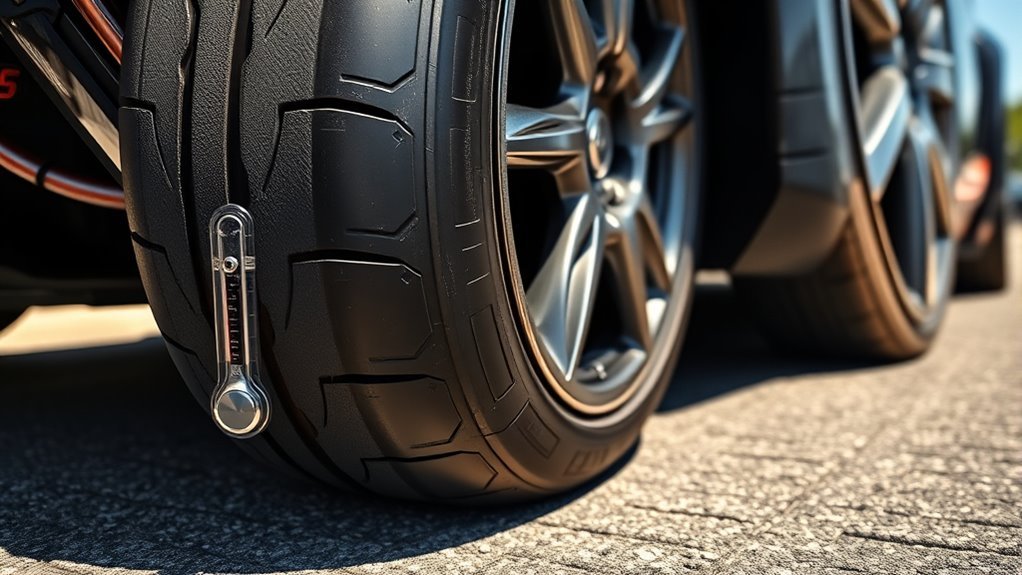
Temperature changes greatly affect tire pressure, and you need to be aware of this to maintain safety and performance. For every 10°F drop in temperature, tire pressure can decrease by 1-2 psi, which may lead to under-inflation. Conversely, rising temperatures can cause over-inflation, making regular checks essential during seasonal shifts.
Temperature Pressure Fluctuation Effects
As temperatures fluctuate, tire pressure can considerably change, impacting vehicle performance and safety. You should be aware of the following:
- Cold Weather: Tire pressure decreases by 1 to 2 psi for every 10°F drop, necessitating regular checks.
- Heat Expansion: Rising temperatures can lead to overinflation, increasing tire pressure and risking performance.
- Pressure Variability: Significant temperature shifts can cause tires to lose or gain several psi, affecting handling and stability.
Maintaining ideal tire pressure is essential to guarantee effective road contact and prevent uneven tire wear. Regularly monitoring your tire pressure, especially during seasonal changes, helps mitigate the risks associated with these temperature-induced fluctuations. Stay vigilant, and prioritize your safety on the road.
Seasonal Adjustments for Inflation
Understanding how seasonal changes affect tire pressure is essential for maintaining ideal vehicle performance and safety. As temperatures drop, tire pressure decreases by approximately 1-2 psi for every 10°F. Conversely, a 10°F increase can raise tire pressure by 1 psi, risking overinflation. These fluctuations notably impact tire performance, affecting traction and handling. Cold weather reduces tire flexibility, while warm weather can cause expansion. To guarantee safety, you must regularly check and adjust your tire pressure before and after seasonal changes. Many drivers overlook these changes, leading to serious safety risks, including blowouts. By staying vigilant with tire pressure adjustments, you empower yourself to drive safely and confidently throughout the year.
What to Do If Your Tires Are Overinflated?
To correct overinflated tires, start by checking the tire pressure with a reliable gauge to confirm it exceeds the manufacturer’s recommended PSI. If it does, follow these steps:
- Gradually release air until you reach the appropriate pressure, making adjustments in small increments to avoid underinflation.
- Regularly inspect your tire tread for uneven wear patterns, as overinflated tires often cause center treads to wear faster than the outer edges.
- Consult the vehicle’s owner manual or the placard on the driver’s door for correct tire pressure specifications to prevent future overinflation.
If you’re unsure about adjusting tire pressure yourself, seek professional assistance at a tire service center. Maintaining proper tire pressure is essential for safety, performance, and tire longevity.
Frequently Asked Questions
What Are the Effects of Overinflated Tires?
Overinflated tires compromise driving safety by diminishing traction, accelerating uneven wear, and heightening blowout risks. Regularly check tire pressure and follow maintenance tips to guarantee peak performance and a safer, smoother driving experience.
Can Overinflated Tires Cause Blowouts?
Yes, overinflated tires can cause blowouts. To prevent this, use tire pressure monitoring systems, adhere to manufacturer recommendations, and practice safe driving habits. Maintaining correct pressure guarantees your safety and enhances tire performance and longevity.
Do Overinflated Tires Result in Good Traction?
Overinflated tires don’t provide good traction; they compromise handling performance and reduce fuel efficiency. Maintaining proper tire pressure is essential for ideal grip and safety, ensuring you enjoy a smooth, controlled driving experience.
What Is the 3% Tire Rule?
Imagine driving with 35 psi instead of 33; that’s where the 3% Tire Rule kicks in. Keeping tire pressure within this limit enhances vehicle handling and fuel efficiency, preventing uneven wear and ensuring safer journeys.
Conclusion
In the end, understanding the consequences of overinflated tires isn’t just about comfort—it’s a matter of safety. Picture yourself driving with tires that could blow out at any moment, jeopardizing your life and others on the road. By regularly checking your tire pressure and adjusting as needed, you can prevent this dangerous scenario. Stay vigilant, and don’t let overinflation catch you off guard. Your vehicle’s performance and your safety depend on it.