Understanding ATV tire pressure is crucial for optimizing traction, handling, and stability on various terrains. Proper PSI enhances grip on soft surfaces like mud while providing necessary firmness for hard-packed trails. Adjust your tire pressure based on conditions—lower for soft terrain and higher for stability on rocky paths. Regular checks can help prevent blowouts and uneven wear. Keep your ATV performing its best, and you’ll discover even more essential tips for tire maintenance and performance enhancement.
Why Tire Pressure Matters for ATV Performance
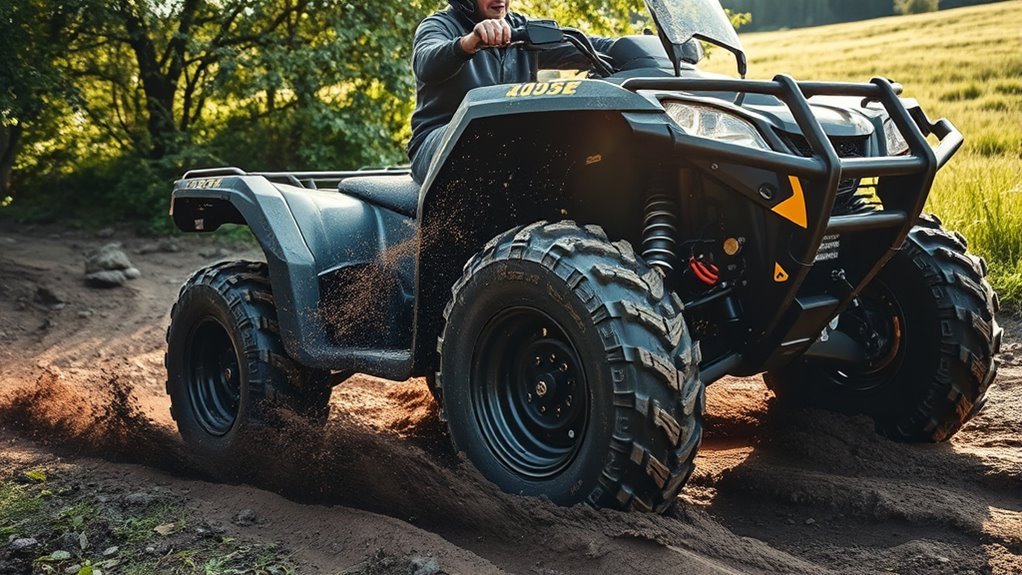
When you hit the trails, understanding tire pressure is fundamental for maximizing your ATV’s performance. Proper tire pressure directly impacts traction and handling. Lower PSI increases your tire’s footprint, enhancing grip on soft surfaces like mud and sand, while higher PSI is ideal for hard-packed trails, helping to prevent punctures. Incorrect pressure can lead to decreased stability; under-inflated tires might compromise cornering, while over-inflated tires hinder grip, making your ride harsher. The sweet spot for most ATVs lies between 10-12 PSI, but adjustments based on terrain and conditions are essential. Regularly monitoring tire pressure guarantees peak performance and comfort, extends tire lifespan, and improves fuel efficiency—elements critical for your adventurous spirit. Embrace freedom by mastering tire pressure!
Understanding PSI: What It Means for Your Tires
PSI, or pounds per square inch, measures the air pressure in your ATV tires, directly affecting their performance and handling. Understanding how to adjust this pressure based on your riding conditions can enhance traction on soft surfaces or stability on hard trails. By keeping a close eye on your tire’s PSI, you’ll not only improve your ride but also extend the life of your tires.
PSI Definition and Measurement
Tire pressure is an essential factor in your ATV’s performance, and understanding PSI—pounds per square inch—can make all the difference on the trail. Proper PSI affects handling and traction, so it’s vital to monitor it regularly with a tire pressure gauge.
- A soft, plush ride over rugged terrain
- Enhanced grip on muddy paths
- Stability on rocky inclines
- Increased risk of blowouts with low PSI
- Uneven tire wear that impacts performance
Impact on Tire Performance
Understanding how tire pressure affects performance is essential for any ATV enthusiast. When tire pressure increases, the contact patch shrinks, which may improve rolling efficiency on hard-packed terrain but can reduce traction in softer conditions. Conversely, lower PSI expands the contact area, enhancing traction on mud and sand, allowing for greater control. However, it’s important to maintain the recommended range of 5-12 PSI to prevent tire deformation and overheating. Regularly checking your tire pressure guarantees peak handling and safety, especially as factors like temperature and load fluctuate. Keep in mind, the right balance of tire pressure can liberate your riding experience, transforming how you tackle diverse terrains and elevating your overall performance on the trail.
How to Adjust ATV Tire Pressure Based on Terrain
Adjusting your ATV’s tire pressure is essential for maximizing performance across different terrains. Here’s how to tailor your tire pressure for various conditions:
Adjusting your ATV’s tire pressure is crucial for optimal performance on diverse terrains.
- Soft terrain (wet sand or mud): Lower to 3-5 PSI for enhanced grip.
- Hard-packed trails or pavement: Maintain 7-8 PSI to guarantee stability.
- Rocky and rough terrain: Set at 5-6 PSI to balance traction and protect sidewalls.
- Dry sand conditions: Adjust to 8-10 PSI for ideal flotation.
- Weight changes: Always check tire pressure when carrying extra cargo or passengers.
Tips for Adjusting ATV Tire Pressure in Soft Terrain
When tackling soft terrain, adjusting your ATV tire pressure is key to maximizing performance. For mud or wet sand, lowering your pressure to about 3-5 PSI can enhance your grip, while dry sand may require you to bump it up to 8-10 PSI for better stability. Be sure to monitor conditions closely, as these adjustments can make all the difference in your ride.
Ideal PSI Range
Finding the ideal tire pressure for your ATV in soft terrain can make a significant difference in your riding experience. Lowering your tire pressure to 3-5 PSI in wet sand or mud maximizes contact and boosts traction. For dry sand, aim for 8-10 PSI to maintain grip while allowing your tires to float. Steering through loose ground? A pressure of 6-8 PSI is perfect for flexibility and adherence. Remember to check your tire pressure when cold for accuracy and adjust before hitting the trails.
- Feel the tires hug the ground
- Experience improved stability
- Glide effortlessly over soft surfaces
- Enhance your control and maneuverability
- Avoid the frustration of getting stuck
Adjusting your tire pressure is key!
Terrain-Specific Adjustments
To optimize your ATV’s performance in soft terrain, you’ll want to contemplate specific tire pressure adjustments that cater to the conditions you’re facing. Lowering your tire pressure to 6-8 PSI in wet sand and mud enhances traction and maximizes ground contact. For dry sand, adjust to 8-10 PSI to improve grip and prevent sinking.
| Terrain Type | Recommended Tire Pressure (PSI) |
|---|---|
| Wet Sand | 6-8 |
| Mud | 6-8 |
| Dry Sand | 8-10 |
| Gravel | 10-12 |
| Firm Ground | 12-14 |
How to Get the Right Tire Pressure for Hard Terrain
Getting the right tire pressure for hard terrain is essential for best performance and safety. You should aim for 10-12 PSI on hard-packed trails and rocky surfaces to maintain stability and prevent punctures. Here’s how to guarantee your tires are properly inflated:
Getting the right tire pressure is crucial for optimal performance and safety on hard terrain. Aim for 10-12 PSI for stability.
- Check your tire pressure regularly to combat environmental changes.
- Adjust to 7-8 PSI for enhanced fuel efficiency while tackling tough trails.
- Monitor for uneven wear, which indicates improper inflation.
- Maintain higher pressure for a firm barrier against sharp surfaces.
- Be mindful of temperature changes, as they can impact your tire’s performance.
How ATV Tire Pressure Affects Handling and Traction

Proper tire pressure not only enhances performance on hard terrain but also plays a significant role in how your ATV handles and grips various surfaces. When you adjust tire pressure correctly, you optimize traction; lower pressures increase the contact patch, boosting grip on soft terrains like mud and sand. Conversely, over-inflated tires can make your ride bouncy and unresponsive, especially on uneven ground. For hard-packed trails, maintaining a tire pressure of 7-8 PSI enhances stability, while reducing it to 3-5 PSI in soft conditions maximizes traction. Keep in mind that under-inflation risks blowouts and hinders obstacle navigation. By tailoring tire pressure to your load and terrain, you’ll enjoy better handling and traction, empowering your ATV experience.
Essential Techniques for Monitoring ATV Tire Pressure
Monitoring your ATV tire pressure is essential for maintaining peak performance and safety on the trails. To guarantee you’re riding at ideal PSI levels, follow these techniques:
- Check tire pressure when tires are cold for accurate readings.
- Use a digital tire gauge for precise measurements, especially in low-pressure ranges.
- Adjust tire pressure based on cargo weight to enhance stability.
- Monitor tire pressure frequently during rides, especially after changes in elevation or temperature.
- Keep a portable air compressor handy for real-time adjustments on the go.
Top 5 Common Mistakes to Avoid in ATV Tire Pressure Management
While it might seem straightforward, managing ATV tire pressure can be fraught with pitfalls that affect your ride. First, neglecting to check tire pressure regularly can lead to low pressure or over-inflation, compromising traction and stability. Second, ignoring manufacturer recommendations can result in poor performance; always adhere to the specific PSI guidelines for your ATV model. Third, failing to adjust tire pressure for different terrains can hinder grip; drop it to 3-5 PSI for soft surfaces and raise it to 10-12 PSI for hard trails. Fourth, overlooking temperature effects may cause incorrect inflation, especially in colder weather. Finally, don’t forget to monitor tire pressure before and after loading cargo to guarantee peak performance and safety!
Upgrading Your ATV: How Tire Pressure Enhancements Boost Performance

When you upgrade your ATV, one of the most impactful changes you can make involves adjusting your tire pressure. This simple tweak can greatly enhance your ride’s traction and handling across various terrains.
- Increased grip on soft mud or sand
- Optimized contact patch for rocky trails
- Improved stability during steep descents
- Enhanced steering response for tight turns
- Extended tire lifespan and reduced wear
Frequently Asked Questions
What PSI Should ATV Tires Be At?
For ideal performance, ATV tire pressure should generally range from 5 to 12 PSI. Always check your manufacturer’s recommendations, and remember safety precautions—adjust pressure according to terrain for the best traction and handling.
Does Higher Tire Pressure Give Better Traction?
Higher tire pressure typically reduces traction on soft surfaces due to a smaller contact patch. While it can enhance handling performance on hard terrain, adjusting tire pressure according to traction dynamics is essential for peak performance.
What Is the 4 PSI Rule?
The 4 PSI Rule means adjusting tire pressure ratios for ideal traction control. Lowering pressure enhances off-road performance, giving you the freedom to conquer challenging terrains while ensuring safety and stability during your adventures.
What PSI Should I Air Down to When off Roading?
When off-roading, air down to 3-5 PSI for soft terrains, 8-10 PSI for dry sand, and 5-6 PSI for hard-packed trails. Tire pressure adjustments greatly enhance off-road performance and adapt to terrain impacts effectively.
Conclusion
In the world of ATV riding, tire pressure is your invisible ally, much like a seasoned guide steering you through rugged trails. By understanding and adjusting your PSI based on terrain, you’ll enhance traction and handling, allowing your ATV to conquer obstacles with ease. Avoiding common mistakes keeps you safe and boosts performance. So, as you gear up for your next adventure, remember—proper tire pressure isn’t just a number; it’s the key to revealing your ATV’s full potential.