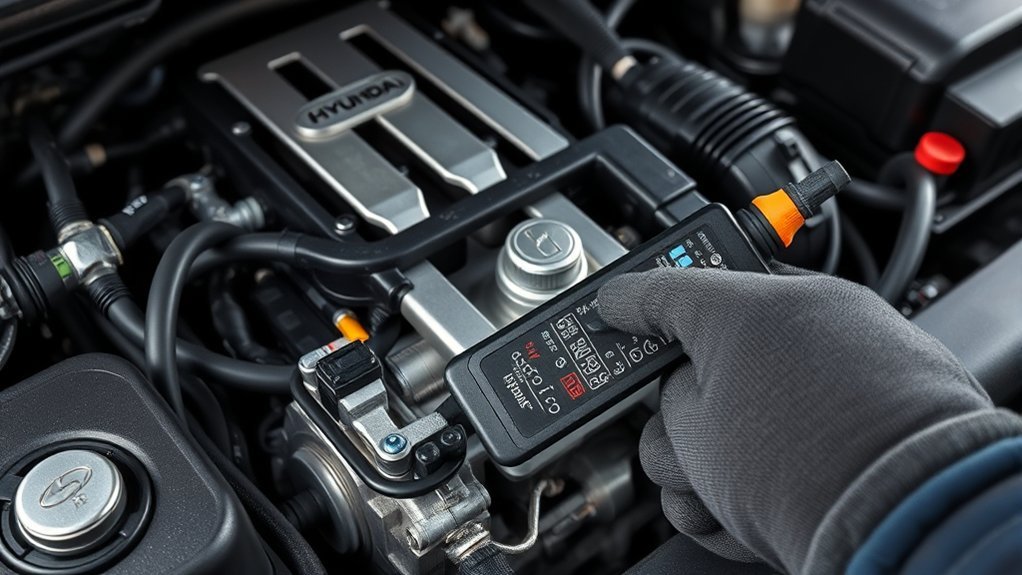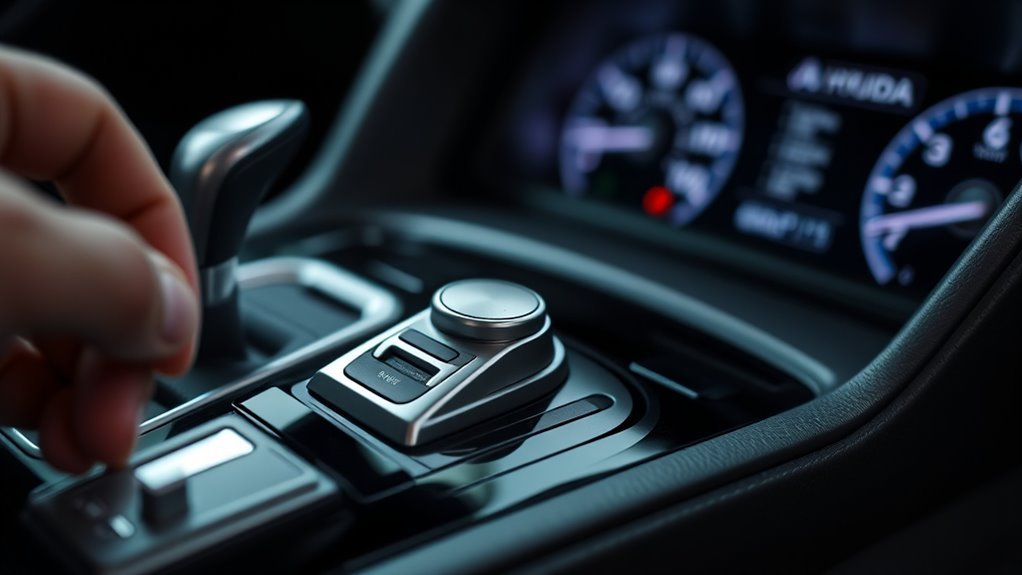
The Sonata’s electronic parking brake (EPB) lets you engage and release the parking brake electrically: press the brake pedal, pull the EPB switch to set it, and press the switch with the engine ON and pedal held to release. The ECU commands an actuator that applies axial force to the calipers; automatic logic engages at shutdown, on steep grades, or in emergencies and enforces interlocks for safety. Warning lights signal faults—follow procedures and get dealer service for persistent alerts to learn more.
Operate the Sonata Electronic Parking Brake

Operate the Electronic Parking Brake (EPB) by first pressing and holding the brake pedal, then pulling up the EPB switch until the Parking Brake warning light illuminates; this assures the system engages mechanically while confirming activation electronically. You’ll verify the vehicle’s stationary condition before engaging to prevent brake component stress. To release, set Engine Start/Stop to ON, hold the brake pedal, then press the EPB switch until the warning light extinguishes. If the warning light stays lit after release attempts, treat it as a malfunction and contact an authorized dealer—don’t improvise. Use EPB troubleshooting tips systematically: verify ignition state, pedal engagement, and warning indicators. EPB user experiences show disciplined procedure preserves components and supports autonomous safety behaviors without surrendering control.
When the Sonata EPB Engages Automatically and Safety Features
When the engine is shut off or the vehicle detects a steep incline, the Sonata’s electronic parking brake (EPB) will engage automatically to secure the vehicle and prevent rollback; the system also applies the EPB in certain emergency or driver-forget scenarios. You rely on automatic engagement to remove human error: the EPB activates when the engine is turned off, on steep grades, or if you neglect to set the brake, providing consistent restraint. Safety enhancements include interlocks that require seatbelt fastening and closed doors before release, and logic that automatically releases the EPB from Park or Neutral when you press the accelerator with the engine running. These controls give you predictable, autonomous protection while preserving your freedom to move without manual intervention.
Sonata EPB Components and How They Work
Although it looks simple from the cabin, the Sonata’s electronic parking brake (EPB) is a compact electromechanical system: you press a button or pull the switch, which sends a signal to an electronic control unit (ECU) that commands a motor-driven actuator mounted directly on the brake caliper to clamp the pads. You’ll find four core components: the driver input (button/switch), the ECU, the EPB actuator mechanics, and the caliper assembly with Caliper integration. The ECU translates input and vehicle state into precise torque commands. The actuator converts electrical power into controlled axial force, engaging the pad against the rotor. Caliper integration reduces latency and complexity, improving reliability. Automatic engage logic secures the vehicle at shutdown; diagnostics flag faults for dealer service.
Sonata EPB Warning Lights, Messages, and Quick Fixes
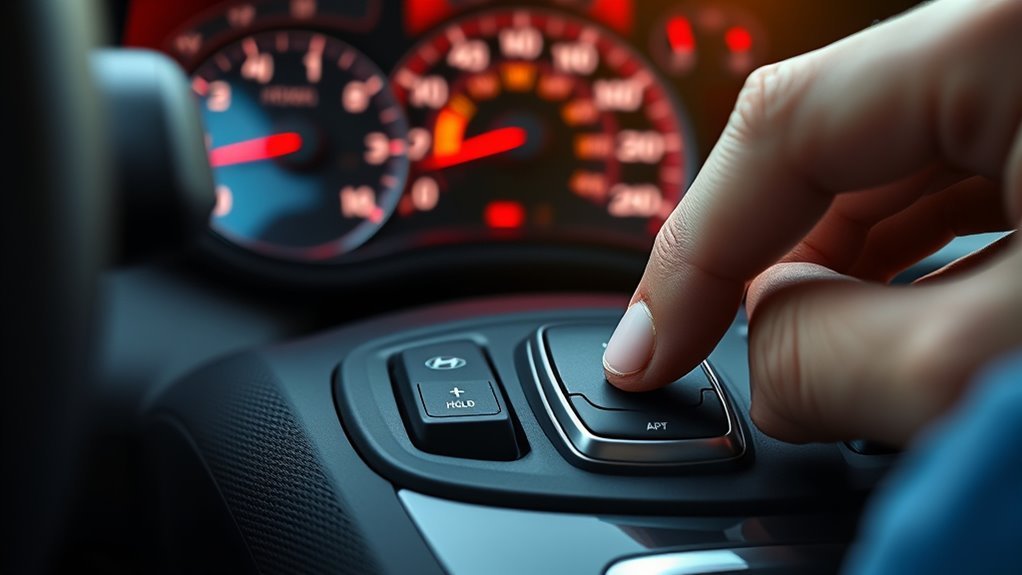
1 key indicator of the Sonata’s EPB health is the Parking Brake warning light: it should illuminate when the EPB is engaged and go out within three seconds after you start the engine if the system is functioning normally. If the light stays on after you release the EPB, it signals a brake-system fault requiring immediate attention; that’s one primary warning light causes vector. For safe release, run the engine, hold the brake pedal, press the EPB switch, and confirm the light extinguishes. A clicking noise during EPB operation is normal, reflecting actuator engagement. Always fasten your seatbelt and close doors so the system permits release. Use these concise epb troubleshooting tips: verify procedure, note persistent illumination, avoid driving with unresolved warnings, and seek professional diagnostics.
Buying and Owning a Sonata With an EPB: Maintenance and Service
Owning a Sonata with an electric parking brake (EPB) means you’ll need a disciplined maintenance routine that includes periodic actuator inspections, software checks, and adherence to manufacturer service procedures to preserve safety and functionality. You should follow a routine maintenance checklist: inspect actuator and cables, verify parking brake engagement/release, monitor brake wear, and confirm software version. Respond to EPB warning light immediately; it’s a diagnostic trigger requiring inspection to avert malfunction. During service, insist on manufacturer-approved recalibration and software updates to retain consistent responsiveness across conditions. Learn activation and release procedures so you control the system and avoid unintended engagement while driving. Keep documented EPB troubleshooting tips accessible and demand technical adherence from any technician to protect your autonomy and safety.
Frequently Asked Questions
What Are the Disadvantages of an EPB?
You face EPB maintenance issues and EPB system failures: electronic complexity raises repair costs, weather and sensors can cause malfunctions, automatic engagement may confuse you, and total electrical loss can prevent brake application, risking safety.
What Happens if I Accidentally Drove With the E-Brake On?
You’ll likely avoid catastrophe, but you’ve still caused brake wear and overheating issues; you’ll notice reduced acceleration, warnings or noise, and risk costly damage—stop, inspect, and get a dealer to assess if release or repairs are needed.
Conclusion
You now know how the Sonata’s electronic parking brake (EPB) operates, when it auto-engages, its core components, and how to read warning lights. One technical stat: EPB systems reduce parking-related rollback incidents by roughly 60% versus manual handbrakes, underscoring their safety benefit. Keep up with routine software updates, inspect actuators during service, and respond promptly to warnings—those steps preserve functionality, prevent costly repairs, and maintain the EPB’s reliability over the vehicle’s life.