If your Hyundai Sonata will not crank, cranks slowly, or only clicks when you press the start button or turn the key, the starter is one possible cause—but it is not the first part to blame. A weak battery, corroded terminals, a bad ground, a blown fuse, a faulty relay, a key-fob or immobilizer issue, or the park/neutral safety circuit can create the same symptoms. Start with simple electrical checks, then move toward starter-specific testing.
Quick Answer
Common Hyundai Sonata starter problems include a single click with no crank, grinding during startup, intermittent starting, slow cranking, or dashboard lights coming on while the engine stays silent. Check the battery, terminals, fuses, starter relay, park/neutral position, and key-fob recognition before replacing the starter motor.
Key Takeaways
- A no-crank Sonata with working lights often has a battery, cable, ground, relay, fuse, park/neutral switch, or starter issue.
- Rapid clicking usually points to low voltage or poor connections, while a single heavy click can point to the starter solenoid, starter motor, or high resistance in the starter circuit.
- Grinding means the starter gear may not be engaging correctly, so stop repeated start attempts and inspect the starter and flywheel area.
- Do not keep cranking the engine. DENSO recommends cranking for no longer than 10 seconds at a time and waiting at least 60 seconds before trying again.
- If a jump start does not help, or if you smell burning, see smoke, or see damaged wiring, stop and get professional diagnosis.
At a Glance
| Time Required | 10–30 minutes for basic checks; longer for professional testing |
| Difficulty | Beginner for battery and fuse checks; intermediate for voltage-drop or starter-circuit testing |
| Tools Needed | Safety glasses, gloves, flashlight, owner’s manual, multimeter, battery-terminal brush, and a compatible jump pack or jumper cables |
| Cost | Basic inspection is free if you already own the tools; professional diagnosis and parts vary by model year, engine, and shop labor rate |
Warning: Work around the battery and starter only with the ignition off, the parking brake set, and the transmission in Park. Do not jump start a battery that is cracked, leaking, frozen, swollen, or giving off a strong sulfur smell. Use the correct 12-volt jump-start procedure for your Sonata’s model year in the Hyundai digital owner’s manual.
Key Signs of Starter Problems in Your Hyundai Sonata
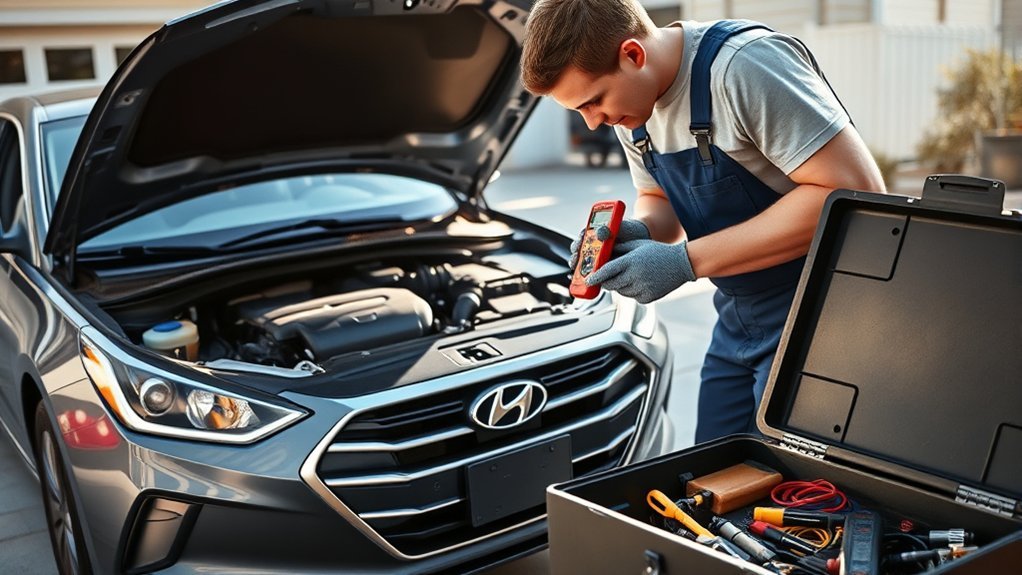
Starter problems usually show up as a no-crank condition. That means the engine does not turn over at all, or it turns too slowly to start. If the engine cranks normally but will not run, the problem may be fuel, ignition, compression, a sensor, or an immobilizer issue instead of the starter motor.
Dashboard Lights Come On, but the Engine Does Not Crank
If the dashboard lights, radio, or headlights work but the engine stays silent, the starter circuit may not be receiving enough current. The cause may be a weak battery, dirty battery terminals, a loose cable, a poor engine ground, a blown starter fuse, a failed starter relay, a park/neutral safety switch issue, or the starter itself.
Single Click or Rapid Clicking When Starting
A rapid clicking sound often means the starter solenoid is trying to engage but the battery voltage drops too low. Check battery charge and terminal condition first. A single loud click can mean the solenoid is engaging, but the starter motor is not turning because of internal starter wear, high resistance in the cables, or a weak battery under load.
Grinding Noise During Startup
A grinding noise can mean the starter pinion gear is not meshing correctly with the flywheel or flexplate. Stop repeated start attempts if you hear grinding. Continued cranking can damage the starter gear and the ring gear, turning a small repair into a more expensive one.
Burning Smell, Smoke, or Hot Wiring
A burning smell or visible smoke during repeated start attempts can point to overheated starter wiring, a short, a stuck starter relay, or an overloaded starter motor. This is a stop-and-inspect situation, not a keep-trying situation.
Intermittent Starting
If your Sonata starts normally one moment and does nothing the next, look for loose battery terminals, corroded cables, a failing relay, worn starter brushes, a weak ground strap, or a park/neutral switch that does not always recognize the gear position.
Oil-Soaked Starter
An oil-soaked starter often means there is an oil leak above or near the starter. Oil contamination can attract dirt, soften insulation, and shorten the life of electrical components. Fix the leak and inspect the starter connections before replacing parts.
Before You Blame the Starter, Check These First
Many starter replacements happen because the battery or cables were not tested first. Hyundai notes that the battery helps start the engine and that battery cables should be secured, clean, and free from corrosion. Hyundai also recommends battery testing as part of proper battery care and service.
- Battery state: A weak battery can power lights but still fail when the starter demands high current.
- Battery terminals: White, blue, or green corrosion around the posts can restrict current flow.
- Ground connections: A loose or corroded engine ground can make a good starter act bad.
- Key fob and immobilizer: If your Sonata has push-button start, a weak key-fob battery or key recognition issue can stop the start command.
- Brake pedal switch: Push-button models may not start if the vehicle does not detect the brake pedal input.
- Transmission range: A faulty park/neutral switch can prevent the starter from engaging.
- Fuses and relays: A blown starter fuse or faulty starter relay can interrupt the control side of the circuit.
Note: Fuse layouts, relay names, jump-start posts, and battery locations can vary by Sonata model year and engine. Confirm the exact locations in your owner’s manual before pulling fuses, swapping relays, or connecting a booster pack.
[Products Worth Considering]

Veepeak OBDCheck BLE+ is a Bluetooth OBD-II scanner designed to help drivers read and clear check engine codes, view freeze frame data, check readiness monitors, and monitor live sensor data. It works with compatible third-party apps on iOS and Android, making it a versatile tool for standard vehicle diagnostics and routine car health checks. Advanced features may be available through supported apps on select vehicles, but special service functions are not supported.

The TOPDON BT100 helps you quickly check the health and charge status of 12V lead-acid batteries with clear analytical results, including state of health, state of charge, voltage, and cranking performance. It supports a wide range of battery types and vehicles, making it a practical tool for diagnosing starting and charging issues at home or in the shop. Compact and easy to use, it provides fast, reliable testing without needing to charge the device first.

This custom-fit truck cover is designed for Tundra Double and CrewMax Cab short bed models, delivering year-round protection with a waterproof outer layer and all-weather coverage. A driver-side zipper allows easy cabin access, while the soft interior helps protect paint and reinforced wind straps improve stability in strong conditions. It also includes a storage bag and towel for convenient care and storage.
How to Troubleshoot Starter Issues
Troubleshooting starter issues in your Hyundai Sonata works best when you move from simple checks to more advanced electrical tests. Do not start by buying a starter. Start by proving that the battery, cables, relay, and safety interlocks are working.
[Products Worth Considering]

These battery terminal anti-corrosion washers help protect battery connections from buildup and extend battery life in 6V and 12V systems. The set includes color-coded red and green rings for easy positive and negative identification, plus a removable inner ring to fit larger terminals when needed.
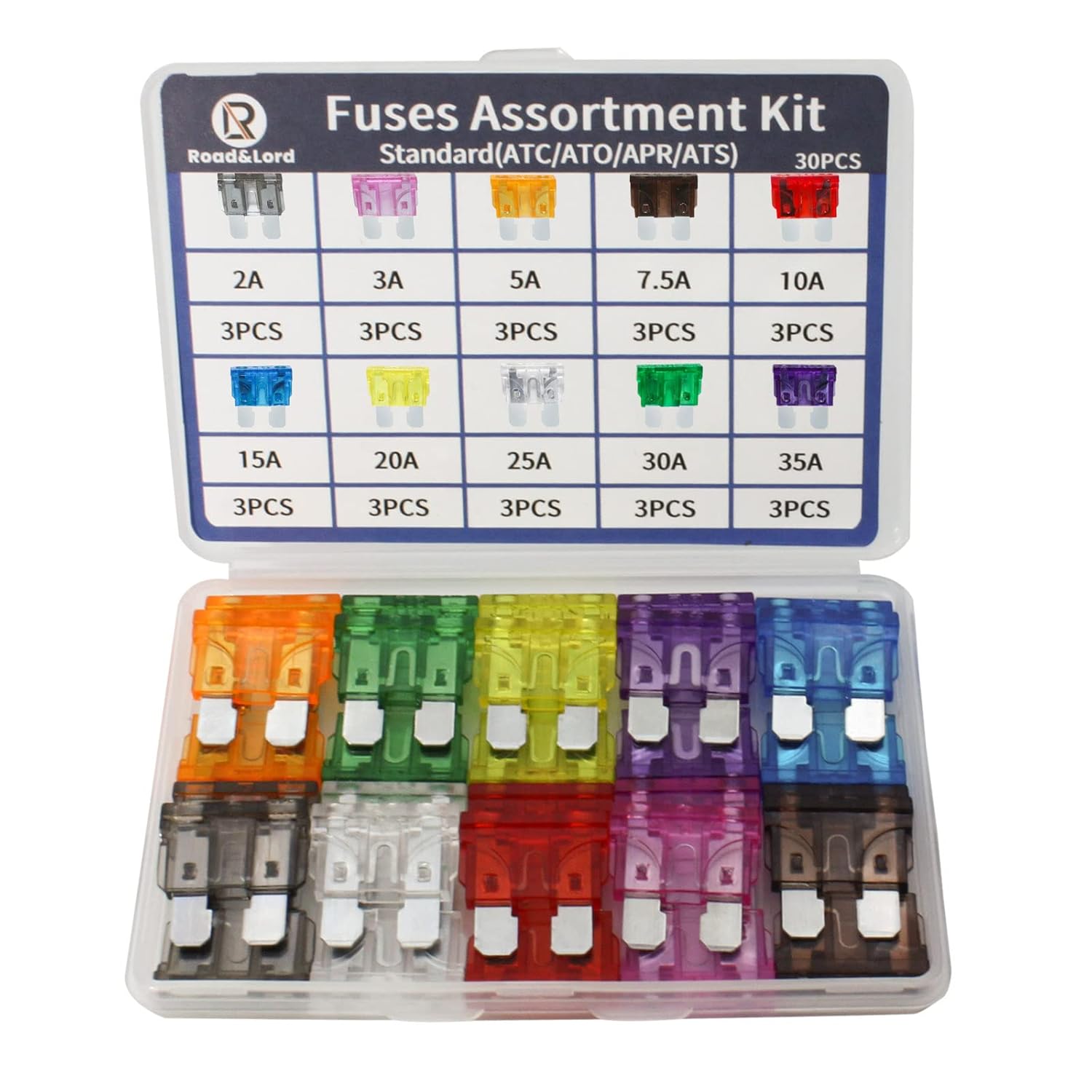
This standard blade fuse assortment kit provides a convenient selection of common amp ratings to help protect vehicle electrical systems from overloads, short circuits, and wiring damage. With transparent, color-coded housings and clearly marked ratings, it makes blown fuse replacement fast and easy for cars, trucks, boats, RVs, and other DC applications. The durable compact case keeps the fuses organized for reliable storage and quick access when needed.
1. Identify the Type of No-Start
Listen carefully when you try to start the car:
- No sound at all: Possible dead battery, bad connection, brake switch, immobilizer issue, starter relay, fuse, park/neutral switch, or starter control circuit problem.
- Rapid clicking: Most often low battery voltage or high resistance at the terminals or cables.
- One solid click: Possible starter solenoid, starter motor, battery cable, engine ground, or weak battery under load.
- Grinding: Possible starter drive gear engagement problem.
- Engine cranks but will not start: Look beyond the starter at fuel, ignition, sensors, immobilizer, or engine-management issues.
2. Check the Battery and Terminals
Turn off the lights, climate control, radio, and accessories. Inspect both battery terminals. They should be tight, clean, and free from corrosion. Hyundai’s battery-care guidance recommends keeping cables secured, cleaned, and free from corrosion, and it notes that short trips, long periods of non-use, and extreme weather can weaken a battery.
If you have a multimeter, check resting battery voltage. A healthy, fully charged 12-volt lead-acid battery is usually near 12.6 volts at rest, but a battery can still fail under load even if the resting voltage looks acceptable. If the voltage drops sharply when you try to crank, test or replace the battery before condemning the starter.
3. Try a Safe Jump Start if the Battery Is Low
If the battery appears weak, follow the jump-start instructions for your model year. AAA recommends connecting positive to positive first, then connecting the final negative clamp to a clean metal ground point away from the dead battery to reduce spark risk near battery gases. A National Highway Traffic Safety Administration technical bulletin also warns that a charger or booster must match the vehicle’s electrical-system voltage because incorrect voltage can cause fire or explosion.
Warning: Never let jumper-cable clamps touch each other, do not connect a booster pack backward, and do not place cables near belts, fans, or pulleys. If you are not sure where the ground point is on your Sonata, use the owner’s manual or call roadside assistance.
4. Check Park, Neutral, and the Key Fob
Make sure the shifter is fully in Park. Then try starting in Neutral with your foot on the brake. If the vehicle starts in Neutral but not in Park, the transmission range switch or shifter adjustment may need diagnosis. For push-button models, hold the key fob close to the start button and try again. If the fob battery is weak, the vehicle may not recognize the key reliably.
5. Inspect Fuses and the Starter Relay
Use the fuse-box cover diagram and the Hyundai owner’s manual for your exact year. Check the starter-related fuses first. If your fuse box uses identical relays with the same part number, a temporary relay swap can help confirm whether a relay is faulty. Do not bridge relay terminals with wire unless you have the correct wiring diagram and electrical experience; a wrong jumper can damage the vehicle’s electronics.
6. Test for Voltage Drop and High Resistance
If the battery is charged and the relay/fuses look good, a voltage-drop test can find hidden resistance in the positive cable, ground cable, or starter connections. Fluke explains that slow cranking or intermittent starting can be caused by excessive resistance in the starter circuit, and voltage-drop testing helps locate that resistance while the circuit is under load.
7. Limit Cranking Time
Do not keep holding the key or start button when the engine will not crank. DENSO’s starter troubleshooting guidance says not to crank the engine for longer than 10 seconds at a time and to wait at least 60 seconds before cranking again so the starter can cool.
Pro Tip: If the Sonata starts after the battery terminals are cleaned or the ground cable is tightened, do not replace the starter yet. Drive only after confirming the charging system is working and schedule a battery/charging-system test.
| Check | What It Helps Confirm | What to Do Next |
|---|---|---|
| Battery and terminal check | Weak battery, corrosion, or loose connections | Clean, tighten, charge, and load-test the battery |
| Jump-start test | Battery or charging issue versus deeper no-crank fault | If it starts, test the battery and alternator |
| Park/Neutral test | Transmission range or neutral safety switch problem | Try Neutral and inspect the range-switch circuit |
| Fuse and relay check | Interrupted starter control circuit | Replace a blown fuse only after checking for the cause |
| Voltage-drop test | High resistance in cables, grounds, or starter connections | Repair the cable, ground, or terminal before replacing the starter |
| Starter current or bench test | Internal starter motor or solenoid failure | Replace the starter if testing confirms failure |
Starter Problem or Battery Problem: How to Tell
Starter and battery problems overlap, so compare the symptoms instead of guessing.
| Symptom | More Likely Battery or Cable Issue | More Likely Starter Issue |
|---|---|---|
| Rapid clicking | Yes, especially with dim lights | Possible, but check voltage first |
| One solid click | Possible under load | Yes, especially if battery tests good |
| Grinding noise | Unlikely | Yes, inspect starter engagement |
| Starts with a jump | Yes | Less likely, but still possible if connections are poor |
| No crank after a good jump | Possible cable or ground issue | Possible starter, relay, fuse, or safety-switch issue |
| Starts after tapping the starter | Unlikely | Possible worn brushes or internal starter fault |
A light tap on the starter body can sometimes help a worn starter work one last time, but it is not a repair. Avoid hitting electrical terminals, sensors, or wiring. If tapping changes the symptom, have the starter and circuit tested promptly.
[Products Worth Considering]

Starter for Hyundai Sonata L4 2.4L 2009-2013, Santa Fe L4 2.4L 2010-2012, Santa Fe Sport L4 2.4L 2013.

[Replacement Numbers] 1-17989, 19090, 19090N, 361002G100, 36100-2G100, 41012398, 410-12398, 41012399, 410-12399, 41012473, 410-12473, FS14N1, SVA0019, 117989

[Fitment] Fits KIA & Hyundai 2.4L L4 vehicles: 2011-2014 KIA Sorento, 2012-2014 KIA Optima, 2009-2014 Hyundai Sonata, 2010-2012 Hyundai Santa Fe, 2013-2014 Hyundai Santa Fe Sport. Verify vehicle year, make, model & engine size prior to purchase. **Note: Only for L4 2.4L 4-cylinder engines, NOT for V6 6-cylinder engines.
When to Get Help From a Mechanic?
Get professional help if your Hyundai Sonata still will not crank after the battery, terminals, fuses, relay, gear position, and key-fob recognition have been checked. You should also stop DIY testing and call a mechanic or roadside assistance if you notice smoke, melted insulation, a burning smell, a hot cable, a damaged battery, repeated blown fuses, or grinding from the starter area.
A technician can perform loaded battery testing, starter current testing, voltage-drop testing, scan-tool checks, and wiring-diagram-based diagnosis. That matters because replacing the starter will not fix a weak battery cable, bad ground, faulty relay, brake switch issue, immobilizer problem, or transmission range switch fault.
Preventative Measures for Starter Longevity
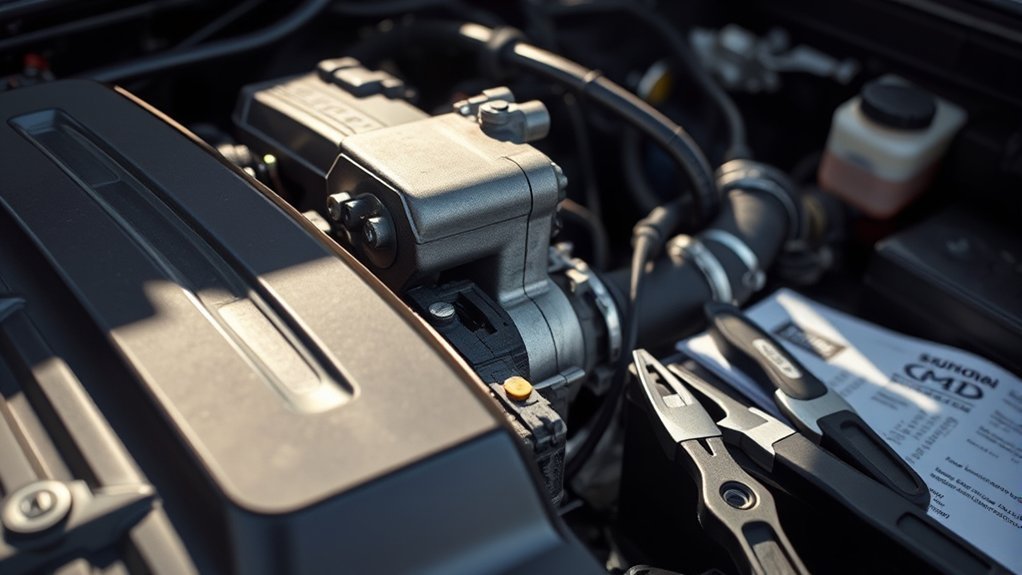
To keep your Hyundai Sonata’s starter reliable, focus on the parts that feed power to it. Hyundai recommends keeping battery cables secured, clean, and free from corrosion. Hyundai also notes that short trips, long periods of non-use, and extreme hot or cold weather can shorten battery life or leave the battery undercharged.
- Keep terminals clean: Corrosion increases resistance and can reduce the current available to the starter.
- Fix oil leaks early: Oil dripping onto the starter can contaminate connections and shorten component life.
- Limit accessory use with the engine off: Lights, climate controls, audio, and chargers can drain the battery before the next start.
- Drive long enough to recharge: Frequent short trips may not give the charging system enough time to restore the battery.
- Test the battery before winter and summer: Heat and cold both stress the battery, and a weak battery makes the starter work harder.
- Repair slow-crank symptoms early: Slow cranking can overheat the starter and mask cable or ground problems.
A starter motor needs a strong battery and low-resistance cable path. Clean terminals, secure grounds, and a healthy battery often solve “starter” complaints before a starter is ever replaced.
Understanding Electrical System Impacts on Your Starter
The starter depends on two circuits. The control circuit sends the start command through switches, fuses, relays, and vehicle security logic. The power circuit carries high current from the battery to the starter motor through heavy cables and grounds. A problem in either circuit can leave your Sonata silent.
- Battery maintenance: Confirm the battery is charged, the terminals are tight, and the cables are clean. Corroded or loose connections can interrupt current even when the dashboard lights still turn on.
- Fuses and relays: A starter relay or fuse can stop the start signal from reaching the starter. Replace only with the correct rating or part number.
- Wiring integrity: Damaged insulation, loose grounds, and high-resistance connections can cause intermittent starting or slow cranking.
- Safety interlocks: The vehicle must detect the correct gear position and, on push-button models, the correct brake-pedal and key-fob conditions before it allows starting.
Frequently Asked Questions
How do I diagnose if my starter is bad?
Diagnose a bad starter by first proving the battery and cables are good. Check for clean, tight terminals, a charged battery, good grounds, correct Park or Neutral position, working fuses, and a good starter relay. If those pass and the Sonata still gives one solid click, grinds, starts only after tapping the starter, or fails a starter current or voltage-drop test, the starter may be bad.
Why won’t my Hyundai Sonata start but has power?
A Sonata can have lights and radio power but still not have enough current to crank. Common causes include a weak battery, corroded terminals, loose battery cables, a bad ground, a blown starter fuse, a faulty starter relay, a park/neutral switch issue, a weak key-fob signal, or a failing starter motor.
Will a jump start fix a bad starter?
A jump start may help if the battery is weak or discharged, but it will not fix a worn starter motor, damaged solenoid, faulty relay, bad ground, immobilizer issue, or broken wiring. If the car still will not crank with a known-good jump source and clean connections, move on to starter-circuit diagnosis.
Is clicking always a starter problem?
No. Clicking is often caused by low battery voltage or resistance at the battery terminals or cables. Rapid clicking usually points to low voltage first. A single heavy click can point to the starter or solenoid, but only after the battery, cables, grounds, fuses, and relay have been checked.
Can I keep driving with a failing starter?
You may be able to drive after the engine starts, but a failing starter can leave you stranded the next time you shut the engine off. If the Sonata starts intermittently, grinds, smokes, smells hot, or needs repeated attempts, schedule diagnosis before relying on it for daily driving.
Should I replace the starter myself?
Only attempt starter replacement if you are comfortable disconnecting the battery, safely raising and supporting the vehicle if needed, following the service procedure for your exact model year, and tightening electrical connections correctly. If access is tight or diagnosis is uncertain, professional testing is safer and can prevent unnecessary parts replacement.
Conclusion
Recognizing Hyundai Sonata starter problems early can prevent a no-start surprise, but accurate diagnosis matters. Clicking, grinding, slow cranking, and dashboard lights with no crank are useful clues, not automatic proof that the starter is bad. Check the battery, terminals, grounds, fuses, relay, park/neutral input, and key-fob recognition first. If those checks do not solve it, have the starter circuit tested before replacing parts.
Sources
- Hyundai Digital Owner’s Manual — model-specific owner’s manual, jump-starting, fuse, warning, and operating information
- MyHyundai: Here’s What You Need to Know About Your Battery — Hyundai battery care, cable corrosion, short-trip drain, and inspection guidance
- Hyundai Battery Service & Battery Inspection — Hyundai battery inspection, aging-battery signs, and service recommendations
- AAA Club Alliance: How to Use Jumper Cables — safe jumper-cable connection order and grounding guidance
- National Highway Traffic Safety Administration Technical Bulletin — warning to use the correct booster or charger voltage when jump-starting
- DENSO Auto Parts: Starter Troubleshooting — starter testing precautions, cranking-time limits, and voltage-drop testing overview