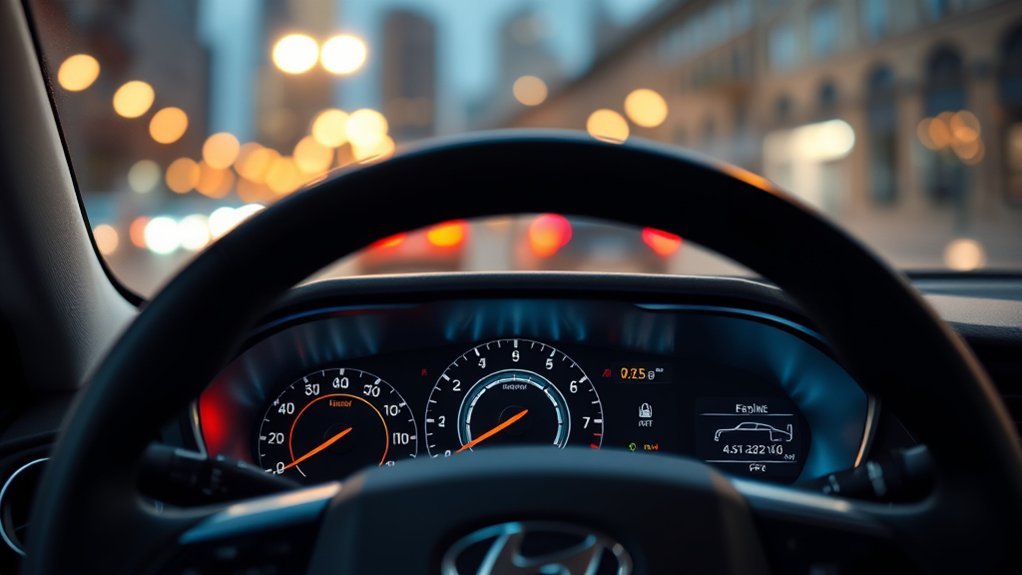
On a U.S.-market 2023 Hyundai Sonata equipped with Auto Start-Stop, Hyundai calls the system Idle Stop & Go, or ISG. It can shut the gasoline engine off at an eligible full stop and normally restart it when you release the brake. The factory ISG OFF button disables the feature while you are driving, but the system is designed to be active again when the engine is running. The 2023 Sonata owner’s manual uses a green Auto Stop indicator when the engine has stopped automatically and yellow or blinking-yellow behavior for non-activation or malfunction conditions—not the newer white-indicator logic used on some later Hyundai models. Hyundai USA’s ISG support material specifically identifies the 2022–2023 Sonata SE among applicable models, while the manual describes ISG as “if equipped,” so confirm the controls and equipment on the individual car.
Last updated: September 16, 2026 · Re-verified against the 2023 Sonata owner’s manual, Hyundai ISG support material, Hyundai Recall 246 / NHTSA 23V-526, Hyundai TSB 24-FL-002H, NHTSA VIN-recall guidance, and current federal idle-reduction research.
Quick Answer
The 2023 Hyundai Sonata’s Auto Start-Stop feature is called Idle Stop & Go, or ISG. If equipped, it can turn the engine off at an eligible full stop and normally restart it when you release the brake. Press the ISG OFF button to disable the feature while driving. A green Auto Stop indicator means the engine is in normal Auto Stop. A yellow Auto Stop indicator with the ISG OFF light can mean the activation prerequisites are not satisfied, while a blinking-yellow Auto Stop indicator with the ISG OFF light indicates ISG malfunction behavior. If the engine fails to restart, keep the brake applied, follow the cluster instructions, restart it manually in Park, and arrange diagnosis.
Key Takeaways
- The 2023 Sonata owner’s manual describes ISG as an “if equipped” system. Hyundai USA’s ISG support material specifically lists the 2022–2023 Sonata SE, so confirm the exact vehicle’s ISG OFF button and equipment before troubleshooting.
- The engine normally stops at an eligible full stop and restarts when you release the brake, but it can also restart automatically because of battery, climate, brake-vacuum, Auto Hold, or time-related conditions.
- Battery charge, climate demand, engine temperature, steering angle, incline, door or hood status, and other prerequisites can prevent an automatic stop.
- The factory ISG OFF button manually deactivates the feature; the 2023 manual says the ISG system is normally active when the engine is running.
- NHTSA’s Recall 23V-526 report identifies 1,143 U.S.-market 2023 Sonatas in the recall’s subject population, produced from October 26, 2022 through April 3, 2023. VIN confirmation is still required.
- A failed restart is different from normal non-activation. TSB 24-FL-002H addresses a software-related no-restart condition on certain Sonatas; the bulletin states that normal warranty applies.
At a Glance
| Applies To | U.S.-market 2023 Hyundai Sonata with ISG, if equipped; Hyundai USA specifically lists the 2022–2023 Sonata SE in its ISG support material |
| Time Required | A few seconds to turn ISG off; longer if battery-sensor calibration, diagnosis, a recall repair, or a software update is needed |
| Difficulty | Easy for normal operation; professional diagnosis recommended for persistent warnings or restart failures |
| Tools Needed | None for the factory button; Hyundai diagnostic equipment for software and fault checks |
| Cost | $0 to use the button; Recall 246 repairs are performed at no charge on affected vehicles; TSB 24-FL-002H states normal warranty applies, so other service cost depends on diagnosis, bulletin eligibility, and warranty status |
Important: Check Hyundai Recall 246
Certain 2023 Hyundai Sonata DN8 vehicles produced from October 26, 2022 through April 3, 2023 were included in NHTSA Recall 23V-526 / Hyundai Recall 246. NHTSA’s report identifies 1,143 U.S.-market 2023 Sonatas in the subject population. The recall involves the electronic controller for the transmission electric oil pump used by the Idle Stop & Go system. Damaged electrical components can cause the pump controller to overheat and increase the risk of a vehicle fire.
Do not assume every 2023 Sonata is affected. Confirm the individual vehicle at the NHTSA VIN recall lookup. Hyundai’s recall notice states that the remedy is performed at no charge and advises owners of affected vehicles with an unrepaired recall to park outside and away from structures until the remedy is completed. This safety recall is separate from TSB 24-FL-002H.
2023 Sonata ISG Symptom Guide
| What You See | What It Can Mean | What to Do |
|---|---|---|
| Green Auto Stop indicator | The engine has stopped automatically in ISG Auto Stop mode | Normal operation; keep the brake applied until you are ready to move |
| ISG OFF indicator and yellow Auto Stop indicator | The 2023 manual says this can occur when ISG activation prerequisites are not satisfied | Check operating conditions; if the indication remains illuminated or the system does not return to normal, have Hyundai inspect it |
| Auto Stop indicator blinks yellow and ISG OFF light is on | The 2023 manual identifies this as ISG-system malfunction behavior | Arrange inspection with an authorized Hyundai dealer |
| Engine restarts while you are still stopped | Can be normal if brake vacuum, battery charge, climate demand, Auto Hold conditions, or the length of the stop requires a restart | Check the forced-restart conditions below before assuming the system is faulty |
| Engine does not restart | Possible ISG fault or software-related condition | Keep the brake applied, shift to Park, restart manually according to the cluster instructions, and ask a dealer to check the system and TSB 24-FL-002H |
Does the 2023 Hyundai Sonata Have Auto Start-Stop?
The 2023 Sonata owner’s manual describes Idle Stop & Go as an if equipped feature. Hyundai USA’s official Idle Stop and Go support video specifically lists the 2022–2023 Sonata SE among applicable models. Published 2023 Sonata SE specifications also identify the 2.5-liter engine with ISG. The safest approach is still to confirm the equipment on the individual car rather than assuming every Sonata trim uses the same system.
The fastest equipment check is to look for a button marked ISG OFF. You can also check the original window sticker, the feature list associated with the VIN, or the owner’s manual supplied for the exact vehicle. Hybrid versions use a different powertrain strategy and should not be diagnosed using gas-only ISG instructions unless the hybrid manual specifically supports the same procedure.
Model-Year Check: Confirm the model year, trim, engine, build market, and ISG equipment before troubleshooting. Similar-looking Sonata controls and indicator behavior can differ between model years and powertrains.
How the 2023 Hyundai Sonata Auto Start-Stop System Works

The archived 2023 Hyundai Sonata owner’s manual describes ISG as a system that automatically and temporarily shuts the engine down when the vehicle is stopped and idling to improve fuel efficiency and reduce exhaust emissions. It also notes that brief ABS, ESC, steering, or parking-brake warning-light illumination can occur during an automatic restart when battery voltage is low and does not automatically prove that ISG has malfunctioned.
In everyday driving, you brake to a complete stop, the engine shuts off if all prerequisites are satisfied, and it restarts when you are ready to move or when the vehicle decides the engine needs to run again. This is why ISG may activate at one traffic light but keep the engine running at the next.
The 2023 Sonata manual lists activation prerequisites that include:
- The driver’s seat belt is fastened.
- The driver’s door and hood are closed.
- Brake-vacuum pressure is adequate.
- The battery sensor is active and the battery has sufficient charge.
- The outside temperature is not too low or too high.
- The vehicle has been driven at the required speed before stopping.
- The climate-control system satisfies its operating conditions.
- The vehicle is sufficiently warmed up.
- The road incline is gradual.
- The steering wheel is turned less than 180 degrees before the vehicle stops.
2023-specific note: Do not use a later Hyundai model’s white Auto Stop indicator rule to diagnose a 2023 Sonata. The 2023 manual describes green Auto Stop operation and yellow or blinking-yellow warning/non-activation behavior.
Safety: The engine can restart automatically while it is in Auto Stop. Before leaving the vehicle or checking the engine compartment, turn the vehicle fully off rather than relying on the engine being temporarily stopped by ISG.
When Does the Sonata Engine Stop and Restart?
According to the 2023 Sonata manual, Auto Stop occurs when the vehicle reaches 0 mph, the brake pedal is depressed, and the selector is in Drive or Neutral. The Auto Stop indicator illuminates green when the engine shuts off automatically.
The normal driver-requested restart occurs when you release the brake. With Auto Hold active, the engine can remain stopped after you release the brake and then restart when you press the accelerator.
After an automatic stop, another idle stop cannot occur until the vehicle has traveled at least 3 mph (5 km/h) and then returned to the required stop conditions. Creeping only a short distance can therefore prevent the next shutoff.
Why Can ISG Restart While I’m Still Stopped?
An engine that restarts while your foot is still on the brake is not automatically malfunctioning. The 2023 Sonata manual says ISG can automatically restart the engine when brake-vacuum pressure becomes low, the engine has been stopped for about five minutes, the air conditioner is running with the fan at its highest setting, the front defroster is on, the battery is weak, or the climate-control system cannot maintain satisfactory heating or cooling.
The manual also lists several Auto Hold-related restart conditions. These include shifting to Park with Auto Hold active, opening the door or unfastening the seat belt with Auto Hold active, or pressing the electronic parking-brake switch. When a forced restart occurs, the Auto Stop indicator can blink green for about five seconds.
Warning: If the engine does not restart, keep the brake applied and follow the cluster message. Hyundai’s 2023 instructions call for a manual restart and recommend restarting in Park. Repeated failures, persistent ISG warnings, or a blinking-yellow malfunction indication require diagnosis.
Benefits of the Auto Start-Stop System
ISG reduces fuel consumption that would otherwise occur while the vehicle is fully stopped with the engine idling. The benefit is greatest on routes with frequent, meaningful idle periods, such as congested city streets and long traffic signals.
How Much Fuel Can Auto Start-Stop Save?
A 2023 Oak Ridge National Laboratory study published in the SAE Technical Paper Series tested four vehicles with Auto Stop-Start both enabled and disabled. It was not a 2023 Sonata-specific test. Fuel-economy improvement varied sharply with the amount of idle time in each test cycle. The largest reported improvements were 7.27% on the FTP city cycle and 26.4% on the highly idle-intensive New York City Cycle.
The practical benefit depends on idle time. A Sonata that spends several minutes stopped during each city trip has more opportunity to save fuel than one driven mainly at steady highway speeds.
Does ISG Reduce Idle Emissions?
The U.S. Department of Energy’s Alternative Fuels Data Center explains that idling consumes fuel while the vehicle is not moving and contributes to air pollution. Stop-start technology reduces the amount of engine-on idle time, so its effect is most relevant in stop-and-go driving rather than open-road cruising.
| Benefit | Real-World Impact |
|---|---|
| Less idling | The engine switches off at eligible full stops instead of consuming fuel while stationary. |
| Better city efficiency | Frequent, longer stops provide the greatest opportunity to reduce fuel use. |
| Lower idle emissions | Less engine-on idle time means fewer emissions produced while the vehicle is stationary. |
When ISG Helps and When It Can Feel Intrusive
ISG is most useful at a complete stop that lasts long enough to avoid meaningful idling. A long red light or backed-up intersection gives the system more time to provide a benefit.
The feature can feel less useful during quick stop signs, parking maneuvers, short drive-through movements, or traffic that repeatedly advances by a few feet. In those situations, a driver may prefer uninterrupted low-speed response. The factory ISG OFF button allows that choice while driving.
Common Concerns About Sonata ISG
Most ISG questions fall into four groups: the feature activates when the driver would rather keep the engine running, it does not activate when expected, it restarts while the vehicle is still stopped, or it fails to restart normally. The first three can reflect normal operating logic. A repeated failed restart is different and needs service attention.
[Products Worth Considering]

The ANCEL AD410 PRO combines engine diagnostics and 12V battery testing in one easy-to-use tool, helping you read and clear check engine codes while checking battery health, cranking, and charging performance. It also provides live data, freeze frame details, and I/M readiness checks to help you diagnose issues faster and prepare for emissions testing. With plug-and-play operation, a clear screen, and broad vehicle compatibility, it is a practical solution for home mechanics and everyday drivers.

The ANCEL AD410 helps drivers quickly read and clear engine-related fault codes, view live data, and understand why the check engine light is on before heading to a repair shop. With built-in code definitions, readiness checks, and support for common OBD2 functions, it makes basic diagnostics straightforward for beginners and DIY users. Powered directly from the vehicle and easy to use with no app required, it offers practical value for everyday vehicle troubleshooting.

The NOCO Boost X GBX45 is a powerful portable jump starter designed to revive gas and diesel engines with fast, reliable performance. It combines spark-proof, reverse-polarity-safe operation with USB-C charging, power bank functionality, and a built-in LED flashlight for roadside emergencies and everyday utility.
Why the Experience Changes by Route
A driver whose route includes long city lights may barely notice the restart and appreciate the reduction in idle time. A driver making frequent short stops or low-speed parking adjustments may notice every engine cycle.
Traffic pattern, climate-control demand, 12-volt battery condition, steering input, engine temperature, and the length of each stop all affect how often the system operates.
Why Does ISG Not Turn the Engine Off?
The 2023 Sonata manual says ISG will not activate when its prerequisites are not satisfied. Common causes include insufficient battery charge, high heating or cooling demand, an engine that is not sufficiently warmed up, extreme outside temperature, a steep incline, a steering angle of 180 degrees or more, an open hood or driver’s door, low brake-vacuum pressure, or insufficient vehicle speed since the previous Auto Stop.
On the 2023 Sonata, the manual describes the ISG OFF indicator and a yellow Auto Stop indicator when activation prerequisites are not satisfied. If the indication remains illuminated, the ISG OFF indicator cannot be cleared, the Auto Stop indicator blinks yellow, or the system continues to malfunction, Hyundai directs the owner to have the vehicle inspected.
Why Did ISG Stop Working After a Battery Replacement?
If the AGM battery has been disconnected, reconnected, or replaced, the 2023 Sonata manual says ISG may not operate immediately because the battery sensor may need to be calibrated or reactivated.
For calibration after an AGM battery is reconnected or replaced, Hyundai’s 2023 manual instructs the owner to turn the engine off, disconnect added electronic devices such as an aftermarket navigation unit or dash cam, leave the engine off for four hours, and then turn the engine on and off three to four times. The same manual also describes battery-sensor reactivation as cycling the ignition once and parking the vehicle for at least four hours with the hood and doors closed and no accessory draw.
Battery Tip: If ISG stopped working immediately after battery service, confirm the required ISG battery specification and battery-sensor procedure before assuming the starter, ISG button, or engine-control system has failed.
When Does the ISG System Need Service?
If the vehicle fails to restart after ISG shuts the engine off, keep the brake applied, shift to Park, and restart it manually according to the cluster instructions. Do not treat repeated manual restarts as normal behavior.
Hyundai issued Technical Service Bulletin 24-FL-002H in February 2024 for ECU and TCU software related to ISG logic. The bulletin describes a condition in which the engine may fail to restart after ISG operates because intake-manifold pressure has not recovered as expected.
For 2023 vehicles, the bulletin lists Sonata DN8 models produced from June 3, 2021 through October 23, 2023 with VINs beginning KMH. It states that 2023 DN8 vehicles require only ECU update event 1074. The bulletin also states that normal warranty applies, so the dealer must confirm the VIN, current software level, bulletin eligibility, and warranty status before determining coverage.
A technical service bulletin is not the same as a safety recall. TSB 24-FL-002H gives technicians a repair procedure for a known restart condition; it is not itself an automatic promise of no-charge service outside applicable warranty coverage. Hyundai Recall 246 / NHTSA 23V-526 is a separate safety recall concerning the ISG electric oil-pump controller. You can also review the site’s guide to Hyundai Sonata technical service bulletins for help understanding how TSBs differ from VIN-specific recalls.
| Item | What It Covers | 2023 Sonata Relevance |
|---|---|---|
| Recall 246 / NHTSA 23V-526 | ISG transmission electric oil-pump controller overheating and fire risk | 1,143 U.S.-market 2023 Sonatas in the NHTSA subject population; production dates Oct. 26, 2022–Apr. 3, 2023; confirm by VIN |
| TSB 24-FL-002H | ECU/TCU software improvement for an ISG no-restart condition | Certain KMH-VIN DN8 vehicles; 2023 vehicles use ECU update event 1074 and the bulletin states normal warranty applies |
How to Turn Off ISG in a 2023 Hyundai Sonata
Use the factory ISG OFF button to deactivate Idle Stop & Go. Hyundai’s Idle Stop and Go how-to guide explains manual on/off operation while noting that availability and functionality vary by vehicle.
- Start the vehicle normally.
- Locate the button marked ISG OFF on the equipped vehicle’s controls.
- Press the button once.
- Confirm that the ISG OFF indicator illuminates.
- Press the button again if you want to re-enable the system during that drive.
- After the next engine start, check the system state again if you prefer to drive with ISG off.
Pro Tip: Turn ISG off before situations that require repeated, precise low-speed movement, such as tight parking, a car-wash queue, or a drive-through line.
The official Hyundai material reviewed describes manual on/off control and states that the ISG system is normally active when the engine is running. It does not identify a permanent factory preference for the 2023 Sonata. Aftermarket memory or bypass modules can add wiring, connectors, or electronic behavior that complicates later diagnosis. The lowest-risk choices are the factory button and dealer-confirmed software service.
[Products Worth Considering]

This protective storage case is designed to keep the Boost X GBX55 jump starter and its accessories organized, secure, and easy to carry. It features a zippered closure, a mesh pocket for chargers, a velvet-lined interior, and a convenient handle for travel. Built with durable, splash-resistant materials, it helps guard against everyday bumps, scratches, and moisture.

These extra-large car drying towels are designed to quickly absorb water and leave surfaces streak-free after washing. The twisted loop microfiber construction delivers a plush, ultra-absorbent feel that works safely on paint, glass, and chrome. With two reusable towels in the pack, they are ideal for efficient drying of cars, SUVs, and trucks at home or in professional detailing.

CAR MODEL: fit for 2020 2021 2022 2023 Hyundai Sonata Accessories, please check your door window switch panel before buying
Could Newer Hyundai ISG Rules Apply to a 2023 Sonata?
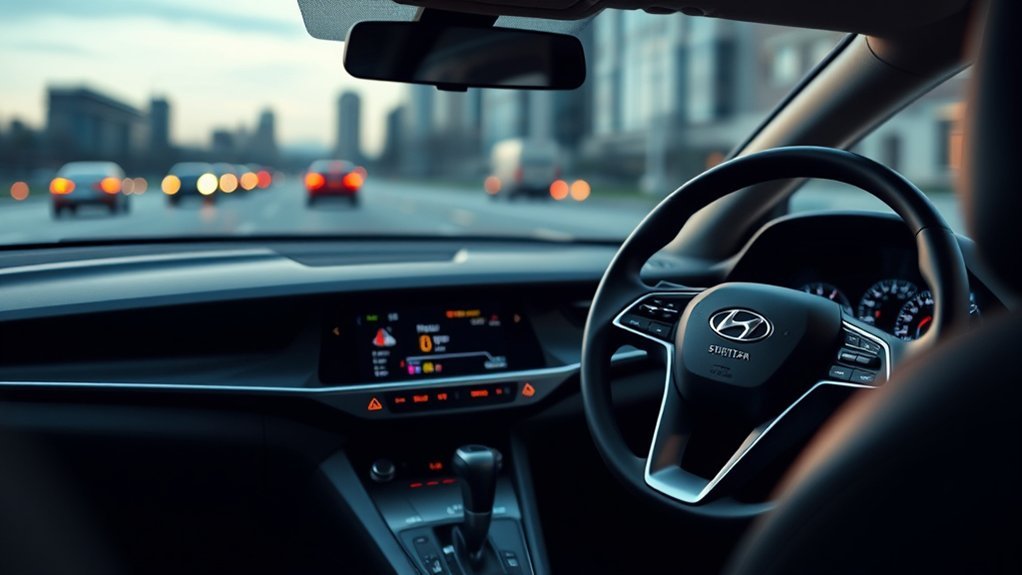
Do not diagnose a 2023 Sonata using indicator behavior from a newer Hyundai simply because the system has the same ISG name. Hyundai has changed cluster messages and indicator behavior across models and model years. The 2023 Sonata manual specifically describes a green Auto Stop indicator during an automatic stop, a yellow indicator when activation prerequisites are not satisfied, and a blinking-yellow indicator during ISG malfunction behavior.
For a 2023 Sonata, use the 2023 owner-manual indicators, the individual VIN’s recall status, and the applicable Hyundai service information. The sources reviewed for this update do not establish that newer white-indicator logic should be retroactively applied to the 2023 Sonata.
How Driving Patterns Affect ISG Fuel Savings
ISG does not provide the same fuel-economy opportunity on every trip. A long traffic signal creates substantial idle time to eliminate. A brief stop sign offers little time before the engine must restart, while highway driving provides almost no opportunity because the vehicle rarely sits stationary with the engine idling.
| Driving Scenario | ISG Effectiveness | Fuel-Saving Opportunity |
|---|---|---|
| Stop-and-go city traffic | High | Frequent full stops create the best opportunity |
| Long red lights | High | Longer idle periods allow savings to accumulate |
| Short stop signs | Low | The stop may be too brief to provide much benefit |
| Parking-lot maneuvers | Variable | Smooth low-speed control may matter more than idle reduction |
| Highway driving | Low | There is little stationary idle time to eliminate |
Practical Ways to Use the Sonata’s ISG Feature
- Leave ISG active: Use it normally on routes with long red lights, congested intersections, and meaningful stationary idle time.
- Turn it off while driving: Use the factory ISG OFF button for tight parking, repeated short movements, car-wash queues, or other situations where uninterrupted low-speed response is more useful.
- Treat warnings as a service issue: The ISG OFF button is a preference control, not a repair. Persistent warnings, blinking-yellow malfunction behavior, or repeated failed restarts require troubleshooting rather than simply switching ISG off.
Troubleshooting 2023 Sonata ISG Problems
If ISG does not behave as expected, use the symptom, indicator state, battery-service history, and VIN to decide what to do next:
- Confirm that the vehicle has ISG: Check for the ISG OFF button and confirm the feature in the exact vehicle’s equipment documentation. Hyundai USA specifically lists the 2022–2023 Sonata SE in its ISG support material.
- Green Auto Stop indicator: The engine is in normal Auto Stop mode.
- Yellow Auto Stop indicator with ISG OFF light: The 2023 manual says activation prerequisites may not be satisfied. If the indication remains on, have the system inspected.
- Blinking yellow Auto Stop indicator: The 2023 manual identifies this as ISG malfunction behavior. Arrange dealer inspection.
- Check battery condition: Insufficient battery charge can prevent Auto Stop and can cause the engine to restart automatically.
- Recent battery replacement or disconnection: Follow Hyundai’s battery-sensor calibration/reactivation procedure before assuming ISG has failed.
- Reduce extreme climate demand: Strong heating, cooling, or defogging demand can keep the engine running or force an automatic restart.
- Check steering and vehicle movement: A steering angle of 180 degrees or more before stopping, or failure to exceed 3 mph since the previous Auto Stop, can prevent activation.
- Confirm the hood and driver’s door are closed: These are ISG operating prerequisites.
- Engine restarts while still stopped: Review brake-vacuum, five-minute stop, climate, battery, Auto Hold, seat-belt, door, and EPB restart conditions before assuming there is a fault.
- ISG OFF indicator will not clear: The 2023 manual says the indicator may be cleared by driving over 50 mph (80 km/h) for up to two hours with the fan speed below the second position. If it remains on, contact an authorized Hyundai dealer. Do not use this procedure as a substitute for diagnosis after a failed restart, blinking-yellow malfunction indication, or safety-recall warning.
- Engine fails to restart: Keep the brake applied, shift to Park, restart manually according to the cluster instructions, and arrange diagnosis.
- Check Recall 246: NHTSA identifies 1,143 U.S.-market 2023 Sonatas in the subject population, produced from October 26, 2022 through April 3, 2023. Confirm the individual VIN.
- Ask about TSB 24-FL-002H: For an applicable KMH-VIN 2023 DN8, ask the dealer to compare the production date and ECU software level with the bulletin. The 2023 procedure uses ECU event 1074 and normal warranty applies.
[Products Worth Considering]

Applicable for Hyundai Sonata 2011-2014

**Please confirm compatibility using the compatibilty guide located in the product images**

Fitment: Replacement for Hyundai Sonata 2011 2012 2013 2014 2.0L 2.4L
Frequently Asked Questions
How does Hyundai Auto Stop-Start work on a 2023 Sonata?
Hyundai calls the feature Idle Stop & Go. On an equipped 2023 Sonata, it can shut the engine off at an eligible full stop. The engine normally restarts when you release the brake, but it can also restart automatically when brake vacuum, battery charge, climate demand, Auto Hold conditions, or the length of the stop requires the engine to run.
Can I permanently disable ISG in a Hyundai Sonata?
The official Hyundai material reviewed describes a factory ISG OFF button for manually deactivating the system and states that ISG is normally active when the engine is running. It does not identify a permanent factory preference for the 2023 Sonata. Aftermarket bypass modules can introduce additional wiring and diagnostic complications.
Why does my 2023 Sonata’s ISG not activate at every stop?
ISG checks battery charge, engine temperature, climate demand, seat-belt status, hood and door status, steering angle, incline, brake-vacuum conditions, and vehicle-speed history. The 2023 manual says ISG does not activate when those prerequisites are not satisfied.
What does a yellow Auto Stop indicator mean on a 2023 Sonata?
The 2023 Sonata manual says a yellow Auto Stop indicator together with the ISG OFF indicator can appear when the prerequisites for ISG activation are not satisfied. If the indication remains illuminated, Hyundai recommends inspection. If the Auto Stop indicator blinks yellow and the ISG OFF light is on, the manual identifies that as ISG malfunction behavior.
Why does ISG restart the engine while I am still stopped?
A restart while you are still stopped can be normal. The 2023 Sonata manual lists low brake vacuum, an Auto Stop lasting about five minutes, maximum A/C fan operation, front defrost, a weak battery, inadequate cabin heating or cooling, and several Auto Hold-related conditions as automatic-restart triggers.
Why did ISG stop working after I replaced the battery?
The 2023 Sonata manual says ISG may not operate immediately after the AGM battery is reconnected or replaced because the battery sensor may need calibration or reactivation. Its procedure includes an engine-off period of at least four hours and ignition cycling. Follow the 2023 manual and have the battery and sensor checked if ISG does not return.
Is Auto Start-Stop bad for the Sonata’s starter or battery?
ISG is a factory vehicle function, and Hyundai checks battery conditions before allowing an automatic stop. That does not mean weak restarts or battery warnings should be ignored. Use the battery specification required for the exact vehicle and arrange diagnosis if restart performance becomes slow, inconsistent, or accompanied by warnings.
Is there a 2023 Hyundai Sonata ISG recall?
Yes. Certain 2023 Sonata DN8 vehicles were included in Hyundai Recall 246 / NHTSA 23V-526 because the electronic controller for the ISG transmission electric oil pump could overheat and increase fire risk. NHTSA identifies 1,143 U.S.-market 2023 Sonatas in the subject population, produced from October 26, 2022 through April 3, 2023. Check the individual VIN because not every 2023 Sonata is affected.
Is Hyundai TSB 24-FL-002H a recall?
No. TSB 24-FL-002H is a technical service bulletin describing an ECU/TCU software procedure for a known ISG no-restart condition on certain Sonata vehicles. For 2023 DN8 vehicles, the bulletin says only ECU update 1074 is required and normal warranty applies. Recall 246 / NHTSA 23V-526 is a separate safety recall involving the ISG electric oil-pump controller.
Should I leave ISG on or turn it off?
Leave it on for routes with frequent full stops and meaningful idle periods. Turn it off while driving when you expect tight parking, repeated short movements, or another situation where uninterrupted low-speed response matters more. Do not use the ISG OFF button as a substitute for diagnosing warnings or failed restarts.
Sources
- Archived 2023 Hyundai Sonata Owner’s Manual — supports 2023-specific ISG prerequisites, green/yellow indicator behavior, Auto Stop and restart logic, malfunction guidance, the 50-mph indicator instruction, automatic-restart safety warning, and battery-sensor calibration information.
- Hyundai USA: Idle Stop and Go — Hyundai support material listing the 2022–2023 Sonata SE among applicable models and explaining basic ISG operation.
- NHTSA: Safety Recall Report 23V-526 — identifies the 1,143-vehicle 2023 Sonata subject population, production dates, ISG electric oil-pump controller defect, fire risk, and remedy information.
- Hyundai Recall 246 Owner Notice — explains the ISG electric oil-pump safety recall, no-charge remedy, and parking guidance for affected unrepaired vehicles.
- Hyundai Technical Service Bulletin 24-FL-002H — provides the ISG software-update description, applicable production ranges, 2023 ECU update event 1074, and warranty information.
- NHTSA Recall Lookup — allows owners to check an individual VIN for unrepaired safety recalls.
- Hyundai How-To: Idle Stop and Go — explains general manual ISG on/off operation and notes that availability and functionality vary by vehicle.
- Oak Ridge National Laboratory: Auto Stop-Start Fuel Consumption Benefits — reports test-cycle fuel-economy results from four vehicles.
- U.S. Department of Energy Alternative Fuels Data Center: Idle Reduction — explains fuel consumption and air-quality effects associated with vehicle idling.
Conclusion
For a 2023 Hyundai Sonata equipped with ISG, the system can shut the engine off at eligible full stops and restart it when you release the brake or when another documented restart condition is triggered. Battery condition, climate demand, engine temperature, steering angle, incline, door and hood status, brake vacuum, and recent vehicle speed can all change whether Auto Stop occurs.
Use the factory ISG OFF button when you want uninterrupted low-speed operation while driving. On the 2023 Sonata, use the year-specific green and yellow indicator behavior rather than a later-model white-indicator rule. If the engine repeatedly fails to restart, have the system diagnosed and ask whether TSB 24-FL-002H applies. Also check the individual VIN at NHTSA’s recall lookup for Hyundai Recall 246 / NHTSA 23V-526.